Ulaanbaatar — The Complete City Guide 2026
The world’s coldest capital, sitting on a tight Tuul River valley between Russia and China. Four Mongolias (Soviet-Republican, Steppe, Mining, Chinggis Khaan), the new Chinggis Khaan International Airport, Naadam Festival 11-13 July, and the honest version of what’s worth a Western visit to one of the under-told capitals of Asia.
Why Ulaanbaatar? An Editor’s Note
In late winter, on the broad granite slabs of Sukhbaatar Square in the centre of Ulaanbaatar, on a clear-cold morning of approximately -28 °C, with the giant seated Chinggis Khaan statue facing south from the steps of the State Palace, the air is the colour of yellow milk. The PM2.5 reading on the IQAir monitor by the Drama Theatre is showing a number above 600 — over twenty times the WHO recommended safe limit. The sky a kilometre overhead is blue. The thirty-storey towers of central Ulaanbaatar fade into the haze a few blocks from where you are standing. This is the working everyday January reality of the coldest capital city on Earth, and it is the first thing about Ulaanbaatar that the visitor needs to understand. The square the visitor is standing on is the same one where, between 10 December 1989 and 9 March 1990, the Mongolian Democratic Union held the protests that ended seventy years of Mongolian People’s Republic and brought down one of the world’s oldest Communist states without a single fatality. The country’s quiet, peaceful 1990 democratic revolution is one of the under-told stories of the late Cold War. The square has been the country’s working political space — and the working tourist-photo space — ever since.
The honest way to read Ulaanbaatar is as four Mongolias squeezed into one valley. The valley itself is the Tuul River corridor, a ribbon of relatively-warm land between the Khentii and Khangai mountain ranges, sheltered enough from the worst Siberian winds to support a permanent settlement. The four Mongolias:
The first is Soviet-Republican Ulaanbaatar — the modern city that was substantially built between the 1924 founding of the Mongolian People’s Republic and the 1990 democratic transition. The Soviet Union poured aid into the country across the 1950s–1980s; the result is the broad-avenue grid, the brutalist apartment blocks, the State Palace, the National University, the State Department Store (“Ikh Delguur”), and the network of Russian-built power stations and district-heating plants that still keep the city warm. The Soviet architectural-and-urban-design layer is the dominant visible one.
The second is Steppe Mongolia — the country’s still-functioning pastoral-nomadic economy, which roughly 25–30 per cent of Mongolians still participate in to varying degrees. The visible expression in Ulaanbaatar is the ger districts — the rings of traditional Mongolian felt-tent (ger / yurt) housing that surround the city core to the north, east and west. The ger districts are where roughly half of Ulaanbaatar’s residents live; the residents are mostly first- or second-generation rural-to-urban migrants, often with extended family still living the pastoral life in the provinces. The ger districts are also the primary source of the city’s air pollution — household coal stoves burning low-grade lignite for winter heating, with 60% of the city’s PM2.5 attributed directly to ger-district household combustion. The government has been working since 2019 on coal-to-electric conversions, ger-insulation retrofits, and the transition to processed-coal briquettes; results are mixed and the 2025–2026 winter season saw PM2.5 still spiking above 600 µg/m³ on the coldest days.
The third is Mining Mongolia — the economic transformation that has dominated the country since the early 2000s. Oyu Tolgoi (the giant copper-and-gold deposit in the southern Gobi, operated by Rio Tinto under a 2009 investment agreement with the government, finally producing at full underground-mine capacity since 2023), Erdenes Tavan Tolgoi (the largest coal deposit in the country, state-owned), and the working roster of medium-scale mines that together generate roughly 25% of GDP and 90% of export revenue. The 2008–2014 mining boom-and-bust shaped modern Ulaanbaatar more visibly than almost any other factor; the resulting wealth-inequality, the off-and-on relationships with the Chinese and Australian mining investors, and the long-running national debate about resource nationalisation are the working political backdrop of the country in 2026.
The fourth is Chinggis Khaan Mongolia — the deep-history layer that anchors the national identity. Chinggis Khaan (the locally-correct rendering; Genghis Khan is the older English transliteration) founded the Mongol Empire in 1206 and over the following two centuries his descendants built the largest contiguous land empire in human history. The Soviet period suppressed Chinggis-Khaan-iconography; the post-1990 democratic-republic period brought it back at scale. The face of Chinggis appears on the country’s banknotes, on the airport name, on the central square (renamed Chinggis Khaan Square in 2013, partly reverted to Sukhbaatar Square in 2016, with both names in working use), on the 40-metre stainless-steel equestrian statue at Tsonjin Boldog 54 km east of the city, and on roughly half the country’s vodka brands. The pre-Soviet Karakorum — the 1235 imperial capital — is 350 km west of Ulaanbaatar and is a working archaeological site rather than a continuing city. Ulaanbaatar itself dates only to 1639 in its original form (as Da Khüree, the seat of the Jebtsundamba Khutuktu, the Mongolian Buddhist spiritual head), to 1778 at its current location, and to 1924 by its current name (Ulaanbaatar means “Red Hero,” after Damdin Sükhbaatar, the 1921 revolutionary leader whose statue still stands at the centre of the square).
Three other working backdrops:
The “Third Neighbour” foreign policy — Mongolia is the only landlocked country on Earth whose only two land neighbours are major nuclear powers (Russia and China). The country’s working diplomatic doctrine since 1990 has been to develop “third-neighbour” relations — with the United States, the EU, Japan, South Korea, India, Türkiye and others — to balance the structural Russia-China constraint. The result is a country that is functionally pro-Western in its political alignment, despite the geographical pin.
The script question — Mongolia uses the Cyrillic alphabet (adopted under Soviet influence in 1941); the older Mongol bichig (traditional vertical Mongol script) was largely suppressed across the 20th century. The current government has been working since 2020 toward formal restoration of the traditional script for official documents by 2025; the policy is partially implemented and you will see both scripts on official signs.
The cold and the air — Ulaanbaatar runs the coldest annual average temperature of any capital city on Earth (0.2 °C). The deep-winter pattern (mid-November to mid-March) is daytime highs of -10 to -25 °C, night lows of -25 to -35 °C, frequent week-long cold spells in January and February with night temperatures below -40 °C. The summer pattern (mid-June to mid-August) is warm and brief — daytime 22–28 °C, dry, the country’s working tourism window. Spring and autumn are short, windy, transitional.
Come for the steppe. Come for the Naadam if you can time it (11–13 July). Come at any time in the summer window and the city is a working revelation. Avoid winter unless you have a specific reason — the pollution is real, the cold is real, and the city’s outdoor attractions are mostly closed. Three days minimum for the city alone; five days plus a Terelj or Khustai overnight is the more honest framing.
Getting There — UBN, Trains, and the Trans-Siberian
Mongolia has one major international airport — Chinggis Khaan International (UBN) — 52 km south of central Ulaanbaatar in the Khushig Valley. The new airport opened on 4 July 2021 and replaced the old Buyant Ukhaa airport (formerly IATA code ULN, now closed to commercial passenger service). UBN is a single large modern terminal with one runway, capacity for approximately 12 million passengers per year, and the country’s working air-gateway.
The direct routes that matter for European, North American and Australasian visitors:
- MIAT Mongolian Airlines (the national carrier) — direct flights to Berlin, Frankfurt, Istanbul, Moscow, Beijing, Seoul, Tokyo (varies seasonally; verify schedules close to booking).
- Turkish Airlines — daily Istanbul to UBN, the working European-via-Istanbul option for most Western European visitors.
- Korean Air, Asiana — daily Seoul Incheon (the most-frequent regional connections for North American visitors via Seoul).
- Air China — multi-daily Beijing.
- Hunnu Air, Aero Mongolia — smaller carriers covering regional and some international routes.
No direct flights from the EU other than the seasonal MIAT services. Most European visitors connect through Istanbul, Frankfurt, Moscow or Seoul. From the US, almost all connections are through Seoul or Beijing.
From UBN airport into the city
The new airport is genuinely far from the city — 52 km, an hour on a good day, two hours in rush-hour traffic.
- Airport Bus X19 is the cheapest serious option. Direct service from UBN to Sukhbaatar Square in central Ulaanbaatar, operating 05:20 to 22:40 daily. ₮15,000 (€3.50) one-way for adults, ₮7,000 for children. Buses run roughly every 30–60 minutes; verify the current schedule at the airport bus stand (signage in Mongolian, English, and Russian).
- Airport taxis and private transfers — expect ₮80,000–₮140,000 (€18–€32) to central Ulaanbaatar. Use the official UBN Airport Taxi desk inside the terminal (fixed-fare, no surprise pricing); avoid the touts in the arrivals hall who quote higher.
- Hotel transfers — most upper-tier hotels include or sell airport transfers at ₮100,000–₮180,000. Book in advance; the hotel will meet you at arrivals.
- No metro or train link between UBN and central Ulaanbaatar as of 2026 (a high-speed rail link was discussed in the 2024 master plan but is not yet under construction).
Trains and the Trans-Mongolian / Trans-Siberian
Ulaanbaatar is a working station on the Trans-Mongolian Railway (the central route of the broader Trans-Siberian network), which runs from Moscow through Irkutsk, across the border at Naushki/Sükhbaatar, through Ulaanbaatar, on to Erlian/Erenhot and Beijing. This is one of the world’s classic long-distance rail journeys and is the right answer for visitors with time and the right romantic disposition.
- Moscow → Ulaanbaatar: approximately 100 hours (4.5 days), ¥4,500–9,000 ($630–$1,260) depending on class. Service typically once weekly.
- Ulaanbaatar → Beijing: approximately 30 hours, ₮500,000–₮1,200,000 ($140–$330), service multiple times per week.
- Ulaanbaatar → Irkutsk: approximately 24 hours, the southern Lake Baikal corridor.
The trains use Russian-broad-gauge track to the Mongolian border (Sükhbaatar) and Chinese-standard-gauge track from Erlian into China; the bogie-change at Erlian is the famous 4-hour stop where each carriage is lifted on hydraulic jacks and the wheel sets are swapped. The right experience for the right traveller. Tickets through the Mongolian Railways website (ubtz.mn) or via a tour operator.
Editor’s tip: If you are landing at UBN on a long-haul connection, take the Airport Bus X19 rather than a private transfer — the bus is air-conditioned, has working WiFi, drops you at the central square, and saves you ₮100,000 that buys two days of dinner in the city. The exception is if you arrive on a 23:00 flight, when the bus has stopped running and a fixed-fare airport taxi is the right move.
Pro Tip: Buy an OYUNTUUL prepaid card (the city’s working transit card; ₮3,500 for the card, top up at any metro-station kiosk or convenience store with ₮5,000 minimum) within an hour of arriving. The card runs the entire UB bus network and the X19 airport bus. Tap-in tap-out, the convenience-store-pace, the cheapest way to move around a city that is genuinely large.
Top 12 Attractions in Ulaanbaatar
A first-time visitor’s attractions list should mix the city’s anchors (the Square, Gandantegchinlen, the National Museum) with the day-trip-and-overnight options (the Chinggis Khaan statue, Gorkhi-Terelj National Park, Khustai). Three days is the minimum for the city alone; five days plus an overnight is more comfortable.
1. Sukhbaatar Square (Chinggis Khaan Square)
The geographic, ceremonial and political centre of the city. The square was first laid out in 1921 and is named after Damdin Sükhbaatar (1893–1923), the Mongolian revolutionary leader who declared the country’s independence on this site in 1921. His equestrian statue stands at the centre of the square, pointing toward the position from which he proclaimed the new government. Around the square: the State Palace (north side, with the giant seated Chinggis Khaan statue added in 2006), the State Opera and Ballet Theatre (east side), the Palace of Culture with the National Museum of Mongolia and the Mongolian Stock Exchange (south side). The square was officially renamed Chinggis Khaan Square in 2013 by a previous government; the 2016 government partly reverted this, and as of 2026 both names are in working use in official and unofficial contexts.
- Hours: 24/7; the State Palace is closed to non-official visitors.
- Entry: Free.
- Access: Central; all city buses converge here.
Editor’s tip: Visit at sunset in summer (around 21:00 in July) — the square is at its working evening crowd, the State Palace is floodlit, and the seated Chinggis Khaan statue casts a particularly photogenic shadow. In winter the square is bleak and cold; spend three minutes for the photograph and retreat indoors.
2. Gandantegchinlen Monastery (Gandan Monastery)
The country’s most important working Buddhist monastery, founded in 1809 as Gandantegchinlen Khiid (“Great Monastery of Complete Joy”). Gandan was the only major monastery allowed to remain open during the Mongolian Communist period (after the 1937–1939 Stalinist purges destroyed roughly 700 of the country’s monasteries and killed somewhere between 18,000 and 30,000 monks). The post-1990 restoration of Mongolian Buddhism has anchored on Gandan, which is now home to several hundred working monks across multiple temples and the Buddhist University of Mongolia.
The complex’s signature object is the 26.5-metre indoor gold-leafed statue of Migjid Janraisig (Avalokiteshvara, the bodhisattva of compassion), housed in the central temple — the original was destroyed and melted down for shell casings under Soviet rule; the current statue was rebuilt and reconsecrated in 1996 with international donations. The monastery describes it as among the largest indoor Buddha statues in Asia.
- Hours: 09:00–21:00 daily; most chapels closed to non-worshippers from 14:00–16:00.
- Entry: ₮4,000 (€0.92); photography surcharge ₮5,000 inside chapels.
- Access: Walking distance from Sukhbaatar Square (1.5 km north-west); bus 19 or Didi-style ride-hail ₮3,000–6,000.
Pro Tip: Catch the morning chanting service (07:00 daily, free) if you can — the working monks’ ritual is the genuine deal and is mostly empty of tourists at that hour. Dress modestly (shoulders, knees covered), remove shoes at the chapel doors, do not photograph the monks during ceremony.
3. Chinggis Khaan Equestrian Statue at Tsonjin Boldog
The country’s most-photographed monument. The 40-metre stainless-steel statue of Chinggis Khaan on horseback, opened in 2008 for the 800th anniversary of the founding of the Mongol Empire, designed by sculptor D. Erdenebileg and architect J. Enkhjargal. The statue stands 54 km east of central Ulaanbaatar at Tsonjin Boldog (the site where, by local legend, Chinggis Khaan found a golden whip as a young man). The statue is the tallest equestrian statue in the world by most measures, weighs 250 tons, and is set on a 10-metre visitor-centre base that houses an archaeology museum, a 5-metre traditional Mongolian boot (the largest in the world per the visitor centre’s claim), and a working café. Visitors take an elevator and stairs up through the horse’s chest to a viewing platform on the horse’s head.
- Hours: 09:00–18:00 daily (winter), 09:00–20:00 (summer).
- Entry: ₮20,000 (€4.60) including museum and tower access.
- Access: No public bus; tour-bus or private-car day-trip from Ulaanbaatar (1.5–2 hours each way). Combine with Gorkhi-Terelj National Park in a single full-day trip.
4. National Museum of Mongolia
The country’s national history museum, on the south side of Sukhbaatar Square. The permanent collection covers Mongolian history from the Paleolithic through the present, with particular strengths in: Bronze Age stelae (the deer-stones of the northern grasslands), Xiongnu nomadic-empire artefacts (the second-century-BCE precursor culture to the Mongols), the Mongol Empire wing (13th-century campaign maps, Karakorum-period artefacts, the famous golden Mongol throne reproduction), the Buddhist art wing (recovered religious art from the post-1990 monastery-restoration period), and the 20th-century galleries covering the Mongolian People’s Republic, the 1990 democratic transition, and the modern country. Strong English-language signage throughout.
- Hours: 09:30–18:00 (summer), 10:00–17:00 (winter), closed Mondays.
- Entry: ₮10,000 (€2.30) adults; ₮20,000 for an audio guide.
- Access: South side of Sukhbaatar Square, 1-minute walk.
5. Bogd Khan Palace Museum
The Winter Palace of the Bogd Khan — the residence of Bogd Khan VIII (Jebtzun Damba Khutagt VIII), the country’s eighth Living Buddha and last theocratic ruler. Bogd Khan VIII ruled Mongolia as a theocratic state from 1911 (after the Qing collapse) until 1924 (the founding of the Mongolian People’s Republic). The Winter Palace was built between 1893 and 1903 and contains six temple buildings on the palace grounds plus the European-style two-storey winter residence built for the Bogd Khan’s personal use. The collection includes the Bogd Khan’s ceremonial robes (some of which are reputed to be assembled from 80,000 fox skins), his collection of taxidermied animals (he reportedly kept a small private zoo), and the working Buddhist artworks of the late-19th-century Mongolian theocratic court.
- Hours: 10:00–18:00 summer, 10:00–17:00 winter, closed Mondays.
- Entry: ₮8,000 (€1.84) adults; photography permit ₮5,000.
- Access: South of the city centre, near Zaisan; bus 7 or taxi ₮5,000–8,000.
6. Zaisan Memorial
The Soviet-era memorial on the hilltop of Zaisan Tolgoi in the south of the city, commemorating the joint Soviet-Mongolian forces in World War II and the broader 20th-century Soviet-Mongolian alliance. The memorial is a 30-metre concrete circular mural-and-monument structure with views over the entire Ulaanbaatar basin. The walk up from the parking area is approximately 300 stairs; the climb is worth the panoramic view that the top delivers, particularly at sunset in summer.
- Hours: 24/7 (always accessible).
- Entry: Free.
- Access: 7 km south of central; bus 7 or taxi ₮6,000–10,000.
Editor’s tip: The Zaisan view is best at sunset on a clear summer evening. Avoid in winter — the climb is icy, the wind is brutal, and the view is into the pollution haze. The hill itself has a small café-and-souvenir cluster at the parking area; the cold-day option is to drive up, photograph from the car park, descend without climbing.
7. Choijin Lama Temple Museum
A small but unusually-intact complex of five temples built between 1904 and 1908 for the Choijin Lama (the State Oracle, the brother of the Bogd Khan). The complex was converted into a museum in 1942 (one of the few religious sites the People’s Republic chose to preserve rather than destroy) and now holds an exceptional collection of Mongolian Buddhist tsam (cham) ritual masks, thangka paintings, and the working interior decoration of the temples. Smaller in scale than Gandan, more atmospheric, less touristed. In the centre of the city, surrounded by 21st-century glass towers — the contrast is the point.
- Hours: 09:00–18:00 (summer), 10:00–17:00 (winter), closed Mondays.
- Entry: ₮8,000 (€1.84) adults.
- Access: Central, 5-minute walk from Sukhbaatar Square.
8. Naran Tuul “Black Market”
The country’s largest open-air market, in the east of the city. The market sells everything from traditional Mongolian leather deel coats and felt ger components to mass-produced electronics, sheep-skin boots, knock-off branded clothing, fresh meat, dried-and-salted dairy products (the working steppe-pantry items), and the shar tos (yellow butter) and aaruul (dried curd) that visitors take home in increasing quantities as they discover the local food culture. The “Black Market” name is a working translation of the Mongolian khar zakh; the market is fully legitimate but operates on a scale and at a price level distinctly below the city’s modern supermarkets.
- Hours: 09:00–18:00 daily, closed Tuesdays.
- Entry: Free.
- Access: Bus 7 or 8 from central, 15-minute ride; or taxi ₮8,000–12,000.
Pro Tip: The Black Market is the working source for authentic Mongolian-craft souvenirs at a fraction of central-city prices — felt ger interior decorations, leather flask-cases, traditional silver belt-buckles, second-hand deel coats, the working everyday-life items. Bring small bills (₮1,000 and ₮5,000 notes), expect to bargain (counter-offer roughly 60% of the first ask), and carry a small bag. The market is also a working pickpocket zone — keep your bag in front of you.
9. The Black Market and Mongolian-craft alternatives
If the Black Market is too chaotic, the State Department Store (“Ikh Delguur”) on Peace Avenue carries a working selection of Mongolian-craft and high-quality cashmere; the Mary & Martha Mongolia fair-trade shop on Peace Avenue has a curated craft-and-textile selection; and the Gobi Cashmere flagship is the country’s largest single cashmere brand with multiple Ulaanbaatar stores. Cashmere is the country’s second-most-discussed export after copper; Gobi and the smaller brands (Goyo, Naadam, Snow Leopard) all produce locally-spun-and-knitted product at roughly 40–60% of the European retail price.
10. International Intellectual Museum (Toy & Puzzle Museum)
A genuinely unexpected Ulaanbaatar attraction — the personal collection of the late Tumen-Ulzii Zandraa, a Mongolian businessman and puzzle enthusiast, who assembled one of the world’s largest collections of intellectual puzzles, traditional Mongolian wooden brain-teasers, and historical board games. The collection runs to several thousand puzzles (the museum’s own figure is “more than 12,000,” which is the working unverified claim) and contains one of the largest Mongolian-wood puzzles ever made. Working puzzle-demonstration sessions for visitors; particularly good for older children.
- Hours: 10:00–18:00 daily, closed Mondays.
- Entry: ₮10,000 (€2.30).
- Access: 5-minute drive from central Ulaanbaatar.
11. Gorkhi-Terelj National Park (Day Trip)
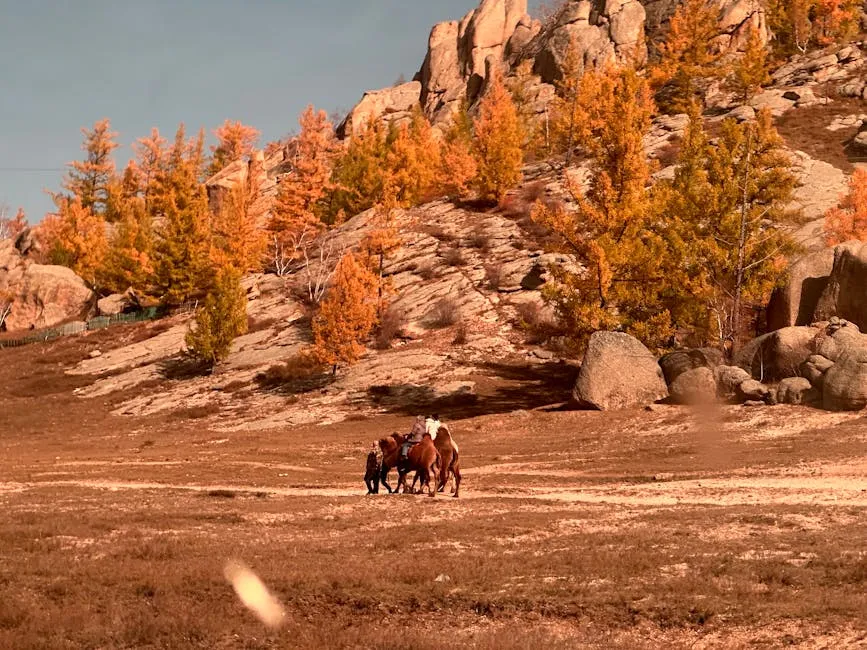
The country’s most-visited national park, 50 km east of Ulaanbaatar, on the south-eastern edge of the Khentii Mountains. The park covers approximately 3,000 km² and is the working introduction to Mongolian steppe landscape for visitors who do not have time to travel further. Highlights: Turtle Rock (Melkhii Khad) — the natural granite outcrop that genuinely resembles a giant turtle; Aryabal Meditation Monastery — the small hillside temple, a 30-minute uphill walk from the parking area; Ariyabal Temple steppe overlook; and the network of ger-camp accommodations that offer the right one-or-two-night introduction to ger living (felt-tent walls, central wood stove, traditional Mongolian breakfast, horseback or yak excursions).
- Hours: Park always open; ger camps season May–October.
- Entry: Park entry ₮3,000 per visitor + ₮5,000 per vehicle.
- Access: Day-trip from Ulaanbaatar by tour bus or private car (1.5 hours each way). Combine with the Chinggis Khaan statue in one long day, or stay overnight in a ger camp.
12. Khustai (Hustai) National Park — the Przewalski’s Horse Reserve
The 506 km² protected area 95 km west of Ulaanbaatar, home to the world’s largest reintroduced population of Przewalski’s horse (Equus ferus przewalskii) — the only surviving true wild horse species, last seen in the wild in 1969, reintroduced to Khustai from European zoo breeding programmes starting in 1992. The current Khustai population is roughly 380 horses across the reserve. Visitors typically spot 10–40 horses during a half-day visit; the working sighting conditions are early morning or late afternoon at the watering points. The park also has steppe wolves, red deer, and a substantial steppe-bird population.
- Hours: April–October main visitor season; year-round access with proper preparation.
- Entry: ₮10,000 (€2.30) per person.
- Access: 95 km west of Ulaanbaatar; tour bus or private car, 2 hours each way; ger-camp accommodation at the park gate.
Ulaanbaatar’s Districts
The city is administratively divided into nine düüregs (districts) but a visitor only encounters about four of them in practice.
Sükhbaatar District — the central core
The political-and-tourist heart of the city. Sukhbaatar Square, the State Palace, the National Museum, the State Opera and Ballet, Choijin Lama Temple, most of the major hotels (Shangri-La, Best Western Premier Tuushin, Kempinski Hotel Khan Palace), the central restaurants, the working tourist-shopping street Peace Avenue (Enkh Taivanii Örgön Chölöö). The right base for a first-time visitor.
Chingeltei District — north-west of central
Home to Gandantegchinlen Monastery, the Beatles Square (a small plaza with a bronze relief of the Beatles installed in 2008 — a working Cold-War memorial of sorts, as bootleg Beatles records were one of the cultural-import channels to Communist Mongolia in the 1970s-80s), and the working middle-class residential blocks of the older Soviet-era apartments.
Bayangol and Khan-Uul — south and west residential
The newer apartment-and-corporate-tower districts that absorbed most of Ulaanbaatar’s post-2000 growth. Khan-Uul holds Zaisan Memorial, the Mongolian Air Force Museum, and the Bogd Khan Palace Museum. Bayangol is more residential. Not a primary visitor base but reachable on foot from central in 30–60 minutes.
Ger Districts — the surrounding ring
The traditional-ger residential rings on the north, east and west edges of the city, where roughly half of Ulaanbaatar’s residents live. Not a tourist district; mentioned because the working geography of the city makes more sense once you understand where the population actually is. The ger districts produce the bulk of the winter air pollution; they are also the cultural-residential anchor for the city’s recent rural-to-urban migrants and are one of the city’s defining socio-economic features.
Songinokhairkhan and the western suburbs
The far-western residential district, the airport-adjacent industrial zones, and the working roster of post-2010 housing developments. Mostly visitor-irrelevant unless your hotel turns out to be here.
Where to Stay — by Budget
Rates per person per night, double occupancy, shoulder season (May–June, September). Peak summer season (July–August, especially Naadam week 11–13 July) adds 40–80%. Winter (November–February) deducts 30–50% on the upper-mid and luxury tiers; the city is in low-tourism mode and good rooms are cheap.
Budget — ₮60,000–₮180,000 per person per night (€14–€41)
The Mongolian hostel scene is well-developed for backpackers, particularly summer-season. UB Guesthouse (the working backpacker anchor, near Sukhbaatar Square), Lotus Guesthouse (the long-running tour-and-stay operation favoured by NGO and budget travellers), and Zaya Backpackers Hostel (newer, central, design-forward). Dorm beds from ₮40,000 (€9.20); private doubles from ₮120,000–₮250,000.
The Mongolian Tourism Office homestay programme is the working alternative — placement with a Mongolian family in central Ulaanbaatar for ₮80,000–₮150,000 per night including breakfast.
Mid-range — ₮250,000–₮600,000 per night (€57–€138) for a double
The well-regarded mid-tier hotels. Bayangol Hotel (the long-running Soviet-period landmark, fully refurbished, central) is the working mid-range anchor at ₮350,000–₮500,000. Best Western Premier Tuushin Hotel (₮450,000–₮600,000, refurbished 2024, the working business-hotel mid-tier). Holiday Inn Ulaanbaatar (₮350,000–₮500,000).
Upper-mid / Luxury — ₮800,000–₮1,500,000 per night (€184–€345)
Kempinski Hotel Khan Palace Ulaanbaatar — the city’s working high-end European-luxury anchor since 2009. 1.4 miles from Chinggis Khaan Square, the right business-and-pleasure five-star. From ₮900,000 (€207) for a standard double in shoulder season.
Shangri-La Ulaanbaatar — the newer flagship (opened 2015), the city’s most-talked-about luxury hotel. Central location, four restaurants including the working high-end Hutong Restaurant Cantonese fine-dining. From ₮1,200,000 (€276) for a standard double; suites substantially higher.
The Continental Hotel Ulaanbaatar — central, mid-luxury Mongolian-brand alternative.
Splurge — ₮2,000,000+ per night (€460+)
The Blue Sky Hotel and Tower — the 25-storey Mongolian-owned luxury anchor with the city’s best panoramic view from the upper-floor suites and the rooftop Sky Lounge bar. ₮2,000,000–₮3,500,000 per night for the upper-tier suites.
Terelj Hotel (Gorkhi-Terelj National Park) — the country’s flagship luxury ger-camp + lodge property, 50 km outside the city. Not a Ulaanbaatar hotel but the right “luxury-Mongolia” experience for visitors looking for the steppe-and-luxury combination. From €350 per night including full board.
Where not to stay
Avoid the cheaper hotels in the outer Khan-Uul and Songinokhairkhan districts unless you have specific business there — the working tax of getting back to central is real, the air pollution is worse outside the centre, and the saving over a central mid-range hotel is small. Also avoid the bottom-tier “Ulaanbaatar central” budget listings that turn out to be in the ger districts — those are not legitimate visitor accommodations and the surrounding infrastructure is not set up for tourist traffic.
Where to Eat — Buuz, Khuushuur and the Imported-Korean Scene
Mongolian cuisine is honestly difficult by global-tourism standards — it is a working pastoral-nomadic cuisine built around mutton, beef, horse, yak, and dairy, with limited vegetable input and a flavour profile that defaults to salt, fat, and fresh-meat-broth rather than spice or acid. A first-time visitor will likely find the traditional cuisine more interesting culturally than viscerally rewarding. The good news for 2026 is that Ulaanbaatar now has a substantial imported-cuisine scene — Korean (the largest), Japanese, Russian, Mediterranean, and a growing roster of European-trained chefs running mid-range Western restaurants.
Traditional Mongolian — what to try
- Buuz (steamed mutton dumplings) — the defining dish, particularly central to the Tsagaan Sar lunar new year (where each household makes hundreds of buuz to receive guests across the holiday week). ₮500–1,500 per dumpling at working restaurants.
- Khuushuur (fried mutton pies) — the deep-fried larger cousin to buuz, the working street-food anchor. ₮2,000–4,000 per pie. The Naadam khuushuur at the National Stadium during the festival is a working national ritual.
- Tsuivan (noodle stir-fry with mutton and vegetables) — the working everyday Mongolian dish, present at any local restaurant menu. ₮8,000–15,000 per bowl.
- Bantan (mutton dumpling broth with millet flour) — the working winter-warming dish.
- Khorkhog (slow-cooked-with-hot-stones mutton) — the traditional steppe-feast dish, normally eaten at ger camps or special occasions rather than everyday.
- Boodog (whole-animal stuffed with hot stones and cooked from inside) — the traditional festive dish; rare in urban restaurants, more common in countryside ger camps.
Where to eat traditional Mongolian in Ulaanbaatar
- Modern Nomads (multiple central locations) — the working tourist-friendly Mongolian-traditional chain, with reliable buuz, khuushuur and tsuivan plus traditional Mongolian-cultural-performance evenings.
- Khaan Buuz (multiple branches) — the country’s largest buuz-and-khuushuur chain, with working fast-food-format quality at ₮3,000–8,000 per meal.
- Talyn Mongol — slightly more upscale traditional-Mongolian-cuisine restaurant in central; the working set menu is ₮35,000–60,000 per head.
The Korean and Japanese influence
Mongolia and South Korea have an unusually close cultural-and-economic relationship — about 50,000 Mongolians work in South Korea, and Korean cuisine has been thoroughly absorbed into Ulaanbaatar’s everyday food scene since the 1990s. The result: a working Korean restaurant at almost every central block, prices substantially lower than the same cuisines in Seoul, and the quality is often genuinely good.
- Seoul Restaurant — the long-running mid-range Korean anchor.
- Tongyong — the upper-mid Korean-fine-dining option.
- Sushi & Sashimi house — the working Japanese mid-range.
Western and contemporary
- Veranda — the country’s first Mediterranean restaurant, opened 2006. Mid-range, central, working European-cuisine reliable anchor. ₮40,000–80,000 per head.
- Hazara Indian Restaurant — authentic North Indian, the city’s best regarded Indian-food anchor.
- Hutong Restaurant at Shangri-La — the high-end Cantonese fine-dining anchor at the city’s flagship hotel. ₮120,000–250,000 per head.
- Rosewood at The Blue Sky Hotel — the working European-fine-dining alternative.
Michelin, plainly stated
Mongolia has no Michelin guide as of May 2026. The Michelin Guide does not currently cover the country, and no Mongolian restaurant appears on the World’s 50 Best Restaurants Asia list (where the geographic remit is principally East and Southeast Asia, with Mongolia outside the standard inclusion set). The working local-restaurant-award systems are the Best Restaurants Ulaanbaatar annual awards and the broader Mongolian Tourism Awards. Expect no Michelin stars; the dining experience is what it is.
The everyday Mongolian breakfast
The working morning ritual is a bowl of suutei tsai (salt-milk tea — the country’s national drink, made by boiling tea leaves in milk with a pinch of salt and butter, drunk hot with bread or aaruul dried curd). Most hotels serve a Western buffet breakfast; the suutei tsai is available on request at any traditional restaurant and at most café-tier establishments.
Editor’s tip: Eat at least one buuz-and-suutei-tsai breakfast during your trip — the dumplings are the country’s defining everyday food, and the salt-milk tea is the working steppe-and-city cultural bridge. Modern Nomads serves both as a working breakfast set; a working everyday option is the Khaan Buuz chain branches scattered across the centre.
Drinking — Vodka, Suutei Tsai and the Craft Beer Plateau
Vodka — the working national drink
Mongolia is one of the world’s largest per-capita consumers of vodka, with a working domestic distillery industry. Chinggis Vodka is the country’s best-known brand (cheap and widely available, ₮25,000–₮40,000 for a 500ml bottle in a shop); Bolor and Ar Khangai are the working mid-tier alternatives. Most central restaurants and bars stock the imported European vodkas at substantial premiums. The Mongolian working drinking-ritual is shot-by-shot in toasts; the appropriate Western-guest etiquette is to drink the first shot offered, sip the second, and tap the third on the table to signal “I appreciate it but I’m done.”
Beer
The mainstream Mongolian beers are Sengur, Niislel, Gem (the country’s three major brewing brands), all working lagers in the 4.5–5.0% ABV range. The post-2018 craft-beer scene has produced a small but real domestic-craft cluster — The Bull Pub in central Ulaanbaatar runs a working in-house brewing programme; Olloo Brewing is the largest of the post-2018 craft entrants. ₮8,000–₮18,000 for a pint at central bars.
Tea — suutei tsai and the milk-and-salt morning
The country’s defining everyday drink. Suutei tsai (salt-milk tea) is the working morning, mid-meal, and end-of-day social-and-thermal beverage. The version a visitor encounters at a working restaurant or guesthouse will be made fresh — boiled-tea-and-milk with a pinch of salt and sometimes a slab of yellow butter. The taste takes one or two attempts to acquire and is then irreplaceable.
Airag — fermented mare’s milk
The traditional fermented horse-milk drink, locally called airag (in the western provinces) or kumiss (the Russian-derived name used in some Mongolian-Russian contexts). Roughly 2% ABV, sour-and-effervescent, made in working production from May through October. Available at most countryside ger camps; less common in central Ulaanbaatar restaurants but present at the Modern Nomads working-traditional venues during the season.
The cocktail and the Sky Lounge
The post-2015 cocktail-bar scene is real in Ulaanbaatar. The working high-end anchor is the Sky Lounge on the top floor of the Blue Sky Hotel — central, panoramic view of the city, the right end-of-day cocktail experience. ₮25,000–₮45,000 per cocktail. The Brauhaus and the working roster of central-Ulaanbaatar mid-range bars cover the more casual end.
Pro Tip: The single best non-tourist Ulaanbaatar drinking experience is a working vodka-and-buuz dinner at a traditional restaurant during the Naadam holiday week (11–13 July) — the city’s working drinking culture is at its annual peak, the prices are everyday-Mongolian, and the company is unguarded. The runner-up experience is a winter suutei-tsai-and-khuushuur lunch at a working ger-district restaurant near the Black Market — the heat-and-fat combination is what the Mongolian winter is built around.
Getting Around the City
Buses
The working Ulaanbaatar transit system runs on city buses and the longer-route inter-district buses. Single fare ₮500 with the OYUNTUUL prepaid card; ₮1,000 in cash. Buses run roughly 06:00–22:00; frequency on the main routes (1, 7, 19) is every 5–15 minutes. The system is genuinely good for a city of this size; signage at major stops is in Cyrillic only with some English at central nodes.
Taxis and ride-hails
There is no formal centralised metered-taxi system. The working setup:
- UBCab is the working ride-hail app (Mongolian Uber equivalent). Install before arrival; payment via the app with linked Western credit card. Most central trips ₮5,000–₮20,000 (€1.15–€4.60).
- Hailed cars — the country’s working informal-taxi system. Almost any private car will stop if you raise your hand; the working rate is ₮1,500 per kilometre, agreed before getting in. This system is informal but works at scale; English is limited.
- Hotel taxis — fixed-fare, more expensive than UBCab but reliable; the right airport-to-hotel arrival mode.
Walking
Central Ulaanbaatar (within the 2-km radius of Sukhbaatar Square) is walkable in summer. The pavements are working, the city is flat, the distances between the major attractions are reasonable. In winter (mid-October to mid-April), walking outdoors is genuinely cold-limited; expect 15-minute walks to become hour-long activities once you factor in the warming stops.
The “no metro” reality
Ulaanbaatar has no metro system as of 2026. A metro has been in planning since the 1980s; construction has been started and stopped several times. The current 2024 master plan targets a first-line opening in the early 2030s; do not expect a metro on your trip.
Cycling
The city has limited cycling infrastructure. Summer cycling is possible but the traffic-and-air-quality combination is not ideal. The Tuul River cycling path is the working alternative — a 6-km dedicated cycling-and-walking path along the south side of the central city, the right summer-afternoon ride.
Driving
Foreign visitors generally do not drive in Ulaanbaatar — the traffic patterns are aggressive, the parking is genuinely hard, and the licensing requirements include a Mongolian driving permit. For day-trips outside the city, hire a driver-and-vehicle through a tour operator rather than self-drive.
Editor’s tip: Combine UBCab for the cross-city trips with buses for the working-day errands. Walking is fine in summer in the central 2-km zone; in winter, take the bus or a UBCab even for short distances — the cold-and-pollution combination is the working everyday issue.
When to Visit
Ulaanbaatar has two genuine seasons: summer (warm, dry, the only viable tourism window) and winter (cold, dry, polluted, mostly closed to outdoor visitors). The shoulder months are short.
- June–August (summer) — the working tourism window. Daytime 22–26 °C, dry, mostly clear, the Naadam Festival in July, the working ger-camp season, the steppe at full green. The single best month is mid-July through mid-August. Naadam (11–13 July) is the country’s national festival and is materially worth timing a visit around.
- May, September — the shoulder windows. Daytime 12–22 °C, variable, the working “tourist-but-cheaper” alternative to peak summer. The Khustai Przewalski’s-horse season runs through September.
- October — late shoulder. Daytime 4–14 °C, increasingly cold, the working “last viable visit” before winter sets in.
- November–March (winter) — the deep cold season. Daytime -10 to -25 °C, night -25 to -40 °C, persistent air pollution, most outdoor attractions effectively closed. Not recommended for a first-time visitor.
- April — early shoulder. Daytime 6–14 °C, transitional, the working “starting to come back” month but ger camps are not yet open.
The cyclic calendar:
– Naadam Festival — 11–13 July annually (sometimes extended to 15 July at the national level). The country’s national festival commemorating the 1921 revolution and showcasing the three traditional sports — wrestling, archery, horse racing — at the National Central Stadium in Ulaanbaatar. Tickets for the opening ceremony, wrestling, and closing ceremony go on sale roughly one month before the festival. The archery and horse-racing competitions are free to attend.
– Tsagaan Sar (Lunar New Year) — typically late January or February, calendared on the lunar cycle. The country’s other major festival; less tourist-accessible than Naadam (it’s primarily a family-and-private-celebration rather than a public event) but worth being in the city for the visible decoration and the buuz-baking ritual.
– Mongolian Independence Day — 26 November, commemorating the 1924 declaration of the Mongolian People’s Republic. Minor public events.
Month-by-Month Weather
| Month | Day high (°C) | Night low (°C) | Sun days | Notes |
|---|---|---|---|---|
| Jan | −16 | −26 | 23 | Coldest month; PM2.5 spikes |
| Feb | −12 | −22 | 20 | Cold and polluted; Tsagaan Sar |
| Mar | −4 | −15 | 23 | Beginning of warmer days |
| Apr | 6 | −5 | 22 | Transition; windy |
| May | 14 | 0 | 23 | First viable visit month |
| Jun | 21 | 7 | 23 | Working tourism window opens |
| Jul | 22 | 11 | 18 | Naadam (11–13 July); peak |
| Aug | 21 | 9 | 19 | Hottest, driest; second-best |
| Sep | 14 | 1 | 22 | Shoulder; still pleasant |
| Oct | 6 | −7 | 22 | Late shoulder; winter approaching |
| Nov | −5 | −16 | 23 | Cold begins; pollution begins |
| Dec | −14 | −24 | 20 | Deep winter; minimal outdoor visits |
Daily Budget Breakdown
Per person per day, in tögrög and euro equivalent, at €1 = ₮4,350.
| Budget level | Per day | What you get |
|---|---|---|
| Backpacker | ₮90,000–₮180,000 / €21–€41 | Hostel dorm (₮50,000), buuz-and-tsuivan meals (₮40,000), bus (₮2,000), one paid attraction (₮10,000) |
| Mid-range | ₮300,000–₮600,000 / €69–€138 | Mid-range hotel per-person (₮200,000), three sit-down meals incl. one Modern Nomads (₮120,000), UBCab+bus (₮25,000), two attractions (₮30,000) |
| Higher | ₮900,000–₮1,800,000 / €207–€414 | Kempinski / Shangri-La per-person (₮600,000), a Hutong dinner (₮250,000), private-driver day-trip share (₮250,000), full attractions (₮50,000) |
| Splurge | ₮2,500,000+ / €575+ | Blue Sky suite, Shangri-La fine-dining, private full-day driver to Terelj overnight in luxury ger camp |
Ulaanbaatar is materially cheaper than Beijing, Seoul, or any major Western city — the budget tier is genuinely accessible at €25/day, the mid-range tier runs to €70-140/day, and the high-end is comparable in absolute terms to Beijing’s high-end but at materially lower experience-density.
Sample Itineraries
3 days — the essential first visit
- Day 1. Morning at Sukhbaatar Square + State Palace + National Museum. Lunch at Modern Nomads (buuz + suutei tsai). Afternoon at Gandantegchinlen Monastery; visit during the working afternoon chanting (if scheduled). Dinner at Veranda or Shangri-La’s Hutong.
- Day 2. Morning at Choijin Lama Temple Museum + Beatles Square. Afternoon at the Naran Tuul “Black Market” (allow 2 hours; bring small notes). Late afternoon climb of Zaisan Memorial for the sunset view. Dinner in central.
- Day 3. Full-day trip to the Chinggis Khaan Equestrian Statue + Gorkhi-Terelj National Park — leave 08:00, statue tour by 10:00, lunch at the statue complex café, afternoon at Turtle Rock and Aryabal Temple in Terelj, dinner at a ger camp or return to UB for late dinner.
5 days — adds an overnight in Terelj or Khustai
Days 1–3 as above. Day 4: Drive to Gorkhi-Terelj National Park for a one-night ger-camp stay — Turtle Rock walk, horseback excursion, traditional steppe dinner, sleep in a heated ger, breakfast at the camp. Day 5: Return to Ulaanbaatar via Khustai (Przewalski’s horse spotting in the afternoon).
7 days — adds Karakorum and the deeper steppe
Days 1–5 as above. Day 6: Drive west to Kharkhorin (Karakorum) — the 1235 Mongol imperial capital, 350 km west of Ulaanbaatar, with the Erdene Zuu Monastery (built 1585 on the ruins of the imperial city, using stones from the old capital walls). One-night stay at a ger camp near the site. Day 7: Return to Ulaanbaatar via the Khustai National Park + final-night dinner.
Best Day Under €15 — Square, Monastery and Black Market on the Bus
A genuinely cheap day, walked and bussed, with the city’s defining experiences.
| Item | Cost | Notes |
|---|---|---|
| Buuz-and-tea breakfast at a working café | ₮8,000 (€1.84) | Buuz + suutei tsai + small bread |
| OYUNTUUL bus card load (good for whole day) | ₮5,000 (€1.15) | Multiple trips |
| Gandantegchinlen Monastery entry | ₮4,000 (€0.92) | Plus photo permit ₮5,000 if you photograph chapels |
| Photo permit (skip if not photographing inside) | ₮0 | The exterior is free to photograph |
| Naran Tuul “Black Market” walk | ₮0 | Free entry |
| Lunch: khuushuur and tea at a working café | ₮10,000 (€2.30) | Two pies + small tea |
| Choijin Lama Temple Museum | ₮8,000 (€1.84) | The under-visited gem |
| Walk back to central via Beatles Square | ₮0 | Free |
| Coffee + cake at a central café | ₮10,000 (€2.30) | An afternoon stop |
| Dinner: tsuivan at a working Mongolian restaurant | ₮15,000 (€3.45) | A working bowl with a beer |
Running total: ₮60,000 / €13.80 — comfortable under target.
If you want to add the Zaisan Memorial sunset (free entry; UBCab return ₮12,000 = €2.76), the day total rises to ₮72,000 / €16.55 — slightly over the €15 mark but the climb is worth it on a clear day.
For context, the fleet’s Best Day Under leaderboard reads roughly: Cairo $3.50 · Bogotá $6 · Kuala Lumpur €8.50 · Munich €12 · Bangalore €15 · Ulaanbaatar €14 · Tbilisi €25 · Chengdu €25 · Shenzhen €25 · Fiji €29 · Nicosia €32.60 · Sicily/Corsica €35–40 · Maldives $50. Ulaanbaatar slots between Bangalore and Tbilisi — a fair placement for a small-and-affordable capital where the food and the bus are cheap, the attractions are modestly priced, and the steppe-day-trip excursions are the budget-buster (you can spend €15 in a central-Ulaanbaatar day, but you cannot get to Tsonjin Boldog and back on that figure).
Editor’s tip: The €15-Ulaanbaatar-day works if you stay in the centre and do not leave. The moment you add a day-trip — Chinggis Khaan statue, Terelj, Khustai — the figure jumps to €40-80 per person depending on whether you take a public bus, a shared van, or a private driver. Budget accordingly.
Hot Day, Pollution Day & Off-Season Plans
Hot day (July–August, 22–26 °C)
Ulaanbaatar’s “hot day” is genuinely manageable — the climate is dry and the temperature rarely exceeds 28 °C even in the peak July week. The right strategy is to do outdoor attractions (Zaisan Memorial, the Black Market, the Tuul River walking path) in the morning and afternoon, retreat indoors during the noon UV peak (the city sits at 1,350m elevation; UV index can hit 9–10 in July).
Pollution day (November–February)
The deep winter is when the city’s air pollution is at its working peak. PM2.5 readings above 200 are routine in January and February; above 500 happens on cold-and-still days. The working response: stay indoors during the worst windows (typically late afternoon through early morning), wear an N95 or KN95 mask when outdoors, and lean on the museum-and-restaurant pivot (National Museum, Choijin Lama Temple Museum, Bogd Khan Palace Museum, the working café-and-restaurant scene). The shopping malls (State Department Store, Shangri-La Mall, Hunnu Mall) all have working AC-and-filtered-air systems that are the right pollution-day retreat.
Off-season (October–April)
Ulaanbaatar in deep winter is materially different from the summer-tourism version. Hotel rates are 30–50% lower; the city’s working-life is in full swing (it is just cold); the central restaurants and museums are open; the Tsagaan Sar (Lunar New Year) festival in February is a working cultural anchor. The trade-off: outdoor attractions and steppe day-trips are weather-limited or closed, the pollution is real, and the daylight hours are short (sunset at 17:00 in December). The right answer for a returning visitor with a particular cultural interest; the wrong answer for a first-time visitor.
Day Trips
Gorkhi-Terelj National Park
50 km east of Ulaanbaatar. Full day or overnight. Turtle Rock, Aryabal Meditation Monastery, the working ger-camp accommodations. The right introduction to Mongolian steppe for time-constrained visitors. Driver-hire ₮180,000–₮280,000 (€41–€64) full day.
Chinggis Khaan Equestrian Statue (Tsonjin Boldog)
54 km east of Ulaanbaatar. Half-day or combined with Terelj. The 40-metre stainless-steel statue, the visitor centre, the panoramic horse-head viewing platform. ₮20,000 entry; driver-hire ₮100,000–₮180,000 for the round trip alone, ₮250,000 combined with Terelj.
Khustai National Park
95 km west of Ulaanbaatar. Full day. The Przewalski’s horse reserve; spot the world’s only true wild-horse species in their reintroduction range. Driver-hire ₮250,000–₮350,000 full day.
Kharkhorin (Karakorum) and Erdene Zuu Monastery
350 km west. Two-day overnight (the working visitor approach). The 13th-century Mongol imperial capital site, the 1585 Erdene Zuu monastery built from the ruins. Ger-camp overnight; ₮600,000–₮900,000 per person all-in.
Hustai-and-Manzushir Monastery combination
A working half-day southern option: the Mongolian Buddhist monastery ruins at Manzushir (40 km south, partly destroyed in the 1937 Stalinist purges, now a working open-air-museum), combined with a half-day at Khustai or a Tuul River steppe drive. ₮250,000 full day.
Safety & Practical Information
Crime
Ulaanbaatar is one of the safer large cities by violent-crime metric — Mongolia has a working stable democracy with a relatively low crime baseline. Petty crime exists at the level you would expect of any capital city of 1.6 million: pickpocketing in the Black Market and at bus stops, occasional bag-snatch in crowded markets, the standard taxi over-quotes at touristic locations. The two specific things to know:
- Drunk-driver risk — Mongolia has high alcohol consumption and the working driving-while-drunk problem is real, particularly Friday and Saturday nights. Take UBCab rather than hailing a private car after 22:00.
- Stray-dog risk — the city has working stray-dog populations in the ger-district edges and at construction sites. Most are harmless; a small percentage are territorial. Walk away from groups of three or more dogs.
Health
Tap water is not drinkable. Use bottled water (₮1,500 per 500 ml). Most hotels provide kettles.
Air pollution is the dominant winter health concern. Bring N95/KN95 masks for any deep-winter visit; the working air-quality index can reach hazardous levels for 1-2 weeks at a stretch in January-February.
Major hospitals: SOS Medica Mongolia (the international-tier private clinic in Khan-Uul; English-speaking, the working evacuation-pathway start point), First State Central Hospital (the largest public hospital), Intermed Hospital (private alternative). For anything serious, the working evacuation pathway is to Seoul, Beijing, or Bangkok (4-6 hours by air, depending on connecting flight).
Altitude — Ulaanbaatar sits at approximately 1,350 metres, which is mild but not negligible. Most visitors do not notice; those with cardiovascular conditions should consult their doctor before travel.
Language
Mongolian (Khalkha dialect) is the official language, written in the Cyrillic alphabet. The traditional Mongol bichig vertical script is being restored as an official script through a 2020 government policy with a 2025-2026 implementation; expect to see both scripts on official signs.
English is partial — common at major hotels, tour operators, the airport, and central restaurants; uncommon in markets, bus drivers, and most outer-district vendors. Russian is widely understood by Mongolians over 40 (a working legacy of Soviet-period education); using basic Russian phrases often gets you a working response. Korean is increasingly understood among younger Mongolians (the 50,000-strong Mongolian-Korean diaspora is a real cultural-and-economic bridge). The Pleco-equivalent for Mongolian is the Bolor Toli dictionary app or Google Translate (with downloadable offline Mongolian pack).
Money
Mongolian tögrög (MNT) is the only currency. ATMs are widely available in central Ulaanbaatar; most accept Visa/Mastercard. Card payment works at most central restaurants and hotels; cash is essential in markets, ger-district vendors, and outside the central city. Khan Bank and Golomt Bank are the major networks. Bring USD or EUR for backup; both exchange easily at any bank or at the State Bank’s airport branch.
Electrical and SIM
Type C and Type E sockets (the European 2-pin variant) at 220V/50Hz. A universal travel adapter is essential.
Local SIMs from Mobicom, Skytel, Unitel, G-Mobile sell at the airport and at central convenience stores for ₮25,000–₮50,000 (€6–€11) with 20-50 GB data; passport required. Most EU/UK roaming plans do not include Mongolia at sensible rates; buy local.
Internet
Most Western services (Google, Facebook, Instagram, WhatsApp, YouTube, X/Twitter) work in Mongolia without a VPN — the country does not operate the Chinese-style Great Firewall. This is a substantial relief for visitors coming from China or routing through Beijing. WiFi is widely available in central cafés and hotels.
Cigarettes
Indoor smoking has been banned in restaurants and public buildings since 2013. Compliance is generally good in central Ulaanbaatar; outer-district bars and small restaurants sometimes do not enforce the rule.
Visa & Entry Requirements
Visa-free entry (under the temporary exemption through 31 December 2026)
- EU member states, UK, Australia, New Zealand, Japan and ~30 other jurisdictions: 30 days visa-free.
- US citizens: 90 days visa-free (this is a longer-standing US-Mongolia agreement, separate from the 34-country temporary exemption).
Passport validity: Valid 6+ months from arrival; at least one blank visa page.
Onward travel: Confirmed return or onward ticket required.
48-hour registration: Visitors staying longer than 30 days must register with the Mongolian Immigration Agency within 48 hours of arrival. For most short-stay visitors this is handled automatically by the hotel or ger camp; verify with your accommodation on check-in.
Verify before booking
The 34-country temporary visa-free exemption runs through 31 December 2026 and has been extended several times since 2023. If you are travelling in 2027 or later, verify the current status with the Immigration Agency of Mongolia or your nearest Mongolian embassy before booking. The standard URL is immigration.gov.mn.
E-visa option
Citizens of countries not on the visa-free list can apply for a Mongolian e-visa at evisa.mn. The portal covers 98 nationalities, takes about 10 minutes to apply, requires a passport scan and a passport photo, and costs approximately $50–$70. Processing is up to 72 hours; allow at least one week before travel.
Hidden Ulaanbaatar
Genuinely under-visited or under-marketed. The second-visit list.
- Manzushir Monastery ruins — 40 km south of Ulaanbaatar, the Buddhist monastery destroyed in the 1937 Stalinist purges, now preserved as a partially-restored archaeological-and-open-air-museum. The contrast between the substantial pre-1937 structure and the post-restoration partial-reconstruction is the most concrete on-site reminder of the country’s mid-20th-century religious-purge history. ₮5,000 entry.
- Beatles Square — the small bronze-relief monument to the Beatles installed in 2008 in front of an apartment block in Chingeltei. A working memorial to the cultural-import role of bootleg Beatles records in late-Communist Mongolia; quiet, photographable, almost no foreign visitors.
- The State Circus (Ulaanbaatar State Circus) — the surviving 1960s Soviet-period circus building with a working contortion-and-acrobatics company. Mongolian contortionism is a working national art form with a continuous training tradition; performances ₮10,000–₮30,000, mostly summer evenings.
- Choijin Lama Temple Museum’s tsam mask collection — covered above in the Top 12; mentioned here because the tsam-mask collection is the city’s strongest single religious-art exhibit and is materially under-visited compared to Gandan.
- The Mongolian Theatre Museum in the Palace of Culture — the working theatre-history museum, with the original opera and ballet costumes from the Soviet-period Mongolian National Theatre, and the working photographic archive of post-1990 Mongolian theatrical productions. Small, free, almost no visitors.
Romantic Ulaanbaatar
The city’s romance defaults to view-and-vodka rather than rose-and-villa.
- Sky Lounge sunset at the Blue Sky Hotel — the working upper-floor cocktail bar with the city’s best panoramic view, particularly atmospheric on a clear summer evening when the line of mountains north of the city is visible. ₮25,000–₮45,000 per cocktail.
- Zaisan Memorial sunset walk — free, public, the best summer view of the city from above. Climb in mid-evening; the post-sunset half-hour is the photogenic working window.
- A ger-camp overnight at Terelj — the country’s working honeymoon-and-romantic-getaway product. A heated ger, a traditional dinner, a sky full of stars (Ulaanbaatar’s pollution doesn’t reach 50 km out), the working steppe-quiet. ₮180,000–₮600,000 per couple per night depending on the camp’s tier.
- Dinner at Hutong at the Shangri-La — Cantonese fine-dining in the most central glass-tower setting in the city; ₮250,000–₮500,000 per couple with wine.
- A summer Naadam-week evening — the city is at its working cultural peak, the central restaurants run special menus, the streets are loud and proud, and the working national-festival atmosphere is the country’s most genuinely-romantic public moment.
Ulaanbaatar with Kids
Mongolia is genuinely good for older children (8+); under-8s require more planning.
- The Chinggis Khaan Equestrian Statue — children love the elevator-and-stairs ride up through the horse’s chest to the head viewing platform.
- The International Intellectual Museum (Toy & Puzzle Museum) — the working puzzle-and-game collection is a child-magnet.
- Khustai National Park — wild Przewalski’s horses, working steppe wildlife; the right family-and-nature day-trip.
- Gorkhi-Terelj ger camp — heated ger, horseback rides, the working introduction to traditional Mongolian-pastoral life; an excellent overnight for older children.
- State Circus — Mongolian contortionism is genuinely impressive and children respond well to it.
What does not work for kids: Gandantegchinlen Monastery for under-5s (the chanting requires quiet behaviour); the Black Market for under-8s (crowded and chaotic); winter visits for any age (the cold-and-pollution combination is brutal).
What’s New in 2026
- The visa-free regime continues. EU/UK/AU 30-day exemption and US 90-day exemption both in force through 31 December 2026. Verify the current eligible-passport list before booking.
- The new UBN airport (opened 4 July 2021) has settled into operations as the country’s working air gateway. Public Bus X19 from the airport to Sukhbaatar Square was reinstated on 1 May 2025; ₮15,000 one-way.
- The 2026 Naadam Festival is scheduled for 11–13 July at the National Central Stadium. The opening ceremony is at 11:00 on 11 July.
- Air pollution remains the city’s working winter crisis. The 2025-2026 winter season saw PM2.5 spikes above 600 µg/m³ on the coldest days. Coal-to-electric conversion programmes for ger-district households are in progress; results are mixed.
- The Mongolian script restoration continues — the 2020 government policy for restoring Mongol bichig (traditional vertical script) for official documents by 2025 is partially implemented; expect to see both Cyrillic and traditional script on official signs.
- Michelin status, plainly stated: No Michelin guide for Mongolia as of May 2026; no Mongolian restaurant on the World’s 50 Best Asia list (geographic scope). The country’s restaurant scene is competent but is not yet on the international fine-dining map.
🌍 See the bigger picture: our Mongolia travel guide covers regions, when to go, and getting around.
Frequently Asked Questions
1. How many days do I need in Ulaanbaatar?
Three days is the minimum for the city alone — square, monastery, museum, the Black Market, one Sukhbaatar-vicinity evening. Five days lets you add a Terelj or Khustai day-trip. Seven days lets you add Kharkhorin (Karakorum) and the deeper steppe. For most first-time visitors, the right framing is 3 days in Ulaanbaatar + 4-7 days in the countryside.
2. Is Ulaanbaatar safe to visit in 2026?
Yes. Violent crime against tourists is rare. Petty crime is minor and concentrated in the Black Market and bus stops. The wider political situation is stable — Mongolia is a working parliamentary democracy with regular peaceful elections. The two real risks are deep-winter cold (November-February, -40°C night lows are real) and air pollution in the same window (PM2.5 frequently in hazardous range). Otherwise the city is one of the safer Asian capitals.
3. Do I need a visa for Mongolia in 2026?
EU + UK + Australia + NZ + Japan + ~30 other countries: NO — 30-day visa-free entry under the temporary exemption through 31 December 2026. US citizens: NO — 90-day visa-free under a separate longer-standing US-Mongolia agreement. Passport valid 6+ months; return ticket required; 48-hour hotel registration (handled automatically). Verify the current eligible-passport list at immigration.gov.mn before booking.
4. Does Ulaanbaatar have any Michelin-star restaurants?
No. The Michelin Guide does not cover Mongolia as of May 2026, and no Mongolian restaurant appears on the World’s 50 Best Asia list (geographic scope). The working high-end dining options are international hotel restaurants (Hutong at Shangri-La for Cantonese, Veranda for Mediterranean) and the Mongolian-traditional Modern Nomads chain for cultural dining.
5. How much does a Ulaanbaatar trip cost?
A backpacker week runs ₮90,000–₮180,000 per person per day (€21-41). A mid-range week runs ₮300,000–₮600,000 per person per day (€69-138). A luxury week runs ₮900,000-1,800,000 per day (€207-414). The €15 day is genuinely possible if you walk, take buses, and eat at working Mongolian restaurants. The biggest budget multiplier is the countryside day-trips — Terelj overnights, the Chinggis Khaan statue + Terelj day, Khustai — which add ₮200,000-600,000 per person depending on the operator.
6. What is the best time to visit Ulaanbaatar?
June through August for the only viable tourism window. July 11-13 for Naadam if you can time it (the country’s national festival). May, September are the shoulder months. Avoid November-March unless you have a specific reason (winter cold + air pollution are both severe).
7. How do I get from UBN airport to the city?
Airport Bus X19 to Sukhbaatar Square — ₮15,000 (€3.50) one-way, 05:20-22:40 daily, 60-90 minutes. Airport taxis and private transfers ₮80,000-140,000 (€18-32). Hotel transfers ₮100,000-180,000 if pre-booked. The airport is 52 km south of the city — allow 1-2 hours including traffic.
8. Is Ulaanbaatar expensive?
No. Materially cheaper than any major European or East Asian capital. Cheaper than Beijing, Seoul, Tokyo by substantial margins. Comparable to Bishkek, Tashkent. A €25-day is comfortably achievable; €50-day gives you a mid-range hotel and full restaurants; €100-day is upper-luxury including a day-trip.
9. What is the deal with the air pollution?
Ulaanbaatar’s winter air pollution (November-February) is among the worst in the world. PM2.5 readings above 600 µg/m³ are routine on the coldest days (27x the WHO recommended limit). The primary source is household coal stoves in the ger districts — roughly 60% of the city’s winter PM2.5. The government has been working since 2019 on coal-to-electric conversions and ger-insulation retrofits; progress is slow. For a visitor: avoid deep-winter visits if possible; if you must travel in winter, bring N95/KN95 masks and stay indoors when AQI is hazardous.
10. Should I attend the Naadam Festival?
Yes, if you can time it. 11-13 July annually at the National Central Stadium in Ulaanbaatar. The country’s national festival, commemorating the 1921 revolution, with the three traditional sports (wrestling, archery, horse racing). Tickets for the opening ceremony, wrestling at the stadium, and the closing ceremony go on sale roughly one month before the festival; archery and horse-racing competitions are free to attend. Book hotels at least three months in advance — Naadam is the country’s busiest tourism week.
11. Can I attend a Buddhist ceremony at Gandantegchinlen Monastery?
Yes. The morning chanting service at 07:00 daily is open to visitors; entry is free (the museum admission applies later in the day). Dress modestly (covered shoulders and knees), remove shoes at chapel doors, do not photograph the monks during ceremony. The afternoon ceremonies vary by day and by the working Buddhist calendar; ask at the monastery’s main entrance.
12. What is Mongolian food like?
Genuinely difficult by global standards. The cuisine is built around mutton, beef, horse, yak and dairy with limited vegetable input. The flavour profile defaults to salt-fat-meat-broth rather than spice or acid. The defining dishes are buuz (steamed mutton dumplings), khuushuur (fried mutton pies), tsuivan (noodle stir-fry), suutei tsai (salt-milk tea), and airag (fermented mare’s milk, summer only). Most foreign visitors find the traditional cuisine more interesting culturally than viscerally rewarding. The good news: Ulaanbaatar now has a substantial Korean and international restaurant scene that fills the gap.
13. Can I do the Trans-Mongolian Railway?
Yes. The Moscow-Ulaanbaatar-Beijing route is the central Trans-Mongolian line, one of the world’s classic long-distance rail journeys. Moscow → UB is approximately 4.5 days (100 hours); UB → Beijing is approximately 30 hours. Bookings through Mongolian Railways (ubtz.mn) or a tour operator. The Russia leg requires a Russian visa (which has been politically difficult since 2022); the China leg requires no visa for most Western nationalities under the current Chinese visa-free regime through Dec 2026.
14. Is Mongolia going to be the next Iceland for tourism?
Probably not, but the tourism industry is growing at a working 10-15% per year and the country’s marketing emphasis on steppe-nomadic-culture-and-untouched-wilderness has clear parallels to Iceland’s pre-2010 trajectory. The current visitor count is approximately 700,000-800,000 a year, of which the substantial majority are Chinese and Russian. The Western-European-and-North-American visitor count is roughly 80,000-120,000 annually as of 2025; expect this to grow steadily through 2026-2030 as the visa-free regime, the new airport, and the working tourism industry mature.
Explore More AiFly Guides
City guides: Tbilisi, GeorgiaYerevan, ArmeniaBangalore, IndiaAhmedabad, IndiaKolkata, IndiaChengdu, ChinaShenzhen, ChinaXi’an, ChinaChongqing, ChinaUlaanbaatar, MongoliaHalifax, CanadaWashington, D.C.San Salvador, El Salvador
Island guides: SeychellesCape VerdeMaldivesFijiCreteCyprusCorfuMykonosNaxosZakynthosRhodesSantoriniSicilySardiniaCorsicaMalta
Cheapest Flights to Ulaanbaatar
We track flight deals to Ulaanbaatar from 1 city worldwide. Here are the best recent fares:
Prices are based on recent deals and may no longer be available. Browse all flight deals