Portugal — Complete Travel Guide 2026
Portugal is the best-value classic destination in Western Europe — but the two places everyone books first, Lisbon and the Algarve, are now so popular they’ve started to buckle under it, and the smartest version of this trip points its nose north and inland instead: up the Douro for port and terraced river scenery, into the green Minho, through the hill towns of the centre, and across the wide, empty, gloriously underrated plains of the Alentejo.
Quick Reference
Western edge of Iberia, facing the Atlantic; the EU’s south-westernmost mainland country, plus the Azores and Madeira out in the ocean
Lisbon (LIS / Humberto Delgado), Porto (OPO / Francisco Sá Carneiro), Faro (FAO, for the Algarve); Funchal (FNC) for Madeira, Ponta Delgada (PDL) for the Azores
Euro (€)
Portuguese; English widely spoken in cities, the Algarve and tourist areas
EU/Schengen. EU/EEA/Swiss travel freely. Non-EU visitors (UK, US, Canada, Australia, etc.) now register fingerprints + photo under the EES biometric system, live since 10 April 2026; ETIAS pre-authorisation with no announced launch date, mandatory on a date not yet announced
May–June and September–October. Avoid the Algarve in August unless you like a crowd
Port wine and the Douro, pastéis de nata, grilled fish, fado, tile-fronted cities, surf, Atlantic light, and being Western Europe’s best value
Porto for the north and Douro; Lisbon for the centre and a city fix; Évora for the Alentejo; a small Algarve town (not the strip) for the coast
Editor’s Note: Read This Before You Book Lisbon
I’ll be blunt, because the romantic Portugal of the listicles is doing the country a disservice. Portugal had a record 2025 — 32.5 million guests, 19.7 million of them foreign, and €29.1 billion in tourism receipts, up 5% on the year — and a meaningful chunk of that success has concentrated in a handful of postcodes that can no longer comfortably hold it.
Lisbon is the clearest case. The historic core has been so hollowed out by short-term rentals that the city finally drew a line: in late November 2025 it amended its short-let regulations so that any central parish where holiday flats make up 10% or more of housing is closed to new registrations entirely. The numbers behind that rule are the real story — in Santa Maria Maior (the Alfama/Sé district), holiday rentals run at 66.9% of housing stock; in Misericórdia (Bairro Alto/Chiado) 43.8%; in Santo António over 25%. Those aren’t neighbourhoods with a tourism problem; those are neighbourhoods that have largely become tourism. You can still feel the soul in Alfama at 7am. By noon in August it’s a conga line of rolling suitcases and tuk-tuks.
None of this means skip Lisbon. It means go in with clear eyes, go in shoulder season, stay a couple of nights rather than a week, and spend the bulk of your trip where Portugal still breathes. That’s the whole thesis of this guide: the country is wonderful and absurdly good value, and the parts of it that are wonderful AND uncrowded AND cheap are the Douro, the north, and the inland Alentejo. Lean there.
If you only remember one sentence from this guide: don’t build a Portugal trip around Lisbon and the Algarve and treat the Douro as an afterthought. Flip it. Build it around the Douro and the north, and treat Lisbon as the two-day bookend.
Should You Go? Who It’s For — and Who It Isn’t
Portugal is for the traveller who wants Western Europe’s culture, coast, food and wine without Western Europe’s prices — and who’s willing to drive a little, or take a slow train, to get away from the crush.
It’s a near-perfect fit if you are: a wine-and-food person (the Douro and Alentejo are world-class and barely touristed by international standards); a surfer or a beach-walker who wants Atlantic wildness over Mediterranean calm; a road-tripper; a culture traveller who likes hill towns, monasteries and tiled churches; or anyone doing Europe on a real budget who still wants to eat and drink well.
It’s a weaker fit if you: need guaranteed hot-and-flat beach weather (the Atlantic is cold and the surf is real — this is not the Med); won’t rent a car and want everything fast by rail (Portuguese trains are scenic but slow, more on that below); or you’re chasing a frictionless luxury-resort bubble and nothing else — fine, the Algarve and the Comporta area do that, but you’ll have skipped the actual country.
Honestly? The people who come away disappointed with Portugal are almost always the ones who did three nights in central Lisbon in August, a day trip to Sintra in a sweaty crowd, and a week in an Algarve package resort — and then wondered what the fuss was. They saw the most strained 5% of the country. The other 95% is the answer.
A Quick Map of the Country: How the Regions Stack Up
Portugal is small — you can drive Porto to Faro in about five hours — but it changes character every hour you travel. North to south, here’s the lay of the land:
- The green north (Minho & Trás-os-Montes): wettest, greenest, most traditional, cheapest. Braga, Guimarães, the Peneda-Gerês mountains, vinho verde country.
- Porto & the Douro: the second city and the river valley behind it — port wine, terraced vineyards, the most beautiful drive in the country.
- The Centro (central Portugal): Coimbra’s ancient university, the hill towns, the pilgrimage at Fátima, the Serra da Estrela mountains, and the Silver Coast with Nazaré’s monster waves.
- Lisbon & around: the capital, plus Sintra, Cascais, the Setúbal peninsula.
- The Alentejo: the vast, empty, golden interior south of Lisbon — Évora, cork oaks, wine, and almost nobody.
- The Algarve: the sunny southern coast — gorgeous cliffs and beaches, and Portugal’s most package-tourist-saturated strip.
- The Atlantic islands: Madeira (subtropical, dramatic) and the Azores (volcanic, wild, green) — separate trips, each worth a week.
Now the depth. I’m going to spend it where the existing aifly guides don’t — the Douro, the north, the centre and the Alentejo — and point you to the dedicated guides for the rest.
The Douro Valley: The Best Reason to Come
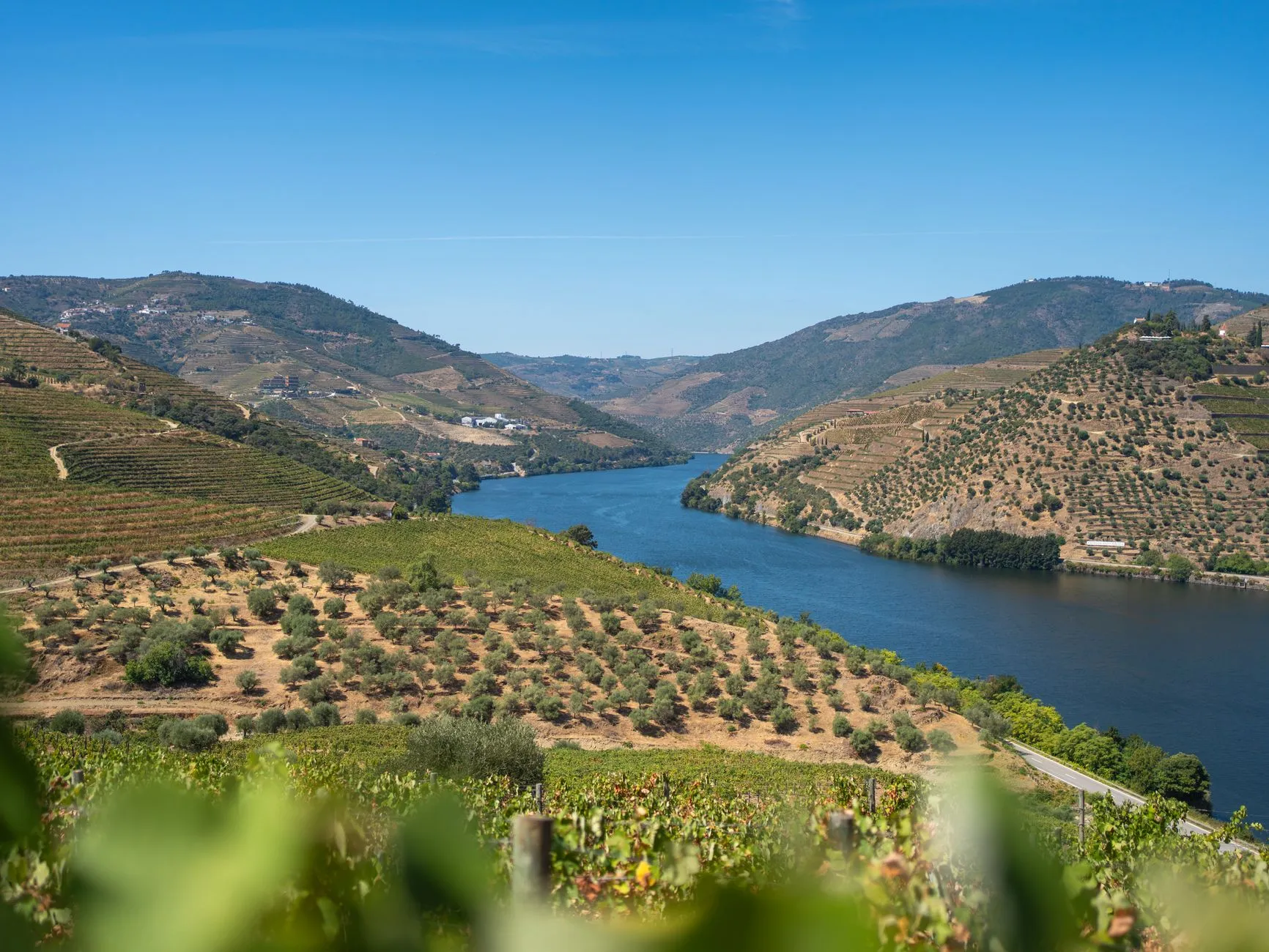
If Portugal has a single must-do that still over-delivers, it’s the Douro. This is the oldest demarcated wine region on earth (1756), a UNESCO landscape of vineyard terraces stacked up impossibly steep schist hillsides above a green river — and it’s where port wine is actually born before it’s shipped downriver to age in the lodges of Vila Nova de Gaia, across the water from Porto.
Here’s the thing nobody tells you: the Douro is gorgeous AND uncrowded compared with anywhere this beautiful in France or Italy, AND it’s cheap. Cellar-door tastings at the quintas run roughly €15–25 depending on the tier; a short scenic river cruise from Pinhão is €15–30 for an hour or two; a decent double room in Pinhão in season is €100–250. For a wine region this storied, those are kind numbers.
How to do it, in order of how much I’d recommend each:
- Drive it. This is the one. Rent a car in Porto and take the N222 from Peso da Régua to Pinhão — regularly voted one of the world’s great drives, and rightly. The road clings to the river through wave after wave of terraced vineyard. Base in Pinhão (tiny, walkable, the heart of it) and visit two or three quintas — many of the great port houses (Quinta do Bomfim, Quinta do Seixo, Quinta Nova) take walk-ins or easy bookings.
- The scenic train, then a car or boat. The Linha do Douro railway from Porto’s São Bento hugs the river from Régua onwards — the final stretch into Pinhão is one of Europe’s prettiest rail rides, and it’s a normal regional train, so it’s cheap. Take it for the scenery, then taste locally.
- A river cruise. The full-day Porto–Régua boats with lunch run about €76; the longer Pinhão day-trips with lunch around €105. Pleasant, but you’re a passenger on a schedule. The luxury multi-day Douro river cruises are lovely and pricey — a different holiday entirely.
Don’t try to “do the Douro” as a day trip from Porto. You’ll spend the day in a minibus and the magic in a 90-minute window. Sleep up there at least one night — a quinta with a terrace and a glass of 10-year tawny at sunset is the whole point.
A word on the wine: drink the table reds, not just the port. The Douro produces some of Portugal’s most serious dry red wine now (the same grapes that go into port — Touriga Nacional, Touriga Franca — vinified dry). And a tawny port, lightly chilled, with the valley in front of you, is one of travel’s great cheap luxuries.
The Green North: The Minho, Braga, Guimarães
North of Porto, Portugal turns lush, devout and deeply traditional — and it’s where I’d send anyone who wants the real country with the fewest other foreigners in it.
Guimarães is the birthplace of the nation (Portugal was effectively founded here in the 12th century; the city wall still reads “Aqui nasceu Portugal” — Portugal was born here). Its medieval centre is a UNESCO World Heritage gem, beautifully intact, and on a normal weekday you’ll share it mostly with locals. Braga, ten minutes away by train, is Portugal’s religious capital — baroque churches, a buzzing student energy, and the extraordinary Bom Jesus do Monte, a zigzag baroque stairway climbing a wooded hill (take the 19th-century water-powered funicular up, walk down). Braga’s Holy Week processions (Semana Santa) in spring are among Iberia’s most dramatic.
This is vinho verde country — “green wine,” meaning young, not the colour: light, faintly fizzy, low-alcohol, made to be drunk cold and cheap with grilled fish or river-fish. It’s the perfect summer afternoon wine and it costs almost nothing.
Push further into the Peneda-Gerês National Park — Portugal’s only national park, a wild upland of granite, waterfalls, wolves, wild ponies (the garranos) and stone villages that feel a century behind. It’s a hiking and wild-swimming destination, hopeless without a car, and all the better for it.
The north is also where you eat the heaviest, most old-fashioned Portuguese food — including francesinha in Porto (a meat sandwich drowned in a beer-and-tomato sauce under melted cheese) and, in Minho, slow-cooked pork and rich greens. Come hungry; come for winter, even. It’s not a summer-only region.
Central Portugal: Coimbra, the Hill Towns, Nazaré’s Monsters
The Centro is the bit most international visitors skip entirely, racing between Porto and Lisbon — which is exactly why I love it.
Coimbra was Portugal’s medieval capital and is home to one of the world’s oldest universities (founded 1290), crowned by the Biblioteca Joanina, a gilded baroque library so over-the-top it keeps a colony of bats to eat the book-damaging insects. The student traditions are still alive — black capes, and a melancholy, masculine style of fado distinct from Lisbon’s. Come in May for the Queima das Fitas (“burning of the ribbons”), the riotous week-long graduation festival, if you want to see the city at full tilt.
Inland are the hill towns and granite villages — Monsanto (built into and around colossal boulders), the walled Óbidos (storybook-pretty, but get there early or after the day-trip buses leave — it’s small and it fills up), and the convent-towns of Tomar (the Templar Convento de Cristo, a genuine wonder) and Batalha and Alcobaça (two of Europe’s great Gothic monasteries, often near-empty). And up in the Serra da Estrela, mainland Portugal’s highest mountains, you’ll find the country’s only ski slopes, glacial valleys, and the famous Serra cheese.
On the coast, the Silver Coast delivers the Atlantic at full volume. Nazaré is now globally famous as the home of the world’s biggest surfable waves — winter swells at Praia do Norte that can top 25–30 metres, drawing the planet’s best big-wave surfers. The big-wave season runs roughly October to March (the Nazaré Big Wave Challenge window for 2026/27 is set for 1 November 2026 to 31 March 2027), and standing on the Forte de São Miguel headland watching a winter set come in is one of Portugal’s great free spectacles. Down the coast, Peniche and Ericeira (a designated World Surfing Reserve) are the everyday surf capitals.
Skip-the-queue tip for Óbidos: everyone goes for the day. The trick is to sleep there — once the buses leave around 5pm, the walled town empties and is yours. And try the ginjinha, the sour-cherry liqueur, served in a little chocolate cup.
The Alentejo: Portugal’s Empty Quarter (Go Now)
If the Douro is the best-known underrated region, the Alentejo is the genuinely underrated one — and it’s my personal favourite corner of the country. South and east of Lisbon, it’s a third of Portugal’s land and a fraction of its crowds: rolling golden plains, cork oaks (this is where most of the world’s cork comes from — you’ll see the trees with their bark stripped to a rusty orange trunk), whitewashed villages, megalithic stone circles older than Stonehenge, and serious, ageworthy wine.
Évora is the base — a beautifully preserved walled UNESCO city with a Roman temple in the middle of it, a cathedral, and the genuinely macabre Capela dos Ossos (Chapel of Bones, walls lined with the bones of 5,000 monks, inscribed “we bones that are here, await yours”). It’s compact, warm-stoned, and even in high season far calmer than Sintra or central Lisbon.
Out from Évora: the marble town of Estremoz, the hilltop villages of Monsaranto and Marvão (the latter a tiny walled eyrie near the Spanish border, with one of Iberia’s great views), and a wine scene that’s quietly excellent — big, sun-soaked reds and increasingly good whites, with quintas that welcome visitors at a fraction of Douro or Tuscan prices. The Alentejo also owns Portugal’s quietest, wildest coast — the Costa Vicentina / Rota Vicentina, a protected stretch of cliffs and surf beaches running down to the Algarve, far emptier than the south coast proper.
The Alentejo is hot and slow in summer — that’s its character, not a flaw. It’s also where Portuguese food gets earthiest: açorda (a bread-and-coriander-and-garlic soup), pork-and-clams (porco à alentejana), black Iberian pig, sheep’s cheeses, and bread you’ll think about afterwards. Go in spring when the plains are green and flowering, or autumn for the harvest.
Lisbon, Porto and the Algarve: The Famous Trio (Briefly)
These three already have their own full aifly guides, so I’ll keep them tight — and honest.
Lisbon (full city guide) is a magnificent city on seven hills, with the light, the trams, the fado, the miradouros, the pastéis de Belém. It’s also, as covered above, the most over-touristed and short-let-saturated place in the country. Go — but go for two or three nights, stay a little outside the absolute centre (Campo de Ourique, Graça, or across the river in Almada for the view back), visit Alfama early, and don’t be surprised when the “authentic” old quarter feels staged at midday. Use it as the gateway, not the whole holiday.
Porto (full city guide) is, for my money, the better city break — grittier, prouder, more workaday, with the Douro at its feet and the port lodges across the river. It’s getting busier (5% guest growth in 2025, faster revenue) but still feels like a living city rather than a theme park. It’s also the natural launchpad for the Douro and the north, which is why so much of this guide orbits it.
The Algarve (full region guide) is genuinely beautiful — the cliffs and sea caves around Lagos and the Ponta da Piedade, the golden coves, the gentle climate. But be honest with yourself about which Algarve you’re booking. The central strip (Albufeira, Vilamoura, Quarteira) in August is a wall-to-wall package-resort crush — full-English-breakfast bars, golf, and beaches you’ll share with thousands. The good Algarve is the western end (Sagres, the wild Costa Vicentina), the quieter east (Tavira, the Ria Formosa lagoon, the sandbar islands), and any of it in May or October. Choose your town carefully and it’s a delight; book the wrong town in August and you’ll wonder why you didn’t just go to the Douro.
And the islands, which are separate trips entirely: Madeira (island guide) — subtropical, mountainous, levada-walking, year-round — and the Azores (archipelago guide) — volcanic, green, dramatic, the wildest thing in the Atlantic. Each deserves a week of its own.
Getting There & Around
Getting there. Most visitors fly into Lisbon (LIS), Porto (OPO) or Faro (FAO) for the Algarve; Madeira and the Azores have their own airports (FNC, PDL). For the trip this guide argues for, fly into Porto if you can — it puts you within an hour of the Douro and the north, and lets you finish in Lisbon rather than start in the crush.
Entry and the new border tech. Portugal is in the EU and the Schengen Area, so EU/EEA/Swiss citizens cross freely with an ID card or passport. For everyone else — UK, US, Canadian, Australian and other non-EU visitors — the big change is the Entry/Exit System (EES), which completed its phased rollout and became fully operational across Schengen on 10 April 2026. In practice that means the first time you enter, you’ll have your fingerprints and photo registered at the border; it replaces passport-stamping and can mean longer queues at busy moments while the kit beds in. Separately, ETIAS — a cheap online pre-travel authorisation (not a visa) for visa-exempt non-EU travellers — is expected to launch on a date that has not been announced and become mandatory on a date the EU has not announced. As of mid-2026 you can’t yet apply for ETIAS and it isn’t required; check the official EU site close to your trip. The standard 90-days-in-any-180 Schengen limit applies to non-EU visitors.
Trains: scenic, cheap, and slow — know what you’re getting. Portugal’s railway is run by CP (Comboios de Portugal), and the honest summary is: it’s pleasant and good value, but it is not fast. The flagship Alfa Pendular tilting trains and the slightly slower Intercidades services connect the main cities — Lisbon to Porto takes about 2h48 on the fastest Alfa Pendular, which is fine but hardly high-speed. (Portugal is finally building a true Lisbon–Porto high-speed line — construction on sections is underway through the late 2020s, with CP having ordered up to 20 new 300 km/h trains — but it won’t help your 2026 trip; the first stretches aren’t due until 2030.) The genuinely magical rail journey is the Linha do Douro along the river. Book Alfa Pendular and Intercidades a few days ahead online for the cheapest fares and a reserved seat; regional and urban trains you just turn up for.
Driving: often the smarter choice. I’ll say plainly what the rail romantics won’t — for the Douro, the Alentejo, the north and the hill towns, rent a car. Distances are short, roads are good, and the freedom to stop at a quinta or a viewpoint is the entire experience. Two cautions: many motorways use electronic-only tolls (no booths), so sort out a toll device or the Via Verde Visitors / EASYToll system with your rental company or you’ll get charged-plus-admin later; and don’t drive into central Lisbon or Porto — park outside and use transit. For city-to-city where you don’t need a car, the Rede Expressos long-distance buses are cheap, comfortable and often faster than the train.
Rule of thumb: trains and buses between the big cities; a rental car for the wine country, the plains and the north. Trying to do the Douro or the Alentejo by public transport is possible but masochistic.
Food & Wine: The Honest Pleasure of It
Portuguese food is unfussy, generous and built on superb raw ingredients — the best fish in Europe, world-class pork, olive oil, bread, and a quiet revolution in wine. Eat like a local and it’s also dirt cheap.
The seafood and fish are the headline. Grilled sardines (sardinhas assadas) in summer — especially around the June saints’ festivals — are a national ritual. Bacalhau (salt cod) is the obsession: famously “365 ways,” one for every day, from the simple bacalhau à brás (shredded with egg and potato) to baked-with-everything versions. On the coast, order whatever’s grilled whole that day — sea bream, sea bass, robalo — and percebes (gooseneck barnacles, prised off the cliffs, a wild briny delicacy) if you see them. Cataplana seafood stews and arroz de marisco (soupy seafood rice) are the things to share.
The meat and the inland dishes: cozido and slow pork in the north, the Alentejo’s pork-and-clams and black-pig, leitão (suckling pig) around Bairrada, and the gloriously excessive francesinha in Porto.
The pastry, obviously: the pastel de nata, the warm custard tart with the scorched, flaky top, is everywhere and properly cheap (around €1.20–1.50 each). The originals at Pastéis de Belém in Lisbon are worth the queue once; honestly, a fresh one from a good neighbourhood pastelaria with a bica (espresso) is nearly as good and has no line.
The wine is where Portugal punishes the rest of Europe on value:
- Port — fortified, from the Douro. Drink a chilled tawny; try a vintage if you can.
- Vinho verde — young, light, faintly sparkling, low-alcohol, from the Minho. The perfect cheap summer white.
- Douro reds — serious, structured, ageworthy dry reds from the port grapes. Increasingly world-class.
- Alentejo reds and whites — big, sun-warmed, friendly, and an outrageous bargain.
- Madeira — the great fortified wine of the island, from bone-dry Sercial to lusciously sweet Malmsey.
The single most reliable budget move in Portugal: order the vinho da casa (house wine) anywhere outside the most touristed streets. It’s frequently local, frequently good, and frequently under €10 a bottle — sometimes under €5 a half-litre. Pair it with the daily prato do dia (dish of the day) and you’ll eat better for €12 than you would for €40 in the tourist traps.
Money & Costs: Western Europe’s Best Value (Still)
For a wealthy Western European country, Portugal remains startlingly affordable — that’s a core reason to come, and despite rising prices and a booming property market, it’s still true in 2026, especially once you leave the most touristed streets.
Rough day-to-day costs: a bica (espresso) at the counter is often €0.80–1; a pastel de nata €1.20–1.50; a hearty prato do dia lunch with the dish, bread and a drink €8–15; a good dinner with wine in a neighbourhood restaurant €20–30 a head; a glass of regional wine €2–4; a glass of port at a Gaia lodge €3–6. A Douro tasting is €15–25; a Pinhão room €100–250 in season. Public transport is cheap — a Lisbon or Porto metro/tram ride is a couple of euros, and the long-distance Rede Expressos buses are excellent value.
A few honest cost notes for 2026:
- Lisbon and the Algarve coast are now pricey by Portuguese standards in high season — hotel rates in central Lisbon in summer rival mainstream Western European cities. The value is in the north, the centre and the Alentejo.
- A tourist tax applies in many municipalities (a few euros per person per night in Lisbon, Porto and elsewhere) — small, but it’s added to your bill.
- Watch the couvert: the bread, olives and cheese a waiter leaves on the table aren’t free; if you don’t want them, send them back, or you’ll be charged a few euros.
- Tipping is modest and not obligatory — round up or leave 5–10% for good service; nobody expects the American standard.
When to Go: Why I’d Avoid August
Portugal is a near-year-round destination, but the difference between the right month and the wrong one is enormous.
- May–June (best overall): warm but not scorching, long days, green landscapes, the saints’ festivals (Lisbon’s Santo António on 13 June; Porto’s wild São João on the night of 23–24 June — bonfires, street parties, and the bizarre tradition of bopping strangers with squeaky plastic hammers), Coimbra’s Queima das Fitas. My top pick.
- September–October (the other sweet spot): the sea is at its warmest, the Douro harvest is on, the crowds thin, and prices ease. Superb for wine country and the coast.
- July–August (peak — manage it): hot, busy, expensive. The Alentejo bakes; the Algarve is a crush; Lisbon and Sintra are at their most strained. If you must come, go inland and north, book everything early, and start your sightseeing at dawn.
- November–March (the underrated season): cool and often wet in the north, mild in the Algarve, and the time for Nazaré’s giant waves (Oct–Mar) and Braga’s Holy Week processions (spring). Cities are cheap and uncrowded; the Douro is bare-vined but atmospheric. Madeira and the Azores stay mild and green.
The contrarian’s calendar: the Douro is loveliest in late September–October (harvest, golden light); the Alentejo in April–May (green, flowering); the cities in shoulder season to dodge both heat and crowds; and the Silver Coast in winter if you’ve come for the surf spectacle rather than a swim.
The Overtourism Reality — and What to Actually Skip
Portugal’s success has created genuine friction, and a good traveller in 2026 should understand it and travel around it rather than add to it.
The pressure is hyper-concentrated, not nationwide. It’s central Lisbon (the short-let saturation and housing protests covered up top), Sintra’s main palaces on summer weekends, the Algarve’s central resort strip in August, and Porto’s riverfront at peak. Step a few neighbourhoods, a few towns, or a few weeks off-peak and the crowding largely evaporates — which is the opportunity, not just the warning.
What I’d genuinely skip or downgrade:
- The Lisbon Tram 28 as a “must”: the famous yellow tram is now so jammed with tourists and pickpockets that the ride is a scrum. Walk the route, or take it at 7am, or just don’t bother and ride a different line.
- Sintra as a rushed day trip in summer: Pena Palace on an August Saturday is a queue-managed crush. If you go, go early, on a weekday, pre-book, and pick two sights, not five — or skip the headline palaces and do the quieter Quinta da Regaleira and Monserrate.
- The central Algarve resort strip (Albufeira/Vilamoura) in peak season, unless that’s specifically the holiday you want.
- Pastéis de Belém’s queue if you’re short on time: a great neighbourhood pastelaria does a near-identical tart with no line.
- Treating Óbidos, Nazaré or Cascais purely as a day-trip stop: they’re far better with an overnight, after the buses leave.
And what to do instead, which is the whole point: the Douro, the Minho, Coimbra and the hill towns, the Alentejo, the eastern and western Algarve, and the shoulder seasons. Same country, a fraction of the strain, and — crucially — your money lands in places that want it.
The kindest and smartest thing you can do as a visitor in 2026: spend at least as many nights outside Lisbon and the central Algarve as inside them. You’ll have a better trip, and you’ll be part of the solution rather than the problem.
A Two-Week Route That Actually Makes Sense
If you have ten days to two weeks and want the version of Portugal this guide believes in, here’s the shape I’d give it — fly into Porto, out of Lisbon:
Porto (2–3 nights) for the city, the port lodges and the riverfront → the Douro (2 nights), sleeping in or near Pinhão, driving the N222 and tasting at a couple of quintas → optionally a loop into the green north (Guimarães and Braga, 1–2 nights) → south through central Portugal (Coimbra and a hill town or two — Tomar, Óbidos — 1–2 nights, plus a stop on the Silver Coast) → the Alentejo (Évora and the plains, 2 nights) → finish with Lisbon (2–3 nights) as the bookend, plus a half-day in Sintra done early and smart.
That itinerary spends its depth where Portugal is best and cheapest, uses a rental car for the bits that need one, and treats the two crowded headliners as the start and finish rather than the substance. It’s the trip I’d take, and the one I’d send a friend on.
Practical Bits Worth Knowing
- Power & plugs: EU two-pin (Type F), 230V. Bring an adapter from the UK/US.
- Language: Portuguese. English is widely spoken in cities, the Algarve and tourist trade; a few words of Portuguese (obrigado/obrigada, bom dia, uma bica por favor) are warmly received. Note Portuguese is not Spanish, and the assumption that it is lands badly.
- Safety: Portugal is one of Europe’s safest countries; violent crime is rare. The real risk is pickpocketing in tourist crush-points — Tram 28, Lisbon’s miradouros, Porto’s São Bento and riverfront — so keep valuables zipped.
- Water: tap water is safe to drink nationwide.
- Connectivity: good 4G/5G; EU roaming works for EU SIMs, and eSIMs are easy for everyone else.
- Opening hours: lunch is roughly 12:30–3, dinner from 7:30 (locals eat at 8–9); many shops and some restaurants still close on Sunday and Monday outside tourist zones.
- Sundays & holidays: plan around them in smaller towns — the village that’s sleepy on a Sunday is the same village that’s magic on a Tuesday.
- The toll catch (again, because it bites people): Portuguese motorway tolls are often electronic-only with no booths. Sort a toll solution with your car-rental company on day one.
Frequently Asked Questions
Cheapest Flights to Portugal
We have tracked 1,461 fares to Portugal from 90 cities. As of June 2026, here is what a good price looked like from each — the lowest fare we recorded, and a “great-deal” benchmark to judge a quote against. These are tracked observations, not live prices: by the time you read this they will have moved, so treat them as a yardstick, not a quote.
| From | Lowest fare we tracked | Great-deal benchmark |
|---|---|---|
| Charleroi (CRL) | €31 | €45 |
| Bergamo (BGY) | €42 | €60 |
| Lyon (LYS) | €45 | €64 |
| Weeze (NRN) | €48 | €68 |
| Eindhoven (EIN) | €51 | €73 |
| Hanover (HAJ) | €62 | €88 |
| Frankfurt Hahn (HHN) | €65 | €93 |
| Katowice (KTW) | €70 | €100 |
| Zurich (ZRH) | €85 | €121 |
| Bologna (BLQ) | €85 | €121 |
| Salzburg (SZG) | €106 | €152 |
| Riga (RIX) | €108 | €154 |
| Helsinki (HEL) | €111 | €159 |
| Rome (FCO) | €113 | €161 |
Recent deals we have posted to Portugal:
- Marseille to Faro, Portugal from €39
- London to Faro, Portugal from £31
- Nantes to Faro, Portugal from €68
- Faro to Porto, Portugal from €34
- Madrid to Faro, Portugal from €27
- Birmingham to Faro, Portugal from £51
- Toulouse to Faro, Portugal from €33
- Barcelona to Faro, Portugal from €40
- Cork to Faro, Portugal from €43
- Nantes to Faro, Portugal from €56
These are fares aifly tracked to this destination, not live quotes — they have changed since and several of the deals above may have expired. Browse current flight deals →