Tanzania — Complete Travel Guide 2026
Tanzania is the country that holds the two biggest things in African travel at once — the greatest wildlife spectacle on Earth in the Serengeti, and the highest point on the continent in Kilimanjaro — and it does not hand either to you cheaply. This is a place you plan around a single decision (the migration’s location this month, the crater, the mountain, the beach) and then build everything else outward; get that decision right and it is the trip of a lifetime, get it wrong and you’ll spend a fortune watching empty grass.
Quick Reference
East Africa, on the Indian Ocean; bordered by Kenya, Uganda, Rwanda, Burundi, DR Congo, Zambia, Malawi & Mozambique
JRO (Kilimanjaro — the northern-safari & Kilimanjaro gateway), DAR (Dar es Salaam — southern circuit & coast), ARK (Arusha — small bush hub)
Tanzanian shilling (TZS); USD used for park fees, the visa and most safari pricing
Swahili (national) & English (widely used in tourism)
e-visa (~US$50; US citizens US$100 multi-entry); yellow-fever certificate if arriving from a risk country; malaria zone
June–October dry season (peak game-viewing + the Mara crossings); late Jan–Feb for the Serengeti calving
The Serengeti & the Great Migration, the Ngorongoro Crater, Mount Kilimanjaro, and the Zanzibar coast
Arusha/JRO for the northern circuit; a fly-in camp inside the parks; Dar for the wild south
Editor’s Note — read this first
Most people arrive thinking “Tanzania safari” is one thing. It is at least four, and they don’t overlap as neatly as the brochures imply. There’s the northern circuit (Serengeti, Ngorongoro, Tarangire) — the famous, busy, infrastructure-rich one you fly into via Kilimanjaro. There’s the southern and western circuit (Nyerere, Ruaha, the chimp forests) — wilder, emptier, structured around fly-in camps and reached via Dar. There’s Kilimanjaro itself, which is a mountaineering expedition, not a safari, and shares only an airport with the rest. And there’s Zanzibar and the coast, the beach half of the classic “safari-then-sand” combo.
The single most important thing to understand: the Great Migration is not a place, it’s a moving target. “I want to see the migration” means nothing without a month attached. The herds spend the year wandering a vast circuit, and a camp that’s in the thick of it in August is staring at empty plains in February. Book the wrong corner of the Serengeti for your dates and you will have paid migration prices for a normal — still good, but normal — safari.
The migration-timing trap: Pick your dates around where the herds will be, or pick your location around your fixed dates — never assume “Serengeti in July = crossings.” The Mara River crossings happen in the far northern Serengeti (Kogatende), roughly July–October. A central or southern Serengeti lodge in those months can be hours of driving from the action.
Second decision: fly-in or drive. The northern circuit works perfectly well as a road safari — you’ll spend real hours in the vehicle between parks, but you see the country and it’s cheaper. The southern and western parks are effectively fly-in only; the roads are long, rough and seasonal, and the whole point of the south is the remoteness that drive access would ruin. Most first-timers do a drive-based northern circuit; repeat visitors and honeymooners gravitate to fly-in camps.
Third: be honest with yourself about the budget. Safari is structurally expensive — park fees alone run to dozens of US dollars per person per day, before a guide, vehicle, fuel or a bed. There is no “cheap” Serengeti the way there’s a cheap European city break. Plan for it or pick a shorter, smarter trip rather than a longer corner-cutting one.
Should You Go? Who it’s for — and who it isn’t
Tanzania is for the traveller who wants the real thing and will pay for it: the migration on the Serengeti plains, a descent into the Ngorongoro Crater, elephants under baobabs in Tarangire, or the summit of Kilimanjaro at dawn. It rewards people who do a little homework — on timing, on operators — and it disappoints people who expect a cheap, spontaneous trip.
It is not a budget backpacking destination in the way Southeast Asia is. You can do a budget camping safari, but “budget” here still means hundreds of euros a day once park fees are in. It’s also not ideal if you want to wing it on arrival — the good camps and the best migration positions sell out months ahead, the parks are cashless, and a safari without a competent guide and vehicle simply doesn’t happen.
The cost reality: A genuine Tanzania safari starts at roughly €230–370 per person per day for a shared budget camping trip and climbs past €800–1,400+ per day for fly-in luxury during peak migration. Those daily rates typically bundle park fees, a vehicle, a guide, meals and accommodation — but a 7-day safari realistically runs from about €1,600 (shared budget) to €4,000–6,000 (private mid-range lodge) to €10,000 and well beyond for fly-in luxury at the height of the season. If that’s a shock, do fewer days well rather than more days cheaply.
Who it’s perfect for: first-time and returning safari-goers, photographers, honeymooners (the safari-then-Zanzibar combo is one of the world’s great honeymoons), and reasonably fit people chasing Kilimanjaro. Families do it too, though very young children and some camps don’t mix.
Getting There — JRO, DAR, ARK & entry
Tanzania has two airports that matter and one that’s a useful footnote.
Kilimanjaro International (JRO) sits between Moshi and Arusha and is the gateway to the entire northern circuit and to climbing Kilimanjaro. If your trip is Serengeti / Ngorongoro / Tarangire / Lake Manyara, or the mountain, you fly into JRO. From Europe there are good one-stop connections via the Gulf and Europe’s hubs; don’t expect us to quote fares, but JRO is well served.
Dar es Salaam (DAR) is the gateway to the southern circuit (Nyerere, Ruaha) and the jumping-off point for Zanzibar and the coast. If your trip is the wild south or a beach-heavy itinerary, fly into DAR.
Arusha (ARK) is a small airport in Arusha town itself, used mostly for domestic and bush flights — handy if a transfer or light-aircraft hop starts there, but not a long-haul arrival point.
Tip: Match your arrival airport to your first destination, not to the famous name. People book JRO “because Kilimanjaro” and then discover their Ruaha camp is a country away. North = JRO, South/coast = DAR.
Entry: Tanzania requires a visa. The cleanest route is the e-visa, applied for in advance at the official immigration portal (visa.immigration.go.tz). The standard tourist (ordinary) visa is US$50 for a single entry valid up to 90 days; US citizens must take the multiple-entry visa at US$100, valid 12 months. Visa-on-arrival in US dollars cash is still available at JRO, DAR and Zanzibar as a backup — but it means queues and exact-cash hassle, so apply online before you fly and arrive smug. A yellow-fever vaccination certificate is required if you’re arriving from (or have recently transited) a yellow-fever risk country, and it’s sensibly recommended regardless; Tanzania, including Zanzibar, is a malaria zone — take prophylaxis. (More in Practical Information.)
The Northern Circuit — Serengeti, Ngorongoro, Tarangire, Manyara
This is the postcard. Four parks, reachable by road from Arusha (or by bush flight), each with a distinct character — and you should resist the temptation to cram all four into too few days.
The Serengeti is the headline: 15,000 km² of plains, kopjes and woodland, home to the resident lions, leopards and cheetahs and to the migration when it’s in residence. The mistake is treating “the Serengeti” as one place — it’s enormous, and where you stay matters enormously (see the migration section). Even outside the migration, the central Seronera area has superb year-round resident game.
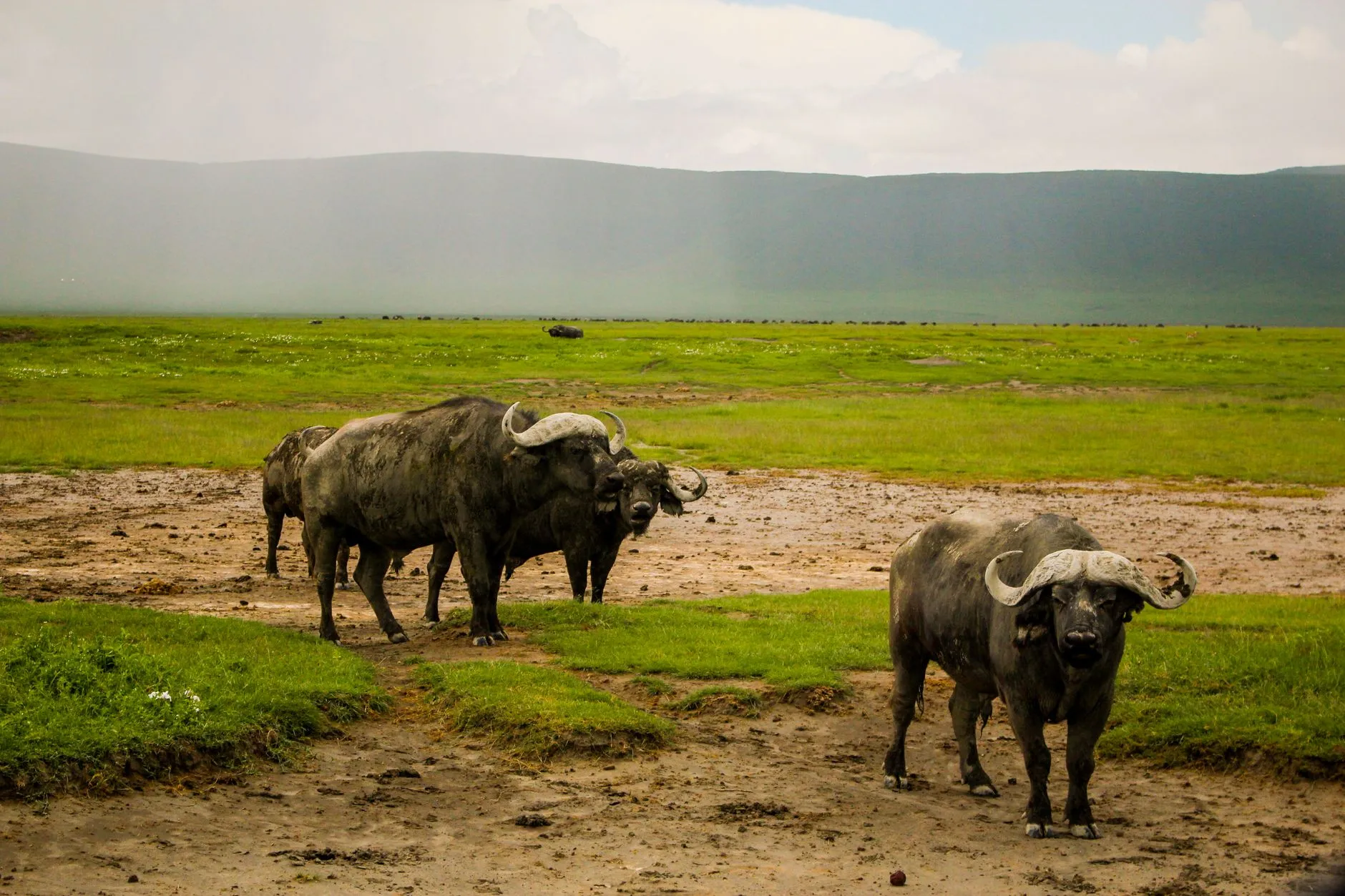
The Ngorongoro Crater is the one nobody regrets. A collapsed volcanic caldera, roughly 600 m deep and 20 km across, with a self-contained ecosystem on the floor — one of the densest concentrations of large mammals in Africa, including a strong chance of the endangered black rhino, which is hard to find elsewhere in the country. It’s busy (everyone wants it, and rightly), and the descent is a managed, fee-heavy affair, but it delivers.
Caution — the Ngorongoro maths: Beyond the conservation-area entry (about US$70.80 per adult per day), descending to the crater floor adds a crater service fee of US$295 per vehicle. Those fees are real, USD-denominated and non-negotiable. Budget for them; don’t let a quote that looks suspiciously cheap surprise you at the gate.
Tarangire is the elephant park — it holds over 5,000 elephants, among the highest densities in northern Tanzania, and its giant baobabs and the Tarangire River make it one of the most photogenic and least crowded of the four. It’s at its best in the dry season (roughly June–October) when game concentrates on the river. Skip it in the wet months and it can feel quiet.
Lake Manyara is the small one — a strip of park below the Rift Valley escarpment, famous for its (sometimes) tree-climbing lions, large flocks of flamingos when the lake is right, and dense birdlife. It’s often done as a half-day on the way in or out. Lovely, but don’t blow precious days on it at the expense of the Serengeti.
A realistic, sane northern circuit: Tarangire → Ngorongoro → Serengeti over 5–7 days, by road or with a fly-in leg into the Serengeti to save the long final drive.
Climbing Kilimanjaro — routes, days, altitude, success
Kilimanjaro is 5,895 m — the highest point in Africa and the tallest free-standing mountain on Earth — and it is a trek, not a technical climb: no ropes, no ice axes, just a long, slow walk into thin air. That’s exactly why it’s so often underestimated. The summit is not about fitness; it’s about acclimatisation, and the single biggest lever on whether you make it is how many days you take.
The main routes:
- Marangu (“the Coca-Cola route”) — the only one with hut accommodation, typically 5–6 days. It’s the cheapest and sounds the easiest, but it’s the least successful: success rates sit around 50–65% because it’s short and ascends/descends the same way (poor acclimatisation). The 6-day version beats the 5-day. Avoid the 5-day unless you’re genuinely acclimatised.
- Machame (“the Whiskey route”) — the popular tented route, usually 6–7 days, with a “climb high, sleep low” profile that aids acclimatisation. On a 7-day itinerary, success rates run roughly 75–90%.
- Lemosho — the scenic, longer western approach, 7–8 days, generally the best balance of beauty and odds: the 8-day option is around 90%, the 7-day around 85%.
- Northern Circuit — the longest at ~9 days, quietest, and the most successful: over 95% summit rate, because it gives your body the most time to make red blood cells.
The altitude truth: Pay for the extra day. Each day above the five-day minimum adds roughly 8–10 percentage points to your summit odds. The cheap 5–6 day climbs have the highest failure and the highest risk of altitude sickness. A 7+ day Lemosho or Machame is the sweet spot for most people — and “I’m fit, I’ll be fine” is exactly the thinking that turns people back at 4,800 m.
When to climb: the dry windows — roughly January–mid-March and June–October — give the best chance of clear summit weather. Avoid the long rains (April–May).
Choose your operator by porter ethics, not just price. Around 70% of Kilimanjaro operators don’t meet fair treatment standards — underpaying, overloading or under-equipping the porters who carry your trip. Look for a company partnered with KPAP / the Kilimanjaro Responsible Trekking Organization (KRTO): they cap porter loads at 20 kg, guarantee fair wages, food and gear, and submit to surprise checks. A KPAP-affiliated climb costs a little more and is the right thing to do. A suspiciously cheap climb is cheap because someone on the mountain is being squeezed.
The Southern & Western Circuits — Nyerere, Ruaha, the chimps
If the northern circuit is Tanzania’s greatest hits, the south and west are its deep cuts — wilder, emptier, and structured almost entirely around fly-in camps. These parks see a fraction of the Serengeti’s visitor numbers.
Nyerere National Park (the former Selous Game Reserve, now ~30,900 km² of protected park) is built around the Rufiji River. Its signature is the boat safari — drifting past hippo pods and basking crocodiles at eye level, something the northern parks can’t offer at this scale — plus walking safaris and one of Africa’s largest populations of endangered African wild dogs.
Ruaha National Park (~20,200 km²) is the wilder, drier, more remote one — superb for lion density (it’s often cited as holding a sizeable share of the world’s remaining lions), big buffalo herds, walking safaris, and rare antelope like sable and roan. You’ll share it with almost nobody. It’s the connoisseur’s Tanzanian park.
Out west, in the forests along Lake Tanganyika, are the chimpanzees. Mahale Mountains — reachable only by boat, no roads — is home to roughly 900 wild chimps and is the more spectacular, more remote experience. Gombe Stream, near Kigoma, is smaller and more accessible (and famous as Jane Goodall’s research site), so it sees more visitors. Both are genuine expeditions, best May–October, and usually combined with Ruaha or Katavi rather than done alone.
Tip: Don’t try to bolt the south onto the north in one short trip — they’re at opposite ends of a large country and the connections eat days and money. The south/west is its own journey: fly into Dar, then bush-hop. Do it on a second Tanzania trip, or commit a full itinerary to it.
The Great Migration — month by month
Roughly two million wildebeest, plus zebra and gazelle, move in a continuous loop chasing the rains and fresh grass. Here’s where they roughly are, and what you go for:
- January–March — the calving (Southern Serengeti / Ndutu). The herds gather on the short-grass southern plains and, in a frenzied few weeks around late January to mid-March, over 80% of the females calve — thousands of births a day, and the predators that follow them. This is the other great spectacle, and it’s far less crowded than the crossings. Base in the south (Ndutu).
- April–June — moving north and west. The herds drift up through the central and western Serengeti, slowly, calves in tow. By June the vanguard reaches the Grumeti River in the Western Corridor, where the first dramatic (crocodile-laden) crossings can happen.
- July–October — the Mara River crossings (Northern Serengeti / Kogatende). The iconic ones. The herds pile up at the Mara River in the far north and plunge across in chaotic, croc-infested crossings — August is often the peak, with July–October the broad window. The crossings are unpredictable (they can happen any day, or not), and you must be in the northern Serengeti to see them. This is the most expensive, most sought-after window.
- November–December — the return south (short rains). As the short rains green the southern plains, the herds turn back south through the eastern/Lobo Serengeti, returning to the calving grounds by year’s end.
The crossings are not a guarantee, even in August. Wildebeest cross when they decide to, sometimes back and forth across the same river over days. Give yourself 3–4 nights in the right area to maximise your odds, and manage expectations — you’ve bought a front-row seat at the river, not a scheduled performance.
Zanzibar & the Coast — brief, because it has its own page
The classic Tanzanian trip ends on the sand: a few days of safari, then a short flight to the Indian Ocean to decompress. Zanzibar — Stone Town’s spice-trade alleys, the powder beaches of the north and east, dhows and snorkelling — is the obvious choice, and it’s the perfect counterweight to dusty days in the bush. The mainland coast around Dar (and quieter islands like Mafia, for whale sharks and diving) is the lower-key alternative.
We’ve given Zanzibar the depth it deserves on its own page — see our full Zanzibar guide for where to stay, Stone Town, the beaches, the spice farms and the practicalities. Here, just know that the safari-then-beach combo is the move: book the safari first (it drives your dates), then tack on 3–5 beach days at the end. The short hop from Arusha or the Serengeti airstrips to Zanzibar is easy and frequent.
When to Visit — month by month
Tanzania has a long dry season and two rainy ones, and your “best time” depends entirely on what you’re there for.
- June–October — the long dry season. Peak safari time: warm, dry, predictable, with game concentrated at water and the Mara crossings unfolding in the north (Jul–Oct). Also a prime Kilimanjaro window. It’s the busiest and priciest stretch — book early.
- January–February — short dry spell + calving. A lovely window: the Serengeti calving is on in the south, the weather is largely good, and crowds are lower than the July–August peak. A strong second choice (and a good Kilimanjaro window too).
- March (late) to May — the long rains. Heavy, sustained rain; some southern camps close and roads flood. The trade-off is the green season: lush landscapes, newborn animals, fewer people and noticeably lower lodge rates and promotions. April–May is the value window if you don’t mind getting wet and some access limits.
- November–December — the short rains. Brief afternoon showers rather than all-day rain; the herds are heading south, the bush is green, and it’s a good-value, quieter period between the peaks.
Tip: If price matters more than the crossings, the green season (April–May) and the short rains (Nov) offer the same animals at a fraction of peak rates. If the migration crossings are the whole reason you’re going, you’re locked into July–October and you should book a year out.
What to Eat
Tanzanian food is hearty mainland staples plus the fragrant, spice-laden cooking of the Swahili coast — and on safari you’ll mostly eat at your camp, so seek out the real thing in towns and on Zanzibar.
Ugali is the national staple: a stiff maize-flour “dough” eaten by hand, scooped to mop up stews, greens, meat or fish. It’s plain on purpose — the carrier, not the star (and it earned UNESCO intangible-heritage recognition). The thing to eat it with is nyama choma — literally “grilled meat,” usually goat or beef roasted over charcoal and sliced from the bone to share, with a sharp tomato-onion kachumbari salad. Mishkaki are the street version: marinated beef or goat skewers grilled over coals.
On the Swahili coast the food shifts to coconut and spice: pilau (rice slow-cooked with cardamom, cinnamon, cloves and cumin), wali wa nazi (coconut rice) with tangy curries, samaki wa kupaka (grilled fish in coconut sauce), and urojo — “Zanzibar mix,” a chaotic, brilliant bowl of fritters, potato, egg, mango and tamarind that’s a whole meal disguised as a snack. For the full experience, the Forodhani Gardens night market in Stone Town is the place — mishkaki, urojo, sugarcane juice and the famous folded, fried “Zanzibar pizza.”
Tip: Stick to bottled or filtered water (tap water isn’t safe to drink), and on the coast eat where it’s busy and freshly cooked — the seafood is superb but wants turnover.
Getting Around — bush flights, road transfers, the vehicle
Two ways to move between Tanzania’s parks, and most trips use both.
Bush flights are the time-saver and, in the south/west, the only realistic option. Operators like Coastal Aviation, Auric Air and Safari Air Link fly small Cessna Caravans (12–14 seats) onto grass and dirt airstrips right inside the parks. They turn a brutal full-day drive into a scenic 60–90 minutes — but they cost extra (figure several hundred euros per leg) and luggage is strictly limited, often ~15 kg in a soft bag. Pack soft-sided and light, or you’ll be repacking at the airstrip.
Road transfers are how the classic northern circuit usually runs — a private 4×4 with a pop-top roof and your guide, driving the gravel and tarmac between Arusha, Tarangire, Ngorongoro and the Serengeti. You’ll spend real hours in the vehicle (some legs are long and rough), but you see the country, it’s cheaper, and a good guide turns the drive into part of the safari.
Tip: A great guide matters more than a fancy lodge. They find the leopard, read the herd, position the vehicle and keep a respectful distance from the animals. When you compare quotes, ask about the guide’s experience and whether the vehicle is private — a shared minibus on a fixed loop is a very different day from a private 4×4 with a naturalist.
Where to Stay — lodges & camps by budget
Accommodation is the biggest lever on your safari cost, and it spans an enormous range. Rather than name specific camps (they change, and a bad recommendation is worse than none), here’s how the tiers actually feel:
- Budget — public campsites & basic camps. Shared facilities, simple meals, often a participation/camping format. It puts you in the parks for the least money, and the wildlife is identical from a tent or a suite. The trade-off is comfort and, sometimes, location.
- Mid-range — comfortable lodges & tented camps. The sweet spot for most: proper beds, en-suite bathrooms, good food, a private vehicle and guide. Tented camps here often sit in or beside the parks and feel genuinely wild without roughing it.
- Luxury & fly-in — exclusive lodges and mobile camps. Premium locations (including private conservancies bordering the parks), fly-in access, superb guiding, sometimes mobile camps that follow the migration. This is where the eye-watering per-night rates live — and where conservancy fees flow back to communities.
Why conservancies are worth the premium: Private conservancies adjacent to the parks are often community-owned, and a slice of what you pay funds local schools, clinics and water. They also run fewer vehicles, so you get the animals with less of the traffic. If you can afford a conservancy camp for part of the trip, it’s both a better experience and a better use of your money.
Costs & Budget — honest safari tiers
There’s no getting around it: safari is expensive, because park fees, a vehicle and a guide are unavoidable fixed costs before anyone sleeps anywhere. Roughly, per person per day (all-inclusive of fees, vehicle, guide, meals, bed):
- Budget camping safari: ~€230–370/day. Shared, simple, but it gets you the Serengeti.
- Mid-range lodge/tented safari: ~€420–750/day. Private vehicle, comfortable camps — what most people should book.
- Luxury / fly-in: €800–1,400+/day, climbing well past that at peak-migration luxury.
A 7-day safari therefore runs from about €1,600 (shared budget) to €4,000–6,000 (private mid-range) to €10,000+ (fly-in luxury in peak season). On top of that, budget for: the visa (US$50, or US$100 for US citizens), park & crater fees if not bundled, bush-flight legs (several hundred euros each), tips (guides and Kilimanjaro crews expect them — see below), and your international flights.
Tip: The cheapest way to cut the bill without gutting the experience is to do fewer, well-chosen days rather than a long budget grind — and to travel in the green season, when the same animals come at a fraction of peak-season lodge rates. A focused 5-day mid-range circuit beats a stretched, corner-cut 9-day one.
Practical Information
Entry / e-visa. Apply online in advance at visa.immigration.go.tz: the tourist visa is US$50 (single entry, up to 90 days); US citizens take the US$100 multiple-entry visa (12 months). Visa-on-arrival in USD cash remains available at JRO/DAR/Zanzibar as a backup, but the e-visa spares you the queue. Carry a passport valid 6+ months with blank pages.
Money. The Tanzanian shilling (TZS) is the local currency (roughly €1 ≈ TSh 3,000 in mid-2026), but US dollars run the safari economy — park fees, the visa, most lodge and tour pricing are USD-denominated. Park gates are cashless (card or a pre-loaded smart card), so you can’t pay fees in cash at the gate. Bring some clean, newer USD notes (pre-2013 bills are often refused) for tips and incidentals, and a card for everything else; ATMs dispense shillings in towns.
Health — yellow fever & malaria. A yellow-fever certificate is required if you’re arriving from a risk country (and broadly recommended). All of Tanzania, including Zanzibar, is malarial — take antimalarial prophylaxis, use repellent and sleep under nets. See a travel clinic 4–6 weeks before you go for these plus routine vaccinations.
Water. Don’t drink the tap water — use bottled or filtered, and be sensible with ice and salads outside good lodges.
Safety. The parks and main tourist routes are well run and safe; use normal city sense in Dar and Stone Town (watch valuables, take registered taxis at night). On Kilimanjaro the real “safety” issue is altitude — acclimatise slowly, take the longer route, and tell your guide immediately if you feel unwell.
Tipping. Build it in: budget a meaningful daily tip for your safari guide (and camp staff), and on Kilimanjaro the porter/guide team relies on tips — your operator will give a per-climber guideline, and an ethical (KPAP) operator makes sure it reaches the crew.
Connectivity. A local SIM (Vodacom, Airtel) is cheap and gives decent data in towns; in the deep bush you’ll have patchy-to-no signal, which is rather the point — most camps have some Wi-Fi at the main area.
Frequently Asked Questions
Cheapest Flights to Tanzania
We have tracked 1,045 fares to Tanzania from 69 cities. As of June 2026, here is what a good price looked like from each — the lowest fare we recorded, and a “great-deal” benchmark to judge a quote against. These are tracked observations, not live prices: by the time you read this they will have moved, so treat them as a yardstick, not a quote.
| From | Lowest fare we tracked | Great-deal benchmark |
|---|---|---|
| Basel (BSL) | €503 | €718 |
| Luxembourg (LUX) | €519 | €741 |
| Salzburg (SZG) | €519 | €741 |
| Hanover (HAJ) | €545 | €779 |
| Turin (TRN) | €545 | €779 |
| Riga (RIX) | €547 | €781 |
| Venice (VCE) | €547 | €781 |
| Tallinn (TLL) | €556 | €794 |
| Vilnius (VNO) | €560 | €800 |
| Bologna (BLQ) | €560 | €800 |
| Cologne (CGN) | €561 | €802 |
| Naples (NAP) | €570 | €815 |
| Sicily (CTA) | €573 | €819 |
| Dusseldorf (DUS) | €573 | €819 |
Recent deals we have posted to Tanzania:
- Gothenburg to Dar es Salaam, Tanzania from €617
- Hanover to Dar es Salaam, Tanzania from €768
- Gothenburg to Kilimanjaro, Tanzania from €721
- Vienna to Kilimanjaro, Tanzania from €738
- Brussels to Dar es Salaam, Tanzania from €722
- Stockholm to Dar es Salaam, Tanzania from €657
- Cheap Flights Dubai to Dar es Salaam 2026 — From 300 EUR
These are fares aifly tracked to this destination, not live quotes — they have changed since and several of the deals above may have expired. Browse current flight deals →