The UAE — Complete Travel Guide 2026
The United Arab Emirates is the most successful theme park ever built, and I mean that as a backhanded compliment: it is dazzling, frictionless, spotless, air-conditioned to within an inch of its life — and almost entirely manufactured. My honest thesis after many visits is that the UAE is at its best as a three-to-five-day winter-sun stopover, not a fortnight’s holiday, and the smartest version of that trip splits its time between Dubai’s chrome-and-glass spectacle and Abu Dhabi’s quieter, deeper cultural play. Go between November and March, treat the desert and the Grand Mosque as the non-negotiables, skip half the towers everyone tells you to climb, and you’ll come home thinking it was money well spent. Stay two weeks in July and you’ll come home thinking you’ve been swindled by a hairdryer.
Quick Reference
Southeast Arabian Peninsula, on the Persian Gulf — a federation of seven emirates bordering Saudi Arabia and Oman
Dubai (DXB), Abu Dhabi / Zayed International (AUH), Sharjah (SHJ), Ras Al Khaimah (RKT)
UAE dirham (AED), pegged to the US dollar at ~3.67 — roughly four dirhams to the euro
Arabic (official); English spoken almost everywhere
Free visa-on-arrival for UK, EU and US passports — 90 days within a 180-day window; passport valid 6+ months
November to March. Avoid May–September unless you love air conditioning
Burj Khalifa, megamalls, desert dunes, the Sheikh Zayed Grand Mosque, Louvre Abu Dhabi, tax-free shopping, the long-haul stopover
Dubai for spectacle, Abu Dhabi for culture — and the best trips do both
Editor’s Note: It’s a Layover, Not a Life
Let me get the unpopular opinion out of the way first, because everything else in this guide flows from it. The UAE rewards a short, sharp, well-planned visit and punishes a long, aimless one.
This is not Italy or Japan or Morocco, places where you can wander a side street and trip over four centuries of accumulated life. Most of what you’ll see in Dubai is younger than your phone contract. The “old town” of Al Fahidi is genuinely lovely, but it’s a few restored blocks; the rest is reclaimed land, imported palm trees, and shopping malls the size of small nations. There is nothing wrong with that — the audacity is the attraction — but it means the UAE runs out of new faster than older destinations do. By day four you’ve seen the tallest building, the biggest mall, a dune, and a mosque, and the law of diminishing returns sets in hard.
The cleverest thing the UAE ever did was make itself the world’s connecting hub. Roughly half the planet is within an eight-hour flight of Dubai. Lean into that. Break a long journey to Asia, Africa or Australia here, give it four or five days, and it’s a triumph. Make it the whole point of a two-week trip and you’ll be padding the itinerary with aquariums by the end.
So the framing I’d urge: think of the UAE as a brilliant intermission rather than the main feature. Plan it like one, and it shines.
Should You Go? Who It’s For — and Who It Isn’t
It’s for you if you want guaranteed winter sun without a long-haul slog into the unknown; you like your holidays smooth, safe and English-speaking; you’re travelling with kids who’ll lose their minds (in a good way) at the theme parks and aquariums; you’re a foodie willing to eat across thirty cuisines in one week; or you simply want to break a long flight in genuine comfort. Solo female travellers, for what it’s worth, consistently rate the UAE among the safest places in the world to move around alone at night — and that’s not nothing.
It’s not for you if you travel for grit, chaos, street life and the unscripted. There is very little serendipity here; everything is curated, ticketed and climate-controlled. Independent backpackers chasing cheap authenticity will find both the prices and the polish off-putting. And if your idea of a good holiday is a beach bar at sunset with a cold beer and no rules, understand going in that alcohol lives behind licences and price tags, and public conduct is genuinely regulated (more on that below — calmly, I promise).
A blunt litmus test: if your favourite trips are the ones where you got pleasantly lost, the UAE will frustrate you. If your favourite trips are the ones where everything just worked, you’ll adore it.
The sweet spot, honestly, is the traveller who wants a few days of effortless luxury and spectacle, knows it’s artificial, and is fine with that. Manage your expectations and the UAE over-delivers. Arrive expecting soul and you’ll leave disappointed in something that never promised it.
Dubai: The Spectacle, in Brief
I’m keeping Dubai short here on purpose, because aifly already has a dedicated Dubai city guide that goes deep — read that for the neighbourhood-by-neighbourhood detail. For a country-level overview, here’s what you actually need to know.
Dubai is the showroom. The Burj Khalifa (828 metres, still the tallest building on earth), the Dubai Mall, the dancing fountains, the Palm Jumeirah, Atlantis, the ski slope inside a shopping centre — this is the postcard, and it delivers exactly what it advertises. Spend a full day or two here and you’ll have seen the headline acts.
But the part of Dubai I’d actually send you to is the old one. Cross Dubai Creek on an abra — a wooden water taxi that costs 1 dirham, about €0.25, the single best-value experience in the country — and you land in Deira, with its Gold Souk and Spice Souk and the genuine, slightly chaotic energy that the rest of the city has scrubbed away. Wander the restored coral-and-gypsum lanes of Al Fahidi (Bastakiya), duck into the Coffee Museum or a courtyard café, and you’ll glimpse the fishing-and-pearling town this was before the oil.
Here’s a Dubai contrarian take I’ll defend: the view of the Burj Khalifa is far better than the view from it. From the top you’re looking at brown desert and a grid of motorways. From the base, with the fountains going at dusk, it’s genuinely spectacular — and free.
Abu Dhabi: Where the UAE Gets Serious
If Dubai is the showroom, Abu Dhabi is the museum — and it’s the part of this trip that justifies the airfare. The capital is wealthier, calmer, lower-rise and a great deal more interested in being taken seriously than its flashy neighbour. It’s a 90-minute drive south, and the UAE’s single best day out lives here.
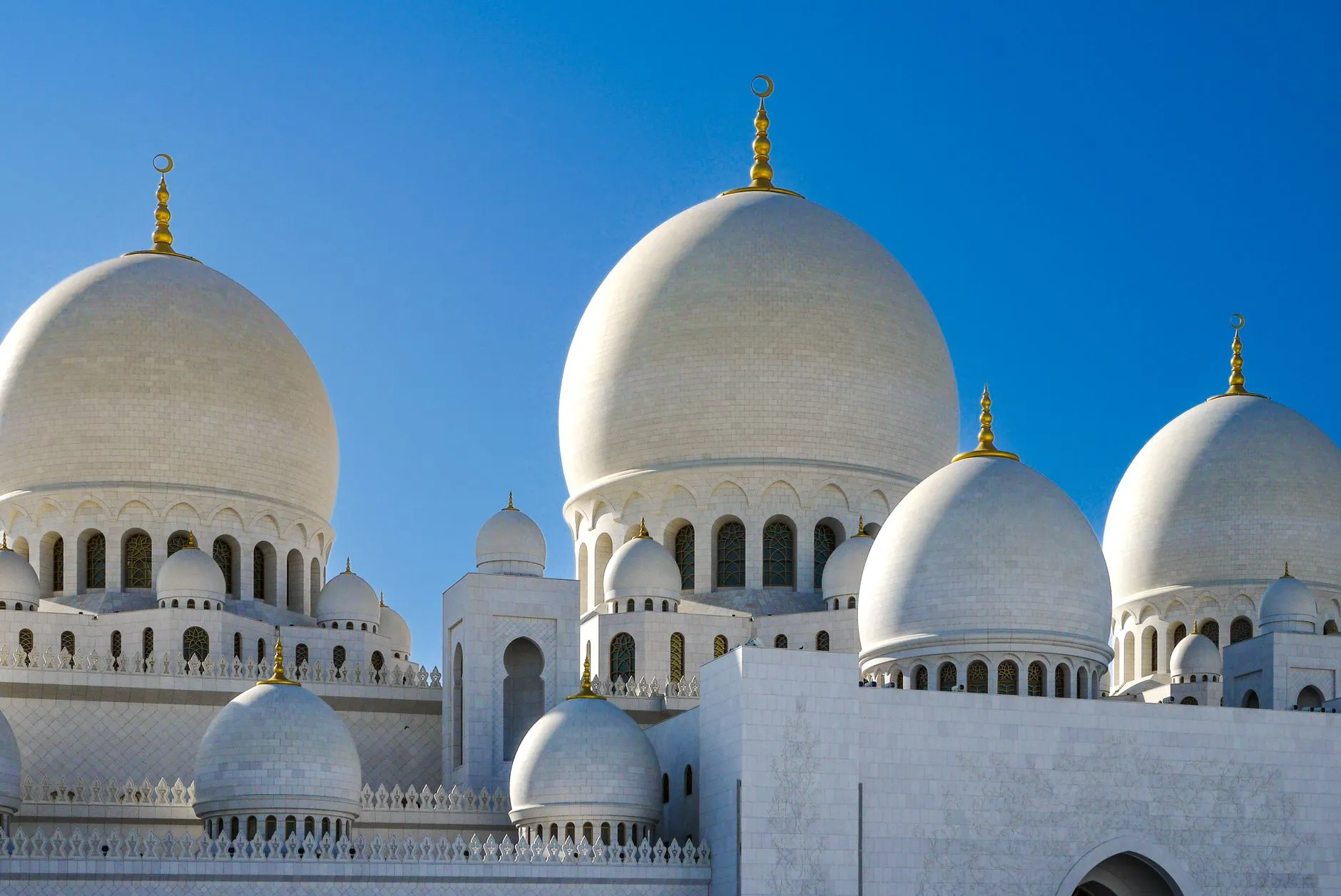
The Sheikh Zayed Grand Mosque is the reason. I am not a religious person and I’ve seen a lot of grand buildings, and it still stopped me cold. Eighty-two domes, a courtyard floored with the world’s largest hand-knotted carpet, columns inlaid with mother-of-pearl, reflecting pools doubling the whole thing at dusk. Entry is free. Dress modestly — long sleeves and trousers or a long skirt for everyone, a headscarf for women (they’ll lend you an abaya if you’re underdressed) — go an hour before sunset when the white marble turns gold then blue, and give it two hours. It is, without competition, the most beautiful single thing in the country.
Do the Grand Mosque at golden hour, not midday: the marble at noon is a blinding white furnace, while at dusk it’s the most photogenic building in Arabia. Book a free timed entry slot online in advance — turn-up-and-queue can mean a long wait at peak season.
Then there’s Saadiyat Island, which has quietly become one of the most ambitious cultural projects on the planet. Louvre Abu Dhabi (open since 2017, entry around €16) sits under a vast perforated dome that drops dappled “rain of light” across the galleries — the building is arguably better than the collection, and the collection is good. And the district is exploding: the Natural History Museum Abu Dhabi opened in late 2025, the Zayed National Museum opened at the end of 2025, and a Guggenheim Abu Dhabi — a Frank Gehry behemoth — is completing through 2026. By the time you read this, Saadiyat is a genuine museum quarter, not a promise.
For families, Yas Island is the other pillar: Ferrari World (home of Formula Rossa, the world’s fastest roller coaster), Warner Bros World, Yas Waterworld, and SeaWorld Abu Dhabi. It’s slicker and often cheaper than Dubai’s equivalents, and Yas Marina hosts the Abu Dhabi Grand Prix each December.
My one-line itinerary for the whole country: if you do nothing else, do the Sheikh Zayed Grand Mosque at dusk and the Louvre Abu Dhabi the same day. That single Abu Dhabi day is worth more than three days of Dubai towers.
Sharjah: The Emirate That Said No to Alcohol — and Yes to Culture
Squeezed between Dubai and the rest, Sharjah is the UAE’s conscience — and its most underrated emirate. It is completely dry: no alcohol, anywhere, full stop. That single fact scares off the brunch crowd and, as a happy consequence, keeps Sharjah genuine in a way the others aren’t.
UNESCO named it a cultural capital of the Arab world, and it earns it. The Heart of Sharjah restoration is the largest of its kind in the region — a whole quarter of old courtyard houses, wind-tower architecture and souks brought carefully back to life. The Sharjah Art Foundation runs serious contemporary art across a cluster of converted heritage buildings, the Blue Souk (Central Market) is a genuine bazaar rather than a mall, and the Al Noor Mosque on the lagoon offers guided tours specifically for non-Muslims. The Sharjah Museum of Islamic Civilization is the best of its kind in the country.
Spend a half-day in Sharjah and you’ll see the UAE that Dubai paved over. It’s twenty minutes from downtown Dubai and a different century. Just go sober — and respect it; this is the emirate that most expects you to dress and behave conservatively in public.
It’s not a place to stay overnight unless culture is your whole reason for the trip — and the Dubai–Sharjah road traffic at rush hour is genuinely grim. But as a contrast day, half-day even, it’s the most authentic stop you’ll make.
Ras Al Khaimah: Mountains, Beaches, and the Casino That’s Coming
An hour north of Dubai, Ras Al Khaimah (RAK to everyone) is where you go when you’ve had enough of malls. This is the adventure emirate, and the scenery does something no amount of engineering can fake: the Hajar Mountains rise straight out of the desert, brown and jagged and ancient.
The headline is Jebel Jais, the UAE’s highest peak at 1,934 metres, home to the world’s longest zipline — nearly three kilometres, hitting speeds around 150 km/h, face-down and screaming. The mountain also has a proper via ferrata, a viewing-deck restaurant, and switchback roads that, blissfully, are 20°C cooler than the coast. RAK’s beaches on Al Marjan Island are quieter and cheaper than Dubai’s, and the whole emirate feels human-scaled.
It’s also about to change dramatically. Wynn Al Marjan Island, the UAE’s first legal casino resort — a colossal multi-billion-euro integrated resort — is on track to open in 2027 (it slipped slightly from its original timeline). When it lands it will reshape RAK entirely, so visit now if you want to see the quiet, pre-casino version.
RAK is my pick for the second half of a longer UAE trip. Two nights here — a mountain day on Jebel Jais, a beach day on Al Marjan — is the antidote to Dubai overload, and it’s still cheap by Emirati standards.
The Other Three: Ajman, Umm Al Quwain, Fujairah
The remaining emirates are where the UAE gets quiet, local and almost charmingly ordinary — and that’s the appeal.
Fujairah is the only emirate on the east coast, facing the Gulf of Oman, and it’s the one I’d single out. The water is cooler and clearer than the Persian Gulf, the diving and snorkelling around Snoopy Island are the best in the country, and Al-Bidyah Mosque is the oldest in the UAE. If you dive, this is your coast.
Ajman, the smallest emirate, is essentially a calmer, cheaper beach suburb of Dubai with a decent national museum in an old fort and a quietly pleasant corniche. Umm Al Quwain is the sleepy one — mangroves, old-fashioned beach resorts, a waterpark, and the closest thing the UAE has to a place where nothing much happens. Neither is a destination in its own right, but both make easy, traffic-free escapes if you’re staying in the northern emirates.
Skip these on a short first trip. Save them for a second visit, or a long lunch on the way to RAK. They’re the everyday UAE — pleasant, unremarkable, and refreshingly free of queues.
The Desert: The One Thing You Actually Came For
Strip away the towers and the malls and you’re left with the thing that was here first and will be here last: the desert. It is the UAE’s one piece of genuinely sublime, un-engineered scenery, and a night out among the dunes is the experience I’d protect above all others. But — and this is a big but — how you do it determines whether it’s magic or a cattle-truck tourist trap.
The standard “desert safari” sold from every Dubai hotel lobby is, frankly, often the trap: a convoy of 4x4s bashing the same scarred dunes near the city, a packed camp with a buffet and a fire-eater, a five-minute camel photo, and a sandboard you queue for. It’s fine. It’s also factory tourism, and you’ll share your sunset with three hundred people.
Pay more, go further, go smaller. A private or small-group trip into the deeper desert — the real, towering dunes of Liwa on the edge of the Empty Quarter (Rub al Khali), three hours from Abu Dhabi, or a quiet conservation reserve like Al Marmoom — is a different planet. Sunrise over the Empty Quarter is one of the great sights of Arabia. The cheap group safari near Dubai is not.
If budget rules, the group safari still beats not going — just book a smaller operator, go for the evening dune-and-dinner version, and treat the dune-bashing as the warm-up to the real event: the silence and the stars once the engines cut. An overnight desert camp, if you can swing it, is worth every dirham.
Getting There & Around — and the Stopover Play
Getting there is the UAE’s superpower. Emirates (Dubai) and Etihad (Abu Dhabi) connect the country to virtually everywhere, and the smartest way to “do” the UAE is to not make a special trip at all — bolt it onto a long-haul journey you’re taking anyway.
The stopover offers are the secret weapon. Etihad runs a genuinely generous free Abu Dhabi Stopover: book a round-trip with a connection through Abu Dhabi and you get up to two free hotel nights plus a Stopover Pass with discounts on attractions. Emirates offers Dubai Connect (free hotel and transfers on qualifying connections of roughly 8–26 hours) and sells competitively priced Dubai Stopover packages bundling hotel, visa and transfers. If you’re flying between Europe and Asia, Africa or Australia, you can effectively get a free Emirati mini-break thrown in. This is the single best-value way to see the country, and it’s exactly the layover-not-a-holiday thesis made bookable.
Before you book a dedicated UAE trip, check whether an Etihad or Emirates routing to somewhere else gets you a free stopover. A flight you were taking anyway plus two free nights in Abu Dhabi is the best deal in this entire guide.
Getting around is easy and cheap by local standards. Dubai’s Metro is clean, driverless and excellent (a Nol card and a day pass cost a few euros), and it reaches the airport, the malls and the Marina. Taxis everywhere are metered, plentiful and inexpensive, and ride-hailing apps work fine. The catch is between emirates: there’s no tourist-useful intercity train yet, so Dubai–Abu Dhabi (90 minutes) and Dubai–RAK (an hour-plus) mean a car, an intercity coach, or a taxi. Renting a car is the move if you want Abu Dhabi, Sharjah and RAK on one trip — roads are superb, fuel is cheap, but the driving can be fast and aggressive, and tolls (Salik in Dubai, Darb in Abu Dhabi) are automatic. Drink-driving is a flat zero-tolerance offence with serious consequences, so don’t even consider one beer.
When to Go: The Heat Is Not a Suggestion
I’ll be unambiguous because too many guides aren’t: come between November and March, and avoid May to September if you possibly can.
From November to March the UAE is close to perfect — days of 22–30°C, cool evenings, low humidity, and that high desert sun that makes everything photogenic. This is when you want to be on a rooftop, in the dunes, on a beach. It’s also peak season, so book ahead and expect Dubai prices at their highest, with December (the Grand Prix, the shopping festival, the Christmas-and-New-Year crowd) the busiest of all.
Now the warning. The summer is not “hot” — it is genuinely brutal. July and August average around 43°C and regularly push toward 45–48°C, and because you’re on the Gulf, the humidity climbs to 70–85%. That combination means 40°C feels like 50°C; stepping outside is like walking into a hairdryer aimed at your face, your glasses fog instantly, and any plan involving more than a few minutes outdoors collapses. Everything indoors is air-conditioned to arctic levels, so summer works if your holiday is malls, museums, aquariums and hotel pools — and you’ll save 40–60% on hotels. But if you came to see the desert, walk the souks, or sit outside at any point, summer is a mistake.
Shoulder season — late October and April — is the value sweet spot: still warm enough for the beach (mid-30s), prices off their peak, and the heat just bearable for an early-morning desert run or an evening at the mosque. October and April are my quiet recommendation.
A note on Ramadan, which in 2026 runs roughly 18 February to 19 March (Eid al-Fitr falls around 20 March). Tourists are perfectly welcome to visit, and the evenings — when the city comes alive for iftar — are magical. But daytime is restrained: eating, drinking and smoking in public during fasting hours is genuinely frowned upon (and technically restricted), some restaurants close until sunset, and the pace slows. Visit during Ramadan for the atmosphere if you’re a considerate traveller; avoid it if you want full daytime buzz and an unbroken brunch schedule.
Money & Costs: Expensive, but Cheaper Than Its Reputation
The UAE has a reputation as a place for billionaires, and the marketing leans into it — but the reputation is half a con. Yes, you can spend €2,000 a night on an underwater suite and €400 on a brunch. You can also do the country surprisingly cheaply, and the gap between those two trips is enormous and entirely within your control.
The dirham is pegged to the dollar (about 3.67), so roughly four dirhams to the euro — your money doesn’t swing day to day, which makes budgeting easy. Here’s the honest spread:
- Cheap and brilliant: the 1-dirham (€0.25) abra across Dubai Creek; the free Sheikh Zayed Grand Mosque; a chicken shawarma for €2–3; a thali or biryani in Karama or Deira for €5–8; the Dubai Metro day pass for a few euros; public beaches (Kite Beach, the Corniche) for nothing.
- Mid-range and worth it: Louvre Abu Dhabi around €16; a desert safari €40–90 depending on quality; a great mid-priced meal across dozens of cuisines for €15–25 a head.
- The wallet-killers: alcohol (a beer in a hotel bar is often €10–13, a cocktail €15–22 — this is where budgets quietly die); rooftop bars and beach clubs (minimum spends); the headline theme parks (€60–80 a ticket); and “At the Top” of the Burj Khalifa (€40 off-peak, €60 at sunset).
The single biggest lever on a UAE budget is alcohol. A dry-ish trip — drinking only at the odd licensed dinner — can cost half what a bar-crawl holiday does. The country is genuinely affordable on food, transport and sights; it’s the drinks tab that bankrupts people.
Tipping is customary but modest (round up taxis, 10–15% in restaurants if service isn’t included), and almost everything is cashless — bring a card, you’ll rarely need dirhams beyond the abra.
Food: Beyond the Brunch
Here’s where the UAE genuinely over-delivers, and it’s the bit the towers-and-dunes crowd undersells. Because roughly 85% of residents are expatriates — vast Indian, Pakistani, Filipino, Iranian, Egyptian, Lebanese and Sri Lankan communities — Dubai and Abu Dhabi are two of the great eating cities of the world, and you don’t need a Michelin budget to prove it.
The mistake is to eat where the marketing points you: the bottomless Friday “brunches” (an institution here, and a fun once-a-trip blowout) and the celebrity-chef tower restaurants are fine, but they’re not where the food is best. The food is in the back streets. Go to Al Karama or Deira in Dubai for the best Indian and Pakistani cooking outside the subcontinent; eat Iranian in Bur Dubai; find a Lebanese spot for proper mezze and grilled meat; queue at a Filipino canteen. Emirati food itself is rarer than you’d expect — seek out machboos (spiced rice with meat or fish), harees, luqaimat (sweet dumplings) and a karak tea — places like Al Fanar or the heritage restaurants in Sharjah do it well.
Eat one expensive, view-driven meal for the photos, then spend the rest of your trip in the immigrant neighbourhoods. A €6 biryani in Karama will beat a €60 plate in a tower nine times out of ten, and it’s the realest thing you’ll do in the country.
The other delight is that almost everything is available and excellent — sushi, dim sum, Texan barbecue, Neapolitan pizza — because the people who make it properly all live here. Coffee culture is serious. And it’s all easy: hygiene standards are high, English menus are universal, and you’ll never struggle to find dinner.
What’s Overrated — and What to Skip
Every guide tells you what to see. Fewer tell you what to skip, so here’s my honest list.
Overrated: Climbing every tower. You do not need to go up the Burj Khalifa and the Frame and Sky Views and the View at the Palm. Pick one observation deck, ideally at sunset, and bank the saving. The Dubai Fountain show is wonderful and free — don’t pay for a premium “lake ride” to see it. The big chain desert safari sold in hotel lobbies, as covered above — small or skip. Global Village and some of the more relentless mega-attractions blur into one if you do too many. And the gold and “designer” souks are a hard sell of mostly tourist-priced goods — browse for the theatre, don’t expect bargains.
Resist the UAE’s central temptation, which is to treat the holiday as a checklist of superlatives — tallest, biggest, fastest, most. You’ll spend a fortune and feel oddly empty. Three or four things done well beats fifteen things ticked off.
Underrated and worth your time: old Dubai (Al Fahidi, the abra, the souks of Deira); the whole of Abu Dhabi’s cultural day; Sharjah’s heritage quarter; an actual deep-desert night; Jebel Jais and the RAK mountains; and simply the food, treated as a destination in itself. Those are where the value and the (modest, qualified) authenticity live. The superlatives are the marketing; this list is the trip.
Laws, Customs & Common Sense
The UAE is liberal by regional standards and genuinely welcoming to tourists — but it is not the West, the laws are real, and a little awareness goes a long way. None of this is hard; almost all of it is simple respect.
- Alcohol is legal for tourists in licensed venues — hotel bars, licensed restaurants, clubs and beach clubs — and you can buy from licensed shops on production of your passport. The drinking age is 21. The rule that catches people out isn’t drinking; it’s public drunkenness, which is an offence. Drink where it’s licensed, get home discreetly, and you’ll never have an issue. (Remember Sharjah is entirely dry.)
- Dress is relaxed in tourist zones — shorts and swimwear are fine at the beach, pool and most malls — but cover shoulders and knees in mosques, government buildings, traditional markets and more conservative emirates. Topless sunbathing is a no. At the Grand Mosque, dress fully modestly.
- Public affection: holding hands is fine; anything more demonstrative in public is best avoided. The UAE is a conservative society in this regard, and discretion is the whole of the law.
- Photography: don’t photograph people (especially local women), government buildings, ports or airports without obvious consent.
- Drugs: zero tolerance, severe penalties — this is not a place to take any chances, including with substances that are legal elsewhere.
- Ramadan: during daylight in the fasting month (18 Feb–19 Mar 2026), don’t eat, drink or smoke in public view out of respect.
Frame all of this as practical courtesy, not a minefield. Millions of tourists have a completely carefree time here every year by following two instincts: dress with a bit of modesty in non-tourist settings, and don’t be loudly drunk in public. Do those, and the UAE is one of the easiest, safest countries on earth to visit.
The Smartest UAE Trip: A 4–5 Day Plan
If you take one thing from this guide, take the shape of the trip. Here’s how I’d actually spend four or five winter days, built around the layover-not-a-holiday thesis.
Day 1 — Old Dubai. Land, settle, and resist the towers. Spend the afternoon in Al Fahidi, cross the Creek by abra for €0.25, get lost in the Gold and Spice Souks of Deira, and eat dinner in Karama or Bur Dubai. Ease in cheap and real.
Day 2 — New Dubai, edited. One observation deck or one mall morning — not three. The Dubai Mall and aquarium, the fountains at dusk, the Burj from below. A rooftop drink if you fancy it. Keep it to the highlights and don’t over-egg it.
Day 3 — Abu Dhabi, the heart of the trip. Drive or coach south. Louvre Abu Dhabi (and the new Saadiyat museums) in the day, the Sheikh Zayed Grand Mosque at golden hour to finish. If you’re travelling with kids, swap a museum for Yas Island. This is the day that makes the country worth it.
Day 4 — The desert. A small-group or private trip into the deeper dunes, ideally with sunset and stars, or an overnight camp if you can. The one piece of true wilderness on the itinerary.
Day 5 (optional) — Mountains or beach. Drive north to Ras Al Khaimah for Jebel Jais and a quieter coast, or simply collapse on a beach with a book. A calm, cheaper come-down before you fly out.
That’s the whole game: two days of Dubai, one transcendent day in Abu Dhabi, one night in the desert, and an optional mountain-and-beach finish. Five days, two emirates minimum, and you’ll have seen the best of the UAE without the fortnight’s fatigue — or the fortnight’s bill.
Frequently Asked Questions
Cheapest Flights to The UAE
We have tracked 673 fares to The UAE from 134 cities. As of June 2026, here is what a good price looked like from each — the lowest fare we recorded, and a “great-deal” benchmark to judge a quote against. These are tracked observations, not live prices: by the time you read this they will have moved, so treat them as a yardstick, not a quote.
| From | Lowest fare we tracked | Great-deal benchmark |
|---|---|---|
| Helsinki (HEL) | €149 | €213 |
| Zurich (ZRH) | €179 | €256 |
| Baku (GYD) | €243 | €347 |
| Yerevan (EVN) | €279 | €399 |
Recent deals we have posted to The UAE:
These are fares aifly tracked to this destination, not live quotes — they have changed since and several of the deals above may have expired. Browse current flight deals →