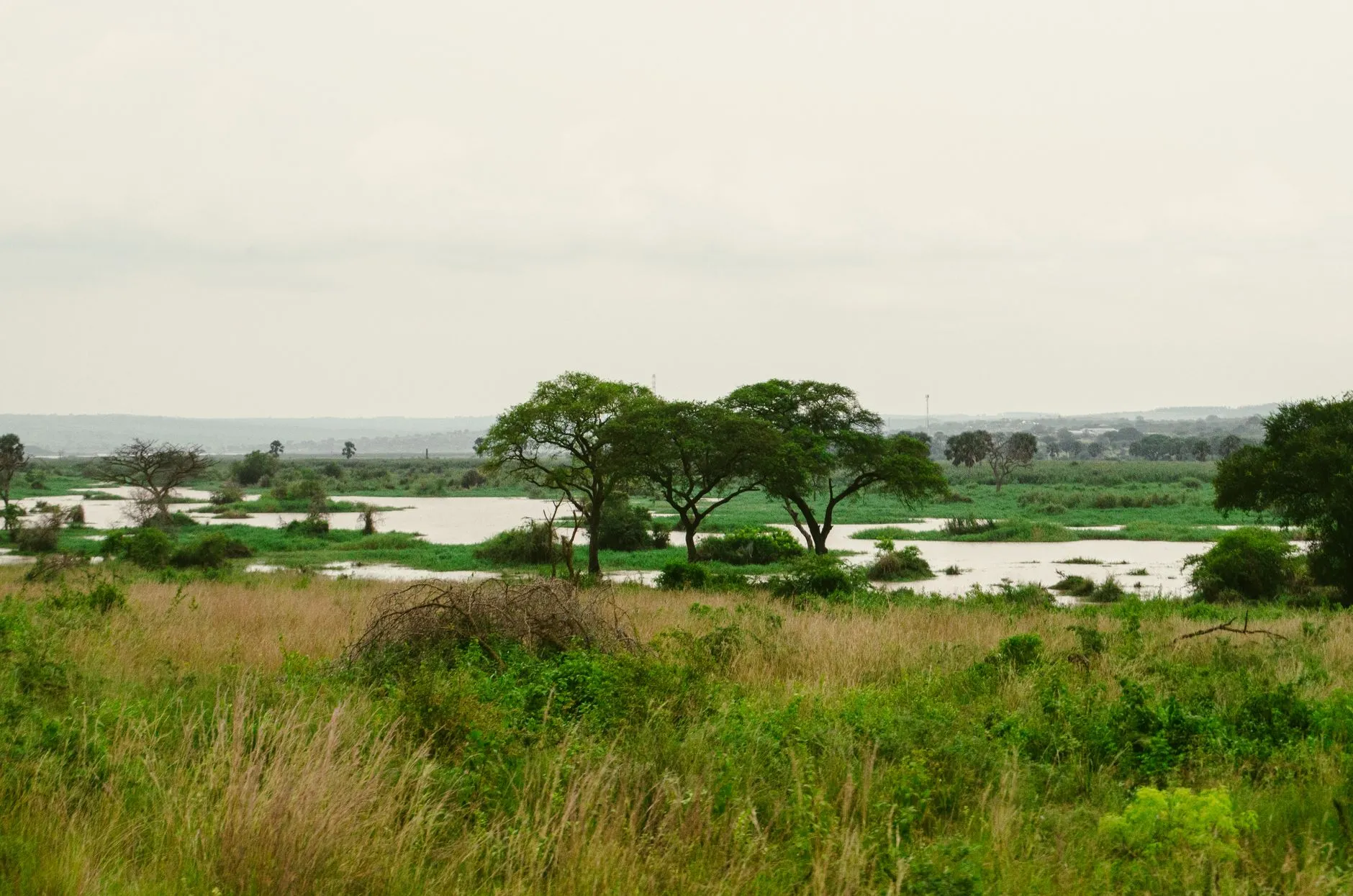
Uganda — Complete Travel Guide 2026
Uganda is the country that put gorillas, the source of the Nile and a thousand shades of green into one small, ferociously beautiful package — and then made you work for all of it. This is the place where you can hike through dripping rainforest for hours to sit ten metres from a 200-kilo silverback, watch lions doze in the branches of a fig tree, raft grade-five rapids on the world’s longest river and decompress on a terraced crater lake, often inside a single week. Winston Churchill called it the Pearl of Africa over a century ago and the branding stuck because it’s true. But understand before you book: Uganda’s headline experiences are expensive, physical and overland. This is an adventure country, not a beach-and-relax one — and that’s exactly why the people who go love it.
Quick Reference
East Africa, landlocked, straddling the equator — the “Pearl of Africa,” all green hills, lakes and forest
Entebbe International (EBB) — the country’s only international airport, ~40 km south of Kampala on a peninsula in Lake Victoria
Ugandan shilling (UGX) — cash-driven, US dollars used for permits and upmarket lodges
English and Swahili are official; Luganda is the everyday language of the centre; dozens of others regionally
E-visa required in advance at visas.immigration.go.ug — visa-on-arrival is gone; €46 single-entry, or the €93 East Africa Tourist Visa covering Uganda+Kenya+Rwanda; yellow-fever certificate mandatory
The two dry seasons — June–August and December–February — for gorilla trekking, wildlife and forest hikes
Mountain gorillas, chimpanzees, the source of the Nile, tree-climbing lions, white-water rafting and impossibly green scenery
Move, don’t base — Entebbe to arrive/depart, the southwest (Bwindi/Bunyonyi) for gorillas, Kibale for chimps, Queen Elizabeth and Murchison for safari, Jinja for adventure
Editor’s Note — the gorilla is the point, and it costs
Let’s be honest about why almost everyone comes: the mountain gorillas. Uganda holds roughly half the world’s surviving mountain gorillas, in Bwindi Impenetrable Forest and tiny Mgahinga, and a permit to spend one hour with a habituated family is the single most expensive, most rationed, most spectacular wildlife encounter in Africa. It is also genuinely life-changing, and almost nobody who does it regrets a euro of it.
But the euros are real. The standard permit alone is US$800 (around €740) in 2026, fixed by the Uganda Wildlife Authority — and that’s before the flights, the lodge, the transfers and the guide. Add it up honestly and a gorilla trek is a four-figure day. There are only a few hundred permits issued per day across the whole country, they sell out months ahead for the dry season, and the trek itself can mean three to six hours of hard, muddy, near-vertical hiking through “impenetrable” forest that earned its name. This is not a drive-up safari sighting. It is a commitment of money, time and legs.
So the central decision is the same one every Uganda trip turns on: are you in for the real thing? If you want a cheap, easy, lie-on-a-beach holiday, this is emphatically the wrong country — Uganda has no coast, the “relaxing” is done on a crater lake after a hard day, and the magic is unlocked by long bumpy drives and early starts. If you want the most concentrated, hands-on wildlife-and-wilderness experience on the continent, and you’ll trade comfort and budget for it, there is nowhere better value than Uganda — its gorilla permit is a third cheaper than Rwanda’s, its parks are emptier, and its people are routinely rated the friendliest in Africa.
⚠️ Book the gorilla permit before you book anything else. Permits are capped, dated and tied to a specific gorilla family on a specific day — flights and lodges flex around the permit, never the other way round. For June–August or December–February, secure it three to six months out (through the UWA or a tour operator) or you may simply not get one.
Should You Go? Who it’s for — and isn’t
Uganda is for the active, curious traveller who treats a trip as an expedition rather than a holiday. It’s superb for serious wildlife people (gorillas, chimps, the Big Four, more than 1,000 bird species — it’s one of Africa’s great birding countries), for primate obsessives (nowhere stacks gorillas, chimps, golden monkeys and a dozen other primates so close together), for adventurers (Jinja’s rafting and the Rwenzori’s snow-capped peaks), and for anyone who wants an African safari without the Serengeti’s Land Cruiser traffic jams.
It’s also, paradoxically, both expensive and good value. The permits and the lodges are the splurges, but on the ground Uganda is cheap — a plate of food for €2, a bottle of beer for a euro, a guesthouse bed for the price of a coffee back home. The cost is concentrated in the headline experiences, not the daily living.
Who it’s not for: anyone after a beach, a poolside cocktail week, or effortless luxury on tap. There’s no coast; the “lakes” are for canoeing and views, not lounging. It’s not for travellers who hate long road days — the drive from Entebbe to the gorillas is eight to ten hours of African highway, and even with domestic flights you’re in for serious overland time. It’s not really a first-ever-trip-abroad country either: malaria is real, the roads are chaotic, and you need to be comfortable with a degree of rough-edged adventure. And it’s a conservative, religious society — discreet, modest and respectful goes a long way.
Getting There & Around — EBB, the long drives & domestic hops
Everything funnels through Entebbe International (EBB), on a peninsula jutting into Lake Victoria about 40 km south of Kampala — there is no second international airport, so this is your door in and out. It’s a small, manageable airport with a genuinely lovely lakeside setting; the drive into Kampala can take anywhere from 45 minutes to two hours depending on the city’s legendary traffic, so many travellers overnight in Entebbe town itself on arrival and departure rather than fight the jam twice.
The European and Gulf connections are solid and getting better. Brussels Airlines is the long-standing direct link from Europe (Brussels, several times weekly); KLM flies direct from Amsterdam. Through the Gulf and the regional hubs you’ve got Qatar Airways (Doha), Emirates and flydubai (Dubai), Turkish Airlines (Istanbul), Ethiopian Airlines (Addis Ababa, multiple daily and often the cheapest one-stop from Europe), RwandAir (Kigali), Kenya Airways (Nairobi) and the national carrier Uganda Airlines, which now flies a growing network of its own. From most of Europe you’re looking at a one-stop routing through Addis, Doha, Istanbul or Nairobi; the direct Brussels and Amsterdam services are the convenient premium.
Then comes the part nobody warns you about enough: getting from EBB to the wildlife is a serious overland undertaking. Uganda’s parks are scattered around the country’s edges and the roads, while improving, are long. Entebbe to Bwindi (the gorillas) is a punishing eight-to-ten-hour drive; to Murchison Falls is five to six; to Kibale and Queen Elizabeth, six to eight. The roads are partly excellent tarmac and partly bone-rattling dirt, and a day “transferring” between parks can eat your whole day.
This is why domestic flights exist and are worth the money for the time-poor. Aerolink Uganda and Safarilink run light aircraft from Entebbe (and Kajjansi airstrip) to bush airstrips near Bwindi (Kisoro), Queen Elizabeth, Murchison (Pakuba) and Kidepo — turning a ten-hour drive into a 60–90 minute hop for somewhere in the region of €230–370 each way. For a tight one-week gorilla-and-safari trip they can save you two whole days of road.
Self-drive vs guided is the other big choice. Most visitors go guided — a driver-guide in a 4WD who handles the roads, the park logistics, the checkpoints and the wildlife-spotting, and it’s genuinely the lower-stress, higher-yield option for a first trip. Self-drive (4WD hire, often with a rooftop tent) is very doable for the confident and adventurous, far cheaper, and rewarding — but the navigation, the rough tracks, the night-driving-is-dangerous rule and the park bureaucracy are all on you. There’s no meaningful public-transport option for a wildlife itinerary; matatus (shared minibuses) and the long-distance “coaches” connect the towns but won’t get you into the parks.
💡 For a one-week trip, fly at least one leg. A single Aerolink hop to Bwindi or Murchison and back buys you two extra days of actual wildlife instead of staring out of a 4WD window. On a longer two-week trip the drives become part of the experience and you can afford to do it all overland.
Gorilla Trekking — Bwindi & Mgahinga
This is the reason Uganda is on your list, so do it properly. The mountain gorillas live in two parks in the far southwest: Bwindi Impenetrable National Park, a steep, ancient, mist-soaked rainforest that holds the overwhelming majority, and tiny Mgahinga Gorilla National Park up against the Rwanda and DRC borders in the Virunga volcanoes.
Here’s how it actually works. You buy a dated permit from the Uganda Wildlife Authority — US$800 (≈€740) for a foreign non-resident in 2026 — which assigns you, on a fixed day, to a single habituated gorilla family in one of Bwindi’s four trekking sectors (Buhoma, Ruhija, Rushaga and Nkuringo). Groups are capped at eight trekkers per family, you get one hour with the gorillas once you find them, and the trek to reach them can take anywhere from 30 minutes to six brutal hours depending on where the family has wandered. Rangers track the gorillas from dawn and radio your group toward them; you can hire a porter for around €15–20 to carry your bag and haul you up the slopes (do it — it’s a tiny sum and it supports the community). There’s also the all-day Gorilla Habituation Experience at US$1,800 (≈€1,665), which gives you four hours with a semi-wild family still being acclimatised — for the hardcore, and the camera-serious.
Why Uganda over Rwanda? Price, mostly. Rwanda’s mountain-gorilla permit is US$1,500 — nearly double Uganda’s — for a very similar (arguably easier, more polished) experience. Uganda is the value play, with the trade-off being the longer, rougher drive to reach Bwindi versus Rwanda’s slick two-hour transfer from Kigali. A clever hack many use: fly into Kigali, which is only three to four hours from Bwindi’s southern sectors by road, rather than slogging from Entebbe — but check the current border-crossing and permit rules, as this routes you across an international frontier.
The trek itself is no joke. Bwindi is steep, slippery, tangled and humid; “impenetrable” is not marketing. You want broken-in waterproof boots, gaiters or tucked-in trousers (stinging nettles and safari ants), gloves for grabbing thorny vines, a waterproof and layers, and a basic level of fitness — there’s no shame in declaring you need an easier (lower-altitude) family when you register. And then you’re sitting in a clearing as a silverback the size of a small car ambles past close enough to hear breathing, while juveniles tumble and a mother nurses, and the price tag evaporates from your mind entirely.
Mgahinga is the smaller sibling, with one habituated gorilla family that occasionally crosses into Rwanda or DRC (so it’s slightly less reliable), but it has its own prize: golden monkeys, the endangered, electric-orange Virunga primate found almost nowhere else, with a much cheaper tracking permit. If you’ve got an extra day in the far southwest, the golden monkeys are a brilliant, underrated add-on.
⚠️ Pack for a real hike, not a game drive. Waterproof boots already broken in, long trousers tucked into socks, garden-type gloves, rain shell and water. People in trainers and shorts suffer. And budget €15–20 for a porter — it’s the easiest, kindest money you’ll spend, and on a six-hour trek it can be the difference between making it and not.
Chimpanzees — Kibale, the primate capital
If gorillas are Uganda’s headline, chimpanzees are its brilliant supporting act, and Kibale National Park is the place. This tract of tall, dense rainforest in the west has one of the highest primate densities on earth — thirteen species, including the largest population of habituated chimpanzees in Uganda, plus red colobus, grey-cheeked mangabeys, L’Hoest’s monkeys and more.
Chimp tracking works much like the gorillas but cheaper and easier: a permit (around US$250 / ≈€230 for the standard hour-with-the-chimps), a guided forest walk, and time with a habituated community of our closest relatives — loud, fast, charismatic and endlessly entertaining as they hoot, drum on buttress roots, groom and crash through the canopy overhead. The walking is far gentler than Bwindi (this is flatter, more open forest) but you’ll still move quickly to keep up with them. There’s also a full-day chimp habituation experience for the dedicated, where you shadow a community from dawn.
Kibale pairs perfectly with the neighbouring Bigodi Wetland Sanctuary, a community-run swamp walk that’s one of the best birding and monkey-spotting half-days in the country — and it sits conveniently on the road between the gorillas and Queen Elizabeth, so it slots neatly into almost any western loop. Many people rate the chimps a notch below the gorillas but still unmissable; do both and you’ve met both of humanity’s great-ape cousins in a week.
Queen Elizabeth National Park — savanna safari & the Kazinga Channel
After the forests, Queen Elizabeth National Park is where Uganda does classic savanna safari. Sprawled across the western Rift Valley floor between two great lakes, “QE” is the country’s most popular park and its most scenically varied — open grassland, crater lakes, wetlands and forest, with the Rwenzori Mountains as a backdrop and an animal list that runs to elephants, buffalo, hippos, leopards, hyenas, a vast cast of antelope and around 600 bird species.
Two experiences define it. First, the Kazinga Channel boat cruise — a two-hour launch along the natural channel linking Lake Edward and Lake George, past one of the densest concentrations of hippos and Nile crocodiles in Africa, with elephants and buffalo coming down to drink and a riot of birdlife on the banks. It’s relaxed, reliable and one of the best-value wildlife hours in the country. Second, the famous tree-climbing lions of Ishasha, in the park’s remote southern sector — a population of lions that, for reasons no one fully agrees on, habitually lounge draped over the branches of fig and acacia trees in the heat of the day. Sightings aren’t guaranteed (they’re wild lions, not a zoo), but Ishasha sits perfectly on the road between Bwindi and the main park, so it’s a natural, low-cost gamble to build into the drive. QE is also where you can tack on chimp tracking in the Kyambura Gorge, a dramatic forested ravine cut into the savanna.
Murchison Falls — where the Nile is forced through a 7-metre gap
Uganda’s largest and arguably most spectacular national park, Murchison Falls, is built around one of the great sights on the African continent: the entire Victoria Nile — the world’s longest river — squeezed through a rock cleft just seven metres wide, exploding through with a roar you feel in your chest before you crest the rise to see it. It is a genuinely jaw-dropping piece of geography, and you can stand right at the lip where the river goes over.
The park splits across the Nile. The northern bank is the game-drive heartland — vast Borassus-palm savanna roamed by elephants, giraffes (Murchison has Uganda’s biggest Rothschild’s giraffe population), buffalo, lions, hartebeest and Uganda kob, with leopards if you’re lucky. The classic boat cruise runs upriver from Paraa to the base of the falls, past banks crowded with hippos, crocodiles and elephants, dropping you (on some trips) for a hike up to the top of the falls — combining the wildlife and the cataract in one unforgettable afternoon. Murchison is five to six hours’ drive north of Kampala (or a short Aerolink flight to Pakuba), and the route in often takes in the Ziwa Rhino Sanctuary, the only place in Uganda to track rhinos on foot, completing the Big Five jigsaw. It’s a different, hotter, more open Uganda than the misty southwest — and for many visitors the falls themselves are the single most memorable image they take home.
Jinja & the Source of the Nile — the adventure capital
When the relentless wildlife schedule needs a different kind of thrill, head to Jinja, two hours east of Kampala on the shore of Lake Victoria, where the Nile begins its 6,650-km journey to the Mediterranean. This is Uganda’s adventure capital, and the headline act is white-water rafting on the upper Nile — a full day on big, warm, tropical-river rapids (some graded up to five, plenty of calmer floating between) that’s regularly rated among the best commercial rafting trips on the planet. It’s exhilarating, professionally run, surprisingly accessible to first-timers, and an extraordinary contrast to crouching in a gorilla forest.
The river also serves up kayaking, stand-up paddleboarding, jet boating, bungee jumping over the Nile, quad biking and horse riding, plus gentle sunset “source of the Nile” boat cruises out to the spot where the river leaves the lake (the actual source has been somewhat tamed by a hydro dam upstream, but the symbolism — and the John Hanning Speke history — still lands). Jinja town itself has a faded colonial-Indian charm, a laid-back backpacker scene, riverside lodges and a genuinely relaxed pace. For many travellers it’s the chill-out, refill-the-tank stop of the trip — close enough to Kampala and Entebbe to bolt onto the start or end of an itinerary, and a complete change of gear from the safari grind.
The Southwest — crater lakes & Lake Bunyonyi
Tucked into the far southwestern corner, near the gorillas, is the Uganda that quietly steals people’s hearts: a landscape of impossibly green, terraced hills, ancient volcanic crater lakes, and the jewel of them all, Lake Bunyonyi — “the place of many little birds.” This is the country’s loveliest place to simply stop. Bunyonyi is a deep, island-studded, mirror-still lake ringed by steep cultivated hillsides, with no crocodiles or hippos and (it’s claimed) bilharzia-free water you can actually swim in — a rarity in this part of Africa.
After a punishing gorilla trek, a day or two on Bunyonyi is the perfect decompression: dugout-canoe paddles between the 29 islands (each with its own story, some grim — one was historically an island where unmarried pregnant girls were abandoned), lakeside lodges and campsites with views that don’t quit, swimming, birdwatching and doing gloriously little at 1,900 metres where the air is cool and clear. The wider region — the crater lakes around Fort Portal and Kibale, the terraced Kigezi highlands sometimes called the “Switzerland of Africa” — rewards anyone who slows down enough to hike the ridges, visit a village, and watch the mist roll off the hills at dawn. It’s the soft, scenic counterweight to all the adrenaline and the early starts, and it’s the bit people are surprised to find they miss most.
💡 Build in two nights on Lake Bunyonyi right after your gorilla trek. It’s an hour or so from the southern Bwindi sectors, it’s beautiful, it’s restful, and it lets the trek sink in before the long road back. Skipping it to “save time” is one of the most common Uganda regrets.
Kampala — the chaotic capital
You don’t come to Uganda for Kampala, but it’s worth a day, and it’s an experience. The capital is a sprawling, hilly, gloriously chaotic city of boda-bodas (motorcycle taxis), thumping markets, traffic that has to be seen to be believed, and an energy that’s the opposite of the serene parks. It’s not a “sights” city in the conventional sense — but it’s a fascinating, intense slice of real East African urban life.
If you have the time, see the Kasubi Tombs (the UNESCO-listed royal burial site of the Buganda kings, painstakingly rebuilt after a 2010 fire), the Uganda Museum for context on the country’s cultures and history, the cathedrals and the Gaddafi National Mosque on Old Kampala hill (with a minaret climb for the best city view), and above all the markets — Owino (St Balikuddembe) is a vast, overwhelming, only-for-the-brave warren of everything. The way to feel Kampala, though, is a boda-boda tour (use a reputable safety-helmet operator like the Walter’s-style tours, not a random rider) weaving through the back streets, and a night out — because Kampala’s nightlife is legendary in the region, with bars and live music in Kabalagala, Kololo and Industrial Area going hard and late. It’s loud, dusty, friendly and full-on; embrace it for a day and then escape to the green.
⚠️ Don’t drive yourself in Kampala, and be street-smart after dark. The traffic is genuinely anarchic and the boda-bodas are the main cause of road injuries in the country — if you ride one, insist on a helmet and a recognised operator. Petty theft happens in crowds and markets; keep phones and bags secure and take registered taxis or ride-hailing (SafeBoda, Uber, Bolt all operate) at night.
Food & Lodges — matoke, the rolex & the lodge life
Ugandan food is hearty, starchy and built around the plantain. The national staple is matoke — steamed, mashed green cooking bananas, bland and comforting, the rice-and-potatoes of Uganda — usually served with a stew of beans, groundnut (peanut) sauce, or meat. Alongside it you’ll meet posho (maize meal), cassava, sweet potato and rice, and the universal protein options of chicken, beef, goat and, around the lakes, superb fresh tilapia and Nile perch grilled whole. It’s home-cooking food rather than a celebrated cuisine, but it’s filling, cheap and honest.
The dish to actively seek out is the rolex — Uganda’s beloved street snack and a genuine national icon: a fried egg omelette rolled up inside a chapati (the name is a mangling of “rolled eggs”), often with tomato, onion and cabbage, made to order at roadside stalls across the country for under a euro. It’s the perfect breakfast, the perfect hangover cure, the perfect bus-journey food, and trying one is practically a rite of passage. Wash it down with Ugandan coffee (the country is a serious arabica and robusta grower — the lake-island and Rwenzori beans are excellent) or, in the evening, the local lagers — Nile Special, Bell and Club — and the fierce local spirit waragi (gin), best treated with respect.
Where you’ll actually eat, though, is the lodge, and lodge culture is a real part of the Uganda experience. The parks and gorilla sectors are dotted with everything from rustic community bandas and campsites to mid-range tented camps to genuinely world-class luxury eco-lodges perched over the forest or the savanna, often with a pool, a fire pit, and a deck where you watch the sun go down over the Rift Valley with a Nile Special in hand. Meals are typically included, usually a generous buffet or set menu of international-leaning food with local touches. The lodges are a significant slice of the trip’s cost and a significant slice of its pleasure — that evening on the deck, the resident hyrax in the rafters, the dawn birdsong, is as much a memory as the wildlife itself.
Costs & Money — why Uganda is a high-ticket trip
Here’s the counterintuitive truth: Uganda is cheap to live in and expensive to experience. Day-to-day costs are low — a local meal is €2–4, a beer about a euro, a guesthouse bed €10–25, a rolex under €1, intercity matatu fares a few euros. If you stripped out the headline activities, Uganda would be a backpacker’s paradise.
But the headline activities are the whole point, and they are not cheap. The gorilla permit at ~€740 (or ~€555 in the low-season months of April, May and November), the chimp permit at ~€230, the lodges (€80–150/night mid-range, €300+ for the upmarket camps), the 4WD and driver-guide (roughly €150–250/day all-in for a private vehicle and guide), and the optional domestic flights stack up fast. A realistic budget for a one-week gorilla-and-safari trip, excluding international flights, lands somewhere around €2,000–3,500 per person for a mid-range private trip — most of it the permits, the vehicle and the lodges. Independent budget travellers using shared transport, camping and skipping the gorillas can do Uganda for a fraction of that; the moment a gorilla permit enters the equation, you’re in four-figure territory whether you like it or not.
On the money mechanics: the Ugandan shilling (UGX) is the daily currency — carry plenty of cash, as much of the country (markets, matatus, rural lodges, fuel in remote spots) is cash-only and ATMs thin out fast outside the towns. US dollars are used for permits, park fees and upmarket lodges, and crucially must be clean, post-2013, undamaged notes — Uganda (like much of the region) rejects old, torn or marked dollar bills outright, and gives poor rates for small denominations. Tipping is expected and woven into the trip: budget for your driver-guide (€10–15/day), gorilla and chimp ranger guides and trackers (a few euros each), porters (€5–10 plus their fee), and lodge staff (a communal tip box). ATMs in Kampala, Entebbe, Jinja and the bigger towns dispense shillings on international cards; withdraw enough before heading into the parks.
💡 Bring crisp, new, large-denomination US dollars for the dollar-priced stuff, and a stack of shilling cash for everything else. Old or torn dollar notes get refused. Don’t rely on cards once you leave the cities — and tell your bank you’re travelling so your card isn’t blocked at the first rural ATM.
Practical Information
Entry & e-visa: As of 2026, visa-on-arrival is gone for most travellers — you must apply online in advance at the official visas.immigration.go.ug portal. The standard single-entry tourist e-visa is US$50 (≈€46), valid 90 days, and processes in roughly two to three working days. If you’re combining Uganda with Kenya and/or Rwanda, the East Africa Tourist Visa (EATV) at US$100 (≈€93) is the smart buy — one multiple-entry visa covering all three countries for 90 days, applied for through the country you enter first. Apply at least a couple of weeks ahead, only through the official .go.ug site (beware the lookalike third-party “visa” sites that charge a fat markup), and print your approval to show on arrival.
Yellow fever: A valid yellow-fever vaccination certificate is mandatory for every traveller over one year of age, regardless of where you’re coming from — you may be asked for it at the airport, and the jab must be given at least 10 days before arrival. Get it well in advance, carry the yellow certificate with your passport, and don’t skip it: this is not negotiable and you can be denied entry without it.
Malaria: Uganda is a malaria zone throughout, year-round, at most altitudes you’ll travel. Take antimalarial prophylaxis (consult a travel clinic), use a DEET repellent, cover up at dusk, and sleep under the nets the lodges provide. It’s the single most important health precaution of the trip — far more relevant to your wellbeing than any exotic-disease worry.
Safety: Uganda’s tourist circuit — Entebbe, the parks, Jinja, the southwest — is broadly safe and welcoming, and Ugandans are routinely rated among the warmest, friendliest people you’ll meet anywhere. The real cautions are practical: malaria, road accidents (the genuine number-one danger — drive in daylight, avoid night travel, treat boda-bodas with care), and petty theft in Kampala’s crowds. Western governments flag specific remote border regions to avoid — parts of the far northeast (Karamoja), and the areas near the DRC and South Sudan frontiers — which sit well away from any normal gorilla-and-safari itinerary. Kidepo Valley in the northeast is a stunning but logistically remote park; check your government’s current advisory for that corner. Stick to the established routes and you’re on solid, well-trodden ground.
The equator: You will cross it — there’s a famous (touristy but fun) marked equator crossing on the Kampala–Masaka road, with the obligatory water-draining demonstration and a souvenir stop. Being on the equator means roughly 12-hour days year-round, a fierce overhead sun (high-factor sunblock, hat), and “seasons” defined by rain, not temperature.
Packing for trekking: Neutral, layerable clothing (greens and khakis, not bright white or camo — camouflage is actually restricted, being associated with the military), broken-in waterproof hiking boots, long trousers and long sleeves for the forest, garden gloves, a proper rain shell (it’s rainforest — it rains in any season), gaiters or long socks, insect repellent, a daypack, a head-torch, and a good camera with a zoom (no flash near the apes). Binoculars transform the birding and the savanna game drives.
Connectivity: Local SIMs (MTN, Airtel) with cheap, generous data are easy to buy at the airport or in town with your passport — far better than roaming, and coverage is decent in the towns and patchy-to-none deep in the parks (which is part of the charm). Most lodges have some Wi-Fi, often slow.
Power: UK-style three-pin (Type G) plugs, 240V. Bring an adapter; bring a power bank for the long days and the off-grid camps.
When to Go
Uganda sits on the equator, so “seasons” mean rain, not temperature — it’s warm-to-hot in the lowlands and cool in the highlands all year, and the calendar is split into wet and dry rather than summer and winter.
June–August is the prime dry season — the most popular window, with the best gorilla- and chimp-trekking conditions (drier, firmer forest trails), the easiest game-driving and the clearest skies. It’s also the busiest and priciest, and gorilla permits for these months sell out furthest ahead. Book early.
December–February is the second dry season, and many in-the-know travellers prefer it — similarly good trekking and wildlife conditions with slightly thinner crowds, though the short rains can linger into December.
March–May and September–November are the wet seasons — and they’re not the write-off they sound. The forests are at their lushest and greenest, the birdlife peaks, lodges drop their rates, and the parks empty out. The catch is mud: gorilla and chimp trails become genuinely slippery and tough, and the dirt roads can get challenging. Crucially, the Uganda Wildlife Authority now runs an official low-season discount — the gorilla permit drops from US$800 to US$600 (≈€555) in April, May and November, a substantial saving for travellers willing to trade a bit of mud and rain for a quieter, cheaper, greener trek. For value-hunters who don’t mind getting wet, those three months are the sweet spot.
In short: June–August or December–February for the best conditions; April, May or November for the cheaper permit and emptier parks. Whenever you go, the forest can rain on you in any month — pack for wet either way.
Frequently Asked Questions
Cheapest Flights to Uganda
We have tracked 2,742 fares to Uganda from 110 cities. As of June 2026, here is what a good price looked like from each — the lowest fare we recorded, and a “great-deal” benchmark to judge a quote against. These are tracked observations, not live prices: by the time you read this they will have moved, so treat them as a yardstick, not a quote.
| From | Lowest fare we tracked | Great-deal benchmark |
|---|---|---|
| Ankara (ESB) | €354 | €506 |
| Vienna (VIE) | €382 | €545 |
| Basel (BSL) | €389 | €556 |
| Cologne (CGN) | €402 | €575 |
| Budapest (BUD) | €403 | €576 |
| Stockholm (ARN) | €412 | €589 |
| Geneva (GVA) | €416 | €594 |
| Nuremberg (NUE) | €421 | €601 |
| Gothenburg (GOT) | €428 | €612 |
| Rome (FCO) | €430 | €614 |
| Stuttgart (STR) | €431 | €616 |
| Paris (CDG) | €445 | €636 |
| Hanover (HAJ) | €447 | €639 |
| Turin (TRN) | €454 | €649 |
Recent deals we have posted to Uganda:
- Edinburgh to Entebbe, Uganda from £548
- Hanover to Entebbe, Uganda from €525
- Bordeaux to Entebbe, Uganda from €640
- Helsinki to Entebbe, Uganda from €660
- Düsseldorf to Entebbe, Uganda from €544
- Hamburg to Entebbe, Uganda from €521
- London to Entebbe, Uganda from £521
- Birmingham to Entebbe, Uganda from £595
- Berlin to Entebbe, Uganda from €588
- Munich to Entebbe, Uganda from €613
These are fares aifly tracked to this destination, not live quotes — they have changed since and several of the deals above may have expired. Browse current flight deals →