Addis Ababa Bole (ADD) — The Complete 2026 Airport Guide
Most people reading this will never leave the building. Bole is Ethiopian Airlines’ megahub and one of Africa’s great connection machines — the place where a flight from Europe funnels you onward to Nairobi, Johannesburg, Lagos or Bangkok. It runs a famously short connection time and a genuinely generous free stopover, and it is also chronically over its design capacity, so the two things you must get right are your connection buffer and your visa status. Here is how it actually works in 2026.
Last verified: July 2026. Ethiopia’s currency, fares and entry rules move fast — the birr was floated in 2024 and is still volatile. Confirm prices, visa requirements and terminal details on official sources and your own ticket before you travel.
Quick reference
| Detail | What you need to know |
|---|---|
| Airport | Addis Ababa Bole International Airport, IATA ADD / ICAO HAAB — the main hub of Ethiopian Airlines and one of Africa’s biggest connecting points, funnelling traffic between Europe, Africa, Asia and the Americas |
| Terminals | Terminal 2 — all international flights. Terminal 1 — domestic flights only. They sit side by side in one contiguous complex, not far apart |
| Location | Only ~6 km southeast of the city centre — but at 2,334 m (7,657 ft) altitude, and city traffic is heavy |
| Into the city | Ride-hailing (RIDE, Feres) or taxi ~15–40 min depending on traffic. The Light Rail does not serve the airport |
| Entry | Most nationalities need an e-Visa arranged in advance at the official evisa.gov.et. Pure airside transit needs no visa; leaving the airport does |
| The good bit | Ethiopian’s free stopover — free transit visa, hotel and meals — for connections of 8–24 hours on two Ethiopian flights, same ticket |
| Watch out for | Very tight advertised connection times · congestion and re-screening · the difference between staying airside and entering Ethiopia |
A connection machine first, a destination second
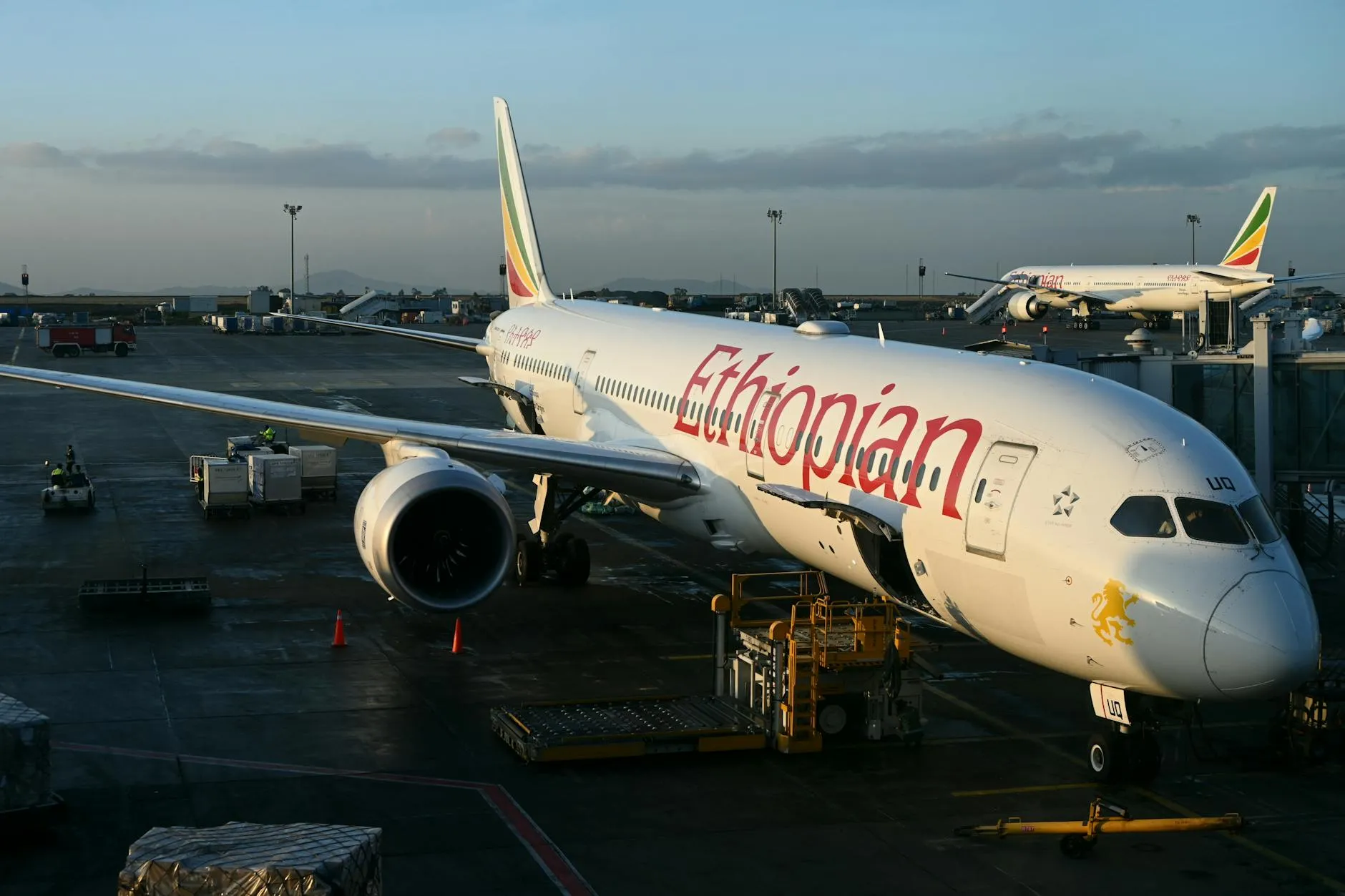
Bole is the beating heart of Ethiopian Airlines, Africa’s largest carrier, and a Star Alliance member. The reason a European traveller ends up here is almost always the same: it is the cheapest, most frequent way to reach the rest of Africa — and increasingly Asia — on a single ticket. You land, you connect, you leave. Ethiopian has built its whole network around that funnel, which is why so much of what matters at ADD is about transit, not arrival.
The scale has outrun the building. Bole was expanded to handle around 22 million passengers a year when its enlarged international terminal opened in 2019, and it now routinely runs close to that — Ethiopian keeps adding routes and frequencies faster than the concrete can keep up. In practice that means a modern but frequently congested airport: long immigration and security queues at peak banks, crowded gate areas, and the occasional bad day of disruption. It is efficient by regional standards and genuinely pleasant in the newer areas, but it is not a place to cut your timings fine. Ethiopia is building an entirely new $12.5-billion mega-airport at Bishoftu, southeast of the city, to replace Bole — it broke ground in January 2026 and is years away, so Bole is your airport for the foreseeable future.
One complex, two terminals
Unlike some hubs, Bole does not scatter you across distant buildings. There are two terminals, side by side:
- Terminal 2 handles all international flights — this is where you arrive from and depart to Europe, and where almost every connecting passenger spends their time. It is the large, newer terminal, with the bulk of the gates, lounges and shops.
- Terminal 1 handles domestic flights only — Ethiopian’s dense internal network to Lalibela, Gondar, Bahir Dar, Axum and the rest. It is much smaller.
Because the two are part of one adjacent complex rather than kilometres apart, moving between them is a walk plus a security check, not a bus ride across an airfield — which is exactly why Ethiopian can advertise such short connection times. If your itinerary pairs an international arrival with a domestic hop (common for anyone heading to the historic north), you will change terminals, clear immigration, and re-clear security. Leave more time than the bare minimum.
Getting into Addis Ababa
The airport is close — roughly 6 km from the centre — but “close” and “quick” are not the same thing in Addis, where traffic can turn a short hop into 40 minutes. The single most important thing to know: the Addis Ababa Light Rail does not stop at the airport. The nearest station is a couple of kilometres away and not a realistic option with luggage, so ignore any guide that tells you to take the tram. Your real choices are an app or a taxi.
| Option | Approx. cost to central Addis | Notes |
|---|---|---|
| Ride-hailing (RIDE / Feres) | ~800–1,200 ETB (roughly $5–8) | The sane default. Fixed in-app price, GPS tracking. You need data — buy a SIM/eSIM in arrivals or use airport Wi-Fi to book. Meet the driver at the app pickup zone |
| Metered / official taxi | ~500–1,500 ETB (roughly $3–10) | Yellow government (NTO) and airport taxis have set or metered fares; older blue-and-white cabs negotiate. Agree the price first |
| Hotel shuttle | Often free for guests | Many Addis hotels run airport pickups — arrange it when you book; the simplest option after a long flight |
| Minibus | A few birr | Cheapest by far but no direct airport stop, crowded and hard to navigate with bags — not recommended for first-timers |
Ride-hailing is what most visitors should use: the app fixes the price, so there is nothing to argue about, and the driver comes to you. If you would rather take a taxi from the rank, use the official government (yellow) taxis and settle the fare before you set off.
Entry, visas and the transit rule that saves you
This is the section to read twice, because Ethiopia’s rules turn on one distinction: are you leaving the airport, or not?
- Staying airside (international-to-international transit): no visa needed. If you land at Terminal 2 and connect to another international flight without passing immigration, you remain in the transit area and need no Ethiopian visa at all. This covers the majority of European travellers using Bole purely as a hub.
- Leaving the airport: you need a visa. The moment you want to enter Ethiopia — for a night in the city, or for the stopover hotel — you need entry clearance. For most nationalities that means an e-Visa arranged online before you fly, at the official portal evisa.gov.et and nowhere else. A swarm of lookalike “e-visa” sites charge a markup for the same thing; ignore them. A single-entry tourist e-Visa runs roughly $52–62 depending on validity — check the official portal for the current fee, and make sure your passport is machine-readable and valid for at least six months.
- Visa on arrival is not the safety net it once was. It has been pared back and is now unreliable for many nationalities, so treat the e-Visa as mandatory and arrange it in advance rather than gambling at the desk.
- Yellow fever certificate — check the direction you are coming from. Ethiopia requires proof of yellow fever vaccination only if you are arriving from a country with a risk of yellow fever transmission — not from direct flights out of Europe or North America. But two things push most people to get it anyway: Ethiopia is itself in a yellow-fever zone, so your onward or return country may demand a certificate from you, and enforcement at the desk can be inconsistent. Carry the yellow card if you have it.
The free stopover — Bole’s best-kept secret
If your connection through Addis is long, Ethiopian Airlines will very likely put you up for free, and hardly anyone realises it. The Ethiopian Stopover programme covers passengers with a connection of 8 to 24 hours in Addis, and it includes a free transit visa, a free hotel room, meals, and transport between the airport and the hotel — no charge, no loyalty status required, any cabin.
The conditions are simple but firm:
- Both your inbound and onward flights must be operated by Ethiopian Airlines on a single ticket — you cannot self-connect from another airline and claim it.
- Your connection must fall in the 8–24 hour window, and your passport must be one that qualifies to enter Ethiopia.
- You usually receive your hotel and meal vouchers at check-in for your first flight; if not, claim them at the transit desk in Addis after immigration. Guests are typically housed at the large Ethiopian Skylight Hotel by the airport.
Lounges and where to rest
Terminal 2 has a clear two-tier lounge picture:
- Cloud Nine Lounge — Ethiopian’s flagship business-class lounge, open 24 hours, with hot food, showers, massage chairs and quiet zones. Access is by a business-class ticket on your onward flight with Ethiopian or a partner such as Lufthansa, Turkish or EgyptAir — not by frequent-flyer status alone, and not via Priority Pass. Connecting in a business seat but leaving in economy? You will not get in.
- Plaza Premium Lounge — the pay-in or lounge-membership option, in Terminal 2 past the main security check near the A/B gates, open 24 hours. It accepts Priority Pass, LoungeKey and DragonPass, and sells walk-in access for around $50 for four hours. Showers and alcohol may cost extra. This is the lounge for most independent travellers on a long connection.
There is also a genuine in-terminal hotel — the 97-room Ethiopian Skylight In-Terminal Hotel, connected directly to the Terminal 2 departures area. It is a paid, book-in-advance option for a real bed and shower between flights, but note that it sits past passport control in the departures zone: you can only use it with a departing boarding pass. This is different from the larger Skylight Hotel next to the airport used for the free stopover, which requires you to clear immigration into Ethiopia.
Connections and minimum times
Ethiopian markets Bole on speed. Its published minimum connecting times are aggressive: as little as 30 minutes between two international flights (or two domestic), and around 60 minutes when the connection crosses immigration and customs — international-to-domestic or the reverse. Those short figures are a real selling point and, on a good day in a quiet bank, they hold.
My honest advice: treat them as the floor, not the plan. Bole runs at capacity, security re-screening for transit passengers is normal, and a peak-hour arrival into long queues can eat a 30-minute buffer alive — especially if you change terminals. For a same-terminal international connection I would want 90 minutes or more; for anything involving the domestic terminal, immigration or a separate ticket, give yourself at least two hours. If you are self-connecting on separate tickets, you must collect your bags and re-check in, so allow far more and factor in the visa you will need to leave airside.
Food, money, altitude and Wi-Fi
Food: Terminal 2 has the usual cafés, coffee bars and grab-and-go alongside sit-down restaurants — and this is the place to try proper Ethiopian coffee and an injera plate before you leave the continent, or the moment you arrive. Airport prices are high by local standards; carry small birr for a coffee.
Money: use bank ATMs in the terminal over the exchange booths, and if a machine offers to bill you in your home currency, decline and choose birr. Because of the 2024 float, rates move — don’t over-withdraw, and keep some small notes for taxis and tips. Card acceptance is patchy off the airport, so cash still matters in the city.
Altitude: Addis sits at about 2,334 m (7,657 ft) — one of the highest capitals on earth. If you are arriving from sea level and pushing straight on to the city or the mountains, take it easy the first day; mild breathlessness and a poor night’s sleep are normal, and alcohol hits harder.
Wi-Fi & SIM: free airport Wi-Fi is available (sometimes flaky at peak). Prepaid SIMs from Ethio Telecom are sold in arrivals, but registration can be slow — an eSIM sorted before you land is the least-hassle way to get online to book a ride.
Frequently asked questions
Do I need a visa if I’m only connecting through Addis Ababa?+
No — if you stay airside. An international-to-international connection at Terminal 2 where you do not pass immigration needs no Ethiopian visa. You only need a visa if you leave the airport to enter Ethiopia, including to use the free stopover hotel. For that, most nationalities must arrange an e-Visa in advance at the official evisa.gov.et.
How do I get the free Ethiopian Airlines stopover hotel?+
If both your flights into and out of Addis are operated by Ethiopian Airlines on a single ticket, and your connection is between 8 and 24 hours, you qualify for a complimentary transit visa, hotel room, meals and airport transfers — regardless of cabin. You usually get the vouchers at check-in for your first flight; if not, claim them at the transit desk in Addis after immigration.
Which terminal do I use at Bole?+
Terminal 2 for all international flights — that is where you arrive from and fly to Europe. Terminal 1 is domestic only (Lalibela, Gondar, Bahir Dar and the rest of Ethiopia). The two are adjacent within one complex, so changing between them is a walk plus a security check, but an international-to-domestic connection also means clearing immigration.
How much time should I leave for a connection at Addis Ababa?+
Ethiopian’s official minimums are short — about 30 minutes between two international flights and around 60 minutes when immigration is involved. Because Bole is busy and re-screens transit passengers, treat those as the floor: aim for 90 minutes or more for a same-terminal international connection, and at least two hours if you change terminals, cross immigration, or are on separate tickets.
Does the Addis Ababa Light Rail go to the airport?+
No. The Light Rail does not serve Bole; the nearest station is a couple of kilometres away and not practical with luggage. Use a ride-hailing app (RIDE or Feres), an official yellow taxi with the fare agreed first, or a hotel shuttle. The city centre is only about 6 km away, but traffic can make the trip slow.
Do I need a yellow fever certificate to enter Ethiopia?+
Only if you are arriving from a country with a risk of yellow fever transmission — not for direct flights from Europe or North America. However, because Ethiopia is itself in a yellow-fever zone, your onward or return destination may require proof from you, and desk enforcement can vary, so many travellers carry the certificate regardless.
Can I use Priority Pass at Addis Ababa airport?+
Yes, at the Plaza Premium Lounge in Terminal 2, which accepts Priority Pass, LoungeKey and DragonPass and also sells walk-in access for around $50 for four hours. Ethiopian’s own Cloud Nine lounge is not a Priority Pass lounge — it is for business-class passengers on your onward Ethiopian or partner flight only.
Is there anywhere to sleep during a layover at Bole?+
Yes. The 97-room Ethiopian Skylight In-Terminal Hotel connects directly to the Terminal 2 departures area for a paid room and shower between flights — but it is past passport control, so you need a departing boarding pass to use it. If your connection is 8–24 hours on Ethiopian, the free stopover programme instead puts you up at the larger Skylight Hotel by the airport, which requires clearing immigration.
At a glance
| Codes | ADD / HAAB — Addis Ababa Bole International Airport |
| Terminals | T2 international (all long-haul) · T1 domestic only · adjacent, one complex |
| Hub for | Ethiopian Airlines (Star Alliance) — a major Europe–Africa–Asia connecting point |
| Distance to city | ~6 km southeast; elevation 2,334 m (7,657 ft) |
| Into the city | RIDE / Feres app or official taxi; no Light Rail to the airport |
| Entry | e-Visa in advance at evisa.gov.et for most nationalities; airside transit needs no visa |
| Free stopover | 8–24 h connection on two Ethiopian flights, one ticket → free visa, hotel, meals |
| Lounges | Cloud Nine (business class only) · Plaza Premium (Priority Pass / ~$50 walk-in) |
Before you fly
- 📊 Check what a good fare through Addis looks like — our price-check tool shows the typical deal range so you know a bargain when you see one.
- 🧳 Baggage checker — confirm Ethiopian Airlines’ carry-on and checked allowance before you pack.
- 🌍 Ethiopia travel guide — Lalibela, the Simien Mountains, the Danakil, when to go and how to plan a hard-but-rewarding trip.
🌍 Planning the trip? Read our Ethiopia travel guide — the historic route north, the Danakil, when to go and how to get around.