Barcelona — The Complete City Guide 2026
I have covered the Mediterranean for two decades, and Barcelona is currently a city fighting for its soul. Most visitors stay in the “Gaudí-Glitter Loop”: they shuffle down the L…
By a 20-Year Travel Editor | Last Verified: March 21, 2026
- Why Barcelona? AnEditor’s Note
- Top Attractions in Barcelona
- Barcelona’s Best Neighbourhoods
- Where to Stay — By Budget
- The “Vermut” Protocol
- Where to Eat
- Getting Around (T-Mobilitat 2026)
- The Editor’s “Golden Hour” Hacks
- Safety, Practical Information & The “Siesta” Reality
- Frequently Asked Questions
I have covered the Mediterranean for two decades, and Barcelona is currently a city fighting for its soul. Most visitors stay in the “Gaudí-Glitter Loop”: they shuffle down the Las Ramblas tourist gauntlet, pay €35 for a “skip-the-line” ticket to a house they don’t understand, eat frozen paella at 6:00 PM, and leave thinking Barcelona is a beautiful but exhausted theme park.
The gap is this: Barcelona is not a Spanish city; it is a Catalan capital with a fierce, independent, and anarchist streak. The real Barcelona is found in the “Superilles” (Superblocks) where cars are banned and children play in the streets, the Sunday “Vermut” ritual in the plazas of Gràcia, and the hidden Roman walls that support 14th-century palaces. This guide is for the traveller who wants the Modernisme masterpieces without the “over-tourism” fatigue.
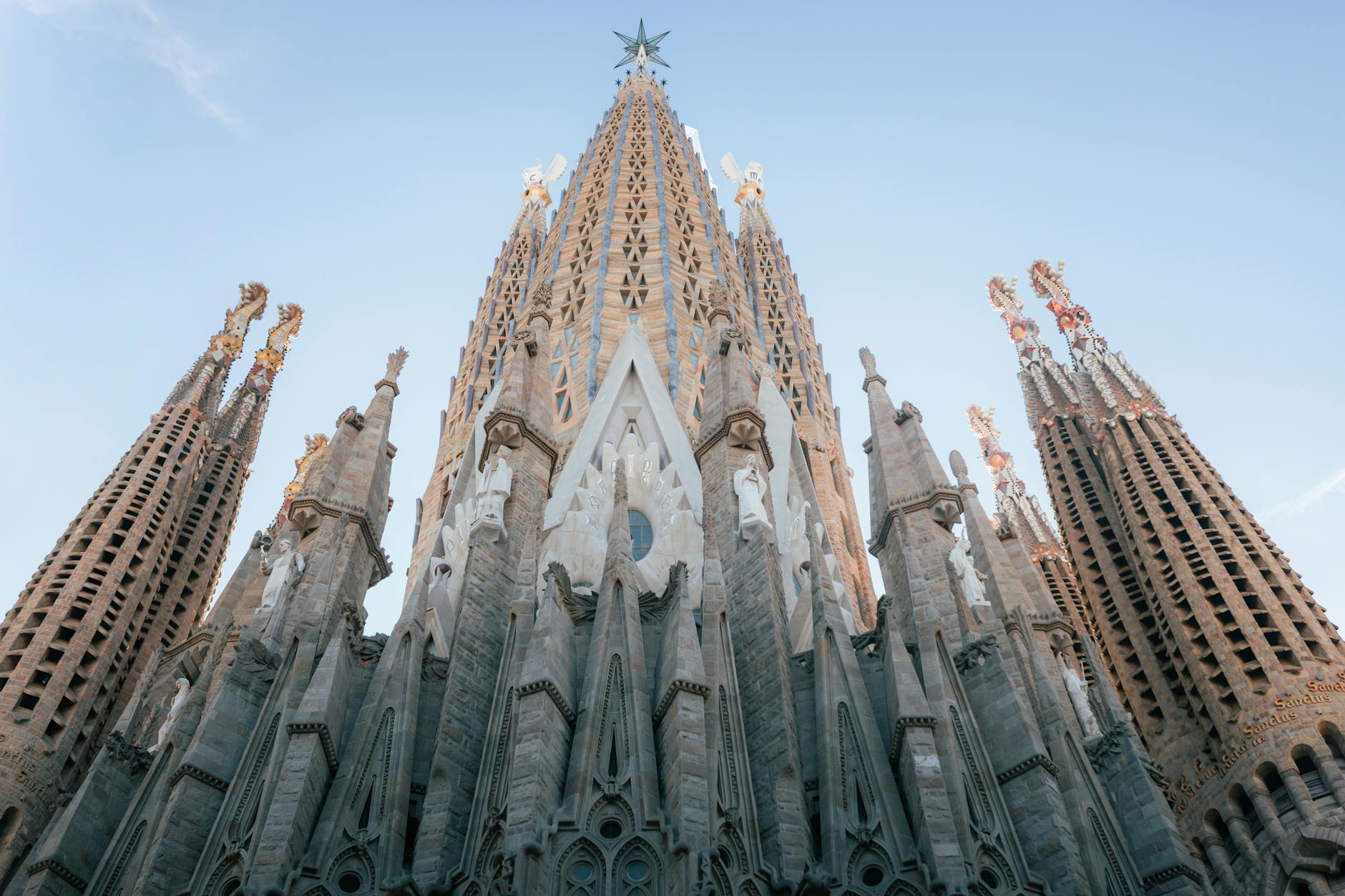
La Sagrada Família — The “2026 Centenary” Experience
In 2026, the world marks 100 years since Gaudí’s death. This is the year the Tower of Jesus Christ (the tallest of the 18 towers) is officially completed.
- Price: €26 (Basic) | €36 (with Towers).
- Book: sagradafamilia.org — Book 4 weeks in advance.
Editor’s Tip: The “Golden Hour” here is literal. Book your entry for 90 minutes before sunset. The stained glass on the west side is “cold” (blues/greens) and the east side is “warm” (reds/oranges). As the sun dips, the interior becomes a hallucinogenic forest of light.
MNAC (Museu Nacional d’Art de Catalunya)
Located in the Palau Nacional on Montjuïc. It holds the world’s finest collection of Romanesque church paintings—frescoes literally peeled off the walls of Pyrenean churches to save them from looters.
- Price: €12. Free on Saturdays after 15:00 and the first Sunday of the month.
Editor’s Tip: Don’t just look at the art. Head to the Rooftop Viewpoint. It offers the best 360-degree view of the city, the Magic Fountain, and the Tibidabo mountain without the Sagrada Família crowds.
Casa Vicens — The “Hidden” Gaudí
Gaudí’s first house. Because it is in the residential neighbourhood of Gràcia and only opened to the public recently, it has 70% fewer crowds than Casa Batlló or La Pedrera.
- Price: €18.
Editor’s Tip: This is Gaudí before he went fully “organic.” It is a Neo-Mudéjar dream of tiles and smoking rooms. Go here instead of the crowded houses on Passeig de Gràcia for a more intimate look at his genius.
The Gothic Quarter — The “Temple of Augustus” Hack
Most people get lost in the souvenir shops of the Barri Gòtic.
Editor’s Tip: Find Carrer del Paradís, 10. Inside a small courtyard are four massive 2,000-year-old Roman columns from the Temple of Augustus. It is free, silent, and hidden in plain sight.
- Gràcia: Once a separate village, it still feels like one. Low-rise buildings, no chain stores, and the best plazas for a mid-day coffee.
- Poble-sec: The “Foodie” frontier. Home to Carrer de Blai (the street of tapas) and the city’s best independent theatre scene.
- El Born: Medieval streets meet high-end boutiques. Visit the Mercat del Born—a former market turned into an archaeological site.
- Poblenou: The “Design District.” Where the beach meets old industrial warehouses turned into tech hubs and craft breweries.
- Budget (€35–€60): Sant Jordi Hostels Rock Palace. High-end design, a rooftop pool, and central.
- Mid-Range (€160–€250): Casa Bonay. A 19th-century mansion turned into a hub for the city’s creative class. It has the best hotel coffee shop in Europe.
- Splurge (€500+): Hotel Majestic or The Edition Barcelona. The Majestic is the “Grand Dame” of the city; The Edition is the 2026 peak of cool near the Cathedral.
- Where NOT to Stay: Las Ramblas. It is noisy, the rooms are often damp/dark, and you are a target for pickpockets the moment you step out of the door.
In Barcelona, “Doing a Vermut” is a social necessity.
- The Ritual: Sunday at 12:30 PM. Order a Vermut de la casa (fortified wine with botanicals), served with an olive, an orange slice, and a “sifón” (soda water).
- The Accompaniment: It must be eaten with conservas (high-end tinned seafood like mussels or cockles) and patatas bravas.
- Dinner Timing: If you show up for dinner at 7:00 PM, the restaurant will be empty or filled with tourists. Locals eat at 9:30 PM.
- The “Tapas” Legend: Quimet & Quimet (Poble-sec). A tiny, standing-room-only bar lined with wine bottles. Order the Montadito with salmon, yoghurt, and truffle honey. ~€4 per piece.
- The “Authentic” Market: Skip the Boqueria (which is 80% fruit cups for tourists now). Go to Mercat de Santa Caterina. It has the same quality of produce but serves the local neighbourhood. Eat at Cuines Santa Caterina inside.
- The Seafood Rule: Never eat Paella on Las Ramblas. For the real deal, take the V15 bus to Barceloneta and eat at Can Majó or 7 Portes. Remember: Paella is a lunch dish. Eating it for dinner marks you as a tourist.
- T-Mobilitat: The paper T-10 tickets are dead. Download the T-Mobilitat app or buy a plastic card. The best value is the T-casual (10 journeys for ~€12).
- The Airport (L9 Sud): The Metro line 9 connects the airport to the city, but it’s slow. The Aerobús (€6.75) is still the fastest way to Plaça de Catalunya.
- The “Superilla” Walk: Walk through the Eixample Superblocks. These are areas where car traffic is restricted to the perimeter, creating massive pedestrian islands. It is the future of urban living.
- The “Bunkers del Carmel” (The Truth): This was the city’s best sunset spot. In 2026, it is fenced off at night to prevent parties. The Alternative: Go to the Mirador de l’Alcalde on Montjuïc. It’s free, has gardens, and offers a better view of the shipping port and the sea.
- The “Santa Maria del Mar” Silence: Visit this 14th-century church in El Born at 5:00 PM. It is the purest example of Catalan Gothic architecture—wide, flat, and hauntingly empty. It is the soul of the city.
- The “Fabra Observatory” View: For the highest view in Barcelona, don’t go to the Tibidabo amusement park. Go to the Fabra Observatory. On summer nights, they do “Dinner with Stars.” It is the most romantic spot in Spain.
- Pickpockets: Barcelona is the world capital of petty theft. They do not use violence; they use distraction. Never put your phone on the table. Never put your bag on the back of your chair. On the Metro, wear your backpack on your front.
- Water: The tap water is safe to drink but tastes terrible (highly chlorinated). Most locals use a “Brita” filter or buy large jugs.
- Language: Locals speak Catalan first, Spanish second. A “Bon dia” (Good day) or “Mercès” (Thank you) will open doors that “Hola” and “Gracias” won’t.
- Sunday Closures: Almost all shops (including clothing and supermarkets) are closed on Sundays. The only exceptions are the Maremagnum mall at the port and restaurants.
- Is Barcelona expensive? It is mid-range for Europe. A beer is €4, a coffee is €2.20. Hotels are the major expense.
- Can I go to the beach? The city beaches (Barceloneta) are crowded and the water is “fine.” For real Mediterranean beauty, take the R1 train 30 minutes north to Ocata or Sant Pol de Mar.
- How many days? Four days is the absolute minimum to see the city and the mountain of Montserrat.
- Is the “Las Ramblas” walk worth it? Walk it once from Plaça de Catalunya to the Statue of Columbus just to say you did, then never go back. The real life is in the side streets.
Final Editor’s Tip: If you have only 2 hours, go to the Hospital de Sant Pau Recinte Modernista. It is a complex of 26 “Palaces for the Sick” designed by Lluís Domènech i Montaner. It is more colourful, more peaceful, and more sprawling than anything Gaudí built. It is the ultimate hidden masterpiece of Barcelona. Ultrathink.