Da Nang (DAD) — The Complete 2026 Airport Guide
Da Nang has one thing almost no other beach gateway can match: the airport is barely 3 km from downtown, so you can be on My Khe beach in ten minutes. The catch isn’t the airport — it’s arriving unprepared for Vietnam’s visa rules and the taxi touts in the arrivals hall. Get those two right and DAD is one of the easiest arrivals in Southeast Asia.
Last verified: July 2026. Fares, terminal details and Vietnam’s entry rules change often — confirm the specifics on your ticket and on the official evisa.gov.vn portal before you travel.
Quick reference
| Detail | What you need to know |
|---|---|
| Airport | Da Nang International Airport, IATA DAD / ICAO VVDN — central Vietnam’s gateway and the country’s third-busiest airport after Hanoi and Ho Chi Minh City, handling around 15 million passengers a year |
| Location | ~3 km from downtown Da Nang and the Han River — one of the most central major airports in Asia. My Khe beach is ~5 km; Hoi An ~30 km south; Hue ~100 km north |
| Terminals | T1 — domestic flights. T2 — international (opened 2017). The two are adjacent buildings, a short walk apart |
| Into the city | Grab ~50,000–70,000₫ (~$2–3) to the centre · airport taxi (Vinasun / Mai Linh) ~90,000–130,000₫ (~$4–5) · Hoi An by Grab ~250,000–350,000₫ (~$10–14) |
| Entry | 45-day visa-free for UK, France, Germany, Italy, Spain, the Nordics and more. US, Canadian and Australian passports are not exempt — get the 90-day e-visa at official evisa.gov.vn ($25/$50) |
| Watch out for | Taxi touts in arrivals quoting 500,000₫+ · fake “e-visa” websites · passport under 6 months’ validity · the airport’s small, crowded international arrivals hall at peak Korean-flight times |
The best thing about DAD: you’re basically already there
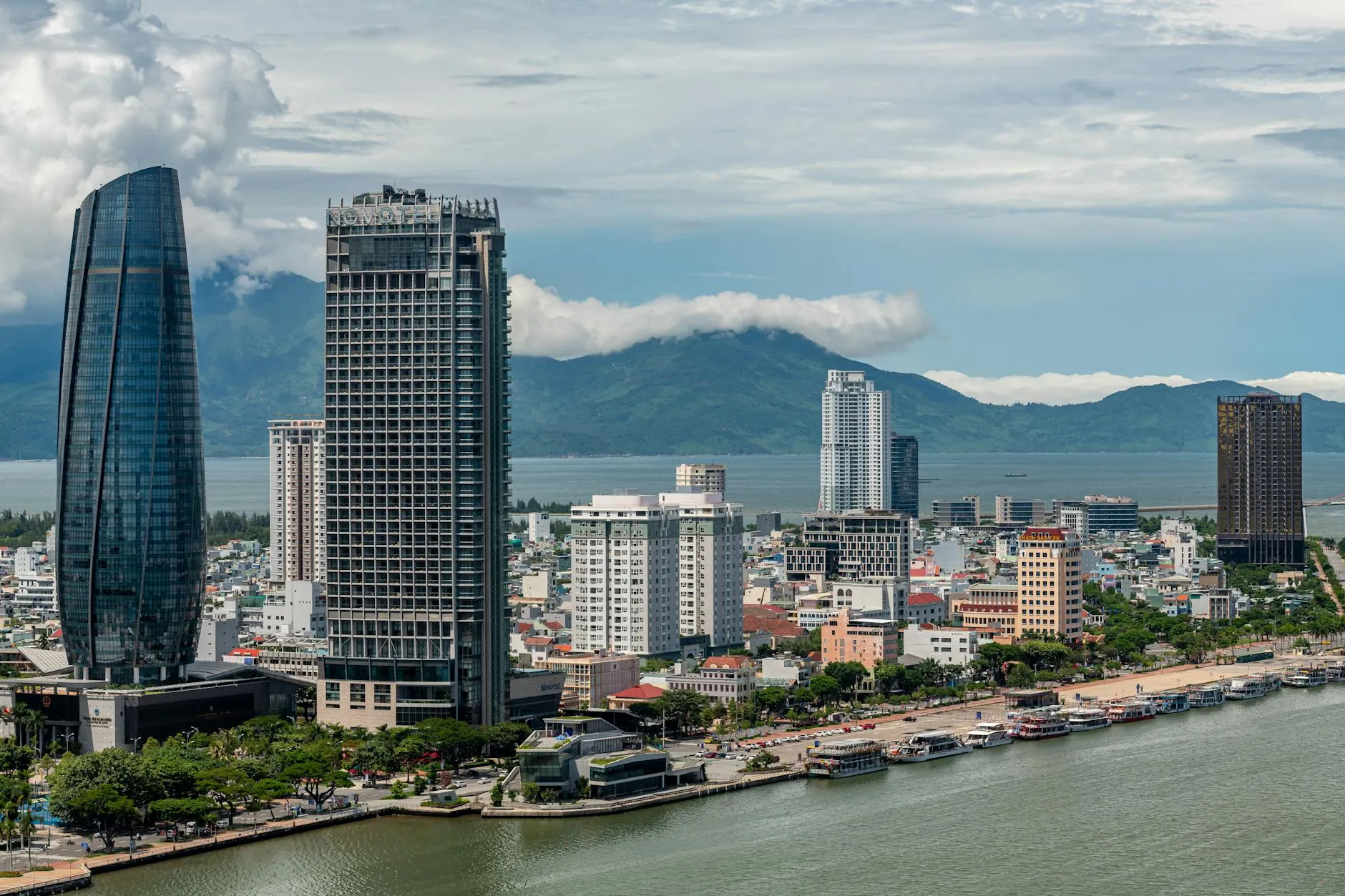
Most beach airports make you earn the beach. Da Nang doesn’t. The runway sits about 3 km from the city centre and the Han River, wedged right into the middle of the city, which makes it one of the most central major airports anywhere in Asia. A Grab to a downtown or riverside hotel is a 10–15 minute, sub-$3 ride; My Khe beach is barely further. There is no 60-km rail slog and no airport-express to decode — the “getting into town” problem that dominates most airport guides is, here, almost trivial.
The layout is just as simple. There are two terminals side by side: Terminal 1 for domestic flights (to Hanoi, Ho Chi Minh City, Nha Trang, Da Lat and the rest) and Terminal 2 for all international flights, opened in May 2017 and still the smartest-feeling part of the airport. They’re adjacent buildings a short covered walk apart, so a domestic-to-international connection here is a walk, not a shuttle. Most travellers arrive on a single international flight from Seoul, Bangkok, Singapore, Kuala Lumpur or a Chinese city and walk straight out — DAD is overwhelmingly a point-to-point leisure airport, not a hub.
Getting into Da Nang — and out to Hoi An
Because the airport is so close in, the ride is cheap and quick. The only real decision is Grab versus the official taxi rank, and the only real hazard is the touts. Here’s the honest comparison:
| Option | To central Da Nang | To Hoi An (~30 km) | Verdict |
|---|---|---|---|
| Grab (app) | ~50,000–70,000₫ (~$2–3), 10–15 min | ~250,000–350,000₫ (~$10–14), ~45 min | Cheapest and cleanest — price fixed in-app, no haggling. The default |
| Airport taxi (Vinasun / Mai Linh) | ~90,000–130,000₫ (~$4–5), metered | ~380,000–450,000₫ (~$15–18), metered | Reputable if you use the marked rank and insist on the meter |
| Private car transfer | from ~$8–10 (pre-booked) | from ~$13–18 (4-seat) | Worth it with luggage or a group; driver waits with a name board |
| Hotel / resort shuttle | often free or fixed | often fixed | Simplest if your hotel offers it — arrange before you fly |
Grab is the move — but download it before you land
Grab is dominant across Vietnam and it’s the single best answer at DAD: you see the price before you accept, it’s paid by card or cash, and there’s no negotiation. The one requirement is a working data connection to book it, so grab a SIM or eSIM before or on arrival. The official Grab pickup point is signposted just outside the terminal — walk past the crowd at the doors to reach it.
The taxi-tout trap
This is the one thing to be genuinely alert to. Freelance drivers work the arrivals hall and the doors, offering “taxi, taxi” and quoting fixed prices of 500,000–700,000₫ for a ride that should cost a fraction of that. Ignore them. Use the Grab pickup point, the official Vinasun or Mai Linh rank (their cars are clearly branded), or your pre-arranged transfer. If you take a metered taxi, make sure the meter is running from zero.
Entry: Vietnam’s visa rules, and the rule everyone gets wrong
Vietnam’s entry system is genuinely confusing, and the internet is full of stale and outright fraudulent advice about it. Here is the current, verified picture for 2026 — read the part that matches your passport.
- 45-day visa-free (UK & much of Europe). Citizens of the UK, France, Germany, Italy and Spain, plus a wider list that includes the Nordic countries (Denmark, Sweden, Norway, Finland), Japan, South Korea and a batch of other European states, get up to 45 days visa-free. You arrive with your passport alone — no application, no fee. This unilateral exemption is confirmed running through 2028, but the country list has been tweaked repeatedly, so check yours against the official portal before you book.
- Everyone else needs the e-visa — this is the rule that trips people up. US, Canadian and Australian passport holders are NOT on the visa-free list. You need Vietnam’s 90-day e-visa: apply on the official government site, evisa.gov.vn, for $25 single-entry or $50 multiple-entry, allow around three working days, and print or save the approval to show at the desk. The e-visa is open to essentially all nationalities and is valid at Da Nang.
- Use the official site — the scam ecosystem is huge. The only legitimate portal is evisa.gov.vn (a .gov.vn address). Countless lookalike sites — .com, .net, “govt.vn” imitations — charge $50–200 for the same $25 visa, and some simply harvest your passport and card details. Don’t click a search ad; type the address yourself. The official portal never processes through PayPal-style consumer checkouts under a private brand.
- Passport validity: six months. Whichever route you take, your passport must be valid for at least six months beyond your date of entry, with blank pages. This is enforced at check-in and at the DAD desk.
- Visa-free vs e-visa is a duration trade-off. Visa-free gives you 45 days; the e-visa gives you up to 90. If you’re a UK/EU traveller planning a longer stay, the paid e-visa buys the extra time — otherwise the free 45 days is plenty for a beach-and-Hoi-An trip.
The single most common Da Nang mistake is an American or Australian visitor assuming the “Vietnam is visa-free now” headlines apply to them. They don’t. If your passport isn’t on the exemption list, you must arrange the e-visa in advance — you cannot simply turn up.
Lounges
DAD is a small international airport, so the lounge scene is modest but real — and if you carry a Priority Pass, you’re covered on both the international and domestic side.
- CIP Orchid Lounge — the main international lounge, airside in Terminal 2, open 24 hours. Priority Pass accepted, and it’s on several premium-card lounge networks. Two honest caveats: there’s a roughly 3-hour stay cap, and it can hit capacity and turn people away during the late-evening peak (~21:00–22:30) when the outbound Korea/China waves stack up.
- Vanda Lounge — a second international option in Terminal 2, listed on the mezzanine level; Priority Pass accepted. Useful overflow if the Orchid is full.
- SH Premium Lounge (the former Song Han Business Lounge) — on the domestic side in Terminal 1, open roughly 04:00 to midnight, Priority Pass accepted. This is the one for a domestic connection or an early Hanoi/Saigon departure.
None of these are flagship international lounges — expect a comfortable seat, decent Vietnamese coffee, snacks and reliable Wi-Fi rather than a spa. At peak times, treat lounge access as a nice-to-have you may have to queue for, not a guarantee.
Food, SIM, money and Wi-Fi
Food: the international terminal has cafés, a handful of restaurants and convenience outlets, but choice is limited and airport prices are steep by Vietnamese standards. If you have time before a departure, eat in the city first — a proper bowl of mì Quảng or bún chả cá downtown costs a fraction of an airport sandwich. Landside on the domestic side you’ll find more of the familiar Vietnamese chains.
SIM & eSIM: there are SIM-card counters in the arrivals areas of both terminals, and because you’ll want data immediately for Grab, sorting connectivity is the first thing to do on landing. An eSIM bought before you fly is the least-hassle route — you land already online. Viettel, Vinaphone and Mobifone all have good Da Nang coverage.
Money: use the bank ATMs in the terminals rather than the exchange counters, and if an ATM offers to bill you in your home currency, decline and choose Vietnamese đồng. Vietnam is still largely a cash country for taxis, markets and small cafés, though Grab and hotels take cards. Note that the đồng runs to large numbers — a “20” note is 20,000₫ — so check the zeros.
Wi-Fi & practicalities: free terminal Wi-Fi is available; there are ATMs, currency exchange, pharmacies and left-luggage on site. The international terminal is bright and modern; the domestic terminal is functional and can feel crowded at peak departure banks.
Connections and transfer times
DAD is not a connecting hub, so most travellers never touch this — but if you’re joining a domestic flight to an international one (or vice versa), plan for the standard Vietnamese process rather than an airside transit.
On an international arrival continuing on a domestic flight, you’ll clear immigration, collect your checked bags, and re-check them for the onward flight at Terminal 1 — there is no seamless airside transfer for separate tickets, and even on a through-ticket you should expect to pass landside between the two terminals. The good news is that T1 and T2 are adjacent, so the walk between them is short and covered.
There’s no published single “minimum connection time” you can lean on the way you can at a big hub, so if you’re self-connecting on separate tickets, give yourself a generous buffer — allow for immigration, baggage reclaim, re-check and a fresh security screen. Two hours is comfortable for a domestic-to-international self-connection here; less than that and you’re gambling on the immigration queue.
Frequently asked questions
How far is Da Nang airport from the city and the beach?+
Very close — the airport is about 3 km from central Da Nang and the Han River, and roughly 5 km from My Khe beach. It’s one of the most central major airports in Asia, so a Grab to a downtown or beachfront hotel is a 10–15 minute ride costing around 50,000–70,000₫ (about $2–3). Hoi An is about 30 km south, roughly 45 minutes by car.
Do UK and European travellers need a visa for Vietnam in 2026?+
No, not for a short trip. UK, French, German, Italian and Spanish citizens — plus the Nordic countries, Japan, South Korea and a wider European list — get up to 45 days visa-free and simply arrive with their passport. The exemption is confirmed running through 2028, but the exact country list has changed several times, so verify yours on the official evisa.gov.vn portal before booking.
Do US, Canadian or Australian citizens need a visa for Da Nang?+
Yes. US, Canadian and Australian passport holders are not on Vietnam’s visa-free list and must arrange a visa before arrival. The simplest route is the 90-day e-visa from the official government site, evisa.gov.vn, costing $25 single-entry or $50 multiple-entry, with about three working days’ processing. Do not turn up expecting visa-free entry.
What is the official Vietnam e-visa website, and how do I avoid scams?+
The only official portal is evisa.gov.vn — a genuine .gov.vn address. Dozens of lookalike sites (.com, .net, “govt.vn” imitations) charge $50–200 for the identical $25 visa and some harvest your passport and card data. Type the address in yourself rather than clicking a search-ad, and be wary of any site promising “express” processing for a big markup — standard processing is the same for everyone.
How do I get from Da Nang airport to Hoi An?+
Hoi An is about 30 km south, roughly 45 minutes. A Grab car runs about 250,000–350,000₫ ($10–14); a metered Vinasun or Mai Linh taxi is roughly 380,000–450,000₫ ($15–18); a pre-booked private transfer with a name board at arrivals starts around $13 for a 4-seat car and is the lowest-stress option after a long flight. There’s no direct train — Hoi An has no railway station.
Is Grab available at Da Nang airport, and is it better than a taxi?+
Yes, Grab is widely available and is usually the best choice — you see the fixed fare before you accept, so there’s no haggling. You just need a data connection to book it, so buy a SIM or eSIM before or on arrival. Use the signposted Grab pickup point outside the terminal. Official Vinasun and Mai Linh taxis are also fine if you use the marked rank and the meter.
Should I worry about taxi touts at Da Nang airport?+
Yes — this is the main hazard. Freelance drivers in the arrivals hall quote inflated fixed prices, sometimes 500,000–700,000₫, for a ride that should cost a fraction of that. Ignore them and use Grab, the official Vinasun/Mai Linh rank, or a pre-arranged hotel or private transfer. If you take a metered taxi, confirm the meter starts from zero.
How does connecting between international and domestic flights work at DAD?+
Terminal 2 handles international flights and Terminal 1 handles domestic ones, and they’re adjacent buildings a short walk apart. There’s no seamless airside transit: on an international arrival you clear immigration, collect and re-check your bags, and pass to the other terminal landside. If you’re self-connecting on separate tickets, allow at least two hours to cover the immigration queue, baggage and a fresh security check.
At a glance
| Codes | DAD / VVDN — Da Nang International Airport |
| Terminals | T1 domestic · T2 international (opened 2017) · adjacent, short walk apart |
| Distance to city | ~3 km to central Da Nang · ~5 km to My Khe beach · ~30 km to Hoi An |
| Cheapest into town | Grab, ~50,000–70,000₫ (~$2–3), 10–15 min |
| To Hoi An | Grab ~250,000–350,000₫ ($10–14) · private car from ~$13 |
| Entry (UK/EU) | 45 days visa-free — passport only |
| Entry (US/CA/AU) | 90-day e-visa at official evisa.gov.vn, $25/$50 |
| Lounges | CIP Orchid & Vanda (T2, Priority Pass) · SH Premium (T1, Priority Pass) |
| Wi-Fi | Free terminal Wi-Fi |
Before you fly
- 📊 Check what a good fare to Da Nang looks like — our price-check tool shows the typical deal range so you know a bargain when you see one.
- 🧳 Baggage checker — confirm your airline’s carry-on and checked allowance before you pack.
- 🌏 Vietnam travel guide — when to go, how to string Hanoi, Hoi An and Saigon together, and the visa detail in full.
🌏 Planning the trip? Read our Vietnam travel guide — best time to go, where to stay, and how to get around.