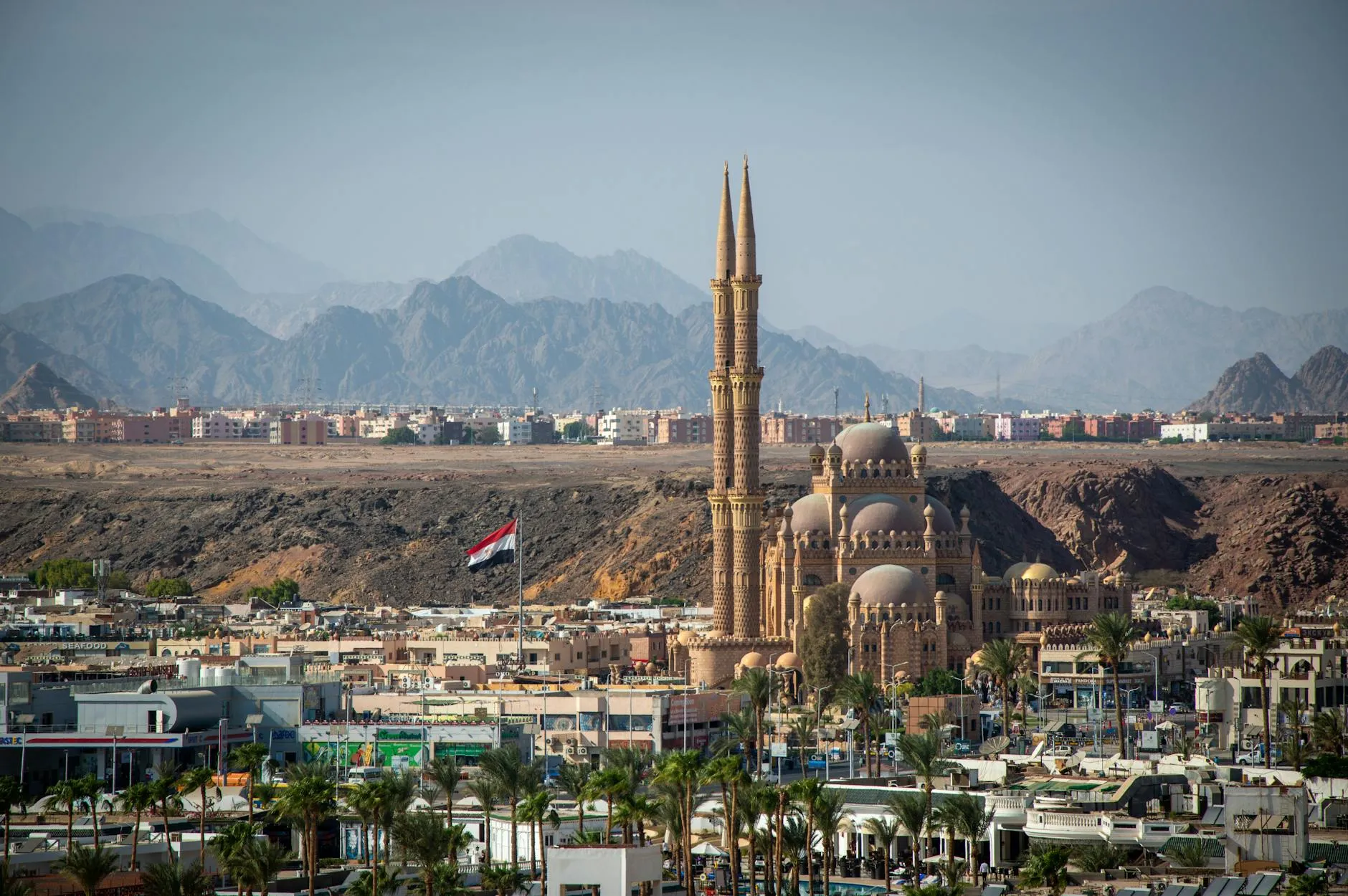
Sharm El Sheikh (SSH) — The Complete 2026 Airport Guide
Here is the thing most people flying into Sharm don’t realise until they’re at the desk: if you’re only here for the beach and the diving, you probably don’t need an Egypt visa at all. South Sinai hands out a free 15-day entry stamp on arrival. That single fact changes how you pack, what you pay, and whether you should even think about a day trip to the Pyramids. This guide walks you through it, plus getting to your resort without being fleeced by a taxi.
Last verified: July 2026. Egyptian entry rules, terminal assignments and transfer prices change often — confirm the specifics on your ticket, with your dive centre, and at official signage before you travel.
Quick reference
| Detail | What you need to know |
|---|---|
| Airport | Sharm El Sheikh International Airport, IATA SSH / ICAO HESH — the Red Sea’s main resort gateway, roughly 6.8 million passengers in 2024, mostly charter and holiday traffic from the UK, Germany, Poland, Scandinavia and Eastern Europe |
| Location | South Sinai, about 15 km (9 mi) north of Naama Bay — roughly a 15–20 minute drive to the main resort strips |
| Terminals | Terminal 1 (opened 2007) handles the great majority of international flights. Terminal 2 is the older building, mostly domestic and overflow. Check the terminal on your boarding pass |
| Entry | Staying only in South Sinai? You get a free 15-day “Sinai-Only” stamp on arrival — no visa needed. Going to Cairo, Luxor or Hurghada, or staying longer? You need the full tourist visa — $30 on arrival, $25 as an e-Visa |
| To your resort | Most arrive on a pre-paid package transfer. Otherwise: a pre-booked private car runs about €9–15; airport taxis have no meter, so agree the fare first |
| Watch out for | Taxi drivers quoting in euros with no meter · the Sinai stamp not covering mainland Egypt · the Pearl Lounge being Terminal 1 only · euro prices carrying a mark-up |
The big one: you may not need an Egypt visa at all
Egypt normally asks most visitors for a visa — either a $30 visa-on-arrival sticker (raised from $25 in March 2026) or a $25 e-Visa arranged online. But Sharm El Sheikh sits inside a special zone with its own rule, and it’s the single most useful thing to understand before you fly.
If you arrive at SSH and intend to stay only within South Sinai — that means Sharm El Sheikh, Dahab, Nuweiba, Taba and St Catherine’s Monastery — for up to 15 days, you are given a free “Sinai-Only” entry permit stamped into your passport on arrival. No fee, no advance application. You simply tell the immigration officer you’re staying in the resorts. For a normal beach-and-diving holiday, that’s almost everyone, and it means you can walk straight past the visa kiosk.
Most European and Western nationalities qualify for this (UK, EU, US, Canada, Australia and more), but it isn’t literally every passport — a handful of nationalities always need a pre-arranged visa, so check your own before you rely on it.
What about Ras Mohammed and the dive sites?
This is where honest advice matters. Visiting Ras Mohammed National Park by land is generally fine on the Sinai stamp. But boat trips to certain offshore dive sites — the famous SS Thistlegorm wreck is the usual example — sometimes require the full Egyptian visa rather than the Sinai permit, because of where the boats operate. Rules are applied inconsistently and can change, so ask your dive centre directly when you book, and if in doubt, buy the full visa. It’s only $30 on arrival ($25 as an e-Visa) and it removes the question entirely.
If you do need the full visa
You have two easy routes. On arrival: buy the visa sticker for US$30 in cash at a bank kiosk in the arrivals hall before you reach the immigration desk — it’s a 30-day tourist visa covering all of Egypt. Online in advance: apply for the e-Visa at the official government portal visa2egypt.gov.eg ($25 — now cheaper than the $30 airport sticker) and arrive with it already approved. Either way, your passport must be valid for at least six months from your arrival date. Already in Sharm on the free stamp and changed your mind about Cairo? You can still upgrade at the airport bank kiosk or at a passport office in town.
Terminals: which one is yours
Sharm has two passenger terminals, and unlike a true transfer hub the distinction is simple. Terminal 1, opened in 2007, is the larger, more modern building and handles the overwhelming majority of international flights — most UK, European and charter arrivals land here. Terminal 2 is the older, smaller building (modernised back in 2004) used mainly for domestic services and some overflow. Most carriers consolidated into T1 after it opened.
The airport carries a broad charter and scheduled mix: British Airways, easyJet, Wizz Air, Turkish Airlines and Air Cairo among the scheduled names, plus heavy seasonal charter volume from the UK, Germany, Poland, Scandinavia and Russia. Signage and announcements are typically in Arabic, English and Russian, reflecting the historic visitor mix.
Getting to Naama Bay, Hadaba and Nabq
The airport is close — about 15 km to Naama Bay, less to the Nabq hotel zone right beside it — so this is a short hop, not an epic transfer. How you do it matters more than how far.
| Option | Rough cost | Notes |
|---|---|---|
| Package transfer | Included | If you booked a package holiday, a coach or minibus transfer is almost always part of it — look for your operator’s rep in arrivals. The no-stress default |
| Pre-booked private car | ~€9–15 | Fixed price online (a saloon for up to 3–4 people starts around €9 on the main transfer sites), driver meets you, no haggling at the kerb. The best value if a transfer isn’t already included |
| Airport taxi | Negotiated | No meter exists — you agree a price before you get in. Drivers routinely quote in euros and expect to be bargained down; settle the number before your bags go in the boot |
| Hotel shuttle | Varies | Some resorts run their own airport pickup — worth asking your hotel before you travel, especially for late-night arrivals |
The taxi reality — and no reliable Uber
Airport taxis in Sharm are not metered, and prices for tourists are negotiable rather than fixed. Local rides cost only a modest number of Egyptian pounds, but arriving visitors are frequently quoted a much higher euro figure — so the golden rule is to agree the total price out loud before you set off, ideally in EGP. Do not assume you can order an Uber or Careem: ride-hailing apps have historically not operated dependably in Sharm El Sheikh, and recent reports say they still don’t. Treat a pre-booked private transfer or your hotel’s own car as the fixed-price alternative to haggling.
Lounges
There is essentially one lounge to know: the Pearl Lounge in Terminal 1, the airport’s only lounge for international departures. It’s airside, upstairs past the main security check, reached by lift. It’s open 24 hours with a maximum stay of three hours, and it takes Priority Pass as well as paid walk-ins from around $38 per person, subject to space on the day.
Expect complimentary snacks and soft drinks, comfortable seating, runway views, fast Wi-Fi and a kids’ area. One thing to set expectations on: recent visitors report no alcohol is served, so this is a quiet, food-and-coffee lounge rather than a bar. And to repeat the point that catches people — if you fly out of Terminal 2, this lounge isn’t available to you.
Money, Wi-Fi and practicalities
Currency: the Egyptian pound (EGP) is the only legal currency, and the pound has moved a lot — figure roughly 1 euro to 52–55 EGP in 2026, but check the day’s rate. In Sharm’s tourist areas shops, taxis and some cafés will happily take euros, pounds or dollars, but they build in a safety margin, so you typically pay a 5–15% premium and get any change back in Egyptian pounds. For anything beyond a quick tip, pay in EGP.
Cash & cards: use bank ATMs in the terminal rather than exchange booths, and if an ATM or card machine offers to charge you in your home currency, decline it and choose EGP — the “convenience” conversion rate is poor. Keep some small euro or dollar notes for tips and the arrival visa, since the $30 visa sticker is a cash purchase.
Wi-Fi & essentials: the terminals have Wi-Fi, ATMs, currency exchange, cafés and duty-free. A local prepaid SIM or an eSIM bought before you land is the cheapest way to stay online; you’ll be offered SIMs in arrivals.
Connections and transfers
Be clear-eyed about what Sharm is: a point-to-point leisure airport, not a connecting hub. The vast majority of passengers arrive on a direct charter or scheduled flight from home and leave the same way. There’s no complex transfer machine here, and no published international-to-international connection routine worth planning around.
If your itinerary does involve a connection — most commonly a domestic EgyptAir or Air Cairo hop to or from Cairo — remember the visa consequence: the moment your journey touches mainland Egypt, the free Sinai stamp no longer covers you and you need the full tourist visa. For a self-connection on separate tickets, collect your bags, clear immigration on the correct entry status, and re-check in with plenty of margin.
Frequently asked questions
Do I need a visa to visit Sharm El Sheikh in 2026?+
If you’re staying only within South Sinai — Sharm El Sheikh, Dahab, Nuweiba, Taba or St Catherine — for up to 15 days, you get a free “Sinai-Only” entry stamp on arrival and don’t need to buy a visa. This covers most European and Western nationalities. If you plan to visit Cairo, Luxor, Aswan or Hurghada, or stay longer than 15 days, you need the full Egyptian tourist visa instead ($30 on arrival / $25 e-Visa).
What is the free Sinai-Only stamp and where is it valid?+
It’s a complimentary 15-day entry permit stamped in your passport at Sharm El Sheikh or Taba airport when you tell immigration you’re staying in the South Sinai resort area. It’s valid only in Sharm El Sheikh, Dahab, Nuweiba, Taba and St Catherine’s Monastery. It cannot be extended, and it becomes invalid the moment you leave the Sinai Peninsula.
Can I visit Ras Mohammed or dive the Thistlegorm on the Sinai stamp?+
Visiting Ras Mohammed National Park by land is generally fine on the free Sinai stamp. Boat trips to some offshore dive sites, such as the SS Thistlegorm wreck, sometimes require the full Egyptian visa rather than the Sinai permit. Rules are applied inconsistently, so ask your dive centre when you book — and if unsure, just buy the full visa ($30 on arrival / $25 e-Visa) to avoid any problem.
How do I get the full Egyptian tourist visa?+
Two ways. On arrival, buy the visa sticker for US$30 in cash at a bank kiosk in the arrivals hall before reaching the immigration desk — it’s valid 30 days for all of Egypt. Or apply in advance for the e-Visa at the official portal visa2egypt.gov.eg for a similar price. Your passport must be valid at least six months from arrival. You can also upgrade from the free Sinai stamp later at the airport kiosk or a passport office in Sharm.
How far is Sharm El Sheikh airport from Naama Bay, and how do I get there?+
Naama Bay is about 15 km (9 miles) from the airport, roughly a 15–20 minute drive. Most package travellers get a coach transfer included in their holiday. Otherwise, a pre-booked private car is fixed-price at around €9–15 and the driver meets you in arrivals. Airport taxis have no meter, so agree the fare before you set off.
Is there Uber in Sharm El Sheikh?+
Not reliably. Ride-hailing apps such as Uber and Careem have historically not operated dependably in Sharm El Sheikh, and recent reports say they still don’t. Your fixed-price options are a pre-booked private transfer or your hotel’s own car service; otherwise you’ll be negotiating with an airport taxi driver, so agree the price up front, ideally in Egyptian pounds.
Which terminal will my flight use?+
Terminal 1, opened in 2007, handles the great majority of international flights, so most UK and European arrivals and departures use it. Terminal 2 is the older building, used mainly for domestic and overflow flights. Always check the terminal printed on your boarding pass — and note the airport’s only international-departures lounge, the Pearl Lounge, is in Terminal 1.
Can I use euros in Sharm, or should I bring Egyptian pounds?+
The Egyptian pound is the only legal currency, but euros, pounds and dollars are widely accepted in Sharm’s tourist areas. The catch is a 5–15% mark-up when you pay in a foreign currency, with change returned in Egyptian pounds. Use bank ATMs for EGP, decline any “pay in your home currency” offer, and keep small dollar or euro notes for tips and the $30 arrival visa.
At a glance
| Codes | SSH / HESH — Sharm El Sheikh International Airport |
| Terminals | T1 (opened 2007, most international) · T2 (older, mainly domestic) |
| Distance to Naama Bay | ~15 km (9 mi), about 15–20 minutes by road |
| Entry (resort stay) | Free 15-day Sinai-Only stamp on arrival — South Sinai only, can’t be extended |
| Entry (rest of Egypt) | Full tourist visa — $30 cash on arrival or $25 e-Visa at visa2egypt.gov.eg; passport valid 6+ months |
| Transfers | Package coach (usually included) · pre-booked private car ~€9–15 · unmetered airport taxi (negotiate); no reliable Uber |
| Lounge | Pearl Lounge, Terminal 1 airside, 24h, Priority Pass or walk-in from ~$38, no alcohol |
| Currency | Egyptian pound (EGP); euros/dollars accepted with a 5–15% mark-up |
Before you fly
- 📊 Check what a good fare to Sharm looks like — our price-check tool shows the typical deal range so you know a bargain when you see one.
- 🧳 Baggage checker — confirm your airline’s carry-on and checked allowance before you pack (charter fares often bundle bags differently to the low-cost carriers).
- 🌍 Egypt travel guide — the Pyramids, the Nile, Luxor, and when to go if you’re pairing the Red Sea with the mainland.
🌍 Planning the trip? Read our Egypt travel guide — the Pyramids, the Nile, the best time to go, and how to pair Sharm’s Red Sea with the mainland.
More deals you might like
 Niš Constantine the Great Airport (INI) Airport Guide 2026 — Free Buses, Cheap Taxis, Real Dinars
 Norwich Airport (NWI) Airport Guide 2026 — The Airport Where Helicopters Outnumber Planes
 Stornoway Airport (SYY) Airport Guide 2026 — Four Miles, Four International Passengers
 Kerry Airport (KIR) Airport Guide 2026 — One Runway, Two Peninsulas