Tehran Imam Khomeini Airport (IKA) — The Complete Guide 2026
IKA currently operates across two terminal buildings with distinct and non-overlapping passenger profiles. Understanding which terminal serves your flight — and understanding the I
Imam Khomeini International Airport (IATA: IKA) is the primary gateway for all international air travel into Iran — a modern, architecturally ambitious terminal located 50km south-west of central Tehran on the vast desert plains of the Tehran Province. IKA serves as the hub for Iran Air, Mahan Air, and a growing range of regional carriers, and handles the full spectrum of Tehran’s international traffic including connections from Turkey, the Gulf states, Europe, Central Asia, and East Asia. In 2026, IKA operates as a unique transit environment: modern in its infrastructure, but subject to specific economic realities, social regulations, and digital restrictions that differ fundamentally from any other major international hub. The cashless payment infrastructure that travellers take for granted across Europe and the Gulf does not function here. Social media platforms are blocked. Dress codes apply from the moment of aircraft arrival. This guide provides the specific, practical intelligence needed to navigate each of these dimensions with clarity — from the terminal layout and the Iranian Tourist Card, to Snapp rideshare, the CIP terminal, and the “night wave” departure phenomenon that makes IKA busiest in the early hours of the morning.
IATA: IKA
Full name: Imam Khomeini International Airport (فرودگاه بینالمللی امام خمینی)
Location: 50km south-west of central Tehran, Tehran Province
Primary carriers: Iran Air, Mahan Air
Currency: Iranian Rial (IRR) — international cards do not work; cash only
Note on Tehran airports: IKA handles all international flights. Mehrabad Airport (THR), located inside the city, handles domestic routes only. Do not confuse the two.
1. Terminal Operations — T1 and the Salam Terminal
IKA currently operates across two terminal buildings with distinct and non-overlapping passenger profiles. Understanding which terminal serves your flight — and understanding the IKA versus Mehrabad distinction — is the foundational navigation requirement before any trip to Tehran.
IKA vs. Mehrabad — A Critical Distinction
Tehran has two airports: Imam Khomeini (IKA) and Mehrabad (THR). This is a source of genuine confusion among first-time visitors and a mistake that has caused missed flights. The rule is absolute: IKA handles all international flights. Mehrabad handles domestic routes only. If your ticket shows IKA, you are at the correct airport for any international arrival or departure. If you are connecting to a domestic Iranian flight after an international arrival, note that the domestic service will depart from Mehrabad — a separate airport inside the city, requiring a taxi or Metro journey from IKA.
Terminal 1 — The Main International Hub
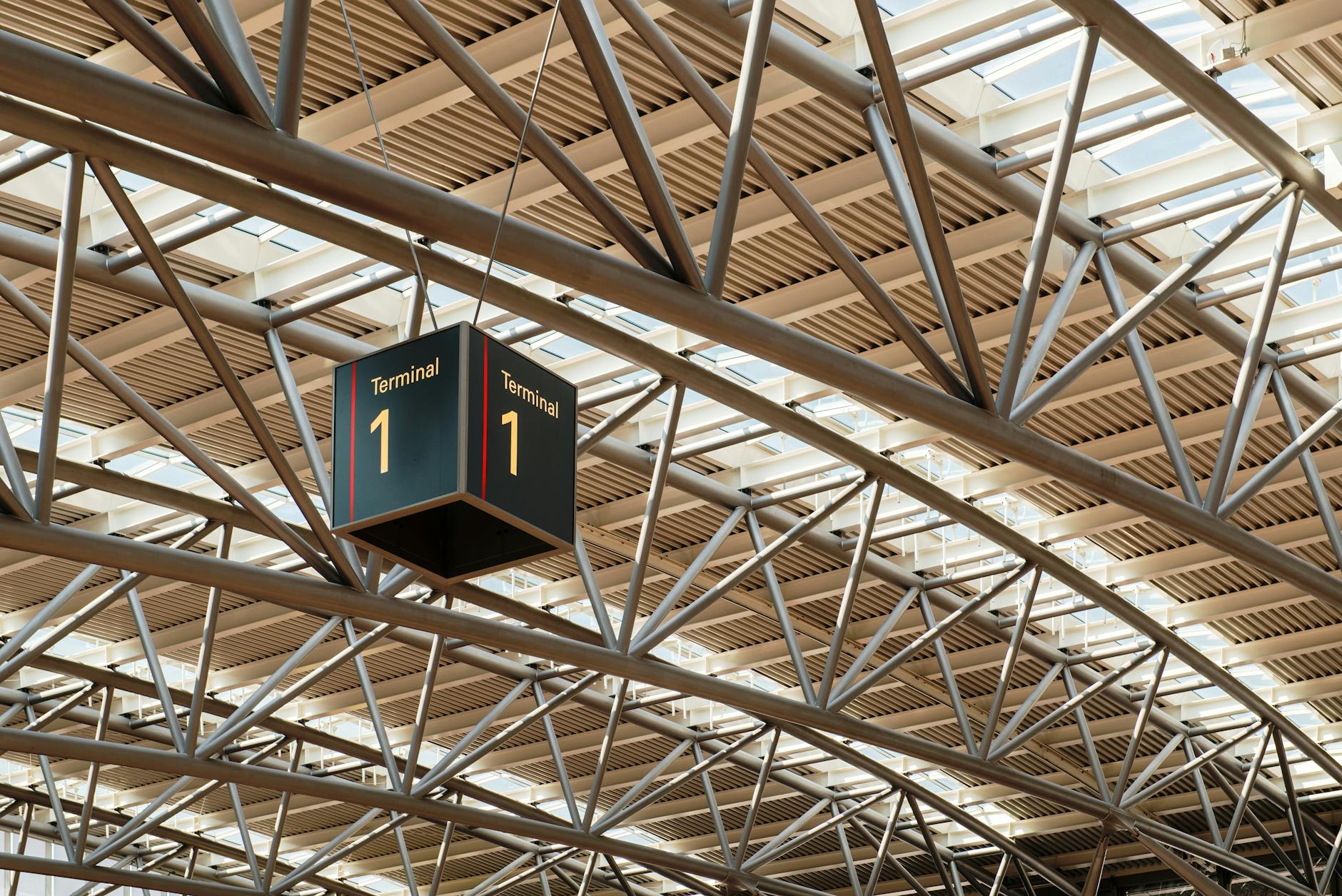
Terminal 1 is IKA’s primary passenger facility and handles virtually all standard international traffic.
Airlines using T1: All major foreign flag carriers operating to Tehran — Turkish Airlines, Qatar Airways, Emirates, Lufthansa, Austrian Airlines, flydubai, and others — alongside Iran Air and Mahan Air international departures. If you are a standard international traveller arriving or departing from Tehran, T1 is your terminal.
Layout: T1 operates on a tiered structure: the ground floor handles international arrivals (immigration, baggage reclaim, customs, and the arrivals hall with exchange booths, SIM card kiosks, and ground transport exits); the upper level handles departures (check-in, security, and the airside departures zone with duty-free, cafés, and the Persian Lounge). The building’s architecture is contemporary and well-maintained — IKA’s physical infrastructure belies some first-time visitors’ expectations about Iranian airports, which in practice is a clean, modern facility.
Duty-free zone (T1): IKA’s duty-free is alcohol-free — the sale of alcohol is prohibited throughout Iran and the airport is not an exception. The duty-free offer covers perfumes, cosmetics, electronics, confectionery, dried fruits and nuts (a genuine Persian speciality), traditional crafts, and saffron. The Persian craft boutiques within T1 offer reasonable-quality souvenirs relative to city market prices; the saffron selection in particular is worth attention, as Iranian saffron is among the world’s finest and airport pricing is competitive.
Peak operating window: IKA’s busiest period is the 23:00–04:00 window. The majority of European and Gulf long-haul departures are scheduled in the late evening and early morning to optimise arrival times in destination cities. This means that while European airports are largely quiet at 02:00, IKA at 02:00 can be operating at near-peak capacity with multiple wide-body aircraft boarding simultaneously. First-time visitors arriving on a day flight will encounter a very different airport from those transiting at midnight.
Salam Terminal (Terminal 2) — Specialist and Pilgrim Traffic
The Salam Terminal (T2) at IKA was purpose-built to handle high-volume pilgrim traffic and has a design capacity of 5 million passengers. In practice, its current operational use is narrower than its capacity suggests.
Current use: T2 is primarily utilised for Hajj and Arbaeen pilgrim flights — the massive seasonal movements of Iranian pilgrims to Mecca (Saudi Arabia) and Karbala (Iraq) that represent some of the largest single-direction passenger flows in global aviation — alongside select seasonal regional charters.
What T2 is not: T2 is not used for standard international flights from Europe, North America, or the major Gulf hubs. The overwhelming majority of international tourists, business travellers, and transit passengers use Terminal 1. Unless your ticket or airline specifically assigns you to T2, assume T1 is your terminal. In practice, approximately 95% of non-pilgrim international travellers will interact exclusively with T1.
2. The 2026 Financial Reality — Cash, the “Cash Wall,” and the Iranian Tourist Card
The single most important practical preparation for any trip through IKA in 2026 is understanding Iran’s financial system as it applies to international visitors. This is not a minor inconvenience — it is a structural reality that requires advance planning before departure from your home country.
International Cards Do Not Work in Iran
Visa, Mastercard, American Express, and all international debit and credit cards are non-functional in Iran. This is a consequence of US-led international financial sanctions that have disconnected Iran from the SWIFT messaging system and international card payment networks. There are no workarounds, no exceptions, and no “some ATMs work sometimes” scenarios to plan around. If you arrive at IKA without physical cash, you cannot pay for anything in the country.
What to bring: You must carry your entire trip budget as physical cash. US Dollars and Euros are the accepted foreign currencies for exchange throughout Iran. Carry both if possible — USD is the standard for larger transactions; EUR is increasingly accepted as a primary exchange currency. Bills must be in excellent condition: new series, clean, without marks, tears, folds, or writing. Iranian exchange dealers routinely reject worn or marked notes. Old-series USD bills (pre-2013 designs) may be refused at some booths.
Calculate your cash requirement in advance and carry it on your person, not in checked luggage. This is the foundational financial preparation for Iran travel and there is no substitute for it.
Exchange Rates — Arrivals Floor vs. Departures Level
Exchange booths operate on both floors of T1. The rates differ meaningfully between them:
- Arrivals floor exchange booths: Convenient but offer lower rates — the standard airport-captive-audience premium applies here as at any international airport.
- Departures level exchange booths: Located on the upper (departures) level of T1, these booths consistently offer better exchange rates than the arrivals floor. If you have the option and are not immediately in need of cash on arrival, changing a smaller amount on the arrivals floor and accessing the departures-level booths during departure is the rate-optimising approach.
There is a well-known structural difference between the “official” government rate and the “market” (sometimes referred to as the bonbast, or “dead-end” street) rate for Iranian Rial. Airport exchange booths in 2026 operate at rates that reflect the functional market environment rather than purely the official rate — but the street exchange rate in Tehran’s city centre is typically marginally better than any airport rate. For the purposes of arriving at IKA with usable currency, exchange on arrival is correct; for extended stays, exchanging further cash at reputable city exchange offices yields modestly better value.
The Iranian Tourist Card — Mah Card and Daric Pay
For travellers who prefer not to carry large amounts of cash in Rial — or who want the convenience of card-like payment throughout their Iran stay — a practical solution exists: the pre-paid Iranian debit card available at kiosks in the IKA arrivals hall.
Services including Mah Card and Daric Pay operate at airport kiosks and offer the following process:
- Present your USD or EUR cash to the kiosk operator.
- Receive a pre-loaded Iranian debit card (linked to the local banking network) loaded with the IRR equivalent of your deposit.
- Use the card like a standard debit card at all shops, restaurants, taxis (on meter), hotels, and retail throughout Iran — wherever Iranian card machines are present.
The Iranian Tourist Card is not a Visa or Mastercard product and has no international connectivity — it functions exclusively within Iran’s domestic banking network. But within that network, it is accepted universally and eliminates the need to carry large IRR banknote quantities. For stays of more than a few days, loading a tourist card with a reasonable daily budget at arrival and topping up at city kiosks is a significantly more convenient approach than managing large Rial cash holdings. The exchange rate at tourist card kiosks is broadly equivalent to the arrivals-floor exchange booth rate.
3. Rules and Social Conduct at IKA — What Applies From the Moment of Arrival
Iranian law applies from the moment your aircraft enters Iranian airspace — and airport staff enforce the relevant rules within the terminal from the moment of disembarkation. These are not customs to be gradually adopted during a city stay; they are legally enforceable requirements at the airport itself.
Dress Code — Hijab Obligation for Women
The hijab requirement is Iranian law, not a cultural suggestion. All women — regardless of nationality, religion, or prior travel experience — are legally required to wear:
- A headscarf covering the hair, before exiting the aircraft.
- A loose-fitting tunic, coat (manteau), or similar garment covering the arms and extending below the hips.
The requirement applies as soon as the aircraft doors open at IKA. Practical preparation: women travelling to Iran should have a headscarf accessible in their hand luggage — not packed in the overhead bin or in checked bags — so it can be worn before disembarkation. Flight attendants on some airlines operating to Iran (including Turkish Airlines and Qatar Airways) will remind passengers of this requirement as the aircraft approaches Iranian airspace.
In 2026, enforcement of dress code standards in central Tehran’s streets and public spaces has varied in intensity across different periods, as it has for many years. The airport, however, remains a strictly monitored zone — airport security and immigration staff consistently enforce compliance at IKA, and the airport environment is not the place to test the boundaries of enforcement. Dress to the standard from the moment of arrival and maintain it throughout the airport transit.
Alcohol — Strictly Prohibited
Alcohol is prohibited throughout the Islamic Republic of Iran with no exceptions for tourists, transit passengers, or airport premises. This has two specific practical implications for international travellers:
- Do not bring alcohol into Iran from a transit point. If your routing includes a transit through Istanbul, Doha, Dubai, or any other airport where duty-free alcohol is available for purchase, do not purchase alcohol for onward travel to Iran. Duty-free alcohol purchased at a transit point will be confiscated at IKA customs — it is not exempt from the prohibition by virtue of being in sealed duty-free packaging. A fine or further consequence may follow.
- IKA’s duty-free is alcohol-free. There is no alcohol for sale anywhere within IKA, in any zone, landside or airside.
Photography Restrictions
Photography within IKA is subject to restrictions that are more stringent than at most international airports. Do not photograph: security personnel or checkpoints; uniformed police or military staff anywhere in the terminal; the airport’s external infrastructure (runways, exterior facades, air traffic control); or immigration desks and officers. Photographing general terminal environments, shops, and public spaces is generally unproblematic — use common sense and, when in doubt, do not photograph. Violations are taken seriously; the worst-case outcome of an innocuous-seeming photograph of a security lane is a device inspection and confiscation of the image.
4. Transport to Central Tehran
The 50km journey from IKA to central Tehran is one of the more variable urban airport-to-city transfers in the world — in terms of time. Under optimal conditions (late night, clear roads), the drive takes 45 minutes. During Tehran’s notoriously severe rush hours (07:30–10:00 and 16:30–20:00), the same journey can take 2 hours or longer. Planning the transport option around this variability is essential.
Snapp or Tap30 — Rideshare Apps (Recommended)
Best for: Travellers with a local SIM card who are comfortable with app-based booking — which, after reading this guide, should be the default for most visitors.
Snapp is Iran’s dominant rideshare platform — functionally equivalent to Uber in terms of the booking experience (request via app, GPS driver tracking, fixed upfront pricing, no cash negotiation). Tap30 is the primary competitor with similar functionality. Both operate from IKA with a designated “Internet Taxi” pickup zone in the airport parking area — drivers do not enter the terminal; follow signage or in-app directions to the specific pickup point.
Requirement: You need a local Iranian SIM card to register and use Snapp, as the app requires an Iranian mobile number for account creation. SIM cards are available from Irancell and Hamrahe Aval kiosks in the arrivals hall — purchase one as your first action after baggage claim (before exiting to the transport zone) and the Snapp setup process takes approximately 5 minutes.
2026 pricing: approximately 8,000,000–12,000,000 IRR (~$12–18 USD equivalent) for a journey to central Tehran, depending on destination zone and time of day. Prices are displayed in the app before confirmation.
Why Snapp is recommended: Fixed pricing eliminates negotiation. GPS tracking provides safety and accountability. The pricing is consistently lower than official taxis for comparable distances. For solo travellers, particularly women travelling alone, the app-based, pre-confirmed driver model provides additional security compared to ad-hoc taxi selection.
Official Airport Taxis (Yellow and Green)
Best for: Passengers who have not yet acquired a local SIM card, or who prefer a traditional direct taxi booking.
Official airport taxis at IKA are identifiable by their yellow and green colour scheme. The fleet includes Toyota Camrys and RAV4s — relatively modern vehicles by Tehran taxi standards. Payment is made either at a pre-pay counter inside the terminal (fixed zone-rate pricing) or by agreeing a fixed price directly with the driver before departing.
2026 pricing: approximately $20–25 USD to central Tehran (or the IRR equivalent). This is the most reliable option for passengers without a local SIM card, and the pre-pay counter option eliminates any fare negotiation entirely.
Practical note: During the post-flight arrival surge — when multiple international flights land within a short window and 300+ passengers simultaneously seek ground transport — the official taxi queue can extend meaningfully. If your timing allows any flexibility, waiting 20–30 minutes for the surge to clear before joining the taxi queue significantly reduces wait time.
Metro Line 8 — Budget Option with Significant Caveats
Tehran Metro Line 8 connects IKA to the Shahed-Baher station on Line 1, from which the broader Tehran Metro network is accessible including connections to the city centre.
Fare: Less than $0.50 USD — the cheapest transport option from IKA by a significant margin.
2026 status and practical limitations:
- Infrequent service: Line 8 operates on an approximately 60–80 minute headway — not a regular urban transit frequency. Depending on when you arrive, you may wait over an hour for the next departure.
- Night service: The Metro stops at approximately 22:00. For the very significant proportion of IKA arrivals that occur between 22:00 and 06:00 (the airport’s busiest window), the Metro is simply not available. Taxi or Snapp is the only viable option for night arrivals.
- Heavy luggage: The combination of a 60-minute headway, platform transfers, and typical Tehran Metro crowding makes Line 8 impractical for passengers with checked-bag-sized luggage.
When Line 8 makes sense: For passengers arriving in daylight hours, without large luggage, who have both time to wait for the service and a destination well-served by Tehran’s Metro network. For the majority of international arrivals — which occur at night, with luggage — the Metro is not a realistic option.
5. Lounges and CIP Terminal — Premium Transit Options
IKA CIP Terminal — Full VIP Landside and Airside Service
The CIP Terminal at IKA (Commercial Important Person terminal — functionally equivalent to a full VIP terminal) is a separate building from the main Terminal 1, offering a completely distinct premium transit experience for pre-booked passengers.
Service model: CIP passengers are driven directly to and from the aircraft in a private vehicle — bypassing the terminal concourse and boarding gates entirely. Airport staff handle baggage collection, immigration processing, and customs clearance on the passenger’s behalf. The passenger waits in the CIP terminal’s private lounge environment while all formalities are completed.
Cost: approximately $100–150 USD per person (2026 pricing) for a single arrival or departure. Must be pre-booked — walk-up access is not available.
Who it is for: Government officials, senior executives, and high-net-worth travellers for whom the time saving and privacy are worth the cost. Also increasingly used by families travelling with elderly members or young children for whom the multi-step immigration and baggage process at T1 creates genuine difficulty. The CIP service effectively converts IKA — which at peak periods can be an operationally demanding transit environment — into one of the smoothest airport experiences available, at a price.
Persian Lounge (T1 Airside)
The Persian Lounge is located in the T1 airside zone, accessible after security and passport control. It is the primary premium lounge for Business Class passengers and paid-entry visitors in the standard terminal environment.
Access: Business Class ticket holders on most airlines operating from T1; paid entry for other passengers (confirm current pricing at the lounge entrance).
Features: The Persian Lounge is notable for two things that are actually hard to find elsewhere in IKA. First, an excellent selection of Iranian sweets and traditional confectionery — various types of shirini (Persian pastries), naan berenji (rice-flour cookies), and dried fruit and nut arrangements that reflect Iran’s extraordinary confectionery tradition at genuine quality. Second, and practically more important: the most reliable high-speed Wi-Fi in the building. IKA’s general terminal Wi-Fi is inconsistent; the Persian Lounge’s dedicated connection is consistently faster and more stable. For passengers needing to complete work, download VPN configurations, or make calls before departure, the lounge’s Wi-Fi quality alone can justify the access cost for a long pre-flight wait.
Non-alcoholic cocktails and mocktails are offered alongside the food selection — sophisticated presentation of fruit-based drinks that reflect a long tradition of non-alcoholic Persian hospitality beverage culture.
The Rexan Hotel — Layover Rest Option
The Rexan Hotel (formerly operating under international chain branding, now independently managed following sanctions-related brand withdrawal) is located directly across from the terminal via a pedestrian bridge — the most immediately accessible accommodation from IKA without any road transit. The hotel offers 6-hour stay packages for layover passengers that provide access to a proper hotel room with shower, bed, and meal service for a fixed short-stay rate. For passengers with connections of 8+ hours who want genuine horizontal rest, the Rexan’s pedestrian bridge access and short-stay packages represent a 10/10 comfort option relative to any in-terminal alternative.
6. Digital Environment — VPN Requirement and Connectivity
Internet Restrictions — Block List and VPN
Iran operates one of the most extensive national internet filtering systems in the world. The following categories of content and services are blocked within Iran’s internet infrastructure:
- Social media: Instagram, Facebook, X (formerly Twitter), TikTok, and virtually all Western social platforms.
- Messaging: WhatsApp, Telegram (intermittent — was blocked, partial restoration), Signal. Note that many Iranians use Telegram via VPN; it is culturally significant locally despite blocks.
- News and information: BBC, VOA, and most major Western news sites.
- Google services: Gmail, Google Maps, Google Drive — all blocked via direct access.
The VPN requirement: A VPN is not optional for any traveller who intends to use social media, messaging apps, or standard email during an Iran visit. Install and test a “Stealth” or “Obfuscated” VPN before your flight. Standard VPN protocols (OpenVPN, WireGuard) are themselves blocked by Iran’s filtering system — only VPNs with stealth/obfuscation capabilities that disguise VPN traffic as standard HTTPS can reliably bypass the filter. Recommended protocols: Shadowsocks, V2Ray, or stealth-mode implementations from established VPN providers. Test the connection before travel, not on arrival at IKA.
At the airport specifically: IKA’s own Wi-Fi network is subject to the same national filtering. Once you have a local SIM card with data connectivity, filtering applies to that connection as well. Your VPN must be installed before you land.
Local SIM Cards — Irancell and Hamrahe Aval
Kiosks for Irancell (the dominant operator) and Hamrahe Aval (MCI) are located in the arrivals hall of T1 after baggage claim. In 2026, SIM registration requires biometric verification — you must present your passport and your facial image is recorded at the point of sale. This is a regulatory requirement, not optional.
Cost: A tourist SIM with approximately 20GB of data is available for approximately $5 USD (IRR equivalent) — among the cheapest tourist data packages at any major international airport. The low cost reflects Iran’s domestic telco pricing rather than tourist pricing.
Why the SIM is essential: Beyond connectivity, the local SIM enables Snapp rideshare registration (requires an Iranian number), use of local navigation apps (Google Maps is blocked — alternatives include Neshan and Balad, which are locally developed mapping apps with excellent Tehran coverage), and general communication within Iran.
7. The “Night Wave” — Departure Strategy for Late-Night Flights
Any passenger departing IKA on a flight scheduled between 01:00 and 04:00 — which accounts for a substantial proportion of all European and Gulf departures from Tehran — is entering the airport’s operational peak. The convergence of multiple wide-body aircraft (Iran Air B747, Mahan Air A340, Turkish Airlines B777, Qatar Airways A350) all processing check-in, security, and immigration within the same 3-hour window creates passenger volumes that can make every stage of the departure process significantly slower than the same process at other times of day.
Recommended arrival time for 01:00–04:00 departures: 4 hours before departure. This is not a conservative buffer for anxious travellers; it is the standard recommendation from airlines, tour operators, and the airport itself for the night wave window. Security and passport control for departures during this window can involve queues of 60–90 minutes under normal conditions. Combined with check-in, baggage drop, the walk to departure gates, and any passport-related processing, 4 hours is the appropriate planning figure.
Insider Tips for IKA in 2026
- VPN first, everything else second: Install and test your stealth VPN before you board the flight to Tehran. It is the single most impactful preparation for the digital environment you are entering. WhatsApp and Instagram will not work without it.
- Cash condition matters: Iranian exchange dealers reject worn, marked, or old-series USD bills without hesitation. Sort your cash before travel — take only clean, new-series notes. Old or damaged bills are worthless at the exchange booth.
- Tourist Card kiosk is the first stop after SIM card: Get your local SIM and tourist card (Mah Card or Daric Pay) in the arrivals hall before exiting. These two items — connectivity and local payment — are the foundations of a functional Iran visit.
- Departures level exchange rate: If you need to exchange more cash on your way out, the departures-level exchange booths at T1 offer better rates than the arrivals floor. Use the departures level for any exchange you are not urgently pressing.
- Headscarf accessible in hand luggage: Women should have their headscarf in a jacket pocket or the top layer of their hand bag — not packed away. The requirement is in effect before you exit the aircraft.
- No alcohol from transit duty-free: Do not purchase alcohol at Istanbul or Doha duty-free for onward carry to Tehran. It will be confiscated at IKA customs and the consequences extend beyond losing the bottle.
- Rexan Hotel 6-hour package for long transits: If you have an 8+ hour connection at IKA and want to sleep properly, the pedestrian bridge to the Rexan and their short-stay package is the best single facility decision available at this airport.
- Hotel shuttle check: Several of Tehran’s higher-end hotels including Espinas Palace offer complimentary airport transfers for guests. Verify this at booking before arranging a separate taxi or Snapp.
- Night Metro check before planning: The Metro stops at approximately 22:00. Do not include it in your transport plan for any arrival or departure after that time.
FAQ — Tehran Imam Khomeini Airport 2026
Can I get a Visa on Arrival (VOA) at IKA?
In 2026, Visa on Arrival is available at IKA for most nationalities — but with important exceptions and requirements. US, UK, and Canadian citizens are not eligible for Visa on Arrival under current Iranian regulations; these nationalities require pre-arranged visas through the Iranian Ministry of Foreign Affairs before travel. For eligible nationalities, a 30-day VOA is available at IKA on presentation of: a valid passport; travel insurance explicitly stating coverage in Iran (not just “worldwide” coverage — Iran must be named); and a confirmed hotel address or invitation letter. Fee: approximately €75. Payment in EUR or USD cash. Processing at the VOA desk can take 30–60 minutes during peak arrival periods — factor this into your total arrivals hall time planning.
Is IKA open 24 hours?
Yes. IKA operates as a 24-hour airport — and its busiest period is actually 23:00–04:00, when the majority of European and Gulf departures are scheduled. Exchange booths, SIM card kiosks, the tourist card services, and ground transport are all operational through the night. The airport’s 24-hour operation is not a contingency mode; it is standard operating rhythm.
Can I use the Metro to get to the city at night?
No. Tehran Metro Line 8 (which connects IKA to the city Metro network via Shahed-Baher on Line 1) stops at approximately 22:00. For the very large proportion of IKA arrivals that occur after 22:00, the Metro is not available. Your options for night arrivals are official airport taxis (~$20–25 USD) or Snapp/Tap30 rideshare (~$12–18 USD, requires local SIM card). Plan your ground transport accordingly before landing.
What is Snapp and how do I set it up at IKA?
Snapp is Iran’s dominant rideshare app — functionally similar to Uber. It offers GPS-tracked, fixed-price rides confirmed before departure. To use it: (1) purchase a local Iranian SIM card (Irancell or Hamrahe Aval kiosk in T1 arrivals, approximately $5 USD for 20GB) — a local number is required for account registration; (2) download the Snapp app and register with your Iranian SIM number; (3) request a ride from the app and follow in-app directions to the designated “Internet Taxi” pickup point in the IKA parking area. The 2026 fare to central Tehran is approximately 8,000,000–12,000,000 IRR (~$12–18 USD).
Where is the best place to rest during a long layover at IKA?
The Rexan Hotel (formerly Novotel/Ibis, now independently managed) is connected to IKA Terminal 1 via a pedestrian bridge — no road transport required. The hotel offers 6-hour stay packages providing a proper room with bed, shower, and meal service for transit passengers. For layovers of 8 hours or more, the Rexan’s short-stay package is consistently cited as the best comfort option at IKA. For shorter waits, the Persian Lounge (airside, T1) is the in-terminal premium option with the airport’s most reliable Wi-Fi and quality Iranian confectionery.
Do I need a VPN in Iran, and can I install it at the airport?
Yes — a VPN is essential for accessing any Western social media, messaging apps (WhatsApp, Telegram), Gmail, or news sites during your Iran visit. You cannot reliably install or configure a stealth VPN after arrival in Iran — the filtering system blocks many VPN-related downloads and configuration traffic. The VPN download, installation, and test must be completed before you board your flight. Use a VPN with stealth or obfuscation mode (Shadowsocks, V2Ray, or obfuscated protocols from major VPN providers) — standard OpenVPN and WireGuard protocols are blocked. IKA’s terminal Wi-Fi and your local SIM data connection are both subject to the same national filtering system that your VPN must bypass.
How early should I arrive for a night departure from IKA?
For any flight departing between 01:00 and 04:00 — which covers the majority of European and Gulf departures — arrive at IKA 4 hours before departure. The convergence of multiple wide-body aircraft in this window creates a departure surge that extends check-in, security, and immigration processing times significantly beyond the equivalent experience at off-peak hours. This is not a conservative estimate; it is the standard guidance from airlines operating the Tehran night wave. Do not plan a 2-hour IKA arrival for a 02:00 departure.
2026 Quick Reference
| Feature | Current Data (2026) |
|---|---|
| IATA Code | IKA |
| vs. Mehrabad | IKA = international only; Mehrabad (THR) = domestic only |
| Primary Currency | Iranian Rial (IRR) — cash only; international cards do not work |
| Accepted foreign cash | USD and EUR — new series, clean, unmarked bills only |
| Iranian Tourist Card | Mah Card / Daric Pay — arrivals hall kiosks, loaded with USD/EUR |
| Snapp to central Tehran | ~8–12M IRR (~$12–18 USD) — requires local SIM |
| Official taxi to central Tehran | ~$20–25 USD |
| Metro Line 8 | Under $0.50, every 60–80 min — stops at ~22:00, not for night arrivals |
| Local SIM (tourist data) | ~$5 USD / 20GB — Irancell or Hamrahe Aval, passport required |
| Visa on Arrival | ~€75 — most nationalities (not US/UK/CA); requires Iran travel insurance |
| CIP Terminal | $100–150 USD — separate building, pre-book only |
| Persian Lounge (T1 airside) | Business Class or paid entry — best Wi-Fi at IKA |
| Rexan Hotel | Pedestrian bridge from T1 — 6-hour layover packages |
| Alcohol | Strictly prohibited — duty-free alcohol from transit will be confiscated |
| VPN | Essential — install stealth protocol BEFORE travel |
| Night wave arrivals | 23:00–04:00 — busiest window; allow 4 hours for departure |
| Dress code (women) | Headscarf + loose tunic mandatory before exiting aircraft |
Data verified: April 2026