Gran Canaria — The Complete Island Guide 2026
A miniature continent 95 km off the coast of Morocco and 1,350 km from the Iberian mainland. An island with a summit at 1,956 metres, Sahara-blown dunes at sea level, and a pre-Hispanic Berber population that was conquered in 1483 and is still, in language and in food, recognisable underneath. This guide separates the three Gran Canarias the tourist brochures flatten into one.
€50–200/day budget
Subtropical: 14–27 °C
🇪🇸 EU / Schengen / EUR €
IGIC 7% (not VAT)
ETIAS not yet live
Why Gran Canaria? An Editor’s Note
Guagua is the word for bus. It comes from an English phonetic corruption by way of Cuba — wagon, spoken by nineteenth-century Caribbean returnees, worn smooth into Canarian Spanish until the Peninsular word for bus (autobús) sounded foreign here. Gofio is the word for toasted-grain flour, the pre-Hispanic staple still eaten at breakfast with milk or coffee; the Guanches — the aboriginal Berbers who inhabited the island for at least fifteen centuries before Castilian ships arrived — ground it between stones in the ravines. Atis Tirma is the phrase Bentejuí, the last Guanche leader, is said to have shouted from the cliff at Ansite on 29 April 1483, a moment before he threw himself onto the rocks below rather than be taken. It translates, loosely, as “for this land.”
Three words. Three arrivals. Three refusals.
Gran Canaria is not a small island. It is a miniature continent, 1,560 square kilometres, five hours by slow road from north to south through climatic zones that shift every fifteen kilometres, from the humid laurel forest of the north to the Sahara-wind dunes at Maspalomas, which are literal North African sand blown here on the calima. The island has a summit at 1,956 metres (Pico de las Nieves) that is occasionally snow-dusted in February while sun-burned Germans are eating lunch on a beach seventy kilometres south. Most visitors never see this. Most visitors arrive at LPA, ride a coach to a resort inside the Maspalomas–Playa del Inglés–Meloneras corridor, and leave a week later with a tan. Gran Canaria handled 15.8 million passengers in 2025. Rough island-tourism economics suggest fewer than one in eight of them rents a car. Most of this guide is for the other seven.
The island is three things at once, held in uneasy stack. Underneath is Guanche Gran Canaria — the pre-1483 island, the one that ground its own flour, buried its dead in stone tombs, and marked the summer solstice with a beam of light falling onto a hand-painted cave ceiling at Risco Caído. Above that, built on top of it and largely from its materials, is Colonial-Port Gran Canaria — the 1478 Real de Las Palmas, the Vegueta old quarter, the Casa de Colón where Columbus is said to have stopped en route west in 1492, the sugar estates, the cochineal plantations, the Atlantic trade hub that made the Canaries the first European colonial laboratory. And on top of that, only sixty years old and already the loudest layer, is Atlantic-Winter Gran Canaria — the tourist economy born in 1962 when a Swedish travel agent booked the first charter flight to a bare stretch of sand at Playa del Inglés, and the rest followed.
The three layers do not sit neatly. You can stand in Vegueta, a UNESCO old quarter with a fifteenth-century street plan, and hear a tour coach idling outside a Guanche archaeology museum whose collections were extracted from caves that are now holiday-let accommodation. The island is arguing with itself. This guide tries to show the argument rather than paper over it.
The Playa del Inglés problem. The southern resort strip — Playa del Inglés, the English Beach, named for British post-war tourists — and its satellites Maspalomas, San Agustín, and Meloneras occupy roughly fifteen kilometres of the south coast. Between them they account for something close to 70% of the island’s tourist beds. The food is mediocre, the prices are Northern European, and very little of it is Canarian in any meaningful sense (the shopping centres are named things like Yumbo and Cita). It is not terrible. It is climate-controlled, reliable, English-speaking, and has dependable German beer. If that is what you want, book it without apology. But do not mistake it for Gran Canaria. The genuine alternatives — Las Canteras beach in Las Palmas for a real urban beach with a reef and tapas bars, Puerto de Mogán for a village-scale harbour, Puerto de las Nieves at Agaete for a working fishing port with Atlantic seafood — are fifteen to ninety minutes away and exist on the island the southern strip was built to avoid.
Who this guide is for. Travellers renting a car for at least part of the trip. Travellers who came for warmth and sun but want to spend a day or two not on a beach. Hikers. Eaters. Anyone whose cheap flight to LPA arrived on a Tuesday and who now wonders why the Norwegians all went south and whether the north is worth a day. (It is. Probably two.)
What to skip. A camel ride on the Maspalomas dunes (€15, fifteen minutes, the camels are bored, the dunes are a protected reserve you are not supposed to be tramping across). The Mundo Aborigen theme park (a recreated “Guanche village” attraction — skip it and visit Cueva Pintada or Risco Caído for the real thing). Any all-inclusive that advertises “flamenco night” — flamenco is Andalusian and has nothing to do with the Canaries; Canarian music is the timple, the ten-line décima verse, and the folía.
Table of Contents
- Top Attractions
- Neighbourhoods
- Where to Stay — By Budget
- Where to Eat
- Drinking Gran Canaria
- Getting Around
- Best Time to Visit
- Month-by-Month Weather
- Daily Budget Breakdown
- Sample Itineraries
- Best Day Under €28
- Rainy Day / Hot Day Plan
- Day Trips
- Safety & Practical
- Visa & Entry
- Hidden Gran Canaria
- Gran Canaria With Kids
- What’s New in 2026
- FAQ
- Explore More
Top Attractions
1. Vegueta — The 1478 Old Quarter
Las Palmas was founded on 24 June 1478 by Juan Rejón, the Castilian captain who landed a small force at the mouth of the Guiniguada ravine and established a beachhead real (royal camp) that five years later became the administrative capital of the Castilian conquest of all three major Canary islands. Vegueta is that first settlement. The street plan is substantially unchanged. The Santa Ana Cathedral sits at the top of the square of the same name, where dogs — real bronze ones, the island’s namesake, because the Latin Canaria refers to dogs, not canaries — stand on the paving. Arrive in Plaza de Santa Ana at 08:30 on a Tuesday morning, before the tourist coaches, and the square is essentially the fifteenth-century Castilian colonial layout intact.
The Catedral de Santa Ana (Mon–Fri 10:00–16:30, Sat 10:00–13:30, Sun tower only) charges €6, which includes the Diocesan Museum and the south tower climb. The tower is the reason to go: a tight spiral up to a view across Vegueta’s red-tiled roofs toward the port, with the Atlantic at your back. The cathedral itself is late-Gothic grading into neoclassical — four hundred years of construction shows.
The Casa de Colón (Mon–Sat 10:00–18:00, Sun 10:00–15:00, €4, free Sunday, free under-18) is a colonial-era mansion claiming a tenuous Columbus connection (he likely stopped in Las Palmas in 1492 en route to the Americas, though whether he slept in this specific house is disputed). The exhibits are better than the marketing — Pre-Columbian artefacts upstairs, a reconstructed fifteenth-century navigation deck, and honest material on the Atlantic slave trade that the Canary Islands funnelled.
- Price: Cathedral €6 | Casa de Colón €4
- Hours: Cathedral Mon–Fri 10:00–16:30, Sat 10:00–13:30 | Casa de Colón Mon–Sat 10:00–18:00
- How to get there: Guagua line 12 or 25 to Vegueta, or 20 minutes on foot from Santa Catalina
- Access note: Cathedral wheelchair accessible on ground floor only; the tower is stairs
- Book: catedraldecanarias.com | casadecolon.com
2. Cueva Pintada de Gáldar — The Painted Cave
Forty-five minutes north-west of Las Palmas, in the small town of Gáldar, is the single most important Guanche archaeological site in the Atlantic. The Cueva Pintada — the Painted Cave — is a pre-Hispanic cave whose interior walls are covered in geometric triangular red, white, and black paintings of a sophistication that had to be seen to be believed before photography made it reproducible. It was rediscovered in 1862 by a farmer planting crops. After decades of well-meaning destruction (visitors were allowed to walk in, breathe on the paint, and run their hands along the walls), the site was closed, a climate-controlled cover was built over it, the surrounding pre-Hispanic settlement of 53 houses was excavated, and a museum opened in 2006.
The paintings are what you are here for, but the surrounding settlement is extraordinary in its own right — one of the best-preserved pre-Hispanic villages in the whole Macaronesian region. The interpretation is bilingual Spanish/English, and the guided tour (included with the ticket) is genuinely good. Budget ninety minutes minimum.
- Price: €6 adult, reduced €3, free under-12 and first Sunday
- Hours: Tue–Sat 10:00–19:00 (summer to 20:00), Sun 11:00–19:00, closed Monday
- How to get there: Guagua line 103 from San Telmo (Las Palmas), 45 min to Gáldar, 5 min walk. Or car, 40 min on GC-2 motorway
- Access note: Wheelchair accessible throughout; ramps in all excavated areas
- Book: cuevapintada.com
3. Risco Caído and the Sacred Mountains — UNESCO World Heritage
In 2019, UNESCO inscribed 18,000 hectares of the Caldera de Tejeda — the volcanic basin at the island’s geographical centre — as a cultural landscape recognising the sustained astronomical and ritual use of the mountain caves by the pre-Hispanic Canarians over more than a thousand years. The star site is Risco Caído itself: a chamber cut into the cliff face above the village of Artenara, whose curved ceiling catches a beam of sunlight that traces a calendar of marks through the spring and summer half of the year, illuminating engraved female figures on the back wall. It is, in every functional sense, a Neolithic observatory.
You cannot walk into the original chamber — access is restricted to preserve the site — but there is an excellent interpretive centre at Artenara with a scaled replica, and guided visits to the surrounding caves (not the original Risco Caído chamber) can be arranged through the Artenara and Tejeda tourist offices. Pair this with a drive along the GC-210 mountain road: the views across the Caldera, especially to the Roque Bentayga (the aboriginal sacred rock that faces Risco Caído), are the best on the island.
- Price: Artenara visitor centre €6–8 depending on tour
- Hours: Tue–Sun 10:00–17:00, closed Monday
- How to get there: Car essential (no practical public transport to Artenara); 1h15 from Las Palmas via GC-21 and GC-15
- Access note: Visitor centre accessible; guided mountain caves require moderate walking
- Book: riscocaido.grancanaria.com | hellocanaryislands.com/…/risco-caido
4. Fortaleza de Ansite — Where the Conquest Ended
Drive twenty minutes inland from Santa Lucía de Tirajana on the GC-65, park at a small dirt lay-by, and walk up a rocky path to a set of three volcanic crags looming over the Tirajana ravine. Beneath the largest crag — La Fortaleza Grande — are the caves where, in April 1483, the last organised resistance of the Guanche Canarians held out against the Castilian forces that had been conquering the island in increments since 1478. Captain Pedro de Vera besieged the fortress. Fernando Guanarteme — the baptised Guanche king who had accepted Castilian suzerainty and was now being used as a negotiator — called on his countrymen to surrender. Bentejuí of Telde, the faicán (high priest) of Telde alongside him, refused. On 29 April 1483, according to the Castilian chronicler Pedro Gómez Escudero and echoed in subsequent tradition, the two men embraced, cried “Atis Tirma” (“for this land”), and threw themselves from the cliff.
This was the end. The conquest was declared complete. The Castilian crown sold off the island’s land, the survivors were variously baptised, enslaved, or deported to the Iberian peninsula, and the pre-Hispanic Canarians — a population estimated at 20,000 to 30,000 at first contact — ceased to exist as a distinct people within a generation. Their descendants are largely genetically present in modern Canarians (a significant maternal-line Berber contribution has been confirmed by genetic studies) but they are, culturally, gone. Only the place-names, the food (gofio), and a few words in the local Spanish remain.
At the foot of La Fortaleza Grande on a midweek morning the only sounds are goats and wind. There is a small interpretation panel in Spanish and, if you look carefully, a plaque. The island’s holiday-brochure narrative does not route past here.
- Price: Free
- Hours: Always open (daylight recommended)
- How to get there: Car only. 50 min from Las Palmas via GC-1 south and GC-65 inland; from Maspalomas 35 min north via GC-500 and GC-65
- Access note: Rough path from lay-by to the foot of the rocks, 10 min walk; not wheelchair accessible
- Information: grancanaria.com — La Fortaleza
5. Roque Nublo — The Cloud Rock
The 80-metre volcanic monolith at the heart of the island, sacred to the Guanches, visible from most of the south coast on a clear day, and the defining silhouette of Gran Canaria. The hike to the base is short — 1.5 km each way from the former La Goleta parking area — but the access rules changed significantly in 2025 and matter in 2026.
The critical parking change. The closest parking (Degollada de La Goleta) was permanently closed to private vehicles in early 2025 for conservation reasons. Your options now are: (a) park at Cruz de Los Llanos, 5 km away, and walk the full route (about 1 hour each way); (b) park at Cruz de Los Llanos and take the guagua line 18 shuttle between Cruz de Los Llanos and La Goleta; or (c) approach from the Llanos de la Pez area on the southern side (longer, more scenic trail).
Mandatory reservation for the 09:00–17:00 window. Since 2024, climbing Roque Nublo between 09:00 and 17:00 requires advance online reservation at reservasroquenublo.com. Outside those hours no reservation is required. The number of daily visitors is capped. In practice this means: either reserve a slot, or start at 07:30 (catch sunrise) or 17:30 (catch sunset) — both of which are the right time to be up there anyway.
The rock is not climbable in the technical sense (climbing is prohibited); you walk to its base, sit on the surrounding plateau, and look south across the Caldera to Tenerife’s Teide, which is visible as a distant cone on most clear days.
- Price: Free (reservation free but mandatory in peak hours)
- Hours: Reservation required 09:00–17:00; free access before 09:00 and after 17:00
- How to get there: Car to Cruz de Los Llanos parking + shuttle bus 18 or on foot; ~90 min drive from Las Palmas, ~45 min from Maspalomas
- Access note: Last 100m to base is uneven volcanic rock; walking boots required; not wheelchair accessible
- Book: reservasroquenublo.com
6. Las Canteras Beach — The Real Urban Beach
Three kilometres of fine yellow sand along the city’s northern shore, protected by a natural volcanic reef (La Barra) 200 metres offshore that turns most of the beach into a calm lagoon. This is where Las Palmas residents swim, walk, drink beer, surf (at the south end where La Barra opens into La Cícer), snorkel over the reef, and eat dinner at the seafront promenade bars. It is not a tourist beach in the southern-resort sense. It is a working urban beach that happens to be one of the best in any European city.
Walk the full promenade north to south: the northern end (Playa Grande, the sheltered end) has the calmest water and is best for swimming with children; Playa Chica in the middle is rockier and quieter; La Cícer at the southern end is where the surf schools run and where the evening crowd gathers for sunset with the Roque Nublo silhouette visible on the horizon inland. The promenade has roughly 60 bars and restaurants.
- Price: Free
- Hours: 24h (lifeguards approx. 10:00–19:00 in high season)
- How to get there: Guagua lines 17, 47, 49, or 80 from San Telmo; 20 min walk from Santa Catalina
- Access note: Fully accessible — ramps, beach wheelchairs, accessible showers at multiple points along the promenade
7. Maspalomas Dunes — The Desert at the Edge of Europe
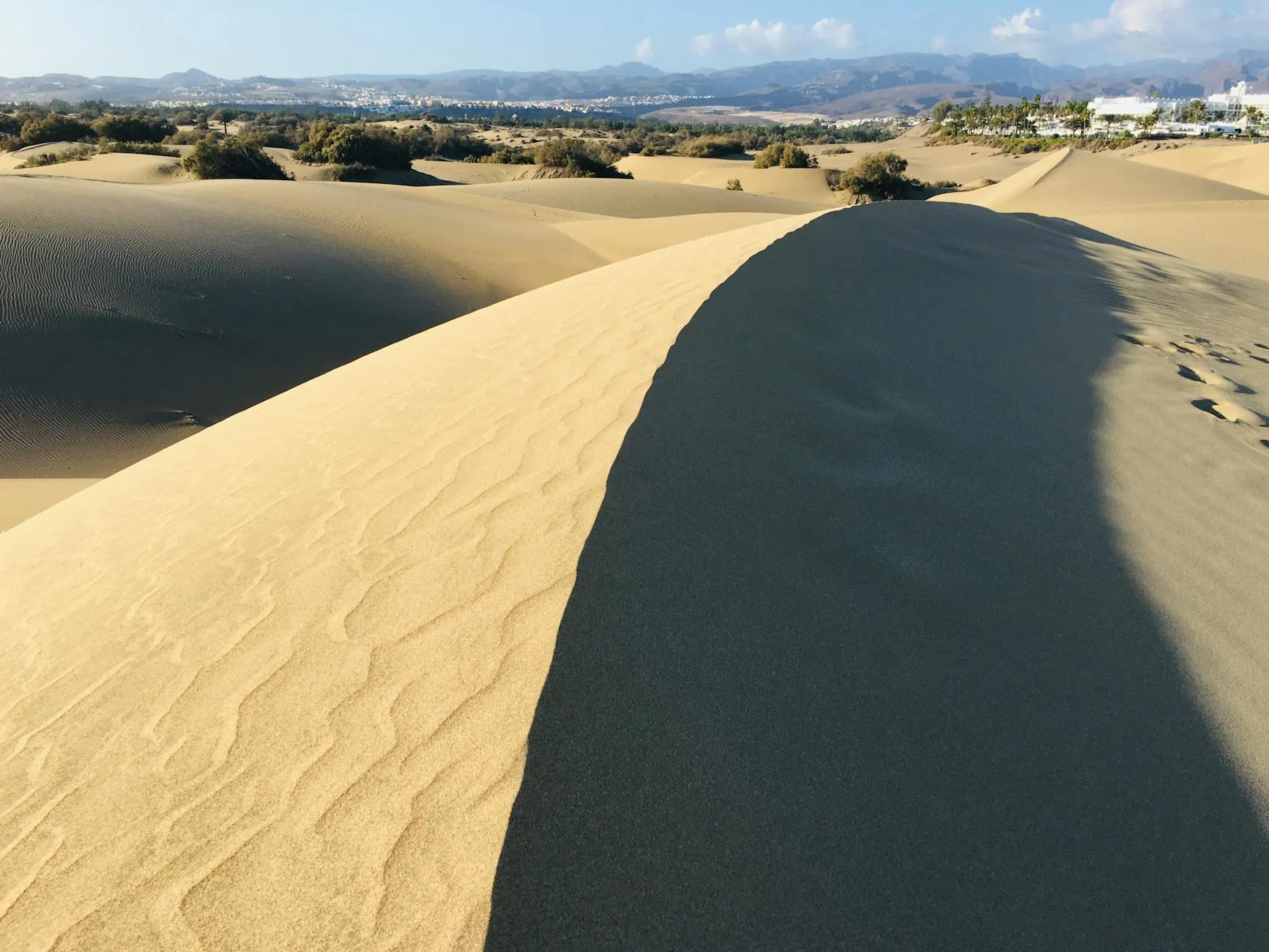
The 404-hectare dunes of Maspalomas are a Special Nature Reserve since 1987, formed by Sahara sand blown here across the Atlantic over millennia. They are genuinely spectacular — the only European landscape that looks like the Moroccan Sahara, with dunes up to twelve metres high running from the resort strip down to the lighthouse. They are also in trouble. Tourist foot traffic — between 150 and 300 trespassers per day in ordinary periods, exceeding 500 at peak — is compacting the sand, destroying the vegetation that stabilises the system, and fragmenting the habitat of the endangered Canarian runner lizard.
The rules in 2026. Since 2024 the protected zone is enforced more strictly. Visitors must stay on one of eight kilometres of marked trails. Walking across the dune field, lying in the bushes, sledging down the slopes, or entering the interior is forbidden. Fines start at €150 and can rise substantially for repeat or serious offences. Twenty environmental officers plus Guardia Civil support patrol the reserve; cameras and PA systems are being installed at key viewpoints.
What this means practically: the dunes are still beautiful and worth visiting, but walk them on the marked trail from the Maspalomas lighthouse north-east toward Playa del Inglés, not across the middle. The trail is about 2 km, takes an hour at a slow pace, and is best done in the last ninety minutes of daylight when the shadows lengthen and the temperature drops. Avoid midday — there is no shade.
- Price: Free
- Hours: 24h (marked trails only; off-trail access prohibited with fines)
- How to get there: Guagua line 30 or 66 from Las Palmas; line 1 or 2 within the resort strip; 5-min walk from Playa del Inglés or Maspalomas Lighthouse
- Access note: Marked trails are sand — not wheelchair accessible, walking boots or sturdy sandals required
- Information: grancanaria.com — Masdunas project
8. Jardín Botánico Canario Viera y Clavijo
On a terraced slope above the Guiniguada ravine, 10 km inland from Las Palmas, is the largest botanical garden in Spain. It is specifically dedicated to the flora of the Canary Islands and Macaronesia — a region (Azores, Madeira, Canaries, Cape Verde) with one of the highest levels of plant endemism in the world. Macaronesia is where the dragon tree (Dracaena draco) still grows in the wild, where the Canarian pine resists fire by regenerating from its trunk, and where several hundred endemic species survive in conditions that cannot be reproduced elsewhere. The garden was founded in 1952 by the Swedish botanist Eric Sventenius, who was buried here.
Plan ninety minutes to two hours. The garden is arranged in ecological zones: laurel forest at the top, pine forest below, dry-zone succulents and cactus lower down. There are dragon trees that are 200+ years old, a greenhouse of epiphytes, and a lava-rock amphitheatre used for summer concerts.
- Price: Free
- Hours: 09:00–18:00 daily (to 19:00 April–September)
- How to get there: Guagua line 301 from San Telmo to the upper garden entrance, then walk downhill through the garden
- Access note: The garden is on a steep slope; the main paths are accessible but the full traverse requires stairs; there is a shorter accessible loop at the upper entrance
- Information: jardincanario.org
9. Pico de las Nieves and the Island Summit Drive
The island peaks at 1,956 metres at Pico de las Nieves — a military installation with antennas, closed to public access, but immediately beside it is the Mirador del Pico de los Pozos de las Nieves at the same altitude, with one of the best views in the whole archipelago. On a clear day, looking south-west, you see Tenerife’s Teide (3,718 metres) and sometimes La Palma. The drive up — GC-130 from Tejeda or GC-15 from San Mateo — is the single most dramatic road in the island’s interior, and the pine-forest air up there is cool and resinous. The road only works if you are driving yourself; no scheduled bus reaches the summit.
Combine this with: Cruz de Tejeda (volcanic col at 1,580 m with a terrace restaurant and views into the Caldera de Tejeda); Mirador de los Pinos de Gáldar (pine-framed view over the north-west); and the hour-long loop through Tejeda village itself — one of Spain’s officially designated “most beautiful villages,” famous for almond-based sweets (bienmesabe) in January when the almond trees blossom.
- Price: Free
- Hours: Daylight hours; roads occasionally close after heavy rain or snow (Jan–Feb)
- How to get there: Car only; 1h15 drive from Las Palmas via GC-15, 1h45 from Maspalomas via GC-60
- Access note: Viewpoints accessible from roadside parking
10. Puerto de las Nieves and Agaete
A fishing village on the north-west coast, 35 km from Las Palmas, at the bottom of the Agaete valley. The main strip is a curved harbour front of white houses with blue-painted doors and window frames; small fishing boats land daily; the fish market on the quay opens around 18:00 most afternoons. Ferries leave for Tenerife five times daily (Fred Olsen, 80 min crossing). The fishing port is working, not decorative, which is exactly why it works.
Twenty minutes inland, up the Agaete valley, are the lushest kilometres of agricultural land on the island: coffee (the only commercial coffee grown in Spain grows here, in the valley microclimate), mango, papaya, and the island’s best untrashed green space, the Tamadaba pine forest, rising immediately behind the valley. You can visit Finca Los Castaños (coffee plantation, guided tastings approximately €15–20) or simply drive the GC-231 to the end and walk.
- Price: Free (village); coffee plantation tours ~€15–20; ferry Tenerife from ~€50
- Hours: Always open; fish market approximately 18:00–20:00
- How to get there: Guagua line 103 from San Telmo, 80 min, €5.40 one way; or car 40 min on GC-2
- Access note: Harbour-front promenade accessible; Finca Los Castaños requires walking on farm paths
- Ferry: fredolsen.es
11. Telde and Its Valleys
Telde, the island’s second city and one of only two pre-Hispanic capitals (the other being Gáldar), is almost completely overlooked by tourism. The historic old quarter around the Basilica of San Juan Bautista is a quiet, dignified network of colonial-era streets with a large sixteenth-century flemish-origin altarpiece inside the church. Ten minutes east is the Cuatro Puertas archaeological site — “four doors” — a pre-Hispanic cave complex with four carved doorways cut into the cliff face, used for burial, storage, and probably ritual. Free entry; no infrastructure beyond a small interpretation panel.
The surrounding valley of Telde is agricultural — the island’s fruit-growing heartland — and the drive east from Telde to the coast at Melenara and Taliarte takes you through banana plantations and small coastal fishing villages with some of the island’s best unpretentious seafood restaurants.
- Price: Free
- Hours: Old quarter always open; Cuatro Puertas always open (daylight recommended)
- How to get there: Guagua line 12 or 80 from Las Palmas to Telde, 25–35 min; car 20 min
- Access note: Old quarter streets are cobbled; Cuatro Puertas has a short rough path
12. Barranco de Guayadeque — The Guanche Valley
The deepest ravine on the island, still home to people living in cave houses — some of them modernised, with electricity and plumbing, continuously inhabited since Guanche times. At the head of the ravine is the Cueva de los Candiles archaeological site and the church of the village of Guayadeque, built partly inside the rock. The valley is the setting of a small Guanche-themed museum (the Museo de Guayadeque, €3, worth thirty minutes), several cave restaurants, and one of the island’s better easy hikes — a 2 km riverbed walk from the museum into the canyon.
- Price: Museum €3; hike and village free
- Hours: Museum Tue–Sun 09:00–17:00; village always open
- How to get there: Car essential; 35 min from Las Palmas via GC-1 to Agüimes, then GC-103
- Access note: Museum accessible; hike on loose-gravel path, stout shoes required
Neighbourhoods of Las Palmas
Las Palmas de Gran Canaria is the island capital and the ninth-largest city in Spain. It is built along a narrow coastal strip between the Atlantic and the mountains behind, which gives it an unusual north-south axis — six kilometres from Vegueta in the south to La Isleta in the north — and a pronounced separation of functions by neighbourhood.
Vegueta — The 1478 Core
The founding quarter (see Top Attractions #1). The Thursday evening ruta de tapas runs across roughly thirty bars in Vegueta and Triana — €3.50 gets you one tapa plus a small beer or wine at each. It is not a gimmick; it is how Veguetans socialise.
Triana — The Nineteenth-Century Commercial Quarter
Immediately north of Vegueta across the Guiniguada ravine. Where Vegueta is the colonial-administrative town, Triana is the nineteenth-century mercantile town — pedestrianised shopping street, Modernista (Canarian art-nouveau) facades, and the Gabinete Literario (an 1844 literary society whose building is now a café, bar, and occasional concert venue). The Pérez Galdós house-museum, birthplace of the novelist who is the island’s most internationally recognised literary figure, is here.
Santa Catalina / Puerto
Three kilometres north, at the port end. This is where the cruise ships dock, where the 1960s hotel strip started before Maspalomas existed, and where the international population (Koreans, West Africans, Indians, Russians, Scandinavians — it is a port city) concentrates. Plaza de Santa Catalina itself is scruffy-but-lively by day and seedy-but-lively by night; the Mercado del Puerto, a restored nineteenth-century iron-and-glass market hall, is now a good food court with oyster bars, Galician seafood, and cheap gin-tonics.
La Isleta
The northernmost neighbourhood, on the peninsula that closes off Las Canteras bay. A working-class, heavily multi-ethnic area (Senegalese, Cape Verdean, Moroccan communities) built up the side of the Vulcano de La Isleta. The waterfront here is rough around the edges but increasingly creative — a small gallery and artist-studio scene, the best kebabs canarios (goat kebabs with gofio and mojo) on the island, and the path up La Montaña de la Isleta for a view back across the whole city.
Ciudad Jardín
South of Santa Catalina, inland. Early-twentieth-century “garden city” neighbourhood with Swiss-chalet-style villas, the Parque Doramas, the Pueblo Canario (a 1930s Canarian-architecture ensemble including the Museo Néstor, a small museum of the painter Néstor Martín-Fernández de la Torre, who is responsible for a great deal of the island’s visual identity), and the Hotel Santa Catalina, the grand 1890 hotel where the Michelin-starred restaurants Poemas and Muxgo operate today.
Playa de Las Canteras / Guanarteme
The beach strip and the neighbourhood immediately inland. Where most independent travellers end up staying in Las Palmas, and rightly — you can walk to the beach, walk to Santa Catalina, and guagua to Vegueta. Mid-range hotels and apartments, lots of Korean and Japanese food (there is a significant Korean community serving the port’s ship-repair industry), and the evening paseo along the beach promenade.
Where to Stay — By Budget
The accommodation question begins with a split: base in Las Palmas (city, culture, real Canarian life) or base in the southern resort strip (beach, reliable sun, package-holiday infrastructure). A third option — base rurally, in a casa rural (farmhouse B&B) in the centre or north — is under-used and suits travellers renting a car for the full trip.
Budget (€40–80/night double)
- Veintiuno (Vegueta, Las Palmas) — Boutique hostel in a restored Vegueta townhouse. Shared rooms from €25, private doubles from €65. The location (two minutes from the cathedral) is the point.
- Apartamentos Las Canteras (Playa de Las Canteras, Las Palmas) — One-bedroom apartments on the beach promenade for €55–75 in shoulder season. Furnished basically, clean, perfect for 3–4 day stays.
- Hotel Rural Las Longueras (Agaete valley) — A nineteenth-century coffee plantation house with eight rooms from €75. Rural, quiet, and a genuine argument for basing in the north-west.
Mid-range (€80–180/night)
- Bull Hotel Astoria (Playa de Las Canteras, Las Palmas) — Functional four-star on the beach promenade; €110–150; honest rooms, good breakfast.
- Hotel Cordial Mogán Playa (Puerto de Mogán) — A four-star resort built as an extension of the village, not across it. Rooms €150–220; on-site Michelin-starred restaurant Los Guayres.
- Hotel Rural Fonda de la Tea (Tejeda village, interior) — Mountain village base, €120–160, walking distance to the centre of one of the island’s prettiest villages, thirty minutes from Roque Nublo.
Luxury (€250–800/night)
- Hotel Santa Catalina, a Royal Hideaway Hotel (Ciudad Jardín, Las Palmas) — The 1890 grand hotel, recently refurbished, where Winston Churchill stayed in 1959. Rooms from €280; suites €500+. Home of Poemas and Muxgo (1 Michelin star each).
- Seaside Palm Beach (Maspalomas) — If you want to do the southern strip at the upper end, this is the five-star exception — Alberto Pinto-designed interiors, full-service gardens, and enough distance from the Playa del Inglés strip to matter.
- Parador de Cruz de Tejeda — The state-run Paradores chain’s Gran Canaria property, at 1,580 metres in the centre of the island, rooms from €160 (mid-range price at luxury feel; heated pool; views into the Caldera). Book 6+ weeks ahead for peak season.
Where to Eat
The island’s food is poorer than it should be in the tourist zones and better than you expect everywhere else. The fundamentals are Atlantic fish (parrotfish, sea bream, octopus), Canarian wrinkled potatoes (papas arrugadas with mojo rojo and mojo verde), goat (cabrito, the single best Canarian meat), gofio in various forms, and the island’s very particular wine from Bandama and Monte Lentiscal.
The Michelin 2026 Set
Gran Canaria currently holds five Michelin stars (Michelin Guide Spain 2026). All are worth the trip if a star dinner is the plan.
- Poemas by Hermanos Padrón (1★) — Hotel Santa Catalina, Ciudad Jardín. Brothers Juan Carlos and Jonathan Padrón’s Canarian-rooted tasting menu. ~€140 per person. Held the star since December 2021.
- Muxgo (1★) — Also inside the Santa Catalina hotel. Chef Borja Marrero’s produce-driven, goat-forward Canarian modernism. Awarded its Michelin star in late 2022 and retained in 2026. ~€120.
- Tabaiba (1★) — Las Palmas, Paseo de las Canteras. Chef Abraham Ortega. Canarian coastal, modernist, tasting menu ~€95. Book six weeks ahead for weekends.
- Los Guayres (1★) — Hotel Cordial Mogán Playa. Chef Alexis Álvarez. Contemporary Canarian with a heavy southern-island identity: goat, black pork, wrinkled potato reinvented. ~€110.
- La Aquarela (1★) — Puerto Rico (southern coast). An odd location — inside an apartment complex — and a surprising star for an international-leaning menu with Canarian touches. ~€120.
Canarian Classic
- Restaurante El Herreño (Vegueta, Las Palmas) — The island’s best canonical Canarian menu: ropa vieja canaria (shredded beef and chickpeas), puchero canario (winter stew), proper papas arrugadas. Mains €15–22. Book.
- Casa Montesdeoca (Vegueta) — Colonial-mansion setting, white tablecloths, strong on grilled fish. Mains €20–30. Touristy at dinner, Canarian at lunch.
- El Santo (Triana) — Newer-generation Canarian, tasting menu €65 with wine pairing. Bookings via Instagram DM only.
- Restaurante Tagoror (Barranco de Guayadeque) — Cave-restaurant at the head of the ravine. The island’s canonical goat-in-a-cave experience; mains €12–18; a tourist venue that happens to serve the dish straight.
Seafood and Fishing Ports
- Cofradía de Pescadores de Melenara (Telde coast) — The fishermen’s cooperative restaurant on Melenara harbour. Fish caught that morning. €30–45 per person for three courses. Closed Mondays.
- Restaurante La Marinera (Puerto de Mogán) — On the working fishing quay (not the marina). Grilled whole fish, pescado a la sal (fish baked in salt), and rice with sea bream. €25–40.
- El Muelle (Puerto de las Nieves, Agaete) — Small, unfancy, right on the harbour. Vieja (parrotfish) is the specialty; order it grilled, not fried.
Street, Market, and Budget
- Mercado de Vegueta (Plaza Santa Lucía, Vegueta, Las Palmas) — The city’s oldest market. Thursday and Saturday mornings are best. Cheese stand at the entrance is the one to visit — sample the island’s queso de flor (a thistle-rennet sheep’s cheese from the west).
- Mercado del Puerto (Santa Catalina, Las Palmas) — Restored iron-and-glass market hall now functioning as a food court. Oyster bar, Galician seafood stall, gin-tonic bar. Lunch €15–20.
- Triana ruta de tapas (Thursday evenings) — About thirty bars across Vegueta and Triana; €3.50 for a small plate and a drink at each. Do five, go home.
- La Champiñonería (Vegueta) — A stand-up mushroom bar. One dish (grilled mushrooms with garlic and paprika oil), one price (~€7), beer, done.
- Los Tarajales (San Mateo, interior) — Sunday market with the island’s best farm produce and a canteen cooking traditional Canarian food at farmer-prices. ~€10 a plate.
Drinking Gran Canaria
Canarian wine is the best thing the island does that it does not advertise. The volcanic soils — very young basalt, iron-rich, low water retention — and the high-altitude vineyards around Bandama and Monte Lentiscal produce wines that taste unmistakably of their place: mineral, smoky, with a volcanic edge that is nothing like Peninsular Spain. The principal white grape is Listán Blanco; the principal red is Listán Negro. Both are unique to the Canaries.
Bodega Los Berrazales (Agaete valley) — A small vineyard in the northern coffee-growing valley, with cellar-door tastings (~€15, 5 wines plus snacks). The wines here are reliably good; the setting is the argument.
Bodegón Vandama (Monte Lentiscal, 15 min inland from Las Palmas) — Wine tasting inside the crater of the Bandama volcano. €25 for a four-wine tasting; book ahead.
Canarian rum. There is also a rum tradition — sugar cane was the first colonial crop, eighteenth-century distilleries at Arehucas (founded 1884) still produce. The Arehucas distillery at Arucas (20 min from Las Palmas) runs tours at €6; the main local product is ron miel (honey rum), more interesting than it sounds.
Where to drink. In Las Palmas, Mercado del Puerto for gin-tonics and oysters; La Pimienta in Vegueta for wine by the glass; Sabor Portugués in Triana for port; La Vinoteca de Triana for proper Canarian wine by the bottle. In the mountains, the Parador de Cruz de Tejeda terrace with a glass from Monte Lentiscal and the Caldera spread below.
Getting Around
Las Palmas Airport (LPA) to the city
The airport is 20 km south of Las Palmas. Taxi fare is approximately €35–40 to the city centre, with a €3.50 airport supplement after 22:00 and on Sundays. Uber does not operate on the island. Cabify operates at slightly lower rates than street taxis.
The airport bus is Guagua Global line 60 — half-hourly from 06:00 to 20:00, every 30 minutes in peak, slightly less frequent off-peak and on Sundays. Two destinations:
- Airport → San Telmo (central Las Palmas): €2.30, approximately 30 minutes
- Airport → Santa Catalina (Las Palmas port / beach area): €2.95, approximately 35 minutes
Buy the ticket on the bus (cash or contactless card; contactless saves approximately 20% vs cash). See guaguasglobal.com — airport.
For the southern resorts, Line 66 runs LPA direct to Faro de Maspalomas and is the cheapest way to reach Playa del Inglés and Maspalomas from the airport — approximately €4.50, 40 minutes.
Public transport on the island
Two operators: Guaguas Municipales (the yellow buses, inside Las Palmas city, guaguas.com) and Guaguas Global (the green buses, everywhere else on the island, guaguasglobal.com).
Tickets are paid in cash on board or by contactless bank card. Contactless gives approximately 20% off the cash fare on most routes. There is a tourist-specific pass called the Guaguas Municipales Turístico for the city only (€9 for one day of unlimited city bus travel). For intercity travel, contactless is almost always cheaper than a day pass.
Important correction: The Bono Residente Canario flat-rate card (€14/month for unlimited travel) is for Canary Islands residents only — not tourists. If you read elsewhere that there is free public transport for everyone: that was, and remains, for residents only.
Renting a car
For everything outside the city, a rental car is the difference between Gran Canaria being three attractions and a beach strip and Gran Canaria being a fully explored miniature continent. Low-season rentals are €18–30/day for a compact; high-season €35–60. Book through Centauro, Cicar (the local operator, often best value), or any of the mainstream internationals. Canarian insurance tends to require an additional surcharge; check.
Driving caveats: The motorways (GC-1 south, GC-2 north) are straight and easy. The mountain roads — especially GC-210 across the Caldera and the GC-60 to the peak — are single-lane, twisty, and occasionally vertiginous. Drive them in daylight. Goats, cyclists, and the occasional tour-bus around a hairpin are all genuine hazards. Parking in Las Palmas is a paid-zone problem (the zona azul is well-enforced) but plentiful and cheap in Vegueta and Santa Catalina outside peak shopping hours.
Ferries between islands
Fred Olsen (Puerto de las Nieves → Santa Cruz de Tenerife, 80 min, from €50) and Naviera Armas (Las Palmas → Santa Cruz de Tenerife, 3h, from €35, also to Fuerteventura and Lanzarote). Gran Canaria is the central hub of the archipelago; a 2–3 day Tenerife add-on is entirely doable.
Best Time to Visit
Gran Canaria has the least seasonal climate of anywhere in Europe. The difference between the coldest and hottest months at the coast is about 7°C. The question is not “when can I go” — you can go anytime — but “what am I optimising for.”
- Best for hiking: March–May. Temperatures 18–24°C at the coast, cooler and often clear in the mountains, minimal risk of calima (Sahara dust haze), greenery at its peak after the winter rain.
- Best for beach: October. Sea temperature peaks at 23.5°C, crowds have thinned from the summer peak, and the German school-holiday wave has not yet arrived.
- Best for winter sun: November–February. Coastal highs 20–22°C; rainfall moderate and largely in December/January; the European hotel rates are higher but availability is wider than in the summer peak.
- Avoid if possible: August. Peak crowds, peak hotel prices, and the highest risk of the calima — the Sahara dust event that can knock visibility down to 100 metres for 24–48 hours at a time. Three to five calima events per year, mostly in August.
- Carnival: Las Palmas’s carnival runs 23 January–1 March 2026 with the main parade week 11–22 February 2026. This is the island’s single biggest cultural event, on the scale of Cádiz or Rio in Canarian terms. If you want to see Gran Canaria at full Canarian-cultural tilt, this is it. Accommodation should be booked four months ahead.
Month-by-Month Weather
Averages for Las Palmas de Gran Canaria (coast). The mountain interior runs 5–15°C cooler depending on altitude; the southern resorts run 1–2°C warmer and drier than the capital.
| Month | Avg High °C | Avg Low °C | Sea °C | Rainfall | Visitor Note |
|---|---|---|---|---|---|
| Jan | 21 | 14 | 19 | 22 mm | Cool evenings; almond blossom inland |
| Feb | 22 | 14 | 19 | 22 mm | Carnival; clear skies; sea coolest |
| Mar | 23 | 15 | 19 | 17 mm | Spring green; best hiking conditions |
| Apr | 23 | 15 | 19 | 8 mm | Peak spring; Easter busy |
| May | 24 | 17 | 20 | 3 mm | Dry, stable, excellent weather |
| Jun | 25 | 18 | 21 | 1 mm | Mid-summer begins; rising crowds |
| Jul | 27 | 20 | 22 | 0 mm | Peak northern-European summer |
| Aug | 27 | 21 | 22 | 1 mm | Highest risk of calima haze |
| Sep | 27 | 20 | 23 | 6 mm | Warm sea; still busy; weather often best |
| Oct | 26 | 19 | 23.5 | 18 mm | Sea peaks; crowds ease; strong recommend |
| Nov | 24 | 17 | 22 | 33 mm | Winter-sun season opens; hotel rates rise |
| Dec | 22 | 15 | 20 | 32 mm | Christmas week booked out at resorts |
Source compilation: en.climate-data.org — Las Palmas and weatherspark.com — Gran Canaria.
Daily Budget Breakdown
Indicative per-person spending for a couple splitting hotel costs. IGIC (the Canary Islands indirect tax, 7% standard rate) is typically already included in quoted prices; it is not VAT (which runs 21% on the Peninsula) and the gap can be real — meals are noticeably cheaper than equivalents in Madrid or Barcelona.
| Category | Budget | Mid-range | Luxury |
|---|---|---|---|
| Accommodation | €25–40 | €55–90 | €150–400 |
| Breakfast | Café con leche + pastry €3–5 | Hotel buffet €12–18 | Hotel buffet €25–40 |
| Lunch | Menu del día €10–12 | Set lunch €18–28 | À la carte €40–70 |
| Dinner | Mercado / tapas €12–18 | Mid-range restaurant €30–45 | Michelin / fine €90–140 |
| Local transport | Bus €4–6 | Taxi or rental share €15–25 | Private driver €80+ |
| Activities | Free museums / beach €0–6 | Museum + day trip €15–30 | Boat or guided €70–150 |
| Wine / drink | Supermercado €3–5 | Bar €8–12 | Wine cellar tour + bottle €30–60 |
| Daily total | €50–75 | €130–200 | €400–700 |
Notes on pricing in 2026. Canary Islands accommodation in the southern resorts jumped roughly 8% in 2025 over the 2024 baseline, slightly less in Las Palmas; Michelin-tier dinner prices are stable at 2024 levels; transport has not moved meaningfully.
Sample Itineraries
The 3-Day Essential
Day 1 — Las Palmas city.
– 08:30: Breakfast at Panadería Pulido (Triana) — pan canario, café con leche. €4.
– 09:30: Vegueta self-guided — Plaza de Santa Ana, Cathedral (€6, climb the tower), Casa de Colón (€4, free Sunday).
– 12:00: Mercado de Vegueta — tapas stalls, queso de flor cheese, small glass of wine.
– 14:00: Walk Triana shopping street, pass the Gabinete Literario, coffee at San Telmo.
– 16:00: Guagua to Las Canteras; swim; walk the full 3 km promenade.
– 19:30: Sunset at La Cícer.
– 20:30: Dinner at Tabaiba (1★, book ahead) or El Herreño (Canarian classic).
Day 2 — The north-west.
– 08:30: Drive to Gáldar (45 min).
– 09:30: Cueva Pintada de Gáldar — guided tour, €6.
– 12:00: Drive to Puerto de las Nieves (10 min), walk the harbour.
– 13:00: Lunch at El Muelle — vieja a la plancha.
– 15:00: Drive up the Agaete valley; visit Finca Los Castaños for coffee tasting.
– 17:00: Drive back via the GC-2 with stops at miradors.
– 20:00: Return to Las Palmas; tapas route on Calle Mendizábal.
Day 3 — The interior.
– 07:00: Early start by car to Cruz de Los Llanos (1h30).
– 08:30: Walk from Cruz de Los Llanos to Roque Nublo base (no reservation needed before 09:00).
– 11:00: Drive to Tejeda village; lunch at Restaurante Texeda or Fonda de la Tea — bienmesabe for dessert.
– 14:00: Drive the GC-130 to Pico de los Pozos de las Nieves mirador.
– 16:00: Visit Artenara visitor centre for Risco Caído interpretation (€6–8).
– 18:00: Return via GC-15 to Las Palmas.
Days 4–5 Add-Ons
- Day 4: Fortaleza de Ansite + Barranco de Guayadeque + lunch at Tagoror. Drive 50 min south; spend 2 hours at Ansite; drive 30 min to Guayadeque; hike the riverbed; cave lunch. Return to city.
- Day 5: Tenerife ferry day-trip. Fred Olsen from Puerto de las Nieves departs approximately 09:00; you get four to five hours in Santa Cruz de Tenerife or Icod (where the oldest dragon tree stands); ferry returns at 18:00. €50 return; own-car brings significant ferry supplement but is not necessary for a day-trip.
The 7-Day Full Island
Days 1–3 as above. Day 4 Ansite + Guayadeque + Santa Lucía. Day 5 Mogán + Puerto Rico + La Aquarela dinner. Day 6 Tenerife ferry (or full day at the Caldera de Tejeda trails). Day 7 Jardín Botánico + Las Canteras + Triana tapas.
Best Day Under €28
A full Las Palmas city day for one person, on foot and by bus, excluding accommodation.
- 08:30: Breakfast at a standing-bar café — café con leche, bocadillo with tomato and Canarian cheese. €3.50.
- 09:30: Walk Vegueta free — Plaza de Santa Ana, dogs in bronze, the old streets. No ticket. €0.
- 10:30: Casa de Colón on Sunday (free) or Cueva Pintada replica at the Vegueta museum. If weekday, Cathedral tower (€6). Assume weekday: €6.
- 12:00: Walk north through Triana — pedestrianised street, art-nouveau facades, the Gabinete Literario for coffee (€2.50).
- 13:00: Guagua 1 to Santa Catalina — contactless fare €1.40.
- 13:30: Lunch at Mercado del Puerto — plate from the Galician stall, glass of Albariño. €12.
- 15:00: Walk to Las Canteras (15 min). Swim. Dry off on the sand. €0.
- 17:30: Sunset walk south along the promenade from Peña la Vieja to La Cícer. €0.
- 19:00: Tapa and a beer at any of the four or five bars behind Playa Chica. €3.50.
- 20:00: Guagua 17 back to Vegueta. €1.40.
Total: €3.50 + €6 + €2.50 + €1.40 + €12 + €3.50 + €1.40 = €29.30, rounded down to €28 on a Sunday with the Casa de Colón free instead of the Cathedral. Slightly cheaper still with bottled water from the Eroski supermarket instead of bar drinks.
On the fleet budget leaderboard, this places Gran Canaria at roughly Santiago / Malta / Crete level — more expensive than Cairo ($3.50), Bogotá ($6), KL (€8.50) or Munich (€12), comparable to Santiago ($13) and Nicosia (€32.60), but cheaper than Sicily, Sardinia, or Mallorca (€35+). The honest answer for Gran Canaria is: it is not a budget destination if you want three meals and an activity, but it is not expensive for a European island.
Rainy Day / Hot Day Plan
Rainy day (most likely November–February, rare):
– Morning: Cueva Pintada de Gáldar (indoors, climate-controlled, 2 hours).
– Lunch: Any of the covered markets — Mercado del Puerto, Mercado de Vegueta.
– Afternoon: Casa de Colón + Cathedral tower; Museo Canario (archaeology, in Vegueta, €4).
– Evening: A Michelin dinner if weather is truly grim. Tabaiba, Poemas, or Muxgo.
Hot day (July and August, especially during calima):
– Morning: Drive to the mountains. The interior is 10–15°C cooler than the coast. Pine forest air at Cruz de Tejeda; lunch at the Parador terrace.
– Afternoon: Swim at Las Canteras between 16:00 and sunset — later is better on a hot day, the reef-sheltered water stays cool relative to the air.
– Evening: Dinner outdoors anywhere on the promenade; the sea breeze after sunset is the island’s reward.
Day Trips
- Tenerife. Fred Olsen ferry from Puerto de las Nieves, 80 min, €50. Four hours in Santa Cruz or Icod; the El Teide cable car is possible but tight on a day-trip.
- Fuerteventura. Naviera Armas ferry from Las Palmas, ~2h, €50–80. The beaches of Corralejo are beyond anything Gran Canaria has; the landscape is pure volcanic desert. Worth two days, doable in one.
- Caldera de Tejeda full circuit. Drive the GC-210 all day: Tejeda → Artenara → Pinos de Gáldar mirador → Cruz de Tejeda. Some of the best mountain driving in Spain.
- Mogán + Puerto de Mogán + La Aquarela. Southern-coast day for a Michelin lunch and a genuinely pretty harbour village.
- Fortaleza de Ansite + Guayadeque + Agüimes old town. The “serious Gran Canaria” day.
- Jardín Botánico + Caldera de Bandama + wine tasting at Monte Lentiscal. An easy half-island day combining Spain’s best botanical garden, a perfectly circular volcanic crater (hike to the bottom in 90 min), and a vineyard lunch.
- La Isleta + Vulcano walk + Las Canteras sunset. A Las Palmas-only day for the back half of the city — Montaña de La Isleta summit walk, Senegalese lunch on Calle Juan Rejón, sunset beer at La Cícer.
- Dunes at dawn. A self-contained dawn-walk day from a southern base — marked trail only, lighthouse to Playa del Inglés, no camel rides, coffee at the Maspalomas lighthouse café.
Safety and Practical
Gran Canaria is among the safer places in Europe. Violent crime affecting tourists is rare. Petty theft — bag-snatching from café tables, distraction pickpocketing around the cruise-port and Las Canteras — is a normal southern-European urban risk, not outsized. Standard precautions: watch your bag at beach bars, do not leave valuables on a beach towel while swimming, do not walk alone through empty port-area streets at 03:00.
Water quality: Tap water is safe to drink island-wide, including in the resort strip (it is mostly desalinated and heavily treated). Bottled water is widely sold but unnecessary.
Medical care: Public hospitals (Hospital Universitario Insular in Las Palmas, Hospital General de Gran Canaria Doctor Negrín) provide EU-standard emergency care. EU visitors use the EHIC/GHIC card; non-EU visitors need travel insurance that covers Spain. Pharmacies are plentiful and the green cross is always easy to find; on-duty lists are posted in every pharmacy window and available at cofgrancanaria.org.
Emergency: 112 (all services). The 112 line speaks Spanish, English, German, and French.
Sun: The Canaries sit at 28°N — this is the latitude of Florida and southern Morocco. The UV index is significantly higher than mainland Europe, even in winter. A hat, SPF 30+, and sunglasses are not optional. Canarians swim, walk, and work under this sun; they do not tan themselves stupid. Follow the local pattern.
Calima (Sahara dust): Occasional events — most frequent in July–September — drop visibility to 100 metres and coat everything in a fine orange-red dust. Avoid extensive outdoor activity during a strong calima. Airlines sometimes divert flights if visibility falls below landing minima at LPA; check your flight status during any active event.
Driving: The Canaries drive on the right. Speed limits 120 km/h on motorway, 90 km/h on secondary roads, 50 km/h in towns, 30 km/h in most urban residential areas. Drink-drive limit is 0.5‰ (stricter than many European countries). Goats, cyclists, and livestock are genuine mountain-road hazards. Rural police checks are frequent and courteous; carry your licence and rental documents.
Visa and Entry
The Canary Islands are Spanish territory and part of the EU and the Schengen area. Entry rules are Spain’s and Schengen’s.
- EU/EEA/Swiss citizens: National ID card or passport. No visa.
- UK, US, Canadian, Australian, New Zealand, Japanese, South Korean citizens: Passport with minimum 3 months validity beyond departure. Visa-free for up to 90 days in any 180-day period (Schengen rule).
- Other nationalities: Check Schengen visa requirements at your nearest Spanish consulate.
EES (Entry/Exit System): Live since 10 April 2026. On arrival at LPA, non-EU travellers have their biometric data (fingerprints and facial image) recorded. First entry takes 5–10 minutes longer than before; subsequent entries should be faster.
ETIAS: with no announced launch date with a grace period into 2027. At the time of writing (April 2026), ETIAS is not yet required for any traveller. When it does launch, visa-exempt travellers (UK, US, Canadian, Australian, etc.) will need to apply online, pay approximately €20, and carry a valid authorisation for entry — initially as a recommendation during the grace period, then mandatorily. Current status at travel-europe.europa.eu/etias.
A useful tax note for shoppers. The Canary Islands have a special tax regime. The local indirect tax, IGIC, runs at 7% standard rate (versus the Peninsula’s 21% VAT). This is why luxury goods in Las Palmas — perfumes, electronics, watches, alcohol — are typically 8–12% cheaper than on the Spanish mainland at like-for-like prices. Non-EU visitors exiting via LPA can reclaim IGIC on purchases over €90 through the Tax Free system at the airport; keep receipts.
Hidden Gran Canaria
Four to six places that will not appear in the coach-tour brochures.
Barrio de San Nicolás and the Risco de San Juan
The hillside quarter immediately above Vegueta, climbing steeply toward the old quarries. Working-class, largely non-touristed, covered in street art since a 2013 municipal intervention. Walk up Calle San Nicolás from the Plaza de San Francisco and follow the murals. The view back across Vegueta from the top at sunset is the city’s best.
Ermita de San Telmo
A tiny sixteenth-century chapel in a small square between the port and Triana. Painted Portuguese-Moorish interior, near-invisible from the outside, almost always empty. Open 10:00–13:00 and 17:00–20:00, free.
Cenobio de Valerón
A pre-Hispanic grain storage site in the north of the island, just off the GC-2. 300 individual chambers cut into a cliff face, used by the Guanches for collective grain storage. €3 adult, open Wed–Sun 10:00–17:00. cenobiodevaleron.com. The most tangible Guanche archaeology on the island after Cueva Pintada and Ansite.
Playa de Güigüi
Three hours’ walk (or by boat from Puerto de Mogán) to a beach on the island’s west coast with no road access. The last genuinely wild beach of any size on Gran Canaria. Take water, food, and sun cover; do not swim out — the currents are strong.
Tufia
A Guanche archaeological site on the east coast near Telde, with pre-Hispanic dwellings and a sixteenth-century castle ruin, adjacent to a small fishing village with two excellent seafood restaurants. Almost nobody visits. Free, always open.
The Ermita de Nuestra Señora del Pino (Teror)
The island’s patron-saint shrine, in the historic village of Teror (30 min inland from Las Palmas). The Basílica is closed to non-worshippers Sunday morning; Saturday market on Plaza del Pino sells excellent chorizo de Teror (a local paprika sausage) and almond sweets. Go on a Saturday, eat your weight in sausage, walk the village streets.
Gran Canaria With Kids
Gran Canaria is an easy family destination. The climate is reliable, the beaches are safe, distances are short, and children find most of it interesting without adult explanation required.
- Las Canteras at the reef end — shallow lagoon water, soft sand, lifeguards, accessible showers. The beach Las Palmas families use.
- Palmitos Park (south coast, 15 min from Maspalomas) — a well-run botanical and bird park (parrots, flamingos, dolphin shows — the dolphin ethics are a judgement call you will have to make). €35 adult, €26 child. palmitospark.es.
- Poema del Mar (Las Palmas port) — Aquarium, modern, strong on Atlantic and deep-ocean species. €25 adult, €18 child.
- Jardín Botánico Canario — free, full of lizards, parrots, and a small pond with turtles. Ninety minutes of running about.
- The Caldera de Bandama walk — 90 minutes, down into a perfect volcanic crater and back up. Easy for ages 7+.
- Puerto Rico’s water sports centre — pedalos, kayaks, paddleboards from €15/hour in a calm sheltered bay.
- Carnival — if your trip falls in February, the Children’s Parade (17 February 2026) is the city at its most inclusive and joyful.
What’s New in 2026
- EES went live 10 April 2026. All non-EU arrivals at LPA now go through biometric registration. Allow extra time on first entry.
- ETIAS with no announced launch date with a grace period into 2027. Registration is not yet required.
- Aena has committed €1.04 billion to Canary Islands airport infrastructure investment across the next several years; LPA terminal and apron expansion is ongoing but does not disrupt operations.
- Norwegian Air launches direct Stockholm–LPA in March 2026, adding Nordic connectivity on top of the existing SAS/Norwegian network.
- airBaltic bases a second A220 at LPA for winter 2026/2027, with new routes from Warsaw, Poznan, Katowice, and Liège (from late October 2026).
- Roque Nublo access rules tightened in 2025 and remain in 2026. Mandatory reservation 09:00–17:00 via reservasroquenublo.com; Degollada de La Goleta parking remains permanently closed.
- Maspalomas dunes protection enforcement intensified. Fines from €150 for off-trail access; cameras and PA systems being installed at viewpoints; 20 dedicated environmental officers on patrol.
- Michelin Guide Spain 2026 confirmed all five Gran Canaria stars: La Aquarela, Los Guayres, Poemas by Hermanos Padrón, Tabaiba, and Muxgo. No new stars added, none lost. No green stars yet on the island.
- Carnival 2026 dates confirmed: Las Palmas 23 January–1 March, main week 11–22 February; Maspalomas carnival runs later, through March.
- LPA handled 15.83 million passengers in 2025, a post-pandemic record; early 2026 tracking suggests a marginal decline year-on-year in Q1 after an exceptional 2025 base.
🌍 See the bigger picture: our Spain travel guide covers regions, when to go, and getting around.
Frequently Asked Questions
How many days do I need in Gran Canaria?
Five days is the honest minimum if you want more than a resort-and-beach experience. Three days covers Las Palmas and one mountain day. Seven days allows the city, the interior, the north-west (Agaete and Gáldar), and the south, plus one rest day. Ten days is ideal and allows a Tenerife ferry add-on. Fourteen-day packages exist for good reason: the island rewards slow travel, and there is a winter-tourism tradition of long stays.
Is Gran Canaria part of the EU? Do I need a Schengen visa?
Yes, and it follows standard Schengen visa rules. The Canary Islands are an autonomous region of Spain, full members of the EU and the Schengen area. UK, US, Canadian, Australian, and most other visa-exempt travellers have 90 days in any 180-day period without a visa. ETIAS has no announced launch date but is not yet required as of April 2026. EES (biometric entry/exit) went live 10 April 2026 and applies on arrival at LPA.
Is Gran Canaria expensive?
Less expensive than mainland Spain for like-for-like meals and shopping (the local IGIC tax runs at 7% versus the 21% VAT on the Peninsula), comparable to mainland Spain for accommodation in the cities, and more expensive than mainland Spain for southern-strip resort packages in the European winter. A mid-range couple spends €130–200 per person per day all-in. The budget floor sits around €50–70; the luxury ceiling is lower than Mallorca or Ibiza.
Las Palmas or the southern resorts — where should I stay?
If this is your first trip and you are mostly there for winter sun, split your stay: three nights in Las Palmas for culture, food, and a real urban beach; three or four nights in the south for beach, pool, and predictability. If you are there to hike and eat, base in Las Palmas or Tejeda (the mountain interior) rather than the southern strip. If you have been before and want a different island, the north-west around Agaete and Puerto de las Nieves is the under-used answer.
Do I need to rent a car in Gran Canaria?
For anything beyond Las Palmas city and the southern resort strip, yes. The bus network works for point-to-point trips (LPA airport to the city, Las Palmas to Gáldar, Las Palmas to Maspalomas) but does not reach the mountain interior on a schedule that makes day-tripping practical. Five days without a car is workable; seven days without is frustrating; ten days without is a mistake. Rental rates from €18–30/day outside peak.
What is gofio and should I try it?
Gofio is toasted-grain flour — traditionally barley, wheat, or a mix — ground finely. It is the pre-Hispanic staple food of the Canarians. At breakfast it is stirred into hot milk or coffee. At dinner it thickens fish stocks (sancocho) or is kneaded with water and oil into a savoury dough. Try it. It is an acquired taste (nutty, slightly bitter, dense) but it is the most direct link to pre-Hispanic Canarian food culture you can eat.
What is the best beach in Gran Canaria?
Three answers for three priorities. For an urban beach with character, Las Canteras in Las Palmas — 3 km of sand, reef-protected, lifeguards, 90+ cafés along the promenade. For a dunes-landscape beach, Maspalomas, on the marked trail only — the off-trail area is a protected reserve with fines from €150. For a wild beach, Güigüi on the west coast, reachable only by hike or boat. The southern resort beaches are fine but none of them are the best on the island.
Is Roque Nublo open without a reservation in 2026?
Between 09:00 and 17:00, the climb to Roque Nublo requires a free advance online reservation at reservasroquenublo.com — daily visitor numbers are capped. Outside those hours, no reservation is required. The closest parking (Degollada de La Goleta) was permanently closed in early 2025. Park at Cruz de Los Llanos and either walk the 5 km approach or take guagua line 18 to La Goleta.
Can I walk across the Maspalomas dunes?
No. Since 2024 the 404-hectare Special Nature Reserve restricts visitors to the 8 km of marked trails. Walking across the dune field, lying in the bushes, sledging, or entering the interior is prohibited, with fines from €150. Twenty environmental officers patrol the reserve; cameras and public-address systems are being installed. The trail from the Maspalomas lighthouse to Playa del Inglés (about 2 km, 1 hour at slow pace) is the recommended walk.
When is Gran Canaria carnival in 2026?
Las Palmas carnival runs 23 January–1 March 2026, with the main parade week 11–22 February 2026. The Coso Apoteosis grand parade is 17 February; the Burial of the Sardine (the traditional satirical closing) is 18 February. Maspalomas carnival runs later, into March. Book accommodation at least 3–4 months ahead for the main week.
Explore More Aifly Guides
- Mallorca Island Guide 2026 — The Balearic baseline.
- Crete Island Guide 2026 — Minoan archaeology, Samaria Gorge, Cretan diet.
- Menorca Island Guide 2026 — Quiet Balearic, prehistoric talayots, UNESCO heritage.
- Sardinia Island Guide 2026 — Nuraghi, Costa Smeralda, Blue Zone food.
- Sicily Island Guide 2026 — Greek, Arab-Norman, and Baroque layers; Mount Etna active 2026.
- Cyprus Island Guide 2026 — Divided-island crossings, Varosha, Troodos churches.
- Malta Island Guide 2026 — Hypogeum, Valletta, Caravaggio.
- Corsica Island Guide 2026 — GR20, Bonifacio, French departmental island.
Cheapest Flights to Gran Canaria
We track flight deals to Gran Canaria from 1 city worldwide. Here are the best recent fares:
Flight Deals from Gran Canaria
Looking for cheap flights departing Gran Canaria? Here are deals to 2 destinations:
Prices are based on recent deals and may no longer be available. Browse all flight deals