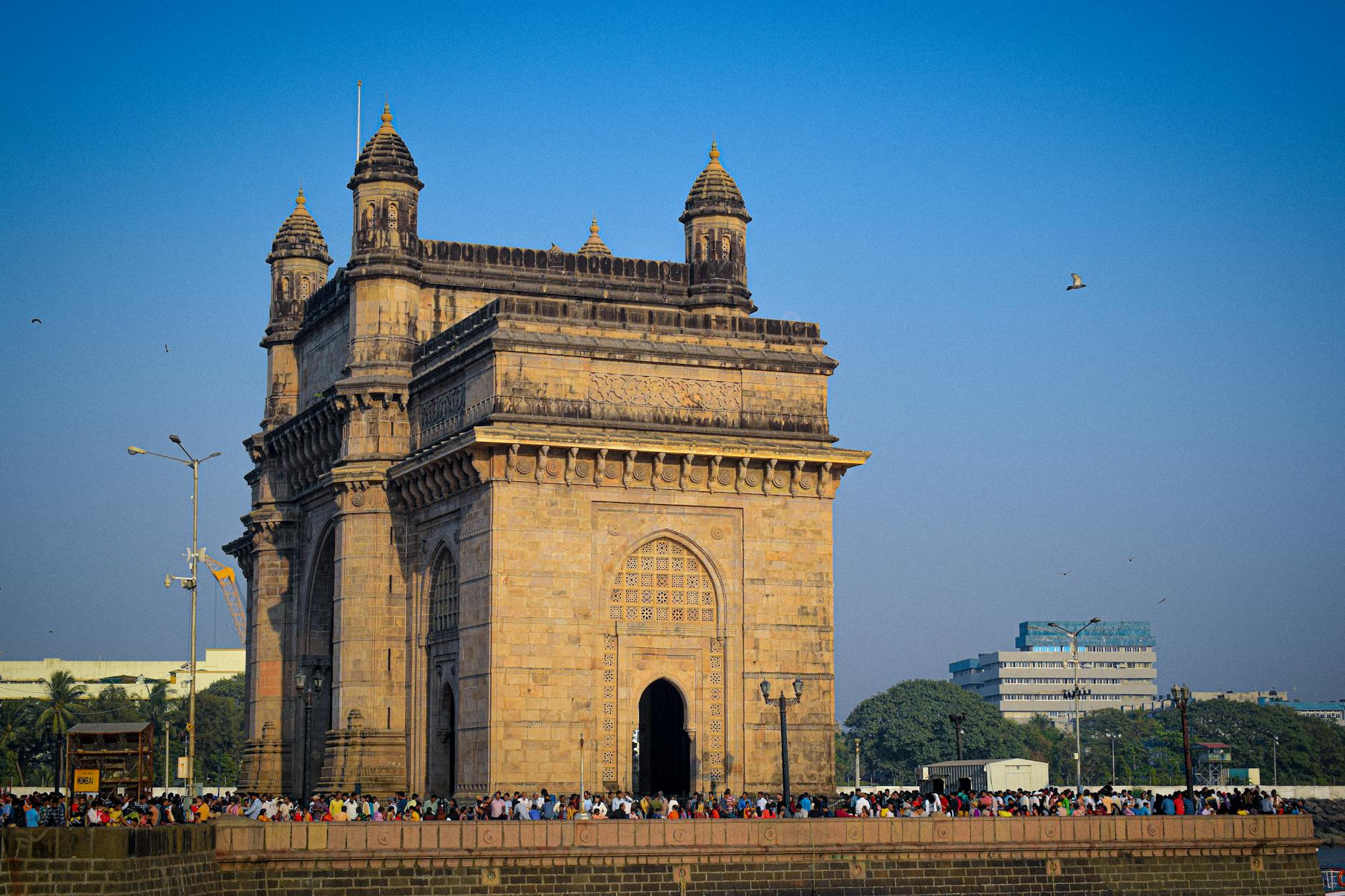
Mumbai — The Complete City Guide 2026
Mumbai is not a city that does anything quietly. It is India’s financial capital, its film capital, its fashion capital, its street food capital, and — depending on who you ask — its spiritual capital too. This is the city of the Gateway of India and Marine Drive’s Queen’s Necklace, of Victoria Gothic architecture and Art Deco apartment blocks, of Bollywood dreams and Dharavi hustle, of vada pav at dawn and kebabs on Mohammed Ali Road at midnight. Twenty-two million people live in this narrow peninsula squeezed between the Arabian Sea and the harbour, and somehow the city holds together through sheer collective will, an extraordinary public transport system, and an unshakeable belief that anything is possible here.
Last verified: April 2026. Every price, opening hour, and practical detail in this guide has been checked against official sources. All prices are in Indian rupees (₹/INR); €1 ≈ ₹95 / $1 ≈ ₹85 at time of writing. Most nationalities need an e-Visa ($10–25 for 30 days, $40 for 1 year). India’s E-Arrival Card is mandatory from April 1, 2026 — submit up to 72 hours before arrival. Verify at the listed URLs before travelling.
Why Mumbai? An Editor’s Note
Mumbai is the city where India’s contradictions are most visible and most electrifying. In Colaba, you can sit in Leopold Cafe — open since 1871 — drinking a Kingfisher while watching the parade of backpackers, businessmen, and beggars on the Causeway outside. Walk ten minutes north and you’re standing before the Gothic extravagance of Chhatrapati Shivaji Terminus, a UNESCO World Heritage Site that looks like a cathedral married a railway station. Take a local train (the “lifeline of Mumbai,” 7.5 million passengers daily) to Bandra, and you’re in a completely different city — street art, rooftop bars, Bollywood celebrities walking their dogs on Carter Road.
The food alone justifies the trip. Mumbai’s street food is a religion: vada pav (the “Mumbai burger”), pav bhaji drowning in Amul butter, bhel puri at Chowpatty Beach, keema pav from the Muslim vendors on Mohammed Ali Road, dosas crisp enough to shatter. The fine dining scene has arrived too — Masque was ranked #15 on Asia’s 50 Best Restaurants 2026, the first Indian restaurant to win the Art of Hospitality Award.
This guide covers everything: the monuments, the food, the neighbourhoods, the trains, the Bollywood connection, and the day trips. For other Indian cities, see our Delhi guide. For other Asian cities, see our Bangkok guide or Singapore guide.
Table of Contents
- Top Attractions in Mumbai
- Mumbai Street Food — India’s Greatest Eating City
- Restaurants, Cafes & Fine Dining
- Mumbai’s Neighbourhoods
- Marine Drive & South Mumbai Heritage
- Bollywood — Film City & Star Spotting
- Dharavi — The City Within a City
- Art, Museums & Culture
- Nightlife & Entertainment
- Getting Around Mumbai
- Mumbai Metro 2026 — The New Network
- The Local Trains — Mumbai’s Lifeline
- Day Trips from Mumbai
- Best Time to Visit & Monsoon Warning
- Practical Information & Visa
- Where to Stay — By Budget & Style
- Budget Tips & Money
- Safety & Scams
- 2026 Travel Notes & Changes
- Frequently Asked Questions
Top Attractions in Mumbai
| Attraction | Price (INR) | Hours / Notes |
|---|---|---|
| Gateway of India | Free | 24/7. Colaba waterfront |
| Elephanta Caves | ₹40 / ₹600 foreign | Tue–Sun 9–17:00. Ferry ₹160/₹260 |
| Marine Drive | Free | 24/7. “Queen’s Necklace” |
| CST (Chhatrapati Shivaji Terminus) | Free / Heritage tour ₹200 | UNESCO. Tours Mon–Fri |
| CSMVS Museum | ₹150 / ₹700 foreign | Tue–Sun 10:15–18:00 |
| Haji Ali Dargah | Free | 5:30–22:00. Low tide only |
| Sanjay Gandhi National Park | ₹85 + Kanheri Caves ₹40/₹600 | Tue–Sun. Closed Mondays |
| Siddhivinayak Temple | Free | Daily. Long queues Tuesdays |
| Dhobi Ghat | Free | 8–18:00. Mahalaxmi station |
| Banganga Tank | Free | Ancient temple tank, Malabar Hill |
| Colaba Causeway | Free | Street shopping, cafes |
| Bandra-Worli Sea Link | ₹100 toll (car) | No stopping on bridge |
1. Gateway of India
Mumbai’s most iconic monument — a 26-metre triumphal arch built in 1924 to commemorate the landing of King George V and Queen Mary. The Indo-Saracenic basalt arch stands at the water’s edge in Colaba, facing the harbour where British troops once disembarked. Today, it’s Mumbai’s living room — couples stroll, balloon sellers work the crowd, and ferry boats depart for Elephanta Island. The Taj Mahal Palace Hotel stands immediately behind, its red dome and Gothic arches forming one of the most photographed backdrops in India.
Price: Free. Hours: 24/7 (best at sunset or illuminated at night). Getting there: Walk from Colaba. Metro Line 3 to Cuffe Parade or CST. Tip: The ferry to Elephanta Caves departs from the jetty next to the Gateway.
2. Elephanta Caves (UNESCO World Heritage)
A group of 5th–7th century rock-cut temples on Elephanta Island in Mumbai Harbour, famous for the massive Trimurti — a 6-metre three-headed sculpture of Shiva that’s one of the masterpieces of Indian art. The main cave has intricately carved pillars, panels depicting Shiva’s marriage to Parvati, and a lingam shrine. The island itself is pleasant — monkeys, a small village, and a toy train from the jetty to the caves.
Price: ₹40 Indians / ₹600 foreigners. Village entry ₹10. Ferry: ₹160 Indians / ₹260 luxury class from Gateway of India. Toy train ₹10. Hours: 9:00–17:00, closed Mondays. First ferry 9 AM, last to island 2 PM, last return 5:30 PM. ~1 hour each way. Time needed: Half-day.
3. Marine Drive & Chowpatty Beach
Marine Drive is a 3.6 km arc of Art Deco buildings along the Arabian Sea, sweeping from Nariman Point to Malabar Hill. At night, the street lights form the “Queen’s Necklace” — one of Mumbai’s most famous vistas. The promenade is Mumbai’s evening stage: joggers, couples, families, and hawkers selling bhutta (corn on the cob) and chai. At the northern end, Girgaon Chowpatty Beach is the city’s most beloved food destination — pav bhaji, bhel puri, kulfi, and pani puri as the sun sets over the Arabian Sea.
Price: Free. Hours: 24/7. Getting there: Metro Line 3 to Marine Lines or Charni Road. Walk from Churchgate station. Best time: Evening for the Queen’s Necklace lights and Chowpatty street food.
4. Chhatrapati Shivaji Maharaj Terminus (CST)
This UNESCO World Heritage railway station is the most exuberant piece of Victorian Gothic architecture in India — and possibly the world. Completed in 1888 by architect Frederick William Stevens, the building is a riot of turrets, gargoyles, stained glass, pointed arches, and carved stonework, topped by a figure of “Progress” holding a torch. It’s also a working railway terminus — 18 platforms serving over 3 million commuters daily on the suburban and long-distance lines. The heritage tour (Mon–Fri, ₹200, ~60 min) takes you inside the ornate central hall.
Price: Free to view the exterior (24/7). Heritage tour ₹200, Mon–Fri only. Getting there: CST is a major transport hub — Central and Harbour line terminus. Metro Line 3 connects nearby. Best time: Evening when the building is illuminated.
5. CSMVS Museum (Chhatrapati Shivaji Maharaj Vastu Sangrahalaya)
Formerly the Prince of Wales Museum, this is Mumbai’s finest museum. The Indo-Saracenic building (designed by George Wittet, who also designed the Gateway of India) houses outstanding collections of Indian sculpture, Mughal miniature paintings, decorative arts, and natural history. The Tata Gallery of pre-history and the arms gallery are standouts. The surrounding gardens, with mature palms and a cafe, are a peaceful escape from the Colaba traffic.
Price: ₹150 Indians / ₹35 children / ₹700 foreigners / ₹200 foreign children. Audio guide ₹200 (free for foreigners). Prices updated May 2025. Hours: Tue–Sun 10:15–18:00. Getting there: Walk from Colaba or Kala Ghoda. Time needed: 1.5–2 hours.
6. Haji Ali Dargah
One of Mumbai’s most iconic sights: a white marble mosque and tomb sitting on a tiny islet 500 metres offshore, connected to the mainland by a narrow causeway that’s submerged at high tide. Built in 1431, the dargah attracts devotees of all faiths — the walk across the causeway with the Arabian Sea on both sides is genuinely magical, especially at sunset. Time your visit for low tide — check tide tables online.
Price: Free. Hours: 5:30–22:00 daily. Getting there: Mahalaxmi station (Western Line), then 10-minute walk. Dress code: Cover head and shoulders. Important: Only accessible at low tide — the causeway is underwater at high tide.
7. Sanjay Gandhi National Park & Kanheri Caves
A 104 sq km tropical forest in the middle of a megacity — home to leopards (40+), deer, macaques, and 274 bird species. The park’s highlight is the Kanheri Caves — 109 Buddhist rock-cut caves dating from the 1st century BCE to the 10th century CE, carved into the basalt hillside. The caves include prayer halls, monasteries, and a large unfinished chaitya (prayer hall) with intact carved columns.
Price: Park entry ₹85 adults / ₹45 children. Safari ₹100/₹50. Kanheri Caves ₹40 Indians / ₹600 foreigners. Toy train ₹65/₹40. Hours: Tue–Sun, closed Mondays. Children under 5 free. Getting there: Borivali station (Western Line), then auto/bus to park gate.
8. Dhobi Ghat (Mahalaxmi)
The world’s largest open-air laundry — 700 washer families (dhobis) have worked these concrete wash pens since 1890, hand-washing clothes from hotels, hospitals, and homes across Mumbai. The rows of concrete troughs stretching to the horizon, with lines of laundry drying in the sun, are an extraordinary sight. View from the bridge near Mahalaxmi station for the classic panorama.
Price: Free. Hours: Best 8:00–18:00, busiest mid-morning. Getting there: Mahalaxmi station (Western Line). Photography: From the bridge is fine. For close-up visits, ask permission — this is a workplace.
9. Siddhivinayak Temple
One of the richest and most visited temples in India, dedicated to Lord Ganesha. Built in 1801, the current temple is modern (rebuilt in the 1990s) but the devotion is ancient. Bollywood stars, cricketers, and politicians come to seek blessings before major events. Tuesdays are the busiest — queues can stretch for hours. Early morning or weekday visits are calmer.
Price: Free. Hours: 5:30–21:30 daily (breaks for puja). Getting there: Dadar station (Western/Central Line) or Siddhivinayak metro (coming with future metro extensions). Tip: If the queue is very long, the paid darshan line (donation-based) is faster.
10. Colaba Causeway
Mumbai’s most famous shopping street — a chaotic, colourful mile of street stalls, bookshops, clothing vendors, antique dealers, and cafes stretching from the Taj Mahal Palace Hotel to the Causeway’s southern end. Leopold Cafe (est. 1871) is the most famous stop — a Mumbai institution serving beer and burgers to travellers for 155 years. Cafe Mondegar has a vintage jukebox and cartoon-covered walls. Haggle hard at the street stalls — start at 40% of the asking price.
11. Banganga Tank
A surprise oasis in the heart of Malabar Hill — an ancient temple tank dating to 1127 AD, surrounded by crumbling temples and stepped ghats. Part of the Walkeshwar Temple complex, Banganga feels like a small piece of Varanasi transplanted into Mumbai. The annual Banganga Festival (classical music on the ghats) is one of the city’s most atmospheric cultural events.
Price: Free. Getting there: Auto from Charni Road or Grant Road station. Time needed: 30–45 minutes.
12. Bandra Fort & Bandstand
A small Portuguese-era fort (16th century) perched on the rocks at Bandra’s Land’s End, offering sunset views across the Arabian Sea with the Bandra-Worli Sea Link in the foreground. The adjacent Bandstand Promenade is Mumbai’s celebrity walking strip — Shah Rukh Khan’s house Mannat is visible from the promenade, and fans gather daily to catch a glimpse.
Price: Free. Hours: Best at sunset. Getting there: Bandra station (Western Line), then 15-minute walk or auto.
Mumbai Street Food — India’s Greatest Eating City
Mumbai street food is not just food — it’s a cultural institution. The city runs on vada pav the way London runs on coffee. Every neighbourhood has its legendary stall, every Mumbaikar has their favourite pav bhaji vendor, and arguments about whose bhel puri is best can escalate into genuine passion. The street food is overwhelmingly vegetarian, astonishingly cheap, and almost universally delicious.
| Dish | What It Is | Price / Where |
|---|---|---|
| Vada Pav | Deep-fried potato dumpling in bread roll with garlic and tamarind chutneys — the “Mumbai burger” | ₹20–50 / Everywhere, esp. Aaram (CST) |
| Pav Bhaji | Spiced mixed vegetable mash with butter-toasted bread rolls, drowned in Amul butter | ₹80–200 / Sardar (Tardeo), Cannon (Fort) |
| Bhel Puri | Puffed rice, sev, onions, tomatoes, tamarind and mint chutneys — Mumbai’s signature snack | ₹30–80 / Chowpatty Beach, Juhu Beach |
| Pani Puri (Golgappa) | Hollow crispy shells filled with spiced water, chickpeas, potato, and tamarind | ₹30–60 / Chowpatty, Khau Galli |
| Mumbai Sandwich | White bread layered with potato, cucumber, beetroot, mint chutney — toasted on a griddle | ₹30–60 / College areas, Fort, Churchgate |
| Misal Pav | Spicy sprouted moth bean curry topped with farsan, onions, lime, with bread rolls | ₹60–120 / Aaswad (Dadar), Mamledar Misal |
| Keema Pav | Spiced minced mutton served with buttered bread rolls — Muslim Bombay at its best | ₹80–150 / Mohammed Ali Road, Grant Road |
| Dosa | Crispy rice-lentil crepe with sambar and coconut chutney — South Indian perfection | ₹50–150 / Ram Ashray (Matunga) |
| Bombay Duck (Bombil) | Not duck — a fish (lizardfish), battered and fried. Classic Mumbai seafood | ₹150–300 / Seafood restaurants |
| Biryani | Mumbai-style spiced rice with meat, layered and slow-cooked (dum) | ₹150–350 / Jaffer Bhai’s (Mohammed Ali Rd) |
Vada Pav — Mumbai’s Soul Food
If Mumbai has one dish, it’s vada pav. A spiced potato fritter (vada) coated in chickpea batter, deep-fried until golden, stuffed into a soft bread roll (pav) with garlic chutney, tamarind chutney, and a fried green chilli. It costs ₹20–50 and it’s the reason Mumbai functions — office workers, students, taxi drivers, and millionaires all eat the same thing from the same carts. Aaram Vada Pav near CST is legendary. Ashok Vada Pav in Dadar is another institution.
Pav Bhaji — The Butteriest Dish on Earth
Pav bhaji is an obscene amount of Amul butter melting into a tawa of spiced, mashed vegetables, served with more buttered bread rolls than any single human should consume. The butter is the point — the best pav bhaji stalls use a visible, alarming quantity. Sardar Pav Bhaji in Tardeo is the gold standard — the pools of melting butter on their tawa are legendary. Cannon Pav Bhaji in Fort and Sukh Sagar at Chowpatty are excellent alternatives.
The Great Street Food Areas
- Chowpatty Beach: The epicentre. Bhel puri, pav bhaji, pani puri, kulfi, and ragda pattice at sunset. This is where Mumbai comes to eat and watch the sea.
- Mohammed Ali Road: Legendary for late-night Mughlai food — seekh kebabs, nalli nihari (bone marrow stew), baida roti (egg-stuffed flatbread). Spectacular during Ramadan when the street becomes a miles-long food festival after sunset.
- Juhu Beach: Pav bhaji, bhel puri, ragda pattice at sunset. More relaxed than Chowpatty, with a wider beach.
- Khau Galli (Ghatkopar): Dedicated food lane with enormous variety — street food from across India in one place.
- Carter Road (Bandra): Modern street food scene alongside sea views and the beautiful people of Bandra.
The golden rule of Mumbai street food: if the stall has a queue, it’s good. If there’s no queue, keep walking. High turnover = fresh food = safe food. Avoid pre-cut fruit, raw salads, and street-vendor ice. Drink bottled water. Your stomach may protest mildly on day one — this is normal.
Restaurants, Cafes & Fine Dining
Mumbai has no Michelin Guide — India is not covered by the Michelin star system as of 2026. But the city’s fine dining scene has exploded, and international recognition is growing fast through Asia’s 50 Best and other awards.
Asia’s 50 Best Restaurants 2026
- Masque (Lower Parel) — Ranked #15 on Asia’s 50 Best 2026 + Art of Hospitality Award (first Indian restaurant to win). Chef Prateek Sadhu’s 10-course tasting menu uses hyper-local Indian ingredients — Himalayan morels, Kashmiri walnuts, coastal fish — in a converted textile mill. Farm-to-table done at the highest level. Tasting menu from ₹8,000+.
Modern Indian Fine Dining
- Indian Accent (NMACC, BKC) — One of India’s most acclaimed restaurants. Modern Indian with global technique. Tasting menu from ₹6,500.
- Tresind (BKC) — Relaunched October 2025 with 14-course menu. Modern Indian with tableside theatrics. From ₹6,000.
- Ziya (The Oberoi) — By Michelin-starred chef Vineet Bhatia. Refined Indian fine dining in a luxury hotel setting.
- Bastian (Bandra/Worli) — Seafood-focused, Bollywood celebrity haunt. The lobster and prawn dishes are outstanding. Mains from ₹1,200.
- Wasabi by Morimoto (Taj Mahal Palace) — Japanese fine dining by Iron Chef Morimoto. Omakase from ₹10,000.
Iconic Mumbai Restaurants
- Leopold Cafe (Colaba) — Est. 1871. The Colaba institution that appears in Shantaram. Beer, burgers, and people-watching. More about atmosphere than food quality.
- Cafe Mondegar (Colaba) — Vintage jukebox, Mario Miranda cartoons on the walls, cold Kingfisher. Another Colaba classic.
- Britannia & Co. (Fort) — An Irani cafe institution famous for berry pulao (rice with zereshk berries). Open since 1923. Go for the history as much as the food.
- Sardar Pav Bhaji (Tardeo) — The single best pav bhaji in Mumbai. Worth the trip to Tardeo alone.
Coffee & Cafe Culture
Mumbai’s third-wave coffee scene is growing fast:
- Blue Tokai — India’s best specialty roaster. Multiple locations (Bandra, Colaba, Lower Parel). Single-origin Indian beans.
- Subko (Bandra) — Coffee, sourdough bread, pastries. Beautiful space.
- Kala Ghoda Cafe (Fort) — In the art district. Good espresso and people-watching.
Mumbai’s Neighbourhoods
Colaba
Mumbai’s tourist epicentre — the southern tip of the peninsula. Gateway of India, Taj Mahal Palace Hotel, Colaba Causeway shopping, Leopold Cafe, Sassoon Dock (transformed into an art space), and backpacker-friendly budget hotels. Walkable, colonial, atmospheric. This is where most visitors spend their first day.
Fort / Kala Ghoda
Mumbai’s arts and heritage district. CSMVS Museum, Jehangir Art Gallery, National Gallery of Modern Art, David Sassoon Library, Horniman Circle (a green oval of colonial buildings), and the Kala Ghoda Arts Festival (Jan 31–Feb 8, 2026, free). Heritage walks, independent bookshops, and excellent cafes. The “Fort” name comes from the old British Fort George — nothing remains but the name and the street grid.
Marine Lines / Churchgate
Marine Drive’s promenade, Wankhede Stadium (cricket), and Churchgate station. An office district by day that becomes buzzy at evening when the city comes to Marine Drive for its sunset constitutional.
Lower Parel
Mumbai’s “SoHo” — a former cotton mill district transformed into galleries, restaurants, breweries, and loft-style workspaces. Masque is here. Phoenix Palladium mall and the Kamala Mills Compound (restaurants, bars, event spaces) are the anchors. Lower Parel is where Mumbai’s creative class works and eats.
Bandra
“Queen of the Suburbs” — and for many Mumbaikars, the real centre of the city. Bandra Fort (sunset), Bandstand promenade (Shah Rukh Khan’s Mannat), Carter Road, Pali Hill (Bollywood residences), Chapel Road, Hill Road shopping, and the most vibrant bar and restaurant scene in Mumbai. Band of Bandra is a street art initiative that has turned walls into murals. The vibe is younger, edgier, and more cosmopolitan than South Mumbai.
Juhu
Juhu Beach (Mumbai’s widest beach, best at sunset with street food), ISKCON Temple, celebrity homes, and Prithvi Theatre (founded by the Kapoor family, renowned for Hindi theatre and independent film screenings). The beach is more relaxed and spacious than Chowpatty.
Worli
Residential and increasingly upscale. Worli Fort, Worli Sea Face promenade, and views of the Bandra-Worli Sea Link. The Nehru Centre planetarium and cultural complex is here.
SoBo vs. The Suburbs
South Mumbai (SoBo) has the heritage, museums, colonial character, and the Gateway/Marine Drive/CST trinity. The Western Suburbs (Bandra, Juhu, Andheri) have the modern energy, nightlife, Bollywood, contemporary culture, and the food scene’s cutting edge. Local trains connect both in 30–40 minutes. You’ll want to spend time in both.
Marine Drive & South Mumbai Heritage
South Mumbai is a UNESCO-quality ensemble of Victorian Gothic and Art Deco architecture — the world’s largest collection of Art Deco buildings after Miami. A heritage walk through Fort and Colaba reveals the full breadth of Mumbai’s colonial past.
Heritage Walk Route
- CST (Victorian Gothic masterpiece, 1888) →
- Flora Fountain (ornamental fountain, 1869) →
- Horniman Circle (neoclassical Asiatic Society Library + green oval) →
- Kala Ghoda (art galleries, CSMVS Museum) →
- Oval Maidan (cricket pitches flanked by Art Deco and Gothic buildings) →
- Marine Drive (Art Deco seafront promenade) →
- Chowpatty Beach (street food finale)
The whole walk is 5–6 km and takes a half-day at a relaxed pace. Start early morning (8 AM) to beat the heat.
Art Deco Mumbai
Mumbai’s Art Deco heritage is concentrated along Marine Drive and the streets behind it — pastel-coloured apartment blocks with geometric balconies, porthole windows, and zigzag motifs. The Eros Cinema, Regal Cinema, and New India Assurance Building are standout examples. The ensemble was included in Mumbai’s UNESCO World Heritage inscription alongside the Victorian Gothic buildings.
Bollywood — Film City & Star Spotting
Mumbai is the home of Bollywood — the world’s largest film industry by volume, producing 1,500–2,000 films per year. The industry is woven into the city’s fabric: stars live in Bandra and Juhu, studios are in Andheri and Goregaon, and you can’t walk through a Mumbai neighbourhood without seeing a Bollywood poster, hearing a Bollywood song, or spotting a film shoot.
Film City (Dadasaheb Phalke Chitranagri)
The main Bollywood studio complex in Goregaon East, inside Aarey Milk Colony. Several tour options:
- Bollywood Dream Tour: ₹599/person — basic tour of sets and locations
- Film City Tour (5 hours): ₹1,699/person — comprehensive with possible live shoot sightings
- Combination tour: ₹1,099/person
- Tour times: 11:00 AM, 12:30 PM, 2:20 PM, 4:20 PM (~1.5–3 hours)
Sets include a helipad, church, temple, lake, courtyard, and the famous Khandala Bridge. You may see live filming in progress. Snacks included. Book via BookMyShow (₹650/adult).
Star Spotting
- Bandstand Promenade (Bandra): Shah Rukh Khan’s Mannat is visible from the promenade. Fans gather daily.
- Pali Hill (Bandra): Celebrity residential area. Discreet mansions behind high walls.
- Juhu Beach: Celebrity jogs and walks at sunrise. Amitabh Bachchan’s house is nearby.
- Carter Road (Bandra): Celebrity dinner spot.
- Chor Bazaar: Vintage Bollywood posters, movie memorabilia, and old film equipment.
- Prithvi Theatre (Juhu): Founded by the Kapoor family. Independent theatre and film screenings — celebrities attend regularly.
Dharavi — The City Within a City
Dharavi is often called “Asia’s largest slum,” but that label doesn’t begin to capture what it actually is. This 2.1 sq km neighbourhood in central Mumbai is home to roughly 1 million people and generates an estimated $1–2 billion in annual revenue through thousands of micro-businesses: leather goods, pottery, textiles, recycling, embroidery, and food production. It’s a city within a city — with its own economy, culture, and extraordinary entrepreneurial energy.
Visiting Dharavi Responsibly
- Reality Tours & Travel: The most reputable operator. From ₹1,250 per person, 2.5 hours, maximum 6 people per group. Departures at 6 AM and 9 AM. 80% of profits support community charities and schools.
- Rules: No photography of people without consent. No photos in residential areas. Respectful observation only.
- What you’ll see: Recycling operations (Dharavi recycles 80% of Mumbai’s waste), leather workshops, pottery kilns, embroidery studios, and the daily life of a community that is far more organised and industrious than the “slum” label suggests.
Art, Museums & Culture
Museums
- CSMVS Museum (covered above) — Mumbai’s finest museum. Indian sculpture, Mughal miniatures, decorative arts.
- Dr. Bhau Daji Lad Museum (Byculla) — Mumbai’s oldest museum (1872), beautifully restored. Maps, models, and objects telling Mumbai’s history. ₹100 Indians / ₹500 foreigners.
- National Gallery of Modern Art (Fort) — Indian modern art from the 18th century onwards. In a converted heritage building.
Cultural Experiences
- NMACC (Nita Mukesh Ambani Cultural Centre) — BKC’s massive new arts complex (opened 2023). World-class theatre, exhibitions, and performances. Home to Indian Accent restaurant.
- Prithvi Theatre (Juhu) — The Kapoor family’s legendary theatre. Hindi plays, independent film screenings, and the Prithvi Cafe.
- Kala Ghoda Arts Festival — Jan 31–Feb 8, 2026. Free multi-arts festival in the Fort/Kala Ghoda district. Visual art, theatre, music, dance, film, and literature.
- Ganesh Chaturthi — September 14–24, 2026. Mumbai’s biggest festival. Ten days of processions culminating in visarjan — the immersion of Ganesh idols at Girgaon Chowpatty. Massive, joyous, overwhelming. Plan well in advance.
Nightlife & Entertainment
Mumbai’s nightlife is the most vibrant in India. Bandra and Lower Parel are the main scenes.
- Aer (Four Seasons, Worli) — Mumbai’s most famous rooftop bar. 34th floor, panoramic views, cocktails from ₹800. Dress code enforced.
- Toit (Lower Parel) — Craft brewery with 6+ house beers on tap. Casual, lively, popular with young professionals.
- The Bombay Canteen (Lower Parel) — Inventive Indian food and cocktails in an industrial-chic space. One of Mumbai’s best bars.
- Bastian (Bandra) — Bollywood’s favourite restaurant. Celebrity-spotting guaranteed on weekends.
- Social (multiple locations) — Co-working space by day, bar by night. The Colaba and Khar branches are best.
- Prithvi Cafe (Juhu) — Not nightlife per se, but the cafe at Prithvi Theatre is a legendary Mumbai hang. Irish coffee, cutting chai, and the creative class.
Note: Mumbai’s nightlife winds down earlier than you’d expect for a city of 22 million. Most bars close by 1:30 AM. Some hotel bars stay open later. Cover charges (₹500–2,000) are common at clubs on weekends.
Getting Around Mumbai
| Mode | Fare | Notes |
|---|---|---|
| Local Trains (2nd class) | ₹5–30 | 7.5M daily passengers. Western/Central/Harbour lines. |
| Local Trains (1st class) | ₹65–235 | Less crowded. Ladies’ compartments available. |
| AC Local Trains | From ₹60 | Tourist ticket: 1-day ₹260, 3-day ₹490, 5-day ₹600. |
| Metro Line 1 (Blue) | ₹10–40 | Versova–Ghatkopar. 12 stations. |
| Metro Line 3 (Aqua) | ₹10–80 | Cuffe Parade–Aarey JVLR. 27 stations. NEW Oct 2025. |
| BEST Bus (non-AC) | ₹10–60 | Covers entire city. Chalo app for routes. |
| Auto Rickshaw | ₹26 minimum + ₹17/km | Suburbs only — not allowed in South Mumbai. |
| Kaali-Peeli Taxi | ₹31 minimum + ~₹22–26/km | Black-and-yellow. Metered. Operate everywhere. |
| Ola / Uber | ₹55–80 base | Surge 1.2–2.5x in peak/rain. Night surcharge 20–25%. |
From the Airport
Chhatrapati Shivaji Maharaj International Airport (BOM) has two terminals: T2 (international) and T1 (domestic, renamed recently). The Metro Line 3 (Aqua Line) — fully operational since October 2025 — now connects both terminals to South Mumbai (Cuffe Parade) in under an hour. This is a game-changer — previously, getting from the airport to Colaba took 1.5–3 hours by road.
- Metro Line 3: Airport T1/T2 to Cuffe Parade (South Mumbai). ₹10–80. Under 1 hour. Best option.
- Pre-paid taxi: Counters inside arrivals. ₹600–1,200 to South Mumbai (1–3 hours depending on traffic).
- Ola/Uber: ₹500–1,500 depending on traffic and surge. Use the designated rideshare pickup area.
Mumbai Metro 2026 — The New Network
Mumbai’s metro has expanded dramatically. As of April 2026, four lines are operational with 80+ km of track — making it India’s third-longest metro network.
| Line | Route | Length | Stations | Fare |
|---|---|---|---|---|
| Line 1 (Blue) | Versova–Ghatkopar | 11.4 km | 12 | ₹10–40 |
| Line 2A (Yellow) | Dahisar East–DN Nagar | 18.6 km | 17 | ₹10–50 |
| Line 7 (Red) | Dahisar East–Gundavali | 16.5 km | 14 | ₹10–50 |
| Line 3 (Aqua) | Cuffe Parade–Aarey JVLR | 33.5 km | 27 | ₹10–80 |
Metro Line 3 (Aqua Line) is the game-changer. Mumbai’s first fully underground metro, operational since October 2025, connects South Mumbai (Cuffe Parade) through the airport (T1 and T2) to the western suburbs. For tourists, this means you can get from Colaba to the airport, or from South Mumbai to Bandra, without sitting in traffic. Key interchanges: DN Nagar (Blue + Yellow), WEH (Blue + Red), Marol Naka (Blue + Aqua).
NEW (April 7, 2026): Metro Lines 9 + 2B Phase 1 inaugurated — Dahisar East to Kashigaon (Mira-Bhayandar), 4 stations.
Operating hours: Line 1: 5:30 AM–11:50 PM. Lines 2A/7: 6:00 AM–10:30 PM. Line 3: 6:30 AM–10:30 PM (Sundays from 8:30 AM).
The Local Trains — Mumbai’s Lifeline
Mumbai’s suburban railway is one of the most extraordinary public transport systems on Earth: 7.5 million passengers daily on three lines (Western, Central, Harbour). The trains are the lifeline of the city — without them, Mumbai would cease to function. Riding them is an experience every visitor should have, but with eyes open.
The Three Lines
- Western Line: Churchgate to Dahanu Road. Runs along Mumbai’s western spine. Most useful for tourists (connects South Mumbai to Bandra, Andheri, Borivali).
- Central Line: CST to Kasara/Khopoli. Runs through the eastern suburbs. Connects to Thane, Kalyan.
- Harbour Line: CST to Panvel. Connects to Navi Mumbai via the eastern waterfront.
Survival Guide
- AVOID peak hours (8–10 AM, 6–9 PM). Trains are crushingly crowded — literally. People hang from doorways. Do not attempt with luggage.
- Use first class if travelling during semi-peak hours (₹65–235). Less crowded, more space.
- AC locals are the best option for tourists (from ₹60). Air-conditioned, reserved seating, civilised. Tourist tickets: 1-day ₹260 / 3-day ₹490 / 5-day ₹600.
- Ladies’ compartments are available on all trains. Women should use them during peak hours.
- UTS app for digital tickets — no queuing at the station counter.
- Off-peak (10 AM–4 PM, after 9 PM) is comfortable and enjoyable. You can sit, watch the city roll past, and feel the rhythm of Mumbai.
Day Trips from Mumbai
1. Elephanta Caves (UNESCO)
Covered above. Half-day trip by ferry from Gateway of India. ₹40/₹600 cave entry + ₹160/₹260 ferry. Closed Mondays. The 5th–7th century rock-cut Shiva temple is one of the great achievements of Indian art.
2. Matheran
India’s smallest hill station — and one of the most charming. No motor vehicles are allowed — you walk, ride a horse, or take a hand-pulled rickshaw. The narrow-gauge toy train from Neral is a heritage experience: a 2.5-hour journey through misty Western Ghats forests on a track built in 1907.
- Getting there: Local train from CST to Neral (~2 hours), then Neral–Matheran toy train.
- Toy train fare: First class ₹300 (₹180 children) / Second class ₹75 (₹45 children) / Luxury class ₹1,352. Booking at Neral counter only, 45 min before departure. No online booking.
- Toy train suspended June–October (monsoon season). Shuttle service continues Aman Lodge to Matheran.
- Sights: Charlotte Lake, Echo Point, Panorama Point, Louisa Point. All accessible on foot.
3. Alibaug
A coastal town across Mumbai Harbour — the easiest beach escape from the city. Catamaran ferry from Gateway of India takes 1 hour 15 min (Ajanta ₹185, PNP ₹285, Maldar ₹200–285, includes free bus to Alibaug). RORO ferry from Ferry Wharf with vehicle (car ₹800–1,000). Kolaba Fort (accessible at low tide), Alibaug Beach, and seafood.
4. Lonavala & Khandala
Twin hill stations in the Western Ghats, 84 km from Mumbai. Dramatic valleys, viewpoints, and waterfalls (best post-monsoon October–March). Bhushi Dam, Tiger’s Leap, Karla and Bhaja Caves (ancient Buddhist rock-cut caves), and Rajmachi Fort. Famous for chikki (brittle candy).
Getting there: Local train from CST/Dadar via Karjat route, scenic through the Ghats (~₹80–90 second class). Vistadome coach available on select trains for panoramic views. By road: 2–2.5 hours.
5. Khanderi Fort
A Maratha-era island fort off the Alibaug coast. Limited tourism infrastructure — accessible by boat from Mandwa or Alibaug. Check locally for boat availability. Historical significance as a naval fort of the Maratha navy under Kanhoji Angre.
Best Time to Visit & Monsoon Warning
- November–February (best): Cool and dry, 18–28°C. Ideal for sightseeing, walking tours, outdoor activities. Peak tourist season.
- March–May: Hot and humid, 30–40°C. Tolerable but uncomfortable for long walks. Accommodation is cheaper.
- June–September (monsoon): Heavy rain, especially July. Streets and underpasses flood regularly (Hindmata, Sion, King’s Circle are notorious). Local trains disrupted or suspended during heavy downpours. Mosquito-borne disease risk increases. Matheran toy train suspended. But: cheaper flights/hotels, fewer crowds, lush greenery.
- October: Post-monsoon. Pleasant transition. Good value.
Practical Information & Visa
Visa
- e-Tourist Visa: Available for 166 countries. Apply at indianvisaonline.gov.in at least 4 days before travel (up to 120 days in advance).
- 30-day e-Visa: $10–25 (seasonal pricing). Single/double entry.
- 1-year e-Visa: $40. Multiple entry. Maximum 180 days per calendar year.
- 5-year e-Visa: $80. Multiple entry.
- NEW: India E-Arrival Card mandatory from April 1, 2026 — submit up to 72 hours before arrival. Digital form replacing physical arrival/departure cards.
Money
- Currency: Indian rupee (₹/INR). €1 ≈ ₹95 / $1 ≈ ₹85 (April 2026).
- ATMs: Everywhere. SBI, HDFC, ICICI accept international cards. Most dispense up to ₹10,000–20,000 per transaction.
- Cards: Accepted at malls, hotels, chain restaurants. Street food is cash only. UPI (Google Pay, PhonePe) is ubiquitous for Indians but harder for tourists to set up.
Water & Health
NEVER drink tap water. Not even in luxury hotels. Bottled water only (check the seal — Bisleri and Kinley are the trusted brands, ₹20–40). Use bottled water for brushing teeth. Peelable fruits are safer than pre-cut.
Where to Stay — By Budget & Style
| Budget | Area | Nightly Rate | Best For |
|---|---|---|---|
| Backpacker | Colaba, Fort | ₹500–1,500 | Hostels, budget hotels, Gateway access |
| Mid-range | Colaba, Bandra, Andheri | ₹2,000–5,000 | Clean hotels, good transport links |
| Upscale | Marine Drive, Lower Parel, BKC | ₹8,000–15,000 | Business hotels, sea views |
| Luxury | Colaba, Worli, Nariman Point | ₹20,000+ | Taj Mahal Palace, Oberoi, St. Regis, Four Seasons |
Budget Tips & Money
| Category | Budget | Mid-Range | Luxury |
|---|---|---|---|
| Daily food | ₹200–500 (street food) | ₹1,000–2,000 | ₹5,000+ |
| Accommodation | ₹500–1,500 | ₹2,000–5,000 | ₹20,000+ |
| Transport | ₹50–200 (trains/bus) | ₹500–1,000 (Ola/Uber) | ₹2,000+ (private car) |
| Daily total | ₹800–2,200 (~$10–26) | ₹3,500–8,000 (~$40–95) | ₹27,000+ (~$320+) |
Budget tips: Eat at street stalls (₹20–50 per meal). Use local trains (₹5–30 second class) and BEST buses (₹10–60). Free attractions: Gateway of India, Marine Drive, Chowpatty, CST exterior, Colaba Causeway, Bandstand, Dhobi Ghat, Haji Ali, temples. Ragunan Zoo equivalent: Sanjay Gandhi National Park entry is just ₹85.
Safety & Scams
- Overall: Mumbai is one of the safest major cities in India. Violent crime against tourists is rare. The main risks are petty theft, overcharging, and the occasional scam.
- Transport: Use Ola/Uber or insist on the meter for auto-rickshaws and taxis. Pre-paid taxi counters at the airport and railway stations. Never accept a taxi tout’s offer at the airport.
- Pickpocketing: Crowded local trains (peak hours), Chor Bazaar, Colaba Causeway, bus stations. Keep bags zipped and phones secure.
- Fake tour guides: Ignore touts at Gateway of India offering “official” tours. Book through reputable operators.
- Women travellers: Use ladies’ compartments on local trains. Avoid empty train cars and isolated areas at night. Ola/Uber is safer than random taxis after dark.
- Emergency numbers: Police 100, Ambulance 102, Fire 101, Tourist helpline 1363.
2026 Travel Notes & Changes
- Metro Line 3 (Aqua Line): Fully operational since October 2025. 27 stations, Cuffe Parade to Aarey JVLR, including airport terminals. Mumbai’s first underground metro — a game-changer for getting around.
- Metro Lines 9 + 2B Phase 1: Inaugurated April 7, 2026 — Dahisar East to Kashigaon (Mira-Bhayandar), 4 stations.
- Navi Mumbai International Airport (NMI): Opened December 25, 2025. Domestic flights only (IndiGo, Akasa, Air India Express, Star Air). ~23+ daily departures. Connected via MTHL bridge.
- MTHL / Atal Setu: 21.8 km sea bridge opened January 2024. Concessional toll ₹250 one-way through December 31, 2026. EVs toll-free since August 2025. Mumbai to Navi Mumbai in 20 minutes.
- Coastal Road: Phase 1 open (Princess Street to Worli–Sea Link). Full 29.2 km to Kandivali expected by May 2026. Free to use (no toll).
- BEST Bus fare revision: Implemented May 2025. Non-AC ₹10–60, AC ₹12–65.
- Auto/taxi fare revision: Implemented February 2025. Auto minimum ₹26, taxi minimum ₹31.
- India E-Arrival Card: Mandatory from April 1, 2026 for all foreign visitors. Submit up to 72 hours before arrival.
- CSMVS Museum prices: Updated May 2025. Foreigners ₹700 (up from previous).
- Ganesh Chaturthi 2026: September 14–24. Massive 10-day festival. Book accommodation well in advance.
Frequently Asked Questions
Cheapest Flights to Mumbai
We track flight deals to Mumbai from 9 cities worldwide. Here are the best recent fares:
Flight Deals from Mumbai
Looking for cheap flights departing Mumbai? Here are deals to 1 destination:
Prices are based on recent deals and may no longer be available. Browse all flight deals