Porto — The Complete City Guide 2026
Porto is the city that gave Portugal its name, port wine its identity, and travellers one of Europe’s most underrated destinations. Stacked on steep granite hills above the Douro River, its terracotta rooftops, baroque churches, and blue-and-white azulejo tiles create a cityscape that feels like a painting you can walk through. Porto is grittier, cheaper, and more authentic than Lisbon — and the locals will tell you so, with pride. It is a city where a world-class meal costs €30, a glass of aged tawny port costs €3, and the sunset over the Douro from the Dom Luís I Bridge costs nothing at all.
Last verified: April 2026. Every price, opening hour, and practical detail in this guide has been checked against current sources. All prices are in euros (€). Porto is one of the best-value cities in Western Europe — significantly cheaper than Lisbon, Paris, or Barcelona. The euro is the currency; no exchange needed if coming from most EU countries.
Why Porto? An Editor’s Note
Porto is one of those rare cities that hasn’t been smoothed by mass tourism. Yes, the crowds come — especially in summer — but the city retains a raw, lived-in quality that Lisbon has lost in places. The Ribéira waterfront is UNESCO-listed but also a functioning neighbourhood where old women hang laundry from wrought-iron balconies. The port wine lodges of Vila Nova de Gaia sit across the river like a wine-soaked theme park, but the wines inside are serious and centuries old. And the food — the food is extraordinary: a francesinha is a heart-attack sandwich that somehow works, bacalhau comes in 365 preparations (one for each day), and the tascas (traditional eateries) serve meals that would cost three times as much in any other Western European capital.
Come for the port. Stay for the people, the food, the tiles, the sunsets, and the realisation that this might be Europe’s most undervalued city.
Table of Contents
- Top Attractions & 2026 Prices
- Azulejo Tiles & Churches
- Portuguese Food & Dining
- Francesinha Deep-Dive
- Fine Dining & Michelin 2026
- Port Wine Guide
- Portuguese Wine Beyond Port
- Neighbourhoods
- Ribéira & the Douro
- Nightlife & Bars
- Shopping & Markets
- Getting Around
- Day Trips from Porto
- Budget & Money
- Weather & Best Time to Visit
- Safety & Tips
- What’s New in 2026
- How Many Days?
- Frequently Asked Questions
- Explore More Guides
Top Attractions & Verified 2026 Prices
| Attraction | Price | Notes |
|---|---|---|
| Livraria Lello | €10.00 voucher | Redeemable on books; book timed slot online |
| Clérigos Tower (Torre dos Clérigos) | €10.00 | 225 steps; best city views; combo tickets available |
| Palácio da Bolsa | €14.00 | Guided tours only; Arab Room is the highlight |
| São Bento Railway Station | Free | 20,000 azulejo tiles; working station |
| Sé do Porto (Cathedral) | Free (cloisters €3) | 12th century; panoramic terrace |
| Church of São Francisco | €10.00 | Baroque gold interior; catacombs; no photos inside |
| Serralves Museum | €24.00 (full access) | Contemporary art + gardens; park only €15 |
| Dom Luís I Bridge | Free | Walk both levels; sunset from upper deck |
| Casa da Música | €12.00 tour | Rem Koolhaas building; concerts from €15 |
| Muralha Fernandina | Free | Medieval city walls; outdoor access; views over Ribéira |
| World of Discoveries | €16.00 | Interactive museum of Portuguese exploration |
| Bolhão Market | Free | Reopened 2022 after renovation; food + produce |
Livraria Lello
Called “the most beautiful bookshop in the world,” Livraria Lello (1906) has a neo-Gothic façade, a stunning red staircase, and stained-glass ceilings. It was allegedly an inspiration for J.K. Rowling (she lived in Porto in the early 1990s). The €10 entry voucher (Silver) is redeemable against any book purchase — a Platinum voucher (€50) also grants access to the rare books Gemma Room. Book a timed slot online — the queue without a booking can be 1–2 hours in summer. Early morning is best.
Clérigos Tower
The baroque bell tower of the Clérigos Church (1763), designed by Nicolau Nasoni. Climb 225 steps for the best 360-degree view of Porto’s rooftops, the Douro, and the port wine lodges of Gaia. €10 (tower + museum; students €7; night visits €5 when available). The church itself is free. Go at sunset for golden light.
Palácio da Bolsa (Stock Exchange Palace)
A 19th-century neoclassical palace built to impress international traders. The highlight is the Arab Room — a lavish Moorish Revival hall inspired by the Alhambra, with 18 kg of gold in the decoration. €14, guided tours only (30 min, multiple languages; students/seniors €9.50; under 12 free). Book online.
São Bento Railway Station
A working train station with an entrance hall covered in 20,000 azulejo tiles by Jorge Colaço (1916), depicting scenes from Portuguese history. Free to enter. One of the most photographed spots in Porto. Still serving regional trains — you may arrive or depart from here.
Church of São Francisco
The exterior is plain Gothic; the interior is a riot of baroque gilt woodwork — estimated 300–400 kg of gold covering every surface. The contrast is staggering. The catacombs beneath contain an ossuary visible through glass floors. €10 (includes museum and catacombs; students €6.50). No photography inside the church.
Azulejo Tiles & Churches
Porto is the azulejo capital of the world. Blue-and-white painted ceramic tiles cover churches, train stations, houses, and shop fronts. Walking Porto is like walking through an open-air tile museum.
Igreja do Carmo — A massive azulejo panel on the side wall depicts Carmelite scenes. Next to it, the Igreja dos Carmelitas — look for the narrowest house in Porto (1.2 metres wide) wedged between the two churches. Free exterior.
Igreja de Santo Ildefonso — Near Batalha, covered in 11,000 tiles by Jorge Colaço. Free.
Capela das Almas (Chapel of Souls) — On Rua de Santa Catarina, completely covered in azulejos depicting the lives of saints. Stunning from the outside. Free.
Sé do Porto (Cathedral) — The 12th-century cathedral is Porto’s oldest building. The Gothic cloisters are decorated with 14th-century azulejos (€3). The terrace has panoramic views. The cathedral interior is free.
São Bento Station — See above. The greatest azulejo ensemble in Porto.
Portuguese Food & Dining
Porto’s food culture is hearty, generous, and extraordinary value. The city has a reputation for big portions, strong flavours, and a “waste nothing” ethos that produced tripas à moda do Porto (tripe stew) — the dish that earned locals the nickname “tripeiros” (tripe eaters).
| Dish | Description | Typical Price |
|---|---|---|
| Francesinha | Porto’s iconic sandwich: meat, cheese, egg, beer sauce (see deep-dive) | €10–€15 |
| Bacalhau (salt cod) | Portugal’s national obsession; 365 recipes. Try à Brás or à Gomes de Sá | €12–€20 |
| Tripas à moda do Porto | Tripe stew with white beans, chorizo & ham — the “tripeiros” dish | €10–€15 |
| Caldo verde | Potato & kale soup with chorizo — Portugal’s comfort food | €3–€5 |
| Bifana | Marinated pork steak sandwich in a crusty roll | €2.50–€4.50 |
| Pastéis de nata | Custard tarts — flaky pastry, creamy filling, charred top | €1.00–€1.50 |
| Sardines (sardinhas assadas) | Charcoal-grilled sardines — summer staple, best June–September | €8–€14 |
| Presunto | Dry-cured ham from Trás-os-Montes or Alentejo | €6–€12 (plate) |
| Polvo à lagareiro | Roasted octopus with olive oil & potatoes — a classic | €16–€25 |
| Arroz de pato | Duck rice baked with chorizo — rich and satisfying | €12–€18 |
Where to Eat Traditional
Taberna dos Mercadores (Rua dos Mercadores 36, Ribéira) — Small, popular, excellent traditional food. Bacalhau and polvo are standouts. Mains €12–€18. Reservations recommended.
A Cozinha do Manel (Rua do Heroismo 215) — A true neighbourhood tasca. Tripas, cozido, and daily specials chalked on a board. Mains €8–€13. Cash preferred. Lunch only.
Cantinho do Avilez (Rua Mouzinho da Silveira 166) — From celebrity chef José Avillez. Modern Portuguese in a relaxed setting. Mains €16–€26.
O Gaveto (Rua Roberto Ivens, Matosinhos) — Arguably Porto’s best seafood restaurant. Worth the tram ride to Matosinhos. Mains €18–€30.
Bifana & Cheap Eats
The bifana (marinated pork steak in a crusty roll) is Porto’s answer to the hamburger — simpler than the francesinha, cheaper, and just as loved. Conga – Casa das Bifanas (Rua do Bonjardim 318) has been Porto’s legendary bifana spot since 1976. A bifana and a beer costs around €3–5. Three floors, always packed, no reservations needed.
Cervejaria Gazela (Trav. de Cimo de Vila 4) — Famous for the cachorro especial (hot dog with melted cheese and spicy sauce). Tiny, chaotic, and beloved. Under €5 for a meal.
Tascas — Porto’s best-value meals are in tascas (traditional eateries). Look for the prato do dia (daily special) at lunch — typically €7–€12 including bread, olives, and a drink. The food is honest, generous, and extraordinary value.
Matosinhos Seafood
For the best seafood near Porto, head to Matosinhos — a fishing town 20 minutes north by metro (Line A to Matosinhos Sul) or bus. Rua Heróis de França is lined with marisqueiras (seafood restaurants) where fish is grilled over charcoal right outside on the pavement. The seafood is as fresh as it gets — boats land their catch at the harbour next door. Expect €15–€30 for a full fish meal with wine. O Gaveto, Marisqueira de Matosinhos, and Pedro Lêmo are all excellent. Go for lunch on a sunny day.
Bolhão Market
Porto’s grand market reopened in September 2022 after a four-year renovation that restored its Art Nouveau building while adding modern infrastructure. It is the heart of Porto’s food culture. On the ground floor: fresh fish, meat, cheese, charcuterie, fruit, flowers, and dry goods. Upstairs: a food court with stalls including Culto ao Bacalhau (dedicated entirely to salt cod, Michelin-listed). Open Mon–Fri 08:00–20:00, Sat 08:00–18:00. Closed Sunday. Free entry. Go in the morning (08:00–12:00) for the liveliest atmosphere and freshest produce.
Pastéis de Nata
Porto has its own excellent nata bakeries (Lisbon doesn’t have a monopoly). Castro – Atelier de Pastéis de Nata is considered by many as Porto’s best. Manteigaria (locations near Clérigos and Bolhão) bakes them fresh in an open kitchen — eat them warm with a dusting of cinnamon. €1.20 each. Nata Lisboa and Fabrica da Nata also have good versions.
Coffee Culture
Porto takes its coffee seriously. A bica (espresso, the Porto/northern term for what Lisbon calls a “café”) costs €0.80–€1.20 at a traditional café. Café Majestic (Rua de Santa Catarina 112) is Porto’s most famous café — a belle époque gem from 1921 with crystal chandeliers and marble tables. Expect €5+ for an espresso (you’re paying for the setting). For actual coffee quality: Combi Coffee, Bop, and Mesa 325 serve excellent specialty coffee in relaxed third-wave settings. €2–€3.50 for a flat white.
Francesinha Deep-Dive
The francesinha is Porto’s most famous dish and one of the most outrageous sandwiches in the world. Invented in the 1950s by a returning emigrant inspired by the French croque-monsieur, it is a tower of: bread, ham, linguica sausage, fresh sausage, steak or roast meat, covered in melted cheese, topped with a fried egg, and drowned in a spicy beer-and-tomato sauce. It comes with a mountain of fries on the side.
Every restaurant has its own secret sauce recipe. The sauce is the heart of the francesinha — some are spicier, some sweeter, some thicker. Locals are fiercely loyal to their favourite.
Best Francesinhas in Porto
Café Santiago (Rua de Passos Manuel 226) — The most famous. Enormous francesinhas with an excellent sauce. €12–€14. Always a queue — worth the wait. Cash only.
Capa Negra II (Rua do Campo Alegre 191) — A strong contender for best in Porto. Rich, complex sauce. €11–€13.
Lado B (Rua de Passos Manuel 190) — Across from Santiago, slightly more modern. Good sauce, shorter queue. €11–€13.
Bufete Fase (Rua da Picaria 85) — A local favourite off the tourist trail. €9–€11.
O Afonso (Rua da Torrinha 219) — Another locals’ choice. Thicker sauce, generous portions. €10–€12.
Fine Dining & Michelin 2026
Porto’s fine dining scene has exploded. The combination of exceptional Portuguese ingredients, young creative chefs, and prices that are a fraction of Paris or London makes Porto one of Europe’s best fine dining destinations.
Michelin-Starred Restaurants (2026)
Porto’s Michelin scene exploded in 2026, gaining four new stars in a single year. The city now has 3 two-star and 9+ one-star restaurants — an extraordinary concentration for its size.
| Restaurant | ⭐ | Cuisine |
|---|---|---|
| The Yeatman | ⭐⭐ | Modern Portuguese, wine-paired (Vila Nova de Gaia) |
| Antiqvvm | ⭐⭐ | Contemporary Portuguese in a palace with Douro views |
| Casa de Chá da Boa Nova | ⭐⭐ | Seafood haute cuisine in Álvaro Siza building (Leça da Palmeira) |
| Pedro Lemos | ⭐ | Creative Portuguese (Foz do Douro) |
| Euskalduna Studio | ⭐ | Basque-Portuguese fusion (Bonfim) |
| Le Monument | ⭐ | Regional Portuguese journey (Avenida dos Aliados) |
| Vila Foz | ⭐ | Seafood-focused (Foz do Douro) |
| Blind | ⭐ | Sensory immersive fine dining (Torel Palace) |
| DOP | ⭐ | Portuguese evolution — NEW 2026 |
| Eon | ⭐ | Refined Portuguese tradition — NEW 2026 |
| Gastro by Elemento | ⭐ | Wood-fired elemental cooking — NEW 2026 |
| IN Diferente | ⭐ | Experimental contemporary (Foz do Douro) — NEW 2026 |
Bib Gourmand: OMA (awarded 2025, retained 2026).
Excellent Restaurants Under €40
Euskalduna (Rua de Santo Ildefonso 404, not the Studio) — The more casual sibling of the starred restaurant. Pintxos and small plates. €25–€40 for a feast.
Flow (Rua do Rosario 155) — Creative small plates from Noma-trained chefs. €35–€50 for a full meal.
Taberna Santo António (Rua das Virtudes 32) — A beloved petiscos (Portuguese tapas) spot. Small plates €4–€10. Wine from €3/glass. Always packed.
Tascas (traditional eateries) — Porto’s best-value meals are in tascas. Look for daily lunch menus (prato do dia) at €7–€12 including drink. A Cozinha do Manel, Taberna de Santo António, and Cantina 32 are excellent.
Port Wine Guide
Port wine is Porto’s gift to the world. The wine lodges (caves) of Vila Nova de Gaia, across the river from the Ribéira, have been ageing port for centuries. A tasting at one or more lodges is essential.
Types of Port
- Ruby — Young, fruity, and intense. Aged 2–3 years in large vats. The most common style. Deep red colour.
- Tawny — Aged in small oak barrels (10, 20, 30, or 40+ years). Amber colour, nutty, caramel flavours. The longer the ageing, the more complex (and expensive).
- Late Bottled Vintage (LBV) — A single-vintage port aged 4–6 years. Richer than ruby, more accessible than vintage.
- Vintage Port — The finest. From exceptional years only, aged in bottle for decades. Needs decanting. Expensive but extraordinary.
- White Port — Made from white grapes. Dry or sweet. The base for Porto Tónico (white port + tonic water + citrus) — Porto’s signature cocktail.
- Rosé Port — A modern style. Light, fruity, served chilled. The aperitif version.
Port Wine Lodges in Vila Nova de Gaia
| Lodge | Tour + Tasting | Highlight |
|---|---|---|
| Taylor’s | from €25 | Panoramic terrace; self-guided audio + 3 ports |
| Graham’s | from €30 | Hilltop location; terrace restaurant; food pairings from €40 |
| Sandeman | from €23 | Iconic black-caped logo; 3 wines, 50 min |
| Cálem | from €20 | Fado + port tasting combo (€28) is popular |
| Ferreira | from €23 | Est. 1751; Portuguese-founded; combos with Serralves |
| Ramos Pinto | from €20 | Art Nouveau museum; 3-wine guided tour |
| Cockburn’s | from €20 | Immersive experience; opened 2023 |
Tasting Tips
- Book ahead in summer. All major lodges sell out, especially afternoon slots. Taylor’s is self-guided (audio in 13 languages); all others offer guided tours.
- Visit 2–3 lodges — each has a different character. Taylor’s for the views, Graham’s for the food pairings, Cálem for fado, Ramos Pinto for the Art Nouveau setting.
- Porto Card holders get 10–50% discounts at most lodges — Cálem, Sandeman, Ferreira, Graham’s, Taylor’s, and Ramos Pinto all participate.
- Aged tawnies (10, 20, 30, 40-year) are the connoisseur’s choice. A glass of 20-year tawny at a lodge bar costs €8–€15 — extraordinary value for what you’re drinking.
- Colheita (single-vintage tawny, minimum 7 years in barrel) is an underappreciated style. Ask for it.
Porto Tónico
Porto’s signature cocktail: dry white port, tonic water, ice, and a slice of citrus. It’s the city’s answer to a G&T — lighter, more aromatic, and uniquely Portuguese. Order it everywhere in summer. The best place to drink one: the terrace of any Gaia lodge at sunset, or Dick’s Bar at The Yeatman hotel. At home: use a 1:2 ratio (port to tonic), a large ice cube, and a sprig of mint or slice of lemon.
Portuguese Wine Beyond Port
Portugal is one of Europe’s most exciting wine countries, and Porto is a superb place to explore it.
Vinho Verde — The signature wine of the Minho region (north of Porto). Light, slightly fizzy, low alcohol, perfect with seafood. €2–€4/glass in most restaurants. The white is classic; the red exists and is an acquired taste.
Douro reds — The same region that produces port also makes outstanding still red wines. Full-bodied, complex, and dramatically underpriced compared to equivalent French or Italian wines. €4–€8/glass for excellent quality.
Alvarinho — A white grape (the same as Spanish Albariño) from the Minho. Crisp, aromatic, a step up from basic Vinho Verde.
Best Wine Bars
Prova (Rua de Ferreira Borges 86) — A wine shop and bar in the Ribéira district. Excellent selection of Douro and Vinho Verde wines. Glasses from €3.50.
Dogma Wine Bar (near Clérigos) — Arguably the finest Vinho Verde selection in the city. Curated Portuguese wines with sommelier-led tastings.
Vinóteca (Rua de São João 46) — A serious wine bar with deep Portuguese wine knowledge. Flights and tastings. Glasses from €4.
Wine Quay Bar (Muro dos Bacalhoeiros, Ribéira) — Casual bar on the waterfront. Douro reds and Vinho Verde with a view. €3–€6/glass.
Capela Incomum — A 19th-century chapel converted into a wine bar. Port, Madeira, and Vinho Verde in a stunning setting.
Folias do Baco (near Clérigos) — Natural wines from the Douro Valley. Minimal intervention, maximum character.
Neighbourhoods
Ribéira (UNESCO World Heritage)
The historic waterfront district along the Douro. Colourful buildings stacked on steep slopes, narrow alleys, and the Cais da Ribéira promenade where locals and tourists mingle. The most photographed area of Porto. Tourist-heavy — eat one street back for better prices and quality.
Baixa (Downtown)
The commercial heart: Avenida dos Aliados (Porto’s grand boulevard), São Bento station, Rua de Santa Catarina (shopping), and Bolhão Market. Where Portuenses actually shop and work. Good for mid-range hotels.
Cedofeita
The creative neighbourhood. Galleries, independent shops, vintage stores, and some of Porto’s best restaurants. Rua de Miguel Bombarda is the gallery street. Less tourist-heavy, more lived-in.
Vila Nova de Gaia
Technically a separate city across the Douro, but functionally part of Porto. This is where the port wine lodges are. Walk across the upper level of the Dom Luís I Bridge for the best views. The cable car (€7 one-way, €10 return) descends to the waterfront.
Foz do Douro
Where the Douro meets the Atlantic. A more relaxed, upscale neighbourhood with a seafront promenade, beaches, and excellent seafood restaurants. Take tram line 1 from the Ribéira. Pedro Lemos (Michelin star) is here.
Bonfim
An emerging neighbourhood east of the centre. Increasingly trendy with bars, restaurants, and a younger vibe. Euskalduna Studio is here. Good for a local experience away from tourists.
Miragaia
A quiet, residential neighbourhood between Ribéira and Cedofeita. Old fishermen’s quarter with narrow streets, affordable restaurants, and a genuine neighbourhood feel. Walk along the river here at dusk.
Ribéira & the Douro
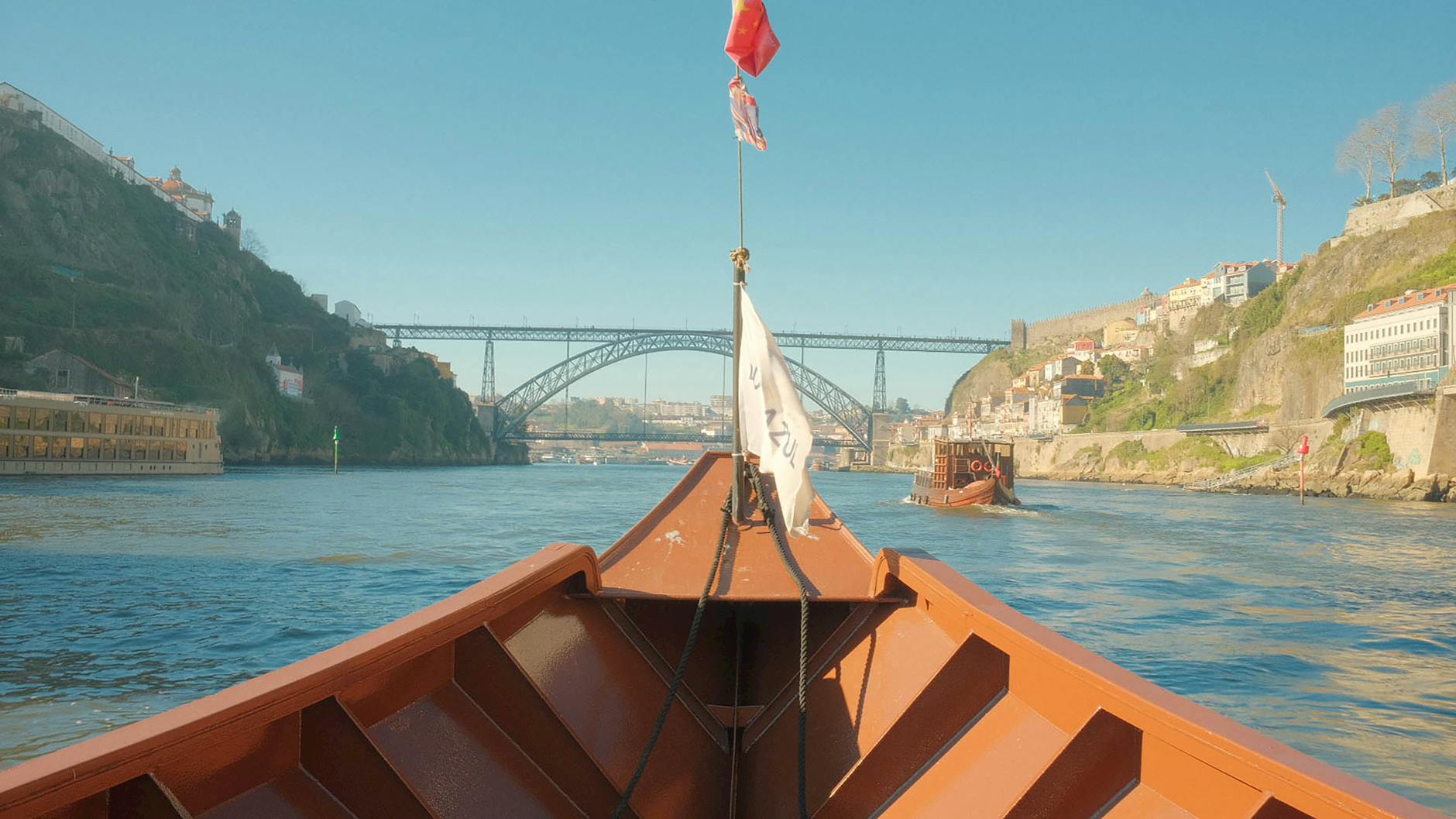
The Douro River is the soul of Porto. The Dom Luís I Bridge (1886, designed by a student of Gustave Eiffel) connects Porto to Gaia on two levels — the upper deck is for the metro and pedestrians (with vertigo-inducing views), the lower for cars and pedestrians.
Rabelo boats — The traditional flat-bottomed boats that once carried port wine barrels downriver from the Douro Valley. They’re now moored along the Gaia waterfront as floating advertisements for the lodges. River cruises depart from both sides: the Six Bridges cruise (from €12.50, 50–60 min) is the most popular.
Cais da Ribéira — The waterfront promenade on the Porto side. Lively, with restaurants and bars. Sit with a glass of wine and watch the light change on the Gaia lodges across the water. Sunset is extraordinary.
Teleférico de Gaia — A cable car connecting the upper bridge level to the Gaia waterfront. €7 one-way, €10 return. Short but scenic.
Best Viewpoints (Miradouros)
Porto’s hills reward those who climb them. The best free views:
- Dom Luís I Bridge (upper deck) — The most iconic viewpoint. Walk across for sweeping views of both Porto and Gaia. Go at sunset.
- Serra do Pilar (Gaia side) — A circular viewpoint next to the monastery above the bridge. Possibly the best single view in Porto — the entire Ribéira, the bridge, the river. Free.
- Jardim do Morro (Gaia) — The garden next to the upper metro station. Locals sit here with wine at sunset.
- Miradouro da Vitória — A hidden viewpoint behind the Clérigos area. Less crowded, beautiful rooftop panorama.
- Clérigos Tower — The highest view in central Porto (€10, 225 steps).
- Miradouro da Serra do Pilar — The circular garden terrace in Gaia. Arrive 30 minutes before sunset for the best light.
Nightlife & Bars
Porto’s nightlife is concentrated in the Galerías de Paris strip (Rua de Galerías de Paris and surrounding streets) — a row of bars and clubs in the centre. Things get going late (after 23:00) and run until 04:00+.
Galerías de Paris — The main bar street. Dozens of bars in a short stretch. Walk along and pick the vibe you like. Beers from €2–€4, cocktails €6–€10.
Aduela (Rua das Oliveiras 36) — A beloved local bar. Cheap drinks, sardine tins on the walls, and a loyal crowd.
Base (Rua do Almada 436) — Porto’s best bar for cocktails and natural wine. Creative, excellent.
Maus Hábitos (Rua de Passos Manuel 178) — A cultural space with art, music, and a vegetarian café/bar. Alternative and creative.
Fado: Porto has its own fado tradition (different from Lisbon). Casa da Guitarra (Rua de São Sebastião 1) offers intimate fado shows from €15. Cálem in Gaia combines fado with port tasting (€28).
Shopping & Markets
Bolhão Market — Porto’s grand market, reopened in 2022 after a full renovation. Fresh fish, meat, cheese, fruit, flowers, and a food court upstairs. The heart of Porto’s food culture. Free entry. Open Mon–Sat, closed Sunday.
Mercado do Bom Sucesso — A renovated market turned food hall near Casa da Música. Multiple stalls: sushi, ceviche, wine bars, and Portuguese classics. Good for a casual meal. Free entry.
Rua de Santa Catarina — Porto’s main shopping street. High street brands plus Café Majestic (a belle époque café, €5 espresso but worth seeing).
Rua de Miguel Bombarda — The gallery and design street in Cedofeita. Art galleries, vintage shops, and independent designers. First Saturday gallery openings are a local event.
A Vida Portuguesa (Rua de Galerías de Paris 20) — The best shop for Portuguese design and traditional products: Claus Porto soaps, ceramic swallows, sardine tins, and more.
Port wine: Buy port at Garrafeira do Carmo (Rua do Carmo 17) for a curated selection at fair prices, or directly from the lodges in Gaia.
Getting Around
| Transport | Price | Notes |
|---|---|---|
| Andante Card (rechargeable) | €0.60 | Required for metro/bus; add credit per zone |
| Metro single (Z2, central) | €1.40 | Covers most central areas; 1h validity |
| Metro airport (Z4) | €2.25 | Line E (Violet), 30 min to Trindade (+€0.60 card = €2.85) |
| Bus single (Andante) | €1.95 | STCP buses; on-board without card €2.50 |
| Historic tram (lines 1, 22) | €6.00 | Vintage trams; return €8; line 18 suspended |
| Andante Tour 24h | €7.50 | Unlimited metro/bus all zones (72h: €16) |
| Train to Lisbon (IC/AP) | from €27.40 | InterCidades 3h 30m; Alfa Pendular €34.60, 2h 45m |
From Porto Airport (Francisco Sá Carneiro)
Porto Airport is 11 km northwest of the city centre.
Metro Line E (Violet) — The easiest and cheapest option. Direct to Trindade (city centre) in 30 minutes. €2.85 total (€2.25 Z4 ticket + €0.60 Andante card). Runs 06:00–01:00, every 20–30 min. Buy an Andante card at the airport station.
Taxi/Uber — €20–€30 to the centre. 20–30 minutes depending on traffic. Bolt and Uber both operate.
Day Trips from Porto
Douro Valley
The terraced vineyards of the Douro Valley (UNESCO World Heritage) produce both port wine and outstanding still wines. The landscape is extraordinary — steep hillsides covered in vines dropping to the river. Options:
- Train: The Linha do Douro from São Bento to Régua or Pinhão is one of Portugal’s most scenic train rides. €12–€17 one-way. 2–2.5 hours. Book at cp.pt.
- Boat: Full-day cruises from Porto to Régua or Pinhão, with wine tastings and lunch. From €75.
- Tour: Guided day trips with wine tastings at quintas (estates). From €55–85.
- Self-drive: The most flexible option. Stop at quintas along the N222 road (voted one of the world’s best driving roads).
Braga
Portugal’s religious capital, 50 km north. The Bom Jesus do Monte sanctuary (UNESCO, 116-metre baroque stairway) is the highlight — climb the zigzagging steps or take the hydraulic funicular (the world’s oldest, since 1882; €2 up / €3 return). Also: the Sé (Portugal’s oldest cathedral), and the lively student-town atmosphere. Train from Porto São Bento: 1 hour, from €3.25.
Guimarães
“The birthplace of Portugal” — where the first Portuguese king, Afonso Henriques, was born. A UNESCO World Heritage medieval centre with a castle (€2; watchtower temporarily closed) and the Palace of the Dukes of Bragança (€5; castle+palace combo €8). Free Sundays until 14:00 for Portuguese residents. Train from Porto: 1h 15m, from €3.60.
Aveiro
The “Portuguese Venice” — a colourful canal city 75 km south. Famous for moliceiro boat rides (from €13, 45 min), ovos moles (sweet egg pastries), and the striped houses of Costa Nova beach (bus from Aveiro, 15 min, €2.45). Train from Porto: 1 hour, from €3.95.
Budget & Money
| Category | Budget | Mid-Range | Luxury |
|---|---|---|---|
| Accommodation | €20–€40 dorm | €80–€160 | €200–€500+ |
| Food (per day) | €15–€30 | €40–€80 | €100–€300 |
| Transport (per day) | €0 (walk) | €5–€7 | €15–€30 |
| Beer (0.3L) | €1.00–€2.00 | €2.00–€3.50 | €3.50–€6.00 |
| Daily Total | €40–€75 | €130–€260 | €320–€850+ |
Money-Saving Tips
- Lunch menus (prato do dia): Most tascas offer a daily lunch special for €7–€12 including a drink. This is the best-value meal in any Western European capital.
- Wine is cheap: A glass of Vinho Verde or Douro red costs €2–€4 in most bars. Port tastings start at €5 in Gaia.
- Free views: Dom Luís I Bridge (both levels), Miradouro da Vitória, Serra do Pilar viewpoint (Gaia), and Jardim do Morro.
- Free churches: Most churches are free to enter (São Francisco and cloisters are exceptions).
- Porto Card Walker: Worth it if visiting 3+ paid attractions (€7.50/day). No longer includes transport (discontinued March 2026).
Weather & Best Time to Visit
Summer (Jun–Aug): Warm and mostly dry (20–30°C). Peak season. São João (June 23–24) is the biggest street party. Sardine season at its peak.
Spring (Apr–May): Pleasant (15–22°C). Flowers in bloom. Fewer tourists. Occasional rain.
Autumn (Sep–Oct): Warm and golden (16–25°C). Wine harvest in the Douro (vindimas). Excellent for wine tourism.
Winter (Nov–Mar): Cool and wet (8–15°C). Porto gets more rain than Lisbon. But the city is atmospheric, prices are low, and you’ll have attractions to yourself.
Best months: May–June and September–October. Good weather, fewer crowds than July–August, and better prices.
Safety & Tips
- Porto is very safe. One of the safest cities in Western Europe. Violent crime against tourists is very rare.
- Pickpockets: Present in tourist areas (Ribéira, São Bento, trams). Standard awareness.
- Hills: Porto is extremely hilly. Wear comfortable shoes. Some streets are nearly vertical. The cobblestones (calçada) are beautiful but slippery when wet.
- Tipping: Not expected in Portugal. Rounding up by €1–2 or leaving 5–10% for good service is appreciated but never mandatory.
- Tap water: Safe to drink throughout Porto, though many locals prefer bottled.
- Language: Portuguese is the language. English is widely spoken in tourist areas and by younger locals. Learning “obrigado/obrigada” (thank you) goes a long way.
What’s New in 2026
São João 2026: Porto’s biggest celebration, the night of June 23–24. The entire city takes to the streets with plastic hammers, sardines, lanterns, and fireworks over the Douro. Free and utterly chaotic. Extended festivities run June 6–July 6 across various venues. Book accommodation months in advance.
Metro Pink Line: The new Pink Line connecting São Bento to Casa da Música (via Liberdade and Hospital Santo António) is expected to open by July 2026 after delays. This will significantly ease east-west travel through the centre.
Metro Ruby Line & new Douro bridge: A second new metro line (Ruby/Rubi) with 8 stations and a new Douro bridge (Ponte D. Antónia Ferreira) exclusively for metro, pedestrians, and cyclists is under construction. Expect some waterfront disruption. Partial service may begin late 2026.
Porto Card change: The transport-included Porto Card was discontinued in March 2026. Only the Walker version (museums/discounts only, no transport) remains. Use Andante Tour passes for transport instead.
Michelin 2026: Porto gained 4 new one-star restaurants (DOP, Eon, Gastro by Elemento, IN Diferente) in the 2026 guide — the biggest single-year gain in the city’s history.
Cockburn’s Port Lodge: The immersive visitor experience that opened in 2023 in Gaia is now one of the most popular port experiences.
Entry requirements: Portugal is in the Schengen Area. EU/EEA citizens need only an ID card. Non-EU visa-exempt nationals: 90 days in any 180-day period. ETIAS is not yet in effect as of April 2026.
Tourist tax: Porto charges a €2 per night tourist tax (max 7 nights) for guests over 13 years old. Paid at accommodation check-in.
How Many Days in Porto?
2 days: Ribéira, Dom Luís Bridge, one port lodge, francesinha, São Bento, Clérigos Tower, Livraria Lello.
4 days: Add Gaia lodges in depth, Foz do Douro, Serralves, neighbourhood exploration, Bolhão Market, a fine dining meal.
6+ days: Add Douro Valley day trip, Braga or Guimarães, deeper wine exploration, Matosinhos seafood, Aveiro/Costa Nova.
Frequently Asked Questions
How many days do I need in Porto?
Three to four days is ideal. Two covers the highlights, four lets you add a Douro Valley trip and deeper exploration.
Is Porto cheaper than Lisbon?
Yes, noticeably. Accommodation, food, and drinks are 15–25% cheaper. A tasca lunch in Porto for €8–12 is hard to beat anywhere in Western Europe.
Porto or Lisbon?
Both are excellent. Porto is grittier, cheaper, more compact, and better for food and wine. Lisbon is bigger, more cosmopolitan, and has better nightlife and beaches. Ideally, visit both.
Is the francesinha really that good?
It is aggressively delicious. Go to Café Santiago or Capa Negra II, not a tourist restaurant. Share one if you’re not very hungry.
Which port wine lodge should I visit?
Taylor’s for the views and self-paced experience. Graham’s for the terrace and food. Cálem for fado + port. Ferreira or Ramos Pinto for a more intimate experience.
Can I do a Douro Valley day trip?
Yes. By train (scenic, from €12), by boat (from €75), or by guided tour (from €55). The train to Pinhão is one of Portugal’s best train journeys.
Is Porto walkable?
Mostly, but it is very hilly. Wear comfortable shoes. The metro helps for longer distances. Going downhill to the Ribéira is easy; coming back up is a workout.
Is Porto safe?
Very safe. One of the safest cities in Western Europe. Standard pickpocket awareness in tourist areas.
Explore More Guides
- 🇪🇸 Madrid City Guide 2026
- 🇪🇸 Seville City Guide 2026
- 🇫🇷 Marseille City Guide 2026
- 🇮🇹 Naples City Guide 2026
- 🇩🇰 Copenhagen City Guide 2026
- 🏴 Edinburgh City Guide 2026
- 🇨🇿 Prague City Guide 2026
- 🇵🇱 Krakow City Guide 2026
This guide was researched and written by the AiFly editorial team. Last verified April 2026. Prices and opening hours are subject to change — always confirm locally. AiFly may earn a commission from partner links at no extra cost to you.