Prague — The Complete City Guide 2026
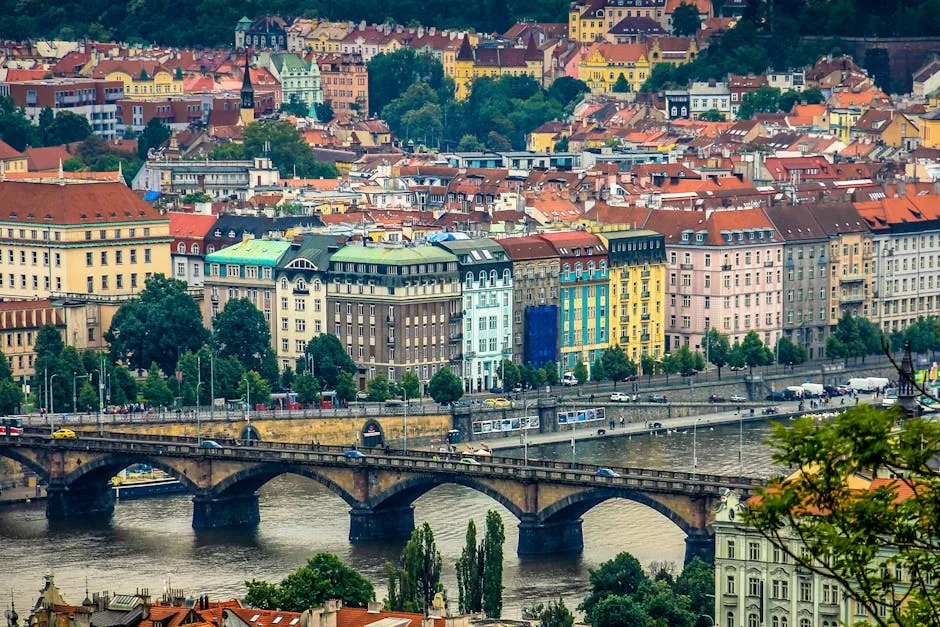
Prague is the city that makes you forget what century you’re in. Gothic spires rise above Baroque facades, a 600-year-old astronomical clock still performs on the hour, and the castle on the hill has been continuously occupied for over a millennium. But Prague is not a museum. It is a city of 1.3 million people who drink more beer per capita than anyone on earth, who pack smoky pubs at lunchtime for svíčková and dumplings, and who have turned their post-industrial neighbourhoods into some of Europe’s best dining districts. The Czech crown (€1 ≈ 24.5 Kč) keeps prices well below Western European capitals.
1,500–3,000 CZK/day budget
9°C avg
Schengen
CZK Kč
Last verified: April 2026. Every price, opening hour, and practical detail in this guide has been checked against current sources. All prices are in Czech crowns (Kč / CZK); €1 ≈ 24.5 Kč / $1 ≈ 22.5 Kč / £1 ≈ 29 Kč at time of writing. Prague is remarkably affordable by European standards — a half-litre of Pilsner in a local pub costs 55–80 Kč (€2.20–3.25) and a full traditional Czech lunch is 150–250 Kč (€6–10).
Why Prague? An Editor’s Note
Prague is the most beautiful city in Central Europe. That is not a controversial opinion — it is the reason 8 million people visit every year. The Old Town survived both World Wars virtually intact, giving it a concentration of Gothic, Renaissance, Baroque, and Art Nouveau architecture that rivals anywhere in Europe. But beauty alone would make it a museum. What makes Prague extraordinary is what happens inside those buildings: Czech pubs serving half-litres of world-class lager for less than a coffee costs in London, Michelin-starred restaurants reinventing Bohemian cuisine, jazz clubs in medieval cellars, and a local culture that runs on a bone-dry sense of humour and a deep scepticism of anything too earnest. Prague has been “discovered” since 1989 and it still hasn’t lost its edge. Come for the castle, stay for the beer.
Extending the trip? See our Vienna city guide (4h by direct RegioJet or ÖBB train), Berlin city guide (4h30 by direct train), Budapest city guide (7h by train or a 90-minute flight), Krakow city guide (7h by direct train, or overnight bus), and Munich city guide (5h50 by direct RegioJet/ÖBB) for the same treatment.
Table of Contents
- Top Attractions & 2026 Prices
- Czech Beer Culture
- Best Pubs & Breweries
- Traditional Czech Food
- Street Food & Snacks
- Fine Dining & Michelin 2026
- Café Culture
- Neighbourhoods
- Where to Stay
- Prague Castle In-Depth
- Jewish Quarter (Josefov)
- Viewpoints
- Nightlife & Jazz
- Shopping
- Getting Around
- Day Trips
- Budget & Money
- Weather & Best Time to Visit
- Safety & Scam Awareness
- What’s New in 2026
- How Many Days?
- Frequently Asked Questions
- Explore More Guides
Top Attractions & Verified 2026 Prices
| Attraction | Price | Hours |
|---|---|---|
| Prague Castle — Main Circuit | 450 Kč | 09:00–17:00 (Nov–Mar 16:00) |
| Charles Bridge | Free (towers 250 Kč) | 24/7; towers ~10:00–18:00 |
| Old Town Hall & Astronomical Clock Tower | 300 Kč | 09:00–22:00 (Mon from 11:00) |
| Jewish Quarter (Josefov) combined | 600 Kč | 09:00–18:00, closed Sat & Jewish holidays |
| Petrín Tower | 250 Kč | 10:00–22:00 (reduced in winter) |
| St. Nicholas Church (Malá Strana) | 150 Kč | 09:00–17:00 (concerts year-round) |
| Strahov Monastery Library | 190 Kč | 09:00–12:00, 13:00–17:00 |
| National Museum | 360 Kč | 10:00–18:00, closed 1st Tue monthly |
| Dancing House (gallery / rooftop) | 225 / 150 Kč | 10:00–22:00 |
| Vyšehrad | Free (casemates 190 Kč) | Grounds 24/7; casemates 10:00–18:00 |
| Municipal House (Obecní dům) tour | 320 Kč | Guided tours at set times |
| Lennon Wall | Free | 24/7 |
Prague Castle (Pražský hrad)
The largest ancient castle complex in the world (70,000 m²), perched on a hill above the Vltava River. It has been the seat of Czech rulers for over 1,000 years and remains the official residence of the Czech president. The complex includes St. Vitus Cathedral, the Old Royal Palace, St. George’s Basilica, and Golden Lane.
Main Circuit (450 Kč): St. Vitus Cathedral, Old Royal Palace, St. George’s Basilica, Golden Lane, Story of Prague Castle exhibition, and Rosenberg Palace. This is now the single combined ticket — the former Circuit A/B split has been consolidated. Budget 3–4 hours for the full experience, or focus on St. Vitus and Golden Lane if time is short.
The castle grounds are free to walk through. You only need a ticket for the interiors. Arrive before 09:30 or after 15:00 to avoid the worst crowds. Security screening at all entrances.
Charles Bridge (Karlův most)
Prague’s most iconic landmark: a 14th-century stone bridge lined with 30 Baroque statues, connecting the Old Town to Malá Strana. The bridge is free to walk at any hour. It is at its most magical at dawn (05:30–06:30) or late evening (after 21:00) when the crowds thin and the castle is lit above. During peak hours (10:00–18:00), it is shoulder-to-shoulder.
The Old Town Bridge Tower (250 Kč) offers panoramic views. The Lesser Town Bridge Towers can also be climbed.
Old Town Square & Astronomical Clock (Orloj)
Prague’s medieval heart. The square is dominated by the twin spires of the Týn Church, the Baroque St. Nicholas Church, the Jan Hus Memorial, and the Old Town Hall with its famous 15th-century Astronomical Clock. The clock performs on the hour (09:00–23:00) — the twelve apostles parade in the windows, death rings his bell, and the cock crows. It’s brief (about 45 seconds) but worth seeing once. The clock was fully restored after a major 2018 renovation.
The Old Town Hall Tower (300 Kč) has an elevator and observation deck with one of the best views in Prague. Go at sunset.
Jewish Quarter (Josefov)
One of the best-preserved Jewish heritage sites in Europe. The combined ticket (600 Kč) covers the Old Jewish Cemetery, Old-New Synagogue (Europe’s oldest active synagogue, 13th century), Pinkas Synagogue (Holocaust memorial with 77,297 names on the walls), Klausen Synagogue, Maisel Synagogue, and the Spanish Synagogue (stunning Moorish interior). Closed Saturdays and Jewish holidays. Budget 2–3 hours.
Petrín Hill
Prague’s green lung on the left bank. The Petrín Observation Tower (250 Kč) is a miniature Eiffel Tower built in 1891. On clear days you can see 150 km. The surrounding gardens (free) are stunning in spring when the cherry trees bloom. There is also a mirror maze (75 Kč) and a rose garden.
Strahov Monastery & Library
Two of the most beautiful Baroque library halls in the world: the Theological Hall (1679) and the Philosophical Hall (1794). You view them from the doorway — entry into the halls themselves is not permitted. 190 Kč for the library, photography fee 50 Kč extra. The monastery also has a brewery (Klasterni pivovar Strahov) with excellent Czech beers and views.
National Museum
At the top of Wenceslas Square, the neo-Renaissance National Museum reopened in 2020 after an extensive renovation. The main building covers natural history, history, and art. The connected New Building has temporary exhibitions. 360 Kč for the main building. First Tuesdays of the month after 16:00 are free. The building itself is worth seeing for its grand interior.
Vyšehrad
A 10th-century fortress on a hill south of the centre, quieter and less touristy than Prague Castle. The grounds are free and include the Basilica of St. Peter and St. Paul, the Vyšehrad Cemetery (where Dvořák, Smetana, and Mucha are buried), and panoramic views over the Vltava. The casemates tour (underground tunnels, 190 Kč) includes the original 11th-century Romanesque bridge and a hall of Baroque statues from Charles Bridge.
Lennon Wall
A graffiti-covered wall in Malá Strana that became a symbol of free speech during the Communist era. Originally painted with John Lennon’s image and Beatles lyrics, it is now continuously repainted by visitors. Free to visit, open 24/7. It’s a photo opportunity rather than a long visit — 5 minutes is enough.
Czech Beer Culture
The Czech Republic has the highest beer consumption per capita in the world — approximately 128 litres per person per year. Beer (pivo) is not a beverage here; it is a cultural institution. The Czechs invented pilsner (in Plzeň, 1842), and Czech lager remains the global benchmark. A pub without beer on tap is not a pub. A meal without beer is not a meal.
The Czech Beer Landscape
Pilsner Urquell (Plzeňský Prazdroj) — The original pilsner, brewed since 1842. Ubiquitous and excellent. Draft in Prague: 55–80 Kč per 0.5L at a local pub.
Staropramen — Prague’s local brewery, brewed in Smíchov since 1869. Lighter and crisper than Urquell. 50–70 Kč per 0.5L.
Kozel — Popular Czech dark and light lager. Velký Popovický Kozel dark is particularly good.
Budvar (Český Budvar) — From České Budějovice (Budweis). The real Budweiser. Nothing to do with the American version.
Bernard — An independent regional brewery with cult following. Their unfiltered lager is superb.
Beer Etiquette
Always drink from a glass. Bottled beer exists but is considered inferior. A proper pub serves from the tap.
The foam matters. Czech beer should have a thick, creamy foam head (pěna). Asking for less foam is an insult. You can order three styles: hladinkové (standard pour, 3-finger foam), mlíko (mostly foam — a lighter, refreshing pour), or snít (half foam, half beer).
Your waiter marks your tab. In traditional pubs, the waiter puts a slip of paper on your table and marks each beer with a pen stroke. Do NOT lose this paper — it is your bill. They will keep bringing beers until you say stop or cover your glass.
Ordering sizes: Velké (0.5L, the standard) and malé (0.3L). Ordering a malé is fine, but the waiter may look slightly disappointed.
Beer Prices: Tourist vs. Local
| Location | 0.5L Draft | Notes |
|---|---|---|
| Local pub (Višnohrady, Žižkov) | 55–80 Kč | This is the real Prague |
| Central pub (Malá Strana, Staré Město) | 65–95 Kč | Still reasonable |
| Tourist trap (Old Town Square) | 120–200 Kč | Avoid — overpriced and poor quality |
| Craft beer bar | 75–120 Kč | IPAs, stouts, sours |
| U Fleků (brewery, since 1499) | 99 Kč / 0.4L | Famous dark lager, served in 0.4L glasses only |
Best Pubs & Breweries
Lokál Dlouhá
The single best recommendation in this guide. Lokál is a modern take on a traditional Czech pub: tank-fresh Pilsner Urquell (unpasteurised, delivered daily from the brewery), traditional Czech food at fair prices, and a buzzing atmosphere. The beer is widely considered the best Pilsner pour in Prague. Reservations essential for dinner. 0.5L Pilsner: 59 Kč. Svíčková: ~195 Kč. Multiple locations — the original on Dlouhá street is best. lokal.ambi.cz
Pro tip: what is “tankové pivo”?
Look for tankové pivo (tank beer) on the window or menu. This is unpasteurised Pilsner Urquell delivered in insulated tanks direct from the brewery rather than in kegs — fresher, creamier, and only served at establishments certified by the brewery. Lokál is the flagship but there are about two dozen tankovna pubs across Prague; the certification means you can’t serve tank beer badly.
U Fleků
Prague’s oldest brewpub, operating since 1499. They brew one beer only: a dark 13° lager (Flekovský tmavý ležák) that is excellent. The experience is touristy (accordion player, group seating, waiters who push shots of Becherovka) but undeniably atmospheric. Beer: 99 Kč per 0.4L (note: they serve 0.4L, not the standard 0.5L). Cash only. They’ll keep bringing beers until you put a coaster on top of your glass.
Pivovarský dům
A brewpub in Nové Město that experiments with unusual beers: banana, coffee, cherry, nettle, champagne beer. The classics are good too. Fun for beer explorers. 0.5L: 55–75 Kč. Food menu is solid Czech pub fare.
Klasterni pivovar Strahov
The monastery brewery at Strahov, with a terrace offering spectacular castle and city views. Their sv. Norbert amber and IPA are excellent. 0.5L: 69–89 Kč. Perfect for a post-castle beer. The views alone are worth the visit.
BeerGeek
Prague’s best craft beer bar with 32 taps of Czech and international craft. If you want something beyond lager — IPAs, stouts, sours, barrel-aged — this is the place. Vinohradská location. 0.4L craft: 75–120 Kč.
Vinohradský Pivovar
A neighbourhood brewpub in Vinohrady with its own lager and wheat beer. The Czech food is above average. Locals outnumber tourists. 0.5L: 55–69 Kč.
Traditional Czech Food
Czech cuisine is heavy, hearty, and built for cold winters. It revolves around meat (pork, beef, duck), bread dumplings (knedlíky), sauerkraut, and sauces. It is not subtle. It is magnificent. And it is absurdly well-priced.
| Dish | Description | Typical Price |
|---|---|---|
| Svíčková na smetaně | Marinated beef sirloin in creamy vegetable sauce with bread dumplings & cranberries | 195–280 Kč |
| Věpřo-knedlo-zelo | Roast pork with bread dumplings & sauerkraut — the Czech national dish | 175–250 Kč |
| Guláš | Thick beef goulash served with bread dumplings, not soup | 165–230 Kč |
| Smažený sýr | Deep-fried breaded cheese (usually Edam) with tartar sauce & fries | 145–195 Kč |
| Kulajda | Creamy mushroom & dill soup with poached egg & potatoes | 85–130 Kč |
| Bramborové knedlíky | Potato dumplings with smoked meat inside | 155–210 Kč |
| Vepřové koleno | Roasted pork knuckle — massive, crispy, designed for sharing | 250–350 Kč |
| Tatarák | Raw beef tartare with garlic toast — Czech pub staple | 195–280 Kč |
| Chlebíčky | Open-faced sandwiches with egg, ham, salami, pickles | 35–65 Kč each |
| Ovedné koleno / Pečená kachna | Roast duck with red cabbage & dumplings | 250–350 Kč |
Svíčková — The Dish You Must Eat
If you eat one thing in Prague, make it svíčková na smetaně. Beef sirloin is marinated for days in a root vegetable mirepoix, slow-roasted, then served sliced in a thick, creamy sauce made from the strained vegetables. It comes with bread dumplings (houskové knedlíky) and a spoonful of cranberry compote. The sauce should be silky, the beef tender, the dumplings dense. A good svíčková is comfort food perfection.
Where: Lokál (195 Kč, the benchmark), Cafe Savoy (premium version ~280 Kč), Kantýna (modern take, Holešovice), Hospoda (near I.P. Pavlova, locals outnumber tourists, 120-200 Kč), Mincovna (Old Town, tourist-friendly but decent).
Smažený Sýr (Fried Cheese)
A thick slab of Edam-style cheese, breaded and deep-fried, served with tartar sauce and fries. This is not health food. This is the Czech answer to a hangover. Vegetarians will find it on every Czech menu. 145–195 Kč at a pub. Street-food versions in baguettes cost 80–120 Kč.
Chlebíčky (Open Sandwiches)
Prague’s original fast food: small open-faced sandwiches on white bread, topped with combinations of ham, egg, potato salad, salami, and pickles. Buy from delis like Sisters Bistro (Dlouhá) or Cukrárna MySweetWay. 35–65 Kč each. Three make a perfect light lunch.
Polední Menu (Lunch Menu)
The best budget hack in Prague: most Czech restaurants and pubs offer a polední menu (daily lunch special) between 11:00–14:00 on weekdays. Soup + main course for 129–199 Kč (€5–8). Quality varies but it’s the same food they serve at dinner for half the price. Look for the handwritten chalkboard outside.
Street Food & Snacks
Trdelník — The Tourist Trap Debate
The cinnamon-sugar chimney cake sold on every corner of the Old Town is marketed as a “traditional Czech pastry.” It is not Czech. It is of Hungarian/Slovak origin and was never part of Czech food culture until tourist vendors popularised it around 2010. Czechs do not eat it. That said, it’s warm, sweet, and pleasant — just don’t call it Czech. 70–120 Kč. The ice cream-filled versions are 120–180 Kč.
Koláče — The Actually-Czech Pastry
Want something genuinely traditional? Order koláče — round sweet pastries topped with poppy seed, tvaroh (farmer’s cheese), or plum jam. Buy them from proper bakeries and konditoreje, not tourist stalls. 30–50 Kč each. This is what Czechs actually eat.
Klobása (Sausage)
Grilled sausages from street stands — this is actually Czech. Prague sausage with mustard and bread: 60–100 Kč. The stalls near Wenceslas Square and Na Příkopě are tourist-priced. The ones near local metro stations are better and cheaper.
Langoš
Deep-fried flatbread topped with garlic butter, cheese, and sour cream. Hungarian origin, adopted enthusiastically. 70–120 Kč from street vendors.
Palacinky (Crêpes)
Thin pancakes filled with Nutella, fruit, or curd cheese (tvaroh). Found at market stalls and cafés. 65–120 Kč.
Fine Dining & Michelin 2026
Prague’s fine dining scene has matured dramatically. The city now has multiple Michelin stars, with chefs reinventing Bohemian cuisine using local ingredients, foraged herbs, and modern techniques.
Michelin-Starred Restaurants in Prague (2026)
| Restaurant | Stars | Cuisine | Tasting Menu |
|---|---|---|---|
| Papilio (near Prague) | ⭐⭐ | Modern European | 4,500–5,500 Kč |
| La Degustation Bohême Bourgeoise | ⭐ | Modern Bohemian | 3,950–4,500 Kč |
| Field | ⭐ | New Nordic-Czech | 2,900–3,500 Kč |
| Stangl 🌿 | ⭐ | Farm-to-table Czech | 2,800–3,200 Kč |
| Casa de Carli | ⭐ | Italian-Bohemian | 2,500–3,000 Kč |
| Levitate | ⭐ | Contemporary | 2,900–3,500 Kč |
Prague now has 5 one-star restaurants plus Papilio (2 stars, just outside the city). Stangl also holds a Michelin Green Star for sustainability. Note: Alcron is no longer Michelin-starred.
Bib Gourmand & Notable Restaurants
Eska — A former factory in Karlín turned into a bakery-restaurant with open kitchen, fermentation lab, and some of the most inventive food in Prague. Bib Gourmand. Lunch menu from 250 Kč, dinner mains 350–550 Kč.
Café Savoy — A grand Malá Strana café with spectacular Art Nouveau ceiling. Czech classics done to a very high standard. Svíčková here is a reference version. 280–450 Kč mains.
Kantýna — A butcher-restaurant concept: choose your cut at the counter, they grill it. Czech-raised beef, excellent dry-aged steaks. Mains 300–600 Kč. kantyna.ambi.cz
Na Kopci — A hilltop restaurant in Vyšehrad with seasonal Czech menus. Bib Gourmand. Set lunch 350–550 Kč.
Café Culture
Prague has a deep café tradition dating to the Austro-Hungarian era. The city’s kavárna (coffee house) culture revolves around lingering, reading, and talking. Third-wave coffee has also exploded.
Café Louvre (Národní) — Art Nouveau classic, Einstein and Kafka drank here. Coffee from 79 Kč.
Café Slavia (Smetanovo nábřeží) — Facing the National Theatre, Art Deco interior, stunning river views. Coffee 85–110 Kč.
EMA espresso bar — Third-wave minimalism. Flat white 85 Kč.
Doubleshot — Prague’s leading speciality roaster. Multiple locations. Espresso from 65 Kč.
Cafeduše — A cosy Vinohrady spot with rotating single-origin coffees. Filter from 75 Kč.
Neighbourhoods
Staré Město (Old Town)
The medieval core: Old Town Square, Astronomical Clock, Charles Bridge approach, and Josefov. This is where most tourists spend their time. Stunning architecture but heavy on tourist traps — especially restaurants on the main square. Stay here for convenience; eat one street back.
Malá Strana (Lesser Town)
Below Prague Castle, a neighbourhood of Baroque palaces, cobblestoned lanes, hidden gardens, and the Lennon Wall. Quieter than Old Town after dark. This is Prague’s most romantic district. Embassy rows and the Kampa Island park add green space. Beer gardens at Vojanovy sady are a local secret.
Hradčany (Castle District)
The hilltop around Prague Castle. Strahov Monastery, Loreto shrine, Nový Svět (a quiet lane of pastel cottages that feels like a village). Less commercial than Old Town. Beautiful for evening walks when the tour groups have gone.
Nové Město (New Town)
“New” since 1348. Wenceslas Square (more of a boulevard), the National Museum, and the commercial centre. Dančící Dům (Dancing House) is here. More practical than beautiful, but well-connected by metro and trams. Good mid-range hotels.
Vinohrady
Prague’s best residential neighbourhood for visitors. Tree-lined streets, Art Nouveau apartments, excellent restaurants and pubs at local prices, a thriving LGBTQ+ scene, and Náměstí Míru square with its neo-Gothic church. This is where Praguers actually eat and drink. 10 minutes from Old Town by metro (line A).
Žižkov
Prague’s alternative quarter. More pubs per square metre than anywhere in Prague (and therefore possibly the world). Scruffier, edgier, cheaper. The Žižkov TV Tower — love it or hate it — has a rooftop bar. Home to students, artists, and people who think Vinohrady is too gentrified.
Karlín
Formerly a flood-damaged industrial district, now Prague’s most dynamic neighbourhood. Tech companies, design studios, Eska (Bib Gourmand), brunch cafés, and a growing food scene. The area along Křižíkova street is excellent for eating. Less historical, more contemporary Prague.
Holešovice
An industrial-turned-creative district in the north. The Veletržní palác (National Gallery’s modern art collection), DOX Centre for Contemporary Art, and the Prague Market (Pražská Tržnice — a sprawling complex of food stalls, Vietnamese restaurants, and pop-up events). Prague’s art and nightlife frontier.
Where to Stay
Three realistic tiers for 2026 pricing. Vinohrady and Malá Strana are the best-value neighbourhoods; the Old Town charges a location premium for rooms that are often smaller and louder. Prices are rough per-night averages for a double, shoulder season, and do not include the 50 Kč/person tourist tax.
Budget (800–1,500 Kč / night)
Czech Inn (Vinohrady) — Art Nouveau building on a leafy street near Náměstí Míru. Dorms and private rooms, lively common areas, easy tram ride from the centre. Dorms from ~450 Kč, doubles from ~1,300 Kč.
Hostel DownTown (Staré Město) — Short walk from Old Town Square with free daily activities and all-you-can-eat breakfast. One of the few genuinely central hostels that still feels welcoming. Dorms from ~500 Kč.
Hotel Anna (Vinohrady) — An Art Nouveau building near Náměstí Míru with actual character at a real budget price — ~1,200–1,500 Kč for a double, metro two stops from the centre.
Mid-Range (2,000–4,500 Kč / night)
The Julius Prague — The most-recommended mid-range hotel in the city right now: restored 1920s building on Senovážné náměstí, design-conscious rooms, excellent breakfast, walking distance to Wenceslas Square. Doubles from ~3,200 Kč.
Hotel Neruda (Malá Strana) — A restored Baroque house on Nerudova street, the steep road climbing to Prague Castle. Boutique rooms, genuine old-world atmosphere, 10-minute walk to Charles Bridge. Doubles from ~2,800 Kč.
Grandior Hotel (Nové Město) — Best quality-to-price ratio in central Prague. Modern, well-run, 24-hour front desk, five-minute walk from Wenceslas Square and Náměstí Republiky. Doubles from ~2,400 Kč.
Luxury (6,000+ Kč / night)
Four Seasons Hotel Prague (Staré Město) — The benchmark. Four historic buildings dating to 1568, directly on the Vltava riverfront, with Charles Bridge framed through many of the rooms. Arguably the best-situated luxury hotel in Europe. Doubles from ~15,000 Kč.
Augustine, a Luxury Collection Hotel (Malá Strana) — A converted 13th-century Augustinian monastery at the foot of the castle hill. Brewery bar uses the original monastery equipment. Currently refurbishing rooms ahead of a 2026 Kempinski rebrand — check the renovation status before booking. Doubles from ~9,000 Kč.
Hotel Three Storks (Malá Strana) — The quieter, more affordable alternative to the Augustine. Elegant boutique rooms steps from Prague Castle and Charles Bridge, family-run atmosphere. Doubles from ~6,000 Kč.
Prague Castle In-Depth
The Prague Castle complex is so large it deserves its own section. Here’s what’s inside:
St. Vitus Cathedral
A Gothic masterpiece that took nearly 600 years to complete (1344–1929). The stained glass windows (including one by Alphonse Mucha) are extraordinary. The nave is free to enter; the ticket is needed for side chapels, royal crypt (with the tombs of Czech kings), and the Great South Tower (287 steps, separate 250 Kč ticket, panoramic views).
Golden Lane (Zlatá ulička)
A row of tiny, colourful 16th-century houses built into the castle wall. Originally for castle guards, later home to goldsmiths. Franz Kafka’s sister lived at No. 22. Now contains small exhibits on medieval life. Included in the castle ticket. Free to walk through after 17:00 when the ticket check ends (summer) or after 16:00 (winter).
Old Royal Palace
The Vladislav Hall has one of the largest vaulted ceilings in medieval Europe. The Defenestration of Prague (1618, which triggered the Thirty Years’ War) happened from a window here. Included in the castle ticket.
Jewish Quarter (Josefov)
One of the most significant Jewish heritage sites in Europe. The legend goes that the Nazis preserved Josefov to create a “museum of an extinct race.” Six synagogues and the Old Jewish Cemetery survive.
Combined ticket (600 Kč): Old-New Synagogue, Old Jewish Cemetery, Pinkas Synagogue, Klausen Synagogue, Maisel Synagogue, Spanish Synagogue.
Pinkas Synagogue is the most emotionally powerful — the names of 77,297 Czech and Moravian Jewish Holocaust victims are hand-written on every wall.
Old-New Synagogue (Staronová synagoga) has been in continuous use since the 13th century. The legend of the Golem of Prague is connected to this building.
Old Jewish Cemetery has 12,000 gravestones layered on top of each other (with an estimated 100,000 burials beneath) because the Jewish community was not allowed to expand the cemetery. The oldest grave dates to 1439.
Viewpoints
Letná Park — Free. The best panoramic view of Prague’s bridges. There’s a beer garden (Letná Beer Garden) at the eastern end with Staropramen on tap and bridge views. Essential at sunset.
Petrín Tower — 250 Kč. 360-degree views from a hilltop. Walk up through the gardens (funicular closed until Q3 2026).
Old Town Hall Tower — 300 Kč. The best view of the Old Town rooftops and Týn Church spires.
St. Vitus Tower — 250 Kč. 287 steps. Looking down over the castle complex and across the city.
Vyšehrad ramparts — Free. Quieter, southern view over the Vltava and the valley.
Žižkov TV Tower — The Brutalist tower with David Černý’s crawling baby sculptures. Observation deck and bar. 250–330 Kč. Love it or hate it architecturally, the view is spectacular.
Nightlife & Jazz
Prague’s nightlife ranges from medieval pub cellars to warehouse techno clubs.
Jazz: Prague has an excellent jazz scene. Jazz Dock (Janáčkovo nábřeží) is a riverside club with nightly live jazz and a spectacular Vltava setting. Reduta Jazz Club (Národní) is the oldest jazz club in Prague — Bill Clinton played saxophone here in 1994. Cover charges 250–400 Kč.
Clubs: Karlovy Lázně (5 floors of different music near Charles Bridge) is Prague’s biggest — touristy but fun. Roxy (Dlouhá) is more alternative. Ankali and Fuchs2 are the serious techno/electronic options.
Cocktails: Hemingway Bar (Kaprova) is world-ranked for cocktails. Bar’a k’rámu (anonymous door, underground) for speakeasy vibes. Trčková Bar for Czech-spirit cocktails.
Shopping
Bohemian Crystal (Czech Glass) — The genuine article. Moser is the premium brand (since 1857). Tourist shops on the Royal Route sell cheaper versions. Beware fakes — buy from established shops like Moser (Na Příkopě), Rückl, or Artěl.
Marionettes & Puppets — A genuine Czech craft tradition. Handmade wooden puppets from 500–3,000 Kč at specialist shops. The mass-produced ones sold in tourist stalls are made in China.
Beer souvenirs — Pilsner Urquell merchandise, Czech beer glasses (0.5L with the correct line mark), miniature beer sets.
Becherovka — The herbal liqueur from Karlovy Vary. Available everywhere. Small bottle: ~200 Kč.
Books — Shakespeare and Sons (Krymská, Vinohrady) is one of Europe’s best English-language bookshops.
Getting Around
| Transport | Price | Notes |
|---|---|---|
| 30-min ticket | 36 Kč (app) / 39 Kč (paper) | Metro, tram, bus within 30 min |
| 90-min ticket | 46 Kč (app) / 50 Kč (paper) | Most useful for sightseeing |
| 24-hour pass | 140 Kč (app) / 150 Kč (paper) | Unlimited metro/tram/bus |
| 72-hour pass | 340 Kč (app) / 350 Kč (paper) | Best value for 3+ day visits |
| Trolleybus 59 (airport) | 46 Kč (90-min ticket) | Airport → Nádraží Veleslavín (metro A), 17 min |
| Airport Express (AE) | 200 Kč | Airport → Hlavní nádraží (main station), 35 min |
| Bolt/Uber (airport) | 450–650 Kč | To centre, 30–45 min |
From Václav Havel Airport
The airport is 17 km west of the centre. Best options:
Trolleybus 59 + Metro — The cheapest and most efficient. Trolleybus 59 (replaced the former bus 119) runs every 5–15 minutes to Nádraží Veleslavín metro station (line A, green), then take the metro into the centre. Total time: 40–50 minutes. Cost: one 46 Kč ticket (90 min, covers trolleybus + metro) via the Lítáčka app, or 50 Kč paper ticket.
Airport Express (AE) — Direct bus to Hlavní nádraží (main train station). 200 Kč, every 30 minutes, 35 minutes ride. More comfortable, fewer stops.
Bolt or Uber — 450–650 Kč to Old Town. Book via app from the pick-up zone outside Terminal 2.
Metro, Tram & Bus
Prague’s public transport is excellent. Three metro lines (A green, B yellow, C red), 30+ tram lines, and extensive buses. The Lítačka app is the best way to buy tickets — no paper, no validators, just a QR code.
Tram 22/23 is the scenic route: it passes through Nové Město, Malá Strana, and up to Prague Castle. A sightseeing ride for the price of a regular ticket.
The funicular to Petrín Hill is normally included in any valid public transport ticket, but is closed for reconstruction until Q3 2026. Walk up through the gardens instead (20–25 min).
Walking
Prague’s centre is compact and walkable. Old Town Square to Charles Bridge: 10 minutes. Charles Bridge to Prague Castle (uphill): 20 minutes. Old Town to Vinohrady: 15 minutes. You can cover the main sights on foot in a single day.
Day Trips from Prague
Kutná Hora & the Bone Church (UNESCO)
A medieval silver-mining town 80 km east of Prague. The Sedlec Ossuary (“Bone Church”) is decorated with the bones of approximately 40,000 people — including a bone chandelier containing every bone in the human body. Entry: 220 Kč. The town also has St. Barbara’s Cathedral (UNESCO, 180 Kč) — a Gothic masterpiece rivalling St. Vitus. Train from Prague Hlavní nádraží: 1 hour, ~120 Kč return.
Český Krumlov (UNESCO)
A fairy-tale medieval town 180 km south of Prague, with a 13th-century castle, red-roofed houses, and the Vltava River winding through. The castle tower has stunning views. Castle tour: 260–320 Kč. Easily the most picturesque town in the Czech Republic. Bus from Prague: 3 hours, ~200 Kč return (RegioJet or FlixBus). Can be a long day trip or ideally an overnight.
Karlštejn Castle
A fairytale Gothic castle 30 km south-west of Prague, built by Charles IV in 1348 to house the Crown Jewels. The approach through a forested valley is gorgeous. Two tour options: Tour 1 (basic, 300 Kč) and Tour 2 (Chapel of the Holy Cross, must pre-book, 400 Kč). Train from Prague: 40 minutes, ~60 Kč return.
Plzeň (Pilsen) & the Pilsner Urquell Brewery
The birthplace of pilsner beer, 90 km west of Prague. The Pilsner Urquell Brewery tour (430 Kč, 90 minutes) takes you through the brewing museum, cellars, and ends with a tasting of unfiltered, unpasteurised Pilsner drawn directly from an oak barrel. It is the best beer you will ever drink. Train from Prague: 1.5 hours, ~200 Kč return (RegioJet).
Terezín (Theresienstadt)
A sobering but important visit: the former Nazi concentration camp and Jewish ghetto, 60 km north of Prague. The Terezín Memorial includes the Small Fortress (prison), the Ghetto Museum, and the Magdeburg Barracks. Combined ticket: 310 Kč. Allow 3–4 hours. Bus from Prague: 1 hour, ~140 Kč return.
Karlovy Vary (Carlsbad)
The famous spa town 130 km west of Prague, with colonnaded promenades, hot springs, and pastel-coloured buildings. Taste the mineral water from the springs (it’s warm and tastes medicinal). Buy a spa wafer (lázeňská oplatka, ~30–50 Kč). The Hotel Thermal has a pool with views. The town hosts the Karlovy Vary International Film Festival every July. Bus: 2 hours, ~300 Kč return.
Budget & Money
| Category | Budget | Mid-Range | Luxury |
|---|---|---|---|
| Accommodation | 400–800 Kč dorm | 1,500–3,000 Kč | 5,000–15,000 Kč+ |
| Food (per day) | 300–500 Kč | 800–1,500 Kč | 2,500–5,000 Kč |
| Transport (per day) | 60–120 Kč | 120–200 Kč | 300–800 Kč |
| Beer (per half-litre) | 55–80 Kč | 80–120 Kč | 120–200 Kč |
| Daily Total | 900–1,600 Kč (~€36–64) | 2,500–4,500 Kč (~€100–180) | 8,000–20,000 Kč+ (~€320–800+) |
Currency Warning
The Czech Republic uses the Czech crown (Kč / CZK), NOT the euro. Some tourist businesses accept euros at terrible exchange rates. Always pay in crowns. Use a travel card (Revolut, Wise) or withdraw from ATMs (look for ATMs belonging to banks — Komerční banka, ČSOB, Česká spořitelna). AVOID “0% commission” exchange bureaus near the tourist areas — they offer rates 10–20% worse than the real rate.
Tourist Tax (Accommodation Fee)
Prague charges a city accommodation fee of 50 Kč per person per night (roughly €2), collected by your accommodation and added at check-out. It applies to all commercial accommodation — hotels, hostels, guesthouses, Airbnb and other short-term rentals. Children under 18 are exempt. The fee is capped at 60 consecutive nights per stay (night 61+ is free — irrelevant for most visitors).
Example: a couple staying four nights in any Prague hotel owes 400 Kč (~€16) in accommodation fee on top of the room rate. A group of four across a seven-night Airbnb owes 1,400 Kč (~€57). It is usually not included in the price you see on booking platforms — expect it as a cash or card charge at the desk.
Prague is currently one of Europe’s cheapest capitals for tourist tax; Prague 1 (the historic core) has been lobbying to raise the fee significantly (proposals around €7/night), but as of April 2026 nothing has been approved and the 50 Kč rate remains in force for all 2026. Source: prague.org and Previo (official Czech hotelier system).
Emergency Numbers
- Emergency (ambulance, fire, police): 112 (EU-wide, English-speaking operators)
- Czech police: 158
- Medical emergency: 155
- Official Prague tourism info: prague.eu
Weather & Best Time to Visit
Spring (Apr–May): Mild and beautiful (12–22°C). Cherry blossoms on Petrín Hill. Fewer crowds than summer. One of the best times to visit.
Summer (Jun–Aug): Warm (20–30°C), long days, beer gardens full. Peak tourist season — Old Town and Charles Bridge are packed.
Autumn (Sep–Oct): Comfortable (10–20°C), beautiful foliage, thinning crowds. Excellent time to visit.
Winter (Nov–Mar): Cold (−3 to 5°C), grey, but atmospheric. Christmas markets (late November through early January) on Old Town Square and Wenceslas Square are among Europe’s best. Hot wine (svařák), fried cheese, and snow on the castle — genuinely magical.
Best months: April–May and September–October. Christmas markets (late November–December) are a separate reason to visit.
Safety & Scam Awareness
Prague is very safe. Violent crime against tourists is negligible. The risks are all petty: pickpockets, overcharging, and exchange scams.
Common Scams
Exchange bureaus: The #1 scam in Prague. Avoid bureaus near tourist areas (especially Karlova, Old Town Square, Wenceslas Square). They advertise “0% commission” but give rates 15–20% worse than bank rates. Use bank ATMs or Revolut/Wise instead.
Restaurant bill padding: Some tourist-area restaurants add charges for bread, condiments, or a “cover charge” that wasn’t on the menu. Always check the bill and ask about unexpected items.
Taxi overcharging: Much less common since Bolt and Uber became ubiquitous, but still happens at taxi ranks near tourist sites. Use Bolt or Uber exclusively.
Pickpockets: Active on Charles Bridge, Old Town Square, Wenceslas Square, and on tram 22/23 to Prague Castle. Keep valuables in front pockets or a zipped bag.
“Friendly” strangers: If someone approaches you near Wenceslas Square offering to show you a “great club” — decline. These lead to overpriced clip joints with aggressive billing.
Tipping
Czechs typically round up the bill or add 5–10%. In restaurants, 10% is generous and appreciated. In pubs, rounding up to the nearest 10 Kč is standard. Do NOT leave a tip on the table — tell the waiter the total you want to pay when they bring the bill.
What’s New in 2026
Petrín Funicular: Closed for reconstruction until Q3 2026. The tower and gardens remain accessible on foot (20–25 min walk up) or via tram 22/23 to Pohořelec.
Vyšehrad Gothic Cellar: Closed for renovation until June 2026. The fortress grounds, cemetery, and casemates remain open.
Easter Markets 2026: Old Town Square and Wenceslas Square, March 21 – April 12. Traditional Czech food stalls, painted eggs, and handcrafted decorations.
Prague Spring Festival 2026: The city’s premier classical music festival, May 12 – June 4. Concerts at the Rudolfinum, Municipal House, and other venues. Book early for the opening night at Smetana Hall.
Astronomical Clock: Fully operational after the 2018 restoration. Apostle procession runs on the hour from 09:00 to 23:00.
Metro Line D: Prague’s fourth metro line is under construction. The first section (Pankrác–Olbrachtova) is expected to open around 2029. Construction may cause some disruption around the Pankrác area.
Entry requirements: Czech Republic is in the Schengen Area. EU/EEA citizens need only an ID card. Non-EU visitors from visa-exempt countries (US, UK, Canada, Australia, Japan, etc.) can stay 90 days in any 180-day period. ETIAS (European Travel Information and Authorisation System) is not yet in effect as of April 2026 — check the latest status before travelling.
Cashless progress: Card payments are accepted almost everywhere in central Prague, including many pubs and market stalls. Cash is still useful for smaller businesses, market vendors, and tipping.
Lítáčka app: The official Prague public transport app supports tourist passes with QR tickets. Cheaper than paper tickets (36 vs 39 Kč for 30-min, 46 vs 50 Kč for 90-min). No need for physical tickets.
How Many Days in Prague?
2 days: Old Town Square, Charles Bridge, Prague Castle, beer at Lokál, svíčková, Josefov.
4 days: Add Petrín Hill, Vyšehrad, Vinohrady pub crawl, jazz evening, Strahov Library, day trip to Kutná Hora.
6+ days: Add Český Krumlov overnight, Pilsner brewery in Plzeň, Holešovice art scene, deeper neighbourhood exploration, cooking class.
Romantic Prague
Prague’s dreamy spires and gaslit lanes make it one of Europe’s most romantic cities. Here’s how to experience its magic with a partner.
Sunset Spots
Letná Beer Garden: Watch the sun set over the Vltava from the Letná park terrace. Beer in hand, bridges stretching below — hard to beat.
Petřín Hill: Climb the Observation Tower (when it reopens Q3 2026) or just find a bench in the orchards. The view rivals the tower itself.
Charles Bridge at Dawn: Be there by 6am. Just the two of you, the statues, and the morning mist rising from the river. Utterly transformative.
Romantic Dining
Mlýnec: Modern Czech cuisine with views of Charles Bridge. Window tables book fast — reserve weeks ahead.
Terasa U Zlaté Studně: Rooftop restaurant below the Castle with panoramic views. One of Prague’s most stunning dining rooms. 4-course menu from 2,890 CZK.
Evening Walks
Cross Charles Bridge after 10pm, wander through Malá Strana’s quiet streets to Kampa Island, then follow the river path back toward the Old Town. About 90 minutes of pure magic.
Hidden Prague
Beyond the crowds, Prague rewards those who explore its quiet corners.
Secret Gardens
Vrtba Garden: A baroque gem hidden behind an unmarked door on Karmelitská street. One of Prague’s finest terraced gardens, UNESCO-listed. Entry 100 CZK.
Wallenstein Garden: The Senate garden — peacocks, grottos, and absolute calm. Free entry, open April-October.
Curiosities
David Černý’s sculptures: Hunt for his provocative works scattered across the city. Start with the upside-down horse in Lucerna Passage (Štěpánská 61), then find the crawling babies on Žižkov TV Tower.
Speculum Alchemiae: A hidden alchemist’s laboratory beneath Old Town. Discovered in 2002 during flood repairs. Tours from 350 CZK.
Náprstek Museum of Asian, African and American Cultures: Overlooked gem in the Old Town. Fascinating ethnographic collections. Entry 150 CZK, free first Wednesday.
Frequently Asked Questions
How many days do I need in Prague?
Three to four days is ideal. Two covers the highlights but feels rushed. A week lets you add day trips and explore the local neighbourhoods properly.
Is Prague expensive?
Cheap by Western European standards. Beer from 55 Kč (€2.20), lunch menus from 129 Kč (€5), attractions 190–600 Kč. Mid-range budget: €100–180/day. Significantly cheaper than Vienna, Berlin, or Munich.
Does Prague use the euro?
No. The Czech Republic uses the Czech crown (Kč / CZK). Some tourist places accept euros at bad rates. Always pay in crowns. Use ATMs or Revolut/Wise for the best exchange rates.
Is Prague safe?
Very safe. Main risks are pickpockets on Charles Bridge and tourist-area scams (exchange bureaus, restaurant bill padding). Violent crime against tourists is extremely rare.
Is the tap water safe to drink?
Yes. Prague’s tap water is safe and good quality. No need to buy bottled water.
When is the best time to visit Prague?
April–May (spring, fewer crowds) and September–October (autumn, beautiful). Christmas markets (late November–December) are a separate highlight.
Is trdelník Czech?
No. Despite being sold on every corner, it is of Hungarian/Slovak origin and was never part of Czech cuisine. Czechs find the “traditional Czech pastry” marketing amusing. It’s still tasty — just don’t call it Czech.
What should I drink in Prague?
Pilsner Urquell from the tank at Lokál. Then světlý ležák (light lager) at any local pub. Then tmavé (dark beer) at U Fleků. Then Becherovka as a digestif. Then more Pilsner.
Explore More Guides
- 🇩🇪 Munich City Guide 2026
- 🇳🇴 Oslo City Guide 2026
- 🇪🇸 Madrid City Guide 2026
- 🇮🇹 Naples City Guide 2026
- 🇫🇷 Marseille City Guide 2026
- 🇪🇸 Seville City Guide 2026
- 🇹🇷 Istanbul City Guide 2026
- 🇻🇳 Hanoi City Guide 2026
This guide was researched and written by the AiFly editorial team. Last verified April 2026. Prices and opening hours are subject to change — always confirm locally. AiFly may earn a commission from partner links at no extra cost to you.
Cheapest Flights to Prague
We track flight deals to Prague from 10 cities worldwide. Here are the best recent fares:
Flight Deals from Prague
Looking for cheap flights departing Prague? Here are deals to 14 destinations:
- Prague to New York, USA from €312
- Prague to New Delhi, India from €404
- Prague to Mumbai, India from €406
- Prague to Phuket, Thailand from €409
- Prague to Toronto, Canada from €414
- Prague to Ghulja, China from €434
- Prague to Malé, Maldives from €461
- Prague to Seoul, South Korea from €477
- Prague to Bangkok, Thailand from €484
- Prague to Nairobi, Kenya from €494
- Prague to Beijing, China from €514
- Prague to Hanoi, Vietnam from €523
- Prague to Zanzibar, Tanzania from €552
- Prague to Shanghai, China from €577
Prices are based on recent deals and may no longer be available. Browse all flight deals