Maiquetía “Simón Bolívar” International Airport (CCS) — Airport Guide 2026
American Airlines landed the first Miami–Caracas flight in five years on 30 April 2026, and United follows with a Houston service from August — which makes this the first year CCS has genuinely mattered to US travellers since the pandemic-era suspension, and the first year a realistic guide to it has to balance reconnection enthusiasm against a safety picture that hasn’t kept up.
Quick Reference
CCS / SVMI
Maiquetía “Simón Bolívar” International Airport
Maiquetía, La Guaira state, Caribbean coast
~21 km west via the Caracas–La Guaira motorway; the city sits ~900 m higher
72 m (235 ft) — airport at sea level, Caracas is not
Separate International and Domestic (Nacional), linked by covered walkway and free shuttle
~8.2 million (2022, last reliable count)
1945
Level 3 — Reconsider Travel (downgraded from Level 4 on 19 March 2026)
Against all but essential travel to most of the country; against all travel to border zones, Zulia, and south of the Orinoco
Bolívar (VES); USD cash is what people actually transact in
~549 VES/USD (late May 2026), weakening ~12% over the prior month
500 VES — worth under US$1 at current rates
E-visa ~US$180, mandatory from 6 April 2026, 15–30 day processing, no visa on arrival
90-day tourist card on arrival by air; return or onward ticket required
6 months beyond planned departure
Certificate required if arriving from Brazil
~US$30–60 to central Caracas from the in-terminal counter, paid in USD
~US$50–80 pre-booked
Uber operates in Caracas; unreliable at the airport — don’t count on it
None
Italviajes Salón VIP (gate 24); Executive Lounge (gates 12–13); both International terminal
American Airlines Miami (30 Apr 2026); United Houston (11 Aug 2026)
Stay airside; city trip not advised on a layover
🏢 Terminals, Layout & the Coast That Charles Lindbergh Recommended
CCS opened in 1945 on a Caribbean coastal site that Charles Lindbergh had recommended after a survey flight. It is Venezuela’s main international gateway and its busiest airport — roughly 8.2 million passengers in 2022, which is the most recent figure worth quoting since later counts are patchy.
The layout that matters operationally: there are two separate terminals, International and Domestic (marked “Nacional” on local signage), connected by a covered pedestrian walkway and a free shuttle. The walk between them takes a few minutes, but a connection between the two means clearing international immigration, making the physical transfer, and going through a second security check in the domestic hall. Budget accordingly rather than relying on a tight layover time.
Within the International terminal, departures and arrivals split across upper and lower levels, so follow level signage, not just the terminal name. The 2007 “Maiquetía 2000” renovation added updated customs and immigration halls, a cargo terminal, and the connecting passageway between the two buildings.
🎨 The Cruz-Diez Floor
The terminal’s floor is worth knowing about before you assume the photos you’ve seen online are current. During 1970s terminal construction, Venezuelan kinetic artist Carlos Cruz-Diez installed “Cromointerferencia de color aditivo” — a vast geometric tile work that produces shifting colour effects as you walk across it. By 2018 it had badly deteriorated under foot traffic, and a promised restoration had stalled with only a fraction completed. Whether it has been fully restored as of 2026 is unconfirmed — treat the photogenic online version as original condition, not a guarantee of what you’ll walk over.
✈️ Airlines Using CCS in 2026
The international board is rebuilding. Copa (Panama City) and Avianca (Bogotá) are the workhorses for onward connections — Panama in particular is the standard one-stop routing into CCS from most of the world. Transatlantic: Turkish Airlines (Istanbul), TAP Air Portugal (Lisbon), Iberia, Air Europa, and Plus Ultra into Madrid, with Plus Ultra also serving the Canary Islands — the Tenerife frequency shifts seasonally, so verify before relying on it. Brazil’s Gol has operated São Paulo service; confirm current scheduling when you book. The domestic and regional network runs out of the Nacional terminal with Venezuelan carriers — Conviasa (the state airline), Avior, LASER, Estelar, RUTACA, and Venezolana.
On the airport’s own history as context for what to expect: Air France flew the Concorde from Maiquetía to Paris in the late 1970s and into the 1980s — this was once a genuinely prestigious stop. That era ended hard. Viasa, Venezuela’s flag carrier, collapsed on 23 January 1997, and the airport spent the 2010s in visible decline, with parts of the terminal reportedly without air conditioning or running water by 2018. Infrastructure has been patched since, and the 2026 reconnection has brought new traffic and attention — but go in expecting a functional airport rather than a polished one. Power and water interruptions have a documented history here; if you have a tight connection, don’t assume every system is working the day you fly.
⚠️ The airport sits at sea level — Caracas does not
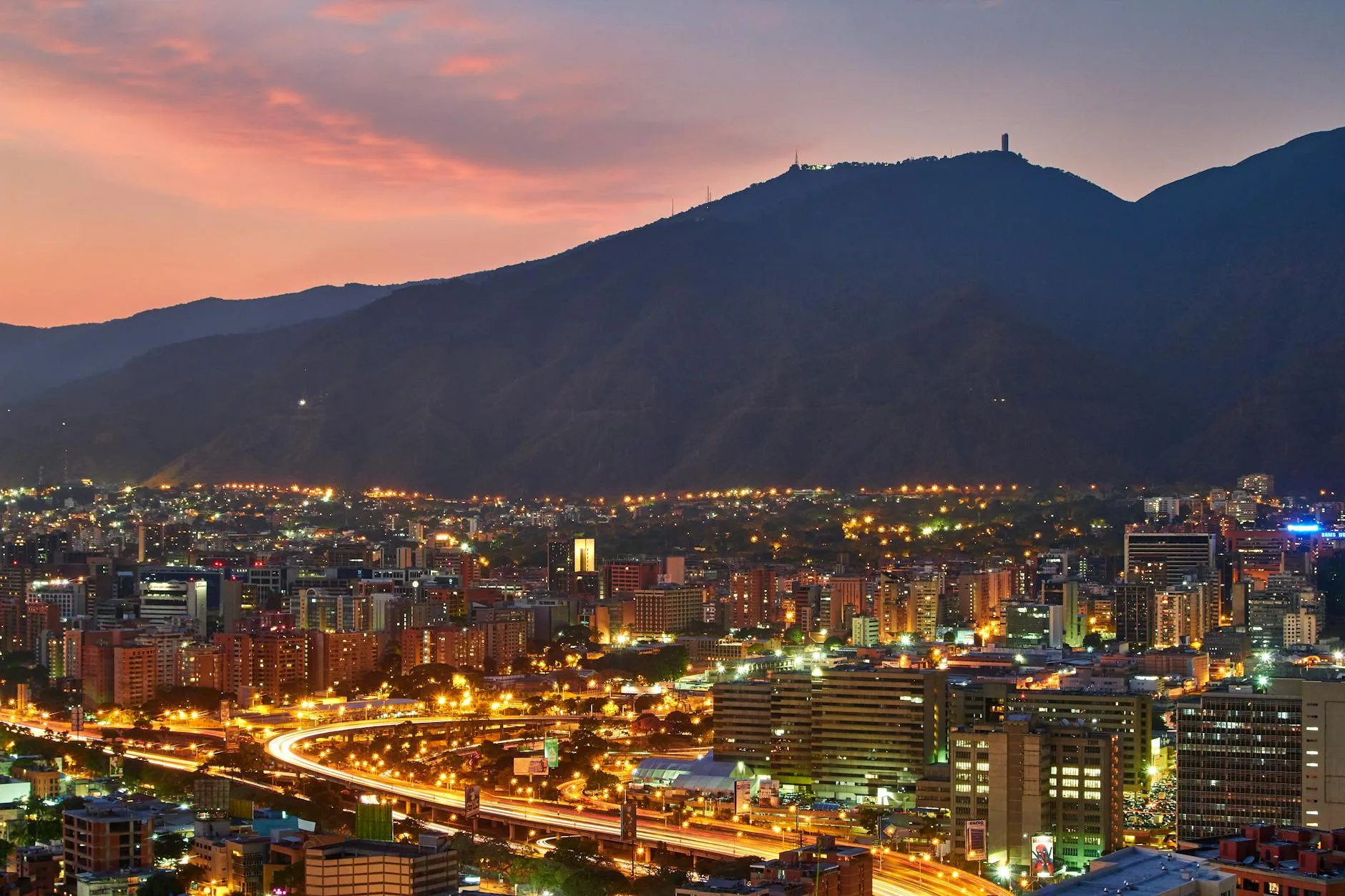
The geography is the source of every transport complication at CCS. The city is 900 metres up behind a coastal mountain range, connected by a single motorway that dropped its main viaduct into a ravine in 2006 and gets targeted by robberies after dark. That is not a detail — it structures everything about getting in and out.
🛂 Entry: Visas, Currency & Health
🇺🇸 The New US E-Visa
If you hold a US passport, this is the single most important line in this guide: as of 6 April 2026, Venezuela requires a digital visa applied for through the Venezuelan Ministry of Foreign Affairs (MPPRE) website before travel. The fee is around US$180 — up from a previous US$60 — it’s delivered by email rather than stamped in your passport, and you should allow a 15–30 day approval window. There is no visa on arrival for American citizens. Arriving without an approved e-visa risks refusal of entry or detention. If you’re planning to connect through CCS, check whether your itinerary has you entering Venezuelan immigration at all — transit rules vary by carrier and ticket.
🛂 US nationals: book the e-visa weeks out
The ~US$180 fee and 15–30 day processing window mean this is not something you sort the day before. Apply via the MPPRE site and confirm delivery before booking onward legs that depend on you clearing Venezuelan immigration.
🌍 UK, EU & Other Nationals
Arriving by air, most nationalities are issued a 90-day tourist card on arrival at no significant cost, provided you can show a return or onward ticket. Your passport must be valid for at least six months beyond your planned departure. Overland or sea entry is different — those routes can require an advance visa, so the on-arrival convenience is specifically an air-arrival rule. Overstaying carries real consequences: fines and detention on departure. Extensions go through SAIME (the immigration service) and must be filed before the card expires, not after.
⚠️ UK travellers: the insurance problem is real
The UK FCDO advises against all but essential travel to most of Venezuela. That wording has a financial consequence: travelling against FCDO advice typically voids your travel insurance. A sightseeing detour from the airport is, for a UK traveller, an uninsured trip by definition. Factor that before making any plan to leave the terminal.
💵 Currency
Venezuela’s official currency is the bolívar (VES). It has been redenominated three times in fifteen years — zeros lopped off in 2008, again in 2018, and a 2021 redenomination that removed six zeros to create the current “bolívar digital,” where one new bolívar equalled a million of the prior notes. The official rate sat near 549 VES to the US dollar in late May 2026 and had been sliding roughly 12% over the preceding month. The largest banknote in circulation is 500 VES — worth under a dollar at current rates, which tells you what cash transactions in bolívares look like for anything substantial.
In practice, the US dollar is what people use. Venezuela is heavily, informally dollarised: prices in shops, taxis, and restaurants are often quoted and paid in USD cash, with bolívares used for change and small amounts.
💵 Bring clean, small-denomination USD
Torn or marked notes get rejected. Breaking a US$100 can be genuinely difficult. Arrive with 1s, 5s, 10s, and 20s. Foreign cards are unreliable, and airport-area ATMs are both scarce and a documented robbery target — do not treat them as a cash backup.
🏥 Health
Yellow fever vaccination is required if you’re arriving from Brazil. It is not a blanket requirement for all arrivals, but yellow fever is present in parts of the country — if you’re travelling onward into the interior, check the current health guidance for your specific itinerary. Mosquito-borne illness, including dengue, is present at the coastal, low-altitude band where the airport sits; bring repellent if you’re spending time at sea level.
Venezuela’s public health infrastructure is one of the cited concerns in both US and UK advisories — medicines and reliable medical care can be hard to find outside major private clinics in Caracas. Carry any prescription you need rather than expecting to source it locally. Comprehensive travel and medical insurance is essential (bearing in mind the insurance void issue for UK travellers under FCDO advice).
The altitude: the airport is at sea level, Caracas is at around 900 m. That’s not high enough to cause altitude sickness for most people — it’s cooler than the coast, not a health hazard in the way Quito or Bogotá can be.
🚆 Getting to Caracas — and Why the Road Matters
CCS connects to Caracas by one road: the Caracas–La Guaira motorway, built in the 1950s, climbing 21 km over the coastal mountains from sea level to a city at 900 m. In normal traffic that drive takes 45 minutes to over an hour. There is no rail link. The metro doesn’t reach the airport. Proposals for a rail corridor have come and gone; nothing is operational. Your realistic options are an official taxi or a pre-arranged private transfer.
The road’s fragility is on the record. Viaduct 1 over the Tacagua creek collapsed on 19 March 2006 after a reactivated landslide crushed the arch span — the highway was shut in January that year and traffic was squeezed onto a steep detour until a replacement bridge was completed. That episode is why the corridor functions as a single point of failure. It isn’t theoretical risk; it happened within the memory of anyone who drove it at the time.
🚕 Official Airport Taxi
Inside arrivals there’s an authorised taxi counter where you pay a set fare, receive a receipt, and are assigned a logged driver. Expect roughly US$30–60 to central Caracas depending on the neighbourhood, paid in dollars. Vehicle quality varies; the safety value is the accountability — fixed price, logged driver, no negotiation in the arrivals hall.
🚕 Pay at the counter, not the kerb
The authorised counter inside arrivals is the safe option. People approaching you in or just outside arrivals offering a ride have no accountability, no fixed price, and the airport-to-city corridor has a documented record of robberies targeting arriving foreigners assumed to be carrying cash. Use the counter.
🚗 Pre-Booked Private Transfer
Booking in advance through a known operator typically runs US$50–80, but you get a named driver meeting you, a tracked vehicle, and a price agreed before you land. For a foreign visitor unfamiliar with Caracas, this is what expats consistently recommend over making the arrivals-hall decision while jet-lagged and conspicuous. The premium is worth it specifically because it removes uncertainty at the most vulnerable moment.
📱 Uber and Ride-Hailing
Uber technically operates in Caracas but is unreliable at the airport — drivers are scarce at Maiquetía, pickups are logistically awkward, and you cannot plan an arrival transfer around it. Treat Uber as a possibility for moving around the city once you’re established, not as an airport option.
🌙 Avoid the night drive
Nighttime transfers between Maiquetía and Caracas are flagged as especially dangerous in current advisories. If your flight lands after dark, the safer option is often to stay near the coast in the Macuto / Caraballeda beach area until morning rather than make the mountain climb at night.
🏨 Staying Near the Airport
The old resort towns of Macuto and Caraballeda sit east of the airport on the La Guaira coast — faded high-rise hotels that once served Caracas weekenders before the December 1999 Vargas disaster, when catastrophic debris flows off the El Ávila slopes buried stretches of coastline and killed tens of thousands. The coast reads as a place that was busier once than it is now, which is accurate. The practical reason to know it exists: if you have an early departure or a late arrival, staying here avoids the night mountain drive entirely.
🛋️ Lounges
The International terminal has a small lounge cluster. Two are accessible on Priority Pass, LoungeKey, and Diners Club:
- Italviajes Salón VIP — near gate 24. Listed hours run roughly 05:00–22:00 on Priority Pass’s own page, though some aggregators show a narrower morning-only window.
- Executive Lounge — near gates 12–13, with a comparable 05:00–22:00 listing. The same caveat on hours applies.
A VIP Executive Lounge between gates 13 and 14 also appears on Priority Pass listings. There is a Conviasa Salón VIP at the end of the International terminal — power, snacks, drinks, and showers — but it is restricted to Conviasa passengers and is not a card-access lounge.
🛋️ Verify hours the day of travel
The lounges list 05:00–22:00 officially, but some sources show morning-only windows. A late-evening international departure could find them closed before boarding. Confirm at the lounge desk rather than trusting the listing, and don’t plan an evening around guaranteed lounge access.
What isn’t here: there is no flagship international airline lounge at CCS — no large oneworld or Star Alliance signature space, no Amex Centurion equivalent. Iberia, TAP, Turkish, and Copa passengers in premium cabins use the contract lounges above. Set expectations at “functional regional lounge with snacks, drinks, and a quieter seat,” not a destination facility.
🍽️ Food & Duty-Free
Airport food at CCS is limited and priced in dollars — expect a markup over street prices, which is standard for airports, except that street prices in Caracas are genuinely cheap because the local economy runs on dollarised wages that are low by any external comparison.
🫓 What to Eat
The dish to eat is the arepa — a split, griddled cornmeal cake filled to order. The national filling is reina pepiada (shredded chicken with avocado, named for a 1950s beauty queen); domino (black beans and white cheese) and pabellón (shredded beef, beans, plantain) are the other staples. On the street in Caracas an arepa runs a couple of dollars; airside expect roughly double.
The cachapa — a sweet-corn pancake folded over salty white queso de mano — is heavier and harder to find airside than an arepa, but worth trying in the city. Empanadas (fried half-moon corn pastries) and tequeños (fried cheese sticks wrapped in dough) are ubiquitous snack-counter options.
🥃 Duty-Free: Venezuelan Rum
If you buy one thing at CCS’s duty-free, make it rum. Venezuela holds a Denomination of Controlled Origin for aged rum and produces genuinely respected bottles: Diplomático, Santa Teresa (the 1796 solera is the flagship), and Pampero are the names to look for. A bottle airside is typically cheaper than hunting one down in the city and reliably stocked in the International terminal, which is not something you can say about most of the duty-free here — it’s the one buy that’s an actual regional specialty rather than the same global liquor wall you’d see anywhere. Venezuela is also a serious cacao origin — the Chuao growing region on the coast produces some of the world’s most sought-after cocoa — so single-origin chocolate is a worthwhile, lighter alternative if the duty-free carries it.
🥃 Buy rum here, not in the city
Diplomático, Santa Teresa 1796, and Pampero are legitimately good bottles, and airside pricing and availability beat the city for a departing traveller. This is one of a small number of “actually worth it” airport purchases at CCS.
On named eateries: the terminal’s food offering rotates and a specific current outlet can’t be confirmed. The honest instruction is to eat in the city if you have the chance, and treat the airside counters as a top-up. The arepa advice holds regardless of which stall is open the day you fly.
💡 The Layover Question: Caracas and El Ávila
Most airport guides push you toward the city here. This one puts the verdict first, then the geography.
Should you leave the airport on a layover? For most travellers, no. The reason is the safety advisory, not the drive time. The US advisory stands at Level 3 (Reconsider Travel) as of March 2026 — the UK FCDO advises against all but essential travel to most of Venezuela, and as noted in the visa section, that wording can void your travel insurance entirely for a UK traveller making a discretionary trip. The airport corridor itself — the arrivals hall and the motorway — has a documented record of violent crime targeting foreigners assumed to be carrying cash. The airport area was among the locations affected by the January 2026 strikes.
The layover arithmetic reinforces the verdict. A round trip to central Caracas is realistically 45 minutes to over an hour each way over the mountain motorway — two to two-and-a-half hours of driving before you’ve seen anything. Add a three-hour international return buffer you’d want at an airport with manual processes, and you’re committing a minimum of seven to eight hours for effectively one sightseeing stop, on a road you’re advised not to use after dark. On any layover under about ten hours that calculation doesn’t add up, and on a longer one the insurance and crime picture makes it a poor trade. The honest recommendation: stay airside, use a lounge, and connect.
🗻 If You’re Actually Entering Venezuela
If you’re entering on a proper trip — correct visa, comprehensive insurance, ideally a local contact or a vetted operator — the most distinctive thing near the airport is El Ávila itself.
El Ávila / Waraira Repano National Park — the green mountain wall that separates the coastal airport from the city. The Teleférico Warairarepano cable car climbs from the Mariperez station on the northern edge of Caracas to a ridge at around 2,100 m — a 3.4 km ride of roughly 15 minutes, with views over both the city and the Caribbean simultaneously. A round trip ran about US$30 for non-Venezuelans (versus a fraction of that for residents); verify the current fare and operating days before going. At the top stands the Hotel Humboldt, the cylindrical 1956 modernist landmark visible from the city below. From the airport you’d reach the Mariperez base in roughly an hour by road, then the cable car up. It’s the single most distinctive sight near Caracas.
Central Caracas — the historic centre around Plaza Bolívar, the cathedral, and the Casa Natal de Simón Bolívar (the Liberator’s birthplace) is about an hour up the motorway. Of genuine historical interest, in a city the advisories tell you to be cautious in. Go with someone who knows it, not solo.
Venezuela has real things worth visiting beyond the capital — the Andes around Mérida, the table mountains of the Gran Sabana, the coast. None of those belong on a casual airport layover in 2026. CCS is a transit point; plan a proper, insured, well-briefed trip if the country itself is the point.
🔧 Practical Notes
Connectivity. Terminal Wi-Fi exists but is inconsistent. Get a local SIM or eSIM before you arrive — Movistar and Digitel are the main networks, and an eSIM sorted at home saves you queuing and the airport’s unreliable retail. Coverage in Caracas is fine; the mountain motorway has dead spots.
Cash discipline in arrivals. The assumption that arriving foreigners carry US cash is precisely what makes the arrivals hall and the corridor risky. Don’t count your money in the hall, don’t display your phone prominently, and don’t engage with anyone offering services you didn’t book in advance.
Tipping. Tipping in dollars is appreciated and increasingly expected in the dollarised service economy. Round up taxi fares and tip a couple of dollars for help with bags.
Tap water. Don’t drink it. Sealed bottled water is sold in dollars everywhere.
Medical. Carry any prescription medication you need. Reliable pharmacies and private clinics exist in Caracas but availability is not guaranteed, and public health infrastructure is one of the documented concerns in both US and UK advisories.
❓ Frequently Asked Questions
📊 At a Glance — CCS 2026
| Feature | Current Data (verify before travel) |
|---|---|
| IATA / ICAO | CCS / SVMI |
| Official name | Maiquetía “Simón Bolívar” International Airport |
| Location | Maiquetía, La Guaira state, Caribbean coast |
| Distance to Caracas | ~21 km west, 45 min–1 hr+ by motorway |
| Elevation | 72 m (235 ft); Caracas ~900 m |
| Terminals | International + Domestic, walkway + free shuttle |
| Annual passengers | ~8.2 million (2022) |
| Opened | 1945 |
| US travel advisory | Level 3 — Reconsider Travel (from 19 Mar 2026) |
| UK FCDO advice | Against all but essential travel (most of country) |
| Currency | Bolívar (VES); USD cash de facto |
| Exchange rate | ~549 VES/USD (late May 2026), weakening |
| Highest banknote | 500 VES (under US$1) |
| US visa | E-visa ~US$180, mandatory from 6 Apr 2026, no visa on arrival |
| UK / EU visa | 90-day tourist card on arrival by air, onward ticket required |
| Passport validity | 6 months beyond departure |
| Yellow fever | Certificate required if arriving from Brazil |
| Airport taxi | ~US$30–60 to central Caracas, counter inside arrivals, USD |
| Private transfer | ~US$50–80 pre-booked |
| Rideshare | Uber in city; unreliable at airport |
| Rail / metro | None |
| Priority Pass lounges | Italviajes Salón VIP (gate 24); Executive Lounge (gates 12–13) |
| El Ávila cable car | Teleférico Warairarepano, ~US$30 round trip (non-residents) |
| US carriers resumed | AA Miami (30 Apr 2026); United Houston (11 Aug 2026) |
| Layover verdict | Stay airside; city trip not advised on a layover |