Cataratas del Iguazú International Airport (IGR) — Airport Guide 2026
The airport exists because the falls are 6 km up the road — and for 2026 that description is almost entirely accurate, with the loss of Flybondi’s Lima route on 5 June 2026 pushing IGR back to a purely domestic schedule after a brief flirtation with international service.
Quick Reference
Cataratas del Iguazú International (Mayor Carlos Eduardo Krause)
IATA: IGR · ICAO: SARI
Misiones Province, Argentina — 16 km southeast of Puerto Iguazú; 6 km south of the falls
279 m (916 ft)
One terminal · single asphalt runway 13/31, 3,300 m
Aeropuertos Argentina 2000
Aerolíneas Argentinas, Flybondi, JetSmart Argentina
Argentine peso (ARS) — approximately 1,410 ARS/USD official rate, May 2026
Visa-free, 90 days, no pre-registration
e-Visa required since 1 January 2026 (~US$51, apply online in advance)
~US$20–25, 20–25 min, fixed-rate desk booking
Río Uruguay line, ~US$1–3, ~30 min, roughly hourly
Iguazú by AMAE — Priority Pass / walk-in ~US$42 (the only one)
45,000 ARS, 2026
Recommended; not legally required to enter Argentina
🏢 Terminal & Geography
IGR is a single-terminal airport small enough to walk end-to-end in under three minutes. One asphalt runway, one check-in hall, a handful of low-numbered gates, a café landside, and the lounge airside at gate 1. The operator, Aeropuertos Argentina 2000, runs it as part of the national concession. Roughly 1.57 million passengers came through in the 2019 peak; nearly all of them flew in from Buenos Aires on a domestic hop and drove straight to the park.
The geography confuses people because conflicting numbers circulate online. The airport sits on the highway between Puerto Iguazú and the national park: 16 km southeast of the town, and only 6 km south of the park entrance. That means the falls are closer to the airport than your hotel in town is — about 15 minutes to the park gate versus 20–25 minutes into Puerto Iguazú. If you are heading straight to the park on arrival, you are almost there when you land.
The 3,300-metre runway handles Boeing 737s and Airbus A320s with room to spare. About 72 flights a week run between Buenos Aires and Puerto Iguazú, split across the two Buenos Aires airports: Aeroparque Jorge Newbery (AEP), the close-in city airport, and Ezeiza Ministro Pistarini (EZE), the international hub 35 km out. Aerolíneas Argentinas also serves Córdoba, Rosario, Salta, San Salvador de Jujuy, and Tucumán from IGR. The cross-border picture is now empty.
⚠️ Flybondi Lima route ends 5 June 2026
As of that date, IGR has no regular scheduled international service. If you planned to connect Lima–Iguazú on that route, recheck your itinerary. Onward connections will require routing through Buenos Aires.
⚠️ AEP/EZE transfer — allow 3–4 hours minimum
If your inbound international flight lands at Ezeiza (EZE) and your Iguazú connection leaves from Aeroparque (AEP), you face a 35-km overland transfer. These are not connected by rail. Budget 3–4 hours to be safe; same-day tight connections across these two airports have a poor record.
The “international” in the name is more geographic than operational. IGR sits at the tri-border of Argentina, Brazil and Paraguay. In 2026 it functions as a domestic gateway with a falls-shaped raison d’être. Expect a regional terminal that fills and empties with the morning and evening Buenos Aires waves.
🛂 Border, Visa & the Currency Question
Entry to Argentina
Over 80 nationalities — including US, Canadian, UK, EU, Australian, Japanese and South Korean citizens — enter visa-free for 90 days, with no electronic pre-registration and no ETA. The old US$160 US-citizen reciprocity fee was scrapped in 2016 and has not returned. Visa extensions beyond the initial 90 days are handled at the Dirección Nacional de Migraciones for a fee in the low thousands of pesos; verify the current amount before relying on it.
Since 1 July 2025, Argentina’s rules require non-resident visitors to carry valid travel medical insurance covering hospitalisation and emergency evacuation, declared on entry. Enforcement through early 2026 has been close to non-existent — consistent traveler reports say agents at Ezeiza and overland crossings have not been asking for proof. Carry a policy because the cost of an uninsured hospital bill dwarfs any premium, but do not expect a desk check.
Currency — what 2022-era blog posts get wrong
Argentina spent years with a notorious gap between the official exchange rate and the “blue dollar” street rate, where paying cash USD could save 50–80%. That is over. In April 2025 the Milei government lifted most currency controls under a US$20 billion IMF agreement and the rates converged sharply. As of late May 2026 the official rate sits around 1,410 ARS to the dollar, with the MEP and informal blue rates only a few percent away — all three clustered roughly 1,430–1,460. The arbitrage that once justified carrying a thick envelope of hundred-dollar bills has collapsed.
💳 Card is the default payment method in 2026
Foreign Visa and Mastercard transactions settle close to the favorable MEP-equivalent rate. Keep US$200–400 in clean, undamaged USD bills for the gaps: tips (which cannot be added to a card slip in Argentina), cash-only taxis, and small vendors. ATM fees at IGR and in town are punishing — withdraw infrequently and in larger amounts if you use one at all.
Argentine banknotes now run from 1,000 up through 2,000, 10,000 and 20,000 pesos — the larger denominations are a direct consequence of the inflation that makes a coffee cost a five-figure number. Coins are effectively out of circulation; nobody uses them. Western Union remains a way to pull pesos at a competitive rate if you want local cash, but the days of cash USD being dramatically better than a card swipe are gone.
Yellow fever
Misiones Province is classified as a yellow fever transmission risk zone, so vaccination is recommended for travelers spending time in the area. It is not legally required to enter Argentina, and a domestic arrival from Buenos Aires will not trigger a certificate check. The certificate does matter for onward travel: some countries require proof of vaccination if you are arriving from a risk zone, so check your next destination’s rules before the trip. The vaccine takes at least 10 days to become effective.
🚆 Getting to Town — and to the Park
The airport-to-town run is 16 km. Prices below are dated to May 2026 and worth confirming before travel.
Taxi
The default. A booked taxi from IGR to Puerto Iguazú runs roughly US$20–25 for the 20–25-minute run, paid in pesos at the equivalent or in USD if the driver accepts. Book at the desk inside the terminal before exiting to lock a fixed per-vehicle rate — agree the number before the doors close if you flag one outside. There is no meter. Going the other direction, directly to the park entrance, is shorter (about 6 km, 15 minutes) and cheaper.
🚕 Book the taxi inside, not outside
The terminal desk quotes fixed per-vehicle rates. A group of four splitting a fixed-rate taxi often costs less per head than the Río Uruguay bus without the wait. If you agree a price at the curb instead, say the number out loud before boarding.
Río Uruguay bus
The cheap option. Río Uruguay runs roughly hourly between the airport and Puerto Iguazú’s central bus terminal (Terminal de Ómnibus) for around US$1–3. The trip takes about 30 minutes. It drops at the terminal, not your hotel door, and it runs on its own timetable rather than yours — if your flight lands between departures, you wait. Works well for a solo traveler with light luggage and flexibility; less useful for a group with bags arriving on a schedule.
Private transfer and shuttle
Various operators sell pre-booked door-to-door transfers: roughly US$10 per seat on a shared van, more for a private car, around 35 minutes to town. The value is certainty — a named driver at arrivals with your hotel as the drop. Worth it for late-night arrivals or travelers who want zero friction on a short trip.
Rental car
Counter desks operate at the terminal. For the falls alone a car is redundant — you will park it and take the park’s own internal train anyway. A rental earns its keep only if you plan to drive the wider region: the Wanda semi-precious-stone mines 50 km north, or the Jesuit ruins at San Ignacio Miní about 240 km south. Argentina drives on the right; cards work at most petrol stations.
⚠️ No Uber or Cabify at this airport
App-based rideshare coverage in Puerto Iguazú is thin to non-existent in 2026. The licensed-taxi trade holds the airport. Do not land expecting to summon a car from your phone; use the desk or a pre-booked transfer.
Getting around inside the park
Once inside the Argentine national park, transport is on foot and on the Tren Ecológico de la Selva (Rainforest Ecological Train) — a propane-and-electric narrow-gauge line that runs from the visitor centre out to the Cataratas and Garganta del Diablo stations. It is included in your park ticket. From Garganta station, a boardwalk of roughly half a kilometre over open water leads to the lip of the Devil’s Throat.
🛋️ Lounge
IGR has exactly one lounge: Iguazú by AMAE, also listed under the older Aeropuertos VIP Club name, airside in front of gate 1. There is no Aerolíneas Argentinas premium lounge, no bank-card flagship facility, no first-class room — just this.
🛋️ Iguazú by AMAE — the honest assessment
Priority Pass accepted. Walk-in rate approximately US$42 per person. Wi-Fi, snacks, drinks including wine and cocktails, and quiet seating away from gate noise. It is comfortable on a long delay or when your card grants free entry. Paying US$42 out of pocket for a 40-minute wait before a domestic flight to Buenos Aires is a poor trade.
The lounge earns its keep on a genuine delay, for a Priority Pass holder, or for anyone who has already exhausted the landside café. This terminal clears security in minutes, so if your flight is on time and you are tight for time, you may never need it.
🍽️ Food Before You Fly — and What to Actually Eat in Town
The airport’s food offer is what you would expect from a small regional terminal: a café-bar landside, basic airside options, and the lounge if you have access. The price gap between airport and town is the usual one — expect to pay a meaningful premium for anything bought past security.
The serious eating is in Puerto Iguazú, and the regional plate is worth seeking out. Misiones sits on the Paraná, and the river dominates the menu: surubí and dorado, two large freshwater fish, appear grilled or in stews at restaurants along Avenida Victoria Aguirre and the streets around the Hito Tres Fronteras. A grilled surubí fillet in town runs a fraction of what an airport sandwich costs.
🥖 Chipá — the one snack worth buying
These small, chewy cheese breads of cassava starch are a Guaraní inheritance shared with Paraguay. Street carts in Puerto Iguazú sell them for a few hundred pesos; the airport version costs several times more. Buy them in town, not at the gate.
The Argentine staples hold in Iguazú — asado, empanadas, milanesa (breaded cutlet), and dulce de leche on anything sweet. An alfajor — two soft biscuits sandwiching dulce de leche, often chocolate-coated — is the easiest edible souvenir to pick up at the airport and one of the few items there that represents genuine fair value.
Mate, the bitter green infusion drunk from a shared gourd through a metal bombilla straw, is less a drink than a daily ritual in Misiones, Argentina’s principal yerba mate-growing province. If you want to take a kilo bag home, buy it at a town supermarket for far less than the airport price.
Tipping in restaurants runs around 10%, in cash — Argentine card terminals do not accept tips added to a slip, so keep pesos for it. The parrillas and river-fish restaurants around Avenida Victoria Aguirre are the reliable cluster; the strip around the Hito Tres Fronteras in town has the highest concentration.
💡 The Falls, the Border Decision & Day-Trip Realities
Argentina or Brazil — the decision that defines your visit
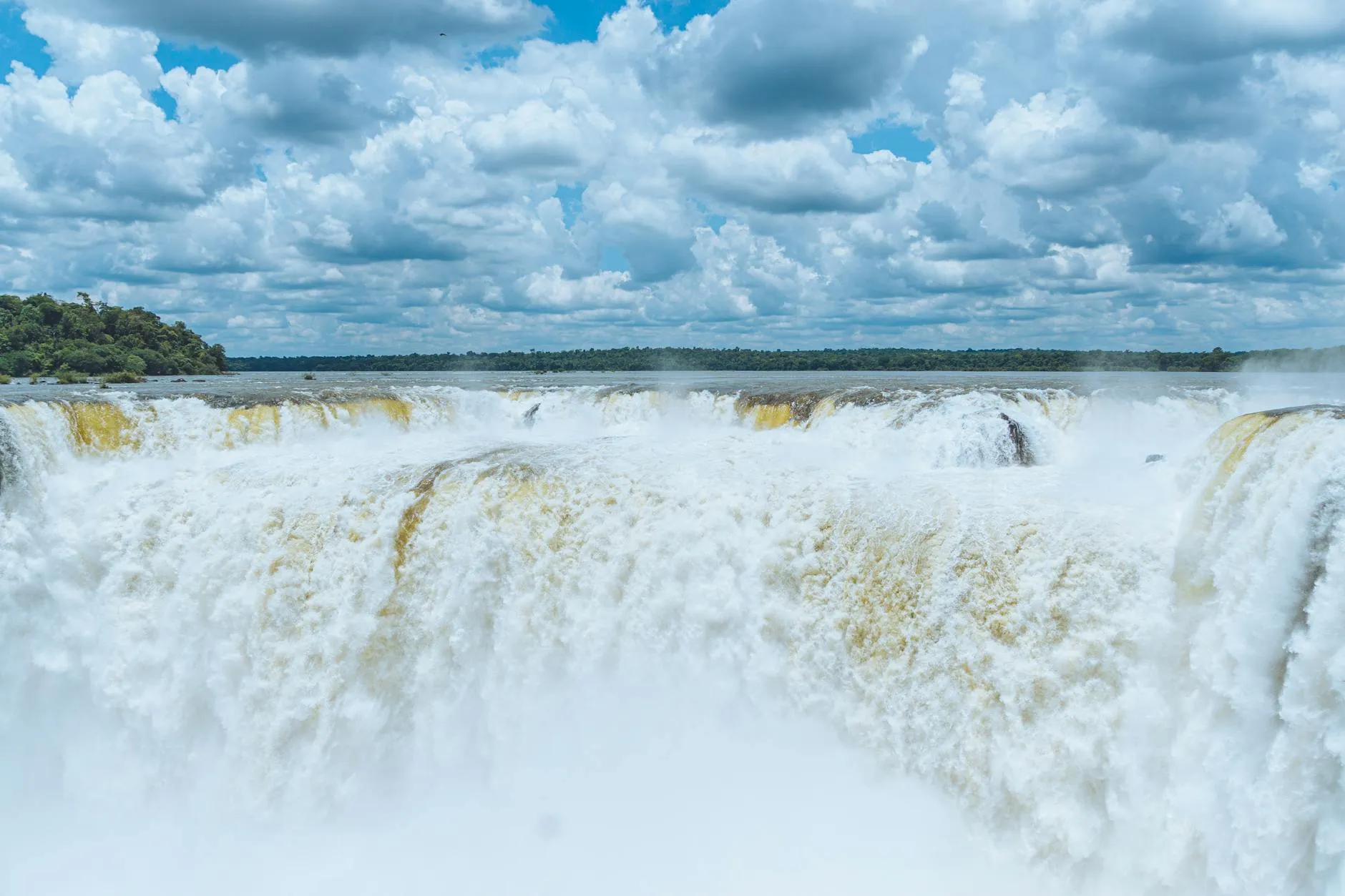
The falls straddle the border, and the two sides are different experiences. Argentina holds roughly 80% of the falls and gives you the immersive day: kilometres of walkways at the water’s edge, the Upper and Lower Circuits, a boat ride to the base of the cascades, and the Ecological Train out to the Garganta del Diablo — an 82-metre horseshoe-shaped falls you stand directly above on a boardwalk over open water. A full day is the minimum to do it properly. Brazil holds about 20% and gives you the panorama: a single main trail, two to three hours, that delivers the wide view back across the whole system toward the Argentine side.
Do both if you have two days. If you only do one, Argentina is the deeper experience; Brazil is the photograph.
🇧🇷 Brazil e-Visa — sort this before you leave home
Since 1 January 2026, US, Canadian and Australian citizens need a Brazil e-Visa (approximately US$51, valid 10 years) to cross to Foz do Iguaçu. You cannot get it at the border. UK and EU citizens remain visa-free. The crossing is 30 km and 40–60 minutes including formalities. If you are American and want the Brazilian panorama, apply online in advance; turning up at the Ponte Tancredo Neves without the e-Visa means turning back.
Argentine park specifics
Foreigner admission is 45,000 ARS for 2026, paid at the gate; the Ecological Train and all walking circuits are included. The park is about 15 minutes from the airport and opens daily. The Garganta del Diablo walkway bottlenecks by late morning when the day-trip groups from Buenos Aires arrive — get there at opening to walk it comfortably.
The Brazilian park (Parque Nacional do Iguaçu) charges BRL 117 — about US$21. These are two separate tickets in two separate countries.
Hito Tres Fronteras
At the confluence of the Paraná and Iguazú rivers, Puerto Iguazú’s Hito Tres Fronteras marks the point where Argentina, Brazil and Paraguay meet, each country planting an obelisk in its own colours across the water. Access on the Argentine side is free, it is about 20 minutes from the airport, and there is a 20-minute light-and-sound show in the evening. It is a short, worthwhile stop that costs nothing.
Further afield
The Wanda mines, 50 km north, are open semi-precious-stone workings you can tour — a half-day round trip from Puerto Iguazú. San Ignacio Miní, roughly 240 km south, is the best-preserved of the Jesuit-Guaraní mission ruins in the region, a UNESCO World Heritage site and a long day-trip or an overnight. Neither is layover material.
The layover math
⏱️ Layover math for the falls — read before you plan
The park entrance is 15 minutes from the airport, but a real falls visit — train out, Garganta boardwalk, one circuit — is a half-day minimum. A 3-hour layover cannot do it: by the time you taxi out, pay in, and reach the Garganta station, you are already turning around. A 6-hour layover can technically reach the Garganta del Diablo and return, but it is tight once you add the drive each way and a security buffer for your onward flight, with no margin if the train queues. With a genuine 6-plus hours and light luggage, go straight to the Devil’s Throat and nothing else. With less than 6 hours, stay airside.
🔧 Practical Notes
SIM and connectivity
Argentina’s three carriers — Claro, Movistar and Personal — all sell prepaid tourist SIMs; registration requires only your passport. Claro generally has the most consistent coverage outside the cities, which matters in a province this rural. As of 2026 the local carriers do not sell tourist eSIMs in-store — you get a physical SIM — but international eSIM providers cover Argentina if you want to arrive connected. Coverage in Puerto Iguazú and at the falls is solid 4G; it thins deeper in the park. The terminal has Wi-Fi; the lounge has its own.
Water
Buenos Aires tap water is safe. In Misiones, a rural province, the cautious move is bottled or filtered water — it is cheap and available everywhere in town. This is not the day to experiment.
Safety
Puerto Iguazú is a tourist town and broadly calm. Ordinary precautions apply around the central bus terminal and the Hito Tres Fronteras area: watch your bag, do not carry large amounts of cash visibly, and use a booked taxi rather than an unmarked car at night. Keep your passport accessible — you will need it if you cross to Brazil. The tri-border area has a reputation for smuggling and informal trade, but that trade is not directed at falls tourists.
Tipping
Around 10% in restaurants, in cash — it cannot go on the card. Roughly the equivalent of US$1 per two bags for porters, a similar token for a driver who handles luggage, US$10–15 per person to a full-day guide with half that to the driver.
🌍 Planning the trip? Read our Argentina travel guide — best time to go, where to stay, and how to get around.
❓ Frequently Asked Questions
📊 At a Glance — IGR 2026
| Item | Detail (2026) |
|---|---|
| Airport | Cataratas del Iguazú International (Mayor Carlos Eduardo Krause) |
| IATA / ICAO | IGR / SARI |
| Province | Misiones, Argentina |
| Distance to Puerto Iguazú | 16 km / 20–25 min |
| Distance to falls / park | 6 km / ~15 min |
| Elevation | 279 m (916 ft) |
| Terminal / runway | One terminal · single 3,300 m runway (13/31) |
| Operator | Aeropuertos Argentina 2000 |
| Airlines | Aerolíneas Argentinas, Flybondi, JetSmart Argentina |
| 2026 route change | Flybondi Puerto Iguazú–Lima ends 5 June 2026 |
| Currency | Argentine peso (ARS), ~1,410/USD official (May 2026) |
| Payment method | Card at near-MEP rate; US$200–400 cash for tips/taxis |
| Visa (Argentina) | Visa-free 90 days, 80+ nationalities, no pre-registration |
| Health insurance | Required on paper since 1 Jul 2025; enforcement near-zero |
| Yellow fever | Recommended; not legally required to enter |
| Airport → town taxi | ~US$20–25, 20–25 min, fixed-rate desk booking |
| Airport → town bus | Río Uruguay, ~US$1–3, ~30 min, hourly |
| Rideshare | Uber/Cabify effectively unavailable in 2026 |
| Lounge | Iguazú by AMAE — Priority Pass / walk-in ~US$42 (only one) |
| Argentine park fee | 45,000 ARS (foreigners), Ecological Train included |
| Brazil park fee | BRL 117 (~US$21) |
| Brazil e-Visa (US/CA/AU) | Required since 1 Jan 2026, ~US$51, 10-year validity |
| Hito Tres Fronteras | Free, ~20 min from airport; evening light show |
| Tap water | Bottled/filtered advised in Misiones Province |
| Tipping | ~10% restaurants, cash only |