Samsun-Çarşamba (SZF) Airport Guide 2026 — Domestic Airport, Summer Border
Samsun-Çarşamba is the main airport of Türkiye’s central Black Sea coast, 25 km east of Samsun city centre on the flat delta ground behind Çarşamba. It carried 1,640,095 passengers in 2025 and only 196,179 of them were international — about 12%. That single ratio explains the airport: it is a domestic airport that grows a border queue for two months a year, when the German diaspora comes home. One terminal handles both, there is no jet bridge, and you walk to the aircraft. Getting into Samsun means SAMAIR, Havaş or a taxi — there is no train. Currency is the Turkish lira, and Türkiye runs its own entry system: 90 days visa-free for most Western passports, an e-Visa for the rest.
Last verified: September 2026.
⚡ 2026 Quick Reference — Key Facts at a Glance
Samsun Metropolitan Municipality runs four airport lines: H1 Üniversite–Batı Garajı · H2 Public Transport Transfer Centre · H3 Bafra bus station · H4 eastern Çarşamba. Times and fares on samair.samsun.bel.tr or 0362 431 10 12
Also serves Samsun, timed to flights: “All of our service points are planned according to aircraft departure times.” ⚠️ The Terme and Çarşamba bus-station stops need a reservation 24 hours ahead — 0850 222 04 87
The airport co-operative, S.S. 41 Nolu Çınarlık Havalimanı Taksi Kooperatifi, 24/7 on 0534 073 10 00 / 0535 642 38 80
25 km to Samsun city centre on DHMİ’s own reckoning; about 26 km and half an hour by road
One building for domestic and international — 11,500 m² total, 18 shared check-in desks, two gates per side. No jet bridges — boarding is by steps from the apron
Turkish lira (TRY) — volatile. At the ECB reference rate of 7 September 2026, €1 was 56.29 TRY; that figure will have moved by the time you read it
A 735 m² VIP salon in the terminal. DHMİ publishes no walk-in price. Priority Pass does not list Samsun — it covers nine Turkish airports and this is not one
Türkiye’s own system — not an EU or EU-border state. 90 days visa-free in any 180 for EU/EEA, UK, US, Canada, Australia and Japan; e-Visa at evisa.gov.tr for everyone else
Valid at least 60 days beyond your permitted stay — so 150 days for a 90-day exemption
1,640,095 in 2025 (DHMİ) — 1,443,916 domestic, 196,179 international. 2024: 1,514,254
Single 13/31, 3,000 m concrete, elevation 17 m. Opened December 1998
🏢 1. A Domestic Airport That Grows a Border Queue in August
Take the numbers first, because they define everything else about this place. DHMİ, the Turkish state airports authority that owns and runs Samsun-Çarşamba, published 1,640,095 passengers for 2025: 1,443,916 domestic and 196,179 international. That is an international share of 12%. For the first seven months of 2026 the split was 863,128 domestic against 94,327 international — domestic up 7.3% year on year, international down 6.1%.
So this is not, in any meaningful operating sense, an international airport. It is a busy Turkish domestic airport with an international annex that fills up in summer. Work the same DHMİ cumulative figures month by month and you can see exactly when: August 2025 alone carried roughly 170,000 passengers, of which about 29,500 were international — more than double a November. Domestic traffic, by contrast, sits stubbornly between about 115,000 and 141,000 every single month of the year. There is no domestic low season here.
The building. DHMİ’s own terminal specification is precise and worth reading before you arrive: Samsun-Çarşamba serves domestic and international traffic inside one terminal building, total floor area 11,500 m², of which 1,288 m² is the domestic arrivals/departures sterile area, 899 m² is the international sterile area, and 735 m² is the VIP salon. Rated capacity is 1.5 million domestic and 500,000 international a year. Check-in is 18 desks in a common-use hall shared by both, plus two Turkish Airlines self check-in machines. Each departure lounge has two gates.
Read those two numbers together — 899 m² of international sterile area, and a 500,000-a-year international rating against an August month of nearly 30,000 international passengers — and you can predict the experience. In February the international side is nearly empty. In the first half of August it is a small room doing a lot of work, with passport control in front of it. Arrive earlier than your airline tells you for a summer international departure, and treat any published minimum connection time at Istanbul with suspicion if your SZF leg is the first one.
No air bridges. Passengers board from the apron by steps. That is fine in June and unpleasant in a Black Sea January, so dress for the walk rather than the cabin.
Who flies here. For the domestic network, DHMİ’s own route list is the record, and it is short and useful:
| Airline | Domestic routes from SZF |
|---|---|
| Turkish Airlines | Istanbul (IST) · Çukurova (Adana/Mersin) |
| Pegasus Airlines | Istanbul–Sabiha Gökçen |
| AJet | Ankara Esenboğa |
| SunExpress | Antalya · İzmir |
Between them those six routes are most of the airport. Istanbul is served from both of its airports, which is the single most useful fact for anyone connecting: IST for the Turkish Airlines long-haul network, Sabiha Gökçen for Pegasus’s cheaper European and Gulf list.
The international side is seasonal and overwhelmingly German. Samsun province sent a great many people to Germany from the 1960s onward and their children and grandchildren fly home in the school holidays. The carriers that have served the German cities from here are SunExpress, Pegasus, AJet, Corendon Airlines and Eurowings, between them covering Düsseldorf, Cologne/Bonn, Berlin, Munich, Stuttgart, Hannover, Frankfurt and Vienna, and AJet has flown Skopje. There is a second, quite different international strand: Baghdad, flown by Iraqi carriers. Almost none of this runs in winter. Check what is actually on sale for your month rather than assuming a route exists because you saw it in a summer list.
Fares and bags. Pegasus, AJet and SunExpress all sell down to a fare with a personal item and nothing else, and on a two-hour domestic hop the bag can cost more than the seat. Our Pegasus baggage guide, AJet guide, SunExpress guide and Turkish Airlines guide carry the current allowances, and the baggage checker compares them in one place.
🛂 2. Türkiye’s Entry Rules, and the Passport Rule That Bites
Türkiye is not an EU member and none of the EU’s border machinery applies at Samsun. The country runs its own system: a broad visa exemption for most Western and Gulf passports, an electronic visa for the rest, and a passport-validity rule that is stricter than it looks. Everything below comes from the Ministry of Foreign Affairs’ own country-by-country visa page and the official e-Visa portal, checked this month.
Visa-free, 90 days in any 180. Ordinary passport holders from the EU and EEA states, the United Kingdom, the United States, Canada, Australia and Japan enter without a visa for short stays. The ministry’s wording is per nationality and worth reading on your own line: Germany’s entry says holders “are exempted from visa for their travels up to 90 days”, the Netherlands and Belgium say “up to 90 days in any 180-day period”, and France, Italy, Spain, Austria and Poland carry the same 90-day treatment. If you are close to a limit, count against the wording for your own passport rather than a general rule, because the clocks are not all written the same way.
A detail that matters at this airport in particular: the ministry maintains a list of countries whose citizens may enter Türkiye on a national identity card rather than a passport. Given how much of Samsun’s international traffic is dual-national families flying in from Germany and the Netherlands, this is a live question at the check-in desk — and the airline’s rules are not the same as the border’s. Check both, and check them before you get to the airport.
Who needs an e-Visa. Nationalities outside the exemption apply online at evisa.gov.tr, which the ministry names as the official portal. The system runs around the clock, issues in roughly three minutes, and covers tourism and commerce only — work and study require a visa from a Turkish embassy or consulate, not an e-Visa. The official fee online is lower than what you would pay to obtain a visa on arrival. Apply on the government site and nowhere else; the copycat agencies charge a markup for exactly the same document, and fees are set per nationality and revised, so read the price on the portal rather than any figure quoted elsewhere, this guide included.
The passport rule that actually catches people. Türkiye requires a travel document valid at least 60 days beyond the “duration of stay” granted by your visa, e-Visa or exemption. In the ministry’s own words: foreigners “should carry a travel document (passport) with an expiration date at least 60 days beyond the ‘duration of stay’ of their visa.” For a 90-day exemption that is 150 days of validity from entry — not six months, and not three. Airlines commonly enforce a blanket six months at check-in anyway, so treat six months as the practical bar and 150 days as the legal minimum. Certain groups are exempt from the 60-day rule, including those entering on a national ID card and holders of diplomatic and official passports.
Money. Türkiye uses the Turkish lira. The lira moves fast enough that any printed rate ages badly: at the European Central Bank’s reference rate for 7 September 2026, €1 was 56.29 TRY, and I am telling you the date precisely because the number will be wrong soon. What does not change is the mechanism, and it is worth more than the rate:
- Always pay in lira. When a card terminal or an ATM offers to charge you in euros, pounds or dollars instead, decline. That is dynamic currency conversion; the rate is chosen by the machine’s operator rather than your bank, and it is always worse.
- Use a bank-branded ATM — Ziraat, İş Bankası, Garanti, Yapı Kredi — rather than a standalone machine or an airport exchange desk, and refuse the machine’s own conversion offer for the same reason.
- Cards work almost everywhere in Samsun, including in taxis. Carry some cash for village dolmuş fares, market stalls and tea houses in the hills.
- Because the currency moves, treat any lira price you read online — including a taxi fare — as an approximation, and confirm before you commit.
🚌 3. SAMAIR, Havaş, and 25 km of Delta Road
There is no rail link and no metro. DHMİ states the position plainly: the airport is 25 km from the city centre and is reached by “Samair and Havaş passenger services, commercial taxis, rent-a-car and private vehicles”. Road routing puts it at about 26 km and half an hour into central Samsun, most of it flat and straight across the delta.
SAMAIR is the one to know about, and it is better than most Turkish regional airports manage, because it is run by Samsun Metropolitan Municipality rather than an operator. It runs four airport lines:
- H1 — Üniversite / Batı Garajı, the university and the western bus garage.
- H2 — Toplu Taşıma Transfer Merkezi, the public transport transfer centre, which is the useful one: it is where you change onto Samsun’s city network rather than being dropped somewhere arbitrary.
- H3 — Bafra Otogar, running west along the coast to Bafra’s bus station.
- H4 — Çarşamba Doğu Yakası, the eastern side of Çarşamba itself.
That H3 line is worth a second look. Bafra is the town at the mouth of the Kızılırmak, an hour west of the airport, and a direct municipal coach to its bus station means the delta is reachable without a car. Timetables and fares are published per line on the SAMAIR site and by phone on 0362 431 10 12; the site also takes a reservation with your pickup point, passenger count and destination. I am not quoting a fare — Turkish fares are revised with inflation and any figure printed here would be wrong within a quarter.
Havaş — the national airport coach and ground-handling operator — also serves Samsun, on 0850 222 04 87, and works on the standard Havaş model: “All of our service points are planned according to aircraft departure times”, rather than a clock timetable. One thing to note before you rely on it: Havaş states that passengers using the Samsun Terme and Çarşamba bus-station stops must contact its customer service centre 24 hours in advance to reserve. If you are heading east along the coast to Terme rather than west into Samsun, make that call the day before.
Taxis are run by a single airport cooperative — S.S. 41 Nolu Çınarlık Havalimanı Taksi Kooperatifi — which DHMİ links from its own transport page and which advertises a 24/7 service on 0534 073 10 00 and 0535 642 38 80, with WhatsApp location sharing. Agree the fare or confirm the meter is running before you set off, and expect a 25 km ride to cost accordingly. There are also car rental offices inside the terminal and a 246-space car park.
| Option | Where it goes | What to know |
|---|---|---|
| SAMAIR H1 | Üniversite / Batı Garajı | Municipal service, four lines total; times per line at samair.samsun.bel.tr |
| SAMAIR H2 | Public Transport Transfer Centre | The one to take if you want the city network |
| SAMAIR H3 | Bafra bus station | Puts the Kızılırmak delta within reach without a car |
| SAMAIR H4 | Eastern Çarşamba | Useful if the airport town itself is your destination |
| Havaş | Samsun and the coast | Timed to flights, not to a clock. Terme and Çarşamba otogar stops need 24 h notice |
| Taxi | Anywhere | Airport co-operative, 24/7, 0534 073 10 00. Confirm the fare or the meter first |
| Car rental | — | Desks inside the terminal; 246-space car park |
🛋️ 4. A 735 m² VIP Salon, and No Lounge Programme
Be straight about this, because the aggregators are not. DHMİ’s terminal specification for Samsun-Çarşamba lists a 735 m² VIP salon inside the 11,500 m² building — the largest single named space in the spec after the sterile lounges. What DHMİ does not publish anywhere I can find, including in its 2026 airport charges tariff, is a walk-in price for it. Turkish state-airport VIP salons are typically bookable rather than a turn-up-and-pay product, so if you want it, ring ahead through the airport’s information line rather than assuming you can buy at the door.
If you are carrying a lounge card, it will not work here. Priority Pass’s own Turkish listing covers nine airports — Istanbul, Istanbul Sabiha Gökçen, Ankara Esenboğa, Antalya, İzmir Adnan Menderes, Muğla Dalaman, Milas–Bodrum, Diyarbakır and Mersin Çukurova — and Samsun is not among them. Neither is it a station where the airlines run their own lounges. Plan on the public seating.
What the terminal does have, on DHMİ’s own list, is a buffet and a café-bar, car rental offices, prayer rooms for men and women, a lost-and-found desk in arrivals, and — a genuinely unusual provision for an airport this size — a 24-hour doctor, medical staff and a fully equipped ambulance on site. Security is a mixed police, DHMİ and private force with CCTV throughout, with X-ray and detector checks at the main terminal entrance as well as at the departure lounges, so the first bag check happens at the door.
The practical advice is the same as at every Turkish regional airport: the sterile areas are small and the catering is a counter. Eat before you come through, and time your arrival to the queue rather than to the clock.
🍽️ 5. Anchovies, Pide and the Hazelnut Coast
Black Sea food is not the Turkish food most visitors know. There are no great kebab houses here. What there is, is fish, maize, butter, cabbage and dairy, and a cuisine that feels closer to the Caucasus than to Anatolia.
Hamsi — the Black Sea anchovy — is the regional obsession and the season runs through the cold months. It is floured in cornmeal and fried (hamsi tava), baked into rice, and occasionally into bread. In midsummer it is out of season, and what is put in front of you is frozen; eat something else and come back in November.
Pide is the everyday Black Sea staple and Samsun has its own local version, which the town takes seriously enough to argue about; order it where the queue is rather than where the sign is biggest. Alongside it, expect kuymak (also mıhlama) — cornmeal beaten into butter and young cheese until it turns molten and stringy — and the black cabbage, karalahana, that turns up in soup and in rolls right along this coast.
The serious purchase is hazelnuts. Türkiye is the dominant world producer and the Black Sea provinces are where they grow; buying them in Samsun is buying near the source, not buying a souvenir. Raw, roasted, or as fındık ezmesi — hazelnut paste, which travels far better than a box of chocolates and costs a fraction of the equivalent branded spread at home. Prices move with each harvest, so buy in a shop in town rather than in the terminal. The delta behind the city is serious farmland rather than scenery, and the produce markets in Samsun and Çarşamba are a better hour than anything in the terminal.
The airport itself offers a buffet and a café-bar. That is the honest extent of it.
💡 6. What the Samsun Coast Is Actually For
Samsun is a working Black Sea port city of around 738,000 people, capital of a province of nearly 1.4 million. It is not a resort and does not pretend to be. It is worth understanding what it is for before you decide how long to stay.
The history is the thing that makes Samsun matter to Turks. On 19 May 1919, Mustafa Kemal — later Atatürk — landed at Samsun from Istanbul aboard the steamer Bandırma, and that landing is treated as the start of the Turkish War of Independence. The date is a national holiday, the city’s university is called Ondokuz Mayıs (“Nineteenth of May”) after it, and a replica of the ship sits in a park on the shore as a museum. If you want to understand why a Turkish colleague reacts to the word “Samsun” the way they do, this is why. Visit the ship, then walk the seafront promenade; the city has spent serious money on its waterfront and it shows.
Amisos Hill is the other in-city item. A cable car climbs from the shore to a wooded hilltop with tumulus tombs, tea gardens and the best view over the bay. It is an hour, not a day, and it is the right hour if you have one to spend before a flight.
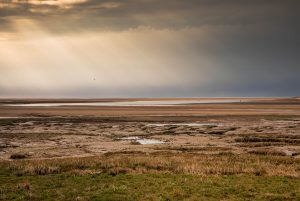
The Kızılırmak Delta is the real reason to come. The Kızılırmak — the Red River, the longest river entirely within Türkiye — reaches the Black Sea west of Samsun near Bafra, and its delta is the country’s third-largest and the largest wetland on this coast: a system of coastal lagoons, reed beds and flooded meadow that is a Ramsar-listed site and one of the most important bird areas in Türkiye. Hundreds of species pass through it, and the spring and autumn migrations are the point. You can reach Bafra directly on the SAMAIR H3 coach from the airport, which is unusually convenient for a wetland this good, though you will want a local guide or a car once you are there.
Inland is where the province gets interesting. Behind the coastal strip the land climbs into hill country of tea houses, hazelnut orchards and thermal springs — Havza and Ladik are the spa towns, and Ladik has its own lake — Stiphane to the ancient Pontic geographers — below the hills. This is yayla country of the same family as the highlands behind Trabzon, less developed and far less visited, and it needs a car.
Football, if you want the most local possible evening. Samsunspor is the city’s club, it plays in the Süper Lig, and a home match is the least touristic thing available to a visitor here.
Planning notes. The Black Sea coast is wet — it rains in every season, including high summer, and the hills behind trap the moisture. Pack a shell whatever the month. The airport sits on flat delta ground with a 3,000 m runway, so it handles weather better than the cliff-edge strips further east, but the schedule is thin outside the domestic core and a missed connection can cost you a day. And because the international season is so concentrated, fares in the German market swing hard between July and November: run your dates through our price checker before you commit, because on this route map moving a trip by three weeks changes the price more than anything else you can do.
❓ Frequently Asked Questions
📊 2026 Summary Data Table
| Category | Detail |
|---|---|
| IATA / ICAO | SZF / LTFH |
| Official name | Samsun Çarşamba Airport (Samsun Çarşamba Havalimanı) |
| Operator | DHMİ — General Directorate of State Airports Authority |
| Opened | 15 December 1998 |
| Location | Çarşamba, Samsun province — 25 km from Samsun city centre (DHMİ) |
| Runway | Single 13/31 · 3,000 m concrete · elevation 17 m |
| Terminal | One building, domestic + international · 11,500 m² total · 1,288 m² domestic sterile · 899 m² international sterile · 735 m² VIP salon |
| Capacity | 1.5 m domestic + 500,000 international a year |
| Check-in / gates | 18 shared check-in desks + 2 Turkish Airlines self check-in · two gates per side · no jet bridges |
| 2025 passengers | 1,640,095 — 1,443,916 domestic / 196,179 international (12%) (DHMİ) |
| 2024 passengers | 1,514,254 — 1,319,506 domestic / 194,748 international |
| Jan–Jul 2026 | 957,455 — domestic +7.3%, international −6.1% year on year |
| Seasonality | August 2025 ≈ 170,000 passengers, ≈ 29,500 of them international — more than double a November. Domestic barely moves all year |
| Domestic routes | Turkish Airlines (Istanbul, Çukurova) · Pegasus (Sabiha Gökçen) · AJet (Ankara) · SunExpress (Antalya, İzmir) |
| International | Seasonal and German-heavy — SunExpress, Pegasus, AJet, Corendon, Eurowings to Düsseldorf, Cologne/Bonn, Berlin, Munich, Stuttgart, Hannover, Frankfurt, Vienna; plus Baghdad on Iraqi carriers |
| Airport buses | SAMAIR (municipal) H1 Üniversite/Batı Garajı · H2 Transfer Centre · H3 Bafra · H4 east Çarşamba — 0362 431 10 12 · Havaş timed to flights, 0850 222 04 87 |
| Havaş caveat | Terme and Çarşamba bus-station stops require a reservation 24 hours ahead |
| Taxi | S.S. 41 Nolu Çınarlık Havalimanı Taksi Kooperatifi — 24/7, 0534 073 10 00 |
| Parking | 246 spaces |
| Lounge | 735 m² VIP salon; no published walk-in price. Priority Pass does not list Samsun (it covers nine Turkish airports) |
| Terminal services | Buffet · café-bar · car rental offices · prayer rooms · lost & found · 24-hour doctor and ambulance · X-ray at the main entrance |
| Currency | Turkish lira — volatile. ECB reference rate 7 Sep 2026: €1 = 56.29 TRY. Always decline dynamic currency conversion |
| Border regime | Türkiye’s own regime — not an EU or EU-border state. 90 days in any 180 visa-free for EU/EEA, UK, US, CA, AU, JP; e-Visa at evisa.gov.tr for others, tourism and commerce only |
| Passport rule | Valid 60 days beyond the permitted stay — 150 days for a 90-day exemption. Some nationals may enter on a national ID card |
| Region | Atatürk’s 19 May 1919 landing and the Bandırma museum ship · Amisos Hill cable car · Kızılırmak Delta (Türkiye’s third-largest, Ramsar-listed, reachable on SAMAIR H3 to Bafra) · Havza and Ladik thermal towns · hazelnuts, hamsi and Samsun pidesi |