Seve Ballesteros-Santander Airport (SDR) Airport Guide 2026 — Green Spain by the Bay
Santander’s airport is five kilometres from the city at Maliaño, on the western side of the bay, and it is named after the golfer who came from the other side of it. Aena counted 1,069,390 passengers in 2025 across 9 airlines and 25 destinations, and the route map is a Ryanair-and-Volotea map with an Iberia line to Madrid. The S4 bus reaches Santander bus station in ten minutes, every forty minutes. Spain is in the Schengen area and Spain uses the euro — separate facts, both worth knowing at the border. The ferry terminal for Britain and Ireland sits on the same side of the bay as the runway. Cantabria is Green Spain, and it is not the Spain most visitors picture.
Last verified: September 2026.
⚡ 2026 Quick Reference — Key Facts at a Glance
Line S4, Aeropuerto ↔ Estación de Autobuses, run under Transportes de Cantabria. 10 minutes to the bus station in the city. Departures from the airport roughly every 40 minutes from 07:20 to 22:00, plus 22:30. Information: (+34) 942 211 995
Not published by the operator or by Aena on any page we could read — buy on board or at the station and check the current fare with Transportes de Cantabria
Alsa links the airport to Bilbao, Gijón, Oviedo and Laredo, but ⚠️ buses only stop at the airport if you have bought the ticket in advance. (+34) 902 422 242
Official regulated Fare 5: minimum €1.64 (day) or €1.98 (night, weekends, holidays), €0.74–€0.85 per km, plus a fixed airport supplement of €8.16. Radio Taxi (+34) 942 333 333 · Tele Taxi (+34) 942 369 191
5 km from the city, at Maliaño in the municipality of Camargo
Ryanair and Ryanair UK (Birmingham, Bologna, Brussels Charleroi, Dublin, Edinburgh, London Stansted, Manchester, Marrakech, Treviso) · Volotea (Granada, Málaga, Menorca, Seville, Valencia) · Vueling (Alicante, Barcelona, Palma, Paris Orly) · Binter Canarias (Gran Canaria, Lanzarote, Tenerife Norte) · Iberia (Madrid) · Wizz Air (Bucharest, Sofia, Tirana) · European Airlines (Barcelona)
None. Aena’s VIP services for this airport list exactly one product — Fast Lane priority security, open 05:00–23:30, valid three months from purchase
Four outlets in total: Come&Fly, Trib’s, Takeoff Santander and Aelia Duty Free. Plan accordingly
Euro (€). Spain is in the eurozone. Free Wi-Fi throughout the terminal
Schengen external border. The Entry/Exit System has been fully operational since 10 April 2026 — fingerprints and a facial image instead of a stamp. ETIAS is not running, no applications are being collected, no launch date has been announced; the fee is fixed at €20
Brittany Ferries sails Santander ↔ Plymouth, Portsmouth and Cork, four calls a week, from the Maliaño docks — the same side of the bay as the airport
🏢 1. One Terminal, 2,400 Metres of Runway, and a Name Given in 2015
Seve Ballesteros-Santander is a single-terminal Aena airport at Parayas, in the municipality of Maliaño, five kilometres from the city on the western side of the Bay of Santander. Aena’s own figures put it at 1,069,390 passengers and 11,619 aircraft movements in 2025 — a shade over a million, which is the size at which an airport has real route choice but no spare capacity for comfort.
The name is worth two sentences because it explains the region. The airport opened as Parayas on 25 September 1953, replacing the old La Albericia aerodrome the same day, with a runway of 1,150 metres. The 1973–77 rebuild took the runway to 2,400 metres and added a new terminal, control tower and fire station; the rebuilt airport reopened on 8 August 1977. On 16 April 2015 the Spanish Official State Gazette published the change of name to Seve Ballesteros-Santander, in Aena’s words “in memory of Cantabria’s most famous international sportsman.” Ballesteros learned the game as a caddie on the far side of this bay. If you want one fact that tells you what Cantabria thinks of itself, it is that the airport is named after a golfer rather than a politician.
Inside, it is small and honest about it. Free Wi-Fi throughout, car hire desks, a post office point, and a barrier-free assistance service. Aena installed an ostomate toilet on floor 0 of the passenger terminal, which is rare enough at this size to be worth naming. The airport’s general information line is (+34) 91 321 1000, which is Aena’s national number rather than a local desk.
What it does not have is slack. There are four commercial units in the whole building — two cafés, one shop and the duty free — and no lounge of any kind. At a million passengers a year, spread over nine airlines flying mostly low-cost schedules, the peaks are sharp: a Ryanair bank and a Volotea departure inside the same hour will fill this terminal. The compensating fact is that you are five kilometres from a real city, so the correct strategy at Santander is to arrive later than you would at a big airport, not earlier.
Fast Lane priority security runs 05:00 to 23:30, which is also the most reliable published indication of when the building is working. It is bought through Aena’s own channels, is valid for three months from purchase, and works by holding a QR code and then your boarding pass to the reader at the access door. Business fares and some airline loyalty cards include it — check with your airline before you pay for it separately.
🛂 2. Schengen, the Euro, and Two Different Things
Spain is in the Schengen area, and Spain is in the eurozone. They are not the same membership and they do not always travel together, which is why we state them separately. The practical version: a flight from Madrid, Barcelona, Palma, Valencia, Seville, Málaga, Granada, Paris, Bologna, Treviso, Brussels Charleroi, Bucharest, Sofia or Tirana lands you here with no passport control at all. The Canary Islands routes — Gran Canaria, Lanzarote, Tenerife — are domestic Spanish flights and likewise pass no border.
The routes where you cross the external frontier are the British, Irish and Moroccan ones, and at this airport that is a large share of the traffic: Birmingham, Edinburgh, London Stansted, Manchester, Dublin and Marrakech. If you are arriving on one of those without an EU, EEA or Swiss passport, the following applies.
The Entry/Exit System is live and settled. The European Commission’s timeline is that the EES began progressive operation on 12 October 2025 and reached full operability on 10 April 2026, across 29 European countries. It replaces the passport stamp: the system instead records your name, travel-document data, fingerprints and a facial image, and the date and place of each entry and exit, so overstays are detected automatically rather than by an officer counting stamps. The practical consequence is one-off: your first crossing after enrolment takes longer, and later ones are faster, because the second time the check is a facial match against a record that already exists. Build the extra time into your first post-EES arrival, not into every trip. At an airport this size, with a handful of non-Schengen arrivals a day, the queues are nothing like the ones you would meet at Málaga or Alicante.
ETIAS: the status, because there is nothing else to give you. The European Commission’s own page states that the European Travel Information and Authorisation System “is currently not in operation and no applications for travel authorisations are collected at this point.” No launch date has been announced. What is fixed is the price: Commission Delegated Regulation (EU) 2025/1411, in force since publication in the Official Journal on 29 October 2025, sets the travel authorisation fee at €20 per application, replacing the €7 originally legislated. Under the parent regulation, the fee is waived for applicants under 18 or over 70 at the time of application, and for family members of EU citizens exercising free-movement rights.
🚨 The warning that matters today: nobody can sell you a valid ETIAS, because there is nothing to sell. Sites charging for one in 2026 are taking your money for a document that does not yet exist. When it launches it will be applied for through an official EU website or app, at €20 or free.
Money. The euro, and card acceptance in Spain is near-universal — you can spend a whole week in Cantabria without cash. Two habits worth keeping: refuse the card terminal that offers to bill you in pounds or dollars rather than euros, because the exchange margin goes to the machine’s operator, and check whether an ATM charges its own fee before you accept. If you have arrived on the ferry from Britain with sterling, change it in the city rather than at the port.
🚌 3. The S4, the Taxi Tariff, and the Bus That Will Not Stop Unless You Booked
The airport bus is line S4 and it is the right answer for most people. It runs between Aeropuerto (Maliaño) and the Estación de Autobuses in Santander, under the Transportes de Cantabria regional network, and the timetable is denser than most airports of this size manage: departures from the airport at 07:20, 08:00, 08:40 and then every 40 minutes through the day to 22:00, with a final 22:30. The run takes ten minutes. The information line is (+34) 942 211 995.
We could not verify the fare and we will not invent one. Aena’s page loads its fares dynamically and never renders them; Transportes de Cantabria publishes timetables, stops and real-time positions but no tariff page we could reach. Buy on board or at the bus station, and check the current single with the operator. What we can tell you is that at ten minutes for a five-kilometre run into the middle of a city, the bus is going to beat the taxi on value by a distance — see the tariff below.
The taxi tariff, by contrast, is fully published and regulated, which is unusually helpful. Airport work is covered by Fare 5, applying only to taxis licensed by the councils of Camargo, El Astillero, Piélagos, Santa Cruz de Bezana and Santander and authorised to serve the airport. The published components are a minimum fare of €1.64, or €1.98 at night, at weekends and on public holidays; €0.74 per kilometre, or €0.85 under the same conditions; €17.51 or €19.67 per hour of waiting; and a fixed airport service supplement of €8.16. On 24 and 31 December between 22:00 and 08:00 there is a further €2.00 supplement. Because the supplement is fixed and the distance is short, the supplement is most of what you pay — which is exactly why the S4 is worth ten minutes of your patience. Radio Taxi is (+34) 942 333 333 and Tele Taxi (+34) 942 369 191.
One trap that catches people arriving on a late flight, and it is not obvious. Alsa runs an airport service connecting Santander with Bilbao, Gijón, Oviedo and Laredo, which sounds like the perfect way to get out of Cantabria without going into the city. But Aena states the condition plainly: the buses stop at the airport only if travellers have bought tickets in advance. Turning up at the kerb hoping to flag one down does not work. Book it before you fly, on the Alsa website or their booking line, (+34) 902 422 242.
| Option | Journey time | Price | Notes |
|---|---|---|---|
| Bus S4 to Santander bus station | 10 minutes | Fare not published — check with the operator | Every ~40 min, 07:20–22:00 plus 22:30 from the airport. Info (+34) 942 211 995 |
| Alsa to Bilbao / Gijón / Oviedo / Laredo | Varies | Booked in advance only | ⚠️ The bus will not stop at the airport unless you already hold a ticket. (+34) 902 422 242 |
| Taxi into Santander | ~10–15 min for 5 km | Minimum €1.64 / €1.98, €0.74–€0.85 per km, plus a fixed €8.16 airport supplement | Regulated Fare 5. Extra €2.00 on 24 and 31 Dec, 22:00–08:00 |
| Car hire | — | Not published on the airport site | Desks in the terminal. The reason most visitors come — see section 6 |
| Parking | — | Prices only through Aena’s booking system | Two car parks: general and first class. Number-plate recognition on entry; pay at the machine before leaving |
| Brittany Ferries to Plymouth / Portsmouth / Cork | Overnight crossing | Not published on the port’s own pages | Four calls a week from the Maliaño docks. Carries cars, so this is how you bring your own vehicle |
🛋️ 4. There Is No Lounge, and Fast Lane Is the Only Thing Sold
Santander has no lounge. Aena’s site for this airport has a “VIP Services” section, and it contains exactly one item: Fast Lane. There is no Sala VIP, no third-party lounge, no airline lounge. A cross-check against the European lounge listings of one of the largest UK resellers returns nothing for Santander either.
What Fast Lane actually is: priority access to the security checkpoint, and nothing else. You hold a QR code up to the reader at the access door, then your boarding pass, and you go through the shorter line. It is open from 05:00 to 23:30, and a purchase is valid for three months — so if you fly in and out of here regularly, one purchase covers several trips. Aena is explicit that business fares and some associated loyalty cards already include it, so check with your airline before buying it twice, and that it does not exempt you from arriving at the time your ticket requires. Buy it only through official Aena channels; the airport says so on its own page, which usually means people have been buying it elsewhere and regretting it.
Is Fast Lane worth it here? Honestly, usually not. At 1.07 million passengers across a single terminal, security queues at Santander are a function of whether two low-cost departures collide, not of a permanent bottleneck. If you are flying at 07:00 on a summer Saturday when Ryanair, Volotea and Vueling all push aircraft out within the hour, it earns its money. Off-peak, you are buying a ninety-second saving.
The better play at this airport is not to be in it very long. Five kilometres from the centre, a ten-minute bus, and a terminal with four commercial units between them make a strong argument for eating in Santander and arriving at the airport later than instinct tells you to. That is the reverse of the advice for a big hub, and it is the correct advice here.
🍽️ 5. Four Outlets, and What Cantabria Actually Eats
Aena lists the entire commercial offer and it is four names: Come&Fly, Trib’s, Takeoff Santander and Aelia Duty Free. That is two catering units, a shop and the duty free. There is no restaurant in the sense you would find at Bilbao or Madrid, so do not plan a meal around the terminal — and if you are travelling with a child, carry what they will need rather than assuming.
Aelia Duty Free is the only place worth shopping in the building, and only on a non-Schengen departure. On a flight to Madrid, Barcelona or the Canaries there is no duty-free saving to be had at all, because you have not left Spain. On the British, Irish or Moroccan routes there is, and the local shelf is the one to look at.
What Cantabria actually eats is one of the better-kept secrets in Spain, because the region is not on the tourist circuit that runs through Andalucía and Catalonia. This is the Cantabrian Sea coast, and the seafood is the point: anchovies from Santoña, salted and hand-filleted, which are a genuinely different product from the tinned anchovy most people know and are the single best thing to carry home; rabas, the battered squid strips that every bar in Santander serves and that Santanderinos argue about with real heat; and the shellfish off the rocks at Suances and San Vicente de la Barquera.
Inland, the food turns mountain: cocido montañés, a white bean, cabbage and pork stew that is a whole day’s eating; quesucos de Liébana, small mountain cheeses from the valley below the Picos; and orujo, the grape spirit distilled around Potes, which comes plain, with honey, or as a herb liqueur. Sobaos pasiegos — dense butter sponges from the Pas valleys — and quesada pasiega, a cheesecake-adjacent baked pudding, are the two things that survive a suitcase intact and are sold at every service station in the region.
The packing rules, briefly. Anchovies in oil and a bottle of orujo both go in the hold — anything over 100 ml will not clear security, and jars of oil-packed fish are heavy. This matters more here than at most airports, because most of the airlines flying from Santander are low-cost carriers with strict and very different cabin rules. Check what your ticket actually includes with our baggage checker before you shop; the Ryanair, Volotea and Vueling allowances differ enough that a bag which travels free on one will cost you at the gate on another.
💡 6. What Cantabria Is For, and Whether the Ferry Matters
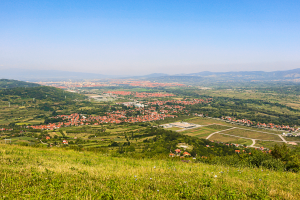
Cantabria is “Green Spain”, and that phrase is doing real work. This is the Atlantic north: wet, green, mountainous, with beaches that face the Bay of Biscay rather than the Mediterranean and a summer that runs cool. Almost nobody who books a Spanish holiday pictures it. That is the whole argument for coming.
Rank the reasons honestly and the mountains come first. The Picos de Europa rise inland from the Cantabrian coast — limestone peaks well over 2,000 metres, remarkably close to the sea for a range of that height. CANTUR, the regional public tourism company, runs the Fuente Dé cable car that lifts you from the valley floor into the massif in a few minutes, along with the ski area at Alto Campoo and the viewpoint on Peña Cabarga. If you have one clear day, spend it there rather than on the coast.
Second: Cabárceno. Also CANTUR’s, the Parque de la Naturaleza de Cabárceno is a former open-cast iron mine turned into enormous enclosures where the animals have hectares rather than pens, and it is a short run from the airport on the same side of the bay. It is the one attraction in the region that works equally well for a family and for someone with no interest in wildlife, because the landscape of eroded karst and abandoned mine workings is worth the ticket on its own.
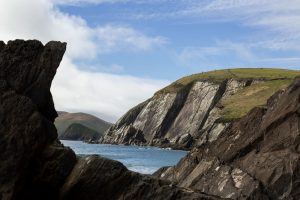
Third: the coast, which is for surfing and for walking, not for lying down. Somo and Loredo, on the far side of the bay from the city, are the surf beaches; the sand at El Sardinero in Santander itself is the elegant one. Westward, Santillana del Mar is the preserved medieval village every visitor is sent to — it is genuinely beautiful and genuinely crowded, so go early or late. The Altamira cave paintings and their museum are beside it; access to the original cave is tightly controlled, so check what is actually visitable with the museum before you drive out. Comillas and San Vicente de la Barquera, further along the same road, are quieter and better.
In Santander itself: the Palacio de la Magdalena on its own peninsula, the Centro Botín on the waterfront, and a bar culture built on rabas and cold beer that is the actual reason to spend an evening in the city.
Now the ferry question, because it changes how you should plan. Yes, it is relevant, and in a specific way. The Port of Santander’s own register lists Brittany Ferries running Santander to the southern British Isles — Plymouth, Portsmouth and Cork — with four calls a week, carrying passengers, tourist vehicles, lorries and trailers. Two things follow. First, the ferry terminal is at the Maliaño docks, on the same side of the bay as the airport, not at the Maritime Station in the city centre, which now handles cruise ships only — so do not let a taxi take you to the wrong quay. Second, and more usefully: the ferry carries cars, and the aircraft do not. If your trip is a Picos de Europa driving holiday from Britain or Ireland, the honest answer is often to sail one way with your own car rather than to fly and hire. And if you are flying in, the ferry is the reason Cantabria has more British visitors than its route map alone would suggest — which is also why Ryanair flies here from Birmingham, Edinburgh, Manchester and Stansted.
Finally, the route-map reality check. Twenty-five destinations from a million-passenger airport is a good number, but look at what is on it: four UK routes, all Ryanair; one Iberia line to Madrid; three Binter services to the Canaries; and Vueling’s Paris Orly as the only other continental capital. If you want anywhere else in Europe, you are connecting through Madrid or Barcelona, or you are driving 100 kilometres east to Bilbao. Santander is an excellent airport for reaching Cantabria and a poor one for reaching the rest of the world — which is fine, because Cantabria is the point. Before you book, run the route through our flight price check: with Ryanair, Volotea and Vueling overlapping on a field this small, the same week can cost twice as much depending on which of them you buy from.
❓ Frequently Asked Questions
📊 2026 Summary Data Table
| Category | Detail |
|---|---|
| Airport | Seve Ballesteros-Santander Airport (SDR / LEXJ), operated by Aena |
| Location | 5 km from Santander, at Parayas in Maliaño, municipality of Camargo, western side of the bay |
| Passengers 2025 | 1,069,390, on 11,619 aircraft movements (Aena) |
| Domestic vs international | 582,093 domestic / 485,777 international in 2025 (Eurostat, whose own total of 1,067,870 differs slightly from Aena’s count) |
| Runway | 2,400 m, since the 1973–77 rebuild; the airport reopened 8 August 1977 |
| Name | Renamed Seve Ballesteros-Santander on 16 April 2015 by publication in the Official State Gazette |
| Airlines | 9: Ryanair, Ryanair UK, Volotea, Vueling, Binter Canarias, Iberia, Wizz Air Hungary, Wizz Air Malta, European Airlines |
| Destinations | 25, including Birmingham, Edinburgh, London Stansted, Manchester, Dublin, Marrakech, Paris Orly, Bologna, Treviso, Brussels Charleroi, Bucharest, Sofia, Tirana |
| Domestic network | Madrid (Iberia) · Barcelona, Alicante, Palma (Vueling) · Seville, Málaga, Granada, Menorca, Valencia (Volotea) · Gran Canaria, Lanzarote, Tenerife Norte (Binter) |
| Bus | Line S4 to Santander bus station, 10 minutes, roughly every 40 min 07:20–22:00 + 22:30. Fare not published |
| Long-distance bus | Alsa to Bilbao, Gijón, Oviedo, Laredo — advance ticket required or the bus will not stop |
| Taxi | Regulated Fare 5: minimum €1.64 / €1.98 · €0.74–€0.85 per km · fixed airport supplement €8.16 |
| Parking | Two car parks (general and first class); prices only via Aena’s booking system; number-plate entry |
| Lounge | None. Aena’s only VIP product here is Fast Lane priority security, 05:00–23:30, valid 3 months |
| Shops & food | Four units: Come&Fly, Trib’s, Takeoff Santander, Aelia Duty Free |
| Currency | Euro (€) — Spain is in the eurozone. Free Wi-Fi throughout |
| Schengen | Yes. EES fully operational since 10 April 2026 — fingerprints and facial image replace the passport stamp across 29 countries |
| ETIAS | Not in operation; no applications are being collected and no launch date announced. Fee fixed at €20 by Delegated Regulation (EU) 2025/1411; waived under 18 and over 70 |
| Ferry | Brittany Ferries, Santander ↔ Plymouth, Portsmouth and Cork, 4 calls a week, from the Maliaño docks |