Debrecen International (DEB) Airport Guide 2026 — Munich, Charters, Forints
Debrecen International is Hungary’s second airport, 5 km south-southwest of the city and about 7 km by road from the Great Reformed Church at the centre of it. One terminal, one 2,500 m runway, and a route map that has changed shape badly since 2023: scheduled traffic has more than halved while holiday charters have risen, and 2025 closed at 186,100 passengers against 272,981 the year before. The single useful transport fact is that DKV’s Airport 1 city bus runs between the terminal and Debrecen’s main railway station on a published timetable for the price of an ordinary bus ticket. Hungary is in the Schengen area but not in the eurozone — you spend forints here.
Last verified: September 2026.
⚡ 2026 Quick Reference — Key Facts at a Glance
DKV line “Airport 1”, Nagyállomás (main railway station) ↔ Airport Debrecen, seven stops. DKV publishes departures from 04:20 to 21:32, roughly hourly
DKV’s current tariff: 480 Ft in the app · 500 Ft paper · 650 Ft from the driver · 1,700 Ft day ticket (≈ €1.32 / €1.38 / €1.79 / €4.68). ⚠️ The airport’s own page still quotes the older 440/460/550 — DKV’s figure is the one that will be charged
The airport’s contracted firms are City Taxi (+36 52 555 555) and Főnix Taxi (+36 52 444 444); both take cards. The airport warns against non-partner taxis touting inside the terminal
Autonom, Eurent, Sixt and Avis have desks here
0–5 min free · 5–60 min 1,500 Ft · 1–6 h 2,500 Ft · 1 day 6,000 Ft · 7 days 15,000 Ft (≈ €41)
5 km south-southwest of the centre in the Hungarian AIP; about 7.4 km and 14 minutes by road
Hungarian forint (HUF) — Hungary is not in the eurozone. ECB reference rate, 7 September 2026: €1 = 363.20 HUF
None. SkyBar shop and bistro plus an airside snack bar. Priority Pass lists Budapest only in Hungary, so a lounge card is useless here
Schengen. The EU Entry/Exit System has replaced passport stamping since 10 April 2026
Not running. The Commission: it “is currently not in operation and no applications for travel authorisations are collected at this point”. Fee fixed at €20
186,100 in 2025, down from 272,981 in 2024 and 306,092 in 2023 (Eurostat)
Lufthansa to Munich — the most frequent service on the board, and the airport’s only real network connection
🏢 1. One Terminal, and a Route Map That Has Changed Shape
Debrecen is a single-terminal airport with a single 2,500 m concrete runway (04R/22L) at 110 m elevation, and the building is easy to understand: you walk in, check-in counters are on your right, the information desk sits next to them, and security and passport control lead to one departure waiting area. The airport’s own FAQ tells you where things are in that much detail, which is a fair signal of the scale. Baggage trolleys are free, in the car park and in arrivals. Smoking is outside the entrance only.
The traffic story is the thing to understand before you book. I took the figures from Eurostat’s airport dataset rather than a secondary source, and they are stark:
| Year | Total | Scheduled | Charter (non-scheduled) |
|---|---|---|---|
| 2022 | 248,238 | 219,590 | 28,648 |
| 2023 | 306,092 | 267,560 | 38,532 |
| 2024 | 272,981 | 223,318 | 49,663 |
| 2025 | 186,100 | 121,043 | 65,057 |
Read the columns rather than the total. Scheduled traffic has fallen by 55% since 2023. Charter traffic has risen by 69% over the same period, and now accounts for more than a third of everything that moves through the building. Debrecen was a low-cost scheduled airport with holiday charters attached; it has become a holiday-charter airport with a scheduled remnant. Wizz Air stopped basing aircraft here in 2024, and the timetable still shows it — there is no dawn Wizz departure wave, because the aircraft flying these routes sleep somewhere else.
What is on the board right now. The airport publishes a live departures list, and across a sample fortnight in September it carries six operators:
- Lufthansa to Munich — by a distance the most frequent thing here, several rotations a week and up to three departures on a busy day (LH1687, LH1601, LH1603). This is the airport’s one genuine connecting product: Munich puts the rest of the world within one transfer.
- Wizz Air (W6) to Eindhoven, Istanbul, Larnaca and Varna.
- Wizz Air UK (W9) to London–Luton — flown by the British subsidiary, several times a week and the busiest leisure route.
- Smartwings (7O) on Monastir and Antalya charters.
- Tailwind Airlines (TWI) on Antalya.
- MGA (4M) on Antalya and Larnaca — a Turkish charter operator, which the board identifies only by those initials.
The airport’s own destination pages list eleven places in total: Antalya, Burgas, Crete, Eindhoven, Istanbul, Larnaca, London, Monastir, Munich, Tel Aviv and Varna. Several of those are summer-only charter products sold through Hungarian tour operators rather than seats you can buy directly, and the practical difference matters — if a “Debrecen to Crete” route appears in a search and then evaporates when you try to book it, that is why.
Practical consequences. Frequencies here are thin. Munich apart, most routes run two or three times a week, which means a missed flight is not a two-hour problem, it is a two-day problem. Build a buffer into anything connecting onward at Munich or Luton, and do not put a same-day onward booking on a separate ticket.
Baggage is where the money is on these routes. Wizz sells down to a cabin-bag-only fare and Lufthansa’s cheapest Economy Light fares carry no hold bag either, so the headline price and the price you actually pay can differ by more than the fare. Our Wizz Air baggage guide, Lufthansa guide and Smartwings guide carry the current allowances, and the baggage checker compares them in one place.
🛂 2. Schengen Yes, Euro No — and What EES Actually Changed
Two memberships get merged constantly, so take them one at a time.
Hungary is in the Schengen area. Arrive from Munich, Eindhoven or any other Schengen airport and there is no passport control at Debrecen at all — you walk from the aircraft to the car park. Arrive from London, Istanbul, Larnaca, Tel Aviv, Antalya, Monastir, Varna or Burgas and you are crossing an external EU border, which is most of Debrecen’s route map. That is unusual for a small regional airport, and it shapes how long arrivals takes.
Hungary is not in the eurozone. The currency is the forint, and it is not being replaced. At the European Central Bank’s reference rate for 7 September 2026, €1 was worth 363.20 HUF. The forint moves more than most EU currencies, so treat any converted figure in this guide as indicative and check the day’s rate — but the mechanism is what matters: a 500-forint bus ticket is about €1.38, and a 6,000-forint day of parking is about €16.50.
EES
The EU Entry/Exit System became fully operational on 10 April 2026, and it applies at Debrecen on every arrival from outside the EU. In the Commission’s own words, “As of 10 April 2026, the EES replaces the stamping of passports allowing the automatic detection of overstayers.” The system registers a traveller’s name, travel-document data, biometrics — fingerprints and a captured facial image — and the date and place of every entry and exit. It records refusals of entry too.
What that means in the queue: your first crossing since April takes the biometrics and is slower; later crossings are checked against the record you already have and are quicker. EU citizens are not registered in EES at all, which at Debrecen matters a lot — a large share of the Luton traffic is Hungarians going to and from work and family in Britain, and they are invisible to the system. The people who will feel it are British and other non-EU passengers arriving on the Luton, Istanbul, Larnaca and Tel Aviv services. On a day when a Luton arrival and a charter land together in a one-terminal airport, allow real time. If you are meeting someone off a UK flight, do not plan the evening around a punctual pickup.
ETIAS
ETIAS is not in operation. The European Commission states that it “is currently not in operation and no applications for travel authorisations are collected at this point”, and that “The European Union will inform about the specific date for the start of ETIAS several months prior to its launch.” When it does start, it will be a travel authorisation for non-EU nationals from 59 visa-exempt countries travelling to 30 European countries, and the fee has been fixed at €20 — under-18s, over-70s and family members of EU citizens are exempt from the fee.
There is nothing to apply for and nothing to pay today. Nobody can sell you a valid ETIAS for Hungary right now, and any site offering to is charging you for a form it cannot file. Ignore them.
Money mechanics
Cards work almost everywhere in Debrecen, including on DKV buses and in both airport taxi firms’ cars. Two rules save real money. First, when a terminal or a cash machine offers to charge you “in euros” or “in pounds” instead of forints, decline — that is dynamic currency conversion and the rate is set by the machine’s operator, not your bank. Second, prefer a Hungarian bank’s ATM in the city to a standalone machine at the airport or on a tourist street; the independents charge a withdrawal fee that the banks generally do not. Carry a little cash for market stalls and small-town spa kiosks.
🚌 3. The Airport 1 Bus, and Why the Fare You Read Is Wrong
Debrecen does the thing that most airports this size fail to do: it has a real, ticketed city bus to the terminal, run by the municipal operator on a published timetable, at ordinary local fares. That is worth saying loudly, because it is the reason DEB is easy in a way that comparable airports are not.
Line “Airport 1” is operated by DKV, Debrecen’s public transport company, and runs between Nagyállomás — the main railway station, where you connect to trams, city buses, regional coaches and the Budapest trains — and Airport Debrecen. The intermediate stops are Debreceni Erőmű, Leiningen utca, Bulgár utca, Hun utca and Repülőtéri út: seven stops in total, so it is a short ride rather than a milk run. DKV’s published departure list runs 04:20, 05:20, 06:15, 07:32, 08:30, 09:30, 10:30, 11:30, 12:30, 13:25, 14:25, 15:25, 16:25, 17:35, 18:35, 19:32, 20:35 and 21:32 — effectively hourly across the operating day. The airport’s own page describes the service as “Airport 1-2” and says the timetable “in most cases is aligned with the arrival and departure times of the planes”; DKV currently publishes only the Airport 1 line, so treat DKV’s timetable as the record and the airport’s description as background.
The fare, and a discrepancy worth knowing about. The airport’s transport page quotes 440 Ft in the app, 460 Ft on paper and 550 Ft from the driver. DKV’s own ticket page currently shows 480 Ft mobile, 500 Ft paper, 650 Ft from the driver, with a block of tickets at 5,000 Ft and a one-day ticket at 1,700 Ft. The operator sets the price, so budget on DKV’s numbers, and buy before you board if you can — the driver’s ticket is a third dearer. At today’s ECB rate, a paper single is about €1.38 and buying from the driver about €1.79. Either way this is the cheapest airport transfer in the guide.
Taxis. The airport names two contracted firms — City Taxi on +36 52 555 555 and Főnix Taxi on +36 52 444 444 — and says their cars are typically under five years old, seat five to eight, carry card terminals and are driven by drivers who speak at least one foreign language. It also warns, in its own words, that using other companies touting inside the terminal “may, in the absence of such regulations, involve risks”. Order at the terminal entrance. The ride into the centre is about 7 km.
Car rental is worth it if the Great Plain is the trip rather than the city. Autonom, Eurent, Sixt and Avis all have a presence; Sixt lists an address on Repülőtéri út beside the airport, with weekday hours and weekends on request, which is a detail to check if your flight lands on a Sunday.
Parking is cheap by Western European standards and clearly tariffed: five minutes free, 1,500 Ft up to an hour, 2,500 Ft for one to six hours, 6,000 Ft for a day, 15,000 Ft for a week, then 2,000 Ft per additional day. Payment is by machine or by scanning the QR code on the ticket.
| Option | Route | Fare | What to know |
|---|---|---|---|
| DKV “Airport 1” | Nagyállomás ↔ Airport Debrecen, 7 stops | 480 Ft app / 500 Ft paper / 650 Ft from the driver | Hourly, 04:20–21:32. Buy before boarding. The airport page’s older 440/460/550 is out of date |
| DKV day ticket | All city buses, trolleybuses and trams | 1,700 Ft (≈ €4.68) | Worth it if you are also using the trams the same day |
| City Taxi | Anywhere | Metered, cards accepted | +36 52 555 555 — an airport-contracted firm |
| Főnix Taxi | Anywhere | Metered, cards accepted | +36 52 444 444 — the other contracted firm |
| Car rental | Autonom · Eurent · Sixt · Avis | — | The right call for Hortobágy and the spa towns |
| Parking | On site | 1 day 6,000 Ft · 7 days 15,000 Ft | First 5 minutes free — enough for a drop-off |
🛋️ 4. There Is No Lounge at Debrecen
Say it plainly, because it is useful and no aggregator will tell you: Debrecen has no lounge. Not a pay-in one, not a card-access one, not an airline one. The airport’s facilities pages, terminal map and FAQ list none, and Priority Pass’s Hungarian coverage is a single airport — Budapest, so a lounge card buys you nothing here. What exists is this.
SkyBar Debrecen is a shop and bistro, renovated in 2019 as part of a refit of the terminal’s retail, selling food, drink and a reasonable range of goods, with sandwiches built around Hungarian ingredients. It is a decent café, not a lounge, and the airport is explicit that “the opening hours of the SkyBar Shop and Bistro depend on the current passenger traffic” — which at an airport running a handful of departures a day means it can be shut. If you are on the 06:15 Munich, do not count on breakfast being open.
Airside, past security, there is a snack bar in the departure waiting area, and the airport’s FAQ confirms you can buy drinks there after the security check with no quantity limit. Free WiFi covers the terminal. There is baggage wrapping, and you can pay for cabin baggage at the information desk next to check-in — worth knowing if you have arrived at a Wizz counter with a bag that will not fit the sizer.
The honest advice is that DEB is not an airport to arrive early at. It is 7 km from a good city with real cafés and a tram line; the sensible plan is a late coffee in town and a short bus ride, not two hours in a waiting area. Get the timing right by working backwards from an Airport 1 departure.
🍽️ 5. Debreceni Páros, and What to Carry Home
Airport catering is the SkyBar and the airside snack bar, and neither is a reason to arrive early. Eat in the city, where the local speciality has genuine standing.
Debreceni páros — the Debrecen double sausage — is the thing the city’s name is attached to across half of Europe. The “Debreziner” you meet in Vienna or Prague is a descendant; the original is a paprika-spiced pork sausage sold and served in pairs, and it is made in several varieties including kosher, a reflection of the city’s long-established Jewish community. Order it grilled with mustard and bread rather than dressed up.
Around it sits the rest of the Great Plain repertoire, which is heavier and more paprika-driven than the Danube-side cooking most visitors know from Budapest: gulyás as a soup rather than a stew, halászlé — a fierce red fisherman’s soup from the Tisza — töltött káposzta, and lángos from a market stall. The Debreczeni Zamat street-food festival and the Wine and Jazz Days are the two food events the city puts its name to, both worth checking against your dates.
For the suitcase: paprika, bought as ground powder in a proper delicatessen or at the market rather than in a tourist shop, is the one genuinely worthwhile Hungarian purchase and costs a fraction of what the same product costs abroad. Sweet (édesnemes) and hot (csípős) are different things — buy both. Pálinka is the fruit spirit and travels well, subject to your allowance; look for a distillery bottling rather than the supermarket own-brand. And if you are flying to a non-EU destination from here, remember that the duty-free rules cut both ways: coming into the EU on the Antalya or Istanbul services, the standard allowances apply.
💡 6. The Puszta, the Spa Towns and the Calvinist Rome
Debrecen is not a pretty medieval town and does not pretend to be. What it is, is the capital of eastern Hungary, a serious university city, and the front door to a landscape you cannot see anywhere else in Europe.
Start with the church, because it explains the city. The Reformed Great Church on Kossuth Square is the largest Protestant church building in Hungary, 1,500 m² of floor, built between 1805 and 1824 in the neoclassical style, with the largest bell of any Hungarian Protestant church. Debrecen’s nickname is the “Calvinist Rome” and it is not decorative: this is where the dethronement of the Habsburg dynasty was declared in 1849, and Kossuth’s chair is still inside. Climb the tower for the view over a very flat country. Next door, the Reformed College has operated continuously since 1538 and holds a library and museum with roughly 17,000 objects.
The Déri Museum is the one unmissable interior. Its permanent galleries include a city-history exhibition, an armoury, a Japanese samurai room and an old picture gallery — but the reason to go is the permanent Munkácsy trilogy: Mihály Munkácsy’s three monumental canvases on the Passion, hung together in a purpose-built hall. Whatever you think about 19th-century religious painting, standing in front of all three at once is a genuine experience, and it is in Debrecen rather than Budapest.
Nagyerdő — the Big Forest — is where the city goes to enjoy itself. It holds the university’s main building, an open-air theatre, the stadium, the zoo, a boating pond and a converted water tower with indoor climbing. It also holds the city’s thermal complex: the airport’s own city page describes the reconstructed thermal bath’s medicinal water at 65 °C, alongside an indoor Mediterranean-style adventure bath. Tram line 1 loops out here from the centre, which makes it a genuinely easy afternoon.
The spa towns are real, not filler. Hajdúszoboszló sits 19 km southwest of Debrecen and about 28 km — half an hour — from the airport, and its Hungarospa complex describes itself as “Europe’s Largest Bath Complex”. Whether or not that survives scrutiny, the scale is not in doubt: an Aqua-Palace indoor experience bath, a medical bath, a swimming pool, an aquapark, a premium zone and a large open-air spa, with a thermal hotel and campsite attached. Check the season before you go — the open-air spa runs to 30 September and the aquapark and premium zone close outside the warm months, while the Aqua Palace, medical bath, pool and medical centre stay open all year. In February the town is quiet and the water is still hot; in July it is packed.
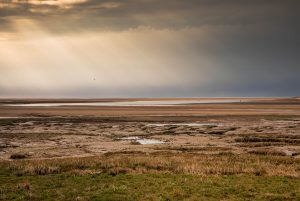
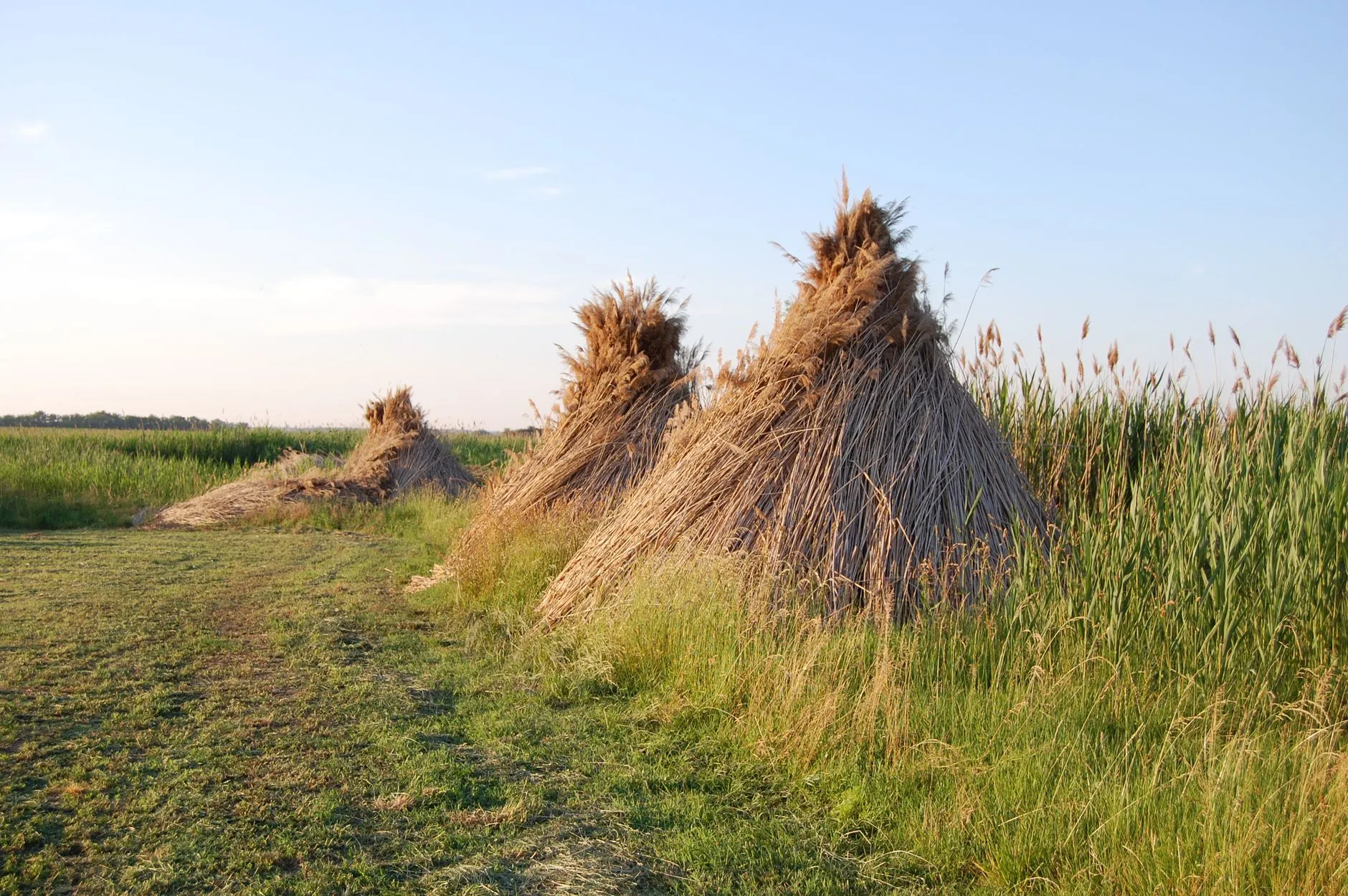
Hortobágy is the reason to rent a car, and it is worth being precise about what it is. Hortobágy National Park – the Puszta was inscribed on the World Heritage list in 1999 under criteria (iv) and (v) — that is, as a cultural landscape, not as a nature reserve. UNESCO’s citation calls it “an outstanding example of a cultural landscape which preserves intact and visible evidence of its traditional pastoral use over more than two millennia”. The property covers 74,820 hectares with a further 199,380 hectares of buffer zone, and it takes in parts of four counties including Debrecen’s own Hajdú-Bihar. What you actually see is the national park’s roughly 800 km² of treeless alkaline grassland — the largest semi-natural grassland in Europe — grazed by hardy native breeds: grey cattle, corkscrew-horned racka sheep, Nonius horses and buffalo, tended by mounted herdsmen called csikós. The built heritage is the Nine Arch Bridge, the burial mounds (kurgans) left by successive migrations from the east, and the csárdas, the isolated single-storey inns that once served travellers on the plain. The village of Hortobágy is about 52 km and 45 minutes from the airport. Go for the herds, the horsemen’s displays and — if you are a birder — the cranes, dotterel and lesser white-fronted geese the park is known for.
Practical planning. The Great Plain is continental: hot, dry summers and genuinely cold winters, with nothing between you and the weather. Late spring and early autumn are the best of it. Budapest is about two hours away by road and a similar time by train from Nagyállomás, so DEB works as a back door to eastern Hungary rather than a way into the capital. And because the schedule here is thin and seasonal, the fare swings are large — run your dates through our price checker before you commit to a week, because on a route list this size moving your trip by a fortnight can matter more than anything else you do.
❓ Frequently Asked Questions
📊 2026 Summary Data Table
| Category | Detail |
|---|---|
| IATA / ICAO | DEB / LHDC |
| Official name | Debrecen International Airport (Debrecen Nemzetközi Repülőtér) |
| Operator | Debrecen International Airport Kft. — city-owned |
| Location | 5 km south-southwest of the centre (Hungarian AIP); ~7.4 km, 14 min by road |
| Runway | 04R/22L · 2,500 m concrete · elevation 110 m |
| Terminal | One passenger terminal; check-in to the right of the entrance, one departure waiting area |
| 2025 passengers | 186,100 (Eurostat) — 121,043 scheduled, 65,057 charter |
| 2024 passengers | 272,981 · 2023: 306,092 |
| The trend | Scheduled traffic −55% since 2023; charter +69%. Charter is now over a third of all traffic |
| Airlines on the board | Lufthansa · Wizz Air · Wizz Air UK · Smartwings · Tailwind Airlines · MGA |
| Destinations listed | Antalya, Burgas, Crete, Eindhoven, Istanbul, Larnaca, London, Monastir, Munich, Tel Aviv, Varna |
| Busiest service | Lufthansa to Munich — the airport’s only real connecting product |
| Airport bus | DKV “Airport 1”, Nagyállomás ↔ airport, hourly 04:20–21:32, 7 stops |
| Bus fare | 480 Ft app · 500 Ft paper · 650 Ft from the driver · 1,700 Ft day ticket (DKV tariff) |
| Taxi | City Taxi +36 52 555 555 · Főnix Taxi +36 52 444 444 — contracted, card-equipped |
| Car rental | Autonom · Eurent · Sixt · Avis |
| Parking | 5 min free · 1 h 1,500 Ft · 1 day 6,000 Ft · 7 days 15,000 Ft · +1 day 2,000 Ft |
| Lounge | None. SkyBar shop and bistro landside (hours vary with traffic) + airside snack bar. Priority Pass covers Budapest only in Hungary |
| Currency | Hungarian forint — Schengen but not eurozone. ECB rate 7 Sep 2026: €1 = 363.20 HUF |
| Border regime | Schengen. EES has replaced passport stamps since 10 April 2026; biometrics on first crossing, faster after. EU citizens not registered |
| ETIAS | Not in operation, no applications collected. Fee set at €20; under-18/over-70 and EU family members exempt |
| UNESCO nearby | Hortobágy National Park – the Puszta, inscribed 1999, criteria (iv)(v), cultural landscape, 74,820 ha · ~52 km from the airport |
| City | Reformed Great Church (largest Protestant church in Hungary) · Reformed College, continuous since 1538 · Déri Museum with the permanent Munkácsy trilogy · Nagyerdő park and thermal baths |
| Spa towns | Hajdúszoboszló / Hungarospa, ~28 km — open-air spa to 30 September, indoor facilities all year |
| Local dish | Debreceni páros — the double sausage the city is named for across Europe |