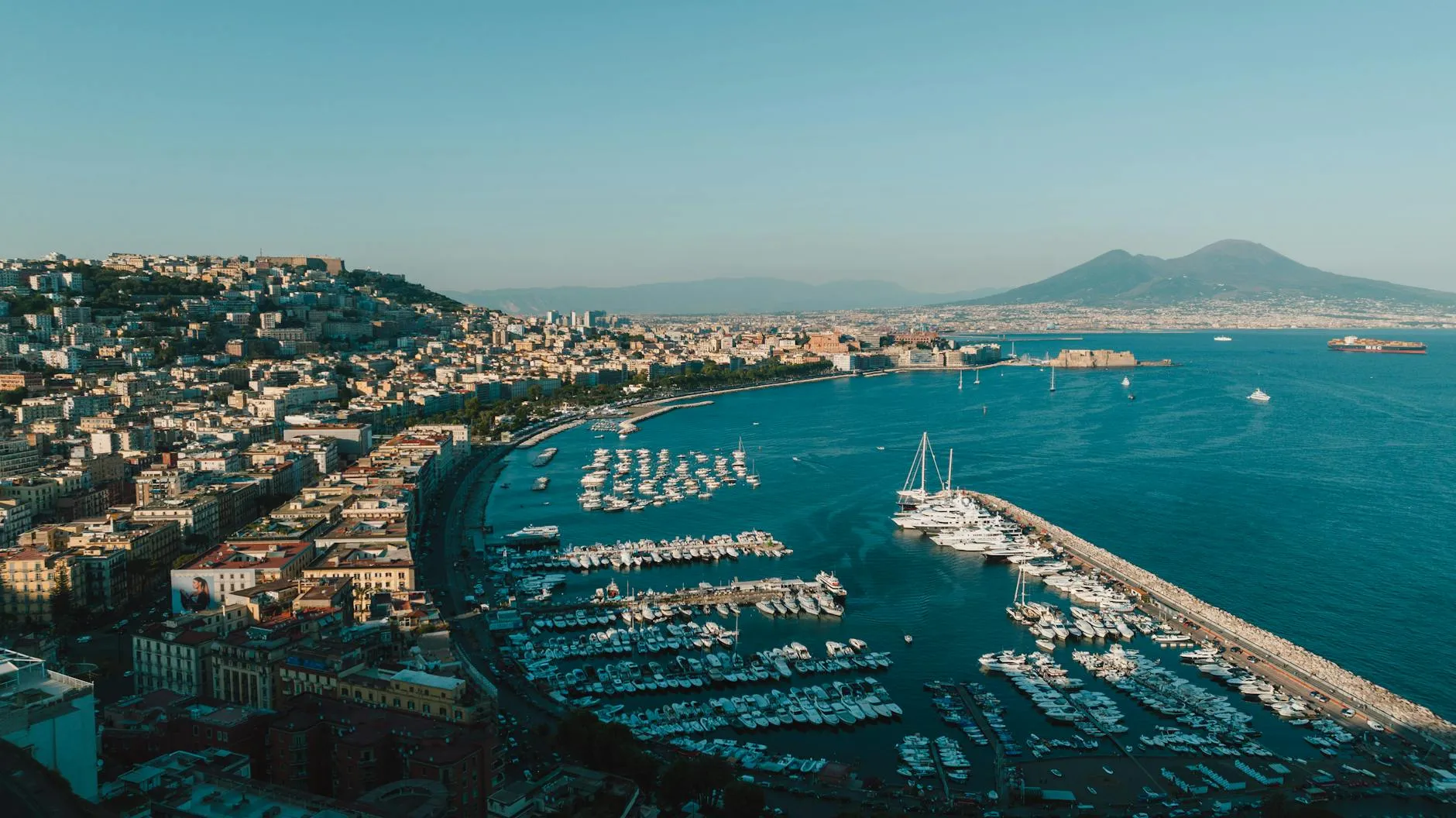
Naples, Italy — City Guide 2026
The Complete City Guide 2026
Naples — The Complete City Guide 2026
Naples is the city that Italy itself cannot decide whether to celebrate or apologise for. It is chaotic, loud, beautiful, crumbling, dangerous-feeling but statistically safe, and home to the best food in the Mediterranean. It invented pizza. It sits in the shadow of an active volcano. Its archaeological museum holds more Roman treasures than Rome. No other city in Europe provokes such strong reactions — and nobody who goes comes back indifferent.
Last verified: April 2026. Every price, opening hour, and booking link in this guide has been checked against official sources. Verify at the listed URLs before visiting — Naples changes its mind about opening hours more often than most cities change their menus.
Why Naples? An Editor’s Note
I was warned about Naples before I first visited in 2009. Every person who had been told me two things: the pizza is the best in the world, and watch your bag. Both turned out to be true, but they missed the point entirely. What nobody told me was that Naples would be the most emotionally intense city I had ever visited — a place where beauty and decay exist in the same doorway, where a 14th-century church sits between a scooter repair shop and a pizzeria that has been open since 1870, where the sound of the city is a continuous opera of horns, voices, espresso machines, and Vespas.
Naples is not for everyone. It is not clean. It is not organised. It is not quiet. The traffic obeys laws that exist only in the Neapolitan imagination. Crossing the street requires an act of faith. But if you can accept the chaos — and if you understand that the chaos is not a failure of the city but its essential character — Naples will give you experiences that no other city in Europe can match.
The Museo Archeologico Nazionale holds more Roman art than all of Rome’s museums combined. Pompeii and Herculaneum are an hour away by local train. The bay, with Vesuvius rising behind the city, is one of the great views in the Mediterranean. The coffee is the best in Italy. The street food costs less than a metro ticket. And the pizza — the real Neapolitan pizza, cooked in 60 seconds in a 485°C oven, served on a plate with no pretension — is a religious experience in a city that takes both religion and food with equal seriousness.
This guide is for people willing to meet Naples on its own terms. If you want order, go to Munich. If you want beauty without effort, go to Paris. If you want to feel truly, overwhelmingly alive, go to Naples.
Extending the trip? See our Rome city guide (1h10 by Frecciarossa), Milan city guide (4h30 by Frecciarossa), Athens city guide (1h30 flight), and Barcelona city guide (2h flight) for the same treatment.
Table of Contents
- Top Attractions in Naples
- Pizza — Naples’ Gift to the World
- Naples’ Best Neighbourhoods
- Where to Stay in Naples — By Budget
- Where to Eat in Naples (Beyond Pizza)
- Getting Around Naples
- Best Time to Visit Naples
- Naples for Art Lovers — Above & Below Ground
- Day Trips from Naples
- Safety & Practical Information
- 2026 Travel Notes
- Free Things to Do in Naples
- Frequently Asked Questions
Top Attractions in Naples
1. Museo Archeologico Nazionale (MANN) — The Greatest Roman Collection on Earth
If you visit one museum in Naples, this is it. The MANN holds the Farnese collection — monumental Greek and Roman sculpture including the Farnese Hercules and the Farnese Bull (the largest single sculpture surviving from antiquity) — and the entire portable art collection recovered from Pompeii and Herculaneum: mosaics, frescoes, bronzes, silverware, and the Secret Cabinet (Gabinetto Segreto) of Roman erotic art.
The Alexander Mosaic from the House of the Faun in Pompeii — depicting Alexander the Great’s victory over Darius III at the Battle of Issus, composed of approximately 1.5 million individual tesserae — is one of the greatest surviving works of ancient art. The Farnese Hercules (3rd century AD, 3.17 metres tall) dominates a room of its own and has been copied more than almost any other sculpture in history.
The Secret Cabinet, reopened permanently in 2000 after decades of intermittent closure, contains Roman erotic art from Pompeii: paintings, sculptures, and household objects that reveal how openly Roman culture treated sexuality. It is genuinely fascinating, historically important, and treated with scholarly seriousness by the museum.
Price: €20 general. Under 18 free (EU). First Sunday of each month: free. Hours: Wed–Mon 9:00–19:30. Closed Tuesdays. Getting there: Metro L1/L2 to Museo/Cavour. Website: mann-napoli.it
Editor’s tip: Visit BEFORE Pompeii. The mosaics, frescoes, and sculptures that were removed from Pompeii are here — seeing them first gives context that transforms your Pompeii visit from “ruins with empty walls” to “ruins where you know what used to hang.” Allow 2–3 hours minimum.
2. Cappella Sansevero — The Veiled Christ
A small, privately owned chapel in the Centro Storico containing one of the most technically astonishing sculptures in the history of art: Giuseppe Sanmartino’s Cristo Velato (Veiled Christ, 1753). A full-size marble figure of Christ lying in death, covered by a translucent marble veil so thin and so perfectly carved that it appears to be actual fabric draped over skin. The effect is impossible to convey in photographs. In person, the stone genuinely appears to be cloth. The technical skill required has never been fully explained — the most common theory is that Sanmartino had an almost supernatural command of marble, but legends persist about alchemical treatment of the stone.
The chapel also contains Francesco Queirolo’s Disinganno (Release from Deception) — a figure freeing itself from a marble net carved with such precision that every knot is individually rendered — and the Anatomical Machines in the basement: two 18th-century human figures with perfectly preserved (or artificially created) circulatory systems. The chapel’s patron, Raimondo di Sangro, was an Enlightenment polymath, alchemist, and Freemason, and the entire chapel is saturated with symbolic meaning that scholars are still decoding.
Price: €12. Under 10 free. Hours: Wed–Mon 9:00–19:00. Closed Tuesdays. BOOKING ESSENTIAL — timed tickets sell out daily, often days in advance. Book at museosansevero.it. Walk-ups are possible but unreliable. Getting there: Via Francesco de Sanctis 19, Centro Storico — 5 min walk from Spaccanapoli.
Editor’s tip: Book at least 3–5 days ahead in spring/summer. The early morning slot (9:00) is the calmest. Stand directly in front of the Veiled Christ and look at the face through the veil — the expression of suffering visible through the marble is the single most technically perfect thing I have seen in any museum in Europe. This is not hyperbole.
3. Spaccanapoli — The Street That Splits Naples in Half
Spaccanapoli is not an attraction — it is an experience. A single, perfectly straight street (actually three streets: Via Benedetto Croce, Via San Biagio dei Librai, and Via Vicaria Vecchia) that cuts through the Centro Storico from west to east, following the line of the ancient Greek decumanus inferior laid out when Naples was Neapolis in the 5th century BC. The street is narrow, crowded, loud, hung with laundry, lined with churches and palazzi, and constitutes the most concentrated sensory experience in urban Italy.
Every few metres there is a church worth entering (most are free), a pizzeria worth eating in, a presepe (nativity scene) workshop worth browsing, or a crumbling palace that would be a national monument in any other city. The Christmas nativity workshops on Via San Gregorio Armeno — artisans who make hand-crafted nativity scenes year-round, with figurines of politicians, footballers, and celebrities alongside the Holy Family — are unique to Naples and genuinely extraordinary.
Getting there: Start at Piazza del Gesù Nuovo (Metro Dante or Toledo, 5 min walk) and walk east. Allow 1–2 hours to walk the full length without rushing. Best time: Morning (9:00–11:00) before the crowds peak, or late afternoon when the light is golden.
Editor’s tip: Look up. Spaccanapoli’s most beautiful features are above eye level: Baroque church facades, wrought-iron balconies, laundry lines strung between buildings four storeys up, and the occasional Madonna shrine lit with electric candles. Naples is a vertical city — the street level is only one layer.
4. Napoli Sotterranea — The Underground City
Forty metres beneath the streets of Naples lies a parallel city: a network of tunnels, cisterns, aqueducts, and chambers carved from the tuff stone over 2,400 years. The Greeks quarried the stone to build Neapolis above; the Romans built aqueducts through it; Neapolitans used it as bomb shelters during World War II (you can still see the graffiti and furniture). The tunnels extend under the entire Centro Storico and have been explored continuously since the 19th century.
The standard tour (Napoli Sotterranea, Piazza San Gaetano 68) takes you through Roman aqueducts, a WWII air-raid shelter, and a narrow passage so tight you use candles rather than torches — not for the claustrophobic, but unforgettable for everyone else. A separate section includes a Roman theatre where Emperor Nero allegedly performed.
Price: ~€12 guided tour (tours depart every hour, English available). Hours: Daily 10:00–18:00 (last tour 17:00). Duration: ~90 minutes. Getting there: Piazza San Gaetano 68, Centro Storico. Entrance directly on Spaccanapoli. Book at: napolisotterranea.org
Editor’s tip: The narrow passage section (about 50 cm wide, 30 metres long, candlelit) is genuinely narrow. If you are seriously claustrophobic, you can skip it — there is an alternative route. If you are moderately claustrophobic, do it anyway. It is one of the most memorable experiences in Naples.
5. Castel dell’Ovo — The Egg Castle
The oldest fortification in Naples, built on the tiny island of Megaride where Greek colonists from Cumae first landed around 680 BC. The current structure is medieval-to-Renaissance, built over Roman ruins (Lucullus’s villa) and named after a legend that Virgil placed a magical egg in the foundations — if the egg breaks, Naples falls. The castle has survived earthquakes, sieges, and Norman, Hohenstaufen, Angevin, and Aragonese rulers. The egg, apparently, holds.
The castle itself is less interesting than the setting: a waterfront fortress on a promontory overlooking the Bay of Naples, with Vesuvius directly across the water. The rampart walk offers one of the best free views in the city. The Borgo Marinari below the castle — a cluster of seafood restaurants around a small harbour — is touristy but atmospheric, especially at sunset.
Price: Free (exterior and ramparts). ⚠️ Note (2026): Castel dell’Ovo has been closed for renovation since July 2025. The exterior, Borgo Marinari, and waterfront views remain accessible. Check napolike.it for reopening updates before visiting. Getting there: Via Partenope, waterfront — 15 min walk from Piazza del Plebiscito or bus/tram along the Lungomare.
Editor’s tip: Go at sunset. Walk up to the ramparts and look north-east across the bay to Vesuvius. The light in Naples between 17:00 and 19:00 in spring and autumn is legendary — painters have been trying to capture it for 300 years. It is free and it is perfect.
6. Duomo di Napoli & the Miracle of San Gennaro
Naples’ 13th-century cathedral is dedicated to San Gennaro (Saint Januarius), the city’s patron saint, martyred in 305 AD. The cathedral contains the Chapel of the Treasure of San Gennaro — the richest chapel in the world, by some measures, containing gold, silver, and jewels donated over seven centuries — and two vials of the saint’s blood.
Three times a year (the Saturday before the first Sunday of May, September 19, and December 16), the dried blood is displayed to the congregation and, according to tradition, liquefies. When it does, Naples celebrates. When it does not (most recently in December 2020), the city worries. This is not a historical curiosity — it is a living tradition observed with genuine intensity by thousands of Neapolitans. The May and September ceremonies are the most dramatic.
Price: Cathedral free. Chapel of San Gennaro Treasure Museum: ~€9. Baptistery of San Giovanni in Fonte (4th-century mosaics): included. Hours: Cathedral Mon–Sat 8:30–13:00 & 14:30–19:00, Sun 8:30–13:00. Museum hours vary. Getting there: Via Duomo, Centro Storico. Website: duomodinapoli.it
Editor’s tip: The 4th-century Baptistery of San Giovanni in Fonte in the right aisle has the oldest surviving Christian mosaics in Western Europe. Most visitors walk straight past it to the San Gennaro chapel. Don’t. The mosaics are older than the building they’re in and they are extraordinary.
7. Palazzo Reale (Royal Palace)
The Bourbon royal palace on Piazza del Plebiscito, built from 1600 and expanded by successive rulers into a sprawling complex of state rooms, gardens, and the Teatro di San Carlo — the oldest continuously active opera house in the world (opened 1737, predating Milan’s La Scala by 41 years). The state apartments are opulent in the way that only Bourbon palaces manage: marble, gilt, frescoes, and a throne room designed to make visitors feel small.
The palace’s national library (Biblioteca Nazionale) contains the Herculaneum papyri — carbonised scrolls recovered from a villa in Herculaneum, the only surviving library from the ancient world, currently being unrolled and read using AI and X-ray technology. You cannot see the scrolls themselves, but the library’s reading rooms are occasionally open for events.
Price: €15. Under 18 free (EU). First Sunday free. Hours: Thu–Tue 9:00–20:00. Closed Wednesdays. Getting there: Piazza del Plebiscito. Metro Municipio (L1/L6). Website: coopculture.it
Editor’s tip: Visit for the Teatro di San Carlo alone. Even if you don’t attend a performance, the guided tour of the theatre (€9, 30 min) is worth it — the interior is red velvet, gold leaf, and 1,386 seats in six tiers of boxes. It is the most beautiful theatre in Italy and it sounds as good as it looks.
8. Castel Sant’Elmo & Certosa di San Martino
The star-shaped medieval fortress on the Vomero hill, 250 metres above the city, offers the single best panoramic view in Naples: the entire bay from Capo Posillipo to Sorrento, Vesuvius centred, the islands of Capri, Ischia, and Procida visible on clear days. The fortress itself is 14th-century Angevin, with exhibition spaces and a permanent contemporary art collection.
Adjacent is the Certosa di San Martino — a 14th-century Carthusian monastery converted into a museum. The cloisters are among the most beautiful in Italy: white marble columns, citrus trees, and absolute silence, 250 metres above the most chaotic city in Europe. The museum’s presepe (nativity scene) collection is the finest in the world — the Cuciniello presepe alone contains over 800 figures in a room-sized landscape of 18th-century Naples.
Price: Castel Sant’Elmo €5 | Certosa di San Martino €6 | Combined €9. Under 18 free (EU). First Sunday free. Hours: Both 8:30–19:30 (last entry 18:30). Certosa closed Wednesdays. Getting there: Funicular from Via Toledo or Chiaia to Vomero, then 10-min walk. Or Metro L1 to Vanvitelli + walk.
Editor’s tip: Go at 16:00–17:00 for the best light on the bay. Bring a camera with a wide-angle lens — the panorama from the fortress ramparts is too wide for a phone at standard zoom. The Certosa cloisters at this hour, with golden light on white marble, are among the most peaceful places in Naples.
9. Catacombs of San Gennaro
A vast network of early Christian burial chambers on the northern edge of the Centro Storico, dating from the 2nd century AD. Two levels of tunnels contain frescoes, mosaics, and burial niches spanning 500 years of Neapolitan Christianity — from Roman-era paintings to early medieval bishops’ tombs. The upper catacomb is the more impressive: a cathedral-scale underground chamber with 10-metre ceilings and frescoed walls.
The catacombs were neglected for centuries and only fully reopened as a managed tourist site in 2006, thanks to a community cooperative (La Paranza) from the Rione Sanità neighbourhood. The guides are young locals whose passion for their neighbourhood’s history is infectious and whose storytelling elevates the visit beyond archaeology into social history.
Price: ~€13 guided tour (English available). Hours: Tours hourly Mon–Sat 10:00–17:00, Sun 10:00–14:00. Getting there: Via Capodimonte 13, Sanità district. Bus C63 from Piazza Dante or 15 min walk north from MANN. Book at: catacombedinapoli.it
Editor’s tip: Combine with a walk through the Rione Sanità — one of Naples’ most fascinating and least touristic neighbourhoods, full of street art, Baroque churches, and a community energy that represents the future of Naples as much as the catacombs represent its past.
10. Piazza del Plebiscito — Naples’ Grand Square
Naples’ largest square, modelled on Bernini’s St. Peter’s colonnade in Rome, with the Royal Palace on one side and the church of San Francesco di Paola (a neoclassical dome inspired by the Pantheon) on the other. The square was a car park until 1994, when it was pedestrianised and restored — one of the great urban reclamation stories in Italian history.
Today it is where Naples gathers: New Year’s Eve concerts (200,000+ people), political rallies, and ordinary evenings when Neapolitans walk, sit, and watch the light change over the bay. The square is best at dusk, when the colonnade is lit and the dome of San Francesco glows against the darkening sky.
Price: Free. Getting there: Metro Municipio (L1/L6) or Toledo (L1), 5 min walk. Nearby: Caffè Gambrinus (the most famous café in Naples, open since 1860) is on the square’s west corner.
11. Certosa e Museo di Capodimonte
A Bourbon hunting lodge turned into one of Italy’s most important art museums, set in a 134-hectare park on the hill above the Sanità district. The painting collection rivals the Prado in spots: Caravaggio’s Flagellation of Christ (1607), Titian’s Danaë, Masaccio’s Crucifixion, and an entire room of Luca Giordano. The contemporary art floor includes Warhol, Kiefer, and a site-specific installation by Anish Kapoor.
The park is Naples’ largest green space and the best place to escape the city’s noise. Neapolitan families picnic here on Sundays. The views south across the bay are superb.
Price: ~€14. Under 18 free (EU). First Sunday free. Hours: Thu–Tue 8:30–19:30. Closed Wednesdays. Getting there: Bus C63/178 from Piazza Dante. The uphill walk from MANN (~25 min) passes through the Sanità neighbourhood. Website: capodimonte.cultura.gov.it
Editor’s tip: The Caravaggio room alone is worth the trip. The Flagellation is one of the most powerful paintings in Italy and the room is often empty because most tourists go to MANN instead. If you love painting, come here before MANN.
12. The Lungomare — Naples’ Waterfront Walk
A 3 km pedestrian promenade along the bay, from Castel dell’Ovo to Mergellina, with Vesuvius framed at the end of every perspective. The Lungomare was described by Italian writer Luciano De Crescenzo as “the most beautiful street in the world,” and on a clear evening it is hard to argue. The promenade passes Castel dell’Ovo, the Fontana dell’Immacolatella, the Villa Comunale (a public garden with the oldest aquarium in Europe), and ends at the fishing harbour of Mergellina.
The Lungomare is where Naples performs its evening ritual: the passeggiata. From about 18:00, families, couples, and groups walk the promenade, stopping for gelato, watching the sunset, and greeting everyone they know. It is the most Italian thing you can do in Italy, and it is free.
Price: Free. Open 24 hours. Getting there: Start at Metro Municipio and walk south to Via Partenope, or Metro Mergellina for the western end. Best time: 17:00–20:00 for the passeggiata and sunset.
Pizza — Naples’ Gift to the World
Neapolitan pizza is not a food category — it is a protected cultural tradition (UNESCO Intangible Cultural Heritage since 2017). The rules are specific: dough made from Type 00 or Type 0 flour, San Marzano tomatoes (DOP, grown on the volcanic slopes of Vesuvius), fior di latte or mozzarella di bufala, extra virgin olive oil, fresh basil. Cooked in a wood-fired oven at 430–485°C for 60–90 seconds. The result: a soft, slightly charred crust with a high, puffy cornicione (edge), a thin centre, and ingredients that taste like they were harvested that morning — because they often were.
A margherita in Naples costs €4–6. A marinara (tomato, garlic, oregano, olive oil — no cheese) costs €3–5. This is the best food deal in Europe.
L’Antica Pizzeria da Michele
Opened 1870. Serves exactly two pizzas: margherita and marinara. No menu. No starters. No desserts. The margherita (€5) is, for many, the definitive pizza on Earth. The queue is famous — 30–60 minutes at peak times. Take a number from the machine outside and wait. There is no shortcut. Via Cesare Sersale 1, near Stazione Centrale. Open Mon–Sat 10:00–23:00. Cash preferred.
Sorbillo
Gino Sorbillo is the most famous pizzaiolo in Naples and arguably the world. His flagship on Via dei Tribunali is always packed. The menu is larger than Da Michele’s — creative toppings alongside classics — but the margherita (€5–6) is the benchmark. The dough is lighter than Da Michele’s, with more char. Via dei Tribunali 32. Book on the app or queue. No reservations for walk-ins.
Di Matteo
Famous for two things: some of the best pizza fritta (fried pizza) in Naples (€2–3 from the street window), and the fact that Bill Clinton ate here during the 1994 G7 summit. The sit-down pizzas are excellent and the queues shorter than Sorbillo (next door) or Da Michele. Via dei Tribunali 94.
50 Kalò
Ciro Salvo’s restaurant in Pozzuoli (and a newer Naples city-centre location) is considered by many experts to be the best pizza in the world as of the 2020s. The dough fermentation is unusually long (24–36 hours), producing a cornicione that is pillowy, fragrant, and almost impossibly light. Margherita €5–7. Piazza Sannazaro 201B (Naples location). Book ahead.
Da Attilio
A Centro Storico institution since 1938, known for pizza a stella (star-shaped pizza with ricotta in each point). Less famous than Da Michele or Sorbillo, more beloved by locals. Via Pignasecca 17. No booking. Queue at peak times.
Starita a Materdei
Featured in the Sophia Loren film L’Oro di Napoli (1954). The pizza fritta here is legendary. The regular pizzas are exceptional. Antonio Starita is a third-generation pizzaiolo. Via Materdei 27–28. Less central, fewer tourists, better experience.
Editor’s tip: Eat pizza for lunch, not dinner — the queues are shorter and the ovens are at their best. Order a margherita first, always. If the margherita is perfect, the pizzeria is perfect. If it’s not, nothing else matters. A glass of Falanghina (local white wine, €2–3) or a Peroni Nastro Azzurro (€2–4) is the correct pairing. Coca-Cola is also traditional and nobody will judge you.
Naples’ Best Neighbourhoods
Centro Storico — The Ancient Heart
A UNESCO World Heritage Site since 1995, the Centro Storico follows the Greek street grid laid out in the 5th century BC. The three main east–west streets (decumani) — Spaccanapoli, Via dei Tribunali, and Via dell’Anticaglia — are the arteries of old Naples. Every block contains churches (over 400 in the Centro Storico alone), palazzi, workshops, and food. This is where you will spend most of your time, and it is where Naples is most intensely itself.
Chiaia & the Waterfront — Elegant Naples
The upscale neighbourhood between the Centro Storico and the sea. Via Chiaia and Via dei Mille are Naples’ most fashionable shopping streets. The waterfront (Lungomare) runs along its southern edge. Piazza dei Martiri is the social hub. This is where wealthy Neapolitans live, where the cocktail bars are, and where the dress code shifts from Centro Storico casual to Italian smart. The best neighbourhood for evening dining.
Quartieri Spagnoli — The Spanish Quarters
A grid of narrow streets built in the 16th century to house Spanish troops. Still densely populated, still chaotic, still hung with laundry, now also home to some of the best street art in Europe and an emerging food scene. The Quartieri Spagnoli has gentrified just enough to be interesting without losing its character. It is safe during the day; at night, stick to well-lit streets. The street art trail (Banksy, Jorit, BLU) is a highlight — see the Art Lovers section below.
Vomero — The Hilltop Escape
Residential, calm, and physically above the chaos. Reached by three funiculars (Centrale, Chiaia, Montesanto) that are attractions in themselves. Castel Sant’Elmo and the Certosa di San Martino are here. Via Scarlatti is a pleasant pedestrianised shopping street. The views over the bay are extraordinary. Come for the castles, stay for the quiet.
Rione Sanità — The Authentic Neighbourhood
North of the Centro Storico, historically neglected, now experiencing a community-led renaissance. The Catacombs of San Gennaro are here. Palazzo dello Spagnolo (a spectacular Baroque staircase) is here. Street art, community cooperatives, and a food scene that is local in the truest sense — this is where Naples’ next chapter is being written. Visit on a catacomb tour, then explore on foot. Safe during the day.
Posillipo — The View
The western headland above the bay. Posillipo has the single best view in the Naples region: the entire bay, Vesuvius, Capri, and the city spread below. Parco Virgiliano (a public park on the tip of the headland) is free and extraordinary at sunset. Less accessible by public transport — bus C21/140 from Mergellina. Worth the trip for the view alone.
Naples with Kids
Naples is not the easiest city for young children — the pavements are uneven, traffic is aggressive, and pushchairs struggle on cobblestones. But children are welcomed in Italy with a warmth that borders on reverence, and Naples has more to offer families than its reputation suggests.
- Città della Scienza (Bagnoli): Naples’ science museum, with a planetarium and hands-on exhibits for all ages. ~€10/€7 child. Bus C1 or Cumana train.
- Acquario di Napoli (Villa Comunale, Lungomare): Europe’s oldest aquarium (1872). Small but charming. ~€5. Walk-in.
- MANN Kids’ sections: The archaeological museum has interactive children’s areas and activity sheets. Under 18 free (EU).
- Edenlandia (Fuorigrotta): An amusement park reopened and refurbished. Free entry; rides from €2–5.
- Pizza-making classes: Several pizzerias offer family classes where kids make their own pizza. Check with your hotel or search “Naples pizza class family” — typical cost €30–50/person.
Practical: Children under 6 ride free on metro/bus. Restaurants universally welcome children and will adapt dishes. A seggiolone (high chair) is available almost everywhere — ask.
Where to Stay in Naples — By Budget
Budget: €20–50 per night per person
Naples is one of the cheapest major cities in Western Europe for accommodation. Hostel dorms run €20–35/night, even in central locations. The area around Stazione Centrale is the cheapest and most convenient for Pompeii day trips (Circumvesuviana departs from here). Centro Storico hostels put you in the heart of the action. Hostel of the Sun and Giovanni’s Home are well-reviewed.
Mid-range: €70–150 per night (double room)
Chiaia is the best mid-range neighbourhood: safe, well-connected, close to the waterfront, excellent restaurants within walking distance. Centro Storico B&Bs put you in the atmosphere but can be noisy (bring earplugs). Vomero is quieter with funicular access. Naples’ hotel stock has improved dramatically since 2020 — new boutique openings every year.
Splurge: €200–500+ per night
Grand Hotel Vesuvio (the most famous hotel in Naples, waterfront, since 1882), Hotel Excelsior (bay views from every room), Palazzo Caracciolo (a 13th-century palace converted to a boutique hotel in the Centro Storico). The Vesuvio is where Oscar Wilde, Humphrey Bogart, and every visiting head of state stayed. The rooftop restaurant has the best bay view of any dinner table in the city.
Where Not to Stay
The area immediately north of Stazione Centrale (Piazza Garibaldi) is noisy, grimy, and unpleasant at night, though not genuinely dangerous. It is convenient for early Circumvesuviana trains. Secondigliano and Scampia (northern suburbs) are residential areas with no tourist infrastructure — there is no reason to stay there.
Naples Accommodation — Quick Price Guide
| Category | Price/Night | Best Areas |
|---|---|---|
| Hostels (dorm) | €20–35 | Centro Storico, Stazione Centrale |
| Budget hotel/B&B | €50–90 | Centro Storico, Garibaldi area |
| Mid-range hotel | €90–160 | Chiaia, Vomero, Centro Storico |
| Upscale | €160–300 | Chiaia, Lungomare |
| Luxury | €300–600+ | Grand Hotel Vesuvio, Excelsior |
Naples is 30–50% cheaper than Rome or Florence for comparable quality. Even luxury hotels are reasonable by Italian standards.
Where to Eat in Naples (Beyond Pizza)
Street Food (€1–5)
Cuoppo: A paper cone filled with fried seafood (shrimp, squid, anchovies) or fried vegetables (aubergine, courgette flowers). €3–5. The best are from street vendors on Via dei Tribunali and at the Pignasecca market.
Pizza a portafoglio: A full margherita folded into quarters and eaten standing on the street. €1–2. The ultimate Naples fast food. Available at any pizzeria with a street window.
Frittatina: A deep-fried ball of pasta (usually bucatini) filled with béchamel, peas, and smoked provola. ~€2. Absurdly good. Available at most friggitorie (fry shops).
Coffee & Pastry (€1–4)
Naples takes coffee more seriously than any city in Italy, which is saying something. An espresso at the bar costs €1–1.50. A caffè sospeso (suspended coffee) is a Neapolitan tradition: you pay for two coffees, drink one, and leave the other for someone who cannot afford it. The tradition has spread worldwide but originated here.
Sfogliatella: Naples’ signature pastry. Two varieties: riccia (flaky, crunchy layers) and frolla (smooth shortcrust). Both filled with ricotta, semolina, candied citrus. Best from: Sfogliatella Mary (Galleria Umberto I), Pintauro (Via Toledo, since 1785), Attanasio (near Stazione Centrale). €1.50–2.50.
Best cafés: Caffè Gambrinus (Piazza del Plebiscito — the grande dame, since 1860, €5+ for table service but worth it once), Caffè Mexico (Piazza Dante — locals’ choice, excellent espresso, €1 at the bar), Gran Caffè Cimmino (Via Filangieri — Chiaia’s neighbourhood café).
Seafood (€15–40)
Naples sits on the Mediterranean and the seafood is extraordinary. Spaghetti alle vongole (clams) is the signature dish — done well, it is the greatest pasta in the Italian canon. Frittura di paranza (mixed fried small fish) is the seafood equivalent of the cuoppo.
Where: Da Dora (Via Palasciano 30, Chiaia — the locals’ seafood temple, book ahead, €30–50/person), Trattoria da Nennella (Quartieri Spagnoli — chaotic, hilarious, excellent, €15–25, cash only), ’A Figlia d’’o Marenaro (Via Foria — market-side seafood, unpretentious, superb).
Traditional Neapolitan (€10–30)
Ragù napoletano: Not a bolognese. A slow-cooked Sunday sauce of pork, beef, and sausage, simmered for 4–6 hours, served over ziti or paccheri. It is a family tradition eaten on Sundays, and the restaurants that serve it take the recipe as seriously as the churches take the liturgy.
Parmigiana di melanzane: Layers of fried aubergine, tomato sauce, mozzarella, and Parmigiano-Reggiano, baked until it bubbles. Naples claims to have invented it (Parma disagrees). The Neapolitan version is richer and more decadent.
Where: Tandem (Via Paladino 51, Centro Storico — ragù specialists, €10–18), Osteria da Carmela (Via Conte di Ruvo 12 — classic home cooking, €12–20).
Michelin Guide Naples — 2026
Naples and the surrounding province top Italy for density of Michelin-starred restaurants. The 2026 Italy guide covers 27 starred restaurants in the Naples province — 1 three-star, 6 two-star, and 20 one-star — and 48 across all of Campania. Highlights:
Il Ristorante Alain Ducasse Napoli (★, new 2026): Alain Ducasse’s Naples outpost received its first Michelin star in the 2026 guide — one of 22 new one-stars in Italy this year. At Romeo Hotel, with Bay of Naples views.
Palazzo Petrucci (★): Near Castel dell’Ovo in the historic centre. Modern elegance meets rustic Neapolitan tradition. Tasting menus €90-140.
Veritas (★): Just above Chiaia. Contemporary Neapolitan cooking. €90-130 tasting.
George Restaurant (★): On the roof of the Grand Hotel Parker’s in Chiaia. Refined and formal, with Vesuvius views. Walking distance from Veritas.
Within the province, worth the trip:
- Torre del Saracino (★★) — Vico Equense: Gennaro Esposito, one of Campania’s defining chefs. ~30 min east of Naples.
- Danì Maison (★★) — Ischia: Nino Di Costanzo’s intimate tasting-menu room on the island. Hydrofoil from Naples.
Note: Naples province is Italy’s highest-density Michelin region outside Lombardy — 27 starred restaurants in Naples alone. This list is the entry point, not the complete survey. See the Michelin Guide Italy 2026 for the full selection.
Getting Around Naples
✈️ Looking for cheap flights to Naples?
Compare prices across airlines — find the best deal for your dates.
From Naples Airport (NAP)
Naples Capodichino Airport is just 7 km from the city centre — one of the closest major airports in Europe.
Alibus: The dedicated airport shuttle. €3–4 one-way (buy on board or at the airport). Stops at Stazione Centrale (Piazza Garibaldi) and the port (Molo Beverello, for ferries to Capri/Ischia). Every 15–20 min. Journey: ~15–25 min to Stazione Centrale. Runs 5:30–23:30.
Taxi: Flat rate €16 to Stazione Centrale, €19 to the Centro Storico, €23 to the waterfront/Molo Beverello. Insist on the flat rate — it is legally mandated. Do not accept a metered fare from the airport.
Metro & Funiculars
Naples has two metro lines (L1 and L6, with L6 partially operational), a Circumvesuviana commuter rail (for Pompeii/Herculaneum/Sorrento), and three funiculars to Vomero. The Toledo metro station (L1) — designed by Oscar Tusquets, with a light installation by Robert Wilson — was voted the most beautiful metro station in Europe. Visiting it is free with any metro ticket.
Single ticket: €1.50 (90 min, metro + bus + funicular). Daily pass: €4.50 (unlimited metro/bus/funicular). Weekly pass: €16.
Naples Transport — Quick Price Guide
| Ticket | Price | Covers |
|---|---|---|
| Single ride (90 min) | €1.50 | Metro, bus, funicular |
| Daily pass | €4.50 | Unlimited metro/bus/funicular |
| Weekly pass | €16 | Same, 7 consecutive days |
| Alibus (airport) | €3–4 | Airport → Stazione Centrale / port |
| Circumvesuviana to Pompeii | ~€3.30 | One way, ~35 min |
| Circumvesuviana to Sorrento | ~€4.60 | One way, ~65 min |
| Taxi airport → centre | €16–23 | Flat rate depending on destination |
| Campania ArteCard 3-day | €41 | Museums + transport (see below) |
Campania ArteCard
The regional transport and museum pass. The main option for tourists is the Tutta la Regione 3-day (€41), which covers Pompeii, Herculaneum, MANN, regional transport (including Circumvesuviana), and 50% off additional museums. If you plan to visit MANN + Pompeii + one other museum, the regional card pays for itself. Buy at the airport, Stazione Centrale, or major museums.
On Foot
Naples’ centro is compact: Stazione Centrale to Spaccanapoli is 15 minutes. Spaccanapoli to the waterfront is 10 minutes. The entire Centro Storico + waterfront can be walked in a day. However: pavements are uneven, traffic does not stop for pedestrians, and scooters use pavements as roads. Walk confidently, make eye contact with drivers, and cross with purpose. You will adapt within an hour.
Best Time to Visit Naples
April–June is perfect: warm (18–28°C), long daylight, ferries to the islands running, outdoor dining everywhere. May is the optimum month — the Maggio dei Monumenti festival opens normally closed churches and palaces for free visits.
July–August: Hot (30–35°C+), humid, and the city slows down. Many locals leave in August. Island ferries are packed. If you visit, go early morning and late evening, rest midday. The sea is warm enough for swimming.
September–October: Excellent. The heat eases, the sea is still warm, tourist crowds thin. September 19 is the Festa di San Gennaro — the blood liquefaction ceremony at the Duomo, street processions, fireworks. Worth planning around.
November–March: Cool (5–15°C), rainy spells, but museums are uncrowded and Naples’ indoor life (churches, coffee bars, restaurants) comes into its own. Christmas in Naples is extraordinary — the presepe tradition, the Via San Gregorio Armeno workshops, and the seafood-based Christmas Eve dinner (Cenone della Vigilia) are uniquely Neapolitan.
Naples for Art Lovers — Above & Below Ground
Naples is one of Europe’s great art cities, but its art is scattered across churches, palaces, catacombs, and streets rather than concentrated in a single district. This makes it harder to navigate but more rewarding to discover.
The above-ground circuit (1 day):
9:00 — MANN. The Farnese collection and the Pompeii galleries. 2–3 hours.
12:00 — Cappella Sansevero. The Veiled Christ. 30–45 minutes (pre-booked).
13:00 — Lunch on Via dei Tribunali. Pizza at Sorbillo or Di Matteo.
14:30 — Pio Monte della Misericordia. Caravaggio’s Seven Acts of Mercy (1607) hangs above the altar of this small church — a single canvas containing seven acts of charity in one scene. It is the most complex Caravaggio in existence and it is in a church, not a museum. €8. Via dei Tribunali 253.
15:30 — Certosa di San Martino. Funicular up to Vomero. Cloisters, presepe collection, bay views. 90 minutes.
The below-ground circuit (half day):
10:00 — Catacombs of San Gennaro. 2nd-century frescoes, early Christian burial chambers. Guided tour, 60 minutes.
11:30 — Napoli Sotterranea. Greek tunnels, Roman aqueducts, WWII shelters. 90 minutes.
13:30 — Galleria Borbonica. A separate underground complex — a 19th-century tunnel built by the Bourbons as an escape route from the Royal Palace, later used as a WWII shelter and military garage. Tours include vintage cars and motorcycles left underground since the 1940s. ~€10. Via Morelli 61 (Chiaia). Book at galleriaborbonica.com.
The street art trail (2–3 hours, free):
Naples has one of the most vibrant street art scenes in Europe, concentrated in the Quartieri Spagnoli and Rione Sanità:
- Jorit’s murals: Hyperrealistic faces on building façades. His San Gennaro face (Via Sanità) and the Diego Maradona (San Giovanni a Teduccio) are the most famous. Jorit is Neapolitan and his work is deeply connected to the city’s identity.
- Banksy’s Madonna with Pistol: On a wall in Piazza dei Girolamini, Centro Storico. Now protected behind plexiglass.
- BLU’s murals: Large-scale political works in the Quartieri Spagnoli. Some have been covered; others persist.
- Diego Maradona tributes: Murals, shrines, and altars throughout the Quartieri Spagnoli and Centro Storico. Maradona is a secular saint in Naples — his death in 2020 prompted a city-wide outpouring of art that continues to grow.
Day Trips from Naples
1. Pompeii — The Frozen City (35 min by train)
The city buried by Vesuvius in 79 AD. 66 hectares of excavated streets, houses, temples, theatres, and public baths, preserved in volcanic ash for nearly 2,000 years. It is the most complete surviving Roman city and one of the most important archaeological sites in the world. The Forum, the House of the Faun, the Villa of the Mysteries (with intact frescoes), and the Garden of the Fugitives (plaster casts of victims) are essential.
Price: €20. Under 18 free (EU). Combined Pompeii + Herculaneum + others: ~€22 (3-day pass). Audio guide €8. Hours: Apr–Oct 9:00–19:30 (last entry 18:00); Nov–Mar 9:00–17:00 (last entry 15:30). Getting there: Circumvesuviana train from Napoli Garibaldi to Pompei Scavi-Villa dei Misteri. ~35 min, ~€3.30. Website: pompeiisites.org
Editor’s tip: Go early (arrive at 9:00 opening) and enter via the Porta Marina entrance. Walk directly to the Forum, then the House of the Faun, then the Villa of the Mysteries at the far end. Most tour groups arrive after 10:30 and cluster near the entrance — the Villa of the Mysteries, the best single site, is 20 minutes’ walk away and relatively quiet until late morning. Bring water and sun protection — there is almost no shade. Allow 3–5 hours minimum.
2. Herculaneum (Ercolano) — The Better-Preserved Alternative (18 min by train)
Buried by the same eruption as Pompeii but by a pyroclastic flow rather than ash, Herculaneum is smaller (4.5 hectares vs. 66), much better preserved (two-storey buildings with intact wooden beams, carbonised furniture, original mosaics), and far less crowded. If you can only visit one, the experts’ choice is actually Herculaneum — the preservation is staggering, the site is walkable in 2–3 hours, and the experience is more intimate than Pompeii’s sprawl.
Price: €16. Under 18 free (EU). Hours: Same as Pompeii. Getting there: Circumvesuviana to Ercolano Scavi. ~18 min, ~€2.60. 10-min walk downhill from station to entrance. Website: ercolano.beniculturali.it
Editor’s tip: Visit Herculaneum instead of (or before) Pompeii if you have limited time. The wooden furniture, the intact mosaics in situ, and the two-storey buildings give a sense of Roman daily life that Pompeii’s ash-preserved ruins cannot match. The Boat Chambers — where skeletons of people who fled to the beach were found — are extraordinarily moving.
3. Mount Vesuvius — The Volcano (1.5 hours)
The only active volcano on mainland Europe. The hike from the car park to the crater rim is 1 km, takes about 25–30 minutes, and rewards you with a view into the 300-metre crater and a panorama of the entire Bay of Naples. Vesuvius last erupted in 1944. It will erupt again. When you stand on the rim, you can smell the sulphur.
Price: €10 crater access (plus ~€3.30 Circumvesuviana + €3.40 EAV bus from Ercolano or Pompeii to the car park). Total from Naples: ~€17–20 round trip. Getting there: Circumvesuviana to Ercolano Scavi, then EAV bus 5010 to the crater car park (~30 min). Or organised tour. Hours: Generally 9:00–15:00/17:00 depending on season. Check parconazionaledelvesuvio.it.
Editor’s tip: Combine Vesuvius with Herculaneum in a single day: take the Circumvesuviana to Ercolano Scavi, bus up to Vesuvius (morning, before clouds build), bus back down, walk to Herculaneum (10 min from station). One of the best day trips in Italy.
4. Capri — The Legendary Island (50 min by ferry)
The island where Roman emperors built villas, where Axel Munthe wrote The Story of San Michele, and where the Blue Grotto has been dazzling visitors since Tiberius used it as a private swimming pool. Capri is expensive, crowded in summer, and worth visiting at least once.
Getting there: High-speed ferry from Molo Beverello (Naples port): ~€22–25 one-way, ~50 min. Slower ferries from Porta di Massa: ~€15, ~80 min. Ferries also from Sorrento (~€18, 25 min). Buy tickets at the port or snav.it / navlib.it. Blue Grotto: ~€18 boat entry (plus €2 rowing boat). Weather-dependent. Tip: Visit off-season (Oct–Apr) or take the first ferry of the day in summer to avoid the worst crowds.
5. Procida — The Secret Island (40 min by ferry)
Capri’s less famous, less expensive, more authentic neighbour. Named Italian Capital of Culture 2022, Procida is a fishing island of pastel-coloured houses, quiet beaches, and seafood restaurants where you are the only tourist at the table. The harbour of Marina Corricella (featured in the film Il Postino) is one of the most photographed spots in the region.
Getting there: Ferry from Molo Beverello: ~€14–18, ~40 min. Slower ferries ~€12, ~60 min. The island is small enough to walk in a day. Tip: Procida is the day trip for people who think Capri is too much. It is genuine, quiet, and beautiful.
6. Reggia di Caserta — Italy’s Versailles (45 min by train)
The Royal Palace of Caserta, built by the Bourbons between 1752 and 1780: 1,200 rooms, 1,742 windows, a 3 km formal garden with fountains, cascades, and a waterfall. It is the largest royal residence in the world by volume and a UNESCO World Heritage Site. The garden alone — a perspective of pools, fountains, and statues stretching to a 78-metre waterfall at the far end — is worth the day trip.
Price: Palace + park €15. Park only €10. Under 18 free (EU). Hours: Wed–Mon 8:30–19:30. Closed Tuesdays. Getting there: Trenitalia regional train from Napoli Garibaldi to Caserta, ~45 min, ~€4–7. The palace is 200 metres from the station.
Safety & Practical Information
Naples has a reputation that exceeds reality. It is not the safest city in Europe, but it is far safer than its image suggests. The crime that visitors experience is almost exclusively petty theft — pickpocketing and bag-snatching, concentrated in tourist-heavy areas. Violent crime against tourists is very rare.
Pickpocketing hotspots: Stazione Centrale/Piazza Garibaldi, crowded metro, the Circumvesuviana, Via Toledo during peak hours, the Rastro market area. Standard precautions: bag in front, phone in front pocket, avoid displaying expensive jewellery.
Bag-snatching: The stereotype of scooter-borne bag-snatchers is rooted in history but uncommon today. Carry your bag on the building side of the pavement (away from the road). Use a cross-body bag. This is sufficient.
Traffic: The most genuine daily danger in Naples. Scooters ride on pavements. Cars ignore pedestrian crossings. Traffic lights are suggestions. Cross the street with confidence and eye contact — hesitation confuses drivers. Walk at a steady pace and they will flow around you. You will adapt faster than you think.
Tap water: Safe and drinkable. Naples water comes from the Serino aqueduct (built by the Romans) and is excellent. Refill bottles freely.
Tipping: Not expected. Many restaurants include a coperto (cover charge, €1–3/person) that covers bread and service. If there is no coperto and service was good, leaving €1–2 per person or rounding up is appreciated but not required.
Scams: The “bracelet” scam (someone ties a bracelet on your wrist and demands payment) exists near tourist sites. Decline firmly and walk away. “Informal” parking attendants who demand payment for public street parking are common — many are unofficial. Pay official meters only.
Is Naples dangerous? No. It is chaotic, it is loud, it feels more dangerous than it is. The actual crime risk for tourists is lower than in Barcelona or Rome. But it demands more street awareness than Munich or Dublin. Stay alert, not anxious.
2026 Travel Notes — What’s New
- Metro Line 1 extensions. New stations continue to open on the L1 line, improving access to the Centro Storico and the port. Check anm.it for current network maps.
- Circumvesuviana reliability. The Circumvesuviana (for Pompeii/Herculaneum/Sorrento) remains Naples’ most complained-about transport. Trains can be overcrowded, delayed, and hot. Travel early morning for the best experience. Do not leave valuables in pockets on crowded trains.
- Pompeii ongoing excavations. New areas of Pompeii continue to be excavated and opened. The Regio IX excavations (2023–2026) have revealed remarkable frescoes and a thermopolium (ancient fast-food counter) that is now publicly accessible. Each visit to Pompeii reveals something new.
- Herculaneum papyri breakthrough. AI-powered X-ray scanning of the carbonised Herculaneum scrolls has begun revealing readable text for the first time in 2,000 years. While you cannot see this work directly, the MANN and Herculaneum site both reference the project in their exhibitions.
- Naples airport expansion. Capodichino Airport has undergone gate and terminal improvements. The Alibus remains the best transport to the city; frequency and reliability have improved.
- First Sunday free museums. Italian state museums (MANN, Pompeii, Herculaneum, Capodimonte, Caserta) are free on the first Sunday of each month. This includes Pompeii — expect large crowds but a genuine saving.
Free Things to Do in Naples
Naples is generous with its treasures. Many of its most powerful experiences cost nothing.
| Experience | Details | When Free |
|---|---|---|
| Spaccanapoli walk | 2,500 years of street life. Churches, palazzi, workshops, presepe. | Always |
| Castel dell’Ovo | Oldest fortress, bay views, sunset from the ramparts. | Always |
| Lungomare passeggiata | 3 km waterfront walk, Vesuvius views, evening social ritual. | Always |
| MANN (first Sunday) | World’s greatest Roman collection. | 1st Sunday/month |
| Pompeii (first Sunday) | 66 hectares of excavated Roman city. | 1st Sunday/month |
| Churches (400+) | Baroque masterpieces. Gesù Nuovo, Santa Chiara cloisters (€6), San Lorenzo Maggiore. | Most free always |
| Toledo metro station | Voted Europe’s most beautiful metro station. Light installation. | With any €1.50 ticket |
| Quartieri Spagnoli street art | Banksy, Jorit, BLU murals. Maradona shrines. | Always |
| Piazza del Plebiscito | Naples’ grand square, Royal Palace exterior, San Francesco church. | Always |
| Capodimonte park | 134 hectares, picnic spots, bay views, free entry. | Always |
| Posillipo sunset | Parco Virgiliano — the best sunset viewpoint in the Bay of Naples. | Always |
| Via San Gregorio Armeno | Year-round nativity workshop street. Unique to Naples. | Free to browse |
Naples Tourist Tax (Imposta di Soggiorno) — 2026 Rates
Naples updated its imposta di soggiorno for 2026, adding roughly €1 per category. It is charged per person per night and capped at 14 consecutive nights — after 14 nights, no further tax is charged. Booking platforms do not include it in the quoted rate; pay at check-in or check-out.
- 4-, 5-star and 5-star luxury hotels: €5.00 per person per night (rising to €6.00 from 1 May 2026)
- 3-star hotels: €4.50
- 2-star hotels: €3.50
- 1-star hotels: €3.00
- Short-term rentals (Airbnb etc.): €5.00
- B&Bs and extra-hotel accommodation: €4.50
Example: a couple staying 5 nights in a 4-star Naples hotel in April pays €50 in imposta di soggiorno (2 × €5 × 5), rising to €60 from 1 May 2026. Source: Comune di Napoli — comune.napoli.it.
Frequently Asked Questions
Do I need a visa to visit Italy?
Italy is in the Schengen Area. EU/EEA citizens: no visa, freedom of movement. US, UK, Canada, Australia, New Zealand, Japan, South Korea and most other Western passports: visa-free for up to 90 days in any 180-day period. ETIAS, the EU’s new visa-waiver travel authorisation (not a visa), is not yet in operation and has no announced start date; a grace period will follow launch before it becomes mandatory. Expect around €20, valid three years. ETIAS is separate from the UK’s ETA, which only applies to travel to Britain.
Is Naples safe for tourists?
Yes, with common sense. Petty theft is the main risk, concentrated in tourist areas and on the Circumvesuviana. Violent crime against tourists is very rare. Naples feels more dangerous than it statistically is. Use standard precautions and you will be fine.
How many days do I need?
Three days for Naples itself: Day 1 for MANN, Cappella Sansevero, and Spaccanapoli. Day 2 for the waterfront, Castel dell’Ovo, Royal Palace, and an opera or ballet at the Teatro di San Carlo (the oldest continuously active opera house in the world, opened 1737). Day 3 for Vomero (Sant’Elmo, Certosa) and the Catacombs. Add Day 4 for Pompeii/Herculaneum. Day 5 for Capri or Vesuvius. A week is not too much.
Should I visit Pompeii or Herculaneum?
Both, if possible. If choosing one: Pompeii for scale and historical impact, Herculaneum for preservation and intimacy. Herculaneum is less crowded and the two-storey buildings with intact wooden elements are extraordinary. Experts often prefer Herculaneum.
Is the pizza really that good?
Yes. A margherita at Da Michele, Sorbillo, or 50 Kalò will recalibrate your understanding of what pizza can be. The combination of the dough, the San Marzano tomatoes, the mozzarella, and the 60-second bake produces something that genuinely cannot be replicated elsewhere. €4–6 for a life-changing meal.
Do I need to book the Cappella Sansevero?
Yes. Timed tickets sell out daily, often days in advance in spring and summer. Book at museosansevero.it at least 3–5 days ahead. Walk-ups are theoretically possible but unreliable. Do not risk it.
What’s the best way to save money?
Visit on the first Sunday of the month (free museums). Buy the Campania ArteCard. Eat pizza and street food for lunch (€5–10). Drink espresso at the bar (€1). Walk everywhere in the Centro Storico. Naples is already one of the cheapest major cities in Western Europe — budget travellers can eat magnificently for €20/day.
Is it worth visiting in winter?
Yes, especially for Christmas. The presepe workshops on Via San Gregorio Armeno are at their peak. Museums are uncrowded. Prices are lower. The Christmas Eve seafood dinner tradition (Cenone della Vigilia) is a uniquely Neapolitan experience. Bring a warm coat — the churches are unheated.
Can I do Pompeii and Capri in one day?
Technically possible but not recommended. Each deserves a full day. If forced to choose: Pompeii in the morning (arrive 9:00, leave by 13:00), Circumvesuviana to Sorrento, ferry to Capri (45 min), two hours on Capri, ferry back. It is exhausting and you will not do justice to either. Better to allocate separate days.
This guide was written with the conviction that Naples is the most underrated great city in Europe. It has everything that the famous cities have — world-class art, extraordinary food, dramatic architecture, layers of history — and one thing they don’t: a refusal to be anything other than itself. Naples does not curate its experience for visitors. It does not smooth its edges. It gives you everything at full volume and trusts you to sort it out. That trust is either overwhelming or liberating, and the difference is entirely in you.
All prices verified April 2026. Verify at listed URLs before visiting.
Found this guide useful? Share it.
Explore More City Guides
🌍 See the bigger picture: our Italy travel guide covers regions, when to go, and getting around.
Flight Deals from Naples
Looking for cheap flights departing Naples? Here are deals to 1 destination:
Prices are based on recent deals and may no longer be available. Browse all flight deals