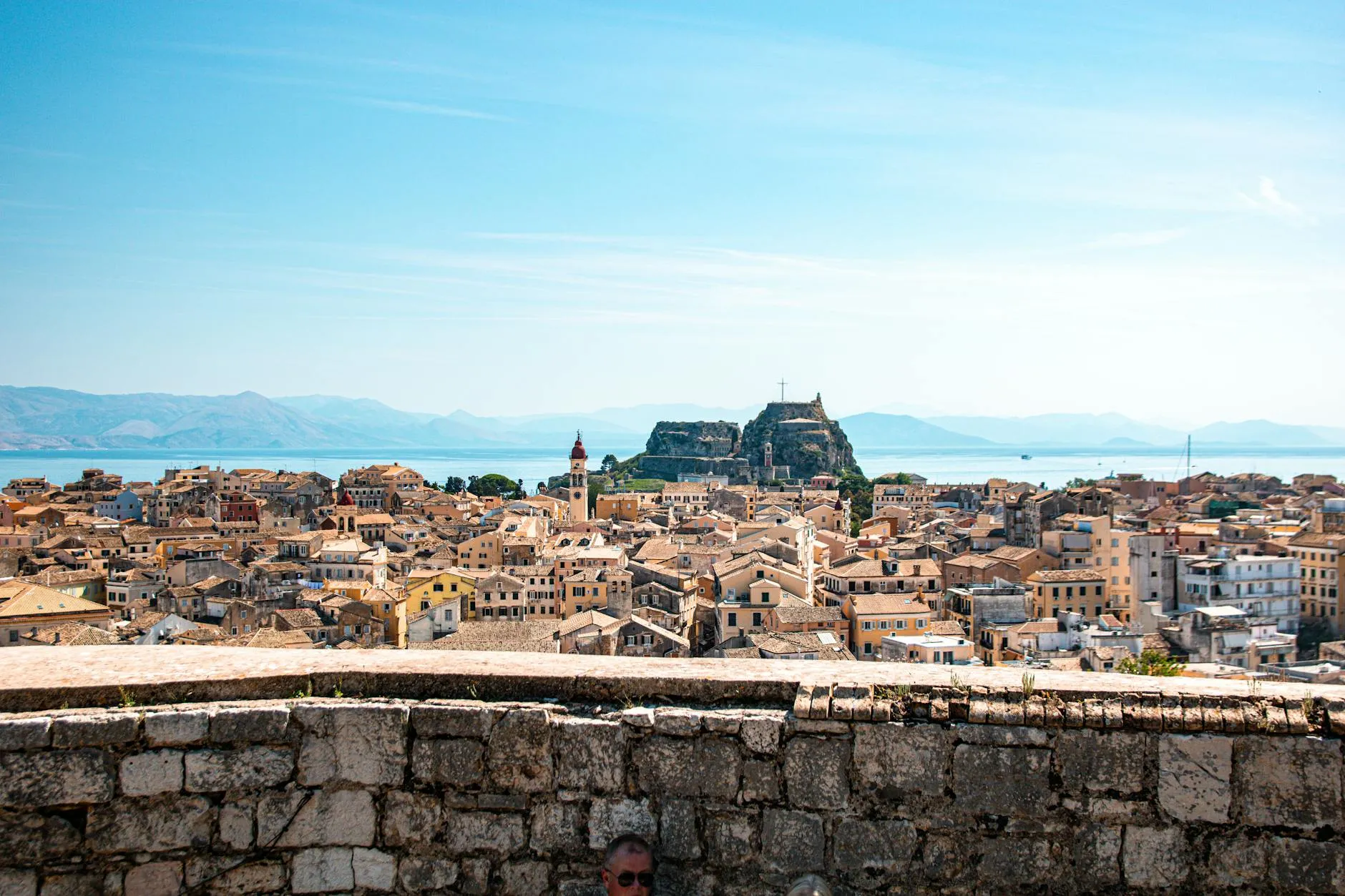
Corfu — The Complete Island Guide 2026
The northernmost of the Ionian Islands, Greek since 1864 but Venetian for four hundred and eleven years before that, with a UNESCO Old Town walked under arcades built by Napoleon’s brother-in-law, a cricket pitch laid out by the British in 1823, four annual processions of a fourth-century Cypriot bishop, and clay pots that fall from the upper windows of the Liston every Holy Saturday at eleven in the morning. Five days minimum; seven for the unhurried version.
€115–415/day budget
May–Sept 24–32°C
🇬🇷 EU / Schengen / EUR €
Climate Resilience Fee €2–15/night
EES active · ETIAS late 2026
Why Corfu? An Editor’s Note
On the morning of Holy Saturday, somewhere around eleven o’clock, the people of Corfu Town throw clay pots out of their windows. Not symbolically — not a small ritual jug — but full-sized terracotta amphorae, painted red, weighted with water, dropped from the upper floors of the Liston arcade onto the flagstones below. The word for these is botides. By a quarter past eleven the Liston is ankle-deep in clay shards and water; by noon the streets are being swept by old men in ironed shirts. You will not see this in Athens. You will not see it on any other Greek island. It is a Corfiot rite, and it is the loudest few minutes of the year on a square that was built as a Venetian shooting range, arcaded under Napoleon’s French administration, and spent fifty years hosting British cricket matches before the Greek state arrived.
The temptation, in describing a place like this, is to talk about layers — Venetian on Byzantine on Greek, peeled back like geological strata. The metaphor doesn’t quite fit Corfu. The Liston arcade is not built on top of the Venetian fortress; it sits next to it. The British cricket ground is not above the old shooting range; it is the old shooting range, with the wickets pitched on what used to be the Venetian spianàta — the cleared field of fire. The Catholic Cathedral is not earlier or later than the Greek Orthodox cathedral; the two stand forty metres apart and both still hold services. In 1583 the Venetian governor of the island ruled that Catholic and Orthodox Easter should be celebrated on the same date in Corfu. Both churches have observed the agreement for four hundred and forty-three years.
What Corfu offers, instead of layered substitution, is a calendar that runs four ways at once. The Venetian-Catholic feast days. The French civic geometry of the Liston. The British cricket fixture list. The Greek Orthodox processions. None of these replaced the others. Most are still observed. This guide is organised around three of them, because three is what fits inside a guide, but the truthful number is at least four.
Corfu became Greek in 1864. It is the only place in the modern Greek state where you can hear opera in the cathedral, where the dialect carries hundreds of Italian-rooted nouns (pastitsada, sofrito, cantada), where the older men still drink ginger beer made the British way (tsitsibira), where Sunday afternoons in spring run to the rhythm of a cricket match, and where the patron saint — Saint Spyridon, a Cypriot bishop who died in 348 AD — is paraded through the streets in a velvet-wrapped litter four times a year, because four times in two and a half centuries the people of Corfu believed he saved them: from plague in 1630, from famine in 1550, from plague again in 1673, and from a thirty-thousand-strong Ottoman army in 1716.
Corfu is also the third Greek island for tourist arrivals after Crete and Rhodes — close to two million international air passengers a year and another eight hundred thousand cruise day-trippers — and it has a Kavos problem that visitors should understand before they book. Kavos is the southeastern resort strip, forty-six kilometres from Corfu Town, that has been sold to British eighteen-to-thirties package buyers for forty years. It is a clubbing town with a long sand beach attached. It is also approximately ten kilometres of motorway from any single thing this guide describes. If you want what Corfu actually is, do not stay in Kavos. Stay in or near the Old Town and take buses, ferries or a hire car to everywhere else. The package brochures bury this. We are not bound by the brochures.
This guide treats Corfu as a city of simultaneous calendars and the surviving practices of each. It also treats Corfu as a place where the twentieth century is still legible in specific addresses: the Scuola Greca synagogue on Velisariou Street and the Holocaust Memorial in the New Fortress square (attraction #5); the Serbian mausoleum on Vido (attraction #12); German bomb damage still readable on certain Old Town walls. The reader who books a week here will be rewarded; the reader who books a long weekend will be hurried.
Who this guide is for: travellers who already know one or two Greek islands, who can tell the difference between a tourist menu and a working taverna, who would rather take a city bus to Kanoni than a coach. Travellers who want the Venetian-Italian-British layer of Corfu in addition to the Greek one. Travellers willing to spend an afternoon in the Evraiki neighbourhood with the synagogue door open behind them. Skip if: you wanted Mykonos in disguise, you came for the all-inclusive, you intend to stay in Kavos.
Table of Contents
- Top Attractions
- Neighbourhoods of Corfu Town
- Where to Stay
- Where to Eat
- Drinking Culture: Ginger Beer, Kumquat, Local Wine
- Getting Around
- Best Time to Visit
- Month-by-Month Weather
- Daily Budget Breakdown
- Sample Itineraries
- Best Day Under €30
- Hot Afternoon and Rainy Day Plans
- Day Trips
- Safety and Practical Information
- Visa and Entry Requirements
- Hidden Corfu
- Romantic Corfu
- Corfu with Kids
- What’s New in 2026
- Frequently Asked Questions
- Explore More Aifly Guides
Top Attractions
1. The Old Town of Corfu — UNESCO walking on the Venetian grid
The Old Town of Corfu was inscribed on the UNESCO World Heritage list in 2007. The citation describes “the three forts of the town, designed by renowned Venetian engineers,” and the four hundred years during which they defended the maritime trading interests of the Republic of Venice against the Ottoman Empire. The inscription is unusual in that it covers a continuously inhabited urban centre, not a ruin or a single monument — which is the right way to walk it. The Old Town is a working part of a small city of roughly thirty thousand people. Coffee, dry cleaning, bread, school runs, lawyers’ offices, a Roman Catholic Archbishop, a chief Rabbi (intermittently — the community is now small enough that a cantor flies in for High Holidays), and a Greek Orthodox cathedral all share the same set of streets.
The grid is Venetian. The narrowness is Venetian. The Liston arcade and the Spianada esplanade are French and British respectively. The marble street paving in Spyridon Street is later Greek, although in many places Venetian flagstones still surface. The most pleasurable single act in Corfu is to walk the Campiello quarter — north of Spyridon Street, between the cathedral and the Old Fortress — at around six in the morning, before the first tour groups land off the cruise ships. There are no signs in the Campiello. There do not need to be. You will know you are inside it because the lanes narrow to two metres, the ceilings of the upper floors lean in across the street, the laundry comes down to head height, and the sea — three or four turns away — disappears completely. It is the most concentrated piece of Venetian Greek vernacular building anywhere outside Crete.
Hours: open city, 24/7. Cost: free. How to get there: the Old Town is a 25-minute walk from Corfu Port, a 10-minute walk from the central Blue Bus terminus at San Rocco Square, or a 20-minute Blue Bus 15 ride from the airport. Editor’s tip: at 09:00 on a summer cruise day, two thousand passengers will land at the port and walk straight up the Liston. If you want the Old Town empty, walk it before 09:00 or after 18:30. The cruise ships almost all leave by 18:00.
2. The Old Fortress (Palaio Frourio) — the rock the city is built against
The Old Fortress is a Byzantine origin, Venetian rebuild, British modification, currently Greek navy and museum. It sits on a rocky promontory cleaved from the rest of Corfu Town by a deep saltwater moat called the Contrafossa, dug by the Venetians in the sixteenth century. The two summits are called the Land Tower and the Sea Tower. The British added a Doric Greek-revival church (Saint George’s, completed around 1840) inside the fortress walls — an Anglican parish church for the British garrison, today a Greek Orthodox church. The view from the upper bastion across to the Albanian coast is the photograph everyone takes of Corfu but few caption correctly: the long brown line on the horizon is mainland Albania, six to eight kilometres away across the strait.
It is also where the Jews of Corfu were held in June 1944 before deportation. There is no plaque on the fortress itself; the memorial is a few hundred metres west at the New Fortress square. Read the deportation history in attraction #5 before climbing.
Cost: €6 adult, reduced rates apply (children, students, EU 6-25 in some categories). Hours: April–October daily 08:00–20:00, last entry 19:30. November–March daily except Tuesday 09:00–16:00. How to get there: walk from the Liston across the wooden bridge over the Contrafossa. Editor’s tip: the climb to the upper Land Tower is steep and exposed; bring water in summer, and arrive within the last hour before sunset for the best light on the Old Town and on the Albanian coast.
3. The New Fortress (Neo Frourio) — the upper city that survived the bombing
The New Fortress was built by the Venetians between 1576 and 1645 on top of the western ridge of the Old Town, partly because the 1537 Ottoman siege had revealed how vulnerable the eastern fortress alone was. New in this case means four hundred and fifty years old. The bastion walls are vast, the perspective from the upper terrace covers the entire western sweep of the Old Town and the New Port, and the entry fee is half of the Old Fortress. Most visitors miss it entirely. They shouldn’t.
The square below the New Fortress — Plateia Neou Frouriou — is also where the Holocaust Memorial stands, erected in 2001. It is a small, deliberately understated bronze. The sculpture is set on a rough stone base. The text identifies the date of the deportation, names the camps, and notes the number of Corfiot Jews who did not return. There is, deliberately, no large monumental composition. It is one of the smaller and quieter Holocaust memorials in Europe, and it is the more affecting for being so.
Cost: €4 (some sources state €5). Hours: April–October 09:00–19:00 typical, varies seasonally. How to get there: five minutes’ walk west of the Liston, up Solomou Street. The Holocaust Memorial in Plateia Neou Frouriou is a 90-second walk further. Editor’s tip: combine the New Fortress with the synagogue and the memorial in a single morning. They form one continuous piece of recent history that rewards being walked in sequence.
4. Saint Spyridon Church — the Cypriot bishop in the velvet litter
Saint Spyridon was born around 270 AD in Cyprus, served as bishop of Trimythous, attended the First Council of Nicaea in 325, and died in 348. His relics arrived in Corfu in the mid-fifteenth century, carried west by a Greek priest in the years after the fall of Constantinople. He has been the patron saint of Corfu for five hundred and seventy years.
The body is preserved, dressed in vestments, and kept in a velvet-lined coffin inside the church on Spyridon Street, the most important Greek Orthodox church on the island. It is opened on his four feast days — Palm Sunday, Holy Saturday, the first Sunday of November, and the eleventh of August — and on December the twelfth, his name day. On those days the coffin is carried through the streets in a long procession by clergy, civic officials, the philharmonic societies of Corfu (there are several — another Italian-Venetian inheritance), and members of the public. The four procession dates are not arbitrary. The first commemorates the saint’s deliverance of Corfu from plague in 1630; the second from famine in 1550; the third from plague again in 1673; the fourth from the Ottoman siege of 1716, when a German field marshal in Venetian service named Johann Matthias von der Schulenburg held the island with two and a half thousand troops against thirty thousand Ottomans, and a great storm on 9 August broke the besieging fleet. The Corfiots attributed the storm to Spyridon. The Venetians, perhaps less theologically committed, agreed.
Cost: free, donation expected for candles. Hours: church open daily 08:00–20:00 typical; Saturday vigil 18:00. How to get there: the bell tower of Saint Spyridon is the highest point in the Old Town and is visible from any of the surrounding streets — head toward it. Editor’s tip: if your visit overlaps with one of the four procession dates or with December 12, the Old Town will be entirely closed to vehicles, the Liston will fill with brass bands in green-and-red Corfiot uniform, and a coffin holding a fourth-century mummy will be carried past you in slow procession. Step out of the procession’s path; do not photograph the open coffin without permission from the clergy.
5. The Evraiki — the Jewish Quarter and the Scuola Greca
A Jewish presence in Corfu is documented from at least the twelfth century, and continuously from the fourteenth. The neighbourhood the community lived in — the Evraiki, Greek for “the Jewish [quarter]” — was formalised by Venetian decree in 1622. Three synagogues stood here before the Second World War. Two were destroyed in the German aerial bombardment of 13–14 September 1943; the third, the Scuola Greca on Velisariou Street, survives. It is the only functioning synagogue on Corfu, the historic Romaniote (Greek-speaking) synagogue of the island — pre-dating the Pugliese-Italian and Sephardic arrivals of the late fifteenth and sixteenth centuries — and one of the oldest continually-functioning synagogues anywhere in Greece.
In June 1944, more than nine months after the Italian capitulation, the German occupying force in Corfu prepared the deportation of the island’s Jews. On 9 June 1944, the community — approximately one thousand eight hundred people, men, women and children — was ordered to assemble in the Lower Square (Kato Platia) in the Old Town. From there they were marched to the Old Venetian Fortress, held for two days in the bastions, then loaded between 11 and 15 June onto three ships and transported to Athens. From Athens they were taken by train to Auschwitz-Birkenau, a journey of nine days during which they were given beets and onions for food and almost no water. On arrival, the great majority were sent to the gas chambers. Of approximately seventeen hundred deported, fewer than two hundred survived. Around two hundred more avoided deportation altogether — sheltered by Christian neighbours, hidden in the mountain villages of the interior, or escaped to the Albanian coast.
The Scuola Greca is open daily, hours posted on the door. It is a small, two-storey, pale yellow stuccoed building with a gabled roof. Inside there is a bimah of carved wood, a Sephardi-Romaniote dual-rite tradition, a women’s gallery, and a brass plaque with the names of the Corfiot dead. The current community numbers fewer than seventy people. They host a Passover Seder annually, and a cantor flies in from elsewhere in Greece or Israel for High Holidays. There is no daily minyan. Visiting is welcome, modest dress expected, no photography during prayer. The Holocaust Memorial in Plateia Neou Frouriou is two minutes’ walk away. Together, they take perhaps half an hour. They are the most important half-hour you will spend in Corfu.
Cost: free, donation appropriate. Hours: synagogue open daily 10:00–16:00 typical, closed Saturdays. How to get there: Velisariou Street is a five-minute walk south-east of the Liston, in the lower Old Town near the Old Port. Editor’s tip: the synagogue’s caretaker speaks Greek, English and Italian. Ask before photographing. If you read English-language history of Greek Jewry, the Holocaust Museum of Greece in Athens has a virtual exhibition specifically on the Corfu community; visit it before you go.
6. The Achilleion — Empress Elisabeth’s flight to Corfu
Empress Elisabeth of Austria — Sisi to her admirers, the Empress to everyone else — built the Achilleion on a wooded hilltop above the village of Gastouri in 1890, ten kilometres south of Corfu Town. She had bought the land in the aftermath of her son Crown Prince Rudolf’s suicide at Mayerling in January 1889; the palace was meant to be a refuge from the Habsburg court. It is dedicated to Achilles — who in Sisi’s reading was the hero who chose a short and glorious life over a long and quiet one, an obsession of hers in middle age.
Sisi did not have long to enjoy it. She was assassinated in 1898 in Geneva by an Italian anarchist named Luigi Lucheni, who used a sharpened needle file. The Achilleion was sold by her heirs in 1907 to the German Emperor Wilhelm II, who used it as a summer residence and centre of European diplomacy through the years immediately preceding the First World War. Wilhelm removed the statue of the German poet Heinrich Heine that Sisi had installed (Heine was Jewish and increasingly out of favour in Wilhelmine Germany) and replaced it with the colossal Achilleus Thnesko — Achilles dying — that still dominates the upper terrace. After 1918 the property passed through Greek state hands, served as a casino, and is now a museum.
The interior is a strange hybrid: Sisi’s neoclassical aspiration, Wilhelm’s imperial-bombast addition, Greek state preservation. The view down to the sea is spectacular. The gardens are formal, not wild. It is worth the trip even if neither monarch interests you, because it is one of the few coherent examples of high-Habsburg romantic architecture standing on a Mediterranean coast that was never Habsburg territory.
Cost: €7 adult, €5 reduced (students 6–18, seniors 67+, large families, university students, military, unemployed with valid certificate, tour groups of 10+); free for under-fives, persons with disabilities + escort, licensed guides. Hours: daily 08:00–19:00. How to get there: Blue Bus 10 from San Rocco Square, every 30 minutes in summer, journey 25–30 minutes; €1.70 from machine, €2 on board. Editor’s tip: take the bus, not the coach. Coach excursions land hundreds of visitors at the entrance simultaneously; the bus drops you with a small handful of independent travellers and you walk in a quieter rotation. Combine with a quick swim at Benitses on the way back.
7. Kanoni, Vlacherna and Pontikonisi — the postcard, honestly
The Kanoni viewpoint is the photograph in every brochure: a small white monastery on a causeway in a green lagoon, with a smaller wooded islet behind it crowned by cypresses and a thirteenth-century Byzantine chapel. The monastery is Vlacherna; the islet is Pontikonisi, called Mouse Island in English for reasons that nobody on Corfu can fully explain. The lagoon is Halikiopoulos, drained progressively for the airport runway that lies a few hundred metres north — which is why, while you are photographing the white monastery, an Aegean A320 may pass at low altitude directly over the cypress trees. The juxtaposition is one of Corfu’s small absurdities. It is also one of the genuine Mediterranean pleasures.
The walk to Kanoni from the Old Town is forty minutes through the Mon Repos park (free), past the ruins of the ancient Greek city of Paleopolis, and ends at a viewing café terrace above the causeway. Bus 2A runs the same route every twenty minutes for €1.70. From the Vlacherna pier, small boats run to Pontikonisi every ten minutes from May to October for €3 return. The crossing is three minutes. There is a small chapel on the islet, several pebble steps to a stone bench, and what is genuinely one of the better short photographs you will take in Greece. Do not arrive at Kanoni with a coach group at midday. Walk down at 17:30, take the boat at 18:15, climb the steps as the sun lowers behind Pelekas, and walk back along the causeway in the blue hour. This is the right way.
Cost: Vlacherna causeway free; Pontikonisi boat €3 return; viewing café drinks €4–6. Hours: Vlacherna monastery hours posted at door, generally 08:00–13:00 and 17:00–20:00; boats to Pontikonisi May–October 09:30–19:00. How to get there: Blue Bus 2A from San Rocco Square or 40-minute walk through Mon Repos park. Editor’s tip: the runway-spotting opportunity is real. Aegean and Sky Express land directly overhead. Plane-spotters know to be at Kanoni late afternoon for the rotation.
8. Mon Repos and Paleopolis — Prince Philip, Saint Cassiopia, ancient Corcyra
Mon Repos is the country villa built between 1828 and 1831 for Sir Frederick Adam, British Lord High Commissioner of the Ionian Islands, and his second wife, the Corfiot Diamantina (“Nina”) Palatianou. The neoclassical design was the work of the colonial Royal Engineers chief Colonel George Whitmore. It is set inside an extensive park on the Analipsis peninsula, a fifteen-minute walk south of the Old Town along the Garitsa seafront. Adam left Corfu in 1832 (he was reassigned to India). The villa later passed to the Greek royal family on Corfu’s annexation to the Greek state in 1864. Prince Philip, husband of the late Queen Elizabeth II of Britain, was born here on 10 June 1921. He left aged about eighteen months — exiled with the rest of the Greek royal family in late 1922 — and reportedly returned only briefly in adulthood. The villa is now a Paleopolis Museum, with rooms preserved from the royal period and ground-floor archaeology of the ancient Corcyran city that lies under the park grounds.
The grounds also contain the ruins of the ancient Doric temple of Hera (the Heraion), a stretch of the city walls of ancient Corcyra, the Roman bath complex of Mon Repos, and a small medieval Byzantine church, the Panagia ton Nerantziha. The grounds are free. The villa-museum charges €4 entry. It is the easiest twenty-minute walk anyone visiting Corfu Town can take, and the largest free public space in the city.
Cost: grounds free; villa-museum approximately €4 (included in the €14 multi-ticket with Old Fortress, Antivouniotissa, Archaeological Museum). Hours: grounds daily 08:00–19:00 summer, 08:00–17:00 winter; museum 08:30–15:30. How to get there: 15-minute walk south from the Liston along Garitsa Bay; or Bus 2A. Editor’s tip: enter through the lower gate by the Garitsa bay, climb to the villa first, descend through the cypress walks to the Heraion ruins, and exit through the back gate near the Anemomylos chapel. This is the best one-hour walk in the city.
9. The Archaeological Museum and the Museum of Asian Art
Two museums, two completely different objects. The Archaeological Museum of Corfu reopened in a renovated building near Garitsa Bay after years of delays. The pediment of the Temple of Artemis from Corcyra (590–580 BC) is the headline piece — a vast carved limestone Gorgon with a serpent belt, flanked by leopards. It is one of the earliest large-scale Greek architectural sculptures to survive in any condition, and it should be the first thing you see in any honest survey of Corfu. The museum is currently €10 entry, daily except Tuesday–Thursday in winter (08:30–15:30), with extended summer hours.
The Museum of Asian Art is housed in the former Palace of Saint Michael and Saint George at the north end of the Spianada. The palace was built between 1819 and 1824 by the British Lord High Commissioner Sir Thomas Maitland and was the seat of British colonial government in the Ionian Islands until 1864. It now holds the only museum of Asian art in Greece — roughly eleven thousand objects assembled from private collections by Greek diplomats and travellers, particularly Gregorios Manos (Chinese and Japanese, donated 1928) and Nicholas Hadjivasiliou (Indian and Tibetan). Entry is €6, or part of the €14 multi-ticket. The combination of objects and setting — Tang ceramics in a British colonial governor’s salon — is one of the more genuinely interesting curatorial experiences in the Mediterranean.
Cost: Archaeological Museum €10; Asian Art Museum €6; €14 multi-ticket valid 3 days at Old Fortress + Antivouniotissa Byzantine Museum + Mon Repos Paleopolis + Archaeological. Hours: see individual museums above; check before visiting, hours change seasonally. How to get there: Archaeological Museum 15-min walk south of Liston along Garitsa Bay; Museum of Asian Art at the north end of the Spianada, 5-min walk from the Liston. Editor’s tip: the multi-ticket pays for itself if you visit any three of the four institutions. Day one in the Old Fortress; day two in Antivouniotissa and the Asian Art; day three at Mon Repos. Buy it at the first one you visit.
10. Mount Pantokrator and Old Perithia — the inland villages above the cloud line
Mount Pantokrator is the highest point on Corfu at 906 metres. From the summit on a clear day you can see the entire island — south to Lefkimmi, north and west to Albania a few kilometres across the strait, and on exceptionally clear days the heel of Italy, roughly 130 kilometres across the Adriatic. There is a working monastery on top, dedicated to the Transfiguration of Christ, which is what Pantokrator refers to in this context (literally Almighty). The first monastery on the site was Angevin, built in 1347; it was destroyed around 1537 (during one of the earlier Ottoman raids); the current church dates to about 1689 with a nineteenth-century facade.
The most rewarding way up is from the village of Old Perithia, on the northern flank of the mountain. Old Perithia is the oldest village on Corfu, built in the fourteenth century as a refuge from coastal pirate raids. At its peak it housed about 1,200 people. By the 1960s most had moved down to the coast for the new tourist economy; for decades it was almost entirely abandoned. It is now partly inhabited again — about a dozen households permanent, a few dozen seasonal — and four working tavernas operate around the small square in summer. Ognistra is the first one you will encounter after parking; the rabbit stew is excellent and the owner Nikos pours a homemade tsipouro on the house. From the village, a marked path climbs through cypress and stunted oak to the summit in approximately one hour each way; about two hours round trip.
Cost: free (parking, summit, monastery). Tavernas in Old Perithia: lunch €15–25 per person. Hours: village always open; tavernas typically 12:00–22:00 in summer, weekends only in winter. Monastery on the summit usually open 08:00–dusk. How to get there: 50-minute drive north from Corfu Town via Kassiopi, then inland. There is no public bus to Old Perithia; rent a small car or take a taxi (~€60 each way). Editor’s tip: combine the morning hike with lunch in Old Perithia and an afternoon swim at Kassiopi or Almyros beach below. The summit is a working military installation; photography is permitted from the monastery courtyard but not from the radar fence above.
11. Paleokastritsa — the bays, the monastery, the boat
Paleokastritsa is a cluster of six small bays on the rugged west coast, twenty-five kilometres north-west of Corfu Town. The bays are separated by cypress-and-olive headlands, the water is genuinely transparent (the sand is fine and the underlying rock is white limestone), and the village above the central bay holds the Paleokastritsa Monastery, founded in 1228, on a wooded promontory. The monastery is free to enter, modest dress required, daily 07:00–13:00 and 15:00–20:00 in summer.
The right way to see Paleokastritsa is by water. Several operators (Michalas Boat Rentals are the long-established choice) rent small motorboats — five horsepower, no licence required — from the central bay and from Agia Triada beach for €60–80 per day. Take one, take a packed lunch, and spend a day reaching the smaller bays inaccessible by road: Limni, Rovinia, Stelari, Iliodoros, the entrance to the Grotta Azzurra sea cave under the monastery cliffs. La Grotta itself, a small natural swimming cove with a beach bar that has operated since the 1960s, is free to access from the cliff path; you pay only if you want a sun bed or food.
The cliff-top fortress of Angelokastro, fifteen minutes’ drive south above Krini village, was the Byzantine-era last refuge for the population of north-west Corfu during pirate raids. It is one of the most defensively-sited fortifications in the Mediterranean — a flat ridge with sheer drops on three sides, accessible only via a narrow southern approach. Entry is €3 in season. The walk up from the small parking area takes fifteen minutes. The view from the upper chapel is the entire west coast in panorama. It rewards the effort.
Cost: monastery free; small boat rental €60–80/day; Angelokastro €3. Hours: monastery 07:00–13:00, 15:00–20:00 summer; boat rentals daily May–October; Angelokastro 08:30–15:30 daily. How to get there: Green Bus from KTEL terminal in Corfu Town, 45 min, ~€3.50 each way; or hire car along the western coast road. Editor’s tip: stay one night in Liapades, the village on the southern headland, rather than in Paleokastritsa proper. Liapades has working tavernas serving fishermen, no resort hotels, and a five-minute walk down to its own bay (Limni) which is the best swimming on this coast.
12. Vido Island — the Serbian war cemetery offshore
Vido is a small wooded islet five hundred metres offshore from Corfu Old Town. There is a free public ferry from the Old Port (Mandraki) every twenty minutes in summer, ten minutes’ crossing. Most visitors don’t go. They should.
Between January and April 1916, the remnants of the Serbian Royal Army — defeated in November 1915 by combined Austro-Hungarian, German and Bulgarian forces and forced to retreat through the mountains of Albania and Montenegro in a winter march that killed perhaps a hundred and fifty thousand people — reached the Adriatic coast at Durrës and Vlorë. Allied transport ships, forty-three in total, evacuated the survivors to Corfu. About a hundred and fifty thousand Serbs landed on the island; many were typhus-ridden, exhausted, dying. The healthier units recovered in camps on the eastern Corfiot coast at Gouvia and Moraitika. The sick were quarantined on Vido to prevent the disease spreading to the local population. Conditions on the small island were grim. Burials in the rocky soil quickly became impossible, so the dead were committed to sea in weighted shrouds. More than five thousand Serbian soldiers and civilians were buried in the strait around Vido — the Plava Grobnica, the Blue Tomb of Serbian national memory.
A mausoleum was built on Vido in 1938 to consolidate the dead from twenty-seven separate Corfiot cemeteries. It contains 1,232 ossuaries. The site is maintained by the Serbian state and visited by Serbian school groups, veterans’ associations and pilgrims year-round. There is an interpretative panel in Serbian, Greek and English. The chapel inside the mausoleum is open. Outside, the rest of the island is a quiet pine-shaded park with a beach, a small kantina serving Greek coffee, and walking paths. A morning here is one of the more substantial half-days a visitor to Corfu can take.
Cost: ferry €1–2 each way (free for some routes, depending on operator); mausoleum entry free, donation appreciated. Hours: ferry runs 08:00–22:00 May–October; mausoleum daily 08:00–13:00 and 17:00–20:00 typical. How to get there: the small Vido Express ferry departs Corfu Old Port (Mandraki harbour, north side) approximately every 20 minutes in summer. Editor’s tip: combine Vido with a sunset walk on the Old Fortress walls afterwards. The two are visually paired across the Mandraki strait, and the Serbian story sits historically alongside the Spyridon procession (1916 in fact) as one of the last twentieth-century moments when Corfu’s role as a place of refuge was decisive at a continental scale.
Neighbourhoods of Corfu Town
Campiello — the Venetian core
The Campiello is the dense lattice of medieval lanes between Spyridon Street and the Old Fortress. The streets are narrow, the apartment buildings are five and six storeys high, washing-lines cross overhead, the ground-floor doorways open into family courtyards. A handful of small piazzas — Plateia Kremasti, Plateia Vrachlioti, Plateia Antivouniotissas — break the density at intervals. This is where Corfiots actually live. There are very few hotels here. There are several small tavernas — Mouragia, Venetian Well, Rouga — that serve genuine Corfiot food and that mostly fill with locals. Walk it before 08:00 and after 22:00; in between the cruise crowds make it briefly inhospitable.
Spianada and the Liston — the parade ground
The Spianada is the great open green space east of the Old Town, separating the Old Fortress from the rest of the city. The Venetians cleared it as a spianàta (literally “esplanade”) — a free field of fire for the fortress cannon. The Liston arcade that lines its western edge is later: it was begun in 1807 under the French imperial commissioner Mathieu de Lesseps (father of Ferdinand, who would later cut the Suez Canal) and his Greek engineer Ioannis Parmezan, completed under the British in 1814, and modelled on the Rue de Rivoli in Paris. The British then turned the Spianada itself into a vast lawned park, installed flower beds, an octagonal Doric Maitland Rotunda (1816) honouring Lord High Commissioner Maitland, the Enosis monument celebrating the 1864 union with Greece, and a music kiosk for the Corfu Philharmonic Society. The cricket pitch is laid out across the upper Spianada in front of the Liston arcade. There are usually two or three matches a week between May and September, between local clubs (Gymnastikos, Byron, Olympia) and visiting British sides on tour. Saturday afternoon is the right time to stop. This is also where the Easter resurrection ceremony takes place, the New Year’s fireworks rise from, and where, in late August, the philharmonic societies converge for the Saint Spyridon’s Eve Concert in the bandstand.
Mandouki and Spilia — the New Port and the working town
Mandouki is the working harbour district north-west of the Old Town, around the New Port and the Limani ferry quay. It is where the ships from Igoumenitsa, Patras and Italy land, where most Corfiots actually shop and eat, and where the tourist density falls to almost zero. The street market on Theotoki Avenue, Saturday morning, is the genuine working market of the city — fruit, bread, fish, kitchenware, clothes — and a useful corrective to Liston-quality prices. Spilia is a small district immediately north of the Old Town wall, between the New Fortress and the New Port, where a few good cheap tavernas survive in the side streets.
Garitsa and Anemomylos — the bayside walk
South of the Old Town, the wide Garitsa Bay opens out, with the Mon Repos park at its southern end. The seafront promenade — Akti Mavili, then Akti Iakovou Polyla — is the local evening volta (the slow promenade walk that organises Greek small-town life), with a string of terraced cafés and one well-known taverna (Faliraki, on the rocks at the foot of the Old Fortress). The walk all the way to Mon Repos takes about thirty minutes from the Liston.
Pontikonisi-Kanoni peninsula — the suburb with the lagoon
South of Garitsa, the peninsula narrows to a low ridge, with the Halikiopoulos lagoon on one side and the deep-water harbour on the other. This is where Kanoni and Vlacherna are. There are two small clusters of mid-range hotels here, and a residential population that uses the airport-adjacent streets daily without complaint. Bus 2A connects every twenty minutes.
Liapades and Paleokastritsa — the west coast options
If you want to be on a swim-quality coast rather than in a city, Liapades (above Limni Beach, immediately south of Paleokastritsa) is the best small-village base in the north-west. Pelekas and Glyfada to the south-west are alternatives. Avoid Sidari (north coast, package strip) and Kavos (south-east coast, party strip).
Where to Stay
Where NOT to stay
Kavos, on the south-eastern tip, is forty-six kilometres from Corfu Town. It is a 2-kilometre strip of bars, clubs, fast food and resort hotels marketed almost exclusively to British eighteen-to-thirties package buyers. The beach is genuinely good. Almost nothing else here connects to the Corfu this guide describes. Sidari, on the north coast, is a smaller and slightly older version of the same package proposition. Acharavi and Roda are calmer but still firmly resort-strip. If your booking website has matched you to a hotel at any of these names without showing you the rest of the island, you have been routed by package code. You can still cancel and rebook; the Old Town options below are not significantly more expensive.
Budget (€60–110 per night, double room shoulder season)
In Corfu Old Town the cheapest comfortable option is a small family-run xenonas (guesthouse) or one-star pension. Recurring well-reviewed names include Hotel Hermes (Mandouki, near the New Port, basic but clean, family-run since the 1960s), Hotel Konstantinoupolis (a survivor of the 1943 bombing on the Old Port, traditional, fragments of period interior), and Pension Spianada (small rooms above a Spianada-edge taverna, walk to everything in five minutes). Budget hotels in Paleokastritsa: Akrotiri Beach Hotel (older, cliffside, swimming pool above the rocks). At the lower end, several rooms-to-let (domatia) operators in Liapades and around Pelekas charge €40–70 in shoulder season for clean en-suite doubles.
Mid-range (€120–250 per night, double room)
Bella Venezia (Old Town, neoclassical mansion of 1872, garden courtyard, mid-range four-star) is the longest-established mid-range option in the Old Town and has the best location of any hotel in the city. Cavalieri Hotel (corner of Spianada, six-storey rooftop bar with the best Old Fortress view) and Konstantinoupolis (mentioned above; refurbished pre-war) are competitive. In the immediate suburbs, Mon Repos Palace – Adults Only (do not confuse with Mon Repos the historical villa) is a beachfront four-star at the lower edge of Garitsa Bay, walking distance to the Old Town, frequently in this band. In Paleokastritsa, the historical Akrotiri Beach Hotel and the newer Sensimar Grand Mediterraneo are both well-reviewed.
Luxury (€300+ per night, double room)
Corfu Palace Hotel (Garitsa Bay, full-service five-star, in town and on the seafront), Marbella Corfu (south-coast promontory at Agios Ioannis Peristeron, contemporary five-star, large pool and beach access), and Domes Miramare Corfu (Moraitika, beachfront, design-led adults-only). The single newest property is the Conrad Corfu, opening ahead of the 2026 summer season — Hilton’s first Conrad in Greece, on a 200-metre private beach with a chef-driven fine-dining outpost from Alexandros Tsiotinis (whose CTC in Athens holds one Michelin star). Verify the opening date directly with Hilton before booking; soft openings have moved in recent years.
Climate Resilience Fee (Greek tourist tax 2026)
Greece levies a Climate Resilience Fee on hotel and short-term-rental stays, set by hotel star rating. For 2026: 1–2 star €2/night, 3-star €5/night, 4-star €10/night, 5-star €15/night. Charged on departure, separately from the room rate, on a special receipt. A 14-night family stay in a 4-star hotel adds €140 to the final bill. Plan it in.
Where to Eat
Corfu is the most Italian of Greek islands at the dinner table. The four hundred-plus years of Venetian rule left a kitchen — pastitsada, sofrito, bourdeto, bianco — that is genuinely distinct from Aegean Greek cooking. Most other Greek islands offer the same restaurant menu (moussaka, gyros, Greek salad, grilled fish). On Corfu, the local dishes win the table. Order them.
What to know about Corfiot food
- Pastitsada: slow-cooked beef (or rooster, or lamb) in a sauce of tomato, red wine, cinnamon, clove, allspice and olive oil, served over thick bucatini. Closer to north Italian stufato than to Greek kokkinisto. The signature Corfiot dish.
- Sofrito: thin slices of veal, lightly floured, simmered in white wine, vinegar, garlic, parsley and freshly cracked black pepper. Faster than pastitsada, lighter, peppery rather than sweet-spiced.
- Bourdeto: spicy fish stew, originally for cheaper white fish (scorpionfish, hake), with onion, garlic and a generous quantity of Florinis paprika or dried red chilli. The Corfiot answer to Marseille bouillabaisse. Order with a basket of bread.
- Bianco: poached white fish in a sauce of lemon, olive oil, garlic and white pepper. Subtle, bright, the rebuttal to bourdeto.
- Tsigareli: braised wild greens (sometimes with paprika and sometimes without). A Lent-friendly side dish.
- Mandolato and Pastokydono (kumquat preserve): the Corfiot dessert tray. Mandolato is a soft almond nougat, similar to Italian torrone, traditionally a wedding sweet.
Budget eats (under €15 per person)
Most working tavernas in the Mandouki, Spilia and Anemomylos districts will feed you a pastitsada or sofrito with a quarter-litre of house wine and bread for €12–14. Mouragia in the Campiello does the most reliable working-class pastitsada with bucatini in town. Klimataria (Old Port edge, run by a fishing family) does bourdeto and grilled fish at fish-market prices. For lunch, the psistaria on Theotoki Avenue near the New Port serves chicken-on-a-spit, salads and chips for €8–10 to a queue of locals. For pastry, Starenio on Guilford Street is the long-established Corfiot bakery; spinach pie €1.80, kumquat tart €3.
Mid-range (€20–40 per person)
Aegli on the Liston has the best terrace position in the Old Town (the arcade of the Liston, looking onto the Spianada cricket pitch) and serves a competent pastitsada in three meats (veal, rooster, lamb). The Liston location commands a premium; the food is good but not exceptional. Alatopipero is a small back-street Old Town taverna doing pastitsada, sofrito and grilled lamb at lower prices than the Liston, with better cooking. Lampadina in the lower Old Town runs a longer Corfiot menu with several Lent-friendly options. Salto Wine Bar is the well-regarded modern entry on Donzelot Street, with an Ionian wine list and small plates. Marina at Anemomylos is the bayside fish option — sit on the deck above the rocks at the foot of the Old Fortress and order whatever was caught that morning.
Special occasion (€50+ per person)
Venetian Well in the Campiello (small piazza around the Venetian wellhead near the Antivouniotissa) is the most consistently-recommended fine-dining option in Corfu Town — modern Greek cooking, regional wine list, fixed-price tasting available. Etrusco in Kato Korakiana (15 minutes north of town) is one of Greece’s most respected restaurants nationally, run by Ettore Botrini’s family — modern Italian-Greek, excellent wine, prices €70–100 per person. The Conrad Corfu chef restaurant, opening 2026 with Tsiotinis at the helm, will be the new entry to watch.
Michelin Guide Greece 2026 — what’s true
The Michelin Guide expanded its Greek selection for 2026 to include Santorini and Thessaloniki, joining Athens. Corfu and the wider Ionian Islands are not included in the 2026 expansion. Greece holds twelve Michelin stars in 2026; all twelve are in Athens. Corfu therefore holds zero Michelin stars in 2026. Etrusco and Venetian Well are excellent restaurants, but they are not Michelin-rated, and travellers seeking starred dining on the island will not find it. Tsiotinis, when his Conrad outpost opens, will be the chef on Corfu most likely to attract a future selection — but a future selection is not the same as a current star, and any travel article that claims otherwise has copied from a press release.
Avoid
The Liston tourist menus serving “moussaka and chips” for €18 are the in-town trap. Prices are double the back-street rate, ingredients are frozen, and the Corfiot dishes are absent or generic. The two or three places on the Liston that serve real Corfiot cooking — Aegli, Bellissimo, Pieto — are clearly a different category and will say so on the menu. Anything advertising “all-you-can-eat” on a chalkboard should be skipped. In Paleokastritsa, the cliff-top restaurants with the best views are fine for sunset drinks; full meals are usually better in Liapades.
Drinking Culture
Tsitsibira (ginger beer) — the British inheritance
Corfu is the only place in Greece where ginger beer is brewed and bottled to a recognisably British recipe. The drink is called tsitsibira in the Corfiot dialect — a phonetic loan from English. The British garrison brought the recipe in the early nineteenth century; a handful of Corfiot families took it up and kept it after 1864. It is still made today, in small bottles with a screw cap and a slightly cloudy appearance, served cold in summer at most Corfu tavernas. Look for the Mavromatis label and the small artisan-distillery brands. Order one before lunch on a hot August day; it is non-alcoholic, sharp, and has a ginger heat that closes the back of the throat.
Kumquat liqueur — the British botanical experiment that stayed
The kumquat is not native to Greece. It was introduced to Corfu in the 1920s — the most consistent attribution is to the British horticulturalist Sidney Merlin, who planted the first commercial trees on his Corfiot estate, drawing on stock the British had earlier brought in from Southeast Asia in the 1840s. The fruit took, particularly in the cooler northern villages around Nymfes, where the soil and microclimate suit it. Today essentially all of Greece’s commercial kumquats are grown on Corfu, a small but real export crop. The liqueur — orange-coloured, sweet, sometimes called koum kouat on the bottle to disambiguate from the fresh fruit — is sold widely in shops on the Liston and at the Mavromatis distillery shop in Nymfes. Drink it cold, after dinner, in small glasses.
Local wine — Ionian reds and whites
Corfu does not have a serious wine industry on the scale of Santorini or Crete, but several small producers keep the indigenous grapes alive: Kakotrygis (a robust white), Petrokorithos (white), Skopelitiko (red, sometimes used in pastitsada). Most Corfiot tavernas serve their own house wine from a pithari (clay vat) by the kilo (litre) or the half. House red is usually €4–5 per half-litre and is the right way to drink with pastitsada. For better wine, the Ionian regional list — Robola from Cephalonia, the Cair range from Rhodes — is more reliable. Salto Wine Bar in the Old Town has the best sommelier-led list in Corfu Town.
Cafés and the kafeneion
Corfu’s café culture is more Italian than mainland Greek — espresso is the default order, cappuccino freddo and espresso freddo in summer, and kafés metrios (medium-sweet Greek coffee) for the older generation. The Liston cafés (Liberty, Cavalieri rooftop, Aegli) are tourist-priced (€4 espresso, €6 freddo) but the seating is excellent. The genuine local kafeneia are around the back streets of the Mandouki and the upper Old Town; €1.50 espresso, no English menu, friendly. Nikolas Café on Filellinon Street has been in operation since the 1920s and is the most atmospheric of these.
Getting Around
From the airport
Ioannis Kapodistrias International Airport (CFU) is three kilometres south of Corfu Town. The Blue Bus Line 15 runs from immediately outside the terminal to the Corfu port, via the KTEL intercity bus station and San Rocco Square in the centre. €1.70 from the ticket machine at the bus stop, €2 from the driver on board (card payments accepted). Every 30 minutes in high season, hourly off-season. Total journey 10–20 minutes depending on traffic. A taxi from the airport to the Old Town costs €15–20; metered, agree the price before departure on long routes.
Inside Corfu Town
Most of the Old Town is car-free, walkable in 25 minutes end-to-end. Blue Bus services connect San Rocco Square to all of the suburbs — Kanoni (Bus 2A), Achilleion (Bus 10), Pelekas (Bus 11), Kontokali (Bus 7). Standard fare €1.70 from machine, €2 on board, no day pass currently available.
Around the island
The KTEL Green Bus network connects Corfu Town to all of the major villages and beach resorts. From the Green Bus station near the New Port, services run to Paleokastritsa (€3.50, 45 min), Glyfada (€2.50, 30 min), Sidari (€4.30, 75 min), Kassiopi (€4.50, 60 min) and Kavos (€5.20, 90 min). The schedules thin out dramatically off-season; September–April you may have only two or three services a day.
Hire car
A small hire car is the right choice if you plan to spend more than three days outside Corfu Town. Local operators (Sunrise, Top Cars, Auto Union) charge €30–45 per day in shoulder season, €45–70 in July–August. Roads are narrow, often single-lane, and the inland villages have steep gradients; choose a small car. Park in central Corfu Town only in the official paid lots near the New Port; old-town streets are pedestrianised and policed.
Ferries
The Corfu–Igoumenitsa ferry is the principal connection to the Greek mainland. Two operators (Kerkyra Lines, Kerkyra Seaways) run roughly every 60–90 minutes from 06:00 to 23:45, total of about 22 daily sailings. Crossing time 1h10–1h30. Foot passenger fare €10–20 each way; small car €40–60 with driver. The seasonal Corfu–Saranda (Albania) hydrofoil takes 30–40 minutes (€30 each way) and runs late April to October. Long-distance ferries from Corfu to Bari and Brindisi (Italy) operate roughly daily in summer; useful as a connection but not essential for sightseeing.
Taxis
Metered, generally fair, can be ordered through the Beat Greece app. Town centre to airport €15–20; town centre to Achilleion €20–25; town centre to Paleokastritsa €50; town centre to Old Perithia €60–70.
Best Time to Visit
The right window is mid-May to mid-June, or mid-September to mid-October. Sea temperature is swimmable (21–24°C), daytime air is 22–28°C, the pre-summer light over the Albanian coast is exceptional, and the cruise-ship density is roughly half the July–August peak. Easter — late March to early May depending on the year — is the cultural sweet spot and the most distinctive single visit you can make to Corfu, but the weather is unreliable (15–22°C, occasional heavy rain). Greek Orthodox Easter in 2026 falls on 12 April, with the botides on Holy Saturday morning, 11 April, at 11:00.
July and August are the busiest months, the hottest (32–35°C, occasional 38°C heat spikes), and the most expensive. Hotel rates double, the Old Town is at maximum tourist density between 09:00 and 17:00, and the cruise port is at saturation. They are also when the philharmonic concerts run nightly on the Spianada and when panigyria (village patron-saint festivals) animate the interior. If you must come in high summer, base yourself in a smaller village (Liapades, Pelekas, Old Perithia) and visit the Old Town only in the evening.
November to March is the proper off-season. About a third of the resorts are closed. The Liston cafés and central Old Town tavernas stay open. Many of the museums move to reduced winter hours and may close one or two days a week. Daytime temperatures are 10–15°C with frequent rain; the heating in older Corfiot apartments is patchy. This is the cheapest visit you can make and arguably the truest, but plan for half-days inside.
Month-by-Month Weather
| Month | High / Low (°C) | Rain (mm) | Sea (°C) | Key events & notes |
|---|---|---|---|---|
| January | 14 / 7 | 153 | 16 | Winter low season; Old Town quiet; rain frequent. |
| February | 14 / 7 | 124 | 15 | 11 February: Kapodistrias birthday observed. |
| March | 16 / 8 | 95 | 15 | First wildflowers; Easter weeks if early. |
| April ⭐ | 19 / 11 | 71 | 16 | Greek Orthodox Easter 12 April 2026; botides on Holy Saturday 11 April. |
| May ⭐ | 24 / 14 | 36 | 18 | Sweet spot begins; cricket season opens; cruise ships re-enter. |
| June ⭐ | 28 / 18 | 18 | 22 | Best swimming weather without August crowds; midsummer light. |
| July | 32 / 21 | 9 | 25 | Peak season; Old Town saturated 09:00–17:00; nightly philharmonic concerts. |
| August | 32 / 21 | 23 | 26 | 11 August: Spyridon procession (Ottoman siege deliverance). Highest crowds and prices. |
| September ⭐ | 28 / 18 | 65 | 25 | Best post-peak window; sea still warm; cruise traffic begins to ease. |
| October ⭐ | 23 / 14 | 116 | 22 | Late shoulder; reliable swimming early in month; rain returns mid-month. |
| November | 18 / 11 | 187 | 19 | Wettest month; first Sunday: Spyridon procession (1673 plague). |
| December | 15 / 8 | 186 | 17 | 12 December: Spyridon name day, three-day commemoration. |
Source: Hellenic National Meteorological Service / climatestotravel.com, 1991–2020 climatological reference. Annual rainfall ~1000 mm — heavy by Greek-island standards. Corfu is in the wettest quarter of mainland Greece.
Daily Budget Breakdown
| Category | Budget | Mid-Range | Luxury |
|---|---|---|---|
| Accommodation (per couple) | €60–110 | €120–250 | €300+ |
| Climate Resilience Fee (per night) | €2–5 | €5–10 | €10–15 |
| Meals & Drinks (per person) | €25–40 | €40–80 | €100+ |
| Transport (per couple, day) | €5–15 (bus) | €30–50 (taxi/car) | €70–150 (car/private) |
| Attractions (per person) | €0–10 | €10–25 | €25–50 |
| Daily Total (couple) | €115–195 | €235–415 | €520+ |
A budget couple staying in a small Old Town pension, eating in working tavernas, walking or taking buses, visits Corfu for around €130–170 a day all-in. A mid-range couple in a four-star Old Town hotel, eating mid-range with one nicer dinner, taxiing or hiring a car for excursions, plans for €280–380. A luxury couple in the Conrad or Corfu Palace, eating at Etrusco and Venetian Well, with a private driver, plans for €600+ daily. Most readers of this guide will be in the mid-range band. Add the Climate Resilience Fee (€5–15 per room per night depending on hotel star) to your final total — it’s collected at checkout, not at booking.
Sample Itineraries
Three-Day Essential
Day 1 — Old Town, fortresses, the seafront walk.
– 09:00 — coffee and bougatsa at Starenio, walk the Liston before the cruise crowd lands.
– 10:00 — Old Fortress (€6); upper Land Tower for the first long view east to Albania.
– 12:30 — lunch at Klimataria on the Old Port (bourdeto and a quarter-litre of house white).
– 14:30 — Spyridon Church, then Antivouniotissa Byzantine Museum (multi-ticket, €14 covers four sites for three days).
– 16:30 — walk south through Mon Repos park to Kanoni and Vlacherna; boat to Pontikonisi (€3 return).
– 19:00 — sunset on the Old Fortress walls, or Cavalieri Hotel rooftop bar.
– 20:30 — dinner at Mouragia in the Campiello (pastitsada with bucatini).
Day 2 — Achilleion, Benitses, the Old Town at night.
– 09:00 — Blue Bus 10 from San Rocco to the Achilleion (€1.70).
– 09:30–11:30 — Achilleion (€7); Sisi’s bedroom, Wilhelm’s “Achilles Dying,” the gardens.
– 12:00 — bus down to Benitses for a swim.
– 14:00 — lunch in Benitses (fish, local wine).
– 16:00 — return to Corfu Town; New Fortress (€4) and Holocaust Memorial in Plateia Neou Frouriou.
– 18:00 — Scuola Greca synagogue if open.
– 20:00 — dinner at Salto Wine Bar (small plates, Ionian wine list).
Day 3 — Paleokastritsa, the west coast.
– 09:00 — Green Bus from KTEL to Paleokastritsa (€3.50, 45 min).
– 10:00 — small motorboat rental from Agia Triada (€60–80/day, no licence required).
– 10:30–14:00 — north along the cliffs to Limni, Rovinia, Stelari; lunch and swim at Limni.
– 14:30 — Paleokastritsa Monastery (free; modest dress).
– 16:00 — taxi or private transfer up to Angelokastro (€3 entry).
– 18:00 — return to Corfu Town.
– 20:00 — dinner at Etrusco in Kato Korakiana for the special-occasion meal (advance booking).
Day 4–5 add-ons
Day 4 — Mount Pantokrator + Old Perithia. Drive north to Old Perithia, hike the marked path to the summit (1 hour each way), lunch at Ognistra, descend to Kassiopi for an afternoon swim, return via the coast road to Corfu Town.
Day 5 — Vido + Reading Society + Asian Art. Morning ferry from Mandraki to Vido for the Serbian Mausoleum and a quiet pine-shaded walk around the islet. Afternoon at the Museum of Asian Art in the former British colonial palace at the head of the Spianada. Evening cricket match on the Spianada (May–September only), then dinner at Venetian Well.
Best Day Under €30
The cheapest substantive day in Corfu costs around €28 per person. The leaderboard inside the aifly fleet — Cairo $3.50, Bogotá $6, Kuala Lumpur €8.50, Munich €12, Santiago $13, Nicosia €32.60, Sicily/Sardinia €35+, Santorini €52 — places Corfu in the more affordable middle of the Mediterranean range, ahead of any other Greek island we have priced. The route:
- 08:30 — coffee and a slice of bougatsa at Starenio: €3.50.
- 09:00 — walk the Liston and the upper Spianada empty before the cruise crowd lands: free.
- 09:30 — Old Fortress (Blue Fortress, €6): morning view across to Albania and down over the Old Town.
- 11:30 — Saint Spyridon Church, free.
- 12:00 — lunch at the Mouragia taverna or any working back-street option in the Campiello: pastitsada with bucatini and a small jug of house red, €11.
- 14:00 — walk south through Mon Repos park (free) to Kanoni and Vlacherna.
- 15:30 — small boat to Pontikonisi (€3 return).
- 17:00 — Bus 2A back to Corfu Town: €1.70.
- 18:00 — sundown on the Old Fortress walls (no second entry needed, walk the outer rampart): free.
- 19:00 — gyros pita and a tsitsibira on a side street near San Rocco: €4.50.
Total: €29.70 per person, weekday, shoulder season. Compared to the daily mid-range total in the budget table, this is a third of the price. It misses the Achilleion and the Asian Art Museum, but it includes both fortresses (in effect — the second visit doesn’t need re-entry to walk the outer ramparts), the cathedral, the UNESCO Old Town, the Mon Repos park, the postcard view at Kanoni, the boat to the islet, and a pastitsada lunch. This is the day to take if you have one budget day in Corfu.
Hot Afternoon and Rainy Day Plans
The hot-afternoon plan
Corfu in late July at 15:00 is unpleasant in the streets — direct sun on stone, no shade, 33°C with high humidity. The Old Town empties out for two hours; locals are in siestas or behind shutters. The right plan is a museum sequence with air conditioning. Start at the Archaeological Museum (€10, 08:30–15:30 winter, longer summer hours), proceed to Antivouniotissa Byzantine Museum (multi-ticket), then the Museum of Asian Art (€6, multi-ticket). All three are walking distance, all three air-conditioned, and the multi-ticket pays for itself. Re-emerge at 17:30 when the streets cool, walk the Old Fortress walls in the lowering light, dinner at 21:00.
The rainy-day plan
Corfu has more rain than any other Greek island — 1,000 millimetres a year, concentrated November to February. A rainy day in Corfu Town is genuinely inside-only. Sequence:
– Morning: Asian Art Museum and the upper-floor exhibitions of the Antivouniotissa.
– Mid-morning coffee at Liberty on the Liston (covered arcade, lasts forever).
– Lunch indoors at Pieto under the Liston arches, or at Klimataria on the Old Port.
– Afternoon: Scuola Greca synagogue if open; the Paleopolis Museum at Mon Repos (a 200-metre walk under cover from the bus stop).
– Late afternoon: kumquat tasting at the Mavromatis shop on Capodistrias Street.
– Dinner at Venetian Well (Campiello, indoors with a small under-arched courtyard for between-course cigarettes).
Day Trips
Saranda and the Albanian Riviera (essential)
The thirty-minute hydrofoil from Corfu Old Port to Saranda runs late April through October. €30 each way; Albania is not in the EU and not in Schengen, so you will be stamped in and out. UK, EU, US, Canadian and Australian passport holders enter Albania visa-free for stays under 90 days. The town of Saranda is a Soviet-era resort that is reinventing itself rapidly; the real reason to make the trip is Butrint — a UNESCO World Heritage archaeological park, 18 kilometres south of Saranda, containing more or less continuous architectural occupation from the seventh century BC (Greek) through Roman, Byzantine, Venetian, Ottoman, and abandoned-twentieth-century strata, set in a wooded lagoon. Entry €10. Combine with lunch at Ksamil (a row of small islets reached by a footbridge, with translucent water that competes with anything in the Caribbean). Day trip total cost from Corfu: €80–100 per person all in.
Igoumenitsa and Meteora (long but worthwhile)
The 90-minute ferry to Igoumenitsa puts you at the gateway to the Greek mainland. From there, a four-hour drive (or bus/train combination) inland reaches Kalambaka and the Meteora monasteries — six remaining functioning Greek Orthodox monasteries built on top of vertical sandstone pinnacles. UNESCO. One of the most spectacular religious landscapes in Europe. This is a two-day day trip from Corfu (one night in Kalambaka), best done by hire car. The other Igoumenitsa-side option: drive 90 minutes north to Parga, a small Venetian fortress town on the Epirus coast, for a half-day.
Paxos and Antipaxos
The small island of Paxos, an hour by hydrofoil south of Corfu, is the quieter alternative to the main island — three small fishing villages (Gaios, Lakka, Loggos), olive-grove walks, sea caves accessible by hire boat, and the small uninhabited Antipaxos a few kilometres further south with what is widely considered the bluest sea in the Ionian. Day trip €40–50 per person via passenger ferry; longer stays possible.
Sivota (Mourtos) and the Lichadonisia coast
Forty-minute crossing from Igoumenitsa, then a short drive south, brings you to Sivota on the Greek mainland coast — a small fishing port with several near-shore islets and a series of swimming bays that read more Caribbean than Mediterranean. Less crowded than Paxos. A day trip from Corfu via Igoumenitsa is realistic; total cost €60–80 with car ferry.
Vido (half-day, included in the main attractions list)
The Vido ferry deserves to be a day trip in its own right: ten-minute crossing from Mandraki, the Serbian Mausoleum, the small beach, the pine-shaded paths, a quiet lunch at the kantina. €1–2 each way.
Safety and Practical Information
Safety. Corfu is a low-crime destination. The standard tourist warnings apply — pickpockets in cruise-day Old Town crowds (rare but not zero), opportunistic theft from rental cars (do not leave valuables visible), and the usual driving caution on narrow inland roads (steep, no guard rails, occasional goats). The package-resort strips at Kavos, Sidari and (lesser) Acharavi have the higher rates of alcohol-related public-order incidents that any 18–30s strip generates anywhere. Outside those zones, this is one of the calmer Greek islands.
Currency / cards / ATMs. Euro (€). Cards are accepted everywhere except a small number of working tavernas and kafeneia in the inland villages. The KTEL Green Bus accepts cash only. Standard ATM withdrawal fees by the major Greek banks (Eurobank, Piraeus, National Bank) are €2.50 per withdrawal. The independent Euronet ATMs charge significantly more — avoid them.
Language. Greek. English is widely spoken in the tourism economy. Italian is widely understood in older Corfiots and in the Old Town tavernas (the post-Venetian inheritance is not entirely linguistic — grazie is more often answered with prego than with parakalo). German is common in resort areas. Useful Greek: ya sas (formal hello), kalimera (good morning), efharistó (thank you), parakaló (please / you’re welcome), na sas eímai logariasmós (the bill, please — actually ton logariasmó parakaló is more usable).
Connectivity. 4G/5G coverage is good across the main town and resort zones, patchy in the inland villages and on Mount Pantokrator. Most tavernas and cafés offer free WiFi; password printed on the receipt. Greek SIM cards (Cosmote, Vodafone, Nova) sell pay-as-you-go data plans at €15–25 for 20 GB. EU roaming applies for EU residents.
Tipping. Round up the bill to the nearest five euros, or 5–10% in better restaurants. Tipping is appreciated, not expected. Greek service charges are usually included on receipts in tourist-tier restaurants; check the bottom of the bill.
Tourist info office. Corfu Region Tourist Office, Vouleftikon Street, near the Liston. Open weekdays 08:00–15:00. Free maps and current Spyridon procession dates. The municipal information point at the Old Port is also reliable.
Emergency numbers. 112 (general EU emergency, English-speaking). 100 (police), 199 (fire), 166 (ambulance). Corfu General Hospital is at Kontokali, 7 km north of Corfu Town.
Visa and Entry Requirements
Greece is in the Schengen Area. EU/EEA/Swiss citizens enter on national ID or passport with no time limit on stays. UK, US, Canadian, Australian, New Zealand, Japanese, Israeli, South Korean, Singapore citizens enter visa-free for up to 90 days in any 180-day period.
EES (Entry/Exit System). Live since 10 April 2026 at all Schengen external borders, including Corfu Airport (CFU). On first arrival to the Schengen Area after 10 April 2026, non-EU travellers go through a biometric registration: facial photograph and fingerprints. The data is held for three years. Subsequent entries within the three-year window use the biometric record and are usually faster. CFU has installed automated EES gates; expect the first entry to add 5–15 minutes to passport control on a busy day.
ETIAS. The European Travel Information and Authorisation System launches in the last quarter of 2026. After ETIAS launch, visa-exempt non-EU travellers will need to apply online before travel — €20, valid three years, processed in minutes for most applicants. As of guide publication (April 2026), ETIAS is not yet required. A long transition period is expected, during which travel without ETIAS will continue to be permitted; the European Commission will publish the specific cutover date several months in advance.
Albania day trip. Albania is not in the EU or Schengen. UK, EU, US, Canadian, Australian passport holders enter visa-free for under 90 days; passport stamped on entry and exit. Bring your passport on the Saranda hydrofoil, not just a national ID.
Hidden Corfu
Old Perithia
The fourteenth-century mountain village on the northern flank of Pantokrator. Most visitors who have heard of it have not been; most who have been describe it as the most surprising single place they saw on Corfu. Lunch at Ognistra on the small square; rabbit stew; tsipouro on the house.
The Reading Society of Corfu
Founded in the 1830s on the Italian model, the Anagnostiki Etaireia Kerkyras is one of the older private cultural institutions in Greece. The library is housed in a neoclassical building on Kapodistriou Street, holds approximately 70,000 volumes including a substantial Ionian-Italian-British nineteenth-century collection, and is open to the public for visits during weekday hours. Free.
The Vido Mausoleum
Already covered as attraction #12. It belongs as much in the hidden category — the visitor density is roughly one percent of the Old Fortress on any given day. The pine-shaded paths and the small beach make it a half-day in itself.
The Botanical Garden of Mon Repos
The grounds of the Mon Repos villa (separate from the museum) are a free public park covering more than thirty hectares. Cypress avenues, a small lily pond, the ruins of the ancient temple of Hera, the Roman bath of Mon Repos, the Byzantine chapel of Panagia Nerantziha. Open daily 08:00–dusk. The early-morning visit, before 09:30, is the best free walk in Corfu Town.
The Dassia Estate of Sir Frederick Adam
Few visitors know that the original British High Commissioner’s villa was at Dassia, not at Mon Repos. The Adam estate was demolished in the late nineteenth century, but the surviving stone gate piers and a section of the walled garden lie at the back of the modern Dassia Magic Life resort. Walk from the Dassia Beach bus stop along the quiet inland road for ten minutes; ask politely.
Saint Sophia of Govinia
A small twelfth-century Byzantine chapel, half-buried in a vineyard, on the road from Gouvia to Tzavros. No regular hours; ask at the village kafeneion. The fresco fragment of Saint Catherine on the south wall is worth the effort of asking.
Romantic Corfu
The dinner at Etrusco in Kato Korakiana with a long Ionian wine flight. The walk to Kanoni in the late afternoon and the boat to Pontikonisi at 18:30, returning in the blue hour. The room at the Bella Venezia in the Old Town with the courtyard garden behind. The sunset from the Cavalieri rooftop with a glass of Robola from Cephalonia. The cliff-edge tables at Limani in Liapades with the lights of Paleokastritsa coming on across the bay. The Achilleion gardens at 17:30 when the coach groups have left and the long shadows reach into the marble cloister. The Old Fortress walls on a Friday evening before the lighthouse cone of light begins to swing.
Corfu with Kids
The Old Fortress climb is the right primary attraction — wide steps, dramatic battlements, lighthouse on top, a small Doric church, plenty of space to run. The boat to Pontikonisi is short and exciting. The grounds of Mon Repos cover thirty hectares of lawn and cypress with archaeology to climb on. The small motorboats at Paleokastritsa (no licence required, parents at the tiller) reach swim coves only accessible by water. The cricket on the Spianada is a free Saturday-afternoon spectacle. The botides on Holy Saturday morning — for kids old enough to handle loud noise and falling crockery — is the loudest thing they will see in any European city. The Aqualand water park outside Agios Ioannis is the modern child-pacifier — €30 day pass, 75 hectares, full season Easter to October. The Achilleion’s mythological statues (Achilles dying, Heine, Wilhelm’s centaur) are also genuinely interesting to a curious eight-year-old.
What’s New in 2026
-
Conrad Corfu opens. Hilton’s first Conrad in Greece, set to open ahead of the 2026 summer season — see Where to Stay (Luxury) for the full entry.
-
EES live at Corfu Airport. The Entry/Exit System became operational at all Schengen external borders on 10 April 2026, including CFU. Allow extra time on the first arrival — biometric registration adds 5–15 minutes on a busy day; subsequent visits are faster.
-
ETIAS has no confirmed launch date. The travel-authorisation system for visa-exempt non-EU travellers begins in the last quarter of 2026. €20, valid three years. As of April 2026 it is not yet required and the European Commission will give several months of notice before the cutover.
-
Climate Resilience Fee unchanged for 2026. Greece’s hotel-night levy was introduced in 2024 and remains in force in 2026: €2 (1–2 star), €5 (3-star), €10 (4-star), €15 (5-star). Charged at checkout, not at booking.
-
Greek Orthodox Easter 12 April 2026. Holy Saturday botides on 11 April at 11:00. The procession of Saint Spyridon’s relics on Holy Saturday morning runs at the same time as the botides (the saint’s procession is at first light; the botides follow at 11:00). The Resurrection ceremony at the Spianada is at 23:40 on Holy Saturday with fireworks at midnight.
-
Michelin Guide Greece 2026 expansion: Santorini and Thessaloniki added. The 2026 Greek Michelin selection will be announced in the second half of the year. Corfu and the wider Ionian Islands are not in the 2026 expansion. Greece holds twelve stars in 2026; all twelve are in Athens.
-
Archaeological Museum reopens. After a long renovation, Corfu’s Archaeological Museum is operational with the Gorgon Pediment of the Temple of Artemis as the headline piece. €10 entry, near Garitsa Bay.
-
Cruise-ship cap discussions ongoing. Greek ministerial proposals for cruise-passenger caps in the Ionian — modelled on the 8,000-per-day cap implemented in Santorini — were under discussion in the second half of 2025. As of April 2026 no Corfu-specific cap has been formally adopted; verify the latest position with the Greek Tourism Ministry if cruise-day timing matters to your visit.
🌍 See the bigger picture: our Greece travel guide covers regions, when to go, and getting around.
Frequently Asked Questions
How many days do I need on Corfu?
Three days is the absolute minimum that does the island justice. Five days is the comfortable version, allowing the Old Town, one west-coast day, the Achilleion, Mount Pantokrator, and a half-day to Vido or the synagogue. Seven days is the unhurried version and the right number if you want to fit in a Saranda or Paxos day trip. Two days is enough for the Old Town only — adequate for a cruise stopover, insufficient for the island.
Is Corfu expensive?
Mid-range. A budget couple in a small Old Town pension pays around €130–170 a day all-in; a mid-range four-star couple pays €280–380; luxury runs €600+. Daily food in working tavernas is €15–25 per person; on the Liston tourist menus it doubles. Major attractions are €4–10 each. The Climate Resilience Fee adds €5–15 per night to your final hotel bill. Cheaper than Santorini or Mykonos; comparable to Crete; more expensive than Lesbos or Samos.
What’s the best day under €30 on Corfu?
The Old Town walking day at €29.70 per person — see the dedicated Best Day Under €30 section above for the hour-by-hour breakdown.
What if it rains all day?
See the Hot Afternoon and Rainy Day Plans section above. Corfu has more rain than any other Greek island, but the Liston is fully covered — the arcaded ground floor was built precisely so that nineteenth-century Corfu could promenade in any weather.
Should I rent a car?
Yes for any stay over three days that includes the west coast, Old Perithia, or extended village exploration. No for a two-day Old Town visit; the Blue Bus network covers everything you need from Corfu Town. Hire car €30–45 per day shoulder, €45–70 in July–August. Park in central Corfu Town only at official paid lots near the New Port.
Is the Saranda day trip worth it?
Yes, particularly for Butrint. The hydrofoil is 30–40 minutes each way, €30. Albania is a different country (passports needed), entry-stamped both ways. Butrint UNESCO archaeological park is genuinely one of the great Mediterranean classical sites, mostly uncrowded. Lunch at Ksamil afterwards. Plan for a full day; €80–100 per person all-in including lunch.
When is the botides tradition?
Holy Saturday morning at 11:00. In 2026 that’s 11 April. The Liston and the surrounding Old Town streets fill with people from about 10:30; the windows above the Liston open at 10:55; thousands of clay pots fall in a coordinated five-minute window from 11:00. Do not stand directly under the upper windows. Police cordons are clearly marked. By midday the streets are being swept and the procession of Saint Spyridon has started.
Is Kavos really that bad?
For travellers seeking a UK-package nightlife strip, Kavos delivers what it promises. For everyone else, it is forty-six kilometres from Corfu Town and disconnected from the Corfu this guide describes. The five-kilometre beach is genuinely good. Almost nothing else here connects to the rest of the island. If a booking site has matched you to Kavos without showing you Old Town options, cancel and rebook. The price differential is small.
Is Corfu safe for solo female travellers?
Yes. Greek small-town social structure, low violent-crime rates, mostly walkable Old Town, well-policed tourist zones. The standard precautions for any Mediterranean island apply. The package-resort strips (Kavos especially) report higher rates of alcohol-related incidents but these are rarely targeted at non-package travellers staying outside those zones. Public transport, taxis, and the ferry network are reliable and well-used by single women throughout the season.
Can I see the Easter procession in 2026?
Yes. The botides on Holy Saturday (11 April 2026, 11:00) and the Resurrection ceremony on the Spianada (23:40 on Holy Saturday, with fireworks at midnight) are both publicly attended events. Spyridon’s coffin is processed through the Old Town from first light on Holy Saturday — the most traditional Corfiot Easter sequence. Hotel rooms in the Old Town book six to eight months ahead for Easter weekend; reserve early.
What about the Conrad opening?
Conrad Corfu — Hilton’s first Conrad in Greece, opening ahead of the 2026 summer season — see Where to Stay (Luxury) and What’s New in 2026.
Closing
Saint Spyridon’s coffin is opened four times a year. On those mornings the clergy sometimes report that his slippers are worn through, replaced, kept by the diocese as relics, distributed to other churches across the Orthodox world. Whether the slippers actually wear is a matter for the people who believe it. What is observable, year after year, century after century, is the procession itself: a fourth-century Cypriot bishop in a silver-and-velvet litter, carried slowly from Spyridon Street across the Liston to the Spianada, with the Corfu Philharmonic in green-and-red uniform playing a slow march behind him. On August 11 the procession marks a storm in 1716. On the first Sunday of November it marks a plague that did not return in 1673. On Easter Sunday the cricketers move their pitch sideways to make room for the church procession before the afternoon match.
Explore More Aifly Guides
- 🇬🇷 Crete Island Guide 2026 — Minoan archaeology, Samaria Gorge, Cretan diet
- 🇬🇷 Rhodes Island Guide 2026 — Knights’ fortifications, Lindos, four-regime palimpsest
- 🇬🇷 Santorini Island Guide 2026 — Akrotiri, the caldera, three catastrophes
- 🇨🇾 Cyprus Island Guide 2026 — Nicosia divided capital, Varosha ghost town, Troodos painted churches
- 🇮🇹 Sicily Island Guide 2026 — Greek, Arab-Norman, Baroque layers; Mount Etna active 2026
- 🇲🇹 Malta Island Guide 2026 — prehistoric temples, Knights of St John, Caravaggio