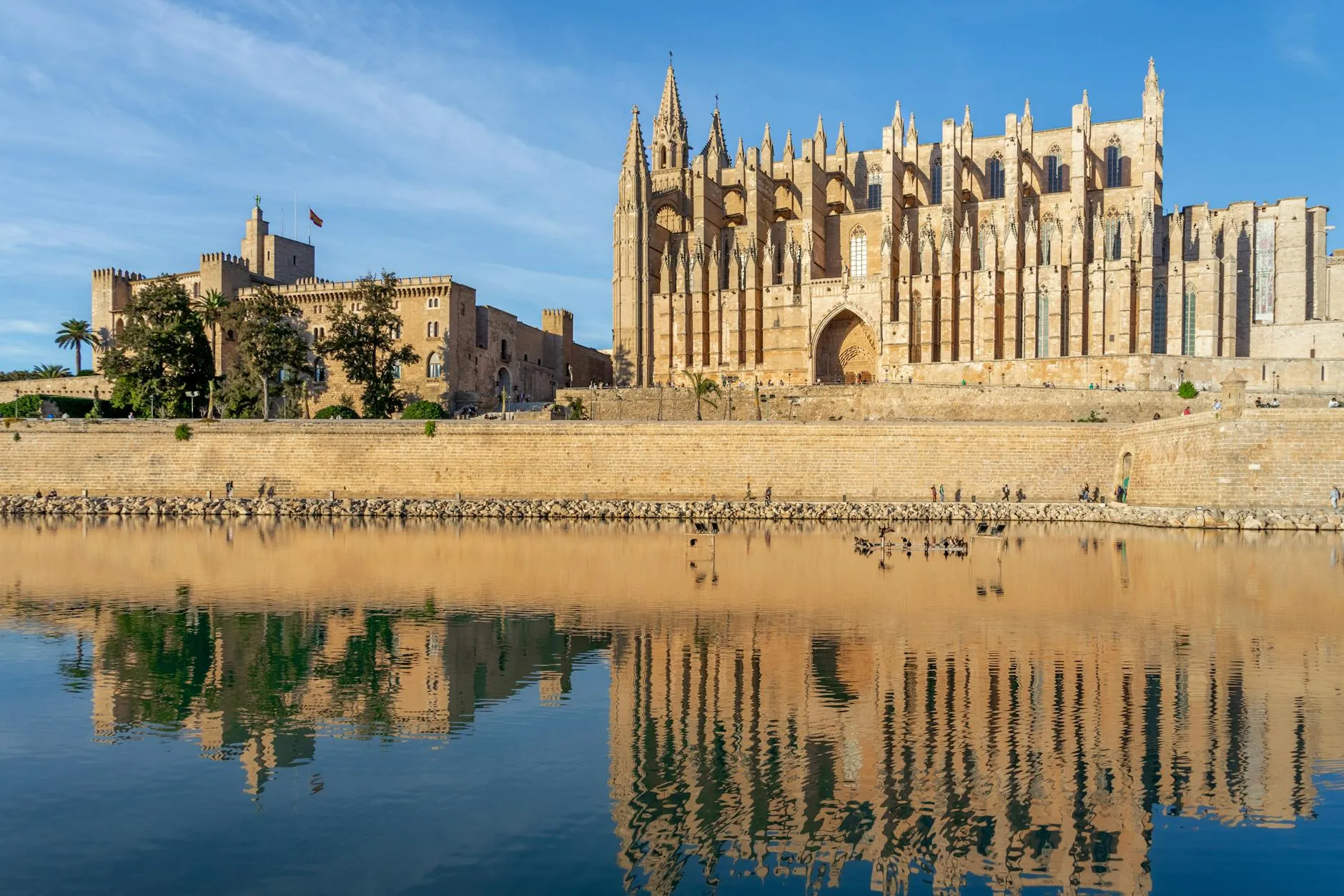
Mallorca — The Complete Island Guide 2026
14 million visitors arrive here each year. Most follow the motorway to a resort and leave. This guide is for the other version of the island: the Tramuntana mountains, Palma’s old city, the Binissalem wine country, and the Mallorquí identity that predates the charter-flight era by eight centuries.
€60–200/day budget
Mediterranean: 8–31 °C
🇪🇸 Schengen / EUR €
No visa (EU/UK/US 90 days)
ETIAS not yet live
Why Mallorca? An Editor’s Note
In the summer of 2024, a protest march wound through the streets of Palma. The signs read, in Catalan: Mallorca no és en venda — Mallorca is not for sale. Tens of thousands turned out; organisers claimed 50,000, police counted 12,000. It was not the tourist industry these people were marching against, exactly. It was a specific outcome of that industry: by 2024, approximately 1,000 permanent residents of the island were living in their vehicles because they could no longer afford rent. The Balearic Islands had become the most expensive housing market in Spain, driven by short-term rental speculation, and the people who had grown up here — who spoke Mallorquí, not Spanish; who farmed the terraced valleys and ran the rural fincas — were being pushed to the margins of an island their families had occupied for centuries.
This matters to a visitor guide for one reason: the traveller who understands what that protest was about will have a fundamentally different holiday than the one who doesn’t.
Mallorca is, at this moment, three simultaneous arguments about the same island. The first argument is between the island and the fourteen million visitors who arrive here each year — most of whom land at PMI, follow the motorway to a resort hotel, and leave without having seen anything recognisably Mallorcan at all. The second argument is between the Mallorcan government and the housing crisis it helped create — a government now implementing rental licence caps, tourist taxes, new construction restrictions, and a wholesale attempt to decouple the economy from volume tourism. The third argument is the one the island has been having with itself since before any of this: the question of what Mallorquí identity actually is, in a place that has been Moorish, Catalan, Spanish, and now European-resort in quick succession, and where the language spoken in the interior villages is not the Spanish of Madrid, not the Catalan of Barcelona, but something distinct, older, and still very much alive.
Every visitor gets the first argument by default. Most never encounter the second or third.
This guide is for people who want all three.
What to skip: If you are looking for Magaluf, you will not find it here. The resort strip between the airport and the southwest coast is functional, heavily trafficked, and serves its purpose. It is not Mallorca. This guide starts where the motorway ends.
What to prioritise: April, May, and October are the months when the island makes the most sense — the Serra de Tramuntana is green, the coves are swimmable but not impossible, and the restaurants in Palma are staffed by people who can still afford to live within commuting distance. The island in July is magnificent in weather terms and brutal in volume terms. Come in shoulder season and you will see a different place.
Table of Contents
- Top Attractions
- Palma Neighbourhoods
- Where to Stay
- Where to Eat
- Wine and Drinking Culture
- Getting Around
- Best Time to Visit
- Month-by-Month Weather
- Daily Budget Breakdown
- Sample Itineraries
- Best Day Under €40
- Rainy Day Plan
- Day Trips
- Safety and Practical Information
- Visa and Entry Requirements
- Hidden Mallorca
- What’s New in 2026
- Frequently Asked Questions
- Explore More Aifly Guides
Top Attractions
1. La Seu — Cathedral of Palma
La Seu is one of the most technically audacious Gothic cathedrals in the world. It was begun in 1229 by Jaume I after the Reconquest of the island from the Moors, built on the site of a former mosque on a rocky promontory above the sea — a deliberate statement of Christian dominance visible from ships approaching the harbour. The exterior is severe limestone; the interior is a controlled revelation of space and light that stops most visitors cold within the first thirty seconds.
The reason: the windows. La Seu has the largest Gothic rose window in existence — 12.55 metres across, containing 1,236 pieces of stained glass — and a second, smaller rose window on the opposite wall. On certain mornings in winter and spring, the light from both windows converges on the floor and the central baldachin in what architects call a double rose effect: two overlapping pools of coloured light, one from the east and one from the west. Gaudi, who worked on the interior between 1904 and 1914, understood this light and organised his restoration around it. His contribution — the wrought-iron baldachin suspended above the high altar, resembling a crown of thorns — is one of the stranger objects in Catalan architectural history.
The floor is lined with the tombs of Mallorcan nobility. The Treasury contains the reliquary of the True Cross (an historical claim that pre-dates the Reconquest, which makes it unlikely). The sacristy has Dalí ceramics donated in the 1980s that are rarely mentioned in the promotional material and are worth finding.
Ticket: €10 adult; €8 senior 65+/student; free under 9; €25 with terrace access and Museum of Sacred Art. Book online at catedraldemallorca.org.
Hours: Mon–Sat 10:00–17:15 (Apr–May), 10:00–18:15 (Jun–Sep), 10:00–15:15 (Nov–Mar). Closed Sundays and religious holidays to visitors.
Getting there: Walk from any point in central Palma (10–15 minutes on foot from most hotels). Bus lines 3, 46 stop near Parc de la Mar.
Editor’s tip: Arrive at 10:00 opening on a weekday. The tour groups begin arriving from 11:00; the morning light in the nave before they do is the best reason to be in Palma.
2. Serra de Tramuntana
The mountain range that runs along Mallorca’s northwest coast for 90km is a UNESCO World Heritage Site — one of the rare landscape designations, awarded not just for the scenery (limestone peaks rising to 1,445m, terraced valleys, ancient olive groves) but for the cultural landscape: the network of possessions (fortified farmhouses), stone-walled terraces built by Moorish labourers in the 9th and 10th centuries, and the water distribution system (sèquies) that still irrigates the valley floors.
The Tramuntana is what most visitors see in photographs and what most visitors never actually enter. From the main resort areas on the southern and eastern coasts, it looks like a scenic backdrop. It is, in fact, a hiking destination with one of the best long-distance trail networks in the western Mediterranean.
The GR 221 (Ruta de Pedra en Sec) — the Dry Stone Route — runs 135km from Port d’Andratx in the southwest to Pollença in the northeast, following the mountain spine through villages that have changed very little since the 18th century. The full route takes 8–10 days; individual day sections can be joined from Palma by bus.
The Archduke’s Trail (Camí de l’Arxiduc), designed by Austrian Archduke Ludwig Salvator in the 19th century, runs a 14km circuit from Valldemossa at roughly 900m elevation, with views that extend on clear days to the Catalan mainland.
Puig de Massanella (1,365m) is the highest accessible peak — the actual summit of Puig Major is a military restricted zone. The Massanella ascent takes 5–6 hours round trip from Cúber reservoir and requires appropriate footwear and navigation; do not attempt in summer heat.
Getting there: TIB buses L211 and L220 from Palma to various Tramuntana villages. Car rental gives more flexibility for trailhead access.
Editor’s tip: The short walk from Biniaraix village up the Barranc de Biniaraix canyon (2km, easy, signposted from the village square) is the single best 90-minute experience in the Tramuntana that costs nothing and requires no hiking equipment.
3. Valldemossa
Valldemossa sits at 400m on the western slope of the Tramuntana, 17km from Palma, in a valley so green it looks artificially maintained. In winter it rains. In summer it is cool at night. Chopin and George Sand spent the winter of 1838–39 here in Cell No. 4 of the Carthusian monastery, and neither found it romantic. Sand wrote a furious account of the experience — Un Hiver à Majorque (A Winter in Majorca) — that accused the Mallorcans of bigotry, backwardness, and price-gouging, and enraged local society for generations. The islanders returned the compliment in a mural in the pharmacy showing the pair as demons.
The monastery is now a museum containing the cell (including Chopin’s Pleyel piano, transported in pieces over the mountains and arriving damaged), a collection of manuscripts, and the pharmacy — still stocked with 18th-century apothecary equipment in its original arrangement. A separate ticket covers the Chopin Museum, which is independent of the monastery and contains more personal material from his time on the island.
None of this is why you actually come to Valldemossa. You come for the village: a medieval street grid of pale limestone and carved doorframes, bougainvillea in spring, a church whose bells you can hear from the road below, and cocarroi (savoury pastries) from the bakery on Carrer Blanquerna that are made fresh each morning and sell out before noon. The village itself is free. The monastery and museum are not.
Monastery ticket: From €12.50 online (10% discount vs door price). Book at cartoixadevalldemossa.com.
Chopin Museum: €6, purchased on-site, separate from monastery.
Hours: Mon–Sat 09:30–18:00 (summer); shorter hours in winter. Check website before visiting.
Getting there: TIB bus L211 from Plaça Espanya, Palma — approx. 40 minutes, every 1–2 hours. Or combine with the Sóller route for a full-day circuit.
Editor’s tip: Come on a Tuesday or Thursday morning when tourist numbers drop. If you go in summer, the afternoon light on the stone turns golden by 17:00 — the village is quieter and more photogenic after the day-trip groups have left.
4. Cap de Formentor
The peninsula at Mallorca’s northernmost tip is 20km of limestone ridgeline with cliffs that drop 400m into the sea on both sides. The lighthouse at the end — Faro de Formentor, built in 1863 — sits at the exact point where the island runs out of land. From the terrace on a clear day, the island of Menorca is visible to the northeast, 50km across open water.
The road from Port de Pollença to the lighthouse was cut into sheer cliff faces in 1928 by political prisoners under the Primo de Rivera dictatorship — a fact that is not mentioned in any of the tourist literature. The road itself is the attraction as much as the destination: hairpin bends over blue-black sea, pine trees growing at horizontal angles from wind-carved rock, and the silhouette of the lighthouse appearing and disappearing around corners.
2026 access restrictions: Private vehicles are prohibited on the Ma-2210 road daily from 10:00 to 22:00, May 15 to October 15, 2026. This applies to all private cars, rental vehicles, and motorcycles. Take TIB Route 334 shuttle bus from Alcudia or Port de Pollença; journey time approximately 1 hour; multiple daily departures during the restriction period. The Formentor Beach car park (300 spaces) has separate access and is controlled by real-time barriers.
Off-season: Outside the restriction period (October 16 to May 14), private vehicles are permitted on the full road.
Editor’s tip: The Mirador de Mal Pas, 3km from Port de Pollença, is accessible by car year-round and has views comparable to the lighthouse approach. Worth stopping if the shuttle bus timings don’t work. The lighthouse for sunset via the last bus of the evening is the definitive experience.
5. Old Town Palma
Palma’s old city contains more pre-modern architecture per square metre than almost any other coastal Mediterranean capital — a consequence of its 500 years as a prosperous trading hub and its relative late entry into mass tourism, which left the medieval street plan largely intact.
The Arab Baths (Banys Àrabs) on Carrer Serra are the most complete Moorish hammam surviving in the Balearics, from the 10th-century Taifa period. Ten columns support the domed chamber; the capitals are re-used Roman stonework, which dates the building’s component parts across two different civilisations. Small, unhurried, genuinely old.
La Llotja (the Merchants’ Exchange), built 1426–1452, is a late Gothic hall whose stone columns spiral upward like twisted ropes. It is now used for temporary exhibitions and is not always open; check the Palma tourist board website before making a detour.
Palau de l’Almudaina, the royal palace adjacent to the cathedral, was a Moorish alcázar before the Reconquest and is now partly open to the public when the Spanish royal family is not in residence. The Tinell hall has original 14th-century wall paintings. The palace courtyard garden is the best free thing in central Palma.
Carrer dels Apuntadors and Carrer de la Mar in the La Llonja neighbourhood have the highest concentration of mid-range and wine bars that serve actual Mallorcans rather than cruise passengers.
Arab Baths ticket: €3.50. Hours: daily 09:30–19:00 (summer), 09:30–18:00 (winter).
Almudaina Palace: €7 general; €4 concession; free for EU citizens on certain days. Check visitbalear.com.
Editor’s tip: The courtyard of the Fundació La Caixa on Gran Via Asima (former Modernista slaughterhouse, now an arts centre) is free to enter and has the most convincing Art Nouveau ironwork on the island — almost never mentioned in tourist guides.
6. Deià
Deià is a village of 800 residents on the mountain road between Valldemossa and Sóller, built on a hillock between olive groves and a cliff coast. National Geographic named it the most beautiful village in Spain to visit in April 2026. The reason is structural: the village is built in concentric rings around a church on a raised platform, with the valley terraces below and the sea visible from the upper lanes. The proportions are correct in a way that is difficult to explain and immediately obvious.
Robert Graves arrived here in 1929 with American poet Laura Riding and built the house Ca n’Alluny in the olive groves below the village. He lived there — with interruptions for the Spanish Civil War and World War II — until his death in 1985. His grave is in the churchyard of Sant Joan Baptista: a simple stone, just name and dates, in a corner plot against the outer wall. The village has never installed a sign directing visitors to it.
Ca n’Alluny is open as a museum. The house is left in the state of a working writer’s home: the library, the study, the garden where Graves grew his own vegetables and entertained an extraordinary succession of mid-century literary visitors, from Alastair Reid to Ava Gardner. The furniture is original. The typewriter is on the desk.
Ca n’Alluny Museum: €7.50 adult; €5.50 concession; children under 7 free. Hours vary seasonally — check lacasaderobertgraves.org before visiting. The museum closes for maintenance periods; there was a partial closure on April 17, 2026.
Getting there: TIB bus L210 from Palma Intermodal, stops in Deià village. Or take the Sóller train to Sóller and a bus from there.
Editor’s tip: The road from Deià to the Cala de Deià (the village cove) winds down through the olive groves for 1.5km and ends at a rocky inlet with a fish restaurant and extremely cold, extremely clear water. No beach, no sunbeds, no organised anything. Exactly what it was 40 years ago.
7. Caves of Drach (Coves del Drac)
The four connected caves at Porto Cristo contain one of the largest underground lakes in Europe: Lake Martel, 177 metres long, 40 metres wide, and 10 metres deep. The caves extend for 1.2km through limestone formations that took 50 million years to produce — stalactites and stalagmites in shapes that range from the abstract to the anatomically improbable. They were fully explored and named in 1896 by a French geologist named Eduard Alfred Martel, and the electric lighting was installed in the 1930s by the engineer Carlos Buigas, who also designed the fountains at the Barcelona International Exposition. The lighting choices — warm amber in the calcite formations, cool blue over the lake — are theatrical in a way that stops visitors before they reach the water.
The visit ends with a classical music concert performed from small boats on the lake, which are then used to ferry visitors across. This sounds like a tourist gimmick. It is, technically, but it is one that has been operating since the 1930s and the acoustics justify it — the cave amplifies and softens the sound in a way that concert halls cannot replicate. The pieces played are typically Schubert and Bach.
The caves are on the east coast, 65km from Palma. They are worth the journey specifically in shoulder season; in July–August the queue for entry can be 2 hours. Book online.
Ticket: €18.50 online (advance); higher at the door. Book at cuevasdrach.com.
Hours: Tours run daily approximately every hour. Check website for current schedule.
Getting there: TIB bus 431 from Manacor. Or combine with a car rental for the east coast.
Editor’s tip: The tour groups tend to bunch at the 10:00 and 12:00 entries. The 16:00 or 17:00 entry has shorter queues and better light at the exit — you emerge at dusk.
8. Es Trenc Beach
Es Trenc is a 3km stretch of protected shoreline in the municipality of Ses Salines, on Mallorca’s southern coast. It is a white-sand beach on a flat agricultural plain — unusual on an island of largely cliffy coasts — and its protection as a natural area has kept it free of the infrastructure (beach clubs, pedal boats, sun lounger concessions) that has colonised every comparable stretch of sand on the island. There are two beach bars. There is parking, at a distance. The water is clear to a depth of 8 metres and turns a sequence of blues moving from the shore: chalky turquoise to deep teal to the open navy of the Maltese channel beyond.
Go early (before 09:00), late (after 18:00), or in October. In July at noon it is not unpleasant — Es Trenc is large enough to absorb visitor numbers that would overwhelm a cove — but it is not quiet. The beach in April, with the wind off the sea and no crowds, is something different.
Access: Free. Parking is a 5–15 minute walk from the beach — no formal car park at the sand itself. Parking charges apply at the nearest lots.
Getting there: TIB bus 501 from Palma, or bus from Campos. Summer services run more frequently. Check tib.org.
Editor’s tip: The saltpans of Ses Salines are 2km to the east of Es Trenc and are a flamingo habitat — pink flamingos are visible from the road in spring and autumn. Worth combining with the beach day.
9. Bellver Castle
Bellver is the only perfectly circular medieval castle in Spain, built on a pine-forested hill 3km west of Palma’s old town between 1300 and 1311. Its circularity is architectural, not symbolic — the round plan allowed defenders to see in all directions — but the effect from the air (or from the upstairs terrace) is of a mathematical object somehow deposited in a landscape that has no other straight lines.
The castle was used as a prison from the 16th century through the early 20th. Its most notable prisoner was the philosopher Gaspar Melchor de Jovellanos, Spanish Enlightenment thinker and reformer, who was held here from 1802 to 1808 by royal order and spent his imprisonment writing, cataloguing the castle’s history, and corresponding with colleagues across Europe. His cell is preserved and still contains books.
The interior houses the Palma City History Museum, which is workmanlike but worth 45 minutes for the Roman stone collection. The real reason to come is the view from the circular terrace: the bay of Palma, the cathedral below, the cruise ships in the port, and on very clear days the silhouette of the Tramuntana mountains running north.
Ticket: €4 adult; free on Sundays.
Hours: Tue–Sat 10:00–18:00 (winter), 10:00–20:00 (summer); Sun 10:00–14:00.
Getting there: Bus line 50 from Plaça Espanya, or 30-minute walk uphill through Palau Reial park. Taxis are quicker from the old town.
Editor’s tip: Sundays are free and the views are identical to weekdays. Come early on a clear Sunday morning before the families arrive.
10. Son Coletes, Manacor
This entry is not on any standard tourist itinerary. It is included because the island has a piece of history that receives no signage at the airport, no mention in the resort hotel welcome cards, and almost no discussion in mainstream travel coverage — and it happened here, in a town that most visitors bypass on the way to the Caves of Drach.
In July 1936, Nationalist forces allied with Mussolini’s Italy seized Mallorca in the opening weeks of the Spanish Civil War. The Italian “volunteers” — in practice, members of the fascist Corpo Truppe Volontarie, whose presence on Spanish soil was an act of foreign aggression dressed as ideological solidarity — coordinated the occupation with local Nationalist sympathisers. The repression of Republican supporters that followed was systematic and swift. The mayor of Palma, Emili Darder, was arrested and executed. In the weeks and months after the Nationalist takeover, hundreds of Mallorcans — trade unionists, teachers, journalists, local officials — were taken to isolated locations and shot.
Son Coletes cemetery in Manacor is one of the primary execution and burial sites. Forensic archaeology teams began excavating the mass graves here in 2008. As of 2026, work is ongoing: bones are still being exhumed, DNA databases are being built, families of victims are still coming forward to register samples. The Spanish Democratic Memory Law of 2022 formalised and funded this work nationally; in Mallorca, the Balearic government has organised educational visits for high school students and live-streamed excavations for families.
There is a small memorial at Son Coletes. It receives few foreign visitors. There is no entry fee. The town of Manacor is 50km from Palma; the cemetery is a short taxi ride from the bus station.
You do not have to go. But Mallorca in 2026 is an island conducting two simultaneous reckonings with its past: the slow, painful archaeology of its Civil War dead, and the faster, louder argument about what mass tourism has done to the living. Understanding both makes the rest of the island more legible.
11. Alcúdia Walled City and Roman Ruins
Alcúdia is the best-preserved medieval walled city in Mallorca — better than Palma, more intact than Artà. The walls were built over a Roman-era predecessor and then reinforced in the 14th century; two of the original six gates remain. Inside the walls: a street plan that has not changed since the Reconquest, a church built on the ruins of a mosque built on a Roman temple, and a Sunday market that has been operating since the 13th century.
Pollentia, the Roman city of which Alcúdia is the direct descendant, was founded in the 1st century BCE and was one of the two main Roman settlements on the island (the other was Palma, on the site of the modern capital). The ruins on the outskirts of the modern town include a forum, a residential quarter, and a theatre — the only Roman theatre excavated in the Balearic Islands. The site is small but the archaeology is specific, and the Museu Monogràfic de Pollentia in the town contains the finds.
Walled city: Free to enter and walk.
Roman Pollentia site: €4 adult; combined ticket with museum €6.
Getting there: TIB bus 350 from Palma Intermodal, approximately 1.5 hours. Or combine with a trip to Formentor.
Editor’s tip: The Sunday morning market in Alcúdia is genuine — used by local farmers and residents as well as tourists. The Tuesday market in the adjacent town of Port d’Alcúdia is more tourist-oriented. Get the day right.
12. Sóller Valley and Heritage Railway
The Sóller valley is where Mallorca grows its oranges. The valley is enclosed on three sides by the Tramuntana and opens to the sea at the northwest coast; the microclimate is warmer and wetter than the rest of the island, and the result is a landscape of orange and lemon trees, terraced fields, and stone-built possessions that has been preserved largely because the Sóller tunnel (opened 1997) allowed the coastal resort traffic to bypass it entirely.
The Sóller Railway runs from Palma’s Plaça Espanya to Sóller via a mountain pass, in carriages that date from 1929. The journey takes 60 minutes and passes through 13 tunnels and over three viaducts. The train has become a tourist attraction in its own right, which means the pricing reflects this: €23 single, €30 return, compared to €4–5 for the TIB bus on the same route. The view through the mountains is identical from both vehicles; the vintage carriages are the difference.
From Sóller, an electric tram (€10 single) runs to the Port de Sóller, a quiet fishing harbour that has retained a low-rise character against all odds. The port beach is narrow but pleasant; the fish restaurants on the seafront are better than the equivalent in Palma’s tourist strip.
Railway ticket: €23 single / €30 return from Plaça Espanya, Palma. Book at trendesoller.com.
Tram: €10 single, Sóller to Port de Sóller.
TIB bus alternative: L211 from Palma, approximately 1.5 hours, €4–5, runs several times daily.
Editor’s tip: If the railway fare is too high, take the bus to Sóller, walk the old town, take the tram to Port de Sóller, have lunch, and take the bus back. It is the same day for a fraction of the cost.
Palma Neighbourhoods
Casc Antic (Old Town)
The old city runs north from the cathedral and La Llotja through a tangle of medieval streets to the Plaça Cort and Plaça Major. It contains the highest concentration of boutiques, galleries, and restaurants that serve Palmesans rather than cruise passengers. Carrer dels Apuntadors is the spine of the evening eating culture. The neighbourhood is walkable in its entirety; every address is within 15 minutes of every other.
Santa Catalina
The neighbourhood west of the old town, once working-class and artisan, now the island’s restaurant and food market hub. The Mercat de Santa Catalina (Plaça del Patí, daily except Sunday) is the market of choice for the restaurant trade: fish, vegetables, charcuterie, and the llonguet (small crusty roll) that is the foundation of pa amb oli. The surrounding streets have the best-value lunch menus in Palma — €12–15 for three courses including wine — and a wine-bar scene that runs late.
La Llonja
The neighbourhood between the cathedral and the port, named for the Gothic merchants’ exchange that occupies its waterfront. In the evening it becomes the main bar strip for 25–35-year-old Palmesans. Less tourist-saturated than the adjacent Passeig des Born axis. The narrow streets south of the Almudaina contain some of the best food-and-drink per square metre in the city.
El Born / Passeig des Born
The tree-lined central boulevard connecting the old city to the modern port is Palma’s equivalent of Barcelona’s Rambla, but without the pickpockets or the living statues. The high-end fashion, jewellery, and design stores cluster here. The cafés are expensive. Worth walking through; not worth eating in.
Portixol
A five-minute ride east of the city centre, Portixol is a former fishermen’s quarter now occupied by the island’s urban professional class — architects, gallerists, film production people who want to live within cycling distance of the cathedral but not in the old town itself. The harbour still has active fishing boats. The restaurants serve fresh fish. The neighbourhood walk from the Molinar to the start of the cycling path east is the most pleasant 40-minute walk in Palma.
Where to Stay
Budget (€40–90/night)
Hostal Ritzi (Carrer dels Apuntadors, Palma): Smallish rooms in the La Llonja neighbourhood, clean, central, independently run. The rooftop terrace has unobstructed cathedral views; book a room on the upper floor for this alone.
Hotel Horizonte (Santa Catalina, Palma): Above the market neighbourhood, reliable mid-budget option, within walking distance of both the old town and the best restaurant cluster.
Can Simó (interior, near Sineu): Rural guesthouse in the flat agricultural centre of the island, away from the coast entirely. The kind of place that reminds you that 40% of Mallorca has nothing to do with beaches.
Mid-range (€100–200/night)
Hotel Sant Francesc (Plaça de Sant Francesc, Palma): 19th-century manor house conversion in the old city, 42 rooms, rooftop pool, restaurant with a serious Mallorcan wine list. The architecture is the product.
La Residencia, Deià (now Belmond property): The benchmark for the Tramuntana experience — pool, olive groves, views — at prices that require advance planning. High-season rates move beyond this tier; shoulder season is achievable at the top of mid-range.
Ca’n Reus (Sóller valley): Former working possessió converted to boutique accommodation. Orange trees in the garden. Breakfast includes things made on the property.
Luxury (€250/night and above)
Fontenille Mallorca (Campos, south coast): Recent opening, 30 rooms in a restored 17th-century estate, outdoor dining, pool, direct access to the south coast coves. The service standard is the best on the island.
Cap Rocat (near Cala Blava, south coast): Converted coastal fortress with rooms built into the original gun emplacements. Suites have private terraces over the sea. No beach — deliberately.
Son Brull (Pollença road, north): Agricultural estate hotel, Michelin-recommended restaurant, 23 rooms. Quiet in a way that resort hotels cannot manufacture.
Where NOT to stay: The corridor from Palma airport south and west through S’Arenal, Playa de Palma, and Magaluf serves a specific market — all-inclusive family packages at volume pricing — and delivers exactly what it promises. If that is not what you are looking for, do not book a hotel within 5km of the Magaluf coastline. The price will seem competitive; the surroundings are the tradeoff.
Accommodation tax: The Balearic ecotax applies to all overnight accommodation. Rate: €0.50–€4 per person per night depending on property category and season, capped at a maximum contribution per visit.
Where to Eat
The Mallorcan Foundations
Mallorcan food is not Spanish food in the sense that Madrid or Seville food is Spanish food. It is a Mediterranean island cuisine with specific indigenous dishes that predate tourism by several centuries and have survived it more or less intact.
Pa amb oli — bread rubbed with tomato and olive oil — is the starting point for every meal and the measuring stick for every restaurant. The bread should be llonguet or pa de pagès; the olive oil should be local (Mallorca has its own DO designation); the tomato should leave a visible orange stain on the bread. It is served with sobrassada (soft, spreadable paprika-cured pork sausage) and/or formatge mallorquí (the local semi-hard cheese). A plate of this and a beer in a Santa Catalina bar at 13:00 is an entire lunch.
Tumbet is the Mallorcan equivalent of ratatouille: layers of fried potato, aubergine, red pepper, and courgette in tomato sauce. It is heavier than it sounds. It is not a side dish.
Arròs brut — literally, dirty rice — is Mallorca’s rice dish, and it is nothing like paella. Dark brown, thick with rabbit, pork ribs, mushrooms, and occasionally black pudding, seasoned with saffron, it is a cold-weather mountain dish from the interior villages that has no equivalent elsewhere. Never order paella in a tourist-facing Palma restaurant when you could order arròs brut instead.
Ensaïmada is the pastry that Mallorcans carry home from every visit to the island in a hexagonal hatbox: a coiled brioche dusted with powdered sugar, light and eggy, at its best 20 minutes after it comes out of the oven. Order it with a tallat (espresso with a splash of milk) at the counter of a bakery that made it that morning, not from the cellophane-wrapped version at the airport.
Porcella (roast suckling pig) is the Sunday lunch dish of the interior. The best versions come from the town of Sineu or the road between Inca and Lluc. Call ahead.
Budget Eating
Mercat de l’Olivar (Palma, Plaça Olivar): The city’s main covered market. The fish and meat halls are working market infrastructure; the upper level has lunch counters where you can eat fideuà (noodle paella), fried fish, or the daily catch. €8–14 for a full meal with wine.
Ca l’Arrosseria (Santa Catalina, Palma): This is where to eat arròs brut. The restaurant serves a fixed daily menu centred on the rice dishes; arrive before 13:30 or join the wait. Lunch menus €14–17.
Mercat de Santa Catalina (Santa Catalina, Palma): Smaller than the Olivar, more neighbourhood-oriented. Best stop for pa amb oli components to eat at the standing counters.
Llonguet bars throughout Santa Catalina and the old town: a sandwich of sobrassada and cheese in a crusty roll costs €3–4 and is the functional morning or midday meal of working Palmesans.
Mid-range and Fine Dining
Marc Fosh (Hotel Convent de la Missió, Palma): 1 Michelin star, contemporary Mediterranean. Marc Fosh has been cooking in Palma long enough that his menu now incorporates the island’s seasonal produce in a way that feels specific rather than generic.
DINS Santi Taura (Palma): 1 Michelin star, explicitly Mallorcan — the menu is built around historic island recipes interpreted through modern technique. The arròs brut here may be the best version in the city. Tasting menu approx. €90.
Nuevo Zaranda (Es Princep Hotel, Palma): 1 Michelin star, chef Fernando Arellano. The view from the Es Princep terrace over the bay accompanies a menu that works in the coastal luxury register more successfully than most.
Béns d’Avall (Sóller coast): 1 Michelin star + green star. On a terrace cut into the cliff between Deià and Sóller, with the sea directly below. The food is Mallorcan in ingredients and Mediterranean in style. The drive to reach it is part of the experience.
Voro (Canyamel, east coast): Mallorca’s only 2-star Michelin restaurant. Chef Álvaro Salazar. Tasting menu in the €150–200 range. Book weeks in advance.
The Tourist Trap to Avoid
The restaurants along the waterfront of the Passeig Marítim and in the streets immediately adjacent to the cathedral (Carrer de la Mar, the west side of Parc de la Mar) are, without exception, calibrated for one-time visitors from cruise ships and coach tours. The paella is frozen and microwaved. The menu del día looks cheap and delivers less. Walk three streets inland from the waterfront to La Llonja or five minutes west to Santa Catalina and the quality-to-price ratio changes entirely.
Wine and Drinking Culture
Mallorca has two Denominació d’Origen wine regions: Binissalem DO, in the flat agricultural interior (Manto Negro grape, firm reds, almond-dry whites), and Pla i Llevant DO, covering the eastern half of the island. A third broader designation, Vi de la Terra Mallorca, covers premium producers working outside the DO system.
Binissalem is the accessible entry point for island wine. The town sits on the railway line between Palma and Inca (€1.85 by train) and its 11 wineries include:
- Bodegas Macià Batle (Santa Maria del Camí): The most visitor-ready, with a full-service wine tourism programme, tastings from €15, vineyard tours, and a shop stocked with back vintages.
- Bodega Ribas (Consell): The oldest winery on the island, founded 1711, still family-owned. The Ribas de Cabrera is the prestige bottling. Visits by appointment.
- Celler Can Ribas (Consell): Biodynamic producers, organically farmed since the 1990s. One of the more considered operations in the DO.
The Vermar wine festival in Binissalem takes place in late September, coinciding with the harvest. The main street is closed and barrels are tapped in the square. It is free to attend; wine purchases are at producer prices.
Drinking in Palma: Santa Catalina has the most functional bar scene for non-tourists. The wine bars on Carrer de Sant Magí have a short, rotating list of Balearic wines by the glass. The craft beer scene centres on the neighbourhood bars around Plaça de la Reina and Carrer dels Apuntadors in the old city.
Gin (ginebra mallorquina) has a production tradition on the island dating from the British occupation of Menorca (which influenced the Balearics more broadly) and from the 18th-century trade routes. Local gin brands include Gin Xoriguer (technically from Menorca but available everywhere) and several newer artisan distillers. Ask for a gin amb llimona (gin and lemon soda) rather than a gin and tonic; it is the local way.
Hierbas mallorquinas — a bittersweet herbal liqueur made from local aromatic plants — is the digestif of the island. Every grandmother’s recipe is slightly different. Order it after a long meal in a rural restaurant and be prepared for the quantity.
Getting Around
From the Airport
Bus A1: From the airport to the city centre (Passeig d’es Born and surrounding stops). Journey time: approximately 30–35 minutes. Fare: €2 cash; cheaper with contactless card. Runs approximately every 12–15 minutes during peak hours.
Taxi: Fixed rate approximately €28 day, €37 night/Sunday/holiday, from the airport to central Palma. Taxis are metered for other destinations.
Car rental: Mallorca has one of the highest per-capita car rental rates in Europe. Prices in peak season (July–August) are high; book months in advance for competitive rates. A car is useful for the east coast, the Tramuntana day trips, and any destination not served by frequent buses.
Within Palma
EMT (Palma city buses): Single fare €2 cash; cheaper with contactless bank card (approximately 40% discount). Route map at emtpalma.cat. Most old-town sights are within walking distance; buses are mainly useful for Santa Catalina, Portixol, Bellver Castle, and the Passeig Marítim.
Island-wide Transport
TIB buses: The island-wide network. Important note on free transport: In 2026, all TIB journeys are free for residents holding the Intermodal Card or Single Card. This does not apply to tourists. Tourists pay standard TIB fares, which vary by distance and route. Cash fares range from approximately €2 to €13.50 for longer routes; contactless card payment offers a 40% discount vs cash. Get the TIB app (tib.org) for live journey planning.
Train: The FGC line runs from Palma Plaça Espanya to Inca and Manacor. The Sóller Railway (separate, heritage) runs to Sóller. Plaça Espanya is the hub for all rail and most TIB bus connections.
Sóller Railway: €23 single / €30 return. Heritage experience, not price-competitive with the bus for the journey itself.
Renting a bicycle: Palma has a rental station network and a coastal cycling path (Via Verda) extending east from the city. For urban cycling only; the Tramuntana road network is challenging and dangerous for road cyclists unfamiliar with Mallorcan drivers.
Driving: Mallorca drives on the right. The main ring road (Via Cintura) around Palma is well-signed; mountain roads are narrow and often without barriers. Note the Cap de Formentor restrictions (see above) before planning east/north coast drives in summer.
Best Time to Visit
April and May are the months when the island is at its most liveable. The almond blossoms (February) are over, the sea is too cold for swimming by most standards (16–18°C), but the hiking conditions are perfect, the restaurants are staffed by people who live nearby, and the tourist numbers are at their annual low. Palma in April is a functioning European city rather than a resort.
September and early October offer sea temperatures of 24–26°C (the warmest of the year), crowds that have receded from August peaks, and the wine harvest season in Binissalem. The Nit de l’Art in Palma (September) opens galleries and cultural spaces across the city for a single free late-night event.
June is excellent — warm, swimmable, not yet overwhelmed. The Tramuntana in June, with dry stone walls and wild fennel, is an understated season.
July and August are high summer: 29–31°C, 14 million visitors, accommodation prices at maximum, and Cap de Formentor accessible only by shuttle bus. The island functions; it just functions loudly. The coves of the east coast (Cala Mondragó, Cala Figuera, Cala Santanyí) are relatively better than the north and west at peak season because they require more effort to reach.
Winter (November–March): Mallorca has a genuine winter — 10°C nights, periodic rain, businesses closed in many resort towns. Palma is functional year-round and has a cultural season; the island outside Palma is quiet in a way that rewards certain travellers. Hotel prices are at their lowest.
Month-by-Month Weather
| Month | High/Low (°C) | Rain days | Key Events & Notes |
|---|---|---|---|
| Jan | 14/7 | 10 | Palma International Boat Show; quiet season; hotel prices lowest |
| Feb | 15/8 | 8 | ⭐ Almond blossom (especially around Santa Eugènia and Selva); Valentine’s marketing |
| Mar | 17/9 | 7 | Tourist numbers beginning to rise; hiking ideal |
| Apr ⭐ | 20/12 | 6 | Peak shoulder season — green hills, sea 17°C, few crowds; National Geo village picks |
| May ⭐ | 23/15 | 4 | Sea 19°C, swimmable for some; Mallorca Live Festival |
| Jun ⭐ | 27/19 | 2 | Ideal conditions; Sant Joan festival (23–24 Jun); crowds arriving |
| Jul | 30/22 | 1 | High season; 14 million arrivals; Cap Formentor shuttle begins 15 May |
| Aug | 31/23 | 1 | Peak heat and visitors; accommodation most expensive; Pollença Music Festival |
| Sep ⭐ | 28/21 | 2 | Best swimming month — sea 24°C; Vermar wine festival Binissalem; Nit de l’Art |
| Oct ⭐ | 24/17 | 6 | Excellent shoulder; sea still 22°C; much reduced prices after 15 Oct restrictions lift |
| Nov | 19/12 | 9 | Rain season begins; many resort businesses close for winter |
| Dec | 15/8 | 9 | Christmas markets in Palma; quiet island; some hotels at annual minimum |
Climate data: AEMET (State Meteorological Agency of Spain), Palma station, 30-year averages.
Daily Budget Breakdown
| Category | Budget | Mid-Range | Luxury |
|---|---|---|---|
| Accommodation (per person) | €40–70 | €90–150 | €200–400+ |
| Meals & Drinks | €20–30 | €45–70 | €100–200+ |
| Transport | €5–10 | €10–20 | €20–50 |
| Activities & Entrance Fees | €8–15 | €20–35 | €50–100+ |
| Daily Total | €73–125 | €165–275 | €370–750+ |
Budget tier: Hostel or budget hotel, market lunches, bus transport, major attractions every 2–3 days. Mallorca is not cheap; the budget floor is higher than equivalent mainland Spanish cities.
Mid-range tier: Boutique hotel or apartment, one restaurant dinner, mix of transport, 1–2 paid attractions daily. This is the comfortable default.
Luxury tier: Belmond or equivalent, tasting menus, private transfers, wine experiences. Mallorca at the luxury level is fully comparable to the French Riviera in pricing and generally delivers better value for food and accommodation quality.
Sample Itineraries
3-Day Essential
Day 1 — Palma in depth
- 09:00: Cathedral La Seu (arrive at opening; 90 minutes including audio guide)
- 10:45: Almudaina Palace courtyard (free; 30 minutes)
- 11:30: Arab Baths (€3.50; 20 minutes)
- 12:00: Old town walk — La Llonja, Passeig des Born
- 13:00: Lunch at a Santa Catalina market bar — pa amb oli, sobrassada, local wine; €10–15
- 15:00: Bellver Castle (bus 50 from Plaça Espanya; €4 or free Sunday)
- 17:00: Return to central Palma; walk the Passeig Marítim
- 20:00: Dinner in La Llonja — two courses and wine; €25–35
Day 2 — Tramuntana loop
- 08:30: TIB bus L211 from Plaça Espanya to Valldemossa (40 min)
- 09:30: Valldemossa — monastery (€12.50) + village walk + cocarroi from the bakery
- 12:00: Bus onward to Deià (30 min); village walk, churchyard, Cala de Deià descent
- 14:30: Lunch at the Cala de Deià fish restaurant (€20–30 for two courses and local wine)
- 17:00: Bus to Sóller; tram to Port de Sóller (€10)
- 18:30: Evening walk at Port de Sóller; dinner at a seafront restaurant
- 21:00: TIB bus back to Palma (check last bus time before committing)
Day 3 — East coast and beaches
- 09:00: Car rental pick-up (pre-booked) or TIB bus 431 to Manacor
- 10:00: (If driving) brief stop at Manacor — note location of Son Coletes for those who want to go
- 11:00: Caves of Drach, Porto Cristo (€18.50 online; 75-minute tour)
- 13:30: Drive south to Cala Mondragó natural park; swimming
- 16:00: Drive west to Es Trenc for late afternoon beach
- 19:00: Return to Palma; dinner in Santa Catalina
Days 4–5 Add-ons:
– Alcúdia walled city + Roman ruins + north coast
– Binissalem wine region (train to Inca, TIB bus to Binissalem, winery visit)
– Pollença and Cap de Formentor via shuttle (full day from Port de Pollença)
Best Day Under €40
A Palma-centred day that covers the island’s two defining experiences: Gothic architecture and the market food culture.
- 08:30 — Mercat de l’Olivar (free to enter): Fresh orange juice at the juice counter, pa amb oli with sobrassada from the charcuterie section. Eat at the standing counter. €5.
- 09:30 — La Seu Cathedral (pre-booked online): The morning light in the nave before the tour groups arrive. Audio guide included. €10.
- 11:00 — Arab Baths and old town walk: Carrer Serra for the hammam (€3.50), then La Llotja, Plaça de la Reina, Carrer dels Apuntadors. The walk is free; the baths are not but are worth it. €3.50.
- 12:30 — Bellver Castle (bus 50 from Plaça Espanya): Circular medieval fortress, city and bay views. Take the bus, not a taxi. €4 entrance + €2 bus return.
- 14:30 — Return to Santa Catalina for lunch: Market stall or lunch menu at one of the neighbourhood bars. Tumbet or arròs brut with a glass of Binissalem red. €12.
- 17:00 — Portixol waterfront walk: Free. 30-minute walk east along the cycling path.
- 19:00 — Beer in Santa Catalina at one of the neighbourhood bars. €3.
Total: €39.50 — honest Mallorcan day with two major paid attractions and four distinct experiences.
Notes: This is slightly over the fleet’s €35 threshold and I’ve left it at the honest number. Mallorca is not Cairo or Bogotá. Skipping the Arab Baths (€3.50) brings the total to €36; skipping the bus and walking to Bellver (25 minutes uphill) brings it to €37.50. The Cairo-level budget day doesn’t exist here without sacrificing the Cathedral or the fort.
Rainy Day Plan
Mallorca’s rainy season is November to March, with occasional heavy rain in October. Palma has enough indoor culture to fill two rainy days without repetition.
Comfortable version:
- Morning: Fundació Pilar i Joan Miró (Cala Major, bus 46 from Plaça Espanya): Miró’s studio-museum, preserved as he left it in 1983. The main gallery rotates works from the estate; the studio contains the artist’s actual brushes, palette knives, and half-finished canvases. €8 adult, cheaper with bus pass.
- Late morning: Museu de Mallorca (Carrer Portella, old town): The island’s main archaeological museum, covering prehistory through the Arab period and the Reconquest. The Talaiotic section (prehistoric) is the best introduction to the megalithic culture of the Balearics. €2.40 adult.
- Lunch: Santa Catalina, indoor market counter or a sit-down restaurant. Stay dry.
- Afternoon: Es Baluard Museu d’Art Modern i Contemporani (Plaça Porta de Santa Catalina): Contemporary art museum in a bastion of the city walls, with a permanent collection of 20th-century Balearic and Spanish work. €7 adult; free Friday 17:00–20:00.
- Evening: Wine bar in the old city — the list at wine bars around Carrer dels Apuntadors tends to run to 30–50 Balearic and Spanish labels.
Total cost: approximately €17 for entrance fees + transport.
Budget version (mainly free):
Walk the entire city wall route (free), visit the Almudaina Palace courtyard (free), sit in the covered market halls watching the trade, and take shelter in any of the café-bars in Santa Catalina that have inside tables. A day that costs under €10 plus food.
Day Trips
1. Valldemossa to Deià to Sóller (Essential — full day)
The northwest coast circuit covers three of the most distinctive places on the island in a single day by bus or car. From Palma, TIB bus L211 runs to Valldemossa (45 min), onward to Deià (30 min further), and to Sóller (30 min further again). The road between Deià and Sóller runs through the Tramuntana at 400m elevation, with the sea visible on both sides of the peninsula on clear days.
Start in Valldemossa for the monastery (morning, before the day-trip coaches arrive). Walk the village, buy cocarrois from the bakery. Take the bus to Deià — 30 minutes of mountain road with views that justify the fare. Walk the village, visit Ca n’Alluny museum (if open), descend to Cala de Deià for lunch. Take the afternoon bus to Sóller, walk the old town, take the tram to Port de Sóller. Last bus back to Palma typically runs at 20:00–21:00; check current timetables at tib.org before you go.
Budget: Bus passes + monastery €12.50 + museum €7.50 + lunch €20 = approximately €45 total.
2. Alcúdia and Cap de Formentor (North)
Take TIB bus 350 from Palma to Alcúdia (90 min, €6–8). Walk the walled city, visit the Roman ruins, have lunch. From Port de Pollença (connected by regular bus from Alcúdia), take the TIB Route 334 shuttle to Cap de Formentor lighthouse (May–October restriction period). The peninsula road takes approximately 1 hour by bus; the views are as good from the bus as from a car. Arrive at the lighthouse in late afternoon for the best light and the least crowded terrace.
Budget: Buses + Roman site €4 + lunch €15 = approximately €30–35 total.
3. Binissalem Wine Country
Train from Palma Plaça Espanya to Binissalem (45 min, €1.85 single). The town is a 10-minute walk from the station. Bodegas Macià Batle (2km outside town, call ahead or book online) runs tastings from €15 and offers a cellar tour with vine explanation. If you’re not driving, the tasting stays modest; the train back is less stressful than it sounds.
Combine with the adjacent town of Santa Maria del Camí, known for its Sunday market (the best on the island, 07:00–13:00, primarily local produce) and the old Camí de Coanegra roadside bar culture.
Budget: Train €3.70 return + tasting €15 + lunch €15 = approximately €35.
4. East Coast Circuit — Caves, Coves, and Manacor
The east coast requires either a car or a combination of TIB buses that takes commitment. The reward: the Caves of Drach, the natural park coves of Cala Mondragó and Cala Figuera, and the working town of Felanitx (market on Sunday, nothing tourist-oriented, good lunch at local restaurants for €10–12 menu del día).
Manacor is worth a stop not for tourism but for reality: it is Mallorca’s second city and a completely un-touristy market town that happens to have Son Coletes cemetery on its outskirts and a very good furniture-making tradition that produced Rafael Nadal (who is from here and whose tennis academy operates nearby). The Caves of Drach are 15km east of Manacor.
Budget (car rental): Rental + fuel + Caves €18.50 + lunch €15 = €60–80 total.
5. Sineu Market and the Interior
Sineu is the geographic centre of Mallorca, a town of 4,000 people in the flat agricultural heartland that the coast has completely bypassed. Its Wednesday market (from 09:00) is the oldest on the island and still primarily a livestock and agricultural market: chickens, rabbits, fresh produce, and local crafts. The town’s church contains a 15th-century altarpiece; the restaurant just off the main square serves the best porcella (roast suckling pig) I have eaten on the island.
TIB train from Palma to Sineu via Inca (approx 1 hour) makes this an easy half-day. The Wednesday timing is essential.
Safety and Practical Information
Safety: Mallorca has very low levels of violent crime. The principal risk for tourists is petty theft (pickpocketing) in the areas immediately around the Passeig des Born, the Plaça Major, and in the resort zones at night. Normal urban precautions apply. The S’Arenal and Magaluf areas have a late-night economy that generates alcohol-related incidents; if you are not staying there, you are unlikely to encounter it.
Mountain hiking in the Tramuntana requires appropriate preparation: water (2 litres minimum for half-day hikes), footwear with ankle support, sun protection, and a downloaded map. The GR221 and all major waymarked routes are well-signed; unmarked routes are not. Mobile coverage is patchy in mountain areas.
Sea swimming: Mallorca’s coves are generally safe for swimming. Riptides are rare in enclosed coves; open beaches (Es Trenc) have occasional strong currents. The blue flag system operates on major beaches; the flag colour indicates safety conditions on the day.
Currency: Euro (€). Cards accepted at almost all establishments including markets. ATMs are plentiful in Palma and in major towns. Rural fincas and small mountain restaurants may be cash-only — carry €20–30 when leaving the city for a day trip.
Language: Catalan (specifically Mallorquí) and Spanish are both official languages of the Balearic Islands. Mallorquí is the first language for many islanders and is what you will hear in the market, in rural restaurants, and between families in the street. Menus are frequently in Catalan first. English is widely spoken in Palma, in the resort areas, and wherever tourism is the primary economy. In interior towns, Spanish is safer than English; Mallorquí expressions of basic courtesy (gràcies, bon dia) are noticed and appreciated.
Tipping: Not structurally expected but welcome. 5–10% in mid-range restaurants if service was attentive; round up in bars and cafés. No obligation in market stalls or takeaway contexts.
Tourist Information: The main tourist office is at Plaça de la Reina 2, Palma. mallorcainfo.com and infomallorca.net are the official regional resources.
Emergency numbers: 112 (all emergencies). Police: 091 or 092. Non-emergency medical: 061.
Visa and Entry Requirements
EU/Schengen citizens: Free movement, no visa, no documentation beyond national ID card.
UK citizens: No visa required for stays up to 90 days. UK passports are treated as third-country nationals for entry purposes; you will go through the non-EU passport queue at PMI airport. The 90/180-day Schengen rolling limit applies.
US, Canada, Australia: No visa required for stays up to 90 days in any 180-day period across the Schengen Area.
ETIAS (European Travel Information and Authorisation System): ETIAS has no announced launch date. As of April 2026, it has not launched and is not required. When it launches, non-EU nationals currently travelling visa-free will need an ETIAS authorisation (fee: approximately €20), valid for multiple trips over 3 years. Following launch, there will be a grace/transitional period of at least 6–12 months before it becomes mandatory for boarding. For trips planned before late 2027, ETIAS is unlikely to be a practical requirement. Monitor travel-europe.europa.eu for current status.
EES (Entry/Exit System): Launched April 10, 2026. Non-EU nationals now have biometric data (fingerprints, facial image) registered at their first Schengen entry and exit. This replaces passport stamps as the mechanism for tracking the 90/180-day rule. Expect slightly longer border queues for non-EU passport holders at PMI as the new system beds in.
Note: Mallorca and the Balearic Islands are part of Spain and the Schengen Area. Days spent in Mallorca count toward your 90-day Schengen allowance.
Hidden Mallorca
Santuari de Lluc: The monastery-pilgrimage complex in the mountains above Pollença is one of the most important religious sites in Mallorca — the patron saint’s statue (La Moreneta, the Black Madonna) has been here since the 13th century — and one of the least-visited by foreign tourists. The complex includes a hostal, a museum, a garden trail, and a walk-in access route (the Camí dels Romans) from Pollença that was used by pilgrims for 700 years. The monks still sing Vespers in the basilica at 18:30 on weekdays.
Capdepera Castle: A walled hilltop fortress on the northeast coast, virtually untouched since the 14th century and almost never on itineraries that aren’t specifically focused on medieval architecture. The views from the walls take in Artà bay, Ibiza on clear days, and the lighthouse of Sa Mesquida.
Plaça de Toros Antigua, Palma: Palma’s old bullring (1929) was converted into a shopping and cultural centre in 2012. The bullfighting era ended; the architecture didn’t. The interior ring is now covered by a glass roof and houses design shops and a food court. The external façade in Modernista brick is the best piece of early 20th-century architecture in the city outside the Fundació La Caixa.
Artà village: 70km from Palma, 10,000 residents, no beach, negligible tourist infrastructure, and one of the best weekly markets on the island (Tuesday). The 14th-century Artà sanctuary on the hilltop above the town is accessible by a pilgrimage stairway lined with cypress trees that has been in continuous use for 700 years.
Coves d’Artà: Less famous than the Coves del Drac but with more dramatic formations at the entrance — the main cave mouth is 35m high and opens onto the sea — and shorter queues. €20 adult, less crowded than Drach in summer. 5km north of Canyamel.
What’s New in 2026
Transport and access: Cap de Formentor private vehicle restrictions are in effect May 15–October 15, 2026 — two weeks earlier than the 2025 restriction period. Plan north coast visits accordingly.
Free TIB transport (clarification): Widely reported as “free public transport” in 2026. This is free for residents with the Intermodal or Single Card. Tourists pay standard TIB fares. The distinction matters when planning a budget.
National Geographic recognition: Deià named the most beautiful village in Spain to visit in April 2026. Expect increased visitor numbers there for the spring season.
ETIAS update: launch, date not announced, confirmed; transitional period means it is unlikely to be mandatory for most travellers until 2027. No action required for travel before late 2026.
EES live: The EU Entry/Exit System launched April 10, 2026. Non-EU nationals should expect fingerprint and biometric registration at first Schengen entry point. Not specific to Mallorca but relevant for travellers arriving via PMI as their first Schengen entry.
Michelin Guide Spain 2026: No new stars awarded to Mallorcan venues this year. Voro retains its two stars. Green star added to Terrae restaurant, Puerto Pollensa (sustainability-focused fine dining).
Housing policy: The Balearic government opened a parliamentary debate in April 2026 on allowing limited new construction on rural land specifically for social housing — a reversal of the long-standing policy of protecting the rural interior from development. The decision will affect land and property prices but not the visitor experience in the short term.
🌍 See the bigger picture: our Spain travel guide covers regions, when to go, and getting around.
Frequently Asked Questions
How many days do I need in Mallorca?
Four days covers the main bases: one day in Palma, one day on the Tramuntana circuit (Valldemossa–Deià–Sóller), one day on the east coast (Caves of Drach, beaches), and one free day. Seven days allows the wine country, the north (Alcúdia, Formentor), and a proper rest day. Two weeks is the full island. One week is the functional minimum if you want to leave the Palma-airport corridor.
Is Mallorca expensive?
More expensive than mainland Spain, comparable to the French and Italian Rivieras for accommodation. Restaurants in Palma are cheaper than equivalent quality in Barcelona or Madrid; resort-area restaurants are mediocre and overpriced. The island has a real budget floor: you will not eat as cheaply here as in Lisbon or Prague. A mid-range couple will spend €250–350 per day including accommodation, food, and activities.
What is the best way to get around without a car?
Palma is fully walkable. TIB buses cover the major inland and coastal destinations on reliable schedules. The Sóller railway is the most scenic public transport option. For the east coast beaches and rural areas, a car for 2–3 days is the most practical solution. Car rental prices are high in July–August; book early.
Is public transport free for tourists?
No. The 2026 free transport scheme applies to Mallorcan residents with the Intermodal Card or Single Card. Tourists pay TIB fares — approximately €2–13.50 depending on route, cheaper with contactless card payment (40% discount vs cash).
What should I eat that isn’t paella?
Arròs brut (dark, meaty rice with rabbit and mushrooms — the island’s actual rice dish), pa amb oli (bread with tomato, olive oil, and sobrassada — the local lunch), tumbet (layered fried vegetables in tomato), ensaïmada (coiled pastry, best eaten within the hour at a Palma bakery), porcella (roast suckling pig, best in the inland towns).
What is the best beach on the island?
Depends on what you want. Es Trenc for unspoiled natural beach (no sun lounger concessions, protected natural area). Cala Mondragó for a smaller, rockier cove in a natural park. Formentor Beach for drama (though shuttle-bus dependent June–September). Cala Figuera (near Santanyí) for a fjord-like inlet with almost no tourist infrastructure. Avoid the Playa de Palma strip and Magaluf if what you’re looking for is the Mallorca of the photographs.
Is the Cathedral worth visiting?
Yes — and specifically worth visiting at opening (10:00) before the tour groups arrive. La Seu is architecturally significant in ways that require being inside to appreciate; the photographs give you the exterior but not the internal scale or the morning rose window light. €10 is reasonable for what it is.
When does Cap de Formentor open and close?
Access by private vehicle is restricted May 15–October 15, 2026, daily 10:00–22:00. Outside these hours and outside this date range, private vehicles are permitted. The TIB shuttle bus (Route 334 from Alcudia/Port de Pollença) runs throughout the restriction period.
Closing
The olive trees on the terraced slopes of the Serra de Tramuntana are between 800 and 1,000 years old. They were planted by Moorish farmers before the Reconquest of 1229, maintained through the Catalan era that followed, tended by the generations of families whose surnames still appear on rural fincas today. They survived the Franco years, the arrival of charter flights in the 1960s, the construction booms of the 1980s and 2010s. They are not a backdrop. They are the oldest continuous human work in this landscape, and they are still being harvested.
Explore More Aifly Guides
- 🇲🇹 Malta Island Guide 2026 — medieval fortifications, prehistoric temples, and the Knights of St John
- 🇬🇷 Crete Island Guide 2026 — Minoan civilisation, the Samaria Gorge, and three millennia of occupation
- 🇫🇷 Corsica Island Guide 2026 — the GR20, Corsican autonomy politics, and the island’s distinct identity
- 🇮🇹 Sardinia Island Guide 2026 — nuraghi, Blue Zone longevity research, and the Costa Smeralda
- 🇨🇾 Cyprus Island Guide 2026 — divided capital, Aphrodite’s birthplace, and the Troodos painted churches
- 🇬🇷 Athens City Guide — Acropolis, Monastiraki, and contemporary Greek food
Cheapest Flights to Mallorca
[Flight deals to PMI — updated by the aifly autoposter pipeline]
Flight Deals from Mallorca
Looking for cheap flights departing Mallorca? Here are deals to 2 destinations:
Prices are based on recent deals and may no longer be available. Browse all flight deals