Marrakech, Morocco — City Guide 2026
Spice, Silence, and the Shock of the Medina
Marrakech — The Complete City Guide 2026
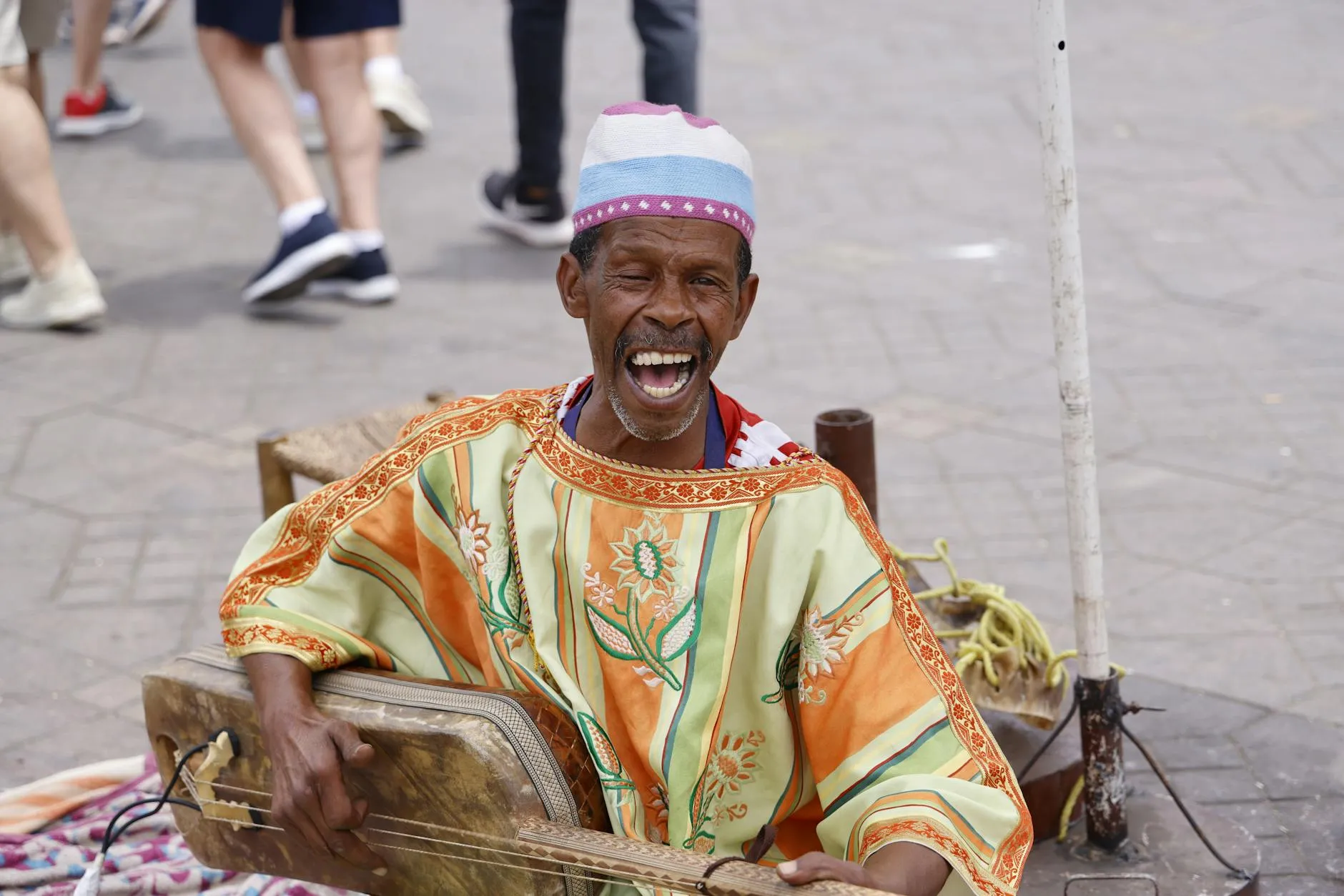
Marrakech is sensory overload in the best possible way. The moment you step through the gates of the medina, the old walled city that has stood since the 11th century, you enter a world of narrow alleys, terracotta walls, the call to prayer echoing from a hundred minarets, and the ever-present scent of cedar, cumin, and orange blossom. In the great square of Jemaa el-Fnaa — UNESCO’s “masterpiece of the oral and intangible heritage of humanity” — storytellers, musicians, snake charmers, and henna artists perform as they have for a thousand years. And when the sun sets, the square transforms into the world’s largest open-air restaurant: a hundred food stalls smoking and sizzling under the kerosene lamps.
400–7,000+ MAD/day (Budget to Luxury)
20°C avg
Visa-free 90 days / MAD د.م.
Last verified: April 2026. Every price, opening hour, and practical detail in this guide has been checked against official sources. All prices are in Moroccan dirham (MAD); €1 ≈ 10.5 MAD / $1 ≈ 9.8 MAD at time of writing. Most nationalities get visa-free entry for 90 days. Verify at the listed URLs before travelling.
Why Marrakech? An Editor’s Note
Marrakech is one of those rare cities that lives up to its mythology. The Red City — named for its terracotta-coloured ramparts — has been drawing travellers since the caravans of the Saharan gold trade, and it has never stopped. What makes Marrakech extraordinary is that it hasn’t been preserved as a museum or theme-parked into submission. The medina is a living, working city: 300,000 people live inside walls built in the 12th century, buying their vegetables from the same market stalls that have operated for centuries, bathing in hammams that predate the Renaissance, and praying in mosques that have called the faithful since the Almoravid dynasty.
For visitors, the draw is threefold: the architecture (Bahia Palace, Saadian Tombs, Ben Youssef Madrasa — Islamic decorative art at its absolute peak), the food (tagines slow-cooked in clay pots, tanjia simmered overnight in hammam embers, pastilla dusted with cinnamon and sugar), and the souks (the largest traditional market in Morocco, a labyrinth of 40,000+ stalls selling everything from hand-hammered lanterns to Berber rugs to fresh saffron). Add in the day trips — Essaouira’s Atlantic coast, the Atlas Mountains, the desert — and you have one of the great travel destinations on Earth.
This guide covers it all. For other warm-weather destinations, see our Seville guide, Istanbul guide, or Bali guide.
Photography Guide — Essential Marrakech Shots
Seven shots that justify the camera weight in a city designed for visual overload.
- Jemaa el-Fnaa at Dusk (Elevated): From Café de France or Café Glacier terrace. The square transforming from market to food stalls as kerosene lamps light up. The smoke, the crowds, the Atlas Mountains behind. Golden hour into blue hour is the magic window.
- Bahia Palace Courtyard (8 AM): The carved cedarwood, zellij tilework, and marble fountains with morning light streaming through lattice screens. Empty at 8 AM — by 10 it’s crowded. Wide angle for the courtyard geometry.
- Souk des Teinturiers (Midday): The dyed fabrics hanging overhead in vivid colours. Midday sun penetrates the souk covering and illuminates the textiles. Look up — the shot is above you.
- Majorelle Garden Blue Villa (Morning): The intense cobalt blue against green palms and red bougainvillea. First slot (8 AM) for empty compositions. The colour contrast is extraordinary in morning light.
- Ben Youssef Madrasa Courtyard (Any time): Every surface decorated — zellij, carved plaster, cedarwood calligraphy. The symmetry of the courtyard photographs beautifully from the centre. Shoot straight up from the courtyard floor for the cedarwood dome.
- Koutoubia Mosque at Sunset: The 77m minaret glowing pink-gold against the Atlas Mountains. Shoot from the gardens west of the mosque. The minaret is the city’s visual anchor.
- Mechoui Alley (Evening): The whole lambs roasting on display, the carver working, the steam rising. Food photography at its most primal. Just off Jemaa el-Fnaa.
Table of Contents
- Top Attractions in Marrakech
- Jemaa el-Fnaa — The Heart of Marrakech
- Moroccan Food — Tagines, Tanjia & Street Food
- Restaurants & Fine Dining
- The Souks — Shopping in the Medina
- Marrakech’s Neighbourhoods
- Hammams — The Moroccan Bath Ritual
- Riads — Where to Stay
- Art, Museums & Culture
- Getting Around Marrakech
- Day Trips from Marrakech
- Best Time to Visit & Ramadan
- Practical Information & Visa
- Budget Tips & Money
- Safety, Scams & Etiquette
- 2026 Travel Notes & Changes
- Frequently Asked Questions
Top Attractions in Marrakech
| Attraction | Price (MAD) | Hours / Notes |
|---|---|---|
| Jemaa el-Fnaa | Free | 24/7. Food stalls peak at dusk |
| Bahia Palace | 100 MAD / 30 children | Daily 8:00–17:00 |
| Saadian Tombs | 100 MAD / 30 children | Daily ~9:00–17:00 |
| Koutoubia Mosque | Free (exterior/gardens) | Non-Muslims cannot enter |
| Majorelle Garden | 170 MAD (garden) / 330 combo | Daily 8:00–18:30. Online only |
| Ben Youssef Madrasa | 50 MAD | Daily 9:00–19:00 |
| El Badi Palace | 100 MAD / 30 children | Daily ~9:00–17:00 |
| Museum of Marrakech | 70 MAD | Daily 9:00–18:00 |
| Menara Gardens | Free | Daylight hours |
| Mellah (Jewish Quarter) | Free (synagogue 10–20 MAD) | Always accessible |
| Maison de la Photographie | 60 MAD | Daily 9:30–19:00 |
| Le Jardin Secret | 100 MAD (tower +40) | Daily 9:30–19:30 |
Note on pricing: Several major sites (Bahia Palace, Saadian Tombs, El Badi Palace) raised prices to 100 MAD in 2025 (up from 70 MAD). Moroccan residents pay 30 MAD. Children aged 7–13 pay 30 MAD; under 7 free. Majorelle Garden requires advance online booking at tickets.jardinmajorelle.com — no walk-up sales.
1. Bahia Palace
The “Palace of the Beautiful” was built in the late 19th century by Grand Vizier Si Moussa and his son Ba Ahmed. It’s a masterwork of Moroccan Islamic architecture: eight hectares of interconnected courtyards, gardens, and rooms decorated with intricately carved cedarwood ceilings, zellij (mosaic tilework), sculpted plaster (tadelakt), and painted wood. The Harem courtyard, with its marble fountain and surrounding rooms for Ba Ahmed’s four wives and 24 concubines, is the highlight. The palace’s deliberate modesty from the outside — a plain wall on a narrow street — is classic Moroccan architecture: all the beauty faces inward.
Price: 100 MAD adults / 30 MAD children 7–13 / Moroccan residents 30 MAD. Hours: Daily 8:00–17:00. Getting there: 10-minute walk south from Jemaa el-Fnaa. Time needed: 1–1.5 hours.
2. Saadian Tombs
Hidden behind the Kasbah Mosque for centuries — they were sealed by Sultan Moulay Ismail and only rediscovered by aerial survey in 1917 — the Saadian Tombs are the final resting place of the Saadian dynasty rulers (16th–17th century). The Hall of Twelve Columns, with its Italian Carrara marble pillars, carved cedarwood dome, and intricate muqarnas (honeycomb plasterwork), is one of the most beautiful small spaces in Morocco. 66 members of the Saadian dynasty are interred here, including Sultan Ahmad al-Mansur (the “Golden One”), whose tomb is topped with gold-leafed muqarnas.
Price: 100 MAD adults / 30 MAD children. Hours: Daily ~9:00–17:00. Getting there: Narrow entrance behind the Kasbah Mosque. Time needed: 30–45 minutes. Tip: Arrive early — the main chamber is tiny and gets crowded.
3. Majorelle Garden & YSL Museum
Created by French painter Jacques Majorelle in 1923, rescued from ruin by Yves Saint Laurent and Pierre Bergé in 1980, the Majorelle Garden is Marrakech’s most famous oasis. The intense cobalt blue (Majorelle blue) of the Art Deco villa, set among groves of bamboo, bougainvillea, cacti, and palms, is one of the most photographed sights in Morocco. The Berber Museum inside the villa has an excellent collection of Amazigh jewellery, textiles, and ceramics. The Musée Yves Saint Laurent next door (2017, by Studio KO) is a stunning brick building housing the couturier’s work.
Price: Garden only 170 MAD. Garden + Berber Museum 230 MAD. YSL Museum 140 MAD (closed Wednesdays). All three combo 330 MAD. Hours: Daily 8:00–18:30. IMPORTANT: Online booking mandatory at tickets.jardinmajorelle.com — no walk-up tickets. Getting there: In Gueliz, ~15-minute taxi from medina (20–30 MAD).
4. Ben Youssef Madrasa
The largest Islamic seminary in North Africa when it was founded in the 14th century, this theological school housed 900 students in 130 dormitory cells arranged around a stunning central courtyard. The courtyard is a masterpiece of Merinid architecture: every surface is decorated with carved zellij, sculpted plaster, and cedarwood calligraphy. The prayer hall at the far end has a marble floor and a soaring cedarwood dome. It operated as a school until 1960, was restored and reopened as a museum, and remains one of the most exquisite buildings in Morocco.
Price: 50 MAD adults / 10 MAD children under 12 / Moroccan adults 20 MAD. Hours: Daily 9:00–19:00 (Ramadan 9:00–16:30). Getting there: In the northern medina, near Museum of Marrakech. Time needed: 30–45 minutes.
5. El Badi Palace
The “Incomparable Palace” was built in the 16th century by Sultan Ahmad al-Mansur using ransoms from Portuguese prisoners and gold from Timbuktu. It took 25 years to build, had 360 rooms, a courtyard with a marble pool 90 metres long, and walls decorated with Italian marble, Chinese porcelain, and Sudanese gold. Within a century, Sultan Moulay Ismail stripped it to the bare walls and transported everything to his new capital at Meknes. What remains is a vast, atmospheric ruin — sunken gardens, crumbling walls, and stork nests on the ramparts.
Price: 100 MAD adults / 30 MAD children. Hours: Daily ~9:00–17:00. Getting there: In the Kasbah, near the Saadian Tombs. Time needed: 45 minutes–1 hour.
6. Koutoubia Mosque
Marrakech’s landmark — a 77-metre minaret built by the Almohad dynasty in the 12th century, visible from nearly everywhere in the city. Non-Muslims cannot enter the mosque, but the surrounding gardens are open and beautiful, especially at sunset when the minaret glows pink-gold against the Atlas Mountains. The mosque’s proportions (the minaret’s height is five times its width) influenced the Giralda in Seville and the Hassan Tower in Rabat.
Price: Free (gardens). Interior closed to non-Muslims. Hours: Gardens open all day. Getting there: 5-minute walk west of Jemaa el-Fnaa. Best time: Sunset.
Jemaa el-Fnaa — The Heart of Marrakech
There is nothing else like Jemaa el-Fnaa on Earth. UNESCO declared it a “Masterpiece of the Oral and Intangible Heritage of Humanity” in 2001, and for once the bureaucratic language doesn’t overstate the case. By day, the square is a sprawling market of orange juice sellers (4–5 MAD a glass), snake charmers, henna artists, herbalists, monkey handlers, and Gnawa musicians. As the sun sets, it transforms into the world’s largest open-air restaurant: a hundred food stalls fire up their grills, kerosene lamps cast golden light, and the smoke from a thousand skewers rises into the evening sky.
Eating at Jemaa el-Fnaa
- Snacks: 10–30 MAD. Grilled corn, fresh juice, dried fruit and nuts.
- Full plates: 40–60 MAD. Tagines, grilled meats, couscous, harira soup.
- Snail soup (babbouche): 10–20 MAD at local stalls (tourist stalls charge 40–50 MAD).
- Mechoui Alley: Just off the square, whole lambs roast on display. 50–80 MAD per portion of fall-off-the-bone slow-roasted lamb.
Performers & Tipping
Snake charmers, musicians, storytellers, and henna artists will demand payment if you photograph them or stop to watch. This is expected — budget 10–20 MAD per interaction. Do not let a henna artist start work on your hand without agreeing on a price first (they will demand 200+ MAD if you don’t). Monkey handlers: avoid — the animals are poorly treated.
Moroccan Food — Tagines, Tanjia & Street Food
Moroccan cuisine is one of the great food traditions of the world — a fusion of Berber, Arab, Andalusian, and French influences refined over a thousand years. Marrakech is its spiritual home: the city where the tagine was perfected, the tanjia was invented, and mint tea became a national ritual.
| Dish | What It Is | Typical Price |
|---|---|---|
| Tagine | Slow-cooked stew in conical clay pot — lamb with prunes, chicken with preserved lemon, vegetable | 40–80 MAD street / 120–250 MAD restaurant |
| Couscous | Steamed semolina with vegetables and/or meat. Traditionally a Friday dish | 50–100 MAD |
| Pastilla (Bastilla) | Layered phyllo pastry with pigeon/chicken, almonds, cinnamon, powdered sugar | 80–150 MAD |
| Harira | Tomato-based soup with lentils, chickpeas, cilantro. The Ramadan staple | 10–20 MAD |
| Tanjia | Marrakech-only: meat slow-cooked overnight in amphora-shaped urn in hammam embers | 60–100 MAD |
| Mechoui | Whole lamb slow-roasted until falling apart. Served by weight | 50–80 MAD per portion |
| Msemen | Square-shaped flaky flatbread with honey or cheese. Morning snack | 3–5 MAD |
| Sfenj | Moroccan doughnuts — hot, crispy, slightly chewy. Best at sunrise | 2–3 MAD each |
| Moroccan Mint Tea | Gunpowder green tea with fresh mint and a shocking amount of sugar | 10–20 MAD per pot |
| Rfissa | Shredded msemen with lentils, chicken, and fenugreek. Comfort food | 50–80 MAD |
Tagine — The National Dish
The tagine is Morocco’s most famous dish, and Marrakech is where to eat it. Named after the conical clay pot it’s cooked in, a tagine is a slow-cooked stew — meat or vegetables braised with spices, dried fruit, nuts, and preserved ingredients until everything melds into something deeply complex. The classic Marrakchi tagines: lamb with prunes and almonds (sweet and savoury), chicken with preserved lemon and olives (sharp and aromatic), and kefta tagine (meatballs in spiced tomato sauce with a poached egg on top).
Tanjia — Marrakech’s Secret Dish
If the tagine belongs to all of Morocco, the tanjia belongs to Marrakech alone. This dish of spiced meat (usually lamb or beef) is sealed inside an amphora-shaped clay urn with preserved lemons, saffron, ras el hanout, and olive oil, then slow-cooked for 6–8 hours in the embers of a public hammam furnace. Traditionally, it’s a bachelor’s dish — men would prepare the urn and drop it off at the hammam on their way to work, picking up the cooked tanjia in the evening. The result is impossibly tender, deeply flavoured meat. Ask your riad to arrange one, or find it at local restaurants near the medina.
Mint Tea — The Moroccan Ritual
Mint tea (atay b’naana) is not just a drink — it’s a ritual of hospitality. Gunpowder green tea is steeped with a generous handful of fresh mint and an alarming quantity of sugar, then poured from height (to create a foam) into small glasses. You will be offered it everywhere: in shops (accept it — it’s hospitality, not a sales trick), in riads, at meals, and by strangers. Refusing is mildly impolite. Three glasses is the custom.
The best food in Marrakech is not in restaurants — it’s in the medina’s street stalls and hole-in-the-wall snack shops. For the very best tagines, eat where the locals eat: follow the crowds, not the TripAdvisor rankings. The tourist-oriented riad restaurants serve competent but rarely extraordinary food.
More Marrakech Restaurants Worth Knowing
Café Clock (Kasbah): Famous for their camel burger and weekly Moroccan storytelling nights. Also serves the best tanjia in the city — ordered a day ahead so the bachelor dish gets its full hammam-ember treatment. 80–180 MAD mains.
Haj Mustapha (Jemaa el-Fnaa area): A Moroccan institution for mechoui — slow-roasted lamb pulled apart by hand and eaten with bread and cumin salt. Not a fancy place; the carver works on the counter. 60–100 MAD for a plate that feeds two.
Snack Toubkal (Jemaa el-Fnaa edge): Local-favourite budget spot. Tagine, couscous, grilled brochettes, fresh juice, all under 50 MAD. The place Moroccans eat when they’re in town on business.
Dar Yacout (Medina): The grand-banquet experience. Fixed-menu five-course traditional Moroccan feast in an opulent riad setting, with rooftop views of the medina. 600–900 MAD. Closed August.
Nomad (Place Rahba Kedima): Contemporary Moroccan on a rooftop overlooking the spice square. Modern takes on traditional dishes. Mains 120–220 MAD. Book for the sunset slot.
Where to eat — by budget:
- Budget (under 100 MAD): Jemaa el-Fnaa food stalls, Snack Toubkal, local fondas off the main square
- Mid-range (100–300 MAD): Café Clock, Nomad, Le Jardin, Le Foundouk
- Splurge (400+ MAD): Dar Yacout, La Grande Table Marocaine (Royal Mansour), La Mamounia restaurants
Restaurants & Fine Dining
Marrakech has no Michelin Guide — Morocco is not covered by the Michelin star system. But the city’s fine dining scene has exploded, driven by the luxury hotel boom and the MENA’s 50 Best Restaurants list.
MENA’s 50 Best Restaurants
- La Grande Table Marocaine (Royal Mansour) — #27 MENA’s 50 Best 2025 + Art of Hospitality Award (Feb 2026). Chef Yannick Alléno’s Moroccan haute cuisine: Berber tagine with Atlas black truffle, pigeon pastilla with ras el hanout. Tasting menus from 1,500 MAD. Morocco’s most celebrated restaurant.
- +61 — #42 MENA’s 50 Best. Australian-Mediterranean by chef Andrew Cibej. Popular with stylish locals.
- Sesamo (Royal Mansour) — #45 MENA’s 50 Best. Venetian-Moroccan by chef Massimiliano Alajmo.
Traditional & Atmospheric Dining
- Al Fassia Gueliz — Run entirely by women. Arguably the best tagines in Morocco. The lamb tagine with caramelised pears is legendary. In Gueliz. Mains 120–200 MAD.
- Dar Yacout — Legendary riad dining experience. Five-course Moroccan feast: 700–900 MAD/person. Rooftop aperitifs at sunset. Book days in advance. Closed August.
- Dar Moha — “New Moroccan cuisine” in a riad with poolside dining by chef Mohamed Fedal. Tasting menu ~600 MAD.
- Nomad — Modern Moroccan on a medina rooftop. Beautifully designed, reasonably priced (mains 80–150 MAD). Great for lunch.
- Café des Épices — Casual terrace overlooking the spice square. Perfect for a mid-souk lunch. Tagines ~70 MAD.
New & Trending 2026
- Flowers — Chef Richard McCormick, open-fire cooking, plant-forward, rooftop medina setting.
- Farmers — Farm-to-fork using produce from Sanctuary Slimane permaculture farm.
- Sahbi Sahbi — Moroccan fusion, by the team behind the YSL Museum.
- Bacha Coffee at Dar El Bacha — Stunning palace turned coffee house with 200+ coffees from around the world. Entry to cafe 10 MAD. Museum 60 MAD.
The Souks — Shopping in the Medina
Marrakech’s souks are the largest traditional market in Morocco — a labyrinth of 40,000+ stalls spread across hundreds of narrow, covered alleys that branch off from the main artery of Souk Semmarine. Each souk specialises in a different trade: leatherworkers here, metalworkers there, dyers in one corner, spice merchants in another. The experience is overwhelming, intoxicating, and utterly unforgettable.
Key Souks
- Souk Semmarine: The main covered thoroughfare. Textiles, clothing, general goods. Your starting point.
- Souk des Teinturiers (Dyers’ Souk): Freshly dyed fabrics hanging overhead in vivid colours. Instagram heaven.
- Souk Smata: Babouches (leather slippers) — hundreds of colourful pairs hanging overhead. 150–250 MAD.
- Souk Cherratine: Leather bags, belts, wallets, jackets. 400–800 MAD for a good bag.
- Souk Zrabi: Berber rugs and Moroccan carpets. Small rug 500–1,000 MAD, large 4,000–5,000 MAD.
- Souk Haddadine: Metalworkers. Brass lanterns (200–500 MAD), hand-hammered teapots (150–300 MAD).
- Spice Souk: Near Jemaa el-Fnaa. Ras el hanout, saffron, cumin, argan oil, handmade soaps.
The Art of Haggling
- Start at 40–50% of the asking price and negotiate upward. The seller expects this.
- Walking away is your most powerful tool. The seller will usually call you back with a lower price.
- Morning (8–10 AM) yields better prices — the first sale of the day (ftour) is considered good luck.
- Go deeper: The stalls deeper into the souks (away from Jemaa el-Fnaa) are more competitive and honest.
- Cash only: Most stalls accept only MAD cash. A few mid-range shops accept cards with 5–10% surcharge.
- Argan oil warning: Only ~30% of “authentic” argan oil in the souks is genuine. Buy from cooperatives or trusted sources (Amal Women’s Training Centre is reliable).
| Item | Fair Price Range (MAD) |
|---|---|
| Argan oil (100ml, authentic) | 200–300 |
| Babouches (leather slippers) | 150–250 |
| Leather bag (good quality) | 400–800 |
| Small Berber rug (3×5 ft) | 500–1,000 |
| Brass lantern | 200–500 |
| Hand-hammered teapot | 150–300 |
| Ceramic tagine (decorative) | 50–150 |
Ensemble Artisanal — The Fair Price Reference
Before you enter the souks, spend 30 minutes at the Ensemble Artisanal (off Avenue Mohammed V, Kasbah side of the medina). This is a government-run fixed-price cooperative where Moroccan artisans sell directly. No haggling, no pressure, no hidden mark-ups. The point isn’t necessarily to buy here — it’s to see what a fair retail price looks like for babouches, carpets, leather goods, silver, ceramics, and argan oil.
Once you’ve calibrated, you can haggle in the souks from a position of knowledge: if the souk asking price is 3× Ensemble Artisanal, you aim for roughly Ensemble Artisanal + 10–20%. If the souk asks more than 3×, walk away — there’s always another shop.
Marrakech’s Neighbourhoods
Medina
The walled old city — UNESCO World Heritage Site, home to 300,000 people, and the heart of Marrakech. Everything you came for is here: Jemaa el-Fnaa, the souks, Bahia Palace, Ben Youssef Madrasa, riads, hammams, and the sensory overload that defines the city. The medina is best explored on foot — cars cannot enter most streets. Stay in a riad here for the full Marrakech experience.
Kasbah
The southern medina district, historically the royal and religious quarter. Saadian Tombs, El Badi Palace, Kasbah Mosque, and the Royal Palace (exterior only). Les Bains de Marrakech, one of the city’s best hammams, is here. Quieter and less tourist-intense than the central medina.
Mellah (Jewish Quarter)
The 16th-century Jewish quarter, east of the Kasbah. Now mostly Muslim residents, but the heritage remains: the Slat al-Azama Synagogue (built 1492 by Sephardic Jews expelled from Spain, 10–20 MAD donation), the Lazama Synagogue, and the Miaara Jewish Cemetery (the largest Jewish cemetery in Morocco). The Mellah has its own spice market and a quieter, more residential feel than the main medina.
Gueliz (Ville Nouvelle)
The French-built new town (1912), connected to the medina by Avenue Mohammed V. Modern boulevards, boutique shopping, art galleries, and Marrakech’s best restaurant scene outside the riads. Al Fassia is here. Grand Café de la Poste (in a restored 1920s post office) is a Gueliz institution. This is where Marrakchis go when they want a break from the medina.
Hivernage
An upscale, leafy suburb between the medina and Gueliz. Luxury hotels (Royal Mansour, La Mamounia), the Menara Gardens, nightclubs (Comptoir Darna), and a resort feel. The most expensive residential area in Marrakech.
Palmeraie
A palm grove of 100,000+ trees north of the city. Luxury resorts, golf courses, camel rides, and quad biking. Scarabeo Camp (Agafay Desert, nearby) offers glamping with Atlas Mountain views. The Palmeraie is 20 minutes from the centre — not walkable, but a pleasant half-day escape.
Hammams — The Moroccan Bath Ritual
The hammam is as central to Moroccan life as the mosque or the souk. Every neighbourhood has its public hammam, and the ritual — steam, hot water, vigorous scrubbing with a kessa (rough mitt), and black soap — has been unchanged for centuries. For visitors, it’s one of the essential Marrakech experiences.
| Type | Price (MAD) | What’s Included |
|---|---|---|
| Public / local hammam | 40–80 | Steam bath. Bring your own supplies (soap, mitt, towel) |
| Private / tourist hammam | 150–600 | Full service: scrub, black soap, argan oil, towels provided |
| Luxury spa hammam | 1,400–3,200 | Full treatments, pool, massage, robe. Royal Mansour level |
Recommended Hammams
- Les Bains de Marrakech (Kasbah) — Since 2003. Full service 400–700 MAD. TripAdvisor 2024 Travelers’ Choice. Beautiful, professional, and welcoming to first-timers.
- Heritage Spa — Mid-range tourist hammam with excellent reviews. Good introduction for newcomers.
- Hammam de la Rose — Intimate hammam near Bahia Palace. Romantic atmosphere.
- Local neighbourhood hammams — The authentic experience. Gender-separated. Bring your own supplies. Ask your riad for the nearest one. 40–80 MAD.
What to Expect — The Hammam Sequence
Whether at a 40 MAD public hammam or a 700 MAD heritage palace, the ritual is similar:
- Hot room: Sit on a heated marble slab for 10–15 minutes. The steam opens pores and softens skin. Sweat freely.
- Black soap (savon beldi): Applied all over and left for 5–10 minutes. It’s olive-oil based, thick, and slightly sticky. Don’t rinse it off yourself — the attendant does.
- Rinse with hot water from a bucket or ladle.
- Kessa scrub: A coarse exfoliating mitt is used all over your body — arms, legs, back, stomach, feet. Vigorous is an understatement. You will see grey rolls of dead skin come off. This is normal and the whole point.
- Rinse again.
- Ghassoul clay mask (optional): Applied and left to dry.
- Final rinse, often with essential oils or rose water.
- Wrap in towels, rest in the cooling room with mint tea. Don’t plan anything for the next hour — you’ll feel simultaneously weightless and extremely relaxed.
Etiquette: Gender-separated. Bring or buy disposable underwear (modest standard). Tip the attendant 20–50 MAD at tourist hammams.
Riads — Where to Stay
A riad (from the Arabic riyad, “garden”) is a traditional Moroccan townhouse built around a central courtyard with a fountain, often with a rooftop terrace. Staying in a riad is the quintessential Marrakech experience: you push through an unmarked door in a dusty medina alley and step into a world of mosaic tilework, carved plaster, orange trees, and birdsong. The best riads are small (4–10 rooms), run by hands-on owners, and serve breakfast on the rooftop with views of the Atlas Mountains.
| Budget | Nightly Rate | What to Expect |
|---|---|---|
| Budget riad | 300–600 MAD (€30–60) | Simple but characterful. Courtyard, rooftop, breakfast included. Family-run. |
| Mid-range riad | 700–1,500 MAD (€65–145) | Beautiful tilework, plunge pool, excellent breakfast. 6–10 rooms. |
| Luxury riad | 2,000–5,000 MAD (€190–480) | Private courtyard, pool, spa, fine dining. Dar Anika, Riad Jardin Secret. |
| Ultra-luxury hotel | 5,000+ MAD (€480+) | Royal Mansour, La Mamounia, Selman. Full resort experience. |
Specific Riad Recommendations
Budget (300–600 MAD/night): Riad Dar One, Riad Amira, Riad Dar Najat — traditional courtyards, rooftop breakfast, friendly staff who’ll meet you at the medina edge.
Mid-range (700–1,500 MAD/night): Riad Yasmine (famous for its Instagram-perfect pool), Riad BE, Riad Kniza. Larger rooms, better breakfasts, proper bathrooms.
Luxury (2,000–5,000+ MAD/night): El Fenn (Vanessa Branson’s art-filled riad-hotel), La Mamounia (the grand dame), Royal Mansour (each suite is a private riad, built by royal commission), Amanjena (Aman’s desert palace outside the city).
Booking tip: Book the riad to collect you from the airport or from Jemaa el-Fnaa and walk you through the alleys. Medina navigation is impossible with a wheeled suitcase at night. This is standard practice, not a scam.
Art, Museums & Culture
- Musée Yves Saint Laurent — Stunning brick building by Studio KO (2017). The couturier’s life and work. 140 MAD. Closed Wednesdays. Next to Majorelle Garden.
- Museum of Marrakech (Dar Menebhi) — In a 19th-century palace near Ben Youssef Madrasa. Moroccan art and artefacts. 70 MAD.
- Maison de la Photographie — Vintage photographs of Morocco from 1870–1950. Beautiful rooftop terrace with medina views and a cafe. 60 MAD.
- Dar El Bacha — Musée des Confluences — Gorgeous palace museum + Bacha Coffee (200+ coffees). Museum 60 MAD / cafe only 10 MAD. Free Fridays for nationals/residents.
- MACAAL (Museum of African Contemporary Art Al Maaden) — Reopened February 2025 after post-earthquake structural reinforcement. African contemporary art in a striking modern building.
- Le Jardin Secret — Restored 16th-century garden with Islamic and exotic plantings. Tower with panoramic views (+40 MAD). 100 MAD adult.
Getting Around Marrakech
| Mode | Fare | Notes |
|---|---|---|
| Walking | Free | The medina is best on foot. GPS unreliable in alleys. |
| Petit Taxi | 10–30 MAD (short trip) | Within city only. Max 3 passengers. Insist on meter. |
| Grand Taxi | 150–200 MAD (airport) | Inter-city/airport. Shared or private. |
| Calèche (horse carriage) | 150–250 MAD/hour | Agree price before. Official rate posted on carriage. |
| Bus No. 19 (airport) | 30 MAD | Budget option to Jemaa el-Fnaa. 30–50 min. |
| City Bus | 4–5 MAD | ALSA operates main routes. |
From the Airport
Marrakech Menara Airport (RAK) is just 6 km from the medina — one of the closest airports to a city centre in Africa.
- Petit Taxi: Official fixed rate 70–100 MAD. Negotiate before entering. Max 3 passengers. 15–20 min.
- Grand Taxi: 150–200 MAD. Fits up to 6 passengers (shared).
- Bus No. 19: 30 MAD. Runs to Jemaa el-Fnaa. 30–50 min. Budget option.
- Private transfer: 150–300 MAD pre-booked via hotel. Most riads offer airport pickup — essential if it’s your first visit (finding a riad in the medina without a guide is nearly impossible).
Day Trips from Marrakech
1. Essaouira
A blue-and-white Atlantic port town 190 km west of Marrakech — the anti-Marrakech. Where Marrakech is red, hot, and intense, Essaouira is blue, breezy, and mellow. Portuguese ramparts, a working fishing port, an outstanding medina (UNESCO World Heritage), and some of the best seafood in Morocco. Jimi Hendrix reputedly stayed here. Fantastic windsurfing and kitesurfing.
Getting there: Supratours bus: 80–140 MAD one-way, 7 departures daily, 2.5–3 hours. CTM bus: 1/day at 8:30 AM. By car: 2.5 hours. Tip: The bus station is outside the medina walls. Walk 10 min to the port gate.
2. Atlas Mountains / Imlil
The High Atlas — where snow-capped peaks rise behind Marrakech’s rooftops. Imlil (65 km, 1.5 hours) is the gateway village: Berber stone houses, walnut orchards, mule tracks, and the trailhead for Mount Toubkal (4,167 m, North Africa’s highest peak, 2-day trek). Even non-trekkers can spend a day walking between Berber villages, eating tagine in a mountain guesthouse, and marvelling at the landscape. Mountain refuges have reopened after the 2023 earthquake.
Getting there: Grand taxi to Asni (~30 MAD) + transfer to Imlil (~20 MAD). Or guided tour from 450 MAD. Trek guides: $75–130/day (compulsory for Toubkal). Best season: April–November.
3. Ouzoud Waterfalls
110-metre cascading falls in the Middle Atlas — Morocco’s most spectacular waterfall. Natural swimming pools at the base, Barbary macaques in the surrounding forest, and boat rides (20–30 MAD) that take you directly under the falls. 150 km from Marrakech, 2.5 hours each way.
Getting there: No direct public bus. Guided tour from 400 MAD/person. Rental car possible. Best season: Spring (peak water flow).
4. Aït Benhaddou (UNESCO)
A fortified ksar (village) of red earth buildings clinging to a hillside — one of the most photogenic sights in North Africa. UNESCO World Heritage since 1987. Used as a filming location for Game of Thrones (Yunkai), Gladiator, Lawrence of Arabia, and The Mummy. 185 km from Marrakech via the spectacular Tizi n’Tichka pass (2,260 m).
Getting there: No direct public transport. Guided tour from 500 MAD/person. Often combined with Ouarzazate (film studios). Full-day trip: 7–8 hours.
5. Ourika Valley
The closest mountain escape — just 45 km south (1 hour). Berber villages, terraced farms, riverside restaurants, and Setti Fatma’s seven waterfalls (hike to the first takes 30 minutes). Much more accessible than Imlil — perfect for a half-day trip.
Getting there: Grand taxi from Bab Rob: 25–40 MAD. Or guided tour from 350 MAD. Year-round.
6. Agafay Desert
A rocky mineral desert 40 km from Marrakech (45 min drive). Not the Sahara — no sand dunes — but spectacularly desolate with Atlas Mountain views. The main draw is luxury glamping: camps like Scarabeo, La Pause, Inara Camp, and Nkhila Lodge offer Bedouin tents, sunset camel rides, open-fire dining, and stargazing.
Options: Sunset camel ride + dinner from ~180 MAD. Quad biking + dinner from ~750 MAD. Overnight glamping from €130–350/night.
Best Time to Visit & Ramadan
Month-by-Month Weather
| Month | High/Low | Rain Days | Key Notes |
|---|---|---|---|
| January | 18/6°C | 5 | Cool. AFCON 2025/26 may still be running. Low season pricing. |
| February | 20/8°C | 5 | Ramadan 2026 begins ~Feb 18 (moon-sighting confirmed). Cooler visiting. |
| March ⭐ | 22/10°C | 4 | Ramadan ends ~Mar 18. Spring begins. Gardens blooming. |
| April ⭐ | 25/12°C | 3 | BEST MONTH. Warm, dry, flowers. Peak season begins. |
| May ⭐ | 28/15°C | 2 | Excellent. Warm. Last month before heat. |
| June 🔥 | 33/18°C | 0 | Hot. Manageable mornings and evenings. |
| July 🔥 | 38/21°C | 0 | Very hot. 38°C+ daily. Only for heat lovers. |
| August 🔥 | 38/21°C | 0 | Hottest. 40°C+ common. Dar Yacout closed. |
| September ⭐ | 33/19°C | 1 | Cooling. Excellent value. Crowds returning. |
| October ⭐ | 27/14°C | 3 | BEST MONTH. Perfect weather. Peak season. |
| November ⭐ | 22/10°C | 5 | Still warm. Excellent visiting. Fewer crowds than October. |
| December | 18/7°C | 5 | Cool days, cold nights. Holiday season. Good prices. |
Marrakech is a desert city — hot days, cool nights, almost no rain May–September. Winter nights can approach freezing. Pack layers year-round. Riads can be cold in winter (ask about heating). Source: Direction de la Météorologie Nationale du Maroc.
- March–May (best): Warm, pleasant, 20–28°C. Gardens in bloom. Peak season.
- September–November (best): Warm, post-summer cool-down. 22–30°C. Excellent value.
- June–August: Hot. Often exceeds 38°C, regularly 40°C+. Only if you love extreme heat.
- December–February: Cool days (12–20°C), cold nights (occasionally freezing). Low season, fewer crowds, good hotel prices.
Ramadan 2026
Expected dates: February 17 to March 18, 2026 (confirmed by moon sighting, +/– 1 day). During Ramadan:
- Most restaurants and cafes close during daylight hours. Hotels and tourist-oriented restaurants remain open.
- Non-Muslims should avoid eating, drinking, and smoking in public during fasting hours.
- Tourist attractions may have reduced hours.
- Iftar (the sunset meal breaking the fast) is a beautiful cultural experience — many riads offer special iftar dinners.
- Crime reportedly drops ~60% during Ramadan.
- The souks quieten by day but come alive after sunset.
Practical Information & Visa
Visa
Visa-free for 90 days for most nationalities: EU, UK, US, Canada, Australia, Japan, and many more. Passport must be valid 6+ months from entry.
Money
- Currency: Moroccan dirham (MAD). €1 ≈ 10.5 MAD / $1 ≈ 9.8 MAD (April 2026).
- ATMs: Widely available. BMCE, Attijariwafa, and Banque Populaire accept international cards.
- Cards: Accepted at hotels, upscale restaurants, and some shops. Souks and street food are cash only.
- Tipping: Expected. Restaurants 10%. Hotel porter 20–50 MAD. Tour guide: half-day 50–100 MAD, full-day 100–200 MAD. Hammam scrubber: 20–50 MAD. Riad staff: 100–200 MAD for your stay.
Tourist Tax (Taxe de Séjour)
Morocco charges a taxe de séjour (tourist tax) at all accommodation. Marrakech’s rate is split between the Taxe de Promotion Touristique (11 MAD/person/night) and the Taxe Communale (15 MAD/person/night), typically combined to around 15–30 MAD per adult per night depending on hotel classification (5-star at the top end, budget riads at the bottom). It is almost always collected separately in cash at check-in or check-out — not included in the booking price you see online. Children under 7 are usually exempt. For a couple staying 5 nights in a 4-star riad, budget roughly €15–25 in cash for the tax. Keep small notes on hand.
Dress Code
Morocco is a Muslim country. While Marrakech is relatively liberal, cover shoulders and knees in the medina, near mosques, and in villages. Hair covering is not necessary for female tourists. No shirtless appearance outside hotel pools. Minimal public displays of affection.
Water
Tap water is not safe to drink. Bottled water everywhere, cheap (5–10 MAD for 1.5 litres).
Ready to Book Your Marrakech Trip?
Find the best flight deals to Menara Airport (RAK)
Budget Tips & Money
| Category | Budget | Mid-Range | Luxury |
|---|---|---|---|
| Accommodation | 300–600 MAD (€30–60) | 700–1,500 MAD (€65–145) | 5,000+ MAD (€480+) |
| Daily food | 80–200 MAD (€8–20) | 300–600 MAD (€30–60) | 1,500+ MAD (€145+) |
| Transport | 20–50 MAD (walking + taxi) | 100–200 MAD | 500+ MAD (private) |
| Daily total | 400–850 MAD (€40–80) | 1,100–2,300 MAD (€105–220) | 7,000+ MAD (€670+) |
Budget tips: Eat at Jemaa el-Fnaa stalls (40–60 MAD for a full meal). Drink street-side mint tea (10 MAD). Walk the medina (free). Free attractions: Jemaa el-Fnaa, Koutoubia gardens, Menara Gardens, Mellah, medina wandering. Budget riads include breakfast. Grand taxi shared rides are cheap.
Safety, Scams & Etiquette
- Overall: Marrakech is safe by North African standards. Violent crime against tourists is very rare. Petty theft and scams are the main risks.
- Fake guides: The biggest hassle. Men approach offering to “show you the way” through the medina, then demand 100–200 MAD. Politely decline (“la, shukran” — “no, thank you”). If you need directions, ask a shopkeeper inside his shop.
- Henna artists: Will grab your hand and start drawing without asking, then demand 200+ MAD. Never let them start without agreeing on a price (20–50 MAD is fair).
- Overcharging: Restaurants near Jemaa el-Fnaa charge 2–3x normal prices. Eat one block deeper.
- Taxi meters: Insist on the meter for petit taxis. If the driver refuses, take another taxi.
- Photography: Always ask before photographing people. Street performers and snake charmers expect 10–20 MAD.
- Women travellers: Verbal harassment (catcalling, comments) is common but rarely escalates. Walk with purpose, don’t engage, and consider walking with a male companion in quieter areas after dark.
2026 Travel Notes & Changes
- FIFA 2030 World Cup: Morocco co-hosts with Spain and Portugal. Marrakech is one of 6 Moroccan host cities. Grand Stade de Marrakech closed for expansion (capacity to 46,000). Airport expanding to 14.2 million passenger capacity. 25,000 new hotel rooms being added nationwide.
- AFCON 2025: Africa Cup of Nations held in Morocco Dec 2025–Jan 2026. Nearly 600,000 foreign visitors. 80% of 2030 World Cup infrastructure completed. Morocco welcomed ~20 million tourists in 2025.
- September 2023 earthquake recovery: Marrakech medina largely recovered — rubble cleared, tourism rebounded. Dar Si Said Museum remains closed for restoration (no reopening date). MACAAL reopened Feb 2025. High Atlas villages rebuilding but unevenly.
- Price increases: Bahia Palace, Saadian Tombs, El Badi Palace all raised to 100 MAD (from 70 MAD) in 2025.
- Majorelle Garden: Now requires advance online booking only — no walk-up tickets.
- Bacha Coffee at Dar El Bacha: Major new addition — stunning palace + 200+ coffees.
- New restaurants: Flowers, Farmers, Sahbi Sahbi, Villa Aaron, Naama — all 2025/2026 openings.
Hidden Marrakech
Beyond Bahia Palace, Le Jardin Secret and the usual medina loop — covered in the main Attractions and Neighbourhoods sections above — these are the corners of Marrakech that most tourists never reach.
Anima Garden
Artist André Heller’s surrealist fantasy garden, 40 minutes outside the city in the Ourika Valley. A four-hectare landscape of sculptures, cacti, palm groves and Atlas-backed photo ops — part botanical garden, part open-air art installation. A pilgrimage for design-minded travellers. MAD 180. Free shuttle from Jemaa el-Fnaa (book ahead). anima-garden.com
The Tanneries
Less famous than Fes but still fully functional on the northern edge of the medina, where raw hides are soaked in pigeon-dropping cisterns and dyed in vats of saffron, henna, poppy and indigo. Visit early morning for the activity, late afternoon for the light on the dye pits. Expect a local guide to find you at the entrance — tip 20–50 MAD. A sprig of mint under the nose helps with the smell.
Guéliz Gallery Scene
The contemporary art district outside the medina walls, concentrated around Rue de la Liberté and Avenue Mohammed V. VOICE Gallery (cutting-edge contemporary, emerging North African artists), Comptoir des Mines Galerie (Art Deco building, rotating exhibitions), and Matisse Art Gallery (Moroccan orientalism and modern Moroccan painters) are the anchors. Combine with lunch at Le Jardin (Guéliz branch) or a coffee on Avenue Mohammed V.
Jewish Mellah & Synagogue
The historic Jewish quarter south of the medina is covered in the Neighbourhoods section above — but don’t skip the Lazama Synagogue (still active, small donation expected) and the old Jewish cemetery. The quarter is quieter, less tourist-focused, and gives the clearest window into Marrakech’s multi-faith past.
Pricing, festival dates, and transport costs reflect data verified in April 2026 via the official sources linked throughout this guide. Travel costs are subject to annual adjustments — attractions and transport authorities typically refresh prices each spring. We recommend confirming real-time prices and booking windows via the authority links in each section before your trip. Where this guide references Michelin stars, the data reflects the most recent edition of the relevant Michelin Guide at time of publication.
Romantic Marrakech
Marrakech is inherently romantic — the call to prayer at sunset, lantern-lit riads, rooftop dinners with the Atlas in the distance.
Romantic Experiences
Rooftop dinner: Most riads offer dinner on the terrace. Candlelit, starlit, city sounds below.
Hot air balloon: Sunrise over the Atlas Mountains. Ciel d’Afrique and others operate from Marrakech. From MAD 2,000/person. cieldafrique.com
Desert sunset: Agafay Desert (45 minutes from Marrakech) for camel rides and camp dinners without the Sahara journey.
Couples hammam: Private hammam experience at spa hotels. La Mamounia, Royal Mansour, or Spa MK.
Romantic Dining
La Grande Table Marocaine: Royal Mansour’s fine-dining Moroccan. MAD 1,500-2,500 for two.
Le Foundouk: French-Moroccan in a converted caravanserai. Three floors, intimate rooms. MAD 600-1,000 for two. lefoundouk.com
Le Tobsil: Traditional palace restaurant with five-course feast. Reservations essential. MAD 800-1,200 for two.
Romantic Stays
Amanjena: Aman resort in the Palmeraie. Pink pavilions, reflecting pools, ultimate seclusion. From MAD 8,000/night. aman.com/amanjena
Riad Farnatchi: Five suites, impeccable design, personal service. From MAD 3,500/night. riadfarnatchi.com
Data Provenance & Verification
- Attraction Pricing: Verified via official sources (Bahia Palace, Saadian Tombs, Majorelle Garden), April 2026
- Restaurant Awards: Per MENA’s 50 Best Restaurants 2025
- Riad Pricing: Direct checks and booking platforms, April 2026
- Exchange Rate: €1 ≈ 10.5 MAD / $1 ≈ 9.8 MAD per XE.com, April 2026
- Weather: Based on Direction de la Météorologie Nationale du Maroc data for Marrakech
- Ramadan 2026: Approximately February 17 – March 18 (lunar calendar — verify exact dates closer to travel)
- FIFA 2030: Per Moroccan Ministry of Youth, Culture and Communication
- AFCON 2025: Per CAF official schedule
- Majorelle Garden: Online booking required per jardinmajorelle.com, April 2026
- Last Updated: April 2026
Frequently Asked Questions
What is the best day in Marrakech for under 300 MAD (~€29)?
Walk to Jemaa el-Fnaa at sunrise — fresh orange juice (5 MAD). Walk the souks as they open (free — don’t buy yet, just explore). Ben Youssef Madrasa (50 MAD). Walk through the northern medina to Maison de la Photographie (60 MAD) — rooftop café with medina views. Walk south to Bahia Palace (100 MAD). Lunch at Jemaa el-Fnaa stalls — tagine and bread (50 MAD). Afternoon: walk the Mellah Jewish Quarter (free), Koutoubia Mosque gardens at sunset (free). Evening: mint tea at a medina café (10 MAD). Total: 275 MAD (€26). A 14th-century seminary, a 19th-century palace, vintage photography of Morocco, the world’s greatest square, a Jewish quarter, an Almohad minaret at sunset, and a tagine — for less than the price of one Majorelle Garden ticket.
More City Guides
Explore all our city and island guides at aifly.one Travel Guides — covering destinations across Africa, Europe, the Americas, Asia, and beyond.
🌍 See the bigger picture: our Morocco travel guide covers regions, when to go, and getting around.
Cheapest Flights to Marrakech
We track flight deals to Marrakech from 6 cities worldwide. Here are the best recent fares:
Prices are based on recent deals and may no longer be available. Browse all flight deals