Shanghai — The Complete City Guide 2026
Three Shanghais layered into one city — the 1842 concession-era Bund, the 1990-onward Pudong skyline that went up on rice paddies in 30 years, and the city the spring 2022 lockdown made for a third time. This guide names all three without picking one as the only story.
¥300–¥4,000+/day budget
Humid subtropical: -2–35 °C, hot+humid summer
Chinese yuan (¥) — €1 ≈ ¥7.90
30-day visa-free for 50 countries (incl. UK + Canada Feb 2026); 240h transit (US)
1 Michelin 3-star + 9 two-stars in the 2026 Shanghai-Jiangsu-Zhejiang Guide
Why Shanghai? An Editor’s Note
Shanghai is the city the 1842 Treaty of Nanjing made and the city the 1990 Pudong New Area designation made again — and then, in spring 2022, the city the COVID lockdown made for a third time. These are three different Shanghais sitting on top of one another, and the guidebook problem with Shanghai is that most guides pretend only the first two exist.
The first Shanghai is the concession city. The Treaty of Nanjing forced open five Chinese ports to British trade — Canton, Foochow, Amoy, Ningpo, and Shanghai — and of those five, Shanghai had the geography (a deep navigable river opening onto the Yangtze delta), the hinterland (the silk and tea of Jiangsu and Zhejiang), and the absence of an existing trading establishment that made it possible to build something genuinely new on the mudflats. The British settled a strip; the Americans joined them; the French took a separate concession south of the British strip; together they ran the International Settlement and the French Concession for almost a century. By 1937 the foreign-built city — Settlement and French Concession combined — counted somewhere over a million residents, swollen by Chinese refugees from the war with Japan and, increasingly, by European refugees from a different war. The Bund — 1.5 kilometres of bank, customs, and trading-house architecture along the western bank of the Huangpu — is what’s left of the trading city’s nervous system. Fifty-two protected buildings, mostly 1900s to 1930s, mostly in formation along Zhongshan East Road. They survived everything that came next.
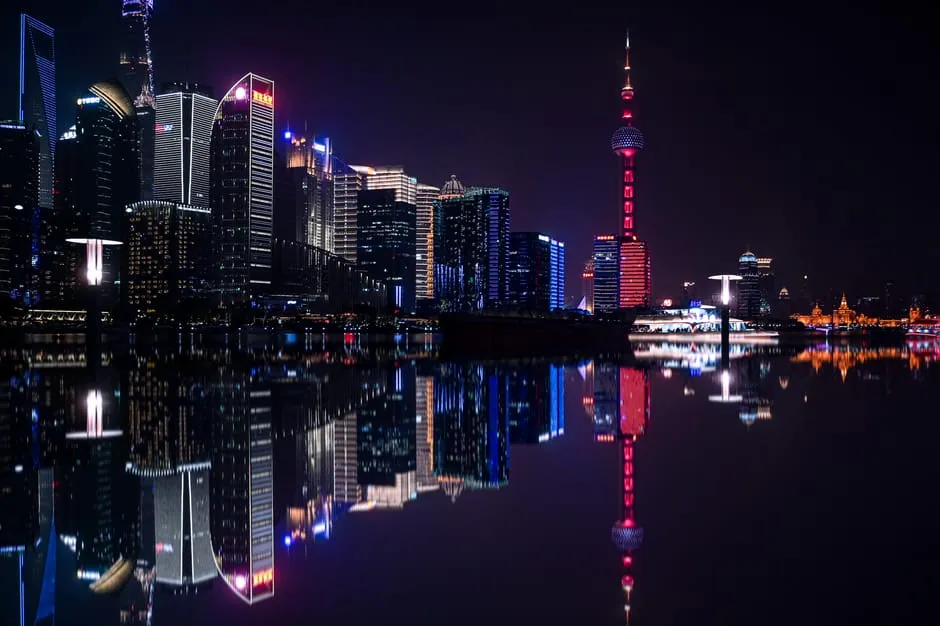
The second Shanghai is the post-1990 city. When Deng Xiaoping designated the Pudong New Area on the east bank of the Huangpu in April 1990, Pudong was rice paddies and warehouses. Lujiazui, the financial district directly across from the Bund, was farmland. The Oriental Pearl Tower (1994) went up first; the Jin Mao Tower (1999) second; the Shanghai World Financial Center (2008) third; and the Shanghai Tower (2016, 632 metres, still the tallest building in China) fourth. The three older supertalls now stand in a row at Lujiazui’s tip with the Shanghai Tower behind them. That entire skyline — the one every photograph in every guidebook shows you — is younger than most of the people looking at it.
The third Shanghai is harder to write about and harder to leave out. From late March to early June 2022, the city’s 25 million residents were under one of the longest and largest urban lockdowns of the COVID era. Citywide restrictions began on 5 April; at peak the city recorded around 25,000 daily cases; the lockdown lasted more than 65 days; April 2022 retail sales fell 11.1 per cent year-on-year nationally, driven heavily by Shanghai. Residents stayed in their compounds. Food deliveries were rationed. The city that prided itself, more than any other in China, on being globally facing and operationally competent had a very public bad experience. Three years later — and the COVID-era restrictions ended nationally in December 2022 — Shanghai is again the largest, richest, most international Chinese city by most measures that matter to a traveller. But the lockdown is recent enough that the older residents you talk to remember exactly where they were when the announcement came, and a small but real share of the city’s foreign population left between 2022 and 2024 and didn’t return.
This guide handles all three Shanghais. The concession-era city through the Bund, the French Concession, and the Hongkou Jewish refugee quarter (where Central European Jews fled to between 1933 and 1941 — Shanghai was one of the only cities in the world that admitted them without visa requirements). The post-1990 city through Pudong, the Maglev, the West Bund museum strip, and Disneyland. The 2022 city by naming it where it shaped things and otherwise leaving it alone.
The fourth thing to know is what this guide is not going to do. It will not tell you Shanghai is “the Paris of the East” — that phrase is a 1920s advertising slogan and the city has not earned it back. It will not call the food “world-class.” (The 2026 Michelin Guide gave the city one three-star restaurant, Taian Table, in its fifth consecutive year at three stars, and nine two-star restaurants — that is excellent for a Chinese city outside Hong Kong, and not world-leading by international standards.) It will not pretend Shanghai is hidden. It is, and has been for decades, the most photographed and most visited city in mainland China after Beijing, and the gap is narrow.
If you have three days, this guide is built for three days. If you have one, the Best Day Under ¥350 itinerary gets you the Bund at dawn, an authentic xiaolongbao at Jia Jia Tang Bao on Huanghe Road, a French Concession walk on Wukang Road, the Shanghai Tower observation deck at sunset, and a working ¥2 Huangpu ferry crossing back at the end of it. If you have five, you add Suzhou (23 minutes by high-speed rail) and Hangzhou (one hour). The order matters less than the rhythm — Shanghai rewards walking, then sitting, then walking again.
Why Shanghai now
The 30-day visa-free programme was extended through 31 December 2026 in November 2025, and on 17 February 2026 the United Kingdom and Canada were added to the eligible list. That now covers most EU member states, the UK, Ireland, Switzerland, Norway, Australia, New Zealand, Canada, Japan, Korea, and Malaysia, with thirty days of stay per entry and no required gap between visits. The 240-hour (10-day) transit programme, last expanded in November 2024 to 65 ports of entry across 24 provinces, includes both Shanghai airports plus the Shanghai Port International Cruise Terminal. For most travellers reading this guide, neither a visa nor a visa application is required.
The 2022 lockdown is now four years in the past. The city’s international flight capacity rebuilt slowly through 2023 and 2024 and as of mid-2026 is broadly back to pre-pandemic levels — check current schedules for your home airport at booking, as the recovery has been uneven by route.
Two specific 2026 anchors:
- The 2026 Michelin Guide for Shanghai, Jiangsu, and Zhejiang — the first combined regional edition — was released on 9 April 2026 in Taizhou. Taian Table retained three stars for the fifth consecutive year; nine restaurants held two stars; the guide added new one-stars and Bib Gourmands.
- Shanghai Disneyland is in its tenth-anniversary year — the resort opened June 2016. The “With You, It’s Magic” 10th-anniversary celebration runs through 2026. The eighth themed land (Zootopia) opened on 20 December 2023; construction on the ninth themed land (Spider-Man) began in May 2025 and continues through 2026.
- LEGOLAND Shanghai opened on 5 July 2025 in Fengjing, Jinshan district, ~70 km southwest of the city centre. It is the largest LEGOLAND park worldwide and was operational throughout 2026.
The cashless economy is now usable by foreigners without a Chinese bank account. Since late 2023 Alipay and WeChat Pay have both supported foreign Visa and Mastercard linkage directly through the app, with the single-transaction limit for verified foreign users raised in early 2026 to roughly USD 5,000 (about ¥35,000). This is the single biggest practical change for travellers in the last three years. As recently as 2019 you could spend a week in Shanghai unable to pay for almost anything that wasn’t priced for tourists. That is no longer the case.
Getting There — PVG, SHA, the Maglev, the high-speed rail
Shanghai has two airports, one Maglev, and the largest high-speed rail station in East Asia. Choosing among them is the first practical decision of the trip.
Shanghai Pudong International Airport (PVG) sits 30 kilometres east of People’s Square, on the coast. It handles essentially all long-haul international flights — Europe, North America, Australia, the Middle East, Africa — plus most regional Asian routes. Three operating passenger terminals (T1, T2, the satellite concourses); a fourth terminal (T3) is under construction as the current expansion phase — check the airport authority’s announcements for the opening window before relying on it.
Shanghai Hongqiao International Airport (SHA) sits 13 kilometres west of People’s Square, inside the city. SHA handles most domestic Chinese routes, Taiwan, and a thin slice of Asia-regional international (Tokyo, Seoul, Hong Kong, Bangkok and a small rotating set of other Northeast and Southeast Asian cities — check the airport’s published destinations before booking through SHA). It is co-located with Hongqiao Railway Station — the high-speed rail terminus — and the two are connected by a short walk. This is the most useful single piece of practical infrastructure in the city: arrive in SHA from a domestic flight, walk across to the railway hall, board the Hangzhou or Suzhou bullet train within an hour of landing.
The Shanghai Maglev is the experiment that became part of the furniture. It runs 30 kilometres from PVG to Longyang Road metro station on the eastern edge of Pudong’s built-up area. Standard fare is ¥50 one-way; with a same-day boarding pass it drops to ¥40; a 7-day round-trip is ¥80; VIP is ¥100. Operating hours run roughly 06:45 to 21:52, with two extra late departures from PVG at 22:15 and 22:40. The journey takes about 7 to 8 minutes. The headline 431 km/h top speed only runs during two daily windows — 09:00–10:45 and 15:00–16:45 — outside which the train cruises at 300 km/h. If you have luggage, time, and any interest in the engineering, the Maglev is worth the ¥40. If you have luggage, no time, and the ride is outside the 431 km/h windows, take Metro Line 2 directly from PVG to wherever you’re staying — it’s slower (about 50–60 minutes to People’s Square) but you don’t need to transfer your luggage at Longyang Road.
Hongqiao Railway Station is the high-speed rail hub. Suzhou is 23 minutes on the fastest G-class trains; Hangzhou is roughly one hour; Nanjing is 1h 15m; Beijing is 4h 18m on the fastest service. Buy via the railway operator’s app (12306) or through Trip.com / Klook. Passport is required for both ticket purchase and boarding; bring it. Hongqiao Railway Station handles more than 350 daily Suzhou-bound trains alone — the frequency is closer to Shinkansen than to European InterCity.
Buses from neighbouring provinces — Hangzhou, Suzhou, Wuxi, Ningbo — exist but are slower and cheaper than the train. Only relevant if the train is sold out, which on the Suzhou route is rare.
Editor’s tip. For arrivals at PVG with luggage, the calculation: Maglev + metro = ¥40 + ¥4-6 with a ~10 min transfer at Longyang Road, total ~25 minutes to People’s Square. Metro Line 2 direct = ¥7-8, no transfer, ~55 minutes. A Didi (Chinese ride-hail) to central Puxi off-peak typically runs ¥150–250 depending on traffic, surge, and the specific drop-off — check the in-app estimate before booking. It is usually faster than the metro outside rush hour. Taxis from PVG run on meter and queue at the official rank; ignore touts inside the terminal.
Top 12 Attractions in Shanghai
1. The Bund (Waitan)
The 1.5-kilometre strip of European architecture along the western bank of the Huangpu, running from Yan’an East Road in the south to Waibaidu Bridge in the north. Fifty-two protected buildings — Romanesque Revival, Gothic Revival, Renaissance Revival, Baroque Revival, Neo-Classical, Beaux-Arts, and a substantial Art Deco run from the 1920s and 1930s. The buildings face the Huangpu and present their backs to the city, which was deliberate: they were designed to be read from the river. The HSBC Building (No. 12, completed 1923), the Customs House (No. 13, 1927, the clock tower still functions), the Peace Hotel (No. 20, still operating as a hotel under an international luxury brand — check current operator at booking) and the former Bank of China (No. 23) anchor the row. Walk the whole length once at dusk — the blue hour when the Bund buildings light gold and Pudong erupts in LED across the river is a real photograph and a real experience, not a trick of the camera. Free; the Bund itself is a public riverwalk.
Editor’s tip. The early-morning walk along the Bund (06:00–07:30) is the city’s quietest and best version of itself. Locals are still doing tai chi in the park strips. The river is busy with working barges before the tourist boats start. Skip the Huangpu River Cruise — it is overpriced and the buildings are better seen on foot — and take the working Huangpu Ferry (see Hidden Shanghai) for ¥2 instead.
2. Shanghai Tower
128 storeys, 632 metres, completed 2015 and opened to the public in 2016. Designed by the international firm Gensler. The tallest building in China and currently the world’s third-tallest by architectural height. The spiral exterior twists one degree per storey, which reduces wind load by 24 per cent — useful in a typhoon-prone city. Two public observation decks: the indoor deck at 546 metres (118F) and an outdoor deck above it on the upper floors, which has opened on a limited schedule when weather and operations allow — confirm at the ticket office on the day. Standard online tickets typically run in the ¥120–180 range depending on date, deck, and advance-booking discount; verify on the official site before arriving. The lift takes 55 seconds.
You can see the Bund, all of Lujiazui, the Huangpu’s curve, the Yangtze beyond it on a clear day. Go on a clear day or don’t go — Shanghai’s smog days have improved since the worst years of 2013–2015 but the visibility from 546 metres is still weather-dependent.
Editor’s tip. Book online for the timed entry. On weekends and public-holiday windows the in-person ticket lines are the longest in Lujiazui — the online queue is short and the in-person one is not.
3. Yuyuan Garden and Yu Garden Bazaar
A classical Ming-dynasty garden in the old Chinese city south of the Bund. Built between 1559 and 1577 for a Ming official; substantially restored multiple times, most recently in the 1950s. About two hectares of rockeries, water-pavilions, and Jiangnan-style architecture. The bazaar that surrounds the garden is the most heavily commercialised tourist node in the city — busloads, queues at the Nanxiang Steamed Bun Shop, souvenir tat. The garden itself is worth seeing if you have not seen a classical Chinese scholar’s garden before; if Suzhou is in your itinerary, the gardens there (the Master of the Nets, the Humble Administrator’s, the Lingering Garden) are larger and quieter. Yuyuan garden entry is a modest fee (under ¥50 at most ticket windows in recent years) — check on-site or via the garden’s official mini-program. The bazaar is free.
4. The Shanghai Museum (People’s Square)
The flagship Chinese-art museum, occupying a purpose-built circle-and-square pavilion on People’s Square — the square is the central reference point of the city and the museum sits at its southern edge. Bronze, ceramics, calligraphy, painting, jade, seals, coins, ethnic minority art. Free; book a timed entry slot on the museum’s WeChat mini-program. The museum’s collection is one of the best in mainland China; the new East branch in Pudong (Shanghai Museum East, which opened in stages from 2024) adds gallery space without dispersing the core collection. Opening hours run roughly 09:00 to 17:00 with last entry around 16:00 and Mondays generally closed — verify on the museum’s WeChat mini-program before turning up.
5. Nanjing Road (Pedestrian) and East Nanjing Road
The east-west pedestrian shopping spine from People’s Square to the Bund — about 1.4 km of commercial frontage. The early stretch (closest to People’s Square) is mainstream chain retail; the eastern end at the Bund is older Republican-era department stores still in operation. The famous double-decker tourist trolley runs the length for ¥5 if your feet are tired. Most useful as a transit route between People’s Square and the Bund rather than as a destination in itself. Avoid 14:00–19:00 weekends.
6. The French Concession and Wukang Road
The strip of streets south of Yan’an Road and west of Huaihai Road that the French controlled from 1849 until 1943. Plane-tree-lined avenues, three-storey shikumen lane houses, the densest concentration of cafés, independent boutiques, and walkable architecture in the city. Wukang Road is the iconic single street — 1.2 km long, with several dozen heritage-listed buildings along its length, anchored by the wedge-shaped Wukang Mansion (designed by the Hungarian architect László Hudec; an early-1920s Art Deco landmark) at the southern apex. The lanes themselves — Anfu, Wulumuqi, Yongkang, Changle, Fuxing — are where the city’s foreign and creative population now mostly lives or pretends to. Free; you walk it.
Editor’s tip. The French Concession is best done as a half-day walk, not a list of buildings. Start at the Jiaotong University metro stop (Line 10), exit toward Huaihai Road, work east toward the Wukang Mansion, then south into the lanes. Stop where you want.
7. Xintiandi
The redevelopment of two blocks of shikumen lane housing into a high-end dining, retail, and bar complex, opened 2001. The shikumen exteriors were preserved (the developers kept the original lilong street pattern and the stone gates that give the buildings their name — shi-ku-men, “stone warehouse gate”). The interiors were gutted. The result is the most photographable preserved-old-Shanghai zone in the city and also the most artificial; locals refer to it as the place foreigners go to drink. The Site of the First National Congress of the Chinese Communist Party (1921) is inside Xintiandi at 76 Xingye Road — free, with patchy English captioning in places; bring a translation app for the panels you actually want to read.
8. Tianzifang (Lane 210, Taikang Road)
The other shikumen-redevelopment node, smaller and rougher than Xintiandi. Tianzifang was redeveloped lane-by-lane from the early 2000s by individual artists and tenants rather than by a single developer, and it shows — narrower alleys, more genuine residential mixed in with the shops, the upper floors still lived in. Tourist-saturated by midday on weekends; quietest 10:00–11:30 weekdays. Free.
9. Power Station of Art (PSA)
The first state-run contemporary-art museum in mainland China, opened 2012 in the converted Nanshi Power Plant on the north bank of the Huangpu in Huangpu district, opposite the China Art Palace. Hosts the Shanghai Biennale (biennial since 2012; the most influential contemporary-art exhibition in Asia — check the museum’s site for the next edition’s dates and theme). The chimney is preserved and visible from kilometres away. Free permanent admission has been the standing policy; major temporary exhibitions are ticketed, with prices set per show.
10. West Bund Museums Strip and Long Museum West Bund
A 9-kilometre strip of converted industrial land along the western bank of the Huangpu in Xuhui district, opened in stages from 2014. Long Museum West Bund (typically 10:00–18:00, closed Mondays, standard admission a moderate fee with surcharges for major touring shows — check the museum’s site for the current exhibition price); West Bund Museum (which opened in 2019 with a Centre Pompidou partnership and has since cycled major Paris-loaned shows — confirm the partnership’s current programming on the museum’s site); the Yuz Museum (a private contemporary collection — verify operating status before turning up, as private Shanghai museums have rotated venues in recent years). This is the most underrated half-day in the city.
11. The Hongkou Jewish refugee quarter and Shanghai Jewish Refugees Museum
Between 1933 and 1941, Shanghai admitted approximately 20,000 Central European Jewish refugees, mostly from Germany and Austria, without requiring visas. They settled in Hongkou district — specifically in the few square kilometres around Tilanqiao and Changyang Road, where the Japanese occupation later confined them to a “designated area for stateless refugees” from 1943 to 1945. The Shanghai Jewish Refugees Museum, housed in the restored Ohel Moshe Synagogue at 62 Changyang Road, opened in 2007 and was substantially expanded in 2020. The synagogue itself was restored in 2025 and reopened with the rest of the memorial hall. Standard admission is a modest fee — check the museum’s site for current hours, which typically run mid-morning to late afternoon with one weekly closure day.
If you have a half-day in Hongkou, the museum and the surrounding lanes (Tongshan Road, Zhoushan Road, Huoshan Park) are the most affecting single sequence in the city. There is no commercial layer here. You can stand in a courtyard and look at a doorway that families fleeing Vienna in 1939 walked through.
12. Disneyland Shanghai
Opened June 2016 in Chuansha New Town, Pudong, about 36 km east of central Shanghai. Eight themed lands as of 2026: the seven original lands plus Zootopia (opened 20 December 2023), with the Spider-Man land under construction (started May 2025). The 10th anniversary “With You, It’s Magic” celebration runs throughout 2026. One-day ticket prices follow a four-tier seasonal calendar: roughly ¥399 on the cheapest weekdays, ¥475–499 on standard weekends and summer, ¥599 on premium weekends, and ¥699+ on peak holidays. Premier Access (the skip-the-line bundle for the headline attractions) adds a per-person surcharge set per attraction or as a daily bundle — pricing varies by date and is shown in the resort’s app at purchase.
The Zootopia: Hot Pursuit trackless ride is the strongest single attraction in the park and one of the best Disney engineering pieces anywhere — book the queue or pay for Premier Access if it’s a priority. Soaring Over the Horizon (the Shanghai version of the flight simulator) and TRON Lightcycle Power Run are the other two anchors. The park is large, well-run, and visibly cleaner than the older Disney parks in Florida and California. A day here is a real day.
Shanghai’s Neighbourhoods
The river is the spine and almost every neighbourhood discussion starts with which side of it. Puxi (west bank, the old city) is the dense, walkable, historic side. Pudong (east bank, the new city) is the financial district plus broad suburban-feeling residential zones. The Huangpu is wider than it looks in photographs and the two banks feel different.
Huangpu (the Bund + People’s Square + Nanjing Road) is the central tourist district. The Bund itself, People’s Square (the city’s central square with the Shanghai Museum and the Shanghai Grand Theatre), East Nanjing Road, and Yuyuan Garden are all walkable from each other. Most three- and four-star hotels in the city centre cluster here; the international luxury cluster on the Bund itself includes Peninsula and Waldorf Astoria — compare current availability and rate on each chain’s site at booking.
The former French Concession (Xuhui and Huangpu districts) is the city’s most pleasant residential and walking quarter. Tree-lined streets, low buildings, the highest density of cafés and independent shops in mainland China. Stay here if you want to walk for the sake of walking.
Jing’an (Jing’an district) is the dense commercial and luxury-residential district north of the French Concession, anchored by the Jing’an Temple (an active Buddhist temple, rebuilt 1980s after Cultural Revolution damage). High-end shopping (Jing’an Kerry Centre); some of the best modern Chinese restaurants in the city; lower-key than Huangpu, more upmarket than the French Concession. The Bulgari, Four Seasons, and a cluster of comparable international five-stars sit in this district — book directly with the brand.
Xintiandi and Huaihai Middle Road area straddles Huangpu and Luwan (now merged into Huangpu administratively). The redeveloped shikumen blocks, the K11 mall, Xintiandi station on Lines 10 and 13. Convenient and expensive.
Pudong is functional, broad-streeted, and very tall. Lujiazui (the financial sub-district at the tip of the peninsula, directly across from the Bund) is where the Shanghai Tower, Jin Mao, World Financial Centre, and Oriental Pearl Tower stand. North of Lujiazui, the residential Pudong feels indistinguishable from the residential outskirts of any large Chinese city. South of Lujiazui, the World Expo 2010 site is now mostly empty.
Hongkou (north of Suzhou Creek) is the former Jewish refugee quarter and an older working-class district. Less polished than Huangpu, more historically dense than Pudong, the most affordable inner-ring district to stay in. Lu Xun Park (named for the writer Lu Xun, 1881–1936, who lived in Hongkou for the last years of his life and is buried in the park) is here.
West Bund (Xuhui district, riverfront) is the converted-industrial museum strip plus the Long Museum, West Bund Museum, Yuz Museum, and an expanding cluster of cafés, design studios, and the West Bund Art & Design Fair (annual, traditionally held in November — check the fair’s site for the current year’s dates and exhibitor list).
Where to Stay — by Budget
Shanghai’s accommodation market is large and the international hotel brands present in force. The single biggest variable is whether you stay on the Bund (premium price, the view) or in the French Concession (mid-range, walkable, less spectacular) or in Pudong (often slightly cheaper, very tall hotels, more transit-dependent).
Luxury (¥2,500+ / €315+)
The Bund hotels — the international five-star cluster on or directly behind the Bund waterfront, with Peninsula and Waldorf Astoria as the canonical names — sell on the view. The Jing’an hotels — Bulgari, Four Seasons, and the comparable five-star brands in the same district — sell on the location and the food. The Pudong supertall stack — the hotel floors of Jin Mao Tower and Shanghai Tower (Park Hyatt and J Hotel are the long-standing operators of these floors, though confirm at booking) — sells on altitude. Rates are highest in mid-September to early November (autumn shoulder + trade-fair season) and lowest in mid-January to mid-March, with the Chinese New Year week as a sharp peak inside that low season.
Mid-range (¥800–2,000 / €100–250)
The French Concession boutique hotels — a cluster of converted shikumen lane houses and small Republican-era buildings around Wukang, Anfu, and Yongkang Roads — plus the international mid-tier chains in the same belt are the best mid-range value. Hongkou and the West Bund are quieter and 15–25 per cent cheaper for comparable quality. Avoid Pudong at this tier unless you are flying in and out via PVG and want the airport-line access.
Budget (¥250–700 / €30–90)
Hongkou, the outer ring of the French Concession, and Putuo district hold the budget hostels and economy hotels. Chinese chain hotels (Hanting, Home Inn, Jinjiang Inn) are clean, functional, and cheap; the international hostel networks (the big global hostel brands rotate Shanghai venues — Hostelworld and Booking.com both list the current crop) cluster in the same belts. Booking through the Chinese platforms (Ctrip / Trip.com) typically prices 10–15 per cent below the international platforms for the same room.
Editor’s tip. Many Chinese hotels at the budget and mid-range tier still ask for passport and a re-registration form at check-in; this is mandatory under Chinese law for foreign guests. If a hotel says it does not accept foreigners, it usually means it has not registered to do so — try the next listing. International chains and the larger Chinese chains (Hanting, Atour, Jinjiang) accept foreigners as a matter of course.
Where to Eat — Shanghainese, the Regional-Cuisine Layer, and the Michelin Layer
Shanghai’s cuisine works at three levels, and you should eat at all three on a three-day visit.
Shanghainese (benbang cai)
The local cuisine is sweeter and oilier than most Chinese regional cuisines — the Jiangnan tradition uses sugar and Shaoxing wine in braises, and Shanghai’s contribution is its aggressively rich version of red-braised pork (hong shao rou), drunken chicken (zui ji, marinated in Shaoxing wine), hairy crab (in season October–November, sourced from Yangcheng Lake near Suzhou), and the two soup-dumpling traditions: xiaolongbao (small steamed soup dumplings) and shengjianbao (pan-fried soup buns with crispy bottoms).
Jia Jia Tang Bao at 127 Huanghe Road (the shop moved from 90 Huanghe Road a few years ago; another shop with a confusingly similar name, Jia Le Tang Bao, now occupies the old #90 — go to 127) is a Michelin Bib Gourmand and the city’s most famous xiaolongbao on a budget. ¥39 per basket for the pork-and-crab. Queue 20–40 minutes at peak; arrive 11:00 or 14:00 for the shortest wait.
Yang’s Dumpling (Xiao Yang Sheng Jian) at 97 Huanghe Road — across the street from Jia Jia — is the most famous shengjianbao in the city. A four-pack of pork-and-shrimp shengjianbao runs in the ¥10–20 range at most outlets — check the menu board on the day; prices have crept up since the mid-2010s. Mrs. Yang opened the original branch in 1994; there are now branches across the city, with the Huanghe Road location the most visited.
For full Shanghainese dinner sit-down: look to the mid-range sit-down houses in the French Concession’s lanes and around Huaihai Road. The names rotate at the mid-range tier — check current Time Out Shanghai or That’s Shanghai listings for the working short list, and read the most recent reviews on Chinese platforms like Dianping. Expect ¥200–400 per head for a mid-range Shanghainese dinner with two cold dishes, three hot dishes, soup, rice, and tea.
The regional-cuisine layer
Shanghai has been an internal-migration magnet for a hundred years and every regional Chinese cuisine has its representative restaurants in the city, often better than what you’d find in second-tier cities of the cuisine’s home province. Sichuan, Hunan, Cantonese dim sum, Hokkien, Yunnan, Northeast (dongbei), Uyghur (Xinjiang) — Shanghai is the easiest single city in mainland China to taste through China.
Mid-range options are easy to find by walking — Sichuan and Hunan houses cluster in the lanes around the French Concession’s Yongjia and Jianguo Roads; Cantonese dim sum is densest in Jing’an and along Huaihai; Yunnan and Northeast restaurants lean toward Hongkou and the western reaches of the Concession. Check current Dianping rankings for the working short list at your price point.
The Michelin layer
The 2026 Michelin Guide Shanghai (released 9 April 2026 as part of the first combined Shanghai-Jiangsu-Zhejiang regional edition) gave the city:
- One three-star restaurant: Taian Table (German chef Stefan Stiller; modern European tasting menu in a hutong-style space in the former French Concession; fifth consecutive year at three stars). Tasting menu pricing sits at the top of the Shanghai market (well into four figures in yuan per head, before pairings); current price and booking on the restaurant’s site, with reservations typically required weeks ahead.
- Nine two-star restaurants, including 102 House, 8½ Otto e Mezzo Bombana, Bao Li Xuan, Canton 8 (Huangpu), Da Vittorio, Fu He Hui, Imperial Treasure Fine Chinese Cuisine, Ji Pin Court, and The House of Rong.
- A long list of one-star and Bib Gourmand restaurants. Jia Jia Tang Bao retains its Bib Gourmand from previous editions.
By international Michelin standards, Shanghai is a strong but not world-leading dining city — Hong Kong has more three-stars, Tokyo has substantially more, Paris and Kyoto more again. Taian Table is genuinely excellent and is currently the only three-star in Shanghai (Beijing holds the other mainland-China three-stars; check the current Michelin Guide site for the up-to-date national roster).
Editor’s tip. For one excellent Shanghainese meal at non-Michelin prices, look for restaurants in the French Concession’s lanes (not the main streets) that have been operating in the same location for fifteen-plus years. The food is usually better and the room emptier than the Bund and Xintiandi equivalents at the same price. The specific names rotate; ask your hotel concierge or read the current Dianping rankings for the working list at your price point.
Drinking — Cocktails, Tea Houses, Craft Beer
Shanghai’s cocktail-bar scene is, by some measures, the strongest in mainland China and competitive with Tokyo’s lower tier. The reason is partly the long foreign-resident layer (concession-era inheritance), partly the post-2010 disposable-income surge, and partly the city’s open licensing regime by Chinese standards.
The top-tier scene clusters in the French Concession and Jing’an, with a handful of speakeasy-style rooms hidden behind unmarked doors and a second wave of newer bars on Yongjia, Anfu, and Wuyuan Roads. The names rotate fast — check current Time Out Shanghai or That’s Shanghai listings for the working short list before booking a tasting flight. Expect ¥120–200 per cocktail at the top tier.
Tea houses are the other Shanghai drinking tradition. The Huxinting Teahouse in Yuyuan Garden Bazaar (the five-pavilioned wooden teahouse on the zig-zag bridge in the middle of the Yu Garden lake) is the most famous and most touristy; expect to pay tourist prices for a pot of green tea — the building and the view are worth it once, the tea itself is not the draw. For a working tea-house experience, the lanes around West Nanjing Road and inside the French Concession hold a rotating cast of smaller, quieter rooms — ask a Shanghainese friend, or read recent Dianping reviews for the current local-favoured short list.
Craft beer has grown fast since the mid-2010s. The scene is anchored by long-running brew-pubs in the French Concession and a layer of independent taprooms across Hongkou and the West Bund. Boxing Cat is the canonical early-2010s name (its ownership has shifted in the years since launch — check who pours the original recipe before you go). Expect ¥45–80 per pint of locally-brewed beer.
Getting Around the City
The metro is the answer to almost every question in Shanghai. As of early 2026 the Shanghai Metro counts 20 operating lines, 522 stations, and more than 930 kilometres of route — making it, by route length, the world’s largest metro network (Beijing has more lines, New York has more stations). The system is well-signed in English, fares are ¥3–10 depending on distance, and Alipay and WeChat Pay both work directly through their respective QR-code transit functions.
Beyond the metro:
- Walking is the way to do the Bund, the French Concession, Hongkou, and Xintiandi. The blocks are short, the traffic at major crossings is fast and not pedestrian-deferential, and the lane interiors are pleasant.
- The Maglev runs only between PVG and Longyang Road; it is not an in-city transport option.
- Didi is China’s Uber. The app links a foreign Visa/Mastercard; the interface has an English mode. Off-peak metered taxi is competitive on price; in rush hour Didi is slightly faster because the algorithm avoids the worst congestion.
- Bike-share: HelloBike and Meituan run dockless yellow and blue bikes across the city. Foreign cards link directly. Pricing has held around ¥1.5 per 30 minutes for years; check the in-app rate when you unlock the first bike. The French Concession and Pudong are both pleasant by bike outside rush hour; the Bund and Nanjing Road are not.
- The working Huangpu ferries run dozens of times a day between Puxi and Pudong banks for ¥2 (see Hidden Shanghai). They are commuter transport, not a sightseeing cruise; the views are the same.
When to Visit
Shanghai’s subtropical maritime monsoon climate gives the city four sharply distinct seasons and one defining rule: avoid the plum rains.
Best months
- Late March to mid-May. Warm but not yet humid. Plane trees in the French Concession leaf out. The Shanghai International Film Festival traditionally lands in mid-June at the very end of the spring window — check the festival’s site for the current year’s dates.
- Late September to early November. The autumn peak — hairy crab season starts, the trade-fair season packs the city, the weather is cool and clear. Hotel rates are highest now. Book early.
Months to avoid
- Mid-June to early July: the plum rains (meiyu, “plum rain” — named for the fruit ripening as the rains start). Two to three weeks of nearly constant rain, very high humidity, and thunderstorms.
- Late July to early September: heat (35°C+ regularly, often 38–40°C), humidity (75–80 per cent), and the typhoon season. Typhoons in Shanghai are rarely Category 5–level but they bring heavy rain, transit disruption, and flight cancellations.
- Chinese New Year week (late January to mid-February, varies by lunar calendar): most of the city’s working population leaves for their home provinces; many independent restaurants and shops close for 1–2 weeks; hotels remain open but at peak prices.
Acceptable months
- November to early December: cold but mostly dry. Late autumn light is good. Crowds drop sharply after early November.
- February (post-New Year) to mid-March: cold (5–10°C daytime), occasional rain. Cheapest hotel rates. The plane trees are bare but the city is uncrowded.
Month-by-Month Weather
| Month | High (°C) | Low (°C) | Rain | Note |
|---|---|---|---|---|
| January | 8 | 1 | Low | Cold, dry, sometimes raw |
| February | 10 | 2 | Low | Cold, occasional rain; CNY week peaks late Jan / mid Feb |
| March | 14 | 5 | Moderate | Early spring, plane trees still bare |
| April | 20 | 11 | Moderate | First fully comfortable month |
| May | 25 | 16 | Moderate | Warm, before plum rains; best of spring |
| June | 28 | 21 | High (plum rains mid-month) | Plum rains start ~mid-June |
| July | 32 | 25 | High | Hottest, plum rains end early-month, then heat |
| August | 32 | 25 | High (typhoons) | Peak heat and humidity; typhoon season |
| September | 28 | 21 | Moderate | Cooling; typhoon risk into October |
| October | 23 | 14 | Low | The best month — clear, cool, hairy crab arrives |
| November | 17 | 8 | Low | Cool, dry, leaves turn in the Concession |
| December | 11 | 3 | Low | Cold, mostly dry |
Daily Budget Breakdown
All figures are per person, mid-range traveller, 2026.
Backpacker (¥300–500 / €38–63)
- Bed in hostel dorm or budget chain hotel: ¥80–200
- Breakfast (street xiaolongbao, jianbing, congee): ¥10–20
- Lunch (working canteen, noodle shop, mall food court): ¥25–50
- Dinner (local restaurant, two dishes + rice): ¥50–100
- Metro and bike-share: ¥20–40
- One paid attraction or museum: ¥0–80
- Tea or coffee: ¥15–30
Mid-range (¥800–1,500 / €100–190)
- 4-star hotel double, French Concession or Hongkou: ¥500–1,000
- Sit-down breakfast and a coffee: ¥40–80
- Two restaurant meals: ¥200–400 total
- Two attractions or one with a ticket plus museums: ¥100–200
- Taxi or Didi: ¥40–80
- One cocktail or craft beer: ¥80–150
Premium (¥3,000+ / €380+)
- 5-star hotel on the Bund or in Lujiazui: ¥2,500–5,500
- Hotel breakfast (¥250) or French Concession café (¥80–120)
- One Michelin-tier dinner (one-star or two-star): ¥800–2,500
- One Michelin-tier lunch or premium dim sum: ¥400–800
- Premium transport (chauffeured car, Maglev premium): ¥200–500
- Bar at Bund-view sky-lounge: ¥150–250 per drink
Sample Itineraries
1 day
Morning: Bund walk from north to south (06:30–08:30, beat the crowds), breakfast xiaolongbao at Jia Jia Tang Bao on Huanghe Road. Cross to Pudong via the ¥2 Huangpu ferry (Jinling Road or Dongchang Road dock). Mid-morning: Shanghai Tower observation deck (book the timed entry). Walk back across the Bund. Afternoon: French Concession walk on Wukang Road, lunch in a Concession lane, café and people-watch. Evening: dinner at a sit-down Shanghainese restaurant; second Bund walk at dusk for the lights.
2 days
Day 1: Bund + Pudong + Shanghai Tower (as above). Day 2: morning at the Shanghai Museum (book timed entry on WeChat), afternoon in the French Concession (Wukang Road, Tianzifang, or both), evening at Xintiandi or in a Concession bar.
3 days
Day 3 adds either the Hongkou Jewish refugee quarter (morning) plus the West Bund museum strip (afternoon), OR Disneyland Shanghai (a full day).
5 days
Add day-trip to Suzhou (one full day; 23 min train each way; Master of the Nets garden + the Pingjiang Road quarter + a Suzhou-style lunch) and a half-day at Zhujiajiao water town (Metro Line 17, ~1 hour from People’s Square).
7 days
Add Hangzhou (one or two nights; West Lake; Longjing tea villages; Lingyin Temple). At seven days the Shanghai-Suzhou-Hangzhou triangle is the canonical short itinerary; this is what most experienced travellers do.
Best Day Under ¥350 — Concession-Era Shanghai
The Bund, an authentic xiaolongbao, the French Concession, a working Huangpu ferry, the Shanghai Tower at sunset, and a Shanghainese dinner — under ¥350.
| Item | ¥ | Notes |
|---|---|---|
| Metro day equivalent (4–6 rides) | 25 | Single tickets ¥4–6 each |
| Breakfast: 1 basket xiaolongbao at Jia Jia Tang Bao | 39 | 127 Huanghe Road |
| Bund walk + Huangpu ferry to Pudong | 2 | Jinling Road or Dongchang Road pier |
| Shanghai Tower observation deck (advance online) | 150 | Price varies by deck and date; book online |
| Lunch: a noodle bowl in Lujiazui | 35 | Mall food court or street noodle shop |
| French Concession walking (Wukang Road) | 0 | Free |
| Dinner: Shanghainese set, casual restaurant | 70 | Two dishes + rice, no alcohol |
| Total | ¥321 | ≈ €41 |
The Shanghai Tower observation-deck price is the swing variable — current online tickets sit in the ¥120–180 range depending on advance booking, date, and which deck. If the Tower fee runs high on your dates, swap to the Oriental Pearl observation deck (lower and cheaper) or skip the altitude entirely — the view of Lujiazui from the Bund and the working ferry crossing already deliver most of the Pudong experience.
Shanghai’s real day-cost lands close to most Western European capitals on a budget itinerary, not significantly cheaper, which surprises first-time visitors. Food and transit are cheap; the indoor attractions and the rooftop drinks are not.
Hot Day, Typhoon Day, Off-Season Plan
Hot day (July–August, 35°C+ and 75% humidity)
Indoors during 11:00–17:00. The Shanghai Museum, the Power Station of Art, the Long Museum West Bund, the Shanghai Tower observation deck (climate-controlled), and the Shanghai History Museum (next to People’s Square) are all genuine half-day options that work in heat. The lane-house interiors of the French Concession and Xintiandi are also walkable — narrow streets shaded by plane trees stay 4–5°C cooler than open boulevards. Stay hydrated; iced jasmine tea (¥10–15 at any convenience store) is the city’s working answer to heat.
Typhoon day (June–October, occasional)
Stay indoors. Flights cancel; the metro mostly keeps running but slows. The classical museums (Shanghai Museum, Power Station of Art) and the larger shopping centres (Kerry Centre, IFC Mall, K11) are typhoon-proof and busy. Disneyland Shanghai closes for severe typhoons — check the resort’s WeChat before travelling out.
Off-season (mid-January to mid-March, mid-November to mid-December)
Cold but dry. The Bund crowds drop by 70 per cent. Restaurant reservations at the high tier (Taian Table, the two-stars) become possible at 2–4 days’ notice instead of 2–4 weeks. The plane trees in the French Concession are bare but the lanes are clean of summer foot traffic. Hotel rates are at their lowest. This is the underrated season — and the cheapest international flight tickets into PVG in the calendar.
Day Trips
Suzhou (23 minutes by high-speed rail)
The classical gardens (Master of the Nets, Humble Administrator’s Garden, the Lingering Garden — all UNESCO World Heritage), the Pingjiang Road quarter (a 1.6-kilometre canal-side street with restored Ming-Qing architecture), and the Suzhou Museum (designed by I. M. Pei, opened 2006). Doable as a single full day from Shanghai. The 350+ daily fast trains from Hongqiao Railway Station to Suzhou North make the day-trip frictionless. Second-class fare typically runs around ¥40 each way; check 12306 or Trip.com for the current day’s price and seat availability.
Hangzhou (1 hour by high-speed rail)
West Lake (Xi Hu, China’s most-painted landscape), Lingyin Temple (a Buddhist complex with origins reported in the 4th century and substantially rebuilt over the long history that followed), and the Longjing tea-growing villages in the hills west of the lake. One full day is enough for a first visit; two days are better for the lake-and-tea-villages combination. Second-class HSR fare typically runs in the ¥75–95 range each way; check 12306 or Trip.com for the current price.
Zhujiajiao Water Town (1 hour by Metro Line 17)
A 1700-year-old canal town on the southwestern edge of Shanghai municipality. Half-day; reachable directly from People’s Square via Metro Line 2 to Hongqiao Railway Station then Line 17 to Zhujiajiao terminus, total ~70 minutes. The water town is heavily commercialised but the canal-and-stone-bridge bones are real. Entry to the water town itself is free; combination tickets covering the individual canal-side attractions are a modest add-on — check the ticket-office board on the day.
Xitang Water Town (1.5–2 hours by long-distance bus or train+taxi)
Smaller, less developed than Zhujiajiao, also more authentic. The Mission: Impossible III canal scenes were shot here in the mid-2000s (the film was released in 2006). Best as an overnight rather than a day trip — the village empties of day-trippers around 17:00 and is quietest from 18:00 to 09:00.
Wuzhen (further afield, 1.5 hours by train + bus)
The most-restored and most-touristed of the canal towns, with the most-developed nighttime lighting. Overnight, not day trip. Worth it if water towns are your priority and you only see one.
Safety & Practical
Shanghai is, by global metropolitan standards, very safe — extremely low rates of street crime, low rates of violent crime against tourists, generally well-policed. The risks for foreign visitors are mostly logistical, not personal:
- Traffic is the biggest hazard. Pedestrian crossings are advisory; e-bikes (silent and frequently on the pavement) are the specific risk. Look both ways before crossing, including pavements.
- Pickpockets exist in tourist-dense areas (Nanjing Road, the Bund, Yuyuan Bazaar) but the rate is lower than Barcelona, Paris, or Rome.
- Scam restaurants on Nanjing Road and around the Bund — usually a young woman approaching asking to “practice English” and inviting you to a tea house or art gallery. Decline politely. The bill that follows is engineered for tourists.
- The water is not potable from the tap. Bottled water is universal and cheap (¥2 for 500 ml at any convenience store).
- Pollution has improved markedly since the worst years of 2013–2015 but is still worse than Western European cities on bad days. Check the AQI before planning an outdoor day.
- English is patchy. The metro signage is bilingual; restaurants in tourist zones have menus or pictures; outside the tourist core, English is rare. A translation app (Pleco for Chinese-English; Google Translate works with a VPN; Baidu Translate works without) is functional in 2026.
- Internet: most Western sites and services (Google, Facebook, Instagram, X, YouTube, most international news) are blocked. A VPN is technically a grey area but most foreign visitors carry one. International data roaming on a Western SIM tunnels through the carrier’s home network and bypasses the firewall in practice — this remains the most reliable workaround for short visits, though the policy can change without notice.
Payment
- Alipay and WeChat Pay both accept foreign Visa and Mastercard linkage as of late 2023. Set up the app before arrival (both work outside China for the registration). The single-transaction limit for verified foreign cards is roughly USD 5,000 ($35,000 RMB) as of early 2026.
- Cash is increasingly unusable — most street vendors and many sit-down restaurants accept QR only. ATMs work with foreign cards at Bank of China and ICBC branches.
- Tour Card (a prepaid card from Bank of Shanghai, top up with international card and link to Alipay/WeChat) remains an alternative if your home card has issues with direct linkage.
Tipping
Not expected. Service charges are sometimes added at high-end hotel restaurants (usually 10–15 per cent); otherwise nobody expects tips.
Visa & Entry Requirements
Shanghai has two routes for visa-free entry as of mid-2026, both useful, both with their own quirks.
30-day unilateral visa-free programme (extended through 31 December 2026)
Eligible passport holders may enter mainland China for tourism, business, family visit, short-term exchange, or transit without applying for a visa. Stays are capped at 30 calendar days per entry. The exemption cannot be extended or converted in-country. There is no required gap between visits — leaving China and re-entering immediately resets the 30-day clock.
Per the Chinese National Immigration Administration list as of February 2026, the unilateral 30-day programme covers 50 countries:
- Europe (35): Andorra, Austria, Belgium, Bulgaria, Croatia, Cyprus, Denmark, Estonia, Finland, France, Germany, Greece, Hungary, Iceland, Ireland, Italy, Latvia, Liechtenstein, Luxembourg, Malta, Monaco, Montenegro, Netherlands, North Macedonia, Norway, Poland, Portugal, Romania, Russian Federation (through 14 September 2026), Slovakia, Slovenia, Spain, Sweden, Switzerland, United Kingdom (added 17 February 2026).
- Asia (7): Bahrain, Brunei Darussalam, Japan, Kuwait, Oman, Republic of Korea, Saudi Arabia.
- Oceania (2): Australia, New Zealand (both extended through 31 December 2026).
- Americas (6): Argentina, Brazil, Canada (added 17 February 2026), Chile, Peru, Uruguay.
Conditions: ordinary passport (not diplomatic/service), valid for at least six months from entry date; purpose of visit tourism, business, family visit, exchange, or transit; maximum stay 30 days per entry. Proof of onward travel (printed return or onward ticket out of China within 30 days) is recommended at immigration. The United States is not on the unilateral 30-day list and requires either a tourist visa or the 240-hour transit programme.
The programme was extended in November 2025 to run through 23:59 on 31 December 2026. Whether it extends further past that date is a separate question that has not been answered publicly as of writing.
240-hour transit visa-free programme
For travellers who do not qualify for the 30-day programme — including all US passport holders, plus some other nationalities — the 240-hour (10-day) transit programme allows visa-free entry through any of the 60-plus designated transit ports, including both Shanghai airports (PVG and SHA) and the Shanghai Port International Cruise Terminal. Travellers must:
- Hold a valid passport from one of 55 eligible nationalities (most Western nations including the US, UK, Canada, Australia, NZ, Japan, Korea, Russia, and all EU members are covered — the National Immigration Administration’s site holds the canonical list and is the source to check before flying).
- Hold an onward ticket to a third country or region (departing China within 240 hours of entry — the count starts at 00:00 the day after entry, so functionally 10 full calendar days).
- Stay within the permitted geographic area (as of late 2024, all of mainland China is open under the 240-hour programme — earlier restrictions to single provinces were lifted).
What changed in 2024–2026 that matters
- The 240-hour transit programme replaced the older 72/144-hour programmes in December 2024.
- The geographic restriction (previously single-province) was lifted in November 2024 — travellers can now move freely across mainland China within the 240 hours.
- The 30-day unilateral programme has been progressively expanded and extended through 2024 and 2025, with UK and Canada added on 17 February 2026.
On arrival
You’ll need: passport with at least six months’ validity, return or onward ticket, proof of accommodation for your first night (a hotel booking screenshot is sufficient). Immigration at PVG is fast (10–25 minutes typical for international arrivals; the lane to use is “Foreigners — Transit” if you’re on the 240-hour programme, “Foreigners” otherwise).
Hidden Shanghai
The category “hidden” is generous in Shanghai — the city has more than 24 million residents and the corners that aren’t on the international tourist trail are still well-known to anyone who lives in them. The five places below are not secrets; they are simply less-photographed than the Bund, Yuyuan, and Wukang Road.
The working Huangpu ferries
Half a dozen scheduled ferry routes cross the Huangpu daily, mostly carrying commuters. The most useful for visitors are the Jinling Road–Dongchang Road and Fuxing Road–Dongfang Road routes, both connecting central Puxi to Pudong’s residential belt. ¥2 per crossing (¥2 single, ¥3 with a bike). Departures every 10–15 minutes during daylight. The crossing takes about seven minutes and gives you a working version of the same view that the Huangpu River Cruise sells for upwards of ¥100 a head.
M50 Art District (50 Moganshan Road)
A converted textile-mill complex on the south bank of Suzhou Creek, repurposed from 2002 into the city’s first artist-studio district. Independent galleries, working studios, design boutiques. Less commercially polished than the West Bund, less hyped than Tianzifang, and the only one of the three where you can talk to artists in their workspace. Free; some galleries charge for special exhibitions. Closed Mondays.
The Shanghai Propaganda Poster Art Centre
A private museum in the basement of a residential block at 868 Huashan Road, Xuhui district. Several thousand original posters from 1949 to the late 1970s, the most complete public collection of Mao-era political-poster art in China. Idiosyncratic ownership (the late Yang Pei Ming opened the museum from his personal collection). Admission is a modest fee (historically around ¥25); confirm operating hours and the current ticket price before turning up, as private museums of this scale can shift schedules without notice. The museum is intentionally not signposted at street level — you ask the doorman of the residential building and they direct you to the basement.
Lu Xun Park and the Lu Xun Memorial Hall (Hongkou)
Lu Xun (1881–1936) was the most influential modern Chinese writer of the early 20th century and lived the last years of his life in Hongkou. The park where he was reinterred in 1956 is an old-school working Chinese park — morning tai chi, retired men playing cards under plane trees, a small Lu Xun museum at the south end (free; closed Mondays). Combine with the Jewish Refugees Museum (5 min walk) for a half-day in Hongkou.
The Shanghai Postal Museum
In the former General Post Office building at 250 Suzhou North Road (north of Suzhou Creek, walking distance from the Bund’s north end). The building itself (opened in the 1920s) is a major piece of Republican-era civic architecture, and the museum (added on the upper floors in the mid-2000s) covers two thousand years of Chinese postal history with an emphasis on Republican-era international mail through Shanghai. Free; closed Mondays. The rooftop gives a different angle on the Bund and on Pudong.
Romantic Shanghai
The city is not romantic in the obvious Parisian sense — it is too vertical, too commercial, too lit. But there are real romantic geographies if you know what to look for.
- The French Concession at dusk: the plane trees on Wukang Road, Fuxing Road West, and Anfu Road are tallest and deepest in the second half of October when the leaves turn. The shikumen lanes (Yongkang Road and the parallels) are at their most photogenic in the half-hour before sunset.
- The Bund at dawn, not dusk: dusk is when everyone goes. Dawn — 06:00 to 07:30 — is when the river is moving and you have the photograph to yourself.
- A rooftop bar on the right side of the river: the Bund-facing rooftops in Lujiazui are the canonical pick for the photograph; the Pudong-facing rooftops along the Huangpu in Puxi are the actual experience. The specific bars rotate every few seasons — check current Time Out Shanghai for the working short list before booking.
- A Suzhou day trip: Master of the Nets garden by evening tour (Suzhou opens several of the gardens after dark in season, traditionally over the warmer months, with chamber music and Kunqu opera performances — check the garden’s site for the current season’s schedule).
- A meal at Taian Table (booking required weeks ahead). The most romantic high-end restaurant in the city is also the most reliable.
Shanghai with Kids
Shanghai is a strong family-travel city for children old enough to walk for an hour. The major draws:
- Shanghai Disneyland (full day, 36 km from the city). Zootopia: Hot Pursuit, TRON Lightcycle Power Run, Soaring Over the Horizon are the three flagship rides. Ages 4+ ideal; the park has plenty for younger children too. 10th-anniversary celebrations through 2026.
- LEGOLAND Shanghai (full day, Fengjing in Jinshan district, about 70 km southwest). Opened 5 July 2025, the largest LEGOLAND park in the world. Eight themed lands, 75+ attractions. Best for ages 2 to 12. One-day ticket pricing follows a seasonal calendar comparable to Disneyland Shanghai’s; check the LEGOLAND Shanghai app or official site for the date you plan to visit. The journey from central Shanghai takes about 75–90 minutes by car or train + taxi; the park is 1 km from Jinshan North railway station.
- Shanghai Ocean Aquarium (Pudong, near the Oriental Pearl Tower) — large, well-maintained, adult admission a moderate fee with discounted child rates; book ahead in school holidays. Best for ages 5–10.
- The Shanghai Natural History Museum in Jing’an Sculpture Park, opened 2015 — Jurassic skeletons, an excellent African Hall, kid-scaled exhibits. Standard adult admission has held around ¥30 in recent years; check the museum’s site for the current ticket.
- The Bund at dusk — every child likes the lights once.
- The Maglev ride itself — the 7-minute, 431-km/h sprint (during the morning or afternoon window) is the experience.
Editor’s tip. Strollers and pushchairs work on the metro (every station has a lift, though some are slow). Most restaurants have child-friendly noodles or fried-rice options off-menu — point at “鸡蛋炒饭” (egg fried rice) on a translation app and you’ll be understood.
What’s New in 2026
- 30-day visa-free programme extended through 31 December 2026 (announced November 2025). UK and Canada added on 17 February 2026 (see Visa & Entry).
- 2026 Michelin Guide Shanghai-Jiangsu-Zhejiang — the first combined regional edition, released 9 April 2026 in Taizhou. Taian Table retains three stars (fifth consecutive year); nine restaurants hold two stars; new one-stars and Bib Gourmands added (see Where to Eat).
- Shanghai Disneyland 10th anniversary — the “With You, It’s Magic” celebration runs all year. Spider-Man land construction continues; Zootopia open since 20 December 2023 (see Top 12 #12).
- LEGOLAND Shanghai — operational since 5 July 2025; first full operating season in 2026 (see With Kids).
- Alipay and WeChat Pay foreign-card transaction limits raised to USD 5,000 single-transaction / USD 50,000 annual for verified foreign users (early 2026).
- Shanghai Metro at 20 lines and ~930 km route length as of January 2026 (after Line 21 integration on 15 October 2025), passing 930 km and remaining the world’s longest metro by route length.
- PVG Terminal 3 is under construction as the airport’s next major expansion — the opening window has been announced and revised more than once. Confirm the current schedule with the airport authority before relying on T3 for departures or arrivals.
🌍 See the bigger picture: our China travel guide covers regions, when to go, and getting around.
Frequently Asked Questions
Do I need a visa to visit Shanghai in 2026?
Most likely no. The 30-day visa-free programme covers most EU member states, the UK (from 17 February 2026), Ireland, Switzerland, Norway, Australia, New Zealand, Canada (from 17 February 2026), Japan, Korea, Malaysia, and Singapore through 31 December 2026 — stay up to 30 days per entry, no extension possible in-country, no required gap between entries. For US passport holders and a few other nationalities, the 240-hour (10-day) transit programme covers visits through PVG, SHA, and the Shanghai Cruise Terminal as long as you have an onward ticket to a third country. Both routes are visa-free at the gate; bring your passport, return ticket, and accommodation booking.
How many days do I need in Shanghai?
Three days is the minimum that captures Bund + Pudong + the French Concession + one museum or Hongkou. Five days adds Suzhou and Zhujiajiao day trips and a slower city pace. Seven days gives you the Shanghai-Suzhou-Hangzhou triangle, which is the canonical short Yangtze-Delta itinerary.
Is the Maglev worth the ¥40?
For a tourist with luggage arriving at PVG: yes — the experience of the train is the experience, the 8-minute crossing of the eastern Pudong belt is genuinely fast, and the ¥40 fare with a same-day boarding pass undercuts a Didi by ¥80–150. For a leisure rider not arriving from the airport: only if you can time it for the 09:00–10:45 or 15:00–16:45 high-speed window. Outside those windows the train cruises at 300 km/h, which is faster than a regular high-speed train but not the headline 431 km/h experience.
Is Disneyland Shanghai worth a full day? And what about LEGOLAND?
Disneyland is worth it if you have kids 4+ or if you’re a Disney completist — the park is large, well-run, the Zootopia: Hot Pursuit trackless ride is one of Disney’s best engineering pieces anywhere, and the 10th-anniversary year (2026) adds programming. LEGOLAND Shanghai (open since 5 July 2025) is the largest LEGOLAND in the world and is the better choice for children ages 2–10 who are LEGO-obsessed. Don’t try to do both in the same trip unless you have a week — they are 100 km apart and each is a full day.
What’s the food not to miss?
The two soup-dumpling traditions: xiaolongbao (steamed) at Jia Jia Tang Bao (127 Huanghe Road, ¥39 per basket, Michelin Bib Gourmand) and shengjianbao (pan-fried) at Yang’s Dumpling (97 Huanghe Road, just across the street). For a sit-down Shanghainese dinner, a mid-range French Concession lane restaurant (¥200–400/head) beats the Bund and Xintiandi equivalents at the same price. For the three-star tier, Taian Table is currently Shanghai’s only Michelin three-star (Beijing holds the other mainland-China three-stars in the 2026 guide) and is the canonical choice — book weeks ahead.
Should I stay on the Bund or in the French Concession or in Pudong?
The Bund for the view (most expensive, central, busy). The French Concession for the walking and the cafés (mid-range, the most pleasant residential atmosphere). Pudong for the airport access via Maglev and for the supertall hotels with altitude views (cheaper than the Bund equivalent, less walkable). For a 3-day first trip, the French Concession wins on net experience. For a 1-night business stop with a PVG departure the next morning, Pudong is the right answer.
Can I pay with my Visa or Mastercard?
In Alipay or WeChat Pay, yes — both apps have supported foreign Visa/Mastercard linkage since late 2023, with the single-transaction limit raised to USD 5,000 in early 2026. Set up the app before arrival. Direct card swipes are accepted at most hotels and at some mid-range and high-end restaurants but the QR-code mobile wallet covers a much wider merchant base — including taxis, the metro, convenience stores, and street food. Cash is increasingly unusable.
What’s the best day-trip from Shanghai?
Suzhou — 23 minutes by high-speed rail, the four UNESCO-listed classical gardens are a full and rewarding day, and the Pingjiang Road quarter is the cleanest restored canal-side street in the Yangtze delta. Hangzhou (1 hour) is a strong alternative if you prefer landscape over architecture. Zhujiajiao (1 hour by Metro Line 17) is the easy half-day option and the closest water town.
Is Shanghai safe after the 2022 COVID lockdowns?
Yes — the COVID-era restrictions ended nationally in December 2022, and Shanghai has been a normal travel destination since 2023. The city is statistically safer than London, Paris, or New York by most measures of street crime. The 2022 lockdown is recent enough that residents remember it, but it does not affect 2026 travel logistically: international flights are at or above pre-pandemic capacity, hotels are open, restaurants are open, museums are open. The visa programmes have been progressively liberalised since 2023 — the current regime is more permissive than it was in 2019.
When is the best time to visit?
Late March to mid-May and late September to early November. Avoid mid-June to early July (plum rains, near-constant rain and humidity) and late July to early September (35°C+ heat, 75–80% humidity, typhoon risk). November and February are underrated — cold but dry, low crowds, lowest hotel rates of the year (excluding Chinese New Year week).
What’s the language situation? Can I get by with English?
Metro signage is fully bilingual. Restaurants in the Bund, French Concession, Xintiandi, and Pudong tourist zones generally have English menus or pictures. Most museum captions are bilingual. Outside the tourist core, English is patchy — but a translation app (Pleco for menus, Baidu Translate without a VPN, Google Translate with one) is functional and most Shanghai service workers are used to translation-app interactions. You can manage three days in Shanghai with zero Mandarin if you carry a translation app.
Is Shanghai expensive?
Mid-range, by global metropolitan standards. A mid-range day comes to ¥800–1,500 (€100–190), comparable to most Western European capitals and meaningfully more expensive than smaller Asian cities. Hotel costs dominate the budget — a 4-star hotel double in the French Concession runs ¥500–1,000, a 5-star on the Bund runs ¥2,500–5,500. Food is the surprising affordable — a Michelin Bib Gourmand meal is ¥40, a sit-down two-dish dinner is ¥70, a high-end Shanghainese dinner ¥300–600. Transport is essentially free at metro prices (¥3–10 per ride).
Is Shanghai safe for solo female travellers?
Yes — the city is statistically very safe at night, late metro stations are well-lit and busy, taxi and Didi services are reliable and trackable. Pickpockets exist in the tourist-dense zones but at lower rates than in Western European capitals. The standard precautions apply (avoid empty late-night streets in the outer districts, keep a phone charged, share your Didi tracking with someone) — but solo female travel in Shanghai is less logistically complicated than in most major European cities.
What’s the best way to handle internet access — Google, Instagram, etc.?
Most Western platforms (Google, Facebook, Instagram, X, YouTube, most international news sites) are blocked by the Great Firewall. International data roaming on a Western SIM card tunnels through your home carrier’s network and bypasses the firewall in practice — this is the simplest workaround for a short visit. Alternatively, install a VPN before arrival (most reputable VPNs no longer work reliably from inside China — install while you’re still on a Western network). Local Chinese SIM cards are cheap and reliable for calls and 4G/5G but route through the Chinese internet, so you’d need the VPN for Google etc.
Explore More AiFly Guides
If this guide helped, the AiFly fleet has companion city guides on Shenzhen, Chengdu, Chongqing, Xi’an, Xiamen — and the budget-anchored Best-Day series running across Cairo, Bogotá, Kuala Lumpur, Munich, Cyprus, Sicily, Corsica. Browse all city guides at aifly.one.
- Xiamen — The Complete City Guide 2026 — the Treaty-of-Nanjing twin port, 1,300 km south of Shanghai, with its own concession layer (Gulangyu) and a very different cuisine (Hokkien). The deepest cross-reference to Shanghai’s concession-era inheritance.
- Chongqing — The Complete City Guide 2026 — the other mega-municipality, the Yangtze upstream terminus, and the source of mainland China’s other defining cuisine (Sichuan/Chongqing hotpot).
Cheapest Flights to Shanghai
We track flight deals to Shanghai from 9 cities worldwide. Here are the best recent fares:
Prices are based on recent deals and may no longer be available. Browse all flight deals