Madeira, Portugal — City Guide 2026
The Complete City Guide 2026
Madeira Island Guide 2026
Levada walks through UNESCO laurel forests, volcanic coastline, year-round spring climate, and Madeira wine that’s been ageing since before your grandparents were born. The island that invented the nature walk as a travel activity.
In This Guide
- Top 12 Attractions
- Levada Walks
- Madeiran Food
- Poncha & Madeiran Drinks
- Madeira Wine
- Michelin & Fine Dining
- Areas & Where to Stay
- Natural Swimming Pools & Beaches
- Cable Cars & Monte
- Day Trips
- Getting Around
- Festivals & Events 2026
- Best Viewpoints
- Budget Guide
- Weather & When to Visit
- Practical Information
- What’s New in 2026
- Explore More
Editor’s Note: Why Madeira Isn’t What You Think
Madeira isn’t a beach destination — accept this and the island transforms from disappointing to extraordinary. The volcanic coastline has almost no sand, the weather changes four times before lunch, and the main activity involves walking alongside 500-year-old irrigation channels through forests that predate human settlement.
This is an island for walkers, wine drinkers, and anyone who thinks “nature” and “adventure” shouldn’t require a passport to Thailand. The levada system is one of Europe’s great hidden treasures — 3,000 km of paths through UNESCO laurel forests, and as of 2026, a booking system that actually makes them better by capping overcrowding. Madeira wine has been ageing in lodges since before your country existed. The food is bold, cheap, and entirely its own. And the poncha will get you before you know what happened.
Five days minimum. A rental car for at least three of them. Comfortable hiking shoes from day one. And surrender to the fact that you’re going to drink more poncha than you planned.
Photography Guide — Essential Madeira Shots
Seven shots that justify the camera weight on an island designed for the lens.
- Cabo Girão Skywalk (Morning): The glass floor with a 580m drop to the fajã farmland below. Morning light avoids shooting into the sun. Wide angle for the scale. The vertigo shot looking straight down through the glass is the money shot.
- 25 Fontes Lagoon (Midday): The waterfall amphitheatre with emerald pool. The laurel forest canopy frames the shot, and midday light penetrates the canopy best. Waterproof your camera — mist is constant.
- Pico do Arieiro at Sunrise: Above the clouds at 1,818m. Drive up in darkness and set up before first light. The cloud sea below with mountain peaks emerging is one of Europe’s great landscape shots. Tripod essential, warm layers mandatory.
- Funchal Old Town painted doors (Evening): Rua Santa Maria’s 200+ painted doors. The colours pop in warm evening light. The street is narrow — a wide lens captures multiple doors in context.
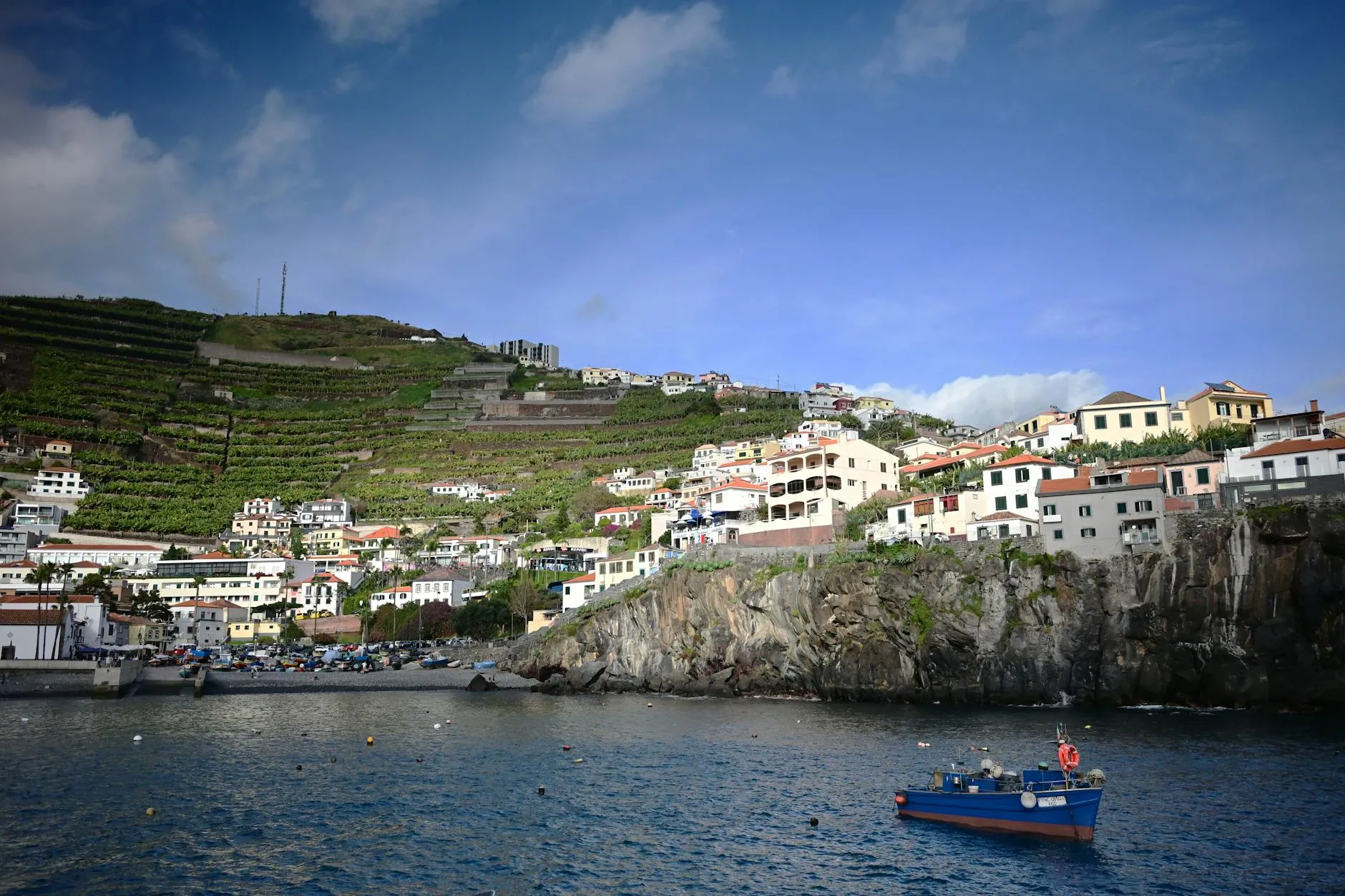
- Câmara de Lobos Harbour (Golden hour): Churchill’s painting angle from the viewpoint above, or at harbour level with colourful fishing boats. Late afternoon light warms the scene.
- Porto Moniz Natural Pools (Atlantic swell): The dramatic moment when waves crash over the outer rocks into the calm pools. Shoot from the elevated walkway for the contrast of wild ocean against serene swimmers.
- Mercado dos Lavradores fruit stalls (Morning): The exotic fruit displays — monstera deliciosa, tamarillo, passion fruit. Colours and textures are extraordinary. Ask vendors before close-up shots.
Top 12 Attractions
| Attraction | Price | Why Visit |
|---|---|---|
| Monte Palace Tropical Garden | €18 | 7 hectares of exotic gardens with African + Asian art, koi ponds, Japanese gate, azulejo panels, and views over Funchal bay from 600m altitude |
| Cabo Girão Skywalk | €5 (under 12 free) | Glass-floor platform at 580m — Europe’s highest sea cliff. Vertiginous views down to fajã farmland below. Free parking, cafe on site |
| Mercado dos Lavradores | Free | Funchal’s 1940s Art Deco market: exotic fruits (custard apple, tamarillo, monstera deliciosa), flower stalls, ground-floor fish hall with black scabbardfish |
| Monte Toboggan Ride | €27.50/1 • €35/2 | Wicker basket sledge steered by carreiros (drivers) in white + straw hat. 2km downhill on public road. Tourist icon since 1850s. 3 passengers: €52.50 |
| Madeira Botanical Garden | €8 | 2,500+ plant species, bird park, panoramic views. Reached by Botanical Garden Cable Car (€13 return) or bus 31 |
| Blandy’s Wine Lodge | From €17 | 30-minute lodge tour + 2 tastings in a lodge founded 1811. Premium (€23, 45 min), Vintage Premium (€59, 90 min, 4 wines incl. Frasqueira), and Private (€150) tastings available. The best Madeira wine education on the island |
| Funchal Cathedral (Sé) | Free | 15th-century Manueline architecture, carved Mudejar cedarwood ceiling (finest in Portugal), gilded altarpiece. Active church — dress modestly |
| Funchal Old Town (Zona Velha) | Free | Rua Santa Maria’s painted doors project (200+ painted doors by local artists), galleries, poncha bars, restaurants. Best explored at night |
| Pico do Arieiro | Free (parking €2) | Madeira’s 3rd highest peak (1,818m). Drive to the summit car park for sunrise above the clouds. Trailhead for the PR1 walk to Pico Ruivo |
| São Vicente Caves | CLOSED | Volcanic lava tubes from 890,000 years ago. Closed since March 2020 due to earthquake damage — reopening not expected until 2028. Volcanism Centre may still be accessible |
| Curral das Freiras | Free | Nun’s Valley — a deep volcanic crater village visible from Eira do Serrado viewpoint (free, drive-up). Try chestnut soup and chestnut cake at the village |
| CR7 Museum | €5 | Cristiano Ronaldo’s trophy collection: 5 Ballon d’Or replicas, 200+ awards, boots, shirts. Next to the famous CR7 statue on the waterfront |
Levada Walks
Madeira’s levadas are irrigation channels carved into mountainsides from the 15th century onwards, distributing water from the rainy north to the sunny south. Walking alongside them became Madeira’s signature activity. There are 3,000+ km of levada paths, from gentle flat strolls to serious mountain traverses through laurel forests that are UNESCO World Heritage since 1999.
2026 Booking System — MANDATORY
From January 1, 2026, trail reservations are mandatory for classified trails. The IFCN (Instituto de Florestas e Conservação da Natureza) now requires advance booking through their official platform. Each trail has a capacity cap with 30-minute entry windows. Most popular trails fill up 1–2 weeks ahead in high season (April–October). Booking is free for some trails but the popular PR6 (25 Fontes) and PR9 (Caldeirão Verde) now charge a trail fee of €4.50 per person. The PR1 (Pico do Arieiro to Pico Ruivo) costs €10.50. Multi-day passes available: 1-day €9, 3-day €22.50, 7-day €52.50 (excludes PR1).
PR6 — Levada das 25 Fontes (25 Fountains)
Madeira’s most popular walk and deservedly so. You follow the Levada do Risco through laurel forest to a waterfall cascading over a mossy rock amphitheatre. The path then descends to the 25 Fontes lagoon where dozens of small waterfalls pour from the cliff face into an emerald pool.
- Distance: 11 km (out and back from Rabaçal car park)
- Duration: 3.5–4.5 hours
- Difficulty: Moderate (some uneven steps, tunnel sections — bring a headtorch)
- Fee: €4.50 per person (2026), booking mandatory via SIMplifica portal
- Start: Rabaçal car park (shuttle bus from PR6 parking — no private cars allowed on access road since 2023)
PR9 — Levada do Caldeirão Verde (Green Cauldron)
A walk into the heart of Madeira’s volcanic geology. The levada path threads through tunnels carved into rock faces, past waterfalls, and through dense laurel forest to a 100m waterfall plunging into a green lagoon. Extended to Caldeirão do Inferno (+2.5 km) if you’re feeling strong.
- Distance: 13 km (out and back from Queimadas)
- Duration: 4–5 hours
- Difficulty: Moderate–Difficult (long tunnels, exposed sections, potential vertigo)
- Fee: €4.50 per person (2026), booking mandatory via SIMplifica portal
- Essentials: Headtorch mandatory for 4 tunnels (longest ~200m). Waterproof jacket — you’ll get dripped on
PR1 — Pico do Arieiro to Pico Ruivo
Madeira’s most dramatic mountain walk, connecting the 3rd highest peak (1,818m) to the highest (1,862m). On clear days you walk above the clouds with views to Porto Santo. This is a proper mountain hike, not a levada stroll. The trail reopened on April 27, 2026 after closure due to August 2024 wildfire damage.
- Distance: 7 km one way (or 14 km return)
- Duration: 3–4 hours one way
- Difficulty: Difficult (steep steps, narrow paths, exposure, altitude)
- Fee: €10.50 per person (2026), booking mandatory via SIMplifica portal. Free for Madeira residents
- Tip: Start at sunrise from Pico do Arieiro for the best light and fewest crowds. Drive up (road open 24h) or take a taxi (€25–30 from Funchal)
PR14 — Levada do Rei (King’s Levada)
The most serene of the major walks. Through pristine laurel forest in the north of the island, along a narrow levada with ferns dripping from above. Much less crowded than 25 Fontes.
- Distance: 10 km (out and back from Queimadas or Ribeiro Bonito)
- Duration: 3–4 hours
- Difficulty: Easy–Moderate (mostly flat, some narrow sections)
PR11 — Vereda dos Balcões (Balconies Walk)
The easiest classified walk and perfect for families or anyone short on time. A flat 1.5 km path from Ribeiro Frio to a viewpoint overlooking the central mountain range. On clear mornings the vista is extraordinary.
- Distance: 3 km (out and back)
- Duration: 45 minutes–1 hour
- Difficulty: Easy (flat, well-maintained, accessible)
- Tip: Combine with a trout lunch at the Ribeiro Frio trout hatchery restaurant
| Trail | Distance | Duration | Difficulty | Fee (2026) |
|---|---|---|---|---|
| PR6 — 25 Fontes | 11 km | 3.5–4.5h | Moderate | €4.50 |
| PR9 — Caldeirão Verde | 13 km | 4–5h | Moderate–Difficult | €4.50 |
| PR1 — Pico Arieiro→Ruivo | 7 km (one way) | 3–4h | Difficult | €10.50 |
| PR14 — Levada do Rei | 10 km | 3–4h | Easy–Moderate | Free |
| PR11 — Vereda dos Balcões | 3 km | 45 min | Easy | €4.50 |
| PR10 — Levada do Furado | 11 km | 3.5h | Easy–Moderate | Free |
Levada Gear & Difficulty
Essential gear (don’t hike without):
- Hiking boots with grip. Trail runners are not enough — levada paths get genuinely slippery after rain.
- Layers. The mountains create their own weather. A clear morning can become 12°C with cloud and rain by noon.
- Headtorch. Many levadas pass through unlit tunnels of 100–800m. A phone torch is not adequate.
- Water (1.5L minimum), snacks, and basic first aid.
- Printed booking confirmation for classified trails — wardens check.
Difficulty ratings explained: Madeira uses a four-tier system (Easy / Moderate / Difficult / Very Difficult). Even “Easy” trails can have exposed sections with significant drops. “Difficult” trails like PR1 require fitness equivalent to a long hill walk plus head for heights. “Very Difficult” means rope sections, landslide risk, and turn-back conditions.
Underrated Levadas
Levada do Norte (PR16): The longest classified levada — 22km if you walk the full course. Quieter than the famous trails, runs through the spine of the island. Fewer crowds, similar laurel forest scenery.
Risco Waterfall extension: If you book PR6 (25 Fontes), add the 30-minute Risco extension at the trailhead. Most walkers skip it; you get a 100m waterfall almost to yourself.
Levada do Furado (PR10): Less famous than 25 Fontes but with comparable forest tunnels and waterfall sections. A solid alternative when PR6 is fully booked.
Madeiran Food
Madeira’s food is distinct from mainland Portugal — shaped by its volcanic soil, subtropical climate, and the Atlantic Ocean that surrounds it. The flavours are bolder, the fruit is sweeter, and the cooking methods have barely changed in centuries. This is a place where “farm-to-table” isn’t a trend — it’s just how things work.
| Dish | Price Range | What It Is |
|---|---|---|
| Espetada | €12–€20 | Beef chunks on a laurel-wood skewer, seasoned with garlic and bay leaf, grilled over wood embers. Hung vertically from a special hook at the table |
| Espada com Banana | €10–€16 | Black scabbardfish (caught at 800–1,200m depth) pan-fried with banana. Sounds odd, works brilliantly. Madeira’s signature seafood dish |
| Bolo do Caco | €1.50–€3 | Sweet potato flatbread baked on basalt stone, slathered with garlic butter. Served warm as bread, as a sandwich, or alongside espetada |
| Lapas | €8–€14 | Limpets grilled with garlic butter and lemon on hot stone. Best eaten at the harbour in Câmara de Lobos with a poncha |
| Picado | €8–€12 | Cubed beef fried with garlic, piri-piri, and herbs, served on a bed of chips. Bar snack that’s become a meal |
| Carne de Vinha d’Alhos | €10–€15 | Pork marinated in wine, vinegar, and garlic. The original recipe that became Hawaiian “Vinha d’Alhos” when Madeiran migrants brought it to Hawaii |
| Açorda | €6–€10 | Bread soup with garlic, coriander, and poached egg. Portuguese comfort food at its finest |
| Sopa de Tomate e Cebola | €3–€5 | Tomato and onion soup with poached egg. Simple, rustic, served in every worker’s restaurant |
| Bolo de Mel | €2–€4 (slice) | Molasses cake with walnuts, almonds, and spices. Dense, dark, keeps for months. Traditional Christmas cake eaten year-round |
| Passion Fruit Pudding | €4–€6 | Maracujá pudding made with Madeiran passion fruit. Intensely fragrant, sharp-sweet. Often on prix fixe menus |
Espetada — The Ritual
Espetada is not just food — it’s a social event. The beef cubes are threaded onto a laurel-wood skewer (traditionally from the bay tree that grows wild in Madeira’s mountains), seasoned simply with coarse salt and garlic, and grilled over wood embers. At the table, the skewer is hung from a special hook suspended above a plate of bolo do caco. The fat drips down. You eat with your hands.
The dish originates from Estreito de Câmara de Lobos, where an annual espetada festival is held. The best restaurant versions use local Madeiran beef, which is richer than mainland Portuguese beef. Try Restaurante Santo António in Estreito de Câmara de Lobos (€14–18) for the most authentic experience, or O Lagar near Funchal for a polished version with valley views.
Espada com Banana
The black scabbardfish (espada) is caught at extreme depth — 800 to 1,200 metres — using long-line fishing from the port of Câmara de Lobos. The fish looks terrifying (snake-like, black, with razor teeth), but the flesh is white, flaky, and mild. Pan-fried with Madeiran banana (smaller and sweeter than supermarket bananas), it becomes Madeira’s most distinctive plate. You’ll see it on every restaurant menu, but the fish hall at Mercado dos Lavradores lets you see the raw product first.
Bolo do Caco
Made with sweet potato flour (Madeira grows its own), bolo do caco is baked on a flat basalt stone (the “caco”). Every restaurant, snack bar, and food stall serves it. The garlic butter version, eaten warm, is worth a trip to Madeira alone. Street stalls on Rua Santa Maria sell bolo do caco sandwiches stuffed with ham, cheese, or octopus for €3–5.
Mercado dos Lavradores — Fruit You’ve Never Seen
The Farmers’ Market in central Funchal is where you’ll encounter fruit that doesn’t exist in most of Europe. The stall sellers offer free tastings to lure you in — accept, but agree on prices before buying. Key exotic fruits:
- Monstera deliciosa — the fruit of the Swiss cheese plant. Tastes like a cross between pineapple and banana. Only ripe when scales lift naturally
- Tamarillo — tree tomato, sweet-tart, eaten raw or in juice
- Anona (custard apple) — creamy, sweet, eat with a spoon
- Maracujá (passion fruit) — Madeiran variety is more fragrant than mainland
- Nispera (loquat) — apricot-like, in season March–May
Poncha & Madeiran Drinks
Poncha — Madeira’s National Drink
Poncha is Madeira’s unofficial national drink: aguardente de cana (sugarcane spirit) mixed with honey and lemon juice, stirred vigorously with a caralhinho (a special wooden stirrer with prongs). The classic version is just these three ingredients. Variations include passion fruit poncha (maracujá), orange poncha, and fisherman’s poncha (with lemon and orange). It tastes deceptively smooth but packs 40%+ alcohol.
The best place to drink poncha is where it was invented: Câmara de Lobos. Walk to the harbour and look for tiny bars serving it for €2.50–€3.50. Bar Ponte Velha on the harbour wall is a classic. In Funchal, the Old Town bars on Rua Santa Maria serve decent poncha for €3.50–4.50 but the atmosphere can’t compete with a Câmara de Lobos harbour bar at sunset.
Coral Beer
Madeira’s local beer, brewed in Funchal since 1872 by Empresa de Cervejas da Madeira. A simple, crisp lager that goes perfectly with lapas. Expect to pay €1.50–€2.50 at a local bar, €3–€4 at tourist restaurants. The brewery doesn’t do tours, but every bar has it on tap.
Nikita
A strange and wonderful Madeiran invention: vanilla ice cream blended with beer (usually Coral) and sometimes pineapple. It sounds terrible. It’s oddly refreshing on a hot day. Every beach bar in the hotel zone serves it for €3–€5.
Madeira Wine
Madeira wine is one of the world’s great fortified wines and the island’s most important export for 500 years. The unique estufagem process (heating the wine, mimicking the effect of tropical sea voyages) makes Madeira wine virtually indestructible — bottles from the 1700s are still drinkable. It was the wine used to toast American independence in 1776.
The Four Noble Grapes
- Sercial — Driest style. High acidity, nutty, almond notes. Best as aperitif. Serve chilled
- Verdelho — Medium-dry. Smoky, honeyed. The most versatile — good with soup or fish
- Bual (Boal) — Medium-sweet. Rich, caramel, dried fruit. Excellent with dessert or blue cheese
- Malmsey (Malvasia) — Sweetest and richest. Dark, treacly, complex. The “luxury” Madeira. Duke of Clarence was supposedly drowned in a butt of Malmsey in 1478
Where to Taste
Blandy’s Wine Lodge (Av. Arriaga, Funchal) is the most comprehensive experience. The lodge occupies a 17th-century Franciscan monastery and offers multiple tasting tiers:
- Lodge Tour — €17 (30 min, 2 tastings)
- Vintage Premium Tour — €59 (90 min, 4 wines incl. Frasqueira single-harvest)
- Private Tour — €150/person (60 min, max 4, Family Private Collection)
Other lodges worth visiting: Pereira d’Oliveira (Rua dos Ferreiros — family-run since 1820, more intimate), Henriques & Henriques (Câmara de Lobos — good for post-harbour poncha), and Barbeito (by appointment).
Age Designations Explained
Madeira’s age statements are strict and reliable, unlike most fortified wines. From entry to grail:
- Finest (3 years): Cooking wine. Skip.
- Reserve (5 years): Decent everyday Madeira. Restaurant standard.
- Special Reserve (10 years): Where it gets serious. €25–40 retail. Genuinely complex.
- Extra Reserve (15 years): Excellent. €50–80. Ageing properly.
- Colheita (single vintage, >5 years): A specific year. Increasingly common at top houses.
- Frasqueira (vintage, 20 years+): The peak. €200–600+ for a half bottle. The wine equivalent of a Beethoven late quartet — more enjoyable the closer you pay attention.
Where to buy: The Garrafeira do Forte in Funchal old town has the deepest selection of older vintages on the island, plus knowledgeable staff. Blandy’s and Pereira d’Oliveira sell direct. Skip airport duty-free for anything above 5 years — selection is limited and prices aren’t better.
Michelin & Fine Dining
Madeira has a growing fine dining scene anchored by its Michelin-starred restaurants, but the island’s real culinary strength is its worker’s restaurants and family-run tascas. Both extremes deserve attention.
| Restaurant | Stars | Price | Notes |
|---|---|---|---|
| Il Gallo d’Oro | ⭐⭐ | €120–€160 tasting | The Cliff Bay hotel. Benoît Sinthon’s refined Portuguese-French cuisine. Madeira’s only 2-star. Jacket suggested |
| William | ⭐ | €85–€120 tasting | Belmond Reid’s Palace. Luís Pestana’s seasonal Madeiran ingredients with contemporary technique. Terrace with ocean views |
| Desarma | ⭐ (new 2026) | €80–€120 tasting | Chef Octávio Freitas. 11th floor of The Views Baia Hotel. Modern reinterpretation of Madeiran traditions. Panoramic views |
| Akua | Bib Gourmand | €30–€45 | Creative Madeiran cuisine. Young chef using local producers. Excellent value for the quality |
Beyond Michelin — Where Locals Eat
The best meals on Madeira are often the cheapest. Look for prato do dia (dish of the day) at worker’s restaurants, typically €7–10 for soup + main + drink. Key spots:
- Adega da Quinta (Santo António, Funchal) — espetada and lapas in a converted wine cellar. €12–18
- Restaurante do Forte (Zona Velha) — seafood with Old Town views. Espada com banana €12
- Venda do Chico (Câmara de Lobos harbour) — tiny bar, huge portions, locals only. Espetada €10
- Taberna Ruel (Funchal) — modern petiscos (Portuguese tapas). Small plates €6–12
- Gaviao Novo (Funchal) — family-run, grilled fish, local wine. Full meal under €15
Areas & Where to Stay
Funchal
The capital and only real city. Split into three zones: Old Town (Zona Velha) for nightlife, restaurants, and painted doors; City Centre around Avenida Arriaga for markets, Blandy’s, and cathedral; and the Hotel Zone (Lido) along the coast west of the centre for resort-style accommodation. Most visitors base here.
- Best for: First-time visitors, foodies, nightlife, wine
- Budget: Hostel €20–30, hotel €50–120, luxury €150–400+
Câmara de Lobos
The fishing village where Churchill sat and painted in 1950 (there’s a plaque at his easel spot). The harbour is postcard-perfect: colourful boats, fishermen mending nets, and tiny poncha bars. Despite being 10 minutes from Funchal by bus, it feels like a different world. The Winston Churchill viewpoint above the village offers sweeping bay views.
- Best for: Authentic atmosphere, poncha, espetada (Estreito de Câmara de Lobos is right above)
- Getting there: Bus 1, 2, or 4 from Funchal (€2, 15 min). Or walk the seaside promenade (5 km)
Porto Moniz
The northwest tip of Madeira, famous for its volcanic natural swimming pools. Seawater fills lava rock pools right on the ocean edge. There are two pool complexes: the natural pools (€3 entry, lockers + showers included) and the nearby Aqua Natura complex (€5). The village itself is tiny but has a few decent restaurants and a small aquarium (€7).
- Best for: Day trip, swimming, dramatic coastline
- Getting there: 1.5 hours by car from Funchal. Bus 80 (infrequent — car recommended)
Santana
The north-coast town famous for its casas de colmo — traditional A-frame thatched houses with bright painted triangular facades. A few original houses survive in the town centre (free to view). The Madeira Theme Park (€12, child €6) showcases island traditions, but it’s more educational than thrilling. Santana is also the gateway to the Queimadas levada walks (PR9 Caldeirão Verde).
- Best for: Photography, levada walks, quiet rural Madeira
- Getting there: 45 min by car from Funchal. Bus 56 or 103
São Vicente
The caves are the main draw, but the north-coast village itself has a pretty church, a volcanic geology centre, and access to several less-crowded levadas. The drive from Funchal via Enchão da Serra is one of the island’s most spectacular, through misty laurel forests and hairpin bends.
Machico
Where Madeira was first discovered in 1419 by João Gonçalves Zarco (well, technically his ship was blown here by a storm). A laid-back town on the east coast with a man-made golden sand beach (imported from Morocco). Less touristy than Funchal, good seafood restaurants, and the closest town to the airport.
Ribeira Brava
A small south-coast town useful as a lunch stop when driving the north coast circuit. The town sits in a deep river valley (the “wild river” that gives it its name) with a 16th-century church and a Saturday morning market. The ethnographic museum (€3) is surprisingly good.
Natural Swimming Pools & Beaches
Madeira has almost no sandy beaches (it’s a volcanic island), but its natural lava rock pools are extraordinary. Seawater crashes over volcanic formations into sheltered pools where you swim with the ocean visible through gaps in the rock.
Porto Moniz Natural Pools
The most famous: volcanic rock pools at the northwestern tip of the island. Entry €3, includes changing rooms and showers. Spectacular when Atlantic swells crash over the outer rocks while you swim in calm water. Open year-round but best May–October.
Seixal Natural Pools
Less developed than Porto Moniz and free to access. The pools sit below the coastal road with a dramatic black sand beach nearby. Locals prefer Seixal to Porto Moniz for exactly this reason — fewer tourists, more authentic. No facilities, so bring everything you need.
Doca do Cavacas
The closest natural pools to Funchal, just west of the Lido area. Small volcanic pools with ladders, changing rooms, and a bar. Entry €6. Includes tunnel to sea cave with three windows cut into volcanic rock on summer evenings. The sunset views over the Atlantic are free.
Praía Formosa
Funchal’s main beach — dark volcanic pebble, not sand, but the water is clean and there are facilities. Several sections with bars, sunbeds (€5–7/day), and lifeguards in summer. The most accessible beach in Funchal.
Calheta Beach
One of Madeira’s only two golden sand beaches — imported from Morocco, held in place by two breakwaters. Calm, warm water in a sheltered bay. Popular with families. There’s a marina, restaurants, and Casa das Mudças contemporary art centre nearby. 45 minutes from Funchal by car.
Machico Beach
The other imported-sand beach, on the east coast. Less crowded than Calheta, with a pleasant promenade and seafood restaurants. The closest beach to the airport (15 min drive).
Cable Cars & Monte
Teleférico do Funchal (Funchal–Monte)
The main cable car connecting central Funchal (Zona Velha) to Monte village at 550m altitude. The 15-minute ride gives panoramic views over the city, bay, and mountains. At the top: Monte Palace Tropical Garden, Our Lady of Monte church, and the toboggan ride start point.
- Price: €16 one way, €22 return
- Hours: 9:00–17:45 (last descent 17:45)
- Tip: Take the cable car up, do the garden and toboggan, then walk or bus back down
Teleférico do Jardim Botânico (Botanical Garden Cable Car)
A shorter cable car connecting the Botanical Garden to Monte. Useful for combining both gardens in one visit without retracing your steps.
- Price: €13 return, €9 one way
- Combo: Funchal–Monte + Botanical Garden cable car combo ticket: €27
Day Trips
Porto Santo Island
Madeira’s sister island, 43 km northeast, is the opposite of Madeira: flat, dry, and blessed with a 9 km golden sand beach. The Lobo Marinho ferry makes the 2.5-hour crossing daily (less frequent in winter). Day trip is feasible but an overnight stay lets you enjoy the beach properly.
- Ferry: Porto Santo Line “Lobo Marinho” from Funchal port
- Price: €39–70 return depending on season (summer peak €70, off-peak €39–50)
- Duration: 2.5 hours each way
- What to do: Beach all day, Christopher Columbus museum (€2), Ponta da Calheta viewpoint, sundowner at the beach bars
- Tip: Seasickness is real — the crossing can be rough. Take medication 30 min before departure. Alternatively, fly (Binter, 15 min, from €40 one way)
North Coast Circuit (Full-Day Drive)
The classic Madeira day drive: Funchal → Cabo Girão → Ribeira Brava → São Vicente → Porto Moniz (swim + lunch) → Seixal → Santana → Ribeiro Frio → Funchal. Allow 7–8 hours with stops. The north coast road (ER101) is spectacular: tunnels through cliffs, waterfalls cascading onto the road, and the Seixal black sand beach.
East Coast: Ponta de São Lourenço
The PR8 trail at Madeira’s eastern tip is a different landscape entirely — arid, windswept, red and yellow rock formations jutting into the Atlantic. A 7.4 km (out-and-back) walk along dramatic cliffs. No shade, bring water and sun protection. Free, booking required for 2026.
Curral das Freiras (Nun’s Valley)
A deep volcanic crater with a village at the bottom. The viewpoint at Eira do Serrado (free, drive-up) offers a vertigo-inducing look down. Drive to the village itself for chestnut soup, chestnut liqueur, and chestnut cake. 30 minutes from Funchal.
Whale & Dolphin Watching
Madeira is one of Europe’s best cetacean-watching locations. Resident populations of short-finned pilot whales, bottlenose dolphins, and spotted dolphins mean year-round sightings. Seasonal visitors include sperm whales (April–September) and Bryde’s whales. Catamaran and RIB tours depart from Funchal Marina.
- Price: €35–65 per person (2–3 hours)
- Best season: May–October for ideal conditions, but sightings happen year-round
- Operators:
- VMT Madeira — Catamaran tours from Funchal Marina. €35–55/3hr.
- Lobosonda — Research-focused operation out of Calheta. €40–60/3hr.
- Rota dos Cetáceos — Smaller RIBs for closer, more intimate encounters. €45/3hr.
- Seaborn — Comfortable catamaran trips, family-friendly. €35/3hr.
- Ventura do Mar — Funchal Marina, catamaran tours.
Desertas Islands
Three uninhabited islands visible from Funchal’s waterfront. Protected nature reserve, home to the endangered Mediterranean monk seal. Full-day boat excursions (€65–85) include snorkelling and a guide. Landing permission required (included in organised tours).
Must-See Stops on the North Coast Drive
If you do one driving day, do this circuit (full day, 9am start, return by 6pm):
- Ribeira Brava: First stop heading west. Coastal town with a Manueline church, riverside promenade, and a well-stocked municipal market. 30 min stop.
- São Vicente: Inland town in the dramatic green valley. The 17th-century chapel built into a volcanic boulder is the photo. Coffee stop.
- Seixal: Free black-sand beach (one of Madeira’s only sand beaches) and free natural pools. Worth the detour off the main road.
- Porto Moniz: The famous lava-rock pools (€3) and lunch. Allow 90 minutes minimum.
- Fanal: The misty laurel forest in the highlands inland from Porto Moniz. Other-worldly when fog rolls in. 4WD or careful driving on the dirt road.
- Calheta: Imported-sand beach, contemporary art museum (Mudas), and the headquarters of the Madeira sugar industry.
Getting Around
Airport to Funchal
| Option | Price | Duration | Notes |
|---|---|---|---|
| Aerobus (SAM) | €6.50 single | 30–35 min | Every 45–60 min. Stops at main hotels. Cash or card |
| Taxi | €25–30 fixed | 20–25 min | Fixed-rate taxi from airport taxi rank. Agree price before |
| Bolt | €12–18 | 20–25 min | Cheapest option. Download app before landing. Pickup at departures level |
| Hotel transfer | €15–30 | 20–30 min | Pre-booked. Most 4–5 star hotels offer this |
Public Transport (SIGA Network)
Since 2025, Madeira’s bus network has been unified under the SIGA brand, integrating Horários do Funchal (urban) with inter-municipal operators (SAM, Rodoeste). You need a GIRO card (€0.50) for discounted fares.
- Urban bus (Funchal): €2 cash on board, €1.40 with GIRO card
- Inter-municipal: €2.60 cash, €2 with GIRO card
- GIRO 24h pass: €12.50 (all SIGA lines)
- 3-day pass: €30 | 7-day pass: €55
Car Rental
A car is the best way to explore beyond Funchal. Madeira’s roads are excellent (many tunnels), but mountain roads have tight hairpins. Key considerations:
- Price: From €20–35/day for a small car (Renault Clio, VW Polo). Book ahead in summer
- Fuel: €1.60–€1.80/litre. Few stations on the north coast
- Parking: Free at most viewpoints and levada trailheads. Funchal centre: €0.50–€1.20/hour
- Driving: Drive on the right. Speed limits well-enforced on motorway (VR1)
- Tip: Get the smallest car that fits your needs. The narrow mountain roads and tight village corners make large cars stressful. Avoid driving in Funchal centre — bus + walk is easier
Festivals & Events 2026
Carnival (February 11–22, 2026)
Funchal’s Carnival is one of Europe’s best-kept secrets. The Saturday-night Slapstick Parade is irreverent and satirical (the floats mock politicians). The Tuesday Allegoric Parade is the grand, colourful affair. Both along Avenida Arriaga. Free to watch from the pavement.
Flower Festival (April 30 – May 24, 2026)
Madeira’s biggest event. Funchal is carpeted with flowers, the Children’s Parade builds a Wall of Hope, and the main Allegoric Parade runs on two Sundays this year (May 3 and May 17 — a first). Flower arrangements throughout the city, concerts, exhibitions. Book accommodation months ahead.
Atlantic Festival (June, weekends)
Fireworks competition over Funchal bay every Saturday in June. International pyrotechnic teams compete for the best display. The fireworks are set off from the sea, with the amphitheatre-shaped city as backdrop. Best views from the hotel zone or Miradouro das Neves. Free.
Wine Festival (August 27 – September 14, 2026)
Celebrates the grape harvest with wine tastings, folk performances, and the harvest procession in Estreito de Câmara de Lobos. The Live Wine Week (late August) in Funchal features open-air tastings at a flat entry fee.
New Year’s Eve Fireworks
Madeira’s New Year fireworks were certified by Guinness in 2006 as the world’s largest pyrotechnic display. The entire bay of Funchal erupts at midnight: fireworks from 50+ positions across the hillside, cruise ships in the bay, and every hotel balcony packed. Book a year in advance for NYE — the island fills completely. Room prices triple.
Best Viewpoints
Madeira’s dramatic topography means extraordinary viewpoints are everywhere. All are free unless noted.
- Cabo Girão Skywalk — 580m vertical drop, glass floor. Madeira’s most famous viewpoint
- Eira do Serrado — Looking down into Curral das Freiras crater village. Vertigo-inducing
- Miradouro da Portela — North coast panorama, mist swirling through Porto da Cruz valley
- Pico do Arieiro — Above the clouds at 1,818m. Best at sunrise (parking €2)
- Miradouro do Véu da Noiva — Seixal’s bridal veil waterfall cascading into the sea
- Barão de São Pedro — Funchal city panorama with bay below. Near Monte
- Miradouro da Beira da Quinta — Câmara de Lobos harbour from above. Churchill’s painting angle
- Ponta de São Lourenço — Madeira’s eastern tip: arid, windswept, utterly different from the rest of the island
Ready to Book Your Madeira Trip?
Find the best flight deals to Funchal (FNC)
Budget Guide
| Category | Budget | Mid-Range | Luxury |
|---|---|---|---|
| Accommodation | €20–€35 hostel | €60–€120 hotel | €150–€400+ resort |
| Food | €10–€15/day | €25–€45/day | €60–€150+/day |
| Transport | €4–€12 (bus) | €25–€35 (rental car) | €50–€100 (taxi + tours) |
| Activities | €0–€10 (free walks) | €20–€40 (tours) | €60–€120 (wine + whale) |
| Total/day | €30–€60 | €100–€200 | €300–€700+ |
Weather & When to Visit
Month-by-Month Weather
| Month | High/Low | Rain Days | Key Notes |
|---|---|---|---|
| January | 19/13°C | 9 | Mild winter. Low season prices. Good for wine lodges and Funchal exploring. |
| February | 19/13°C | 7 | Carnival (Feb 11–22, 2026). Funchal comes alive. Still quiet on trails. |
| March | 19/13°C | 7 | Spring arriving. Flowers beginning. Good levada conditions. |
| April ⭐ | 20/14°C | 6 | Excellent. Flower Festival begins late month. Trails open, manageable crowds. |
| May 🌸 | 21/15°C | 4 | FLOWER FESTIVAL (Apr 30–May 24). Peak bloom. Book ahead. |
| June ⭐ | 23/17°C | 2 | Dry. Atlantic Festival fireworks (Saturdays). Swimming season begins. |
| July ⭐ | 25/19°C | 1 | Peak summer. Warm, dry, busy. Natural pools at their best. |
| August ⭐ | 26/20°C | 1 | Hottest. Wine Festival (late Aug–Sep). Peak prices. |
| September 🍷 | 25/20°C | 4 | Wine Festival. Still warm. Crowds thinning. Excellent visiting. |
| October ⭐ | 23/18°C | 7 | BEST MONTH. Warm, fewer tourists, everything open. |
| November | 21/16°C | 8 | Cooling. More rain. Lower prices. Good value. |
| December 🎆 | 20/14°C | 9 | New Year’s Eve fireworks (world’s largest, Guinness 2006). Christmas markets. Book a year ahead for NYE. |
South coast (Funchal) is warmer and drier than north coast. Mountains create microclimates — always carry layers. Rain typically comes in short bursts, not all-day downpours. Source: IPMA (Instituto Português do Mar e da Atmosfera) climate data.
Madeira has a subtropical oceanic climate — mild year-round with no real winter. Funchal sits between 17°C (January) and 26°C (August). The south coast is sunnier and drier; the north coast is greener and wetter. The mountains create their own microclimate — you can have sun in Funchal, clouds at Monte, and rain at Pico do Arieiro in the same hour.
Best time for levada walks
April–June and September–October. Summer (July–August) is fine but hotter and more crowded. Winter walks are possible but some mountain trails may be closed due to weather.
Best time for swimming
June–September for ocean temperatures above 22°C. The natural pools at Porto Moniz and Seixal are best in calm conditions (May–October). Atlantic swells can close pools in winter.
Shoulder seasons
March–April and October–November offer the best balance: good weather, fewer tourists, lower prices, and everything open. The Flower Festival (late April–May) is the exception — it brings crowds.
Practical Information
Currency & Payments
Euro (€). Card payment widely accepted in Funchal, but carry cash for levada parking, market stalls, rural restaurants, and poncha bars. ATMs throughout Funchal; fewer in villages.
Language
Portuguese. English is widely spoken in Funchal’s tourist areas, hotels, and restaurants. Less so in rural villages, but people are helpful. Basic Portuguese (“bom dia”, “obrigado/a”, “a conta, por favor”) goes a long way.
Safety
Madeira is extremely safe. Violent crime is virtually non-existent. Petty theft can occur in Funchal’s market area and tourist zones — normal precautions apply. The real safety risks are levada walks (slippery paths, vertigo sections, weather changes) and driving mountain roads. Wear proper hiking shoes and bring a headtorch for tunnel walks.
Visa
Madeira is part of Portugal and the Schengen Area. EU/EEA citizens: no visa needed. Many other nationalities: 90-day visa-free entry. ETIAS (European Travel Information and Authorisation System) is not yet active as of April 2026.
SIM & Connectivity
EU roaming applies for EU SIM cards. Otherwise, buy a MEO or NOS SIM at the airport (€10–15 for 10GB). Wi-Fi is good in Funchal hotels and restaurants. Mountain areas and levada paths have patchy or no signal.
Electricity
European standard: Type F, 230V. UK visitors need a plug adapter.
Tipping
Not mandatory but appreciated. Round up taxi fares. Leave 5–10% at sit-down restaurants if service was good. No tipping expected at bars or casual eateries.
Madeira Airport (FNC)
Officially Cristiano Ronaldo International Airport (renamed 2017). The runway extension over the sea is famous for its dramatic approach. Turbulence on landing is common — pilots require special training for this airport. Occasionally flights divert to Porto Santo in strong crosswinds.
Driving Tips & GIRO Card
Rent the smallest car you can fit in. Madeira’s mountain roads are narrow, switchbacked, and frequently blind. A small hatchback is far easier to manoeuvre than a mid-size SUV — and parking spaces in Funchal old town are tight even for compact cars.
Tunnels are everywhere. Madeira has more than 150 road tunnels, some over 3km long. Headlights on at all times in tunnels (legal requirement).
Mountain road protocol: Uphill traffic has right of way. If two cars meet on a single-track road, the one closer to a passing place backs up. Don’t panic — locals do this every day.
GIRO card (transit savings): The contactless GIRO card costs €0.50 and reduces SIGA bus fares from €2 cash to €1.40. Buy at any newsagent or kiosk. Top up at the same places. Worth it on day one if you’re using buses at all.
What’s New in 2026
- Trail reservations mandatory from January 1, 2026 — advance booking required for all classified trails via IFCN platform. PR6 and PR9 now charge €4.50 per person
- SIGA bus integration — unified ticketing across all Madeira bus operators. GIRO card replaces all previous passes. Pre-paid paper tickets discontinued
- Flower Festival restructured — for the first time, two separate allegoric parades (May 3 and May 17), extending the festival to nearly a month (April 30–May 24)
- Cable car prices increased — Funchal–Monte return now €22 (was €20). Botanical Garden cable car return €13 (was €12)
- Porto Moniz pool renovation — improved changing facilities and accessibility. Entry remains €3
- Blandy’s new tasting tiers — Lodge tour €17, Premium €23, Vintage Premium €59, Private €150
- ETIAS — not yet active. When implemented, non-EU visitors will need to register online (€20, valid 3 years)
Pricing, festival dates, and transport costs reflect data verified in April 2026 via the official sources linked throughout this guide. Travel costs are subject to annual adjustments — attractions and transport authorities typically refresh prices each spring. We recommend confirming real-time prices and booking windows via the authority links in each section before your trip. Where this guide references Michelin stars, the data reflects the most recent edition of the relevant Michelin Guide at time of publication.
More Guides
Explore all our city and island guides at aifly.one Travel Guides — covering destinations across the Americas, Asia, Africa, and Europe.
Data Provenance & Verification
- Attraction Pricing: Verified via official sites, April 2026
- Levada Fees: Per IFCN 2026 schedule via trails.madeira.gov.pt
- Restaurant Pricing: Direct menu checks and Michelin Guide Portugal 2026, April 2026
- Transit: SIGA/GIRO fares per sfrm.pt, April 2026
- Weather: Based on IPMA climate data for Funchal
- Madeira Wine: Prices verified via Blandy’s and Pereira d’Oliveira retail checks, April 2026
- Festivals: Dates per visitmadeira.com official calendar, April 2026
- Last Updated: April 2026
Frequently Asked Questions
Is Madeira worth visiting in 2026?
Absolutely. The new trail booking system actually improves the experience by capping overcrowding on popular levadas. The island offers Europe’s best hiking, extraordinary food for the price, year-round mild weather, and a pace of life that feels like the Mediterranean did 20 years ago. It’s one of the best-value destinations in Europe.
How many days do I need in Madeira?
Five to seven days is ideal. Day 1: Funchal (market, Old Town, Blandy’s). Day 2: Monte (cable car, garden, toboggan). Day 3: Levada walk (25 Fontes or Caldeirão Verde). Day 4: North coast drive (Cabo Girão, Porto Moniz, São Vicente). Day 5: Eastern Madeira (Ponta de São Lourenço, Machico). Day 6–7: Whale watching, wine tasting, or Porto Santo. If you only have 3–4 days, prioritise Funchal + one levada + the north coast drive.
Do I need a car in Madeira?
For Funchal, no — buses and walking cover everything. For exploring the island, a car is strongly recommended. Buses reach most destinations but are infrequent on rural routes. A rental car from €20–35/day gives freedom to chase weather, hit viewpoints at dawn, and reach trailheads without waiting for buses. Bolt is a good supplement in Funchal.
Is Madeira safe?
Very safe. It’s one of the safest destinations in Europe. The main risks are on levada walks (slippery paths, vertigo-inducing sections, sudden weather changes in the mountains). Always wear proper hiking shoes, bring a headtorch for tunnels, and check trail conditions before setting out. Driving mountain roads requires caution but the main roads are excellent.
What should I eat first?
Walk straight to Mercado dos Lavradores for a fruit tasting, then find a harbour-side bar in Câmara de Lobos for lapas grelhadas (grilled limpets) and poncha. In the evening, order espetada at a traditional restaurant — it arrives hanging from a hook above your table. Finish with passion fruit pudding. Total cost for two: under €50.
When is the best time to visit Madeira?
April–June and September–October are perfect: warm weather (20–25°C), flowers in bloom, fewer tourists, and all hiking trails open. Summer (July–August) is hotter and busier. Winter (November–March) is still mild (17–20°C) with lower prices, but more rain and some mountain trails may be closed. The Flower Festival (late April–May) and New Year’s Eve are peak periods — book months ahead.
Can I swim in Madeira?
Yes, but forget sandy beaches — Madeira is volcanic. The natural lava-rock swimming pools (Porto Moniz €3, Seixal free, Doca do Cavacas €6) are the main attraction. Calheta and Machico have imported-sand beaches. Hotel zones have pool complexes. Ocean swimming is possible but Atlantic currents can be strong.
Is Madeira wine sweet?
It can be, but the range is enormous. Sercial is bone-dry, Verdelho is medium-dry, Bual is medium-sweet, and Malmsey is sweet. Most restaurant Madeira is the cheap 3-year sweet version — not representative. Visit Blandy’s (€11 tour + tasting) to understand the full spectrum. A good 10-year Verdelho is one of the wine world’s great bargains at €20–30.
What is the best day in Madeira for under €30?
Bus to Câmara de Lobos (€2). Walk the harbour, poncha at a harbourside bar (€3). Bus to Cabo Girão Skywalk (€2 + €5 entry) — 580m glass floor over the Atlantic. Bus back to Funchal (€2). Mercado dos Lavradores fruit tasting (free samples, buy a custard apple for €2). Bolo do caco with garlic butter from a street stall (€2). Walk the Old Town painted doors (free). Worker’s restaurant lunch — prato do dia with espada com banana, soup, and drink (€9). Evening walk along Funchal seafront promenade (free). Total: €27. Glass-floor cliff walk, harbour poncha, exotic fruit, painted street art, and Madeira’s signature fish — for the price of one Michelin appetizer.
Romantic Madeira
With its gardens, cliffs, and perpetual spring, Madeira is an underrated couples’ destination.
Sunset Spots
Ponta do Sol: The southernmost village, named for catching the last light. Watch the sun drop into the Atlantic from the pier or church terrace.
Pico do Arieiro: If clouds cooperate, sunset from Madeira’s third-highest peak is extraordinary. Bring layers — temperatures drop fast at 1,818m.
Reid’s Palace terrace: Classic colonial grandeur. Afternoon tea transitions to sunset cocktails. Dress smartly.
Romantic Stays
Reid’s Palace: The iconic grande dame, clinging to cliffs since 1891. Churchill’s favourite. From €400/night.
Quinta da Casa Branca: A manor house in botanical gardens, more intimate than the resorts. From €200.
Estalagem da Ponta do Sol: Design hotel built into the cliff at Ponta do Sol. Dramatic infinity pool, stunning restaurant. From €150.
Romantic Experiences
Private catamaran cruise: Sail the coast, swim in hidden coves, spot dolphins. Half-day from €350 for two via Madeira Wind.
Sunrise at Pico Ruivo: Hike up in the dark (headlamps essential), reach the summit for first light over the clouds. Unforgettable.
Diving & Water Sports
The Atlantic waters around Madeira are clearer and warmer than you’d expect at this latitude (thanks to the Gulf Stream). Marine life thrives in the volcanic underwater terrain.
Diving
Madeira has emerged as a serious diving destination, with visibility often exceeding 30 metres and water temperatures of 18-24°C year-round.
Key sites:
- Garajau Marine Reserve: Protected since 1986, dense with fish. Groupers, barracuda, rays, occasional mantas. Best diving on the island.
- The Bowbelle wreck: Dredger sunk in 1996 at 30m. Encrusted with life, home to moray eels. Advanced divers.
- Madeirense wreck: Cargo ship at 30m near Caniçal. Good for penetration diving with proper training.
Dive operators:
- Madeira Diver — PADI 5-star, Garajau specialists. Two-tank boat dives from €75.
- Scuba Madeira — Smaller operation, strong on personalized service. Discovery dives from €65.
Swimming
Madeira has no sandy beaches to speak of (the Calheta artificial beach uses imported sand). Instead, embrace the complexos balneares — bathing complexes with sea access pools and platforms.
Best spots:
- Porto Moniz: Famous volcanic pools, but crowded. €3 entry.
- Seixal: Free natural pools, often overlooked. Black pebble beach nearby.
- Doca do Cavacas: Funchal’s closest pools, €2 entry, restaurant/bar adjacent.
- Praía Formosa: Funchal’s beach — pebbles, not sand, but accessible and local.
Stand-Up Paddleboarding & Kayaking
The calm bays around Calheta and Machico are ideal for paddleboarding. Terras de Aventura rents SUPs from €25/hour and runs coastal kayak tours (€40/half-day).
Madeira with Kids
Madeira isn’t an obvious family destination, but it works surprisingly well for active families who don’t need a beach holiday.
Kid-Friendly Attractions
Aquário da Madeira: Small but well-maintained aquarium in Porto Moniz. Touch pools, local marine species. €8 adults, €5 children.
Monte Toboggan Run: The classic — wicker sleds piloted by white-clad carreiros. Kids love it. €27.50 solo, €35 for two. Minimum age 3.
Monte Palace Tropical Garden: Koi ponds, tile collections, and exotic plants keep kids engaged. €18 adults, free under 15.
Cable Cars: Both the Funchal-Monte and Botanical Garden cable cars are exciting for kids without being scary. The glass floor panels are a highlight.
Easy Walks for Families
PR11 Vereda dos Balcões: Just 1.5km return, flat, ends at a viewpoint over the valleys. Suitable from age 4.
Ponta de São Lourenço (partial): The first half is manageable for older kids. Turn back before the steep descent.
Rainy Day Options
Madeira Story Centre: Interactive museum covering the island’s history. Good for kids 6-12. €8.
CR7 Museum: Cristiano Ronaldo’s museum — footballs, trophies, and photo ops. €5 adults, €3 children.
🌍 See the bigger picture: our Portugal travel guide covers regions, when to go, and getting around.
Cheapest Flights to Madeira
We track flight deals to Madeira from 1 city worldwide. Here are the best recent fares:
Prices are based on recent deals and may no longer be available. Browse all flight deals