Naxos — The Complete Island Guide 2026
Largest of the Cyclades at four hundred and twenty-nine square kilometres, with the highest peak (Mount Zas, one thousand and four metres), the deepest soil, the longest sandy west coast, and the most ambitious unfinished things in the Aegean — the Portara of Lygdamis, the ten-and-a-half-metre Apollonas Kouros, the two Melanes Kouroi at Flerio. The brochure island was a different one. This is what is actually here.
€60–€235/day budget; €30 best day
Aug 30°C; Jan 14°C; Sep sweet spot
🇬🇷 EU / Schengen / EUR €
Climate Resilience Fee €1.50–€10/night
EES active 10 Apr 2026 · ETIAS not yet live
Why Naxos? An Editor’s Note
The Naxian Sphinx stands in the Archaeological Museum of Delphi, two hundred and twenty centimetres tall, carved from white Naxian marble in around 560 BC. It was sent as a votive to the Sanctuary of Apollo, mounted on a ten-metre Ionic column with one of the earliest Ionic capitals in Greece. The total monument rose to almost twelve and a half metres, planted in the most-visited religious centre in the ancient Greek world, where it announced — to anyone arriving by the Sacred Way — that Naxos was the wealthiest, the most artistically ambitious, the most politically confident of the islands of the Cyclades.
The Sphinx is not on Naxos. The Lions of the Naxians are at Delos, where most have weathered down to ribcages and one has been lost. The marble is in temples across Greece. The largest marble statue ever quarried by an Archaic Greek workshop, the ten-and-a-half-metre Apollonas Kouros, lies on its back in the quarry at the north end of Naxos, where the sculptors abandoned it in around 600 BC because no road existed that could carry eighty tonnes of half-finished god down a mountain. The Portara — the marble doorframe that is the symbol of the island, four blocks of twenty tonnes each on the islet of Palatia at the harbour mouth — is the only thing that was ever built of a temple of Apollo started in 525 BC by the Naxian tyrant Lygdamis and abandoned the following year, when Sparta deposed him. The temple was meant to be fifty-nine metres long. Only the doorframe was ever built.
This is the most useful thing to know about Naxos before arriving. The island was the centre. In the Archaic period it was the largest Cycladic island by area (it still is — 429 km²), the highest (Mount Zas at 1,004 m is the roof of the Cyclades), the head of the first Delian League, and the only Aegean island whose marble and emery were exported across the entire Mediterranean. The Sphinx at Delphi and the Lions at Delos were the gifts of an island that already was the centre, not of one that wanted to be remembered.
What followed was a slow, repeated displacement. Athens broke Naxian independence in 470 BC. Rome arrived. The Byzantines passed through. Then in 1207, in the long aftermath of the Fourth Crusade, a Venetian nobleman named Marco Sanudo arrived with a small flotilla, captured the island, founded the Duchy of the Archipelago, built the pentagonal Kastro that still stands above Chora, divided the island into fifty-six fiefs and installed a Latin archbishopric. The Sanudo and Crispo dukes ruled Naxos and the surrounding Cyclades for three hundred and fifty-nine years before the Ottomans took the duchy in 1566. The Catholic minority that the Venetians left behind is still there in the Kastro today. So are the tower-houses they built in the inland villages of Halki, Filoti, Apiranthos and Sangri.
Modern Naxos has done something quietly remarkable in the long Cycladic boom of the last fifty years. It has remained an agricultural island. The Tragea valley is the largest olive grove in the Cyclades. Patata Naxou — the island’s PDO potato — is grown across the lowland plateau and shipped from the port of Naxos to mainland Greek supermarkets. Graviera Naxou is the only Greek graviera made principally from cow’s milk. Arseniko, the four-hundred-year-old hard cheese the cheesemakers call “male” because it takes the strength of the morning’s milk, comes from goat and cow herds grazing the slopes of Zas. Kitron — a citron-leaf liqueur made nowhere else on earth — has been distilled at Vallindras in the village of Halki since 1896, in copper stills heated by olive wood, with the first export ledger entry dated 1928. The island grows more food than the island eats, and what is left over goes to Athens on the same Blue Star ferry that brought you in.
The result is a Cycladic island that does not have to perform. Naxos has the longest unbroken stretch of west-coast sand in the Cyclades — Agios Prokopios, Agia Anna, Plaka, Mikri Vigla and Pyrgaki — mostly golden sand backed by tamarisk and dune, much of it free of sunbeds. The interior holds eight inland villages of genuine substance — Halki, Filoti, Apiranthos, Sangri, Melanes, Koronos, Apollonas and the smaller marble villages of the north-east plateau — alongside the Mount Zas hike, the Apollonas Kouros and the two Melanes Kouroi at Flerio, the Temple of Demeter at Sangri, the Della Rocca-Barozzi tower in the Kastro, more than a hundred Byzantine churches in the Tragea, and the Portara at sunset every evening of the year. Zero Michelin stars in the 2026 selection. The 2026 expansion adds Santorini and Thessaloniki to the Greek guide; Naxos is not in it.
That is, on most days of the year, the right number.
The trap on Naxos is the cruise-day-tripper version of Chora — the harbour-front waterfront cafés in July and August between eleven and four, when ships from Mykonos disgorge a few hundred passengers for an afternoon. Skip those four hours and that strip; everything you want is in the Old Market alleys above and behind. The thing to skip in the south is the lounger row at the Agia Anna mid-strip in peak season — the same beach is empty and free a four-hundred-metre walk further south or further north. The thing to skip in the interior is the Apollonas Kouros if you are not also going to spend an afternoon in Apiranthos and Koronos — the kouros is forty-five minutes’ drive each way through marble villages that deserve more than a stop for the bathroom.
Who this guide is for: travellers who have already done Santorini and Mykonos and are now trying to understand why a Greek family from Athens picks Naxos for two weeks in August; who fly with hold luggage; who would rather pay €13 for a taverna menú with a carafe of house wine than €60 for a beach-club cocktail and the privilege of sitting on a lounger; and who can read a quietly serious history and a hike-up-a-mountain in the same week.
What follows is the rest of the case.
Table of Contents
- Top Attractions
- Naxos Town and the Inland Villages
- Where to Stay — by Budget
- Where to Eat
- Drinking on Naxos: Kitron, Wine, Raki
- Getting Around
- Best Time to Visit
- Month-by-Month Weather
- Daily Budget Breakdown
- Sample Itineraries
- Best Day Under €30
- Hot Afternoon and Rainy Day Plans
- Day Trips
- Safety and Practical Information
- Visa and Entry Requirements
- Hidden Naxos
- Romantic Naxos
- Naxos with Kids
- What’s New in 2026
- Frequently Asked Questions
- Explore More Aifly Guides
Top Attractions
1. The Portara — A Doorframe That Outlived Its Temple
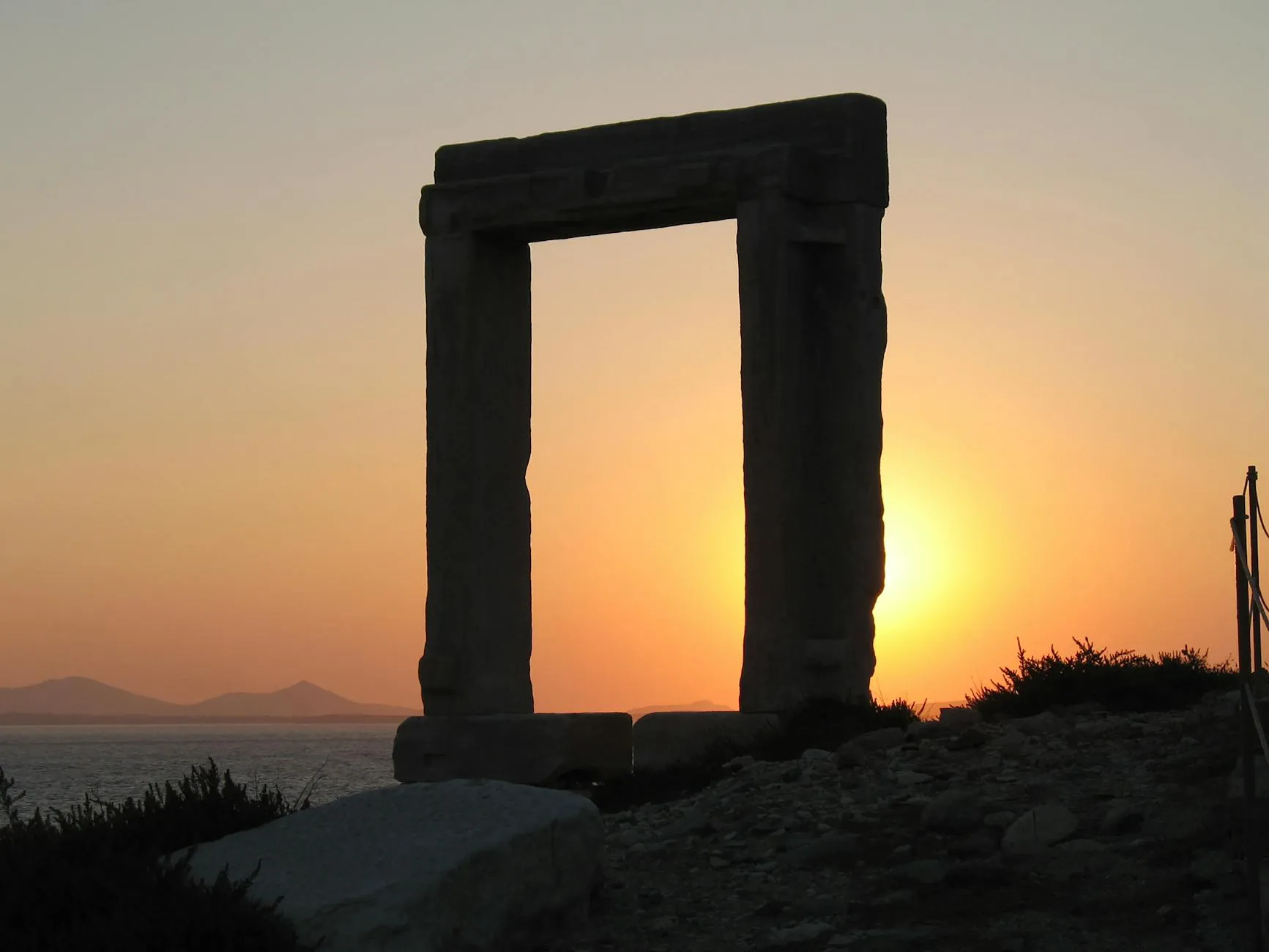
The Portara is what people mean when they say Naxos. A single marble doorframe — four pieces of weathered Naxian marble, each weighing close to twenty tonnes, fitted into a five-and-a-half-metre square gateway — standing alone on the islet of Palatia at the entrance to Naxos harbour, joined to Chora by a low stone causeway. It is the most photographed object in the Cyclades after the Oia caldera. It is also a fragment of a much larger story.
The temple it was meant to admit was begun around 525 BC by the Naxian tyrant Lygdamis, an ally of Pisistratus of Athens and Polycrates of Samos. The plan was vast — a Temple of Apollo Delios fifty-nine metres long and twenty-eight metres wide, designed to rival the Temple of Olympian Zeus then rising in Athens and the great temple of Hera that Polycrates was building on Samos. It was meant to be one of the largest temples in the Greek world. Construction lasted barely a year. In 524 BC the Peloponnesian League under Spartan leadership intervened against the tyrants of the Aegean; Lygdamis was deposed; the workforce dispersed; the temple stopped at the foundations and the doorway. The doorway has been there ever since. A small Christian church was built within the ruins in the sixth or seventh century AD. The medieval Venetians quarried the rest of the temple stone for the Kastro walls, leaving the Portara because it was too heavy to break apart and re-use.
Walk out at sunrise — the light comes from behind the doorway and silhouettes the marble against an empty sea. Walk out again at sunset — the light comes from the west, blasts through the door, and floods Chora with orange. Both are real, both are free, both are worth doing.
- Price: Free
- Hours: Always open
- How to get there: Walk from anywhere in Chora — five minutes from the port, ten from the Kastro
- Access note: The causeway is uneven stone. Slippery when wet. Wear closed-toe shoes after rain.
- Editor’s tip: The sunset crowd compresses onto the Portara islet itself between 18:30 and 20:30 May–September. The better photograph is from the small breakwater wall on the north side of the harbour, where you get the doorway, the islet, and the silhouette of Chora behind it in the same frame, with no people in the foreground.
2. The Kastro of Chora and the Della Rocca-Barozzi Tower
The Kastro is the medieval citadel that Marco Sanudo built in 1207 and the Sanudo and Crispo dukes lived in for three and a half centuries. It sits at the top of Chora, behind the Old Market alleys. From the harbour, walk up Apollonos Street, take the second of the three surviving gates, and you are inside it — pentagonal in plan, originally with five corner towers, with a central square that still holds a Catholic cathedral and the Venetian-period mansions of what were once the noble families of the duchy. Catholic Mass is still said in the cathedral on Sundays. The Della Rocca and Barozzi families still live here.
The single best entry into the Kastro’s history is the Domus Della Rocca-Barozzi, a tower-mansion set into the inner wall of the citadel, which has been opened as a small private museum by Nikos Karavias of the Della Rocca-Barozzi family. The collection is what was actually in the house — Venetian furniture from the eighteenth and nineteenth centuries, ducal-period documents, garments, household objects, paintings of the family’s ancestors who governed islands of the duchy. Karavias gives the tour himself when he is in Naxos. In the courtyard of the tower, from April to October, the museum hosts the Naxos Festival concert series — chamber music, lyric concerts, occasional theatre — Wednesday to Sunday at 20:00, ticket prices around €15 to €20.
The Archaeological Museum of Naxos sits in the same Kastro precinct, in a seventeenth-century Venetian mansion. Its collection of Early Cycladic marble figurines is second in the world only to the National Archaeological Museum in Athens — the same simplified faceless figures, three thousand to five thousand years old, that influenced Brâncuși and Modigliani. The museum has been operating for some years from the cultural centre of Saint Ursula in the Kastro while the main building undergoes restoration; check on the day for which building is open.
- Price (Della Rocca-Barozzi tour): A small entry fee, around €5–€8; concert tickets €15–€20
- Hours (Della Rocca-Barozzi): Daily 10:00–15:00 and 19:00–22:00, April to October; closed in winter
- Hours (Archaeological Museum): 09:00–14:00 Wed–Mon, closed Tuesday and public holidays
- How to get there: Walk up from the port; ten minutes through the Old Market alleys
- Editor’s tip: Do the Della Rocca-Barozzi tour in the morning when Karavias is most likely to be there, then come back at 20:00 for the concert. The same ticket gets you into the courtyard either way, and the chamber concerts at sunset in the Kastro are one of the genuinely good experiences of the Cycladic summer that almost no day-tripper finds.
3. The Apollonas Kouros — The Largest Statue Greek Sculptors Ever Tried to Move
The Apollonas Kouros lies on its back in an open quarry at the northern end of Naxos, three minutes’ walk uphill from the village of Apollonas. Ten and a half metres of light grey Naxian marble. About eighty tonnes. Cut from the bedrock on three sides — front, sides, head — but never separated from the rock floor underneath. The chisel marks are still on the marble. A bearded male figure, often interpreted as Dionysus rather than the standard Apollo on account of the beard, made in the early sixth century BC.
Two things are arresting when you stand next to it. The first is the size — there is no photograph that prepares you for it; it is the size of a building, lying down. The second is the abandonment. The sculptors got far enough that you can see the face, the chest, the position of the legs. They worked in this quarry for months, possibly years. And then someone realised that no-one was going to get eighty tonnes of finished statue down the mountain to a ship — there is no road carved to take it out — and they walked away. Twenty-six centuries of weather have rounded the marble. Goat tracks cross the figure’s chest. Children from Apollonas have always swum at the cove below.
There are two more colossal kouroi on Naxos — both at Flerio, near the village of Melanes, half an hour’s drive east of Chora. The first lies in a tree-shaded private garden enclosure, four and three-quarter metres long, six tonnes, abandoned around 570 BC because its lower legs broke during transport from the cutting site. A fifteen-minute walk further along the path brings you to the second, exposed on an open hillside, of similar age and dimensions, abandoned slightly later in the finishing process — you can see the carved braided hair on its head. Three colossal Archaic kouroi, all on Naxos, all in their original positions, all unfinished. There is nothing comparable in the rest of the Greek world.
- Price (Apollonas + Flerio kouroi): Free, open-air sites
- Hours: Always open; bring water in summer, no shop within walking distance at the quarry
- How to get there: Apollonas — €7.10 KTEL bus from Chora, about 1 hr 50 min one way, or 70 minutes by hire car via the inland mountain road through Apiranthos. Flerio (Melanes) — €1.80 KTEL bus to Melanes, then a signed 15-minute walk uphill
- Access note: Both sites involve uneven rocky paths. Trail shoes recommended at Flerio; the Apollonas approach is paved
- Editor’s tip: Do Apollonas in the morning before the heat — you are walking on bare rock with no shade. The bus from Chora arrives mid-morning; allow forty-five minutes at the kouros, then have lunch at one of the two tavernas in Apollonas village (octopus on the line, fresh fish), then take the next bus back via Apiranthos and Filoti to break the inland mountain drive into legible pieces.
4. Mount Zas — The Roof of the Cyclades
Zas is the highest peak in the entire Cyclades archipelago — one thousand and four metres of white Naxian marble bedrock rising out of the Tragea valley above the village of Filoti. In Greek mythology it is the mountain on which Zeus was raised; the cave of Zas, halfway up, is the legendary cave of the god’s childhood. The hike to the summit takes three to four hours round trip from the trailhead at Aria spring, climbing about five hundred metres of elevation through olive groves, scrubland, then loose marble rock and exposed ridge for the final push. On a clear day the summit gives you Paros, Ios, and the dome of Santorini in the distance to the south, and the entire interior of Naxos laid out below.
Two routes exist. The shorter and steeper goes from Aria spring directly up the south face — clearly marked with red dots and cairns, no ambiguity, no exposure, but a sustained climb on loose marble for the last hour. The longer loop adds the cave of Zas — a small, deep limestone cave halfway up where, by tradition, Rhea hid the infant Zeus from his father Cronus, who had a habit of eating his children. Bats live in the cave. Bring a torch if you go in. The longer route via the cave is the better hike if you have four hours; do not attempt either route after 10:00 between June and September — there is no shade above the tree line.
- Price: Free
- Hours: Daylight only — start by 07:30 in summer, by 09:00 in spring and autumn
- How to get there: KTEL bus from Chora to Filoti (€3.20, 35 min), then a 20-minute walk or short taxi up to Aria spring; or self-drive
- Access note: Steep, rocky, sustained climb. Real trail shoes or boots. Two litres of water per person minimum in summer
- Editor’s tip: Many guides will tell you to start at the small chapel of Agia Marina above Aria spring, not at the spring itself. They are right — the chapel is a hundred metres up the road and saves you a hot, exposed first kilometre. The water at Aria spring is drinkable and cold; refill on the way back.
5. The Temple of Demeter at Sangri
Demeter was the goddess of grain. The Temple of Demeter at Sangri, in the south of Naxos near the village of Gyroulas, was built around 530 BC — almost the same moment as the Portara — out of pure white Naxian marble, in an Ionic style with a square plan and a Doric-influenced roof that was unusual for its time. It sits on a low plateau of farmland, with views in every direction. After the temple stopped functioning in the late Roman period, an early Christian basilica was built directly over its foundations, reusing many of the temple’s marble blocks; you can see the Christian stones laid against the pagan blocks at ground level today. The site was excavated and partly anastylosed — fitted back together from its original pieces — in the late 1990s and early 2000s by a team from the Greek Ministry of Culture.
The walk from the car park to the temple takes about ten minutes through a small olive grove. Bring a hat. The site has no shade.
- Price: €5
- Hours: Closed Tuesdays. Winter: 08:30–15:30, Wednesday–Monday. Summer: Monday and Wednesday–Saturday 08:30–15:30, Sunday 08:00–20:00
- How to get there: 15 km from Chora via the Sangri turn-off; KTEL bus or self-drive
- Editor’s tip: Pair the Temple of Demeter with the Bazeos Tower — they are two kilometres apart on the same back road, and the Bazeos Tower’s small museum is open all year. The temple is at its best in late afternoon when the sun is low across the marble and the heat has eased.
6. The Bazeos Tower
Built around 1600 as the fortified Monastery of Timios Stavros — the True Cross — by a community of Greek Orthodox monks who needed walls in a century of pirate raids on the Cyclades. Rebuilt to its current form in 1789. Bought by the Bazeos family in the nineteenth century when the monastery was dissolved. Restored, sympathetically, in the late twentieth century by Kostas Bazeos, an architect descendant of the family, who reopened it to the public in 2001 as a year-round cultural centre.
Inside: a small permanent exhibition on Cycladic vernacular architecture, contemporary art shows that change through the year, and from July to September the Naxos Festival, a programme of classical and contemporary music, theatre, lectures, and dance that has been running since the building reopened. The Festival has worked with the Benaki Museum, the Greek National Opera, and visiting Athenian and European ensembles. Tickets are typically €15–€25 for evening events.
- Price: €5 entry to the tower itself; concert tickets separately
- Hours: Daily, 10:00–15:00 and 18:00–22:00 in summer; check ahead in winter
- How to get there: Two km east of Sangri, on the same back road as the Temple of Demeter; self-drive recommended
- Editor’s tip: If you are coming for an evening concert, eat first — there is no food at the tower itself, and the closest taverna is back in Sangri village. Bring a cushion; the seating in the courtyard is hard stone.
7. Apiranthos — The Marble Village
Apiranthos sits at six hundred metres on the eastern flank of the island, thirty-two kilometres from Chora, surrounded by terraced fields and emery quarries that the village was built to work. The streets are paved with the same white Naxian marble that the houses are built from — the village glows in late afternoon. The dialect is distinct: a Cretan-influenced Greek with deep “l” and “r” sounds that linguists have traced to the same vocal pattern found only in the villages of Anogia and Mylopotamos in central Crete. The first documented mention of Apiranthos is in the Liber insularum archipelagi of the Italian traveller Cristoforo Buondelmonti, in 1420. The strongest documented wave of Cretan settlement here followed the failed Daskalogiannis revolt against the Ottomans in Sfakia, on Crete, in 1770; refugees moving across the Aegean settled where they could, and the highland of east Naxos absorbed enough of them to change the speech of the place permanently. The village has been speaking it for two and a half centuries.
There are five small museums in Apiranthos — Archaeological, Geological, Folk Art, Natural History, Visual Arts — all founded by the Naxiote folklorist and politician Manolis Glezos and his brother Nikos. Visit at least two. The Geological collection in particular is the best place in Greece to understand emery — corundum, the second-hardest mineral on earth after diamond — which was mined here continuously from antiquity until the late twentieth century, and which gave the village and its neighbours (Koronos, Komiaki, Skado) their living for two and a half thousand years.
30 May 1941: Two Boys Climb the Acropolis
Manolis Glezos was born in Apiranthos on 9 September 1922. His family were emery miners. He was raised in the village until he was eleven, when his father moved them to Athens for schooling. On the night of 30 May 1941, with his friend Apostolos Santas, also nineteen and also a law student at the University of Athens, Glezos climbed the rear of the Acropolis hill in the dark, evaded the German garrison, climbed the flagpole at the eastern edge of the rock, and tore down the swastika flag that had been raised there on 27 April 1941, when the Wehrmacht had entered Athens. The two boys took the flag down the hill. They were sentenced to death in absentia. Charles de Gaulle, broadcasting from London, called Glezos “the first partisan of Europe.”
He was arrested four years later, escaped, was arrested again after the war by the post-civil-war right-wing government, sentenced to death three more times for his communist politics, served sixteen years in Greek prisons, and was released. He served as a member of the European Parliament for SYRIZA from 2014 to 2015 in his nineties. He died at home in Athens on 30 March 2020 at the age of ninety-seven, by which point he had been continuously politically active in some form for seventy-eight years.
In Apiranthos, where he was born, where he grew up, where he founded the village’s five museums — most Naxiotes still call him simply Manolis. Apostolos Santas, the other boy on the Acropolis, was born in Patra in February 1922 and died in Athens in April 2011 aged eighty-nine. Their joint act on 30 May 1941 is widely considered the first major act of the Greek resistance.
- Price (museums): Small admission, around €3 each; combined ticket sometimes available
- Hours: Most museums open 10:30–13:30 and 18:00–20:00 in summer, mornings only in winter; closed Mondays
- How to get there: €4.10 KTEL bus from Chora, about an hour, four to six departures daily in summer
- Editor’s tip: Time your visit so you arrive late morning, see two museums, eat lunch at Lefteris Tavern — the Lefteris burger with melted Naxian gruyere, tomato and pepper, served on a flower-bedecked veranda above the village — then walk the marble alleys for an hour in the afternoon light, then catch the late bus back via Filoti and the Tragea. A full day. One of the best on the island.
8. Halki and the Vallindras Distillery
Halki — Chalki on some maps — sits in the centre of the Tragea valley, sixteen kilometres from Chora, surrounded by the largest olive grove in the Cyclades and ringed by Byzantine and post-Byzantine churches. It was the capital of Naxos under the Venetians and remained the island’s administrative centre well into the nineteenth century, when Chora overtook it. The neoclassical mansions on the main street were built by Halki’s nineteenth-century merchant families, who grew wealthy on olives, wine, and citron.
Halki is also the home of Vallindras Distillery, established in 1896 by Markos Vallindras, the oldest kitron distillery on Naxos and one of the oldest continuously operating distilleries in Greece. The distillery still occupies the original premises at the centre of the village. The copper pot stills are the same, the heating fuel is still olive wood, and the family — now in its fifth generation — still does the distilling. Walk in unannounced, and one of the family or the distillery’s small staff will give you a free tour: the stills, the warehouse with its rows of demijohns and barrels, the original ledger book in the office where the first export sale on 7 March 1928 is written in copperplate handwriting. At the end of the tour you taste all three styles of Kitron Naxou — the yellow at thirty-six percent alcohol with no added sugar, the white at thirty-three percent with low sugar, the green at thirty percent with the most sugar. Most Naxiotes drink the white; you will see why. A 700 ml bottle of any of the three is around €13–€18 from the distillery shop, less than what you will pay for the same bottle in an Athens supermarket.
Halki has also become Naxos’s contemporary-craft village — the Fish & Olive ceramics studio, L’Olivier olive-oil and herb shop, Era boutique with its Greek designers — clustered along three hundred metres of the main street.
- Price (distillery tour and tastings): Free
- Hours (distillery): Daily 11:00–19:00, May to October; mornings only off-season
- How to get there: €2.80 KTEL bus from Chora, about 25 min, several departures per day
- Editor’s tip: Halki is at its best in late afternoon when the day-trippers have left and the church bells of Tragea are doing the four-thirty office. Stay for dinner at Yannis Tavern — twenty-seven years in the same spot, the white wine of the family’s own vineyard at Tripodes — and catch the last bus or a taxi back.
9. Plaka, Agios Prokopios, Agia Anna — The Long Western Sand
The west coast of Naxos south of Chora is the longest unbroken sandy coast in the Cyclades. From the airport south to Pyrgaki, the beach is essentially continuous, broken only by the small headland at Agia Anna and the dune system at Plaka. The water is shallow, clear, and warm by Cycladic standards from late May into early October. The sand is fine and pale gold.
Three distinct sections matter:
- Agios Prokopios is the closest to Chora — a fifteen-minute, €2.10 bus ride away. The beach is wide, the water is calm, the south end has a small fishing harbour with three or four good fish tavernas, and the north end has the bus stop and most of the area’s hotels. Crowded in July and August, but the crowd is mostly Greek and Italian families.
- Agia Anna, immediately south, is the lively middle — beach clubs, restaurants, sailboats, the small ferry to Paros — concentrated in a four-hundred-metre strip that gets very full in peak season. South of the Agia Anna headland, the beach opens into the dune system, with no buildings, no loungers, and no shade: bring a parasol. This is the part most visitors miss.
-
Plaka runs four kilometres from the south end of the dunes to the small village of Plaka. The northern end has a handful of low-key beach bars and tavernas; the southern end is empty. Officially the unbroken stretch from the dunes to Plaka village is one of the longest free public beaches in the Cyclades. Mikri Vigla, ten minutes’ drive further south, has windsurfing and kitesurfing on the windward north side and calmer swimming on the leeward south side.
-
Price: All beaches free; sunbed + umbrella €15–€25/day at organised sections
- Hours: Always open
- How to get there: KTEL “Beach Bus” from Chora every 15–20 min in summer, €2.10 each way; airport stop on the same line
- Editor’s tip: Walk south. From the bus stop at the north end of Agios Prokopios, walk twenty minutes south through Agia Anna and over the headland into the dunes, and you will find empty sand within forty-five minutes of leaving Chora. Take water — the dunes have no shop.
10. The Tragea Valley and Its Byzantine Churches
The Tragea is the high agricultural plateau in the centre of Naxos, between Halki and Filoti. It is the largest olive grove in the Cyclades — many of the trees are six hundred years old, some considerably older — and it is also the densest concentration of Byzantine and post-Byzantine churches on a Greek island after Mount Athos. The standard count is over a hundred and fifty small chapels and churches across the Tragea, dating from the seventh century AD onwards. Most are still locked except on the saint’s day; the keys are held by the elderly woman whose family has the responsibility for that particular church, and you find her by asking in the nearest village kafeneio. This is not unfriendly. It is simply how the system works.
Three churches are reliably open or easy to get the key for, and each is worth the diversion:
- Panagia Drosiani in the Moni area — sixth or seventh century AD, one of the oldest Christian churches in Greece, with frescoes from the seventh and twelfth centuries. The exterior is a low cluster of barrel vaults; the interior is dim and cool. Donation expected.
- Agios Mamas at the Potamia turn-off — tenth century, the original cathedral church of medieval Naxos, half-ruined but with its dome intact. Free, always open.
- Panagia Filotissa in Filoti — eighteenth-century rebuild on a much older foundation, the village’s main church and the site of the Filoti Panigyri on 15 August every year, the largest village festival on Naxos.
The Tragea is also where you walk for the Naxiote interior. A network of kalderimi — stone-paved donkey tracks centuries old — links Halki, Moni, Filoti, Damalas, Potamia, and Apano Sangri. None of them is particularly long; most can be done as half-day walks.
- Price: All churches free or by donation
- Hours: Variable; ask in the village kafeneio
- How to get there: Bus to Halki, Filoti, or Apiranthos and walk; or self-drive
- Editor’s tip: Time your Tragea drive for the late afternoon “horizontal light” between five and seven, when the olive trees throw long shadows, the marble dust on the paths catches the sun, and the bell-towers of the small churches turn from white to honey-yellow.
11. The Eggares Olive Press Museum
Eight kilometres north of Chora, in the village of Eggares, the Eggares Olive Press Museum occupies a working olive mill that operated from 1884 until the 1950s and has been preserved exactly as it was when it stopped working. The grindstones, the screw presses, the storage jars, the cold-pressing equipment, the original family living quarters above the mill — all in place. Tours are run by the family who restored the mill, are free, and end with tastings of the local olive oils, honey-walnut breads, olive pastes, and the museum’s own infused oils. The cake at the end is one of the best things you will eat on the island and there is no question on the politeness of the second slice.
- Price: Free guided tour and tastings
- Hours: Daily 11:00–18:00, 2 May to 30 September; closed in winter
- How to get there: Self-drive (10 min from Chora) or via the Eggares-bound KTEL bus
- Editor’s tip: Go in the morning before the tour groups arrive — the family does the tour in person when there are fewer than ten visitors, and that is when you get the real version.
12. The Old Market and the Kastro Alleys at Dusk
Chora’s Old Market — the warren of shops, tavernas, ouzeries, leather workshops, jewellers, and bakeries that fills the slope between the harbour and the Kastro walls — is one of the more rewarding hour-long walks in the Cyclades. The buildings are mostly Venetian-era stone houses with later Greek-Orthodox additions; the alleys are narrow, paved with marble flagstones polished by five hundred years of foot traffic, and the shops are still mostly run by the families who own them. The bakery at the corner of Old Market and Kastro Street has been making amygdalota — the Naxiote almond and rose-water sweet — since the 1970s, and the kitron-and-mastiha shop opposite still does its own bottling.
Walk up at dusk. The Kastro walls are lit, the cathedral bell rings the office, and the kafeneia put their tables out in the small squares. Stop for an ouzo and a small plate of marinated octopus.
- Price: Free
- Hours: Old Market shops mostly 10:00–14:00 and 18:00–22:00 in summer
- How to get there: Walk from anywhere in the lower town
- Editor’s tip: The cruise day-trippers — when there are any, they come over from Mykonos on small private excursion boats — are out of Chora by 16:30. The Old Market between 17:00 and 19:00 in July is the version you came for.
Naxos Town and the Inland Villages
Chora (Naxos Town)
The capital, the port, the airport-bus terminus, and where almost all visitors begin and end. Population about nine thousand. Three sections matter: the Bourgos (the lower town between the harbour and the Old Market), the Old Market itself (the alley grid running uphill), and the Kastro (the medieval citadel at the top, with its own small Catholic and noble-family quarter). The waterfront strip directly facing the harbour is where you will find the cheap-and-cheerful pizza and the inflated cocktails; the Bourgos squares one street back are where the old kafeneia are; the Old Market alleys above are where the actual food and craft is. The tourist information office is at the harbour, just past the ferry pier.
Halki
Once the capital. Now the most polished of the inland villages — neoclassical mansions, the Vallindras Distillery, two or three contemporary craft galleries, a handful of excellent tavernas. Sixteen kilometres from Chora, on the bus route. The Tragea valley begins here.
Filoti
The largest of the inland villages, twenty-four kilometres from Chora at the foot of Mount Zas. The hike to the summit starts here. The 15 August Panigyri at Panagia Filotissa is the largest village festival of the year on Naxos — Greek Orthodox liturgy in the morning, folk music and dancing in the village square through the night.
Apiranthos
The marble village, the Cretan-dialect village, the village of Manolis Glezos and the five small museums. Thirty-two kilometres from Chora at six hundred metres elevation. The most rewarding day-trip in the interior, and one of the best meals on the island at Lefteris Tavern.
Sangri
In the south, near the Temple of Demeter and the Bazeos Tower. A working agricultural village, less polished than Halki, more useful as a base for the south coast and the kouroi at Flerio. Two good tavernas in the village square.
Apollonas
The northernmost village, an hour and fifty minutes by bus from Chora at the end of the spectacular north coast road. The Apollonas Kouros lies in the quarry above the village. A working fishing harbour, two tavernas with octopus on the line, and a beach that is empty by Cycladic standards even in August.
Koronos and Komiaki
The two emery villages of the eastern interior, between Apiranthos and Apollonas. Koronos in particular is worth a stop — the village square is built around the abandoned emery transport cable that carried the mineral down to the loading dock at Moutsouna on the east coast until the 1980s. Rusting pylons still stand on the hillsides. The cable system was, in its day, one of the longest aerial ropeways in southern Europe.
Melanes
The closest inland village to Chora — fifteen minutes by bus, €1.80. Marble quarries, the two Flerio kouroi, and a clutch of small tavernas in the village.
Where to Stay — by Budget
Naxos is bigger than most Greek islands, and where you stay shapes what kind of week you have. The four real options are: in Chora (cultural immersion, walking-everywhere convenience, restaurants), at Agios Prokopios or Agia Anna (beach immersion, fifteen minutes from Chora by bus), at Plaka or Mikri Vigla (the long quiet beaches, but you need a car), or at Apollonas (north-coast remoteness, also requires a car). For a first visit of less than five days, Chora or Agios Prokopios are the right answer.
Budget — €40 to €90 a night
- Pension Sofi — central Chora, family-run since the 1970s, basic but spotless rooms with bathrooms, breakfast included, owners pick up at the port. Around €60–€80 in shoulder season.
- Hotel Anixis — quiet position just below the Kastro, with a roof terrace looking down over Chora and the Portara. Around €70–€100 in summer.
- Iliovasilema Studios — Agios Prokopios, two-minute walk to the beach, simple, family-run. Around €60–€90.
- Studios at Agia Anna — many small studio operators along the back streets behind the beach offer rooms with kitchens for €50–€80; book direct rather than via aggregators where possible.
Mid-range — €120 to €280 a night
- Lagos Mare Hotel — Agios Prokopios, a seven-minute walk to the beach; design-led, three small pools, the in-house 1924 Restaurant under chef Dimitris Skarmoutsos is one of the better fine-dining options on the island. From around €180 in summer.
- Hotel Grotta — northern edge of Chora, looking back at the town and the Portara from above; family-run, friendly, breakfast on the terrace. Around €130–€180.
- Naxos Resort Beach Hotel — Agios Georgios, the closest beach to Chora; a fifteen-minute walk along the sand to the harbour and the Portara. From around €150.
- Aeolos Resort — Agios Prokopios, self-styled sustainable resort with a strong commitment to local sourcing. Around €170–€260.
Luxury — €350 to €1,500+ a night
- Naxian Collection — a small estate of private villas with private pools at Stelida, on the headland between the airport and Agios Prokopios. Each villa has its own kitchen, sitting room, terrace and pool; tailor-made chef service available. From around €600 in shoulder season, well over €1,200 in peak.
- Naxian Utopia — luxury villa estate, Naxos Town side. From around €450.
- ELaiolithos — boutique mountain hotel above Moni in the Tragea, looking out over the olive grove. The estate-level dinner with paired Naxian wines is one of the better gastronomic experiences on the island. From around €350.
Where Not to Stay
The immediate strip on the harbour-front of Chora — the same buildings that house the cocktail bars and the souvenir shops — gets the noise from the late-night bars on one side and the ferry horns at 06:45 on the other. Walk five minutes uphill into the Old Market or the Bourgos and the price drops, the noise drops, and the experience improves. Stelida is fine for villas and quiet, but the airport flight path runs over it from 06:00 to 19:30; if you sleep light, check before you book.
The Climate Resilience Fee (€1.50–€10 per room per night by hotel-star tier, March to October) is added at check-in and paid in cash or card on departure; budget for it on top of the room rate.
Where to Eat
Naxos eats better than its reputation suggests. The island grows its own potatoes, makes its own cheese, raises its own lamb and beef, makes its own wine and its own kitron, and the cooking has never had to perform for the cruise crowd because the cruise crowd does not, with rare exceptions, come here. There are no Michelin stars on Naxos in the 2026 selection — the Greek expansion adds Santorini and Thessaloniki, neither of which is Naxos — and on most days that is the right number. What you get instead is honest cooking with named ingredients.
Budget eats — €4–€12 per person
- Souvlaki and gyros at To Souvlaki tou Maki in the Old Market — a hole-in-the-wall, one cook, five-table operation; the best gyros in Chora for €4.
- Bakery Bikos on Old Market street — amygdalota, kalitsouna (small cheese pies), bougatsa in the morning. Coffee €1.50, pastry €1.50.
- Loukoumades at the small kiosk behind the harbour — €2.50 for a cone.
- Greek salad with local tomatoes and Naxian xinotyro at any kafeneio in the Old Market — €6–€8.
Mid-range — €20–€40 per person with wine
- Apostolis — Old Market, Chora. Modern Greek with a light hand; the Greek salad is served inside a hollow bread loaf, the kleftiko is slow-braised lamb shoulder, the imam bayildi is unusually good. Live music some evenings. Book ahead in summer.
- Yannis Tavern — Halki, on the main street. Twenty-seven years in the same spot. The moussaka is the family recipe; the white wine comes from the family’s own vineyard at Tripodes. Outdoor tables on the marble pavement.
- Lefteris Tavern — Apiranthos. Started by Lefteris Karapatis, a village shoemaker by trade, in the 1990s; now run by his son Yannis. The Lefteris burger — beef stuffed with melted Naxian gruyere, tomato and pepper, with hand-cut fries — is the dish people come for; the T-bone steak (up to a kilo) and the whole-roasted lamb shoulder are the others. Flower-bedecked terrace looking out over the village.
- Axiotissa — Kastraki, on the south-west coast. The chef-owner cooks what is in season from a half-kilometre radius — small fish, foraged greens, Naxian goat. Closed Mondays.
- Avli tou Thodori — Chora, in a courtyard off the Old Market. Mezedopolio style — many small plates, very good tiganites and ladenia.
Special occasion — €50–€110 per person
- 1924 Restaurant at Lagos Mare Hotel, Agios Prokopios. Chef Dimitris Skarmoutsos. Modern Greek tasting menu rooted in Naxian ingredients — the kitron-cured kingfish, the slow-roasted Apiranthos goat, the Naxian cheese course. The single best fine-dining experience on the island.
- Vasilis Tavern at Apollonas. Not “fine dining” — but if you are at the kouros for the day, the fish here is among the best on the island, and it costs you €40–€60 for a whole grilled fish, salad, and a half-kilo of house wine. Half a Cycladic wedding-table for the price of a Mykonos starter.
Traditional dishes to know
- Patata Naxou — the PDO yellow-fleshed potato; it appears under everything, fried, roasted, mashed. Order patates lemonates — lemon-roasted potatoes — at any taverna.
- Graviera Naxou — the PDO cow’s-milk graviera, mild, nutty, melts well. Eaten as a meze with kitron, or melted into the Lefteris burger.
- Arseniko — the four-hundred-year-old hard cheese, sharper, saltier; “the male cheese” (in opposition to thilikotiri, “the female cheese”). Ask for it specifically; it is not always on the table.
- Xinotyro / Xinotiri — the hard-aged sour goat’s cheese; pairs well with raki.
- Naxian beef — the inland cattle from the Tragea valley produce a beef that is unusual in the Cyclades (most islands have lamb and goat but not significant beef herds). The kontosouvli-style spit-roasted beef at Lefteris is the best version.
- Kalogeros — pork, beef and aubergine cooked with Naxian gruyere, a Naxiote fournou dish.
- Loukaniko Naxou — the local pork sausage, often with orange peel and herbs.
Avoid
The waterfront restaurants on the harbour-front of Chora that put English-language menus and photographs of dishes at the door. The food is fine; the price is roughly double what the same plate costs three streets uphill in the Old Market, and the cooks are not from the family that owns the building.
Drinking on Naxos: Kitron, Wine, Raki
Kitron
Kitron is a citron-leaf liqueur that exists in three styles — yellow, white, green — produced commercially only on Naxos and registered as a PDO product. The fruit is the citron, Citrus medica, an ancestor of the lemon brought from Asia by Alexander’s army; it grows in walled groves around the villages of Tragea, Halki, Damarionas and Damalas. Almost no-one eats the fruit; the leaves are what go into the still. The Vallindras Distillery in Halki has been making kitron continuously since 1896. Most Naxiotes drink the white (thirty-three percent alcohol, low sugar). After dinner, served chilled, in a small wine glass, with a small plate of xinotyro.
Wine
Naxos is a wine-growing island — vineyards at Tripodes, Damalas and Sangri, with the local Vasilakis and Tripodakis family wineries doing serious work in indigenous Cycladic varieties (Mantilaria for red, Aidani for white, the rarer Liatiko in some experimental blends). House wine in tavernas is often Naxiote; ask. A half-kilo carafe of house wine is typically €4–€7.
Raki and Rakomelo
The local raki — distilled grape pomace from the autumn harvest — is what gets drunk through the winter. In the cold months it is served warm with honey, cinnamon and clove, as rakomelo, in many of the Tragea villages. The Rakee Festival in September, when the year’s distilling is done, is the closest the island has to a working calendar of the harvest.
Kafeneia
Old kafeneia in Chora and the inland villages serve small bottles of beer (€2.50), Greek coffee (€1.50), kitron at the bar (€2.50 a shot), and tiny plates of meze free with the second drink. Kafeneion Kalami in the Old Market and Argyris in Filoti are two of the best.
Getting Around
From the airport (JNX)
Naxos Island National Airport sits seven kilometres south of Chora on the west coast. There is no airport-dedicated bus inside the terminal, but the Beach Bus (the KTEL line to Agios Prokopios, Agia Anna and Plaka) stops on the main road about a five-hundred-metre walk from the terminal door, signed “Naxos Camping.” Fare €2.10 to Chora or to the beach hotels. The bus runs every fifteen to twenty minutes in summer; tickets are paid at the destination station on arrival from the airport stop. Otherwise: a taxi from the airport to Chora is €18–€25 (no meter; agree the price before you get in), or to Agios Prokopios €10–€15. Pre-booked private transfers around €25–€35.
KTEL public buses
The Naxos KTEL bus network is unusually good for a Greek island. Eleven main lines from Chora reach all the inland villages and all the major beaches. Headline 2026 fares from Chora:
- Beach buses (Agios Prokopios / Agia Anna / Plaka): €2.10, every 15–20 min in summer
- Halki: €2.80, ~25 min
- Filoti: €3.20, ~35 min
- Apiranthos: €4.10, ~1 hour
- Apollonas: €7.10, ~1 hour 50 min
- Melanes: €1.80, ~15 min
Buy tickets in advance at the Chora bus station opposite the port, at the small kiosks at the major beach stops, or at the hotels and pensions that act as agents (the network is informal but works). Drivers do not normally sell tickets en route; the airport stop is the exception, where you pay at the Chora station on arrival. Students 25% off; under 6 free. Schedules at naxosbuses.com.
Taxis
About two hundred taxis operate on Naxos in summer. The rank is at the harbour, opposite the ferry terminal. There is a single phone dispatch number (+30 22850 22444). Fares: Chora to Filoti about €25; Chora to Apollonas about €60. No meter; agree the price before you get in.
Hire car
The right answer if you have more than three days and want to do the inland villages and the south-coast beaches at your own pace. €30–€50 a day in shoulder season, €50–€80 in July and August, slightly more for an automatic. The roads are paved to all the main villages and beaches; the inland mountain road via Filoti and Apiranthos is spectacular and well-engineered. The road to Apollonas is narrow in places; take it slowly. The dirt tracks on the north-east and east coast (Moutsouna to Psili Ammos, Apollonas to Lionas) are passable in a small car in summer but a 4×4 is more comfortable.
Ferry from Athens (Piraeus)
Two daily Blue Star sailings, plus services by Hellenic Seaways and Seajets. Conventional ferry: about 5 hours 30 minutes. Fast ferry: 3 hours 30 minutes to 4 hours. First Piraeus departure 06:45, last 17:30. Economy ticket from around €30, standard €50–€60, business €70–€80. The Blue Star service is the comfortable option — wider seats, better cafeteria, slower but more reliable in wind. Book ahead in July and August.
Domestic flights (JNX)
Athens (ATH) to Naxos in 42–45 minutes. Three operators in 2026: Aegean, Olympic Air, Sky Express. First flight 06:00 (Olympic Air), last 19:05 (Sky Express). Aegean also runs direct services from Naxos to Heraklion (Crete), Rhodes, and Thessaloniki. Booking: through Aegean and Olympic the day before is usually fine; in peak season book a week ahead.
Sea taxi to Paros and Mykonos
Small ferries cross Naxos to Paros several times daily in season (€10–€15, 30 minutes); to Mykonos via Blue Star or fast catamaran the same day-trip distance is around 21 nautical miles port-to-port and the crossing is 35 minutes to one hour, depending on the boat. From Mykonos’s Old Port, the small Delos ferry runs separately to Delos in another 30 minutes; Naxos-to-Delos as a one-day round trip is feasible by changing boats at Mykonos.
Best Time to Visit
The honest answer for Naxos is mid-September to early October. The sea is still 23–24°C, the meltemi has eased and prices have dropped. The Filoti and Apiranthos panigyri (15 and 29 August) are recently past, the Naxos Festival at Bazeos Tower is still on, and the kitron and raki distillation seasons run alongside the Tragea valley at its golden best. Late May through mid-June is the spring counterpart: cooler water, longer daylight, wildflowers in the interior, no crowds. July and August are peak season and the island works fine in peak season — Naxos absorbs the load better than smaller Cyclades because there is more island per visitor — but you will pay more, and the dunes south of Agia Anna are the only beaches you will want by the second week of August. November through March: Chora has its winter rhythm and several tavernas stay open, the Tragea is green and the beaches are empty, but the ferry is unreliable in storm, half the hotels are closed, and the Della Rocca-Barozzi tower and the Eggares Olive Press are shut.
Month-by-Month Weather
| Month | High °C | Low °C | Rain | Notes |
|---|---|---|---|---|
| January | 14 | 9 | Wettest | Storms can cancel ferries; many hotels closed |
| February | 14 | 9 | Wet | Carnival before Lent; quiet |
| March | 15 | 10 | Drying | Almonds blossom in Tragea; Easter sometimes here |
| April | 18 | 12 | Light | Greek Orthodox Easter Sunday 12 April 2026 — major holiday |
| May ⭐ | 22 | 15 | Rare | Sea swimmable from end of month; wildflowers |
| June | 26 | 19 | Rare | High season starts mid-month |
| July | 29 | 22 | None | Hot; meltemi on west coast 5–7 days/week |
| August | 30 | 23 | None | Hottest; Filoti Panigyri 15 August, Apiranthos 29 August |
| September ⭐ | 26 | 20 | Light | The sweet spot; Naxos Festival continues, Dionysia first weekend |
| October ⭐ | 22 | 17 | Increasing | Light rain returns end-of-month; sea still 22°C |
| November | 18 | 13 | Wet | Many businesses close 1–15 November |
| December | 15 | 10 | Wet | Quiet; Christmas in Chora has its own small rhythm |
Source: Hellenic National Meteorological Service averages 1991–2020.
Daily Budget Breakdown
For one person, in 2026 prices, including the Climate Resilience Fee.
| Category | Budget | Mid-range | Luxury |
|---|---|---|---|
| Accommodation | €30–€45 (pension or studio) | €70–€140 (3-star hotel, half a double) | €300–€800+ (villa or 5-star) |
| Meals + drinks | €18–€28 (taverna lunch + souvlaki dinner) | €40–€60 (taverna dinner with wine) | €90–€180 (1924 or estate dinner) |
| Transport | €5 (KTEL bus) | €15 (rental car shared, or taxis) | €60+ (private driver, helicopter add) |
| Activities | €8 (one museum + Portara walk free) | €20 (museums + concert ticket) | €100+ (private kouros tour, sailing day) |
| Daily total | €60–€85 | €145–€235 | €550–€1,200+ |
Budget tier: pension in Chora or a studio at Agios Prokopios, KTEL buses, gyros for breakfast and a taverna menú for dinner, one paid attraction a day, a Greek coffee or two at a kafeneio. This is the normal Greek-family Naxos and it does not feel like deprivation.
Mid-range: a small hotel or small B&B near the harbour or behind Agios Prokopios beach, occasional rental-car day for the inland villages, a sit-down dinner at Apostolis or Yannis Tavern most nights with a half-kilo of house wine, the Della Rocca-Barozzi concert one evening, the kouros tour one day. This is what most foreign visitors actually spend.
Luxury: Naxian Collection, Naxian Utopia or ELaiolithos, private chef nights, sailing day to the Small Cyclades, dinner at 1924 Restaurant, private driver for the inland villages, the kitron private cellar tasting at Vallindras. About a tenth of the visitor base.
Sample Itineraries
Three-day essential
Day 1 — Chora.
– 08:30 Coffee at a kafeneio in the Bourgos (€1.50)
– 09:00 Walk to the Portara via the harbour causeway
– 10:00 Old Market, slowly — bakery, leather, kitron shop
– 11:30 Climb to the Kastro; visit the Della Rocca-Barozzi tower
– 13:00 Lunch at Apostolis — Greek salad in a bread loaf, kleftiko, half a kilo of house wine
– 15:00 Archaeological Museum (in the Saint Ursula building during the renovation)
– 17:00 Coffee with a view at one of the Kastro-edge cafés
– 19:30 Walk back to the Portara for sunset
– 20:30 Della Rocca-Barozzi courtyard concert (book ahead)
Day 2 — The interior. Hire a car.
– 09:00 Drive south to Sangri
– 09:30 Temple of Demeter (€5)
– 11:00 Bazeos Tower
– 12:30 Drive up through Halki — Vallindras Distillery free tour and tastings
– 14:00 Lunch at Yannis Tavern in Halki
– 16:00 Drive on through Filoti to Apiranthos
– 17:30 Apiranthos — at least the Geological Museum
– 19:30 Dinner at Lefteris Tavern, Apiranthos
– 22:00 Drive back to Chora through the Tragea under stars
Day 3 — Beach and the kouros at Flerio.
– 09:00 Beach Bus to Plaka (€2.10) — empty south end
– 13:00 Lunch at one of the small tavernas at Plaka village
– 15:00 Bus or taxi inland to Melanes; walk up to the two Flerio kouroi (free)
– 17:30 Bus back to Chora
– 19:00 Sunset at the Portara again — different light, different crowd
– 20:30 Dinner at Avli tou Thodori — many small plates, ouzeria style
Five-day essential — add these
Day 4 — Mount Zas.
Bus to Filoti (€3.20), short walk to Aria spring trailhead, hike to the summit (3.5–4 hours round trip; start by 08:00 in summer). Lunch back in Filoti. Afternoon visit to Panagia Drosiani and Agios Mamas in the Tragea. Dinner in the village square at Filoti.
Day 5 — North coast, the Apollonas Kouros.
Drive (or bus) the spectacular north coast road via Eggares (Olive Press Museum), Engares, the marble villages of Skado and Komiaki, to Apollonas. Lunch by the harbour — fresh fish at Vasilis Tavern. Afternoon at the kouros and the small beach. Drive back via the inland mountain road through Apiranthos and Filoti for the long horizontal Tragea light.
Seven-day essential — add
Day 6 — Small Cyclades day trip. Catch the small Skopelitis ferry from Chora harbour to Iraklia, Schoinoussa, Koufonisia, or Donousa; spend the day on one of these tiny islands; return on the evening boat. Iraklia is the wildest, Koufonisia the prettiest, Donousa the most remote. The ferry runs daily in summer; €5–€12 each way.
Day 7 — Full day at the beach you liked best. Or a day of inland walking on the kalderimi between Halki, Moni and Filoti. Or — if you must — the day-trip to Mykonos and Delos via small ferry, returning the same evening. Allow a full ten hours and accept that you will be tired.
Best Day Under €30
Naxos’s signature budget day. A walking-and-bus day that costs €27.10 if you keep to the bus and the hole-in-the-wall, or €29.10 if you add a museum.
- Greek coffee at Kafeneion Kalami in the Old Market — €1.50. Sit outside under the eucalyptus.
- Walk to the Portara at 08:30 — free. Empty in early morning. Take photos against the empty sea.
- Walk back through the harbour to the bakery on Old Market street — almond pastry and another coffee — €3.00.
- Climb to the Kastro — free. Take an hour to walk all three gates and the perimeter. Sit in the central square.
- Della Rocca-Barozzi tower — €5. Twenty minutes inside, fifteen minutes in the courtyard.
- Souvlaki at To Souvlaki tou Maki for lunch — €4. Eat it walking back down the alleys.
- Beach Bus to Plaka, Agia Anna or Agios Prokopios — €2.10. Walk south past the loungers into the dunes.
- Spend three hours on free sand. Bring water and a small towel.
- Bus back to Chora — €2.10.
- Late afternoon Greek coffee at one of the harbour kafeneia — €2.50. Watch the ferry come in.
- Mezedopolio dinner at Avli tou Thodori — three small plates and a glass of house wine — €7.00.
Total: €27.20. Add the Archaeological Museum (€2 in the temporary Saint Ursula location) for €29.20. The honest version with a third taverna plate or a kitron at the kafeneio comes in just under €31.
This makes Naxos the cheapest Cycladic best-day in the fleet — cheaper than Lanzarote (€33.50), Nicosia (€32.60), and substantially cheaper than Sicily (€35), Sardinia (€35), Santorini (€52) and Mykonos (€60+). It is one of the lower numbers in the Mediterranean island fleet, period.
Hot Afternoon and Rainy Day Plans
Hot afternoon (July–August, 14:00–17:00)
Greek custom, even in seaside Cycladic villages, is to retreat indoors between two and five in summer. Adopt the custom. Comfortable version: lunch at a taverna with a slow second carafe and a long shaded interior; a long swim before; a long siesta after. Budget version: a small bag of cheese, bread and tomato from the Old Market bakery, a bottle of cold water, the marble step inside the Kastro under the cathedral wall. Both work.
Rainy day (rare June–September, occasional April–May and October, common November–March)
- Della Rocca-Barozzi tower (€5) — long indoor exhibits, gives you 90 minutes
- Archaeological Museum (around €2 currently, in the temporary Saint Ursula building) — another 90 minutes
- Vallindras Distillery in Halki (free) — drive or bus; warm interior, kitron tastings; 60 minutes
- Eggares Olive Press Museum (free) — covered courtyard and indoor mill; 45 minutes
- A long lunch at Yannis Tavern in Halki under the marble eaves of the main street — 90 minutes
- Bookshop and old kafeneia of the Bourgos in Chora
A full rainy day costs about €15–€20 in entries and €30–€45 in lunch and coffee, plus your transport.
Day Trips
Small Cyclades
The four inhabited Small Cyclades — Iraklia, Schoinoussa, Koufonisia, Donousa — sit in a chain south-east of Naxos, served daily in summer by the small Express Skopelitis ferry from Chora harbour. Three to seven hours’ total travel time depending on which island, and any of them can be done as a long day trip or as an overnight. Koufonisia is the prettiest and the most-visited; Iraklia is the wildest; Donousa the most remote. €5–€12 each way; the boat is small and the ride can be choppy.
Paros (Parikia)
Forty minutes by fast ferry from Chora; €15–€25 each way. Parikia is the white-and-blue Cycladic capital that everyone has the postcard image of, and the Panagia Ekatontapyliani (Church of the Hundred Doors), one of the oldest continuously functioning Christian churches in Greece, is genuinely worth the day. The marble quarries above Marathi, where the marble for the Hermes of Praxiteles and the Venus de Milo was cut, are also accessible by car or taxi from Parikia.
Mykonos and Delos
The Naxos-to-Mykonos crossing is around 21 nautical miles port-to-port (roughly 39 km) and takes between 35 minutes and 1 hour 25 minutes, depending on the boat. From Mykonos’s Old Port, the small Delos ferry runs to the sacred archaeological island in another 30 minutes. The full Mykonos-and-Delos day from Naxos is feasible — leave on the 09:00 fast ferry, change at Mykonos for the 11:00 Delos boat, three to four hours on Delos, return to Mykonos for late lunch and an hour in Chora, evening ferry back to Naxos by 20:00. Long day, but it works.
Mount Zas full circuit
Strictly an interior day trip, not a sea trip, but worth listing here: bus to Filoti, hike up to the summit via the cave, descend by the alternative path to Danakos, walk down to the village of Filoti by mid-afternoon, lunch in Filoti, bus back to Chora. Eight hours; one of the better single days on the island.
Apollonas and the north-coast loop
A full day on hire car. Drive Chora → Eggares (olive press) → Engares → Skado → Apollonas (kouros + lunch) → return inland via Koronos and Apiranthos → Filoti → Chora. About 130 km; six hours of driving with stops; bring water, a hat, and a phone charger.
Safety and Practical Information
Safety
Naxos is one of the safer islands in the Cyclades. Petty crime is rare; violent crime is exceptional. The most common visitor incidents are scooter accidents on the inland mountain roads, sunstroke on the long beach walks in August, and dehydration on the Zas hike. None of these is the island’s fault. The water at all the main beaches is clean and lifeguarded in summer. Sea conditions on the west coast can be windy in the afternoon when the meltemi blows; check the forecast before swimming far out at Plaka or Mikri Vigla. In the inland villages and the marble alleys of Chora’s Old Market, walk in the middle of the alley at night and use the phone torch — the marble flagstones are very polished and uneven.
Currency and cards
Euro. ATMs in Chora (most banks have one), Halki, Filoti and Apiranthos. Cards accepted in most hotels, restaurants, distilleries and museums. Bring some cash for the kafeneia, the bus tickets, the small museums in the inland villages, and the donations at Byzantine churches.
Language
Greek. English is widely spoken in tourism — hotels, beach restaurants, ferry agents, museum staff. Less in the kafeneia of the inland villages, where some Greek words go a long way: kaliméra (good morning), efcharistó (thank you), parakaló (please / you’re welcome), éna / dýo (one / two).
Connectivity
4G/5G coverage across the island, including the inland villages and the north-coast road. Wi-Fi in all hotels and most cafés. Roaming from the EU is at no extra cost; non-EU visitors can buy a Greek SIM card at Chora’s Wind, Cosmote or Vodafone shops on Protopapadaki Street.
Tipping
Five to ten percent at sit-down restaurants if you are happy with the service; round up at the kafeneion; €1–€2 to a porter or housekeeper. Naxos is not a heavy-tipping island.
Tourist info office
At Chora harbour, opposite the ferry terminal, run by the Naxos and Small Cyclades municipality. Bus timetables, ferry schedules, free island maps. Open 09:00–14:00 and 17:00–20:00 in summer.
Emergency
112 for any emergency (police, ambulance, fire). The Naxos General Hospital is on the southern outskirts of Chora. There is a coastguard station at the harbour for sea incidents. Pharmacies in Chora, Halki, Filoti and Apiranthos; rotating Sunday duty.
Visa and Entry Requirements
Greece is in the EU, the Eurozone (€), and the Schengen Area. Most visitors arrive via Athens (international flight) and connect to Naxos by ferry or domestic flight, or arrive direct via charter or Aegean to neighbouring Mykonos / Santorini and connect to Naxos by ferry.
Citizens of EU/EEA/Switzerland
National ID card or passport. No visa, no time limit on stay, no other paperwork.
Citizens of US, UK, Canada, Australia, NZ and other visa-waiver countries
Passport valid for three months past your departure date. No visa required for tourist stays up to 90 days in any 180-day period in the Schengen Area. From a date that has not been announced onwards, an ETIAS pre-authorisation will be required: €20 fee, three-year validity, free for under-18s and over-70s. ETIAS is launching with a six-month grace period — during the grace period, travel without ETIAS will not be refused entry. Apply only at travel-europe.europa.eu when it opens; commercial intermediaries charge more for the same authorisation.
EES
The EU Entry/Exit System has been live at all Schengen border crossings since 10 April 2026. It replaces passport stamps with a biometric record (a facial image and four fingerprints; under-12s exempt from fingerprints). On first arrival in the Schengen Area in 2026, you spend an extra few minutes at a kiosk. On subsequent arrivals — including from a Naxos domestic ferry connecting onwards out of Greece — you use the same biometric record without re-enrolment.
Climate Resilience Fee
A nightly accommodation tax of €1.50 to €10 per room per night, depending on hotel star rating, March to October. Lower rates November to February. Payable at check-in or check-out, in cash or by card. Budget for it on top of the room rate.
Hidden Naxos
Moutsouna and the Emery Cable
Moutsouna is a small fishing village on the east coast, fifty minutes’ drive from Chora through the Apiranthos plateau. It used to be the loading port for the emery mined at Koronos and Komiaki — for sixty years from the late 1920s, the mineral was carried down from the mountains on an aerial cable that crossed seven kilometres of empty hillside, in iron buckets that ran day and night. The cable system stopped in the 1980s when synthetic abrasives killed the global emery market. The pylons still stand on the hills above Moutsouna, rusting against the sky, and the loading dock with its concrete chute is still in the harbour. There are two excellent fish tavernas on the seafront, both of which use the catch off the small boats. The water at the village beach is shallow and clear; the next bay south, Psili Ammos, is a long ribbon of empty fine sand reached by a dirt track passable in a small car in summer.
The Byzantine Churches You Never Open
There are over a hundred and fifty Byzantine and post-Byzantine chapels across the Tragea, the Damalas valley, and the higher slopes of Zas — most locked, most with frescoes inside, most unsignposted. The single best way to see one is to go to the Filoti kafeneion at Argyris or the Halki kafeneion in the small square behind the church and ask. Sometimes the woman with the key is in the village; sometimes she is in her olive grove; sometimes she will simply walk you to the door, unlock it, and stand back while you go in. A €5 donation in the candle box afterwards is the right gesture.
The Bay of Kalantos
In the deep south-east of Naxos, an hour’s drive from Chora on a paved road that becomes a dirt track for the last three kilometres. A long shallow bay with no buildings, a small chapel, and a single seasonal taverna run by a Naxiote family who fish in the morning and serve lunch in the afternoon. No phone signal. Bring sunscreen.
The 4×4 Loop on the East Coast
The dirt track from Moutsouna south past Psili Ammos and Panermos to the small beach at Kanaki is one of the more beautiful drives on Naxos and one of the least trafficked. Three hours including swims. 4×4 strongly recommended in summer; do not attempt after rain.
The Halki Late Service
Saturday evening vespers at Panagia Protothroni in Halki — the parish church next to the Vallindras Distillery — is one of the most beautifully sung in the Cyclades. Twenty minutes; appropriate dress; sit at the back; do not photograph.
Romantic Naxos
The standard romantic Cycladic move on Naxos is dinner at the Kastro at one of the small terrace restaurants overlooking Chora and the Portara at sunset, then a slow walk back through the alleys to the harbour for kitron at a Bourgos kafeneion. 1924 Restaurant at Lagos Mare is the more high-end version. Apostolis and Avli tou Thodori are the romantic-but-not-formal versions in the Old Market.
For the actually-quiet version: a night at one of the Tragea valley villas — ELaiolithos at Moni — with the estate dinner served on the terrace looking out over the olive grove at sunset. The mountains turn pink, the Byzantine bells from Halki ring the office, and there is no traffic for twenty kilometres in any direction.
The single cheapest romantic move on Naxos: a bottle of Naxiote white wine from the Vallindras shop, a small loaf from the Old Market bakery, two small jars of olives and capers from L’Olivier in Halki, and the sunset on the breakwater wall at the north side of the Portara harbour. €15 total. Two and a half hours, depending on the wine.
Naxos with Kids
Naxos is one of the easier Greek islands for travelling with children. The beaches are sandy and shallow, the inland villages are walkable, the food is recognisable, and the distances are manageable.
- Plaka beach (south end) — long shallow water, soft sand, no big waves; the dunes behind for shade
- Agios Prokopios beach — a small fishing harbour at the south end with octopus drying on lines and a children’s-shoes-on stretch of shallow water
- Apollonas Kouros — children love climbing around it; bring water and a hat, no road traffic
- Vallindras Distillery in Halki — children get the smell of citron leaves and the sight of copper stills (no tasting for them; a glass of fruit juice can be requested)
- The donkey ride to Aria spring above Filoti — a small set of working donkeys, family-run, €5 per child, fifteen minutes
- Eggares Olive Press Museum — the family who run the museum are good with children and the cake at the end is the actual reason kids remember the visit
- Mount Zas summit — older kids only (10+); steep and sustained
- The small swimming cove below the Apollonas Kouros — clean, sheltered, shallow
What’s New in 2026
- EES has been live at all Greek Schengen border posts since 10 April 2026, including for non-Schengen passengers transiting via Athens. Allow a few extra minutes on first entry.
- ETIAS has no announced launch date with a six-month grace period; not yet required.
- Climate Resilience Fee: €1.50–€10 per room per night, March to October, unchanged from 2025.
- Michelin Guide Greece 2026 expansion now covers Athens plus Santorini and Thessaloniki; the H2 2026 selection is the first to cover the new regions. Naxos is not in the expansion and holds zero Michelin stars in 2026.
- Naxos Festival at Bazeos Tower returns July to September for its twenty-fifth anniversary year.
- Vallindras Distillery marks its 130th continuous operating year in 2026; the distillery is opening a small additional visitor exhibition on the history of citron cultivation in the Tragea valley.
- Greek Orthodox Easter 2026: Sunday 12 April 2026, with Good Friday on 10 April. Filoti and Apiranthos hold their major liturgies; the village squares are quiet during the morning Mass and lively in the afternoon.
- Filoti Panigyri at Panagia Filotissa: 15 August 2026 (Friday) — the major village festival of the year on Naxos.
- Apiranthos Panigyri of Agios Ioannis: 29 August 2026 (Saturday).
- Dionysia Festival in Chora: first weekend of September 2026.
- Rakee (raki) Distillery Festival: late September, anchored on the year’s grape pressing.
Frequently Asked Questions
How many days do I need on Naxos?
Three days is the working minimum and gives you Chora, the inland villages once, and one beach day. Five days is the comfortable version — adds Mount Zas and the Apollonas / north-coast loop. Seven days lets you add a Small Cyclades day trip and a long afternoon at one of the harder-to-reach beaches (Kalantos or Psili Ammos). Ten days is the version where you can also walk the kalderimi between the Tragea villages and stay one night in a Tragea village hotel.
Is Naxos expensive?
By Cycladic standards, no — substantially cheaper than Mykonos or Santorini, modestly cheaper than Paros, comparable to Tinos and Syros. The honest Best Day Under €30 for one person stays under €30 with one small museum, and a five-night holiday for two in shoulder season at a comfortable mid-range hotel with two restaurant dinners and a hire car day will run €1,000–€1,400 all in. July and August are about 30–40% more expensive than the same week in May or September.
Naxos or Paros?
Naxos for the inland villages, the kouroi, the agricultural cooking, the long beaches, the seriousness. Paros for the white-and-blue Cycladic postcard, the smaller scale, the easier nightlife, the marble heritage. Both are good; both are different. If you have done one and want the other, you should go.
Are there Michelin-starred restaurants on Naxos?
No. Naxos holds zero Michelin stars in the 2026 selection. The 2026 Greek expansion adds Santorini and Thessaloniki to Athens; Naxos is not in the expansion. The single best fine-dining experience on the island is 1924 Restaurant at Lagos Mare in Agios Prokopios under chef Dimitris Skarmoutsos; the best taverna for serious meat is Lefteris in Apiranthos; the best Old Market modern Greek is Apostolis in Chora.
What about EES and ETIAS?
EES (Entry/Exit System) has been live at all Greek Schengen border crossings since 10 April 2026. ETIAS has no confirmed launch date with a six-month grace period — not yet required for travel. From the application date, non-EU visa-waiver visitors will need a €20 ETIAS pre-authorisation, three-year validity, free for under-18s and over-70s. Apply only at travel-europe.europa.eu when it opens.
When do things open and close?
Most beach businesses open from late April and close at the end of October. The Della Rocca-Barozzi tower runs April to October. The Eggares Olive Press runs 2 May to 30 September. The Vallindras Distillery in Halki (1896) runs daily 11:00–19:00 May to October, mornings only off-season. The KTEL beach buses run frequently from May to September; reduced winter schedule. Domestic flights and Blue Star ferries operate year-round but are subject to weather cancellation in winter storms. Most of the inland villages have at least one taverna and one kafeneio that stay open through winter; many of the boutique hotels close from November to March.
Is the airport useful?
Yes for Athens connections (45 minutes), but the ferry from Piraeus is more reliable in shoulder season and gives you a half-day at sea you would otherwise spend in airport security. For onward travel within Greece — Heraklion, Rhodes, Thessaloniki — the JNX direct services are the best option.
Can I do Delos as a day trip from Naxos?
Yes, but you need to change at Mykonos. Take the morning Naxos-to-Mykonos fast ferry; transfer at the Old Port to the Delos boat; spend three to four hours on the archaeological site; transfer back; eat in Mykonos Chora; take the late-afternoon ferry back to Naxos. About ten hours total. Doable but tiring; consider an overnight on Mykonos instead if you want a full Delos morning.
Is Naxos child-friendly?
Yes. Shallow sandy beaches, walkable Chora, recognisable food, friendly tavernas, donkey ride at Aria spring, swimming below the Apollonas Kouros, Eggares Olive Press cake. The KTEL bus is straightforward for families; under 6 ride free.
Is Naxos LGBTQ-friendly?
Yes. There is no significant scene comparable to Mykonos, and Naxos is not a destination for nightlife, but it is a calm and welcoming island; same-sex couples will find no issues at any of the hotels, restaurants or tavernas listed in this guide.
Cash or card?
Both. Cards work everywhere except the kafeneia, the bus tickets, the small Byzantine churches, and the Apollonas village fish tavernas. Carry €40–€60 a day in cash for those.
Should I rent a car?
For a stay of less than three days in Chora, no — bus and walking are sufficient. For a stay of four days or more that includes the inland villages and the south-coast beaches, yes — the cost of three days of car rental (€90–€150) is less than the equivalent in taxis and adds whole days to the itinerary. The roads are paved everywhere you need to go.
Is the water safe to drink?
Tap water is generally safe in Chora and the main beach areas — many residents drink it; many also prefer bottled. Outside the main settlements, drink bottled. Aria spring at the start of the Mount Zas hike has spring water that locals drink direct from the spout.
What’s the best month to visit?
September. Sea still warm, meltemi eased, prices lower; the Naxos Festival is still on, the Dionysia is the first weekend, the Rakee festival is the second half of the month. Late May and early June are the spring counterpart.
Explore More Aifly Guides
- 🇬🇷 Mykonos Island Guide 2026 — Delos, Mavrogenous and the working Cycladic village
- 🇬🇷 Corfu Island Guide 2026 — Venetian arcades, the Spyridon procession, four annual feast days
- 🇬🇷 Santorini Island Guide 2026 — caldera, three catastrophes, and the Akrotiri storerooms
- 🇬🇷 Crete Island Guide 2026 — Minoan palaces, Battle of Crete, the Lasithi plateau
- 🇬🇷 Rhodes Island Guide 2026 — Knights’ fortifications, Lindos, four-regime palimpsest
- 🇨🇾 Cyprus Island Guide 2026 — Nicosia divided, Varosha, Troodos painted churches