Zakynthos — The Complete Island Guide 2026
The Ionian island that gave Greece its national anthem (Dionysios Solomos, born here 1798), survived the deadliest earthquake in modern Greek history (12 August 1953, magnitude 7.2, three buildings standing afterwards), saved every one of its two hundred and seventy-five Jewish residents from the Nazis (the Bishop wrote a single name on the list — his own), and is now the only place in the eastern Mediterranean where you cannot legally land on its most photographed beach. The brochure island is a different one. This is what is actually here.
€48–€700+/day budget; €34 best day
Aug 30°C; Jan 14°C; Sep sweet spot
🇬🇷 EU / Schengen / EUR €
Climate Resilience Fee €1.50–€10/night
EES active 10 Apr 2026 · ETIAS Q4 2026
Why Zakynthos? An Editor’s Note
Greek schoolchildren memorise the first two stanzas of a poem written in 1823 by a young man from this island who, until he was twenty, did almost all his writing in Italian. Dionysios Solomos finished his secondary studies in Cremona, took a law degree from the University of Pavia at nineteen, and came home to Zakynthos in 1818 carrying a head full of Foscolo and Monti and an Italian poetic vocabulary that would have made him perfectly employable as an Italian Romantic of the second rank. Instead, two years after returning, he made a decision that ought to be more famous than it is. He sat down and started writing in Greek — a language without an established literary tradition for what he wanted to do, and a language he had to teach himself, as a literary instrument, in his twenties. The Hymn to Liberty came out of him in May 1823. Mantzaros set the first two stanzas to music in 1828. In 1865 the new Kingdom of Greece adopted them as its national anthem. In 1966 Cyprus did the same. Every Greek and every Cypriot opens public ceremonies with the words of a man from this island who wrote them in a language he had decided, as an adult, to commit to.
This is the most useful sentence to carry into Zakynthos: the man who gave Greek its anthem learned Greek as a literary language as an adult. It is also the sentence that, once you understand what it implies, dismantles every brochure version of the place.
There are three Zakynthoses, three answers to the question of what this island actually is, and the brochure shows you only the first one — and most of that first one is currently closed.
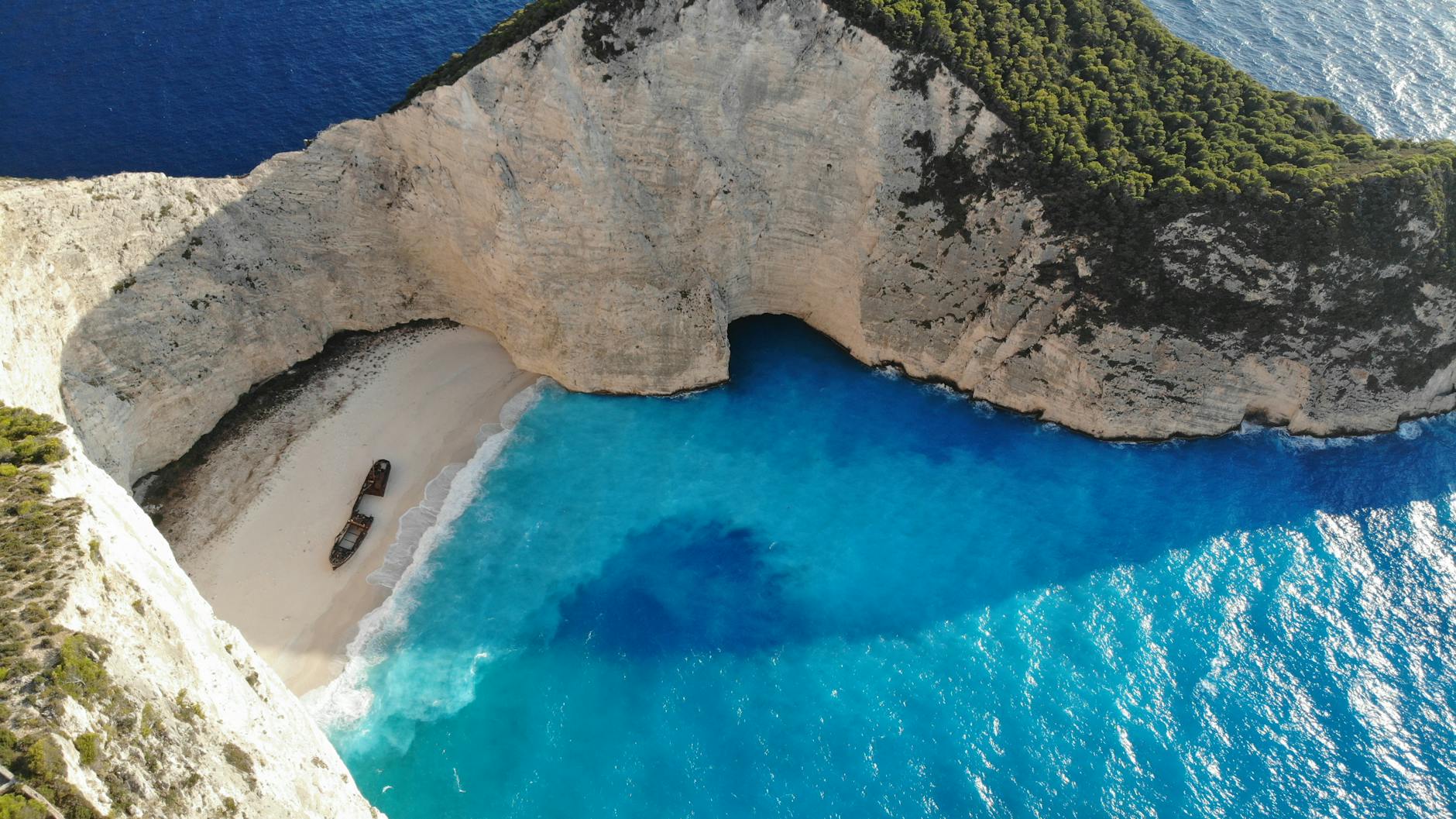
The first is the brochure island. The Navagio shipwreck framed by impossible turquoise. The thatched sunbed strip at Laganas. The party boats out of Tsilivi. The Caretta caretta turtles nesting at Sekania. The framed photo on every car-rental wall. Almost none of this is straightforwardly available in 2026. The Navagio cliff has been closed to land access since 2018 after a series of rockfalls; the Greek government extended the ban again in March 2026 after a fresh OASP geological inspection found the cliffs still unstable. You can sail into the bay; you cannot land. The viewpoint on the cliff above has been intermittently closed for the same reason. The turtles are nesting in numbers (the National Marine Park, established in December 1999, was the first sea-turtle marine park in the Mediterranean and still hosts about eighty per cent of the loggerhead nests in the basin), but the visiting protocols are tight, the enforcement is uneven, and the most ethical interaction is from a glass-bottom boat that keeps fifteen metres of distance, not from a bare-skin selfie at Marathonissi. Laganas in July is what Laganas in July has been since the late 1990s — a budget-package neon strip that the rest of the island prefers not to acknowledge.
The second is the earthquake’s island. On 12 August 1953, at 11:23 in the morning, after foreshocks on the 9th and 11th, a magnitude 7.2 earthquake destroyed almost everything. Three buildings survived in Zakynthos Town. Kefalonia next door was lifted sixty centimetres clean out of the sea. The Venetian-Ionian fabric that had been here for three hundred and twelve years — pastel-painted town houses with first-floor balconies, the long sea-front loggia called the Strata Marina, the Catholic and Orthodox cathedrals, the synagogue, the five-storey campaniles — was gone in ninety seconds. What you walk through today is not old. It is a careful, quiet reconstruction begun in the late 1950s under strict anti-seismic codes that capped heights, simplified façades, and replaced ornament with rigidity. The town that hits a first-time visitor as a perfect small Italian-Mediterranean port is in fact Italian-coded reconstruction — postmemory architecture. The brochure does not mention this. The brochure shows you the harbour and the bell-tower of Saint Dionysios and lets you assume both predate 1953. Only the bell-tower does, and only because it was rebuilt in the 1920s at unusually rigid specifications and survived. The town is one of three twentieth-century Mediterranean cities — Skopje, Agadir, Zakynthos — that were essentially erased and rebuilt from the foundations in living memory. Read it that way and it stops being a postcard disappointment and starts being a serious place.
The third is the poets’ island, and it is the one that earns the trip. Solomos was born here in 1798 and is buried here under a marble urn in the museum on Saint Mark’s Square. Andreas Kalvos was born here in 1792 and is buried in the same room. Ugo Foscolo was born here in 1778 — the first modern Italian novel, Last Letters of Jacopo Ortis, came out of an island most Italian readers would struggle to find on a map. The Heptanese School of Literature, the entire late-eighteenth-and-nineteenth-century body of poetry in Greek that came from this archipelago that was never sustainedly Ottoman, was built in significant part by men born in the back streets of this town. The cantades — the four-voice male polyphonic singing you can still hear on Saturday nights in a few Bochali tavernas — are the last living scrap of the Italianate musical culture that produced Solomos’s ear. And in the late summer of 1944, when three small German boats arrived to deport the island’s two hundred and seventy-five Jews and the German officer ordered the mayor to prepare a list, the mayor went to the Metropolitan, the Metropolitan took a piece of paper and wrote a single name on it (his own), and the entire Jewish community of Zakynthos survived the war. The list with the one name is a different artefact from the list of three hundred names that was its alternative. Yad Vashem recognised both men as Righteous Among the Nations in 1978. The synagogue itself was destroyed in 1953 — the sequence of catastrophes on this island is dense — but the courtyard at 44 Tertseti Street is still there, and so are the two bronze statues of the Bishop and the Mayor that stand in it.
Most visitors to Zakynthos meet only the first island and conclude that the second and third do not exist. They can be forgiven; the brochures concur. The job of this guide is to point at the second and third without pretending the first does not also exist.
The reader who books a long weekend will have time for the brochure island and one boat trip and a meal at Prosilio. The reader who books a week will have time for the second and the third. The reader who books two weeks will start to understand the island as the locals do — as a Heptanese place with an Italian inheritance, a serious literary genealogy, a Greek Orthodox patron saint who walks at night, a moral history that includes one of the cleanest acts of Holocaust resistance in occupied Europe, and a coastal economy that has not yet decided whether the turtles or the tourists are the primary good.
Skip Laganas. Drink with locals in Bochali. Stand for ten minutes in the Tertseti Street courtyard. Read the first two stanzas of the Hymn to Liberty in Greek (if you cannot read Greek, in transliteration). Eat at Prosilio. Take the boat to Marathonissi at seven in the morning, see the turtles before the day-trippers, and then go to the Solomos and Eminent Zakynthians Museum. Do these in any order. Then come back here and read the rest of this guide.
Table of Contents
- Top Attractions
- Neighbourhoods of Zakynthos Town
- Where to Stay — by Budget
- Where to Eat
- Drinking Culture & Cantades
- Getting Around
- Best Time to Visit
- Month-by-Month Weather
- Daily Budget Breakdown
- Sample Itineraries
- Best Day Under €25
- Hot-Day / Rainy-Day Plan
- Day Trips
- Safety & Practical Information
- Visa & Entry Requirements
- Hidden Zakynthos
- Romantic Zakynthos
- Zakynthos with Kids
- What’s New in 2026
- Frequently Asked Questions
- Closing
- Explore More Aifly Guides
Top Attractions
1. The Solomos and Eminent Zakynthians Museum
The single most important room on the island sits on Saint Mark’s Square (Plateia Agios Markos), in the Hora’s northern half, and is missed by approximately ninety-five per cent of arrivals. The museum was founded in 1959 — six years after the earthquake destroyed almost everything, and at a moment when the island had every excuse to put off cultural reconstruction in favour of housing — and was built specifically to hold the relics, manuscripts, portraits, and exhumed remains of the Heptanese School poets and the leading nineteenth-century Zakynthians.
The ground floor is a mausoleum. Solomos’s marble sarcophagus stands in the centre of the room. Andreas Kalvos’s urn, returned to the island from Louth in Lincolnshire (where he died in 1869, having spent his last decades teaching Italian and Greek to English schoolchildren), sits beside it. The remains of Foscolo were repatriated in 1871 to Florence and lie in Santa Croce among the great Italian dead, but his birth certificate and the letters home are here. The upstairs rooms hold Solomos’s manuscripts — including the working drafts of the Hymn to Liberty, with crossings-out and second thoughts and the false starts that any reader of the polished anthem version forgets the poem ever had — and a series of portraits of nineteenth-century Zakynthian intellectuals, soldiers, clergy, and one or two minor saints.
The room is small, dim, and smells of old paper and floor wax. There is no audio guide — only a laminated English-and-Greek text that you will read in seven minutes. Then you stand in front of the sarcophagus for as long as you choose to. Most visitors give it twenty minutes; the right amount is forty-five.
- Price: €4 adult.
- Hours: Generally 09:00–14:00 daily except Tuesdays in low season; longer summer hours. Confirm at the door.
- Get there: Eight minutes’ walk from Solomos Square in the south of the Hora; if you keep the seafront on your right, you cannot miss it.
- Editor’s tip: Visit on the morning of 8 April if you can — Solomos’s birthday — when local schoolchildren bring laurel wreaths and the room smells briefly of honey and crushed leaves.
2. The Church of Saint Dionysios and the Silver Reliquary
The patron saint of Zakynthos was born here in 1547 to a noble family, became a monk on the Strofades islands south of the main island after his parents both died in 1567, was briefly Archbishop of Aegina in 1577, came home for health reasons two years later, and lived out the rest of his life as abbot of Anafonitria Monastery in the island’s interior. He died on 17 December 1622, aged seventy-five, and asked to be buried at Strofades. Three years later, when the brothers exhumed him to move the bones to a new ossuary, the body was uncorrupted and smelled (the contemporary phrase) of frankincense and roses. He was canonised in 1703.
Today the relics are in a silver-sculpted sarcophagus in the south aisle of the Church of Saint Dionysios on the southern seafront of Zakynthos Town. The reliquary itself was designed in the early 1820s by the priest-painter Nikolaos Kantounis and executed in 1829 by the silversmith George Diamantis Bafas; it survived 1953 because the church’s bell-tower is one of the three buildings that did. There is a story, repeated by everyone who lives here, that the saint walks at night, leaves the reliquary, performs miracles around the island, and returns — and that his slippers wear out and have to be replaced once a year. The sacristan will show you the slippers if you ask politely and stand aside while a believer is praying.
There are two annual festivals: 23–26 August (the day in 1717 when monks moved the relics from Strofades to Zakynthos Town) and 16–19 December (the day of his death). Each is a three-day affair with processions, marching bands, ceremonial chanting in the Heptanesean idiom (which fuses Byzantine modal singing with Italian polyphonic harmony in a way that exists only here and on Corfu), and a town-wide market at the seafront. The morning procession of 24 August is the single largest gathering on the island.
- Price: Free to enter the church; small donations expected for candles.
- Hours: Open from early morning until evening; quietest 09:00–11:00 and 17:00–19:00.
- Get there: South end of the Strata Marina seafront, ten minutes’ walk from Solomos Square.
- Editor’s tip: The bell-tower can be climbed (on request) for the only pre-1953 view of Zakynthos Town. The view from the top is surreal — you are standing on top of the only building older than your grandmother and looking down at a city that is not.
3. The Bishop-and-Mayor Memorial at the Old Synagogue Courtyard, 44 Tertseti Street
In the late summer of 1944, three small German boats arrived at the harbour and the German officer in command summoned Mayor Loukas Karrer and ordered him to prepare a list of every Jew on the island. There were two hundred and seventy-five of them, in a community that had been on Zakynthos since at least the sixteenth century, with a synagogue at 44 Tertseti Street and a small school in the same courtyard. Karrer left the meeting and went directly to Metropolitan Chrysostomos Dimitriou, who was the senior Orthodox cleric on the island and a man with a personal record of intervention on behalf of his Jewish neighbours. Chrysostomos told the Mayor to burn the list and to organise the dispersal of the Jewish families to the rural villages of the interior, which he did within forty-eight hours. Then Chrysostomos went to the German officer himself. When the officer demanded the list, the Bishop took a piece of paper, wrote a single name on it — his own — and handed it across the desk. The German force was small; it had other islands to administer; and the Jews of Zakynthos, hidden in the hill villages and protected by the rural priests, all survived the war. Two hundred and seventy-five out of two hundred and seventy-five.
This was not a typical outcome in occupied Europe. In Thessaloniki, ninety-six per cent of the Jewish community was deported and murdered. In Corfu, the Jewish community of about two thousand was rounded up in June 1944 and almost entirely destroyed at Auschwitz. The Zakynthos rescue is one of a small handful of Holocaust outcomes in which an entire community came through. Yad Vashem recognised both Loukas Yiorgios Karrer and Metropolitan Dimitrios Chrysostomos as Righteous Among the Nations on 14 March 1978.
The synagogue itself was destroyed in the 1953 earthquake and never rebuilt; with no Jewish community left on the island after most of the survivors emigrated to Athens or to Israel after the war, there was no congregation to rebuild for. What stands today at 44 Tertseti Street is a small open courtyard, the surviving foundation of the building, and two life-sized bronze statues — one of the Bishop, one of the Mayor — facing each other across the empty space where the bimah used to be. There is a brass plaque set into the ground in Greek, English, and Hebrew. There is no admission booth. There is no ticket. There is usually nobody else there.
Stand in the courtyard for ten minutes. The list with the one name is the most important physical artefact this island produced in the twentieth century. The list itself does not survive — the German officer presumably tore it up — but the act of writing it does, and the courtyard is where it was conceived.
- Price: Free; voluntary donations to the small Jewish heritage maintenance committee in the box on the wall.
- Hours: Open courtyard, accessible at any hour. Quietest in the early morning.
- Get there: Tertseti Street, two minutes’ walk from Solomos Square, in the Hora’s old grid. Look for the iron gate set into the wall between two postwar town houses.
- Editor’s tip: Read about the rescue before you stand in the courtyard, not after.
4. The Bochali Castle (Venetian Castle of Zakynthos)
The Venetian fortress sits on the wooded ridge above Zakynthos Town and was built between the late fifteenth and seventeenth centuries on the foundations of a Byzantine kastro that had stood since the twelfth. For three hundred years it was the administrative capital of the Venetian island, with a gunpowder magazine, a small Catholic chapel, a garrison commander’s house, four bastions, and the original civic archive. Most of what was inside it was destroyed twice — once in the earthquake of 1820, again in 1953 — and what is left is essentially the perimeter walls, the ruined chapel of Saint Lipios, the gunpowder magazine, and the long pine forest that has grown over the rest. The pleasure of the place is not the ruins but the walk and the view.
You can climb up from Bochali village in twenty minutes through the pine woods. The path is signed; the surface is loose pine-needle and gravel; do not attempt it in a flat-soled shoe in the rain. At the top you have the entire island laid out below you — Zakynthos Town directly underneath, Laganas Bay arcing away to the south-west, Cephalonia in the distance to the north, the Peloponnesian mountains across the strait to the east. There is an outdoor café outside the gates where you can have a Greek coffee and a glyko tou koutaliou (a small spoonful of jam in syrup) for €4 total.
- Price: €4 adult.
- Hours: Generally 08:30–16:00, closed Tuesdays. Confirm at the gate.
- Get there: Drive or taxi to Bochali (€8 from Solomos Square), or walk up from the seafront (forty minutes, steep in the last third). The bus to Bochali is infrequent and requires patience.
- Editor’s tip: Time your visit for ninety minutes before sunset. The light at the top of the ridge becomes liquid gold for about twenty minutes and then drops fast. Bring a sweater — even in August it gets cool up there once the sun goes.
5. The Strani Hill and the Solomos Plaque
A short walk further along the ridge from Bochali Castle brings you to the Strani Hill, where (according to the foundational story of Greek Romantic literature, which may or may not be true in its details but is true in its spirit) Solomos sat and listened to the cannon fire of the Greek War of Independence drifting across the strait from Missolonghi during the long siege of 1825–26 and was inspired to write the Hymn to Liberty. There is a small bronze bust of Solomos on the spot, a plaque with the first stanza in Greek, and a wooden bench that overlooks the strait. The view east is the same view he saw. The cannon fire is gone; the geography is not.
This is a five-minute stop, not an hour-long visit. It is exactly worth the five minutes.
- Price: Free.
- Hours: Always open.
- Get there: Ten-minute walk from Bochali Castle along the ridge path.
- Editor’s tip: Stand on the bench and read the first stanza aloud. You will feel slightly self-conscious. Do it anyway.
6. Marathonissi (Turtle Island)
Marathonissi is the small uninhabited islet in the centre of Laganas Bay that hosts one of the densest concentrations of loggerhead nests anywhere in the Mediterranean. It is part of the National Marine Park of Zakynthos, established by Presidential Decree on 22 December 1999 — the first national park anywhere in Greece dedicated to sea-turtle protection, and the first marine sea-turtle park anywhere in the Mediterranean basin. The island has two beaches: a long, soft, pale-gold sand beach on the lee side that the turtles use, and a smaller pebble beach on the windward side. There is no construction, no umbrellas, no built shade, no anchoring of boats to the sand, no staying after dusk.
The standard visit is a half-day trip from the small port at Limni Keri or from Agios Sostis on a licensed glass-bottom boat. Operators are required to keep their distance from the sand beach (you can land for a short swim and walk under controlled conditions in the shoulder season; in peak summer landing is restricted) and to maintain a minimum fifteen-metre distance when turtles are sighted in the water. You will almost certainly see at least two or three turtles; you will see substantially more if you go at seven in the morning rather than at midday. The turtles do not perform; they breathe, they paddle, they look at you with the resigned patience of creatures that have been doing this for ninety million years. It is the most worthwhile boat trip on the island.
- Price: €25–€40 per person depending on operator and length of trip. Marathonissi itself has no entry fee.
- Hours: Trips run from approximately April to October. Season-end varies year to year.
- Get there: Boats from Limni Keri (south-west) or Agios Sostis (south); the Keri side is quieter and the boats older.
- Editor’s tip: Take the seven o’clock morning departure. The turtles are active, the water is glass, and you will be back in town by midday before the crush.
7. Navagio Bay (Without Landing) and the Cliff Viewpoint
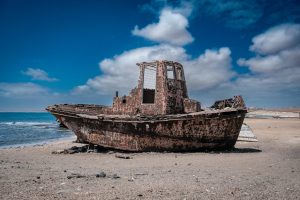
Navagio Beach — the cove with the rusting wreck of the MV Panagiotis, run aground in 1980 in disputed circumstances and now half-disintegrated by half a century of Aegean weather — is the single most photographed beach in Greece and possibly in the eastern Mediterranean. It is also currently inaccessible by land. The cliffs around the cove have been progressively destabilising since 2018, several large rockfalls have killed bathers, and the Greek government’s anti-seismic agency OASP confirmed in March 2026 that conditions remain unsafe. The official position for the 2026 season is: no landing on the sand, no sitting on the beach, no swimming in close to the wreck. Boat tours into the bay are permitted but cannot put passengers ashore.
The cliff-top viewpoint overlooking the cove (the famous photograph) has had intermittent partial closures for the same reason — sections of the rim are also unstable. Confirm the day’s status with your hotel or with the local tourist information office before driving up; the road from Anafonitria is a forty-five-minute single-track climb that you do not want to do for nothing.
What this means in practice: you can go by boat into the bay (most south-coast and west-coast boat tours include it as a thirty-minute pause for photographs), and you can attempt the cliff viewpoint if it is open on the day. You cannot do what most visitors think they will do, which is sit on the sand. Treat this as a half-day trip if you take the boat, or as part of a longer west-coast circuit by car if you also want to try the viewpoint.
- Price: Boat tours from Porto Vromi (the closest small port) €20–€35 per person; from Zakynthos Town €30–€50 with multiple stops.
- Hours: Boat tours daily April–October, weather permitting.
- Get there: Porto Vromi is the closest port; boats also leave from Saint Nikolaos in the north and from Zakynthos Town in the south.
- Editor’s tip: If the cliff viewpoint is open, drive up at first light. The angle of the sun before nine o’clock makes the cove genuinely turquoise; by midday the contrast collapses and the photos look like every other photo of Navagio. If the viewpoint is closed, do not pretend to yourself that you will hike around the cordon. The cordon is there for sound geological reasons.
8. Anafonitria Monastery
The Holy Monastery of Theotokos Anafonitria sits in the agricultural interior of the island, in the north-west, and was founded in the middle of the fifteenth century during the early years of Venetian rule. Saint Dionysios was abbot here in his last years, and the small cell in which he lived (a whitewashed three-by-three-metre room with a single arrow-slit window, a low pallet, an icon, and nothing else) is preserved. The monastery’s main church holds a Byzantine icon of the Virgin called Anafonitria — the Virgin Who Calls Out — that was brought from Constantinople by refugees after the city fell in 1453. The icon is small, dim, and, according to local belief, miraculous.
Anafonitria itself is also a working agricultural village that smells, depending on the month, of olive press (November), thyme (June), and burning kindling (January). The monastery is on the edge of the village and free to enter. There is a small shop that sells olive oil, honey, and tsipouro pressed by the local cooperative.
- Price: Free. Modest dress required (covered shoulders and knees; wraps available at the door if needed).
- Hours: 08:00–13:00 and 16:00–20:00 in summer; shorter hours in winter; closed during the midday break.
- Get there: Forty-five minutes by car from Zakynthos Town via the village of Volimes. The KTEL bus serves Anafonitria once or twice a day; check schedule.
- Editor’s tip: Combine with the Volimes weaving cooperatives (handwoven rugs and woollen textiles, sold from old village stone houses) and the Skinari peninsula in the north — a half-day loop.
9. The Cameo Island Wooden Bridge (Agios Sostis)
A small white-rock islet just off the south coast at Agios Sostis, connected to the mainland by a long wooden footbridge that becomes more or less wobbly depending on the swell. There is one bar, one swimming platform cut into the rock, and a series of weathered photo opportunities involving white sheets, gauzy curtains, and the kind of painted signs that suggest the place was conceived as a wedding venue and grew from there. It is essentially a single elaborate Instagram set, and the best thing about it is that everyone visiting it knows that this is what it is.
- Price: €5 entry to the island (enforced; the bridge has a turnstile at the mainland end).
- Hours: Approximately 09:00–22:00 in season.
- Get there: Drive to Agios Sostis on the southern coast (twenty-five minutes from Zakynthos Town). Park in the village and walk to the bridge.
- Editor’s tip: Go at sunset. The light makes it forgivable. Do not eat at the bar — the food is terrible and the prices reflect a captive audience.
10. The Keri Caves and the Mizithres Sea Stacks
The south-western tip of Zakynthos drops into the sea in a series of white-limestone cliffs honeycombed with caves at sea level — some you can swim into, some only a small boat can enter, and one (the Kamara, or Arch) that a kayaker can pass through. Just offshore, two pillar-like sea stacks called the Mizithres rise out of the water like teeth. The combination of cliff, cave, stack, and the ferocious Ionian blue is the single most photogenic stretch of the island that is not Navagio.
The standard visit is a glass-bottom boat trip from Limni Keri that takes in the caves, swings out to Marathonissi (see Attraction 6), and returns through Laganas Bay over the seagrass meadows where the turtles forage. Boats run from approximately April to October.
- Price: €25–€40 per person for a half-day combined trip.
- Hours: Daily in season, weather permitting.
- Get there: Limni Keri village, twenty minutes from Zakynthos Town.
- Editor’s tip: The kayak tour (run by a small local outfit out of Limni Keri) is substantially better than the glass-bottom boat for anyone reasonably fit. You get into the smaller caves the bigger boats cannot reach, and you have the sea to yourself between July dawns at five-thirty and the day-trip armada at ten.
11. The Volimes Carpets and the Skinari Lighthouse
Volimes is the inland village in the north of the island that has been a centre of weaving since at least the eighteenth century. The narrow main road through the village is hung, on both sides, with long handwoven wool carpets and rugs in geometric patterns — red, ochre, indigo, undyed cream — that the women of the cooperative weave on traditional wooden looms. Prices range from about €30 for a small mat to €600 for a large room rug; the work is real, the colours are vegetable-dyed, the wool is local. Bargaining is acceptable but expect about ten per cent off, not fifty.
A few kilometres further north, at the very tip of the island, the Skinari peninsula and its small lighthouse mark the closest land to Cephalonia (visible across the eight-kilometre strait on a clear day). There is a small unmanned chapel, an excellent free swimming spot down a flight of steps cut into the cliff, and almost no infrastructure. Bring water.
- Price: Free.
- Hours: Volimes shops generally 10:00–14:00 and 17:00–20:00, closed Sundays. Skinari accessible always.
- Get there: One-hour drive from Zakynthos Town via Anafonitria.
- Editor’s tip: Buy the carpet from the woman who is sitting at the loom, not from the shop with three staff and a card machine. The woman at the loom made the carpet.
12. The Strofades Islands (For the Determined)
Eight nautical miles south of the southern tip of Zakynthos, alone in the open Ionian, sit two small islands called Strofades. The larger one, Stamfani, holds a fortified Byzantine monastery built in 1241 by the Princess Irini of Nicaea after she survived a shipwreck nearby. Saint Dionysios (see Attraction 2) was a monk here in his early adult life and was buried here in 1622. The islands are part of the National Marine Park and are a major migratory bird stopover; over twelve hundred species pass through in spring on their way north from Africa, and the dawn dove migration in late April and early May is one of the great Mediterranean wildlife events.
There is no scheduled ferry. Visiting requires a private yacht or a chartered fishing boat, both arrangeable from Limni Keri or Zakynthos Town for around €600–€900 for the day for up to six people. The crossing is two and a half hours each way. There is no infrastructure on the islands; bring water, food, and a hat. The monastery’s caretaker monks (when in residence) will let you in if you arrive with a written letter of introduction from the Metropolitan in Zakynthos Town or, more pragmatically, with a small bottle of good tsipouro.
- Price: €100–€150 per person for a chartered day trip with five companions.
- Hours: Charter trips run May–September only; sea conditions dictate.
- Get there: Charter from Limni Keri (most common) or Zakynthos Town.
- Editor’s tip: This is a trip for someone who has been to Zakynthos before and wants the deepest version. It is not a standard day out. If the weather forecast shows force four or above, do not go — the open Ionian crossing is uncomfortable in anything more than a light chop.
Neighbourhoods of Zakynthos Town
Zakynthos Town (locally called the Hora, the Town, the way Greek islanders refer to their main settlement) is small enough to walk end to end in twenty minutes and structured by three axes: the long seafront from the south Saint Dionysios end to the north harbour mouth; the central Solomos Square; and the inland grid of pastel-painted reconstruction streets behind. There are no formally-named neighbourhoods, but there are four understood areas.
Solomos Square and the Strata Marina (south-central)
The main square, named after the poet, sits one block back from the harbour and contains the Byzantine Museum (see below), the bandstand, the bronze statue of Solomos in his characteristic over-the-shoulder pose, and a series of cafés on its inland side that fill from about ten in the morning to midnight. The Strata Marina is the long colonnaded seafront that runs south from here to Saint Dionysios. This is where the evening volta (the Greek promenade) happens: families, couples, retirees, dogs, ice creams, fishing boats coming in. The arcades on both sides of the square are postwar reconstruction in deliberate Venetian-revival idiom — meaning they are not Venetian, but they are pleasant.
Saint Mark’s Square and the Old Aristocratic Streets (north-central)
A ten-minute walk north of Solomos Square brings you to Plateia Agios Markos — the smaller, quieter, more elegant square that holds the Solomos and Eminent Zakynthians Museum (Attraction 1) and the Catholic Cathedral of Saint Mark (which serves the small remaining Catholic community of Italian-descended Zakynthians and the priest-and-five-faithful Sunday masses are an extraordinary thing to slip into). The streets immediately around the square — Tertseti, Foskolou, Kalvou, Romanou — are named for the Heptanese poets and were the residential addresses of the prewar Zakynthian intelligentsia. The reconstruction here is denser, the houses taller, the gardens smaller. This is where you will find the bronze statues of the Bishop and the Mayor at 44 Tertseti Street (Attraction 3).
Bochali (the upper town)
The wooded ridge above the Hora, reached by a switchback road or by a series of stepped lanes from the seafront. Bochali is technically a separate village but it functions as Zakynthos Town’s upper neighbourhood — the place locals go for sunset, for cantades, for the view, and for the kind of small taverna that does not advertise itself in English. The Venetian Castle (Attraction 4) and Strani Hill (Attraction 5) are both up here. Two or three of the tavernas around the central plateia in Bochali still host informal Saturday-evening cantades sessions in season. This is where the second island and the third island meet.
The Northern Harbour and Argassi Approach (north and south-east)
The northern half of the seafront, around the harbour mouth and the ferry terminal, is functional rather than worth lingering in — coach parking, supermarkets, ATM clusters, the bus station for the KTEL services. South-east of the Hora, on the road towards Argassi, is the modern strip of mid-priced hotels and restaurants that serves the bulk of Zakynthos Town’s accommodation. Neither of these areas rewards a wandering stroll, but you will end up in both.
What to skip in town
The “Old Town” tourist gift-shop strip immediately behind the bandstand — magnets, T-shirts, replica icons, ouzo bottles in the shape of the island — is the same gift-shop strip you have seen in every Greek island town and is no better here. The “traditional Greek folklore evening” buffet places on the southern seafront, with bouzoukis on a loop and €25 fixed-price menus that include three feta cubes and a piece of grilled chicken, are aimed at coach-tour passengers and should not concern you.
Where to Stay — by Budget
The serious decision is not which hotel but which part of the island. Zakynthos Town gives you the museums, the food, the harbour, the ferry, the seafront walk, and easy day-tripping by car or bus to almost everywhere on the island. Argassi (south-east of town) is the budget-and-mid-range strip and is fine but characterless. Tsilivi (north of town) is the family-friendly resort strip with a long sandy beach. Laganas (south coast) is the budget package strip and should be avoided unless you specifically want it. The far north (Akrotiri, Skinari) is the quietest and the most expensive. The interior villages (Anafonitria, Volimes, Bochali) are a different proposition entirely — quiet, agricultural, very good for two or three nights of a longer stay.
Climate Resilience Fee 2026 (Greece-wide, charged at checkout, not in your booking quote): €1.50 per night for 1–2 star, €3 for 3-star, €7 for 4-star, €10 for 5-star — applied per room in the high season (March–October).
Budget (€40–€80 per night for two)
Family-run pensions and small hotels in Zakynthos Town and Argassi. Plaka Beach Hotel in Tsilivi for direct beach access. Pension Limni in Limni Keri for a south-coast base. The Zakynthos Town backpacker scene is small but functional — a few hostels offer dorm beds at €20–€25 per person in summer.
- Plaka Beach Hotel (Tsilivi) — three-star, walking distance to Tsilivi beach, family-run. €60–€80 in shoulder season for a double with breakfast.
- Hotel Strada Marina (Zakynthos Town seafront) — three-star postwar hotel directly on the Strata Marina with harbour-view rooms. €70–€95 in shoulder season.
- Pension Limni (Limni Keri) — small family-run guesthouse on the south coast, very basic, walking distance to the boat trips. €40–€55.
Mid-range (€100–€220 per night for two)
Boutique hotels in restored or rebuilt town houses, mid-sized resort hotels with pools at Tsilivi and Argassi, and a small but growing number of agriturismi in the interior villages.
- The Lesante Classic (Tsilivi) — five-star family resort with multiple pools, four restaurants, kids’ club, beach access. €180–€280 in shoulder season; significantly higher in July–August.
- Diana Palace Hotel (Argassi) — four-star, large pool, walking distance to Argassi beach. €100–€150.
- Strofades Hotel (Zakynthos Town, near Solomos Square) — central, simple, four-star, breakfast included. €110–€140.
- Levantes Estate (Bochali ridge above town) — eight-suite boutique in a restored 1960s villa, sunset terrace, no pool, includes breakfast on the terrace. €170–€220.
Luxury (€350–€1,000+ per night for two)
The two anchors are Olea and Lesante Cape, both on the north coast around the village of Akrotiri.
- Olea All Suite Hotel & Spa (north coast, Tsilivi) — five-star, member of Design Hotels, eighty-nine suites, the main pool reads as a small lake, three restaurants on site, full spa. The hotel reopens for the 2026 season on 1 May 2026 with a new outdoor pool, an expanded wellness wing, a fitness centre, and a yoga shala set under the property’s olive trees. Adults-only. €420–€800 in shoulder season; €750–€1,400 in peak.
- Lesante Cape Resort & Villas (Akrotiri village, north coast) — five-star, member of The Leading Hotels of the World, designed as a traditional Greek village around a central plateia with its own taverna and chapel, four restaurants, private beach, family-friendly. €500–€1,000 in shoulder season.
- Lesante Blu (Akrotiri) — adults-only sister property to Lesante Cape, beachfront, very good for couples. €450–€900.
Where NOT to stay
Laganas in July or August unless you have specifically come for the budget package strip. Kalamaki immediately east of Laganas in the same months — it is a quieter version of the same problem. Argassi during August (the Athenian holiday weeks 1–15 August) when the strip is at its loudest. The interior villages without a hire car — they are quiet because there is nothing within walking distance, and you will find this restful for one day and impossible by the third.
Where to Eat
Zakynthian cooking is an Ionian-Italian-Greek hybrid that reflects the island’s three centuries of Venetian rule and the post-1453 Cretan refugee influx. The marker dishes are: sartsa (a slow-braised veal-and-tomato dish with cinnamon and clove, served with pasta or rice — the closest mainland Greek equivalent is youvetsi but sartsa is sweeter and longer-cooked); skordostoumbi (an aubergine-and-garlic dish served cold the next day); kounelo stifado (rabbit slow-braised with pearl onions and red wine); ladotyri (an oil-cured cheese, an Ionian tradition that is a different cheese from the Lesvos PDO of the same name); mandolato (an Italian-derived almond-and-honey nougat that comes in soft and hard versions and is the standard celebration sweet at festivals); and the various forms of pastitsada (a Corfiot dish that has crossed back across the strait — pasta with slow-braised meat in a tomato-and-cinnamon sauce). The fish is good; the seafood at Limni Keri and at the small port at Bochali is excellent and priced by the kilogram.
Fine dining
Prosilio (Zakynthos Town, near Solomos Square) — the undisputed best restaurant on the island. Chef Kristy Karageorgou cooks a modern Greek menu rooted in the Ionian tradition with a Middle Eastern and North African inflection. The setting is a courtyard garden in a restored back-street town house with ambient music that is, for once, the right music at the right volume. Recognised by the FNL Guide and the Xrysoi Skoufoi (Greek Golden Toques). Tasting menu around €70–€90 per person without wine; à la carte €50–€70. Advance booking essential, often a week or more in summer.
Bassia (Akrotiri village, north coast) — the second strongest fine-dining experience on the island, in a converted village house with terraces above the Ionian. The seafood is the strength — lobster pasta, grilled local catch by the kilogram, raw plates done with restraint. €60–€90 per head with one carafe of wine. Booking essential.
Komis Fish Tavern (Zakynthos Town, near the harbour) — a serious fish kitchen with daily catch from local boats and a long list of mezedes. Less polished than Prosilio or Bassia and substantially less expensive — €35–€55 per head with wine. The grilled octopus is exceptional.
Mid-range and traditional
Malanos (Zakynthos Town, in the Ammos district inland) — the local taverna for the slow-braised dishes. Sartsa, kounelo, kid goat from the spit. About €25–€35 per head with carafes of the house red.
Lefteris (Bochali) — a meat-led mountain taverna on the ridge above town. Lamb chops, kontosouvli, local sausages. About €25–€35 per head.
To Kati Allo (Zakynthos Town) — modern Greek small-plates, half-portion sizes, very good wine list with a focus on Ionian and Cefalonian small producers. About €30–€45 per head.
Akrotiri Fish Tavern (Limni Keri harbour) — boat-to-table seafood at the small port where the Marathonissi tours leave from. Order whatever the boat has just landed, by the kilogram. €35–€60 per head depending on what you order.
Budget eats
Mageirio Arekia (Zakynthos Town, narrow alley north of Solomos Square) — daytime mageirio (the Greek lunchtime stewed-dish kitchen) that does three or four dishes a day from a steam table. €8–€12 for a generous lunch. Closes around 16:00.
Souvlaki at Kalamia (Zakynthos Town) — grilled-meat counter on Lombardou Street. €4 for a souvlaki pita with the works; €8–€10 for a full plate. The kontosouvli on Saturdays is the lunch.
Bakery Iliopoulos (Zakynthos Town) — for the morning koulouri (sesame ring) at €0.80, the cheese pies at €2, the galaktoboureko at €3, and the loaf of village bread at €2.
Sweets, ice-cream, and the mandolato
Mandolatos Tsouris (Zakynthos Town) — the oldest mandolato shop on the island, a five-generation family business behind Solomos Square. Soft mandolato (€7 for 250 g) is the local festival sweet; the harder pasteli version (sesame brittle, €5 for 200 g) travels better. Both are excellent.
Yiannakis Gelato (Zakynthos Town seafront) — the local gelato counter, family-run, with an unusually good fior di latte and a serious pistachio Aegina.
Avoid
The strip of “traditional Greek dance evening with all-you-can-eat buffet” places along the southern seafront. The “fish tavern” places at Laganas with the laminated menus in five languages. Any restaurant whose tout is standing in the street trying to pull you in. Any restaurant with a TripAdvisor sticker on the door from before 2018.
Michelin status
Zakynthos and the broader Ionian Islands are not currently covered by the Michelin Guide. The Michelin Guide Greece selection covers Athens (twelve stars across the city as of the 2026 selection); the 2026 expansion adds Santorini and Thessaloniki, with the new selection to be announced in the second half of the year. Zakynthos is not in the expansion. As of this guide’s publication, no Zakynthos restaurant holds a Michelin star, and the island’s leading fine-dining anchors (Prosilio, Bassia) are framed in this guide as island fine-dining anchors at FNL Guide and Greek Golden Toques level — not as Michelin properties.
Drinking Culture & Cantades
Zakynthos is not a wine-producing powerhouse on the scale of Santorini or Cephalonia, but it makes a serviceable Verdea (a dry white blend produced from a mix of grapes including Skiadopoulo, Pavlos, Robola, and Goustolidi) that is the local table wine and pairs well with everything from sartsa to grilled fish. Goustolidi varietal bottlings from the small winery cooperatives at Lithakia are worth ordering when you see them. The local distillates are tsipouro (the standard Greek pomace brandy, served in 200 ml bottles with mezedes) and ouzo (which is universal on Greek islands but not particularly Zakynthian).
The drinking culture is the Ionian seafront café culture — long, slow, four-hour evenings of one ouzo or one Mythos beer at a time, mezedes coming out one small plate at a time, conversation in unhurried bursts. The Strata Marina seafront in Zakynthos Town is the model. Bochali is the same culture in a quieter, higher, pine-scented setting.
Cantades — what they are and where to hear them
Cantades (sometimes transliterated kantadhes or kantades) are the Heptanesean four-voice male polyphonic a cappella song tradition that exists, in this exact form, on Zakynthos and on Corfu and almost nowhere else. They are sung by groups of four men in unmoving close harmony — a lead voice, a high second, a low second, and a bass — without instruments. The repertoire is partly Greek-language love songs and serenades from the nineteenth century and partly older Italian-language Venetian melodies that crossed over and stayed. The form is a direct survival of the Venetian musical culture that ruled the island from 1485 to 1797, refracted through Greek language and the local musical ear. There is also an improvised variant called arekia (from the Italian a orecchio — by ear), in which the singers improvise verses in the same harmonic structure.
Hearing live cantades is genuinely difficult to plan around. The tradition is sustained by a few dozen elderly singers in Bochali and a small revival movement among younger Zakynthian men in their thirties. There is no scheduled programme. The conditions are: a Saturday evening in season, one of three or four tavernas in Bochali whose owners are themselves cantadores, a table of four old friends, and enough wine. Ask at your hotel for the current Saturday-night spots; the names rotate. The town’s main tourist office (in the harbour terminal building) maintains an informal list. If you find a session, sit at a separate table, do not request anything, do not record on your phone, do not applaud at the end of a song unless the locals are applauding. Buy the singers a round of tsipouro after the third song.
There is also a modest annual Cantades Festival in late July at the Bochali plateia with scheduled performances; this is more accessible but less authentic than the Saturday-night taverna tradition.
Getting Around
From the Airport (ZTH — Dionysios Solomos International)
The airport is six kilometres south of Zakynthos Town, named after the poet (see Editor’s Note), and handles seasonal European charter and scheduled traffic plus year-round Aegean and Sky Express services to Athens. The terminal is small.
- KTEL bus: €2.20 per person, runs from a stop directly outside the arrivals hall to Zakynthos Town in about twenty minutes. The schedule is sparse — gaps of up to four hours between departures, and last service in the early evening — so check ktel-zakynthos.gr or the printed schedule at the bus stop before you commit. If the next bus is more than thirty minutes away, take a taxi.
- Taxi: €18–€25 to Zakynthos Town, €25–€35 to Argassi or Tsilivi, €40–€55 to Laganas or the Lesante hotels at Akrotiri. Fixed-rate taxi tariffs are posted at the airport rank.
- Pre-booked transfer: €30–€45 for a private car to most destinations, €60–€90 for a minivan. Worth it for groups of three or more.
Inter-island and to the mainland
- Ferry from Kyllini (Peloponnese): Levante Ferries operates the route; the crossing is one hour fifteen minutes and the foot-passenger fare is €13.50 one-way. Five sailings daily, thirty-three weekly (verify against current schedule before travel). Vehicle fares €60–€120 each way depending on size. The ferry runs from Kyllini, which is itself ninety minutes by car from Patras. The drive from Athens to Kyllini is about three and a half hours; from Patras one hour. Book ahead in July and August for car space.
- Ferry from Pesada (Cephalonia): A small seasonal car-ferry runs in summer from the southern Cephalonian port of Pesada to Saint Nikolaos in the north of Zakynthos. Approximately ninety minutes; €10–€15 foot-passenger; useful only if you are doing an Ionian island-hop, as the connecting bus on either end is sparse.
- From Athens by air: Aegean and Sky Express both fly Athens–Zakynthos in approximately fifty minutes, several daily in season; significantly less frequent in winter.
Around the island
- KTEL Zakynthos bus network: runs from the central Zakynthos Town terminal (next to the harbour) to most coastal villages, including Argassi, Tsilivi, Laganas, Kalamaki, Limni Keri, Volimes, and Anafonitria. Fares €1.80–€4.50 depending on distance. Frequencies are good on the southern coastal routes (Argassi, Tsilivi, Laganas — every thirty to sixty minutes in season) and very poor on the northern interior routes (Volimes, Anafonitria — once or twice a day). Detailed schedule at ktel-zakynthos.gr.
- Hire car: the right call for a stay of three days or more. Small economy hatchbacks from €25–€40 a day in shoulder season, €50–€80 in peak. International rentals (Avis, Hertz, Sixt) at the airport; smaller local agencies in Zakynthos Town (Yes Rentals, Jimmy’s, Famozo) are typically cheaper. The roads are paved everywhere you need to go; the dirt tracks to the more remote beaches in the north (Porto Vromi, the western coves) are passable in summer in a small car but better with a small SUV.
- Scooter or quad: €15–€30 a day; useful for short hops, but the island’s main coastal roads carry fast traffic and the inland switchbacks are steep. Helmets are required; check that the rental includes one.
- Taxi: plentiful in Zakynthos Town and Tsilivi; rare elsewhere. Fares are metered; the standard short hop within town costs €5–€8.
Walking distances in Zakynthos Town
- Solomos Square to Saint Mark’s Square: ten minutes north along Filita Street.
- Solomos Square to Saint Dionysios Church: ten minutes south along the seafront.
- Solomos Square to the Bishop-and-Mayor memorial at 44 Tertseti Street: two minutes north-west.
- Solomos Square to the harbour ferry terminal: five minutes north.
- Solomos Square to Bochali (uphill): forty minutes; the switchback is steep in the last third.
Best Time to Visit
The sweet spot is mid-May to late June and the second half of September. The water is warm enough for comfortable swimming (twenty-two degrees and rising in May–June, twenty-four degrees and falling in September). The day-trippers from Kefalonia and the package tourists from Laganas have not yet arrived (May–June) or have already left (mid-September). The boat trips run on schedule. The Saint Dionysios summer festival (23–26 August) marks the peak crowding; the second half of September is the year’s quietest warm month. October is comfortable but the boat schedules thin out and Olea and the upmarket north-coast hotels start to close from late October.
July and August are hot, crowded, and expensive — and they are also the only months when the cantades sessions in Bochali run with any regularity. If you must come in peak season, come for the music and the August Saint Dionysios festival, accept the prices and the queues, and stay in the interior villages rather than on the coast.
Winter (November–March) is mild but rainy. The town is open; the museums are open; Saint Dionysios’s December festival (16–19 December) is the deepest immersion in the island’s Orthodox-civic culture you can get. Many of the boat trips and most of the resort hotels are closed.
Month-by-Month Weather
| Month | Avg High | Avg Low | Rain Days | Sea Temp | Key Events & Notes |
|---|---|---|---|---|---|
| January | 14°C | 7°C | 13 | 15°C | Wettest month after December. Town quiet, museums open. |
| February | 14°C | 7°C | 11 | 15°C | Carnival in second half (variable date — 2026 was 16–22 February). |
| March | 16°C | 8°C | 9 | 16°C | Climate Resilience Fee high season begins. First boat trips re-open late March. |
| April | 19°C | 11°C | 7 | 17°C | ⭐ Wildflowers; Greek Orthodox Easter Sunday 12 April 2026; Solomos’s birthday 8 April. EES live from 10 April 2026. |
| May | 23°C | 14°C | 5 | 19°C | ⭐ Boat trips fully running. Strofades bird migration peaks early month. Genuinely the best month. |
| June | 27°C | 17°C | 2 | 22°C | ⭐ Long warm days. Sea climbs through June. Cantades sessions start in Bochali. |
| July | 30°C | 20°C | 1 | 24°C | Hottest month equal with August. Peak crowds. Cantades Festival late month. |
| August | 30°C | 21°C | 1 | 26°C | Saint Dionysios summer festival 23–26 August (peak 24th). Most expensive month. |
| September | 27°C | 18°C | 4 | 25°C | ⭐ The quiet warm month. Sea still 24–25°C. Lowest prices of the warm season after first week. |
| October | 23°C | 15°C | 8 | 23°C | Boat trips wind down by end of month. Olive harvest begins. |
| November | 19°C | 12°C | 12 | 20°C | Olive press season — if you want to see a working press, this is the month. |
| December | 15°C | 9°C | 14 | 17°C | Wettest month. Saint Dionysios winter festival 16–19 December (peak 17th). |
Source: Hellenic National Meteorological Service climate normals; sea temperatures from ECMWF Mediterranean reanalysis.
Daily Budget Breakdown
| Category | Budget | Mid-range | Luxury |
|---|---|---|---|
| Accommodation (per room, two people) | €40–€80 | €100–€220 | €350–€1,000+ |
| Meals & drinks (per person per day) | €18–€30 | €35–€60 | €90–€180 |
| Local transport | €5–€10 | €15–€25 (car share) | €40–€60 (private taxi/transfer) |
| Activities | €5–€15 | €25–€45 | €80–€200 (private boat, fine dining) |
| Daily total per person (couple sharing) | €48–€85 | €85–€175 | €280–€700+ |
In the budget tier you sleep in a family-run Zakynthos Town pension, eat at Mageirio Arekia for lunch and a small taverna for dinner, take the KTEL bus to one beach, and pay €5 for an island museum. In the mid-range tier you sleep in a four-star hotel with breakfast included, share a hire car with one or two companions, eat at one mid-range taverna and one fine-dining restaurant per stay, and take one half-day boat trip. In the luxury tier you sleep at Olea or Lesante Cape, eat at Prosilio or Bassia, take a private chartered boat to Marathonissi, and have a driver take you up to Bochali for sunset.
July–August prices run thirty to fifty per cent above the shoulder-season figures above; September is the cheapest warm-weather month.
Sample Itineraries
Three-Day Essential
Day 1 — Zakynthos Town and the literary heart
– 08:30 — Cortado and a koulouri at Bakery Iliopoulos.
– 09:00 — Solomos and Eminent Zakynthians Museum on Saint Mark’s Square (Attraction 1). Forty-five minutes minimum.
– 10:30 — Walk to the Bishop-and-Mayor memorial at 44 Tertseti Street (Attraction 3). Stand in the courtyard for ten minutes. Read the plaque.
– 11:30 — Byzantine Museum on Solomos Square (the rescued ecclesiastical art from the destroyed churches; €4, closed Tuesdays/Sundays).
– 13:00 — Lunch at Mageirio Arekia (€10).
– 14:30 — Walk south along the Strata Marina to the Church of Saint Dionysios (Attraction 2). Ask the sacristan to show you the bell-tower if you have a head for heights.
– 16:00 — Coffee at a Solomos Square café. Take a book.
– 18:30 — Taxi up to Bochali (€8). Walk to the Strani Hill (Attraction 5). Sunset at the Venetian Castle (Attraction 4) — last entry typically 15:30, but the wooded approach and the café outside the gates run later.
– 20:30 — Dinner at Lefteris in Bochali (€30 per head with carafes of the house red).
Day 2 — The south coast and the turtles
– 07:00 — Taxi to Limni Keri (€25); board the seven-thirty glass-bottom boat for the Keri Caves and Marathonissi (Attractions 6 and 10). Half-day; €30 per person.
– 12:30 — Lunch at Akrotiri Fish Tavern in Limni Keri harbour. Order whatever was landed that morning (€40 per head).
– 15:00 — Drive (or KTEL bus) back to Zakynthos Town. Optional stop at Cameo Island (Attraction 9) en route — sunset is the right time.
– 19:30 — Dinner at Prosilio (book at least three days ahead in summer; €80 per head with wine).
Day 3 — The interior and the west coast
– 09:00 — Hire a car for the day (€40).
– 09:30 — Drive north-west via the village of Macherado (Sunday liturgy at the Church of Aghia Mavra is genuinely good if you happen to be there).
– 11:00 — Anafonitria Monastery (Attraction 8). Forty-five minutes.
– 12:30 — Volimes weaving cooperatives. Buy a small carpet from a woman at a loom.
– 13:30 — Drive to the Skinari peninsula (Attraction 11). Swim at the cliff steps. Bring water.
– 15:00 — Drive south down the west coast. If the cliff viewpoint at Navagio is open (Attraction 7), stop. Otherwise continue to Porto Vromi for a thirty-minute boat into the bay (€25).
– 18:00 — Drive back to Zakynthos Town via the inland Bochali road for the long sunset views.
– 20:00 — Dinner at Komis Fish Tavern (€45 per head).
Day 4–5 add-ons
Day 4 — A Cephalonia day trip. Drive to Saint Nikolaos in the north (forty-five minutes from Zakynthos Town); take the seasonal ferry to Pesada in southern Cephalonia (ninety minutes); rent a scooter or hire a taxi for the day; lunch at Spilia in Lassi or at Tassia in Fiscardo if you push north; ferry back. Long day; only feasible May–September.
Day 5 — Deep-Heptanese day. Leave Zakynthos Town early, drive to Macherado for the Aghia Mavra church and its nineteenth-century iconostasis. Continue through the central agricultural plain to the Aristeon Olive Oil Press Museum at Lithakia (€5). Lunch at one of the village kafeneia in Mouzaki on the goat stew of the day. Afternoon at the Keri lighthouse for the view across to the Mizithres sea stacks. Evening cantades hunt in Bochali if it is a Saturday (see Drinking Culture above).
Best Day Under €25
Zakynthos Town walking-and-bus day costed at the realistic low end. Take the day in this order; the arithmetic works.
- Coffee + koulouri at Bakery Iliopoulos (08:30) — €1.80
- Solomos and Eminent Zakynthians Museum (09:30) — €4.00
- Bishop-and-Mayor memorial at 44 Tertseti (10:30) — Free (small donation in the box, €1.00)
- Byzantine Museum on Solomos Square (11:00) — €4.00
- Lunch at Mageirio Arekia — soup, stewed dish of the day, bread, glass of house white (13:00) — €10.00
- KTEL bus from town to Tsilivi beach (14:30) — €1.80 each way = €3.60
- Swim at Tsilivi (free public beach east end), one frappé — €3.00
- Walk along the Strata Marina seafront at sunset — Free
- Sunset cortado on Solomos Square (19:30) — €2.50
- Dinner at the Lombardou Street souvlaki counter — souvlaki pita with the works (20:30) — €4.00
Total: €33.90. For a day under €25, drop the second museum (Byzantine, €4), the souvlaki dinner (replace with a €2.00 cheese pie from Iliopoulos), and skip the second coffee. That brings the day to €23.90 and you have eaten well, walked the Hora end to end, met all three Zakynthoses (literary, earthquake-rebuilt, and Sunday-afternoon tourist), and not been ripped off.
Hot-Day / Rainy-Day Plan
Zakynthos in July and August can hit thirty-five degrees in the afternoon; the right response is to do the morning by 11:00, retreat indoors or to the water from 13:00 to 17:00, and come back out at sunset. Zakynthos in November–March can be steadily wet for days; the right response is to go inside.
Hot afternoon plan
- 13:00 — Long lunch at a town taverna with a courtyard. Carafe of house white, mezedes, slow.
- 14:30 — Either a swim at Tsilivi beach (KTEL bus, €1.80; the eastern end of Tsilivi has shade) or an hour at the Solomos and Eminent Zakynthians Museum (cool, dim, quiet).
- 16:00 — Coffee under the colonnade at Solomos Square. Read.
- 17:30 — Walk the Strata Marina as the heat drops.
- 19:30 — Sunset at Bochali.
Rainy day plan (winter version)
- 09:00 — Slow breakfast at the Strata Marina café of your choice. Greek coffee. Watch the rain hit the harbour.
- 10:30 — Solomos and Eminent Zakynthians Museum.
- 12:00 — Byzantine Museum.
- 13:30 — Lunch at Malanos (sartsa is exactly the right wet-cold-day food).
- 15:00 — Church of Saint Dionysios. The candles, the silver, the chant if a service is on.
- 16:30 — Mandolatos Tsouris for the warm soft mandolato.
- 17:30 — Coffee and a book at a Solomos Square café until the rain stops or until you accept that it will not.
- 19:00 — Quiet dinner at To Kati Allo with a half-bottle of Goustolidi.
Day Trips
1. Cephalonia (the essential day trip)
The neighbouring Ionian island, twice the size of Zakynthos and culturally its mirror sibling. The seasonal Pesada–Saint Nikolaos ferry (April–October) crosses the strait in ninety minutes; in summer there are typically two return sailings a day. From Pesada you can drive or taxi to Argostoli (the Cephalonian capital, half an hour), the dramatic Melissani underground lake (forty minutes), the village of Fiscardo (the only major Cephalonian settlement to survive the 1953 earthquake intact, ninety minutes), or the long beach at Myrtos (fifty minutes). A single day is enough only for one cluster — Argostoli plus Lassi, or Sami plus Melissani, or the long northern drive to Fiscardo. If you can stay overnight, do.
2. Olympia (mainland Peloponnese)
The original site of the ancient Olympic Games. The ferry from Zakynthos Town to Kyllini takes one hour fifteen minutes; from Kyllini, Olympia is about an hour’s drive south through the Pyrgos plain. The site is large; budget three hours for the museum and the ruins together; the Phidias workshop (where the gold-and-ivory Olympic Zeus was made) and the long stadium are the highlights. Ticket €12 combined entry, free first Sunday of the month November–March. Long day from Zakynthos but doable; better as a one-night side trip.
3. Patras
The third-largest Greek city, ninety minutes from Kyllini by car or coach. The Patras Carnival in February–March is one of the great Mediterranean carnivals (the 2026 edition ended in late February). Outside Carnival, Patras is a pleasant working Greek port city with the Saint Andrew Cathedral (one of the largest Orthodox churches in the Balkans), the medieval castle, the Roman Odeon, and the Achaia Clauss winery on the city’s outskirts (founded 1854, the producers of Mavrodaphne of Patras). Half-day visit feasible; a full day is more comfortable.
4. Zakynthos’s western coves by chartered boat
A specifically nautical day trip. Charter a small boat with a skipper out of Limni Keri or Saint Nikolaos and spend the day working slowly down the west coast — the small sea-caves at Xigia (a free natural sulphur spring runs into the sea here, said to have therapeutic properties), Porto Roxa, Korakonisi, the Mizithres sea stacks. Most operators will happily put together a custom itinerary; expect €350–€500 for a six-person boat for the day with a skipper. Bring food.
5. Strofades (for the determined)
See Attraction 12. A specific kind of day trip; not for everyone.
6. The Cephalonia–Ithaca double
For the literary completist who has come this far for Solomos and wants to also visit the home of Odysseus. From Cephalonia (after a Pesada–Saint Nikolaos ferry crossing on the morning before), take the small inter-island ferry from Sami to Vathy, the main port of Ithaca. A long day; better as a two-night Ionian sweep with one night in Cephalonia and one on Ithaca itself.
Safety & Practical Information
Safety
Zakynthos is one of the safer Greek islands. Petty theft from rental cars at remote beach parking spots happens occasionally; do not leave valuables visible. Pickpocketing in the central Hora is rare but not zero; keep your phone in a zipped pocket on the busy August Saint Dionysios festival days. The cliffs at Navagio, Keri, and the western coast are seismically active and unstable in places — pay attention to cordons and warning signs (these are not theatrical; bathers have died at Navagio in the last decade from rockfall). Traffic on the main coastal roads moves faster than European-mainland visitors expect; pedestrian crossings outside Zakynthos Town are a polite suggestion rather than a binding rule.
The summer wildfire risk on Zakynthos has historically been lower than on the Peloponnesian mainland because of the island’s smaller scale and damper north-easterly winds, but 2024 saw the first significant fires in twenty years near the Skopos peak south of Zakynthos Town. Check the Hellenic Civil Protection daily fire-risk map (civilprotection.gov.gr) on hot windy August days.
Currency, cards, ATMs
Euros. Cards are accepted everywhere except the smallest tavernas and the village kafeneia; the KTEL bus is cash only. Carry €40–€60 a day in cash. ATMs are plentiful in Zakynthos Town and in the resort villages.
Language
Greek, with English widely spoken in the tourist economy and in the towns. Italian is unusually well understood by older Zakynthians (the postwar generation that grew up under the lingering Heptanesean culture). German is the second tourist-economy language (after English) at Tsilivi and Argassi. A few words of Greek go a long way — kalimera (good morning), efcharisto (thank you), parakalo (please / you’re welcome).
Connectivity
4G coverage is essentially universal in the populated areas; 5G is patchy outside Zakynthos Town. Roaming for EU SIMs is free under the EU regulation. Hotel and café Wi-Fi is widely available.
Tipping
Standard Greek practice. Round up at cafés. Ten per cent at restaurants for good service. Taxi drivers expect the fare rounded up. Hotel housekeeping €1–€2 per night left on the pillow.
Tourist information
The official tourist information office is in the harbour terminal building on the seafront, open approximately 09:00–14:00 and 17:00–19:00 in season. They have current bus schedules, ferry timetables, and (often) a list of which Bochali tavernas are running cantades on the upcoming Saturday.
Emergency numbers
- Police, fire, ambulance: 112 (EU general emergency number)
- Coast Guard: 108
- Tourist police: 1571
- Hospital (Zakynthos General Hospital): +30 26953 60100
Visa & Entry Requirements
Greece is in the Schengen Area and uses the euro.
- EU/EEA/Swiss citizens: national ID card or passport. No visa, no time limit.
- UK, US, Canadian, Australian, NZ, Japanese, South Korean citizens: visa-free for stays up to ninety days in any one-hundred-and-eighty-day period within the Schengen Area.
- Other nationalities: check the Greek Embassy in your country.
- EES (Entry/Exit System): has been live at all Greek Schengen border crossings — including ZTH airport for any non-EU passport, and the Kyllini ferry passport control if you arrive on a non-EU passport — since 10 April 2026. The system replaces the old passport-stamping with a biometric record (facial image and fingerprints; under-12s exempt from fingerprints). At first crossing, expect five to fifteen minutes of additional processing time.
- ETIAS (European Travel Information and Authorisation System): is a separate pre-travel authorisation, not a visa. Expected to launch in the fourth quarter of 2026 with a six-month transitional grace period extending into 2027. Cost €20, three-year validity, free for under-eighteens and over-seventies. Apply only at travel-europe.europa.eu when it opens.
- Climate Resilience Fee: Greek hotel and short-term-rental tax, replaced the old accommodation tax in 2024. €1.50–€10 per night by hotel star tier in high season (March–October). Charged at checkout, not in the booking quote.
Hidden Zakynthos
The Catholic Cathedral of Saint Mark
A small Catholic cathedral on Saint Mark’s Square, around the corner from the Solomos Museum. Serves the small remaining Catholic community — descendants of the Italian families who stayed when the Venetians left in 1797 and never converted. Sunday mass is in Italian and Latin and attended by perhaps fifteen people. Slip in for ten minutes any weekday morning; it is quiet, the small organ is unusually fine, the feeling of the room is the tail of an empire. Free; donations to the box.
The Aristeon Olive Oil Press Museum at Lithakia
A working olive oil press in the village of Lithakia, twenty minutes south of Zakynthos Town, that has converted its older nineteenth-century equipment into a small museum and runs guided tours of the modern press alongside. The proprietors are warm; the explanation of the stone-and-screw press they used until the 1960s is genuinely interesting; the tasting at the end is generous. About forty-five minutes total. €5 entry; tastings included.
The Mavrofiroz Tomb (the seafront sundial-tomb)
A small marble sundial-tomb on the seafront walk south of the Saint Dionysios Church, marking the burial place of the Venetian-era physician and natural philosopher Pietro Mavrofiroz, who left the island his collection of astronomical instruments in 1718. The collection itself was lost in the 1953 earthquake; the tomb survived. Five-minute stop. Free.
The covered fish market behind the harbour
A small covered market two blocks behind the ferry terminal where the morning catch comes in from the south-coast boats between 06:30 and about 09:30. Not a tourist site; a working market. If you are awake early, walk through. Free.
The Macherado church of Aghia Mavra
In the small inland village of Macherado, twenty minutes west of Zakynthos Town, the Church of Aghia Mavra is one of the few churches on the island whose interior survived the 1953 earthquake more or less intact — heavy gilt iconostasis, dark wood pews, a smoke-blackened ceiling, a side chapel of the Virgin with eighteenth-century votive offerings nailed to the wall in their hundreds. Free; closed midday.
The 1953 earthquake memorial at Solomos Square
A small unobtrusive bronze plaque at the seaward end of Solomos Square that marks 12 August 1953, 11:23 in the morning. Most visitors walk past it without seeing it. Stand in front of it for a minute.
Romantic Zakynthos
Sunset at Bochali Castle
The single best sunset on the island. See Attraction 4 for logistics. Time the visit so you are at the bench outside the castle gates by twenty minutes before sundown; bring a small bottle of wine and two glasses (the café will not mind if you do not buy from them, but it is more polite to also order coffee). The light at the top of the ridge holds gold for perhaps fifteen minutes and then plunges; the harbour lights below come on in sequence. About forty minutes of magic.
Dinner at Bassia in Akrotiri
The most romantic restaurant on the island. Sea-view terrace, white linen, restrained service. About €120 for two with a bottle of Goustolidi; book the seven o’clock seating in shoulder season (the eight o’clock is in the heat of August evenings) and ask for a corner table.
A small boat to Marathonissi at first light
Charter a private skiff out of Limni Keri for the dawn (€80 for two with a skipper) and be on the water by six. The light, the empty water, the turtles, the whole of Laganas Bay to yourselves. Back at the harbour by nine for breakfast. A genuine memory.
Walk the Strata Marina at midnight
The seafront promenade between the Saint Dionysios Church and the harbour mouth is at its best between eleven and one — the fishing boats setting out for the night, the last cafés closing, the colonnade lights, the empty stone. Walk slowly. Talk quietly.
A night at Lesante Cape
Adults-only sister property Lesante Blu is the better choice for a couple. Three-night minimum at peak season; €1,500–€2,500 for two for three nights with the half-board option. The dawn over the private beach is the marketing photograph realised.
Zakynthos with Kids
Zakynthos is one of the better Greek islands for families. The beaches are sandy and shallow; the food is recognisable and unfussy; the Marine Park boat trips have a built-in wildlife pay-off; the town is small enough that nobody gets lost.
- Tsilivi Water Park — small but reputable, eight slides, lazy river, kids’ pool. €25 adult, €18 child, day ticket. Open June–September.
- The Marathonissi turtle boat trip — see Attraction 6. Genuinely the best wildlife experience on a Greek island family holiday for under-twelves. Take the seven o’clock departure if you can; book the seats with the glass-bottom panel directly underneath.
- The Aristeon Olive Oil Press Museum — see Hidden Zakynthos. Children get a small bottle of olive oil at the end of the tour.
- Tsilivi beach — long sandy stretch, shallow water, beach bars with kids’ menus. The eastern end is the quieter and less expensive end.
- Cameo Island wooden bridge — see Attraction 9. Mildly precarious in a way that under-eights find thrilling and parents find tolerable.
- The Skinari peninsula and the Blue Caves — boat trips from Saint Nikolaos in the north (€20–€30, ninety minutes) into the limestone Blue Caves, where the water turns iridescent under the cave roofs and small swimming stops are part of the trip. Very popular with children.
- Solomos and Eminent Zakynthians Museum — twenty minutes is enough for a child of ten; the marble urns and the manuscripts hold attention if you tell them what they are.
The Saint Dionysios festivals in August and December are loud, late, and crowded but children typically love them — there is a market with toys and sweets, a fairground component, and the procession itself with drums, brass band, clergy in vestments, and many many candles.
What’s New in 2026
- Olea All Suite Hotel & Spa reopens 1 May 2026 (see Where to Stay → Luxury).
- EES (Entry/Exit System) has been live at all Greek Schengen border crossings since 10 April 2026, including ZTH airport for non-EU arrivals.
- ETIAS is expected to launch in the fourth quarter of 2026 with a six-month transitional grace period.
- Climate Resilience Fee rates are unchanged from 2025: €1.50–€10 per room per night by hotel star tier in high season (March–October).
- Navagio Beach access remains restricted: no land access since 2018, ban extended again in March 2026 after a fresh OASP geological inspection. Boat tours into the bay continue. Cliff viewpoint subject to intermittent closure.
- Michelin Guide Greece 2026 expansion: adds Santorini and Thessaloniki; selection announced in the second half of the year. Zakynthos is not in the expansion and currently holds zero Michelin stars.
- Eighty-second anniversary (late summer 2026) of the Bishop-and-Mayor rescue of the island’s Jewish community. Local civic events at the Tertseti Street courtyard expected during the August Saint Dionysios festival week.
- Saint Dionysios summer festival: 23–26 August 2026, peak procession 24 August.
- Saint Dionysios winter festival: 16–19 December 2026, peak procession 17 December.
🌍 See the bigger picture: our Greece travel guide covers regions, when to go, and getting around.
Frequently Asked Questions
How many days do I need on Zakynthos?
A long weekend (three days) is enough to do the Hora, one major boat trip, and a meal at Prosilio — but only just. Five days is the comfortable version: it adds a hire-car day for the interior and the west coast, a second beach day, and a Bochali sunset evening. Seven days lets you add a Cephalonia day trip and a deep day in Anafonitria and the inland villages. Ten days is the version where the island starts to feel like home — you can also slip across to Kyllini for an Olympia day, attend a Saturday cantades session in Bochali, and get to Strofades if the weather cooperates.
Is Zakynthos expensive?
By Greek-island standards, no. Substantially cheaper than Mykonos or Santorini, modestly cheaper than Paros, comparable to Naxos and Crete and Corfu. The honest Best Day for one person stays under €34, and a five-night holiday for two in shoulder season at a comfortable mid-range hotel with two restaurant dinners and a hire-car day will run about €1,000–€1,400 all in. July and August run thirty to fifty per cent more expensive than the same week in May or September.
Can I visit Navagio Beach?
Not by land. The cove has been closed to land access since 2018 because of cliff instability, and the Greek government’s anti-seismic agency OASP confirmed in March 2026 that the closure remains in force for the 2026 season. You can sail into the bay on a boat tour from Porto Vromi or from Saint Nikolaos and look at the wreck and the cove from the water; you cannot land on the sand. The cliff-top viewpoint above the cove has had intermittent closures for the same reason; check the day’s status before driving up.
Is the cantades singing in Bochali still a real thing?
Yes, but it is not a scheduled programme. Two or three Bochali tavernas host informal Saturday-evening sessions in season (May–September), sustained by a few dozen elderly singers and a small revival movement of younger Zakynthian men. There is also a modest annual Cantades Festival at the Bochali plateia in late July with scheduled performances. For Saturday sessions, ask at your hotel for the current spots; the names rotate. If you find a session, sit at a separate table, do not request anything, do not record on your phone, and buy the singers a round of tsipouro after the third song.
What’s the deal with the turtles?
The loggerhead sea turtle (Caretta caretta) nests on six beaches in Laganas Bay between approximately late May and August, with hatchlings emerging from August into October. The bay was declared the first sea-turtle marine park in the Mediterranean by Presidential Decree on 22 December 1999 — the National Marine Park of Zakynthos — and Zakynthos still hosts roughly eighty per cent of the loggerhead nests in the basin. Visiting protocols are strict: curfew 7 pm to 7 am on nesting beaches, fifteen-metre minimum distance when swimming with turtles in the water at Marathonissi, no umbrellas or anchoring on the islet. Enforcement of these rules has historically been uneven, which is the chronic political-environmental issue on the island. The most ethical interaction is from a glass-bottom boat that respects the distance rules, ideally in the early morning before the day-trip armada.
Where can I see the Bishop-and-Mayor memorial?
44 Tertseti Street, in the Hora’s old grid, two minutes’ walk from Solomos Square. The site is the courtyard of the destroyed synagogue (the synagogue itself was lost in the 1953 earthquake); two life-sized bronze statues of Metropolitan Chrysostomos and Mayor Loukas Karrer stand facing each other across the open space. There is a brass plaque set into the ground in Greek, English, and Hebrew. Free entry, accessible at any hour, usually empty. Read about the rescue before standing in the courtyard, not after.
Is the airport useful?
Yes for Athens connections (fifty minutes on Aegean or Sky Express, several daily in season), and very useful for the European charter market that brings in most of the package-holiday volume. The KTEL airport bus is functional but infrequent; for arrivals after the bus stops or when the next bus is more than thirty minutes away, a €18–€25 taxi to Zakynthos Town is the pragmatic choice.
Should I hire a car?
For a stay of three days or more that includes the interior or the west coast: yes. The roads are paved everywhere you need to go; the scenery rewards the wandering; the cost (€25–€40 a day in shoulder season) is less than the equivalent in taxis. For a stay of three days entirely in Zakynthos Town and at one south-coast beach: no. Use the KTEL bus and walk.
What about the Saint Dionysios festivals?
Two annual three-day festivals — 23–26 August (translation of relics from Strofades to Zakynthos Town) and 16–19 December (death anniversary). The peak processions are on 24 August and 17 December respectively. Both involve a clergy-led procession of the saint’s silver reliquary through the Hora to the seafront, a marching band in red-and-blue uniform, the Heptanesean modal chanting, and a town-wide market. The August festival is the larger of the two and the single biggest gathering on the island; it is also the most expensive week of the year for accommodation.
Cash or card?
Both. Cards work everywhere except the village kafeneia, the KTEL bus tickets, the small Byzantine churches, and the smaller fish tavernas at Limni Keri. Carry €40–€60 a day in cash for those.
What’s the best month to visit?
September. The water is still warm (24–25°C), the day-trippers have left, the prices have dropped, the Bochali cantades sessions are still running, the boat trips run on schedule, and the second half of the month is the year’s quietest warm spell. Late May and early June are the spring counterpart — comparable temperatures, more rainy days, and the Strofades bird migration on early.
Is there a Michelin-starred restaurant on Zakynthos?
No. Zakynthos and the broader Ionian Islands are not currently covered by the Michelin Guide. The Greek selection covers Athens (twelve stars as of the 2026 selection), and the 2026 expansion adds Santorini and Thessaloniki — Zakynthos is not in the expansion. The island’s leading fine-dining anchor is Prosilio in Zakynthos Town under chef Kristy Karageorgou (FNL Guide and Greek Golden Toques recognition), and a strong second is Bassia in Akrotiri on the north coast.
What about EES and ETIAS?
EES has been live at all Greek Schengen border crossings — including ZTH airport for non-EU passport holders, and the Kyllini ferry passport control if you arrive that way on a non-EU passport — since 10 April 2026. It replaces passport stamping with a biometric record (facial image and fingerprints; under-twelves exempt from fingerprints). ETIAS is a separate pre-authorisation expected to launch in Q4 2026 with a six-month transitional grace period; €20, three-year validity, free for under-eighteens and over-seventies. Apply only at travel-europe.europa.eu when it opens.
Closing
Solomos’s Hymn to Liberty opens with the line every Greek learns in school: Σε γνωρίζω από την κόψη / του σπαθιού την τρομερή — I recognise you from the awesome edge of the sword. The “you” in that line is Liberty. The man who wrote the line was twenty-five years old, had returned to this island from his Italian education only five years earlier, and had committed himself, as an adult and against the practical career advice of every literary friend in Pavia and Florence, to writing in a Greek that did not yet have a poetic vocabulary for what he wanted to say.
A hundred and twenty-one years later, in the late summer of 1944, the senior Orthodox cleric of the same island sat across a desk from a German officer who had come to take three hundred names and turn them into a list. The Bishop took a piece of paper and wrote one name on it — his own — and slid it across the desk. The Mayor had already burned his list. The rural priests hid the families in their cellars and stables for the rest of the war.
The Hymn to Liberty is in the museum on Saint Mark’s Square. The list with one name is gone, torn up by the German officer, but the courtyard where the act was conceived is at 44 Tertseti Street, two minutes’ walk away. Most visitors to Zakynthos see neither.
Explore More Aifly Guides
- 🇬🇷 Naxos Island Guide 2026 — the Portara, the Apollonas Kouros, the Tragea olive grove, the working Cycladic interior
- 🇬🇷 Corfu Island Guide 2026 — the Liston, Saint Spyridon, the Holy Saturday clay-pots, the four-civilisation calendar
- 🇬🇷 Santorini Island Guide 2026 — Akrotiri, the caldera, the cruise-cap, the 2025 earthquake swarm
- 🇬🇷 Crete Island Guide 2026 — Knossos, the Battle of Crete, Anogia, Samaria Gorge
- 🇬🇷 Rhodes Island Guide 2026 — the Knights, Lindos, the 22 July 2023 wildfire, the Kahal Shalom synagogue
- 🇨🇾 Cyprus Island Guide 2026 — the divided capital, Paphos, Varosha, the Troodos painted churches