Kalibo International Airport (KLO) — Airport Guide 2026
Kalibo handles most of the international traffic into Boracay, but it sits two hours of road from the island — a trade-off that defines every decision you make here, from which airport to book to whether a layover is worth anything.
Quick Reference
Kalibo International Airport — KLO / RPVK
2 km east of Kalibo town, Aklan, Panay Island, Western Visayas
One two-level passenger terminal; international wing ~2,633 m²
Cebu Pacific (5J), Philippines AirAsia (Z2) — Manila only
Trinity Airways (formerly T’way Air, code TW) (TW) Seoul-Incheon, seasonal ~May–Oct; China charters intermittent
~68 km, ~1.5–2 hours by road
10–15 min crossing
Visa-free ~30 days, 150+ nationalities; passport 6 months validity; onward ticket required
Mandatory, free, at etravel.gov.ph — within 72 hours of arrival and departure
Philippine peso (PHP); ~₱58/US$1, ~₱66/€1 (May 2026, volatile)
~₱180–₱250 per person (branded/pre-booked transfers higher)
~₱500 each way: ₱300 environmental (once per stay) + ₱150 terminal + ~₱50 boat
Airside, international departures, ~₱1,200 pay-in, ~06:00–20:00
Main terminal, ~₱600 pay-in
Terminal Wi-Fi patchy/lounge-tied; Globe or Smart prepaid SIM recommended
✈️ The Terminal & Carrier Picture
Kalibo has one passenger terminal, two levels. Check-in, security, and the pre-departure area occupy the ground floor; the international wing is a modest 2,633 square metres rated for around 400 passengers at a time. Facilities open around flights and close when the apron goes quiet — don’t plan around 24-hour anything.
The carrier picture in 2026 is narrower than the “international airport” label suggests. Domestically, the route is Manila, served by Cebu Pacific and Philippines AirAsia. Those are the only two carriers and the only domestic destination; if you’re connecting from anywhere in the Philippines other than Manila, you route through there.
⚠️ Trinity Airways Seoul route is seasonal, not year-round
Trinity Airways’s Seoul-Incheon service (roughly 4 hours 15 minutes) typically runs May through October, then pauses. Confirm the timetable before booking anything around it — off-season, the international wing is essentially idle.
Internationally, the durable link is Trinity Airways to Seoul-Incheon. Beyond that, mainland Chinese cities — Hangzhou and others — have appeared in Kalibo’s schedule at various points, driven by charter and leisure demand, but these routes come and go. The Korean leisure market is what has kept Kalibo on the international map, and the Korean tour-group rhythm is the dominant texture of the international terminal in season.
The practical implication: Kalibo serves Manila feeder traffic and seasonal Seoul traffic well, and almost nothing else reliably. If your origin is neither Manila nor Seoul, you are almost certainly connecting, and the real question is whether to connect through Kalibo at all versus routing to Caticlan on a Manila leg.
🛂 Border & Visa Rules
The Philippines runs its own national entry system. There is no EU-style pre-authorisation and no US-style travel authorisation — neither applies here.
### Visa-free entry
Travellers from more than 150 nationalities — including the United States, United Kingdom, Canada, Australia, Japan, Brazil, Israel, and most of Europe — enter without a visa for up to 30 days under the long-standing visa-waiver arrangement. Your passport needs at least six months’ validity. You also need proof of onward travel out of the Philippines within your permitted stay; airlines enforce this at check-in and will deny boarding over a missing return or onward ticket even when immigration would let you through. A confirmed return flight or a ticket to a third country both satisfy it.
The 30 days can be extended in-country — an initial extension to 59 days through the Bureau of Immigration, then monthly extensions — but that’s a process you start after arrival, not before.
China and India operate on their own arrangements following shorter visa-free windows introduced in 2025. The Philippines expanded its e-visa platform through late 2025 and into 2026, but for the visa-free nationalities above, the visa-free rules still stand as of mid-2026 and the e-visa is optional rather than required.
### eTravel — mandatory and free
📋 eTravel: register within 72 hours, both ways
Every international traveller must complete the Philippine eTravel registration at etravel.gov.ph — on arrival and again on departure. It’s free; the system rejects submissions more than 72 hours before the flight, so you can’t do it a week ahead. Fill in passport and trip details, receive a QR code, show it to airline staff before boarding. The departure registration catches people more often than the arrival — Kalibo’s signage for it is thinner than Manila’s.
The registration window opens exactly 72 hours (three days) before your scheduled arrival or departure. Do both: the departure registration is as mandatory as the arrival one and is the step people skip. Any website charging for “eTravel” is not the real one — the Philippine government collects no payment.
🚐 Kalibo vs Caticlan — The Transfer Decision
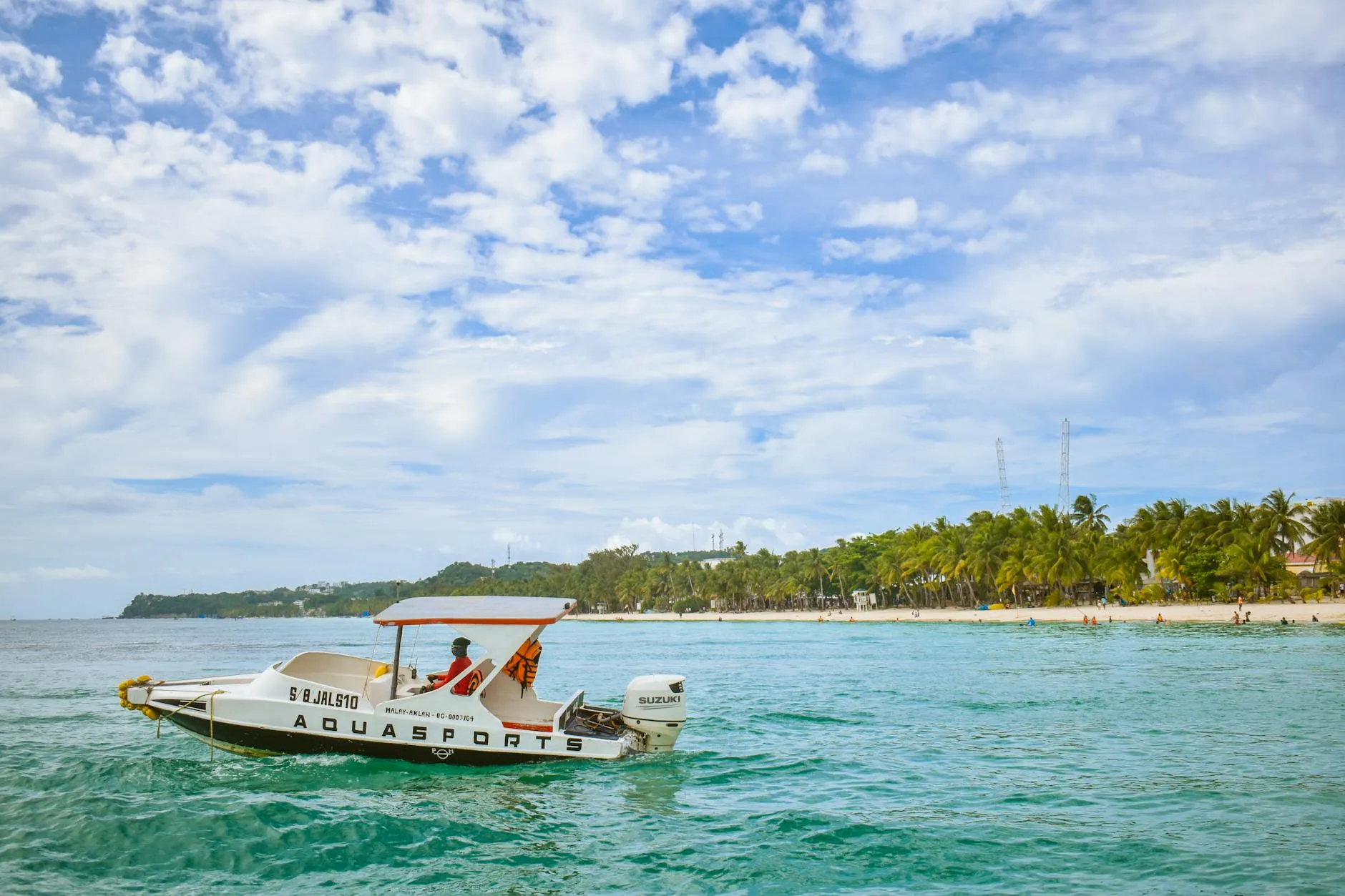
Two airports serve Boracay. Caticlan (MPH, officially Godofredo P. Ramos / Boracay Airport) is across the water from the island — its jetty is about 2 km from the terminal, a 7–10 minute van or tricycle ride, then a 10–15 minute boat. Kalibo is roughly 68 km away, about two hours of road, and then the same boat.
The honest comparison: fly Caticlan if you can find an affordable, well-timed flight. Its runway limits it to smaller aircraft and fewer carriers, which is why fares are often higher and schedules thinner. Fly Kalibo when the fare is lower, the schedule suits you, or your international routing lands there — which it often does, since Kalibo handles most of the area’s international flights on its longer runway.
✈️ Caticlan is faster; Kalibo is cheaper and wider
Caticlan gets you to Boracay in under 30 minutes from landing. Kalibo takes three hours. Pay the premium for Caticlan if the math works; accept Kalibo when it doesn’t.
### Getting to the Jetty
Outside the Kalibo terminal, shared vans and buses run to Caticlan jetty port. Shared seats commonly cost ₱180–₱250 per person on local vans and buses; pre-booked branded services quote higher, around ₱450, and a private transfer costs considerably more. Drive time to the jetty is about two hours. Vans wait at the airport but sometimes hold until they fill — factor in a possible wait before departure. Verify current fares against operators before travel.
🚐 Shared van is the normal option; agree the fare before you get in
People approaching you at arrivals with a private car will quote well above the shared-van rate. The shared vans outside are the standard, cheap transfer. If someone steers you toward a “special” or “express” service at two or three times the van price, that’s a choice, not a necessity.
### At the Jetty
Caticlan Jetty Port charges fees before you board, and foreigners pay more than locals. As of 2026, the structure is: ₱300 environmental fee for foreign tourists (a one-time charge for the whole stay, not per crossing), ₱150 terminal fee each direction (so ₱300 round trip), and the boat ticket at roughly ₱50. Budget about ₱500 per person for the inbound crossing. You fill out a short form with passport details, pay at separate windows, and keep the receipts to board.
⚠️ Carry pesos for the jetty — cash only at port windows
The van, the port windows, and the tricycles on Boracay are all cash-and-peso operations. Have enough on hand before you leave Kalibo. ATMs are more reliable in Kalibo town than at the airport, so draw cash in town if needed.
### The Monsoon Port Switch
Which jetty you use on the Boracay side shifts with the season. During the Amihan (northeast monsoon, roughly October through March), the standard crossing is Caticlan Port to Cagban Port on Boracay. During the Habagat (southwest monsoon, roughly April through September), operations move to Tabon Port and Tambisaan Port. Port staff route you to whichever is in use that day — you don’t choose. This matters because Cagban drops you at the quieter south end of the island, while Tambisaan arrives at the east side near Station 3. Your transfer operator will handle the routing.
🛋️ Lounges
Kalibo has lounge options. Set expectations to small regional airport, not international hub.
Marhaba Lounge sits airside in international departures, near Gate 1, and runs roughly 06:00–20:00 around the international flight schedule. Pay-at-the-door access is around ₱1,200 per person. It also admits eligible premium and partner-airline passengers. There are no showers and no dedicated rest areas — seating, refreshments, and Wi-Fi.
A landside lounge in the main terminal offers pay-on-entry at around ₱600, covering seating, soft drinks, and Wi-Fi. Being landside (pre-security), it’s useful mainly if you’re early and the public seating is packed.
🛋️ Priority Pass / DragonPass / LoungeKey acceptance at KLO is unconfirmed
Several aggregators list pay-in pricing and vague “accepts memberships” notes without naming specific networks. If lounge access via a membership card is part of your plan, check your card provider’s own app for KLO before you count on it. Keep the peso pay-in fare ready as a fallback. The lounges exist; the network acceptance is genuinely unverified.
🍽️ Food Before You Fly
Food at the terminal is limited and tracks the flight schedule — a small set of cafés and snack counters in departures and arrivals, open when flights move and closed when they don’t. There is no 24-hour dining. If your flight is early morning or late at night, eat before you arrive.
Kalibo town, 2 km away, is where the real eating is. Aklan’s signature dish is inubaran na manok — chicken stewed in coconut milk with banana-pith (the inner heart of the banana stalk), producing a sour, rich broth that doesn’t appear dressed up for tourists the way Boracay’s restaurant strip does. The town has standard Filipino fast-food chains and carinderia (small canteen-style eateries with pre-cooked dishes by the plate) around the town centre and the malls — cheaper and more varied than anything at the airport.
Kalibo is also the home of the Ati-Atihan festival in January, a loud, paint-and-drums street celebration that served as the model for the Philippines’ other January festivals. If you’re transiting through Kalibo in mid-January, the town is a different proposition than in any other month.
⏱️ Layover Reality
⚠️ Boracay round-trip from KLO takes six to seven hours minimum — not viable on short connections
Four hours of road (two hours each way), the boat crossing each way (~30–40 minutes round trip with loading), jetty paperwork and fees (~₱500 per direction), plus a van wait that can add 30 minutes, and a return-security buffer of 90 minutes to two hours before an international departure. The total is six to seven hours of transit before a single minute on the island. You need roughly ten hours of layover before a Boracay excursion makes sense, and you’d get an hour or two on the beach at the end of it. On anything shorter, the island is not reachable.
On a shorter connection, Kalibo town is the realistic option: food, a hotel room for a pre-dawn departure, or simply a wait in a more comfortable environment than the terminal. The town is a working provincial capital, not a sightseeing destination, but it does have decent food and the Ati-Atihan context in January. The terminal itself has no airport hotel and no dedicated sleep facilities.
🔧 Practical Notes
Currency. The Philippine peso (PHP). As of May 2026 the rate is roughly ₱58 to US$1 and ₱66 to €1, but the peso has been volatile — the dollar rate swung between about ₱56 and ₱62 in the same month. Treat any published conversion as approximate and check a live rate before changing money. Change at a bank or established money-changer in Kalibo town or the malls; airport and tourist-strip booths run wider markups.
Cash and cards. Kalibo outside the malls and bigger hotels runs on cash. ATMs and money-changers in Kalibo town are more reliable than at the airport terminal. Have enough pesos on hand for the van (₱180–₱250), the jetty fees (~₱500), and tips before you leave the airport area.
Connectivity. Terminal Wi-Fi is patchy and largely tied to the lounges. A local prepaid SIM or eSIM — Globe or Smart are the two main networks — bought on arrival or before travel is the reliable option. Coverage on the Kalibo–Caticlan road is generally fine.
Border checklist. eTravel QR code ready at the airline counter (both arriving and departing). Proof of onward travel for the airline’s visa-free check. Passport valid at least six months. No EU or US pre-travel authorisation systems apply to the Philippines — the visa-free rules and eTravel above are the complete requirement.
🌍 Planning the trip? Read our The Philippines travel guide — best time to go, where to stay, and how to get around.
❓ Frequently Asked Questions
📊 At a Glance — KLO 2026
| Item | Detail |
|---|---|
| Airport / codes | Kalibo International Airport — KLO / RPVK |
| Location | 2 km east of Kalibo, Aklan, Panay Island, Western Visayas |
| Terminal | One two-level passenger terminal; international wing ~2,633 m² |
| Domestic routes | Manila (Cebu Pacific, Philippines AirAsia) |
| International routes | Seoul-Incheon (Trinity Airways, seasonal ~May–Oct); mainland China charters intermittent |
| Distance to Caticlan jetty | ~68 km, ~1.5–2 hours by road |
| Boat to Boracay | 10–15 min crossing |
| Visa policy | Visa-free ~30 days, 150+ nationalities; passport 6 months validity; onward ticket required |
| eTravel registration | Mandatory, free, at etravel.gov.ph — within 72 hours of both arrival and departure |
| Shared van to Caticlan | ~₱180–₱250 per person; branded/private higher |
| Boracay port fees (foreigner) | ~₱500 each way: ₱300 environmental (once per stay) + ₱150 terminal per direction + ~₱50 boat |
| Lounges | Marhaba airside (~₱1,200 pay-in); landside lounge (~₱600 pay-in); network card acceptance unconfirmed |
| Currency | PHP; ~₱58/US$1, ~₱66/€1 (May 2026, volatile) |
| Layover viability | Not viable for Boracay under ~10 hours; ~6–7 hours round-trip transit |
| Connectivity | Terminal Wi-Fi limited/lounge-tied; Globe or Smart prepaid SIM/eSIM recommended |
| Monsoon port switch | Amihan (Oct–Mar): Caticlan↔Cagban; Habagat (Apr–Sep): Tabon/Tambisaan |