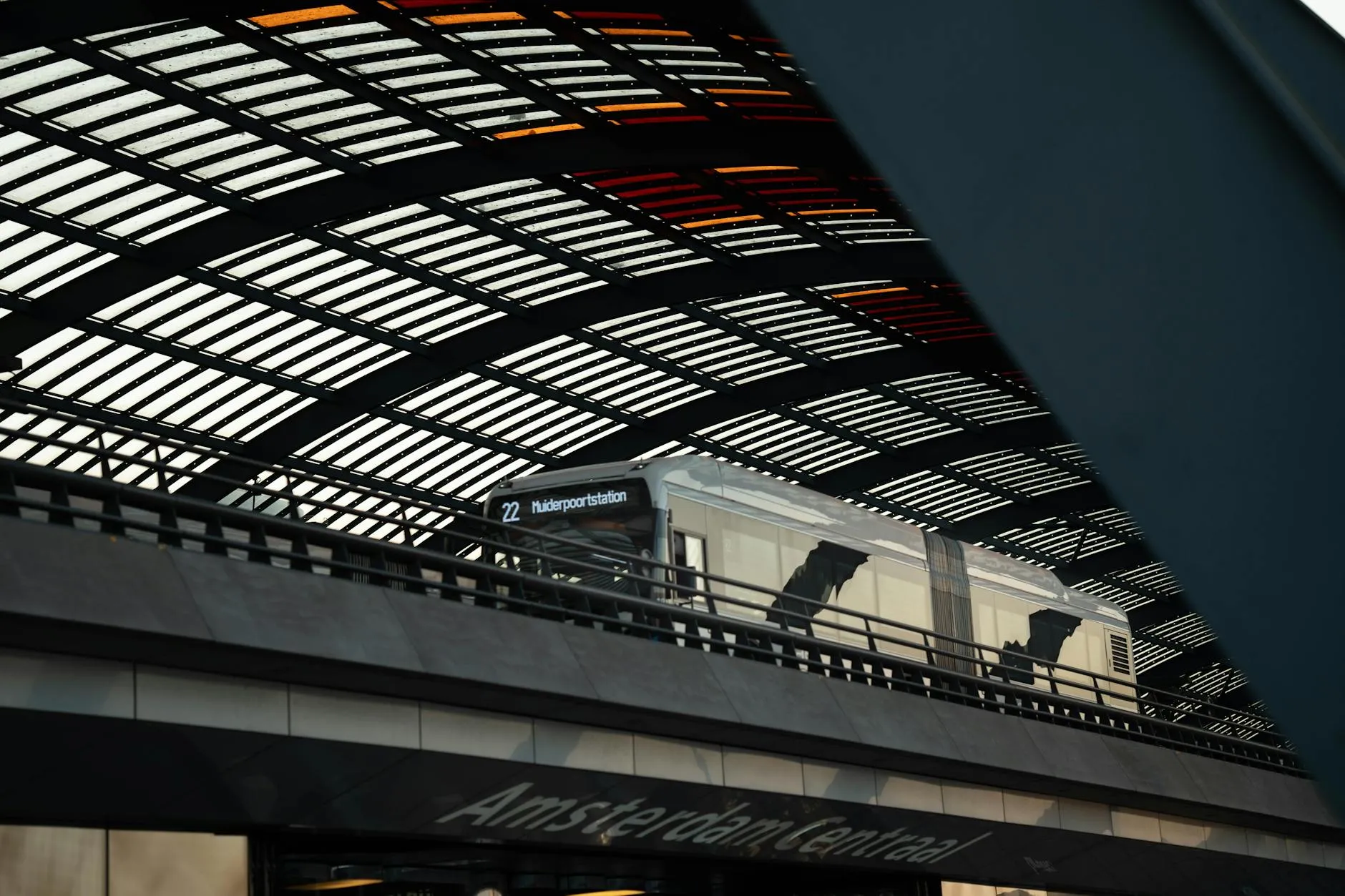
Amsterdam Schiphol (AMS) — The Complete 2026 Airport Guide
Schiphol is one building — there are no separate terminals to get wrong, and that alone makes it easier than most big hubs. The catch is what the single hall hides: the Schengen versus non-Schengen split that decides whether you clear passport control, and the new EES biometric checks that have been live since 10 April 2026 and lengthened those queues. Read the pier letter on your gate, not the departure hall, and get to the airport earlier than you used to.
Last verified: July 2026. Fares, gate assignments and EU entry rules change often — confirm the specifics on your ticket and at official signage before you travel.
Quick reference
| Detail | What you need to know |
|---|---|
| Airport | Amsterdam Airport Schiphol, IATA AMS — the Netherlands’ main gateway and KLM’s home hub; ~68.8 million passengers in 2025 across a single terminal building |
| Layout | One terminal, three departure halls (1, 2, 3), all connected airside, feeding lettered piers B–H and M. The split that matters is Schengen vs non-Schengen, not the hall number |
| Into Amsterdam | Direct train from beneath the terminal to Amsterdam Centraal — about €6.60, ~15 minutes, up to 8 an hour · taxi ~€40–60 · Uber ~€35–55 |
| Entry | EES biometric checks are live since 10 April 2026 — non-EU arrivals register fingerprints and a photo, adding queue time. ETIAS has no announced launch date (with a grace period after launch) |
| Connections | Single terminal, so minimums are short: 40 min Schengen–Schengen, 50 min if either leg is non-Schengen. Schengen↔non-Schengen transfers mean re-clearing passport control |
| Watch out for | The passport queue in EES season · gates out on Pier M (the low-cost concourse) · the last train before the night gap · assuming your fast Intercity Direct to Rotterdam has no surcharge (it does — but not toward Amsterdam) |
One terminal, three halls, eight piers — read the letter, not the number
Schiphol’s defining feature is that it is a single terminal building. There is no T1 versus T2 to land at by mistake, no inter-terminal shuttle. Everything sits under one roof, connected airside, and you can walk from any gate to any other without a train — genuinely unusual for a hub this size.
What you navigate are three Departure Halls (1, 2 and 3) on the landside for check-in, and eight lettered piers airside where the gates live: B, C, D, E, F, G, H and M. Hall 1 leads to piers B and C, Hall 2 to D and E, Hall 3 to F, G, H and M. But the hall you check in at is not what governs your journey — the Schengen versus non-Schengen status of your pier is.
The Schengen split is the real map
Flights within the Schengen Area involve no passport control; flights to and from outside it (the UK, US, most of Asia, Africa and the Middle East) do. Schiphol splits its piers accordingly:
- Schengen piers: B, C, the lower level of D, and M. No passport check on departure or arrival within this zone.
- Non-Schengen piers: E, the upper level of D, F, G and H. You clear passport control (and, on arrival from outside the EU, EES) to move between this zone and the Schengen side.
Pier D is the clever bit: it is split-level, Schengen on the lower deck and non-Schengen on the upper, so the same physical pier serves both. Pier M is the low-cost concourse, tacked onto the H area and reached by a longer walk — it is the Schengen half of that budget-airline corner, so allow extra minutes if your gate is an M number.
Getting into Amsterdam
This is the easy part — one of the best airport-to-city links in Europe. The station is directly beneath the terminal: ride an escalator down from Schiphol Plaza, the concourse between the arrival halls, straight onto the platforms. No separate rail terminal, no shuttle. The honest comparison:
| Option | Price | Time to Amsterdam Centraal | Verdict |
|---|---|---|---|
| NS train | ~€6.60 (€7.10 with a single-use card) / ~$7 | ~15 min, up to 8/hour | Fastest, cheapest, most frequent — the default for almost everyone |
| Taxi | ~€40–60 / ~$44–66 | ~30–40 min (traffic-dependent) | Only for groups, late arrivals or lots of luggage |
| Uber / ride-hail | ~€35–55 / ~$39–61 (surges higher) | ~30–40 min | Marginally cheaper than a taxi off-peak; pick-up at Schiphol Plaza |
The train — take it unless you have a specific reason not to
Trains to Amsterdam Centraal are run by NS (Nederlandse Spoorwegen) and leave from the platforms under the terminal. A second-class single is around €6.60, and the ride is roughly 15 minutes — about 14 on a direct Intercity, 16 to 17 on a Sprinter that also stops at Sloterdijk and Lelylaan. Both cost the same and both get you there; if you are staying near Amsterdam-West, the Sprinter’s extra stops may actually put you closer. Departures run up to eight times an hour through the day, thinning out overnight, so the train is almost always the right call over a €50 taxi.
Pay the modern way: tap in and out with a contactless bank card, Apple Pay or Google Pay (the OVpay system, live across all Dutch public transport) and you are charged the standard fare with no card to buy. If you prefer a paper ticket, a single-use OV-chipkaart from the yellow machines or the ticket office adds about €1 for the card itself. Remember to tap the card readers on the platform both when you board and when you leave, or you will be overcharged.
International trains — Eurostar and beyond
Schiphol’s station is on the main line, so Eurostar (which absorbed the old Thalys brand in the 2023 merger) calls here on its Amsterdam–Rotterdam–Antwerp–Brussels–Paris route. That makes AMS a rare airport where you can step off a plane and onto a high-speed train to Brussels or Paris without going into the city first.
Two caveats. The London-bound Eurostar does not stop at Schiphol — because of UK border pre-checks it runs only from Amsterdam Centraal’s dedicated terminal, so take the local train into the city first. And in 2026 the cross-Channel service was disrupted: direct UK–Netherlands Eurostar trains were suspended into the summer after infrastructure damage near Rotterdam. If an international train is part of your plan, check the operator’s live status before you rely on it.
Entry: EES, ETIAS, Privium and e-gates
The single biggest change to expect at Schiphol in 2026 is at the border, not the boarding gate.
EES — live since 10 April 2026
The EU’s Entry/Exit System (EES) became fully operational across all Schengen external borders on 10 April 2026, after a phased rollout that began in October 2025 (Schiphol started introducing it from November 2025). It replaces the old passport stamp. If you are a non-EU traveller — including UK, US, Canadian and Australian citizens — you now register your fingerprints and a facial photo at a self-service kiosk or booth on your first entry, and the system logs each crossing after that.
The practical effect is queue time. That first registration takes longer than a stamp did, and during busy arrival banks the non-EU passport hall can back up. There is no official published figure for the extra minutes, and it eases once your biometrics are on file, but the safe assumption on arrival from outside the EU is to budget more time at passport control than you would have in 2024, especially on your first EES entry. EU and EEA citizens using the e-gates are largely unaffected.
ETIAS — with no announced launch date
The ETIAS travel authorisation (the EU’s answer to the US ESTA) has no announced launch date, with a transitional grace period before it becomes strictly mandatory — so for much of 2026 you may not need it yet, but it is coming. When it applies, visa-exempt non-EU visitors (US, UK, Canada, Australia and around 55 other nationalities) apply online before travelling. It costs €20, is free under 18 or over 70, and lasts three years. Use only the official EU ETIAS site, not a lookalike reseller, and confirm whether you need one on your travel date.
Privium and e-gates
Schiphol runs its own fast-track membership, Privium, which uses an iris scan (and facial recognition) to clear the border and adds a priority security lane. It still operates in 2026; the entry tier is roughly €180 a year (the Partner add-on rises to €210 from 1 June 2026), which only makes sense if you pass through often. For everyone else, the standard self-service passport e-gates handle EU/EEA and other eligible travellers automatically — no membership needed, just an e-passport and age eligibility.
The queues and the capacity cap
Schiphol earned a rough reputation in summer 2022, when post-pandemic staffing shortages produced security queues of five and six hours, missed flights and a compensation scheme. To cope, the airport imposed a temporary daily passenger cap — around 70,000 a day at its tightest — through 2022 and into 2023. Staffing has since recovered and that cap is gone; the queues in 2026 are ordinary peak-hour queues plus the new EES load, not the 2022 collapse.
The cap that remains is different: a government limit on annual flight movements, driven by noise rules rather than crowding. The 2026 figure is 478,000 movements (down from a historical 500,000), but its legal footing is contested — the Dutch Council of State struck down the underlying decree in March 2026, and the government has said it will hold to 478,000 in practice while it reworks the rules. For a passenger this is background noise: it caps how many flights airlines can schedule over a year, not your security line on the day.
KLM’s hub and the lounges
Schiphol is KLM’s home base and the airline accounts for more than half of all flights here, which makes AMS the European hub of the SkyTeam alliance. If you are flying KLM, Air France or another SkyTeam carrier in a premium cabin or with status, you will be pointed to KLM’s own Crown Lounges — and, importantly, there are two of them, one on each side of the border:
- Crown Lounge 25 — the Schengen lounge, on the upper level near the D gates. The smaller of the two.
- Crown Lounge 52 — the large non-Schengen lounge above Lounge 3 near the F pier, spread over two floors with shower suites and hireable sleeping cabins. This is the flagship, and the one most intercontinental KLM passengers use.
Head to the one on the correct side of passport control for your flight — crossing back means re-clearing the border. KLM also sells paid access to its own economy passengers (around €60 for Lounge 25, €75 for Lounge 52), space permitting.
If you are not flying SkyTeam or have no status, the Priority Pass and walk-in option is the Aspire Lounges: Aspire 26 on the Schengen side (Departure Hall 1 area) and Aspire 41 on the non-Schengen side (near Gate 41). Both accept Priority Pass; walk-in access runs from roughly €35 — treat that as approximate and confirm at the door.
Connections and minimum times
The single-terminal layout is a real advantage for transfers — there is no building to change. Schiphol’s published minimum connecting times are among the shorter ones for a major hub: 40 minutes for a Schengen-to-Schengen connection and 50 minutes when either leg is non-Schengen. KLM describes its own Schiphol transfer minimum as “usually around 50 minutes.”
The complication is the same Schengen split. A connection that stays entirely on one side is a straightforward walk. But if your itinerary crosses between the two zones — a non-Schengen long-haul arrival to a Schengen short-haul, or the reverse — you clear passport control in between, and on arrival from outside the EU that now includes EES. The published minimums build that in, but on a tight non-Schengen inbound in EES season, more margin is wise. Self-connecting on separate tickets, give yourself far longer.
Food, money and Wi-Fi
Food: airside dining is decent rather than a destination — grab-and-go plus a few sit-down spots along Holland Boulevard and near the lounges. For something local, look for stroopwafels, bitterballen and a proper broodje; landside Schiphol Plaza has more choice (including a supermarket). Prices are airport prices.
Money: the Netherlands is heavily card-based — you can pay for almost everything by contactless card or phone, so you rarely need cash. If you do want euros, use a bank ATM over an exchange booth, and if a machine offers to bill you in your home currency, decline and choose euros.
Wi-Fi and practicalities: free Wi-Fi covers the terminal. There is left-luggage storage at Schiphol Plaza, showers and sleeping cabins inside the Crown Lounges, and pharmacies and a medical service on site.
Long layover: a museum, a library and a park
A long connection at Schiphol is one of the more rewarding ones to have — you do not need to leave the airport, or clear immigration, to do something worthwhile. Three things stand out.
- Rijksmuseum Schiphol — a genuine annex of Amsterdam’s national museum, airside on Holland Boulevard between piers E and F. It shows a rotating selection of Dutch Golden Age paintings, admission is free, and it is open around the clock. It is the best free thing at the airport and most transit passengers walk straight past it.
- The Airport Library — also airside on Holland Boulevard, a quiet corner with Dutch literature translated into dozens of languages plus screens of music and film. A calm place to wait that is not a gate.
- The Panorama Terrace — a rooftop plane-spotting deck with a boardable Fokker 100 and views over the apron. The catch: it is landside, above the terminal between Departure Halls 1 and 2. You can only reach it if you are on the public side (before security or after collecting bags), so it is for meeters, greeters and pre-security time, not a pure airside transit.
If you have the hours and the right to enter the Netherlands, Amsterdam itself is only about 15 minutes away by the train under the terminal — a short enough hop that a five- or six-hour layover is genuinely enough for the canals, a museum and a meal before you head back.
Frequently asked questions
How do I get from Schiphol to central Amsterdam, and how much?+
Take the train. NS trains run from platforms directly beneath the terminal (down the escalators from Schiphol Plaza) to Amsterdam Centraal in about 15 minutes, up to eight times an hour, for roughly €6.60. Tap in and out with a contactless card or phone (OVpay). A taxi or Uber is €35–60 and takes 30–40 minutes — only worth it for groups, late arrivals or heavy luggage.
Does Schiphol have more than one terminal?+
No — Schiphol is a single terminal building with three Departure Halls (1, 2 and 3) that all connect airside, feeding lettered piers B to H and M. There is nothing to land at by mistake and no inter-terminal shuttle. What matters instead is whether your gate is on the Schengen or non-Schengen side, which decides whether you go through passport control.
What is EES and how does it affect my arrival at Schiphol?+
The EU Entry/Exit System has been fully live since 10 April 2026. Non-EU travellers (including UK, US, Canadian and Australian citizens) register fingerprints and a facial photo at a kiosk on first entry instead of getting a passport stamp. It adds time to the non-EU passport queue, especially on your first registration, so budget more time at border control than you would have a couple of years ago. EU/EEA citizens using the e-gates are largely unaffected.
Do I need ETIAS to fly to Amsterdam in 2026?+
Possibly by the end of the year. ETIAS has no announced launch date with a transitional grace period before it is strictly enforced, so for much of 2026 you may not need it yet. When it applies, visa-exempt non-EU visitors apply online in advance; it costs €20 (free under 18 or over 70) and lasts three years. Check the official EU ETIAS site for whether it is required on your travel date.
What is the difference between the Schengen and non-Schengen piers?+
Schengen flights (within the Schengen Area) involve no passport control; non-Schengen flights (the UK, US, Asia and beyond) do. At Schiphol, piers B, C, the lower level of D, and M are Schengen; piers E, upper D, F, G and H are non-Schengen. To move between the two zones you clear passport control, and on arrival from outside the EU that now includes EES. Your gate letter, not the hall number, tells you which side you are on.
Which lounges can I use at Schiphol, and can I pay in?+
KLM’s Crown Lounge 25 (Schengen, near the D gates) and Crown Lounge 52 (non-Schengen, the big one near pier F) serve SkyTeam premium and status passengers, with paid economy access from about €60–75. If you are not flying SkyTeam, the Aspire Lounges (26 Schengen, 41 non-Schengen) accept Priority Pass and sell walk-in access from around €35. Pick the lounge on the correct side of passport control for your flight.
How long do I need for a connection at Schiphol?+
The published minimums are 40 minutes for a Schengen-to-Schengen connection and 50 minutes when either leg is non-Schengen; KLM cites around 50 minutes for its transfers. The single terminal keeps these short, but a connection that crosses between the Schengen and non-Schengen zones means clearing passport control (and EES on non-EU arrivals) in between, so leave extra margin on tight non-Schengen inbound connections.
Is Schiphol a good airport for a long layover?+
Yes — it is one of the better ones. Airside, without clearing immigration, you can visit a free branch of the Rijksmuseum and the Airport Library, both on Holland Boulevard. If you can enter the Netherlands, central Amsterdam is only about 15 minutes away on the train beneath the terminal, so a five- or six-hour layover is enough to see the city. (The rooftop Panorama Terrace is landside only.)
At a glance
| Codes | AMS / EHAM — Amsterdam Airport Schiphol |
| Layout | One terminal, Departure Halls 1–2–3, piers B–H and M · single connected airside |
| Key split | Schengen: B, C, lower D, M · Non-Schengen: E, upper D, F, G, H |
| Into Amsterdam | NS train, ~€6.60, ~15 min, up to 8/hour, from beneath the terminal |
| Taxi / Uber | ~€35–60, ~30–40 min |
| Entry | EES live since 10 Apr 2026 (extra queue time); ETIAS expected, date not announced |
| Connections | 40 min Schengen–Schengen · 50 min if non-Schengen |
| Hub airline | KLM (SkyTeam) — Crown Lounge 25 (Schengen) & 52 (non-Schengen) |
| Wi-Fi | Free, terminal-wide |
Before you fly
- 📊 Check what a good fare to Amsterdam looks like — our price-check tool shows the typical deal range so you know a bargain when you see one.
- 🧳 Baggage checker — confirm your airline’s carry-on and checked allowance before you pack.
- 🏙️ Amsterdam city guide — where to stay, eat and what’s actually worth your time in the city.
🏙️ Planning the trip? Read our Amsterdam city guide — where to stay, what to eat, and how to spend your time in the city.