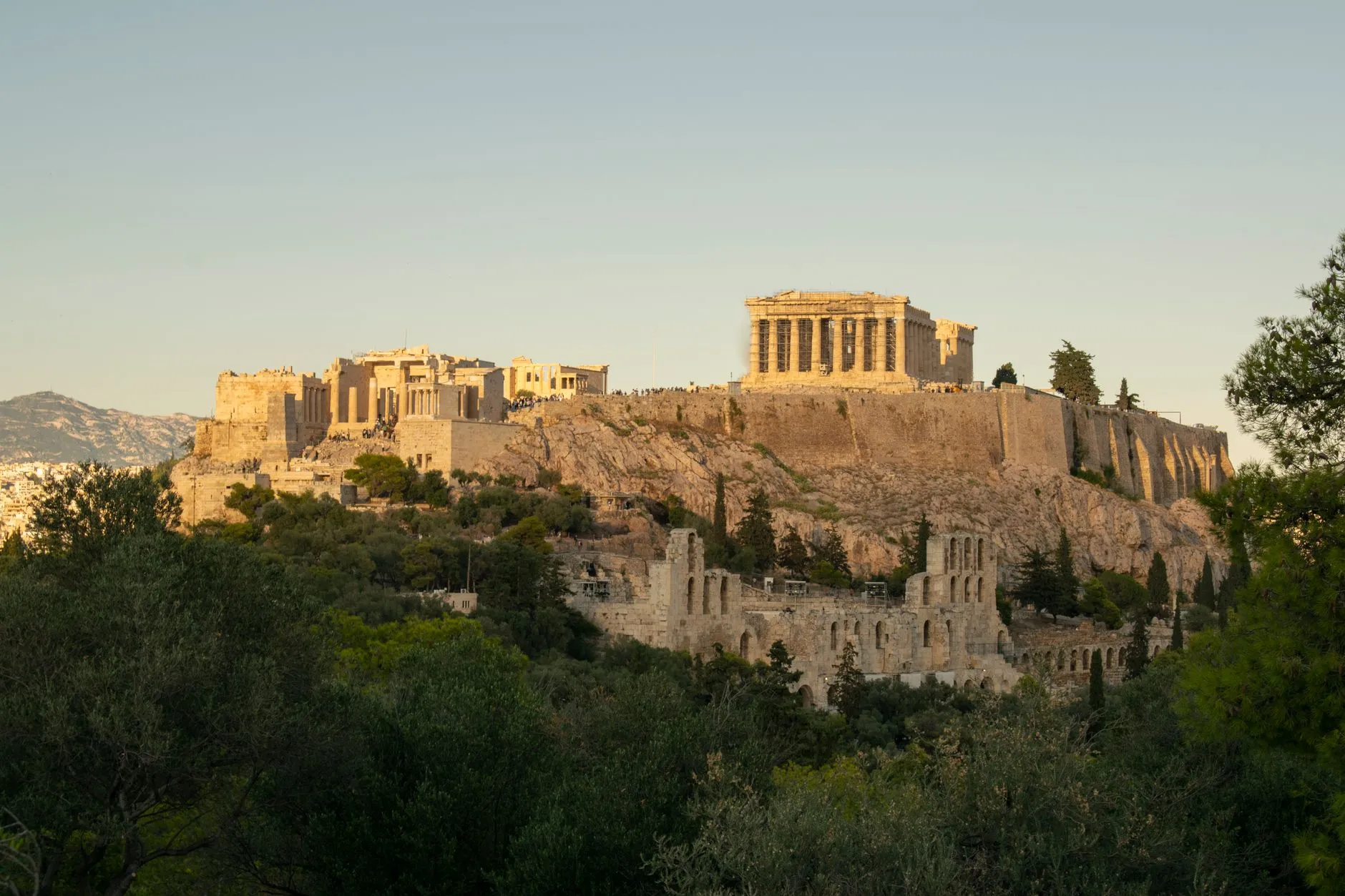
Greece — Complete Travel Guide 2026
Everyone arrives in Greece chasing the same two photographs — a white church above a Santorini caldera, a windmill on Mykonos — and most of them leave having seen a sliver of the country, paid double for the privilege, and queued behind a cruise ship to do it. Here is the thing nobody puts on a postcard: the real Greece, the one that will stop you mid-sentence, is on the mainland and on the islands no algorithm has discovered yet. This guide is an argument for going there instead.
Quick Reference
Southeastern Europe, where the Balkans meet the Mediterranean and Aegean seas
Athens (ATH), Thessaloniki (SKG), Heraklion (HER) & Chania (CHQ) on Crete, Rhodes (RHO), Corfu (CFU), Kos (KGS), Mykonos (JMK), Santorini (JTR)
Euro (€)
Greek; English widely spoken in tourist areas, less so in mountain villages
EU/Schengen. Non-EU visitors (UK/US/AU/CA etc.) register biometrics at the border under the EES, live since 10 April 2026; ETIAS expected, date not announced
Late May–June and September–early October; avoid the July–August heat-and-crowd peak
Ancient ruins, 6,000 islands, blue-domed churches, olive oil, the world’s most generous tavernas, and a coastline that never ends
Athens for the mainland and a first trip; Nafplio for the Peloponnese; Thessaloniki for the north — and no more than one or two islands per visit
Editor’s Note: The Mainland Is the Secret
I’ll say it plainly because nobody else seems to: if your entire Greek trip is Santorini and Mykonos, you have been sold the gift shop and missed the country. Those two islands are extraordinary on a quiet morning in May and faintly grim at 6pm in August, when 8,000 cruise passengers funnel up the same cliff path for the same sunset and a Greek salad costs €22. They are a tiny, heavily monetised fraction of what Greece actually is.
What Greece is, is a mainland most visitors never set foot on. It is monasteries balanced on rock pinnacles at Meteora. It is the oracle at Delphi, where the ancient world came to ask its questions, perched on the slope of Mount Parnassus. It is the Peloponnese — the gnarled hand of land below Athens that holds Mycenae, the theatre at Epidaurus, the sea-fortress of Monemvasia and the tower villages of the Mani, all on roads you can drive in a week. It is the Zagori, a cluster of stone villages above the deepest gorge in the world, where you can walk all day and meet more horses than tourists.
The single best decision you can make about a Greek holiday is to spend at least half of it on the mainland. It is cheaper, emptier, deeper, and — this is the part that surprises people — it has beaches just as good as the famous islands, minus the queues.
The islands are wonderful. I’ll point you to the right ones. But treat them as dessert, not the whole meal. The country’s heart beats inland, and almost nobody is fighting you for a table there.
Should You Go? Who It’s For — and Who It Isn’t
Greece is for you if you want layered, walkable history that you can touch rather than view behind glass; if you eat with appetite and curiosity; if a long lunch under a plane tree counts as an activity; if you’ll trade a marquee sight for an empty one; and if you can build a trip around seasons rather than around school holidays. Greece rewards the flexible and the curious almost more than anywhere in Europe.
Greece is harder work if you need everything to run on a Swiss timetable. Ferries get cancelled when the meltemi wind blows. Smaller archaeological sites keep eccentric hours. Service is warm but unhurried — your bill will not arrive until you ask, three times, because rushing you out is considered rude. And if your only model of “Greece” is an infinity pool and a beach club, you can absolutely have that, but you’ll pay Mykonos prices for a Mykonos experience and wonder why everyone says the country is cheap.
If you have one week and it’s your first time, do not island-hop frantically. Pick Athens plus one region (the Peloponnese) or Athens plus one island. Greece punishes the over-ambitious itinerary with whole days lost to ports and transfers.
Families do very well here — Greeks adore children and tavernas will happily produce a plate of chips and grilled chicken at 10pm. Couples find honeymoon postcard Greece on the islands and something more soulful on the mainland. Solo travellers, especially women, generally report Greece as one of the easier, safer countries in Europe to wander.
Entry, EES & Border Practicalities
Greece is in the EU and the Schengen Area, and 2026 is the year the border got more technological. The Entry/Exit System (EES) has been live across Schengen’s external borders since 10 April 2026. If you hold a non-EU passport — British, American, Australian, Canadian and so on — your first arrival now means a short biometric registration: fingerprints and a facial photo, taken at the border, replacing the old passport stamp. It logs you in and out and enforces the 90-days-in-any-180 rule automatically.
Expect this to add time at Athens and the bigger island airports during the first arrival wave of the morning, especially at the height of summer. There was a brief, confusing spell in April 2026 when Greece stopped collecting biometrics from UK travellers; that was reversed in late May 2026 after Brussels made clear no member state may exempt a single nationality. So: everyone non-EU registers, no exceptions.
EU, EEA and Swiss nationals are unaffected by all of this — wave your passport and walk through. It’s only non-EU visitors who do the biometric step, and only once per 180-day window.
ETIAS — the pre-travel authorisation many people confuse with EES — is not live yet. It is expected to begin in the final quarter of 2026, with a transitional grace period during which you can still enter without it, and only becomes genuinely mandatory from around 2027. When it does land it’ll be a quick online application costing roughly €20 and valid for three years. For a 2026 trip you almost certainly won’t need it — but check the official travel-europe.europa.eu site close to departure, because the timeline has slipped before. Your passport must be valid for at least three months beyond your planned departure and issued within the last ten years.
Getting There & Around: The Ferry Strategy
Most people fly into Athens (ATH), which has direct connections across Europe and increasingly the US and Gulf, or into Thessaloniki (SKG) for the north. In summer, dozens of seasonal routes land you straight onto Crete, Rhodes, Corfu, Kos, Mykonos and Santorini without ever passing through Athens — worth knowing if an island is your whole trip.
For the mainland, rent a car. This is non-negotiable for the Peloponnese, Meteora, the Zagori and the Pelion; the bus network (KTEL) is decent between cities but useless for the village-hopping that makes these regions special. Roads are good, the motorways are tolled and fast, and Greek driving is more assertive than dangerous. A train line runs Athens–Thessaloniki and, gloriously, Athens to Kalambaka (the town beneath Meteora) — one of the best-value scenic rides in the country.
Then there are the ferries, the circulatory system of island Greece, and the single thing first-timers get most wrong. Three things to internalise:
Book ahead in July and August. The fast catamarans to Santorini and the popular Cyclades genuinely sell out, and so do the evening return sailings to Athens on summer weekends. Reserve both legs before you fly.
First, there are two kinds of boat. Conventional ferries (Blue Star is the workhorse) are slower, much cheaper, vastly more comfortable, and barely notice rough seas — you sit on deck with a coffee and watch the islands slide by. High-speed catamarans (Seajets, Golden Star and others) are roughly twice the price and half the time, but they’re cramped, you stay in your seat, and they are the first thing cancelled when the wind gets up. For a relaxed trip, take the slow boat and treat the crossing as part of the holiday.
Second, ferries leave Athens from three ports, not one: Piraeus (the giant main hub for the Cyclades and Crete — there are up to eight daily sailings to Santorini and five to Heraklion from around €33), Rafina (handy for Mykonos, Andros, Tinos and closer to the airport), and Lavrio. Confirm which port your ticket uses; arriving at the wrong one is a classic, expensive mistake.
Third, book through an aggregator like Ferryhopper or directly with the lines, save the QR code to your phone, and build slack into your plan. A cancelled fast ferry can blow up a tight itinerary — which is exactly why I keep telling you not to make a tight itinerary.
The Mainland I: Meteora & Delphi
Two sights in central Greece would each justify the flight on their own.
Meteora is one of those places that photographs well and then, in person, knocks the wind out of you anyway. Six working Eastern Orthodox monasteries sit atop sheer sandstone pillars that rise hundreds of metres straight out of the Thessalian plain, built in the 14th–16th centuries by monks who hauled themselves and their materials up in nets. You base yourself in Kalambaka or the prettier village of Kastraki, and you can reach the monasteries by car, by guided hike up the old paths, or — the cheapest joy — by the slow train from Athens. Each monastery charges a small entrance fee (around €3) and enforces a modest dress code: long trousers or skirts, covered shoulders; the monasteries lend wrap-skirts at the door.
Go for sunrise or stay until sunset and visit the monasteries on a weekday. The midday tour-bus surge is real, but it evaporates by late afternoon, and the light on the rock at golden hour is the whole reason you came.
Delphi, about two and a half hours from Athens, was the omphalos — the navel — of the ancient Greek world, the sanctuary where city-states sent envoys to consult the oracle of Apollo before going to war, founding colonies or marrying off their children. The ruins climb the slope of Mount Parnassus with the Gulf of Corinth glittering far below, and the small site museum holds the bronze Charioteer, one of the finest surviving statues of antiquity. Don’t rush it, and don’t skip the lower terrace where the round Tholos of Athena Pronaia stands — it’s the image everyone’s seen and somehow still arrive too tired to walk down to. The handsome ski-and-stone town of Arachova just up the road makes a good lunch stop and turns into a buzzy winter resort when Parnassus opens for skiing.
The Mainland II: The Peloponnese — Greece’s Greatest Road Trip
If I could send you to one region and nowhere else, it would be the Peloponnese: a peninsula the size of a small country, threaded with empty roads, that packs more world-class history and prettier coastline into a week’s drive than anywhere in the Mediterranean. Make Nafplio your base — it is, frankly, the loveliest town in Greece, the first capital of the modern state, with Venetian and Ottoman lanes, bougainvillea everywhere, a little island fortress (the Bourtzi) in the bay, and the colossal Palamidi castle reached by a staircase of (legendarily) 999 steps. It is also a perfect dinner town.
From there everything is a day trip. Mycenae, Agamemnon’s gold-rich Bronze Age citadel, with its Lion Gate and the beehive Treasury of Atreus. The Theatre of Epidaurus, a 4th-century-BC amphitheatre with acoustics so perfect a coin dropped on the stage is audible in the back row of 14,000 seats — and where, on summer weekends, you can watch ancient drama performed as part of the Athens & Epidaurus Festival. Further south, Monemvasia — “the Gibraltar of the East,” a fortified Byzantine town hidden on the seaward flank of a vast rock, invisible from the mainland until you’re upon it, with a single car-free street of stone houses and a church on the summit.
Drive into the Mani, the middle finger of the Peloponnese’s three southern peninsulas. It is austere, sun-bleached and unforgettable: clusters of grey stone tower-houses built by feuding clans, the village of Areopoli, the dramatic caves at Diros, and Kardamyli, where the travel writer Patrick Leigh Fermor made his home. This is where Greece feels oldest and least performed.
And when you want to swim, you can — the Peloponnese has beaches the equal of any island (Voidokilia near Pylos is a perfect crescent of pale sand) without a single beach club charging you €40 for a sunbed. Throw in Olympia, birthplace of the Games, on the western side, and you have a trip that ruins you for the package-island version of Greece.
The Mainland III: Zagori, the Vikos Gorge & Epirus
Up in the northwestern corner, in the mountains of Epirus near the Albanian border, is the Greece that even many Greeks treat as a secret. The Zagori is a cluster of 46 stone-built villages — the Zagorochoria — connected by old slate paths and graceful arched stone bridges, set in an alpine landscape of beech forest, rivers and grey peaks. UNESCO inscribed the Zagori cultural landscape on its World Heritage list in 2023, and it is utterly unlike the white-cubes-and-blue-domes Greece of the brochures: think slate roofs, mountain herbs, hearty pies and woodsmoke.
At its heart is the Vikos Gorge, which holds a Guinness record as the deepest gorge in the world relative to its width — a vertiginous green chasm you can hike along the rim or, for the fit and well-shod, walk the floor of in a full and rewarding day. Base yourself in the Papingo villages or Monodendri, hike to the Beloi viewpoint for the classic vertical panorama, swim in the surreal turquoise Voïdomatis river, and eat the best mountain food in Greece.
Epirus is a four-season region, and that’s its trick. It’s gorgeous in autumn when the forests turn, magical with snow in winter, and blissfully cool in a July when the islands are an oven. If a Greek summer heatwave frightens you, come up here instead.
The Mainland IV: The Pelion
The Pelion peninsula, curling into the Aegean east of Volos, was in myth the summer home of the centaurs, and it still feels half-enchanted: a green spine of chestnut and apple orchards dropping to beaches on one side and a calm gulf on the other. The villages — Makrinitsa with its mansion houses and balcony views over Volos, Tsagarada around a 1,000-year-old plane tree, cobbled Milies — are stone-and-slate beauties strung along switchback roads. Down on the coast, Mylopotamos and Damouchari (where parts of Mamma Mia! were filmed) are among the loveliest swimming spots in the country.
The signature experience is the Moutzouris, a narrow-gauge mountain railway that puffs between Ano Lechonia and Milies across stone viaducts on summer weekends — a slow, ridiculous, wonderful thing to do with a half-day. The Pelion is also one of Greece’s underrated food regions, heavy on spentzofai (sausage-and-pepper stew), local cheeses and apple-everything.
The North: Thessaloniki & Halkidiki
Thessaloniki is Greece’s second city and, to a lot of people who know the country well, its most likeable — younger, looser and far less touristy than Athens, with a 2,300-year history layered Byzantine over Roman over Ottoman, and a Sephardic Jewish heritage that ran deep until the catastrophe of the Second World War. Walk the seafront promenade past the White Tower to the Umbrellas sculpture at sunset, climb into the Ano Poli (the Upper Town that survived the great 1917 fire, all wooden balconies and Byzantine walls), stand inside the immense Roman Rotunda, and browse the covered Modiano market.
Thessaloniki is, with no real competition, the best place to eat in Greece. The city invented the morning bougatsa (custard or cheese in crisp filo), its ouzeri and tsipouro bars set the national standard for small-plates eating, and the food culture here is taken seriously in a way that even Athens can’t quite match. Come hungry; stay an extra day.
An hour or two southeast lies Halkidiki, the three-pronged peninsula that is northern Greece’s beach playground. Know the difference between the legs: Kassandra is the busier, more developed one; Sithonia is the quieter middle prong with the best beaches and pine forests running down to turquoise coves; and the third, Mount Athos, is the autonomous monastic republic — closed to women entirely and accessible to male visitors only with an advance permit, by boat. For most travellers, Sithonia is the answer: Aegean-perfect water, a fraction of the Cyclades prices.
Which Island for Whom
You should still see an island — just the right one, for the right reason. A quick honest sorting, with deeper guides where we have them:
- Santorini — the caldera view is genuinely one of the great sights of Europe, and it’s a superb honeymoon if you stay up in Oia or Imerovigli and accept the prices. But in peak summer it is a cruise-day crush, and it’s nobody’s idea of relaxed. Go in May, June or October, or not at all.
- Mykonos — beautiful Cycladic town, world-famous beach clubs, and the most aggressively expensive place in the country. Right for a party crowd with a budget; wrong for almost everyone else.
- Crete — not really an island so much as a country: mountains, gorges, Minoan palaces, the best regional cuisine in Greece, and beaches at both ends. Hire a car and give it a week of its own.
- Naxos — my pick for first-timers and families: a real working island with mountain villages, long sandy beaches, great value and proper Greek life going on around the tourism.
- Rhodes — the Dodecanese big-hitter, with a magnificent medieval walled Old Town and big resort infrastructure; strong on history.
- Corfu — lush, green and Ionian, with Venetian architecture and a softer, more Italianate feel; good for families.
- Zakynthos — Ionian, home of the famous Shipwreck (Navagio) cove and the loggerhead turtles of Laganas Bay.
Want the Cyclades feel without the Santorini circus? Aim at the ones that aren’t on every feed: Milos (lunar coves and the Sarakiniko moonscape), Folegandros (a clifftop village and blissful quiet), Sifnos (a foodie island with a pottery tradition), Amorgos, Tinos, Naxos’s little neighbours, or car-free Hydra an hour from Athens. Ikaria is a genuine “blue zone” where people forget to die; Karpathos and Symi in the Dodecanese reward the effort of reaching them.
The golden rule: one or two islands per trip, never six. The point of an island is to slow down on it.
The Overtourism Reality — and What to Skip
Greece had a record 2025 — 37.98 million visitors, up 5.6% on 2024, and €23.6 billion in tourism revenue, the best year in its history. That money matters enormously to the economy, but it concentrates on a handful of places, and 2026 is the year Greece started pushing back.
Santorini now enforces a daily cap of 8,000 cruise passengers, and a per-passenger cruise levy of €20 at Santorini and Mykonos in peak season (1 June–30 September), dropping to €12 in the shoulder months and €5 at other ports. Scheduled cruise calls to Santorini have fallen by roughly 18% for 2026. The island has also reorganised how passengers come ashore to thin the cliff-path crush. It’s a sane response to a real problem — but it tells you everything about where not to be on an August afternoon.
Here’s my honest skip list. Skip Santorini and Mykonos in July and August unless you have a specific reason and a deep wallet — you’ll see a fraction of what you paid for. Skip Oia at sunset if crowds make you miserable; the same caldera view is yours all day from Imerovigli with nobody beside you. Skip Navagio “Shipwreck Beach” as a swim — access has been restricted on safety grounds and it’s now largely a viewpoint. And skip the Plaka tourist-strip tavernas with men outside waving menus at you.
The fix for overtourism, as a traveller, isn’t to feel guilty — it’s to spread out and shift dates. Go in the shoulder season. Put the mainland in your itinerary. Choose the third-most-famous island instead of the first. You’ll have a better holiday and you’ll be part of the solution rather than the problem.
Eating in Greece: Beyond the Tourist-Strip Moussaka
Greek food is one of the great cuisines of the Mediterranean and it is routinely libelled by what gets served on tourist strips: gluey reheated moussaka, a sad “Greek salad” with iceberg lettuce, and a frozen calamari ring. Real Greek food is none of that, and finding it is mostly about knowing what kind of room you’ve walked into.
A taverna is the everyday restaurant. A mageirio or mageireftá place specialises in slow-cooked oven dishes — gemista (stuffed tomatoes and peppers), briám (roasted summer vegetables), lamb kleftiko, giouvétsi — that are made in the morning and served at room temperature, which is correct and delicious, not a sign they’re cold. A psarotaverna does fish and seafood; you’ll often choose your fish from ice and pay by the kilo, so ask the price before you nod. A psistariá is a grill house for souvlaki, chops and kontosouvli. And an ouzeri or tsipourádiko is the small-plates institution: you order rounds of mezédes — taramosaláta, fava, grilled octopus, saganáki, gigantes beans — to graze over ouzo or tsipouro. That last one, especially in Thessaloniki and Epirus, is the most fun you’ll have at a Greek table.
Order like a Greek: family-style, lots of small dishes in the middle, bread and a jug of house wine (chýma), and never rush. The proper horiátiki — village salad — has no lettuce, just tomato, cucumber, onion, peppers, olives and a slab of feta under a slick of olive oil and oregano. If yours has lettuce, you’re in a tourist trap; pay and leave.
Eat regionally. Cretan dáko (rusk, tomato, mizíthra cheese). Santorini’s tomato fritters and fava. Thessaloniki’s bougátsa for breakfast. Loukoumádes (honey doughnuts) for pudding. And drink the wine seriously — Greece is having a quiet renaissance: crisp Assyrtiko from Santorini’s volcanic vineyards, the brooding red Xinomavro of Naoussa, soft Agiorgítiko from Nemea, and a new generation of growers who’ve dragged retsina back to respectability. A taverna lunch with wine on the mainland runs €15–20 a head; you will eat better than you do at home for less.
Money & Costs: Where Greece Is Cheap and Where It Robs You
Greece is, on average, one of the better-value countries in Western Europe — but the average hides a huge spread, and understanding it is how you avoid sticker shock. The mainland and the quiet islands are genuinely cheap: a hearty taverna dinner with wine for €15–25, a freddo espresso for €3–4, a proper gyros for €3.50–4.50, a comfortable village guesthouse for €60–90 a night. Santorini and Mykonos in season are not cheap by any European standard: a mediocre dinner can run €40–60 a head, a beach-club sunbed pair €60–150, and boutique-hotel rates rival Paris.
The new line on your bill to know about is the Climate Crisis Resilience Fee, a per-night accommodation charge that funds disaster recovery. In high season (April–October) it runs from around €1.50 a night for a one- or two-star hotel up to €10 for a five-star, with short-term rentals at €8 and luxury villas at €15; it’s lower from November to March. You usually pay it in cash at check-in or check-out, separate from your room rate, so don’t be surprised by it.
Cards are accepted almost everywhere now, including for ferry tickets and most tavernas, but carry some cash for small mountain villages, monastery entrances, roadside fruit stalls and the occasional cash-only koutoúki. Tipping is appreciated but modest — rounding up or leaving 5–10% for good service is plenty; it is not the American obligation. Fuel and motorway tolls add up on a Peloponnese road trip, so budget for them. And the genuinely free luxuries — swimming off a public beach, walking a gorge, sitting two hours over one coffee — are exactly the ones Greece does best.
When to Go
This is the decision that makes or breaks a Greek trip, and the honest answer runs against the calendar most people book.
Late May, June, September and early October are the sweet spot — warm seas, long days, everything open, prices and crowds well below the peak, and temperatures you can actually walk a ruin in. If you can only travel in these windows, do; the country is at its best.
July and August are the peak, and they are hard. Recent summers have brought severe heatwaves — 40°C-plus stretches that have, on the worst days, forced the Acropolis to close in the early afternoon — alongside the wildfire risk that now shadows every Greek summer. Prices and crowds top out, the Cyclades get raked by the meltemi wind (which is refreshing on a beach and infuriating when it cancels your ferry), and August 15, the Dormition of the Virgin, is a national holiday when half the country is on the move. If August is your only option, lean into the mainland mountains — Epirus, the Zagori, the Pelion — where it’s cooler and calmer.
Winter is Greece’s quiet secret. Athens, Thessaloniki, Meteora and Delphi are atmospheric and cheap, you can ski at Arachova or on Pelion, and the cities belong to the people who live in them. The islands largely shut down, so winter is a mainland-and-cities season — which, given the whole thrust of this guide, suits us fine.
For culture, time a 2026 trip to the Athens & Epidaurus Festival (late May through August — ancient tragedy performed in the 2,300-year-old theatre at Epidaurus is unforgettable), Orthodox Easter (12 April 2026, the most important and moving event in the Greek year, best experienced in a village), or one of the island summer panigýria feast days.
Athens & Practical Notes
Athens deserves more than the day-and-a-half most island-bound travellers give it — see our dedicated city guide — but as a hub it’s where most trips begin and end. Give the Acropolis an early-morning or late-afternoon slot to dodge the heat and the cruise crowds, eat in Koukáki or Pangráti rather than the Pláka strip, and use it as the launchpad for the mainland this guide keeps urging on you.
A few practical odds and ends. The tap water is safe to drink in Athens, Thessaloniki and most of the mainland; on many islands it’s brackish and locals drink bottled, so ask. Pharmacies (the green cross) are excellent and pharmacists handle a lot of minor ailments. SIM/eSIM data from a Greek provider is cheap and coverage is good even on remote islands. Driving is on the right, an International Driving Permit is wise for non-EU licences, and rural petrol stations can be sparse — fill up before a mountain run. Modest dress (covered shoulders and knees) is required at monasteries and churches. And Greek time is elastic by northern-European standards: lunch is 2–4pm, dinner starts at 9, and the locals don’t appear at the beach until the worst of the heat has passed. Slow down to match them — it’s the whole point.
Frequently Asked Questions
Cheapest Flights to Greece
We have tracked 1,445 fares to Greece from 83 cities. As of June 2026, here is what a good price looked like from each — the lowest fare we recorded, and a “great-deal” benchmark to judge a quote against. These are tracked observations, not live prices: by the time you read this they will have moved, so treat them as a yardstick, not a quote.
| From | Lowest fare we tracked | Great-deal benchmark |
|---|---|---|
| Bratislava (BTS) | €28 | €40 |
| Bucharest (OTP) | €29 | €41 |
| Naples (NAP) | €31 | €44 |
| Vienna (VIE) | €33 | €47 |
| Warsaw (WMI) | €39 | €56 |
| Krakow (KRK) | €40 | €57 |
| Stockholm (ARN) | €46 | €65 |
| Charleroi (CRL) | €47 | €67 |
| Gothenburg (GOT) | €53 | €76 |
| Frankfurt Hahn (HHN) | €57 | €82 |
| Basel (BSL) | €61 | €87 |
| Copenhagen (CPH) | €62 | €89 |
| Helsinki (HEL) | €65 | €93 |
| Rome (FCO) | €69 | €99 |
Recent deals we have posted to Greece:
- Montreal to Athens, Greece from C$850
- New York to Thessaloniki, Greece from $563
- New York to Athens, Greece from $401
- Budapest to Thessaloniki, Greece from €40
- Houston to Thessaloniki, Greece from $764
- Washington to Thessaloniki, Greece from $760
- Detroit to Thessaloniki, Greece from $750
- Hanover to Thessaloniki, Greece from €168
These are fares aifly tracked to this destination, not live quotes — they have changed since and several of the deals above may have expired. Browse current flight deals →