Côte d’Ivoire — Complete Travel Guide 2026
Côte d’Ivoire is West Africa’s quiet comeback story — a country that, barely a decade out of civil conflict, has rebuilt itself into one of the most confident, fast-moving places on the continent, with a lagoon-side capital so glossy locals only half-joke that they live in the “Manhattan of West Africa.” This is a francophone beach-and-city trip for travellers who want the energy of Lagos without the chaos, the elegance of Dakar with better food, and almost none of the crowds — provided you do your homework on the visa, the jabs, and which parts of the map to leave well alone.
Quick Reference
West Africa, on the Gulf of Guinea, between Ghana and Liberia
Abidjan Félix-Houphouët-Boigny (ABJ) — the only realistic gateway
West African CFA franc (XOF), pegged to the euro at a fixed €1 = 655.957
French (essential); 60+ local languages, plus Dioula as a market lingua franca
e-visa: online pre-enrolment via SNEDAI (~€73), biometric visa issued on arrival at Abidjan; yellow-fever certificate mandatory
November to February — the long dry season, less humid, festival-heavy
Cocoa (the world’s biggest producer), the largest church on earth, Grand-Bassam’s colonial old town, Abidjan nightlife, attiéké
Abidjan (Cocody or Plateau) for the city; Grand-Bassam or Assinie for the coast
Editor’s Note: The Comeback Nobody’s Talking About
I’ll be honest with you, because the brochures won’t: ten years ago I would not have sent a first-time Africa traveller to Côte d’Ivoire. The country spent 2002 to 2011 sawn in two by a north–south civil conflict, ending in a brief but ugly post-election crisis in Abidjan that put the city on the news for all the wrong reasons. People my age still picture roadblocks and exiled presidents.
That country is gone. The Abidjan you land in now is a place of glass towers and ring roads, of a brand-new metro line under construction, of rooftop bars in Cocody where the cocktail list is in French and the crowd is dressed better than you are. The country hosted — and pulled off, spectacularly — the 2023 Africa Cup of Nations (played in early 2024), winning the thing on home soil in front of a delirious national stadium. Tourism is now an actual government project, branded “Sublime Côte d’Ivoire,” and the numbers aren’t vanity: the Ministry of Tourism counted roughly 6.7 million visitors in 2025, generating about CFA 1.1 trillion (around €1.7 billion) and some 8.7% of GDP. A $212-million leisure complex, Songon Parc Oriental, is being built west of the capital. This is a country leaning hard into being visited.
Forget the 2011 headlines. The single most useful thing I can tell you about Côte d’Ivoire in 2026 is that it has comprehensively moved on — and that almost nobody outside the region has noticed yet. That gap, between the reality and the reputation, is exactly why it’s worth going now.
So why isn’t it overrun? Two reasons. One, French is genuinely non-negotiable here in a way that scares off the Anglophone backpacker crowd. Two, the country still carries a real security caveat in its northern third — not the south, not the coast, but a Sahel-facing border zone that keeps it off the easy bucket lists. Get past both of those and you have a sophisticated, soulful, deeply underrated country more or less to yourself.
Should You Go? Who It’s For — and Who It Isn’t
Let me save you a wasted flight. Côte d’Ivoire is not a wildlife destination — if you want the Big Five and golden-hour savanna, go to East or Southern Africa, full stop. The famous Taï and Comoé national parks are real and important, but they’re remote, hard-going, and not why most people come.
It is for you if: you speak at least restaurant-grade French (or are travelling with someone who does); you like cities with a pulse — markets, music, food, late nights; you want a beach holiday with culture attached rather than an all-inclusive bubble; you’re an unfussy traveller who can roll with heat, bureaucracy, and the occasional power cut; and you specifically want a francophone West African trip, distinct from the Anglophone circuit of Ghana and Nigeria.
It is not for you if: you have zero French and no patience for it; you need everything booked, slick, and predictable; you’re chasing safari or trekking as the main event; or you’re nervous about travelling somewhere your home government slaps a “Level 2 / increased caution” label on (the US State Department did exactly that on 18 February 2026, and the UK and Canada say similar). That label is justified — but it’s a caution, not a closed door, and it’s overwhelmingly about the north.
The honest one-line filter: if the idea of negotiating a taxi fare in French, in 32°C heat, with sweat running down your back, sounds like an adventure rather than a nightmare — you’ll love it. If it sounds like a nightmare, believe yourself.
For most visitors the trip is a triangle: Abidjan, Grand-Bassam, and either Assinie or Yamoussoukro. A week does it comfortably; ten days lets you breathe. You do not need — and frankly should not attempt on a first trip — the far north or the deep western forest.
A Country That Came Back: The Honest Recent History
You can’t understand modern Côte d’Ivoire without two names. The first is Félix Houphouët-Boigny, the founding president who ran the place from independence in 1960 until his death in 1993, presiding over the “Ivorian miracle” — a cocoa-and-coffee boom that made this the richest, most stable country in francophone West Africa for a generation. His fingerprints are everywhere you’ll go: the airport bears his name, and so does the most surreal building on the continent (more on Yamoussoukro shortly).
The second arc is the fall and the recovery. After his death, the economy wobbled, an ugly politics of “Ivoirité” (who counts as a “real” Ivorian) took hold, a coup landed in 1999, and by 2002 the country had split — a rebel-held Muslim-majority north, a government south, and a tense French-and-UN-patrolled buffer between them. It limped on, half a country, until a contested 2010 election tipped Abidjan into a short, brutal crisis in early 2011 that killed roughly 3,000 people before it ended.
And then — this is the part the world missed — it recovered, fast. Since 2012 Côte d’Ivoire has posted some of the strongest, most sustained economic growth in Africa, often above 6–7% a year. Abidjan has been rebuilt and then some. The 2023 AFCON was, more than a football tournament, a coming-out party.
Don’t airbrush the history when you talk to people — Ivorians don’t. But also don’t carry it as fear. The crisis is genuinely behind the country, and locals are quietly, fiercely proud of how far they’ve come. A respectful question about it, over a beer, gets you a far more interesting evening than another conversation about the weather.
Getting There & Around
The gateway. Effectively all visitors arrive at Abidjan Félix-Houphouët-Boigny International (ABJ), in the Port-Bouët district near the coast. It’s a modern, manageable airport — nothing like the scrum some imagine. Air France, Brussels Airlines, Turkish, Royal Air Maroc, Ethiopian, Emirates and a spread of African carriers (Air Côte d’Ivoire, the national airline, included) serve it; from Europe you’re looking at a roughly 6–7 hour direct hop from Paris or Brussels, or a one-stop via Casablanca, Istanbul, or a West African hub.
The visa-on-arrival reality. Here’s the bit that trips people up, so read it twice. You do the paperwork online before you fly, through the official SNEDAI portal (snedai.com/e-visa — use only that one; the country is plagued by lookalike agency sites that overcharge). You upload your passport page, a return flight booking, and proof of accommodation or an invitation, then pay the fee — currently around €73 for a three-month, multiple-entry visa, approved in roughly 48 working hours. You then collect the actual biometric visa — fingerprints and all — at the airport on landing. So it’s a hybrid: pre-approve online, finalise on arrival. Get the online step done a week or two ahead; do not turn up at ABJ expecting to wing it.
Getting around Abidjan. The city is big, spread across a lagoon, and chopped into districts (Plateau, Cocody, Marcory, Treichville, Yopougon) connected by bridges. Forget walking between them. Your options: ride-hailing apps work well and are the stress-free choice for visitors — they remove the haggle and the language barrier in one move. Regular orange taxis are cheap but unmetered, so agree the fare first, in French, before you get in. The shared minibuses (gbakas) and the communal woro-woros are authentic, dirt-cheap, and not where I’d start as a newcomer. A long-awaited metro line is under construction — useful to know, not yet useful to ride.
Getting around the country. The Abidjan–Grand-Bassam road is short and easy. Abidjan–Yamoussoukro is a genuinely good, fast motorway (about 230 km, two-and-a-bit hours). For longer hauls, comfortable intercity coach lines (UTB, and others) connect the major southern cities and are the sensible way to move. Self-driving is doable on the main southern highways but I wouldn’t bother — hire a car with a driver if you want flexibility, which is common and affordable here.
Two hard rules that the embassies and I agree on: don’t drive intercity at night, anywhere, and don’t go poking around within 50 km of the Mali or Burkina Faso borders at all. Stick to the south and the coast and the security picture is, frankly, calmer than your imagination is telling you.
Abidjan: The Manhattan of the Lagoon
Abidjan is the reason to come, and the thing first-timers always underestimate. This is a city of five-million-plus that genuinely feels like a capital of something — ambitious, stylish, occasionally exhausting, alive at night in a way that puts a lot of bigger cities to shame.
Le Plateau is the business heart: the cluster of towers across the lagoon that gives the city its nickname. It’s where you’ll find the brutalist-modernist St Paul’s Cathedral (a genuinely striking 1980s building shaped like a figure leaning forward, designed by Aldo Spirito — go inside), the administrative quarter, and the daytime hustle. By night the Plateau half-empties; the life moves elsewhere.
Cocody is where I’d base you. It’s the leafy, affluent, embassy-and-villa district — the best hotels, the rooftop bars, the smart restaurants, the contemporary-art scene at Galerie Cécile Fakhoury, the university, and a more relaxed pace. If you want the polished, confident face of new Abidjan, this is it.
Treichville and Marcory are the older, grittier, more soulful side — Treichville especially, with its huge market, its mosque, and a music-and-maquis nightlife that has been Abidjan’s beating cultural heart for decades. Treichville is where the coupé-décalé sound was born — the flashy, joyful dance-music genre Côte d’Ivoire exported across the francophone world. A night out here, ideally with a local, is the real thing.
Yopougon (“Yop” to everyone), across the lagoon, is the vast, working-class district immortalised in the Aya de Yopougon graphic novels — sprawling, chaotic, and the city’s true demographic centre of gravity. Fascinating; not where a first-timer wanders alone after dark.
Spend at least one evening eating and drinking outdoors at a neighbourhood maquis rather than a hotel restaurant. The hotel will be fine. The maquis — plastic chairs, grilled fish, a sound system, cold Flag or Bock beer, strangers becoming friends — is the actual point of Abidjan.
What to skip in the city? The much-touted Banco National Park “rainforest in the city” is interesting on paper but underwhelming in practice unless you’re a botanist — more famous for the open-air laundry (fanico) than for any wildlife you’ll see. And don’t waste a precious evening at a sterile mall when the street is right there.
Grand-Bassam: Colonial Ghosts and Weekend Sand
Forty kilometres east of Abidjan sits the country’s most atmospheric day-or-overnight trip, and one of only two genuinely “must-do” sights for the culturally minded. Grand-Bassam was the French colonial capital until 1896, when a yellow-fever epidemic chased the administration inland to Bingerville. What it left behind is a UNESCO World Heritage quarter (listed in 2012) of crumbling, ochre-and-cream colonial buildings — the old governor’s palace (now a costume museum), trading houses, and verandahs slowly losing their fight with the sea air, set against a traditional Nzema fishing village. It’s faded, half-restored, and all the more evocative for it.
The genius of Grand-Bassam is that it’s two trips in one: a morning wandering the heritage town, an afternoon flopped on the beach. The Atlantic here is gorgeous to look at but be candid with yourself about the rip currents — this stretch of coast has a real undertow, and you should swim only where it’s clearly safe and ideally supervised, not strike out alone. Weekends bring half of Abidjan down for the seafood-and-sun ritual; come midweek for the heritage town in peace, weekend for the party.
Grand-Bassam is the easiest “wow, I’m really in West Africa” hit on the whole trip — colonial decay, ocean, grilled fish, and a 45-minute drive from your Abidjan hotel. If you do only one excursion, do this one.
Yamoussoukro: The Largest Church on Earth, in the Middle of Nowhere
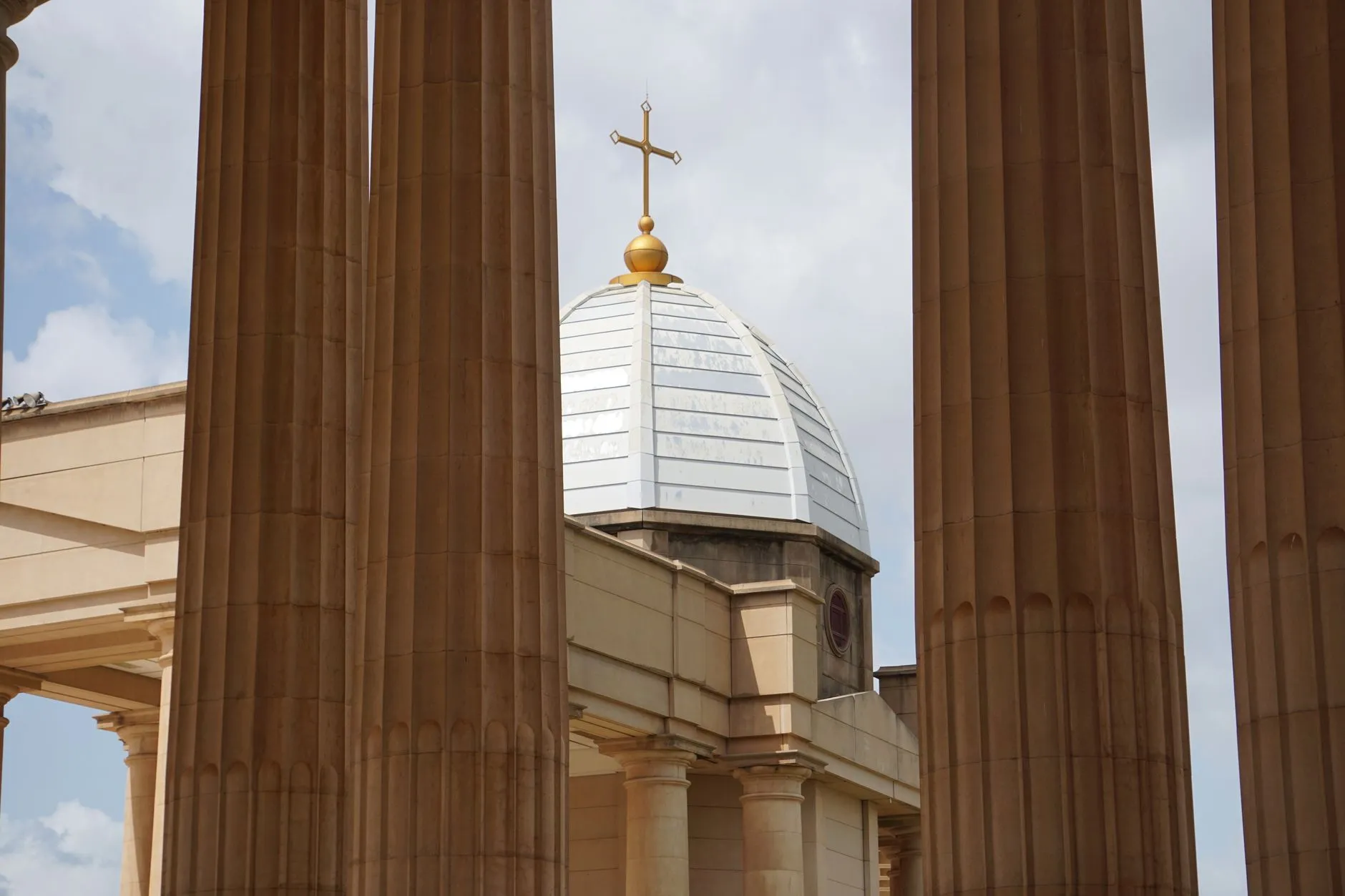
Now for the genuinely surreal one. Yamoussoukro is the country’s official capital — Houphouët-Boigny’s home village, which he promoted to capital and then attempted to turn into a grand showpiece. The showpiece is the Basilica of Our Lady of Peace (Basilique Notre-Dame-de-la-Paix), and there is nothing else like it on the planet.
It is, per Guinness World Records, the largest church in the world — bigger than St Peter’s in Rome, which it was deliberately and pointedly modelled on (and outscaled). Some 30,000 square metres of marble and Italian glass, a dome rising to 158 metres, parking for 11,000, pews for 7,000 and standing room for tens of thousands more — all consecrated by Pope John Paul II in 1990, built in a town of (then) a few hundred thousand, in a country where Catholics are a minority. The cost — somewhere around $300 million — and the morality of building it in a developing nation were controversial then and are debated now. You can have that argument in your head as you stand under the dome. What you can’t do is not be staggered.
It’s about a 2.5-hour drive from Abidjan on a good motorway, very doable as a long day trip, better as an overnight that lets you also see the sacred crocodiles at the presidential palace lake (a kitschy local tradition) and the wide, eerily empty boulevards of a capital built for a future that hasn’t quite arrived.
Is Yamoussoukro worth the day? Yes — but for the strangeness, not the beauty. You are visiting a monument to one man’s vision and ego, dropped into the savanna, and the dissonance is the whole experience. Go for that. Don’t go expecting a charming town; it isn’t one.
Assinie & the Coast: Where Abidjan Goes to Switch Off
If Grand-Bassam is the cultural beach, Assinie is the holiday beach. About 80 km southeast of Abidjan (an hour-plus, often more with weekend traffic), strung along a sandy spit between the ocean and the Aby lagoon, this is where the city’s well-to-do keep weekend villas and where the country’s resort scene actually lives. Palm-fringed sand, calmer lagoon water on the inland side, beach clubs, kitesurfing, lagoon boat trips out toward the village of Assouindé and the old French fort, and — at peak times — a proper party scene.
It’s not undiscovered and it’s not cheap by local standards — this is the priciest corner of the country — but it’s the most straightforwardly relaxing place to spend two or three nights, and a lovely soft landing or send-off bookending the busier city days. Come during the week or shoulder season and it’s serene; come on a holiday weekend and you’ve joined Abidjan’s entire social calendar.
Further along the coast, Sassandra and San-Pédro (the cocoa port) offer wilder, less-developed beaches for the more adventurous — beautiful, but more effort and less infrastructure. For most travellers, Assinie is the right amount of beach.
The West: Man, the Mountains, and the Real Interior
For travellers with more time and a taste for the road less paved, the west around the town of Man is the country’s most scenic interior: green mountains, waterfalls, the famous Mont Tonkpi ridge, the cascades and the liana “bridges” of vine strung across rivers, and a strong tradition of masked dance among the Dan and Yacouba peoples — including the genuinely jaw-dropping stilt dancers. This is the Côte d’Ivoire of forest and folklore rather than lagoon and cocktails.
I’ll level with you about logistics: the west is a longer, rougher trip, French is even more essential, and you’ll want a driver-guide who knows the area. It’s deeply rewarding for the right traveller and entirely skippable for a first, short trip. The far north — Korhogo, the Senufo country, the painted cloths and the sacred forests — is culturally extraordinary but pushes you toward the Sahel-facing zone where the security advisories bite, so I’m not sending casual visitors there in 2026. Côte d’Ivoire rewards greed for the interior, but only if you have the days and the right driver; on a one-week trip, resist it and do the southern triangle properly rather than racing inland and seeing all of it badly.
The Food: Attiéké, Garba, and the Maquis Religion
This is where Côte d’Ivoire quietly out-eats most of West Africa, and I will fight anyone who says otherwise. The national staple is attiéké — fermented grated cassava, steamed into light, slightly sour couscous-like grains — and once you get it, you crave it. The defining cheap-and-perfect street meal is garba: attiéké with chunks of fried tuna, raw onion, chilli and a squeeze of lime, eaten from a stall for a couple of euros, the unofficial fuel of working Abidjan. Order it. Repeat it.
Then there’s the maquis — both a place and a way of life. A maquis is an open-air grill-and-beer joint, and the whole social rhythm of the country runs through them. The thing to eat is poisson braisé (whole grilled fish, butterflied, lacquered, served with a fierce tomato-onion-chilli relish and a mound of attiéké or alloco), or poulet braisé, or kedjenou — chicken or guinea fowl slow-steamed in a sealed pot with peppers and aubergine until it falls apart, a dish you’ll think about for months. Alloco — fried plantain, sweet and caramelised, with chilli — is the side you’ll order without thinking.
Don’t miss sauce graine (palm-nut), sauce arachide (peanut), and the gloriously slimy okra sauces over rice or foutou (pounded plantain/cassava). On the street, snack on grilled corn, roasted plantain, and bissap (hibiscus juice) or fresh ginger juice to cool the chilli.
The single best meal you’ll eat in Côte d’Ivoire will cost you less than a coffee back home and will be a whole grilled fish at a plastic table under a string of bulbs. Skip one fancy hotel dinner and put the money toward two extra maquis nights instead. You will thank me.
A word on coffee and chocolate: this is the world’s largest cocoa producer and a serious coffee grower, yet — maddeningly — it has historically exported the beans raw and imported the finished product. That’s changing; look for local craft-chocolate brands (Instant Chocolat and others) as a genuinely worthwhile, very Ivorian souvenir.
Money & Costs: What Things Actually Cost
The currency is the West African CFA franc (XOF), and here’s the traveller’s gift: it’s pegged to the euro at a fixed, unchanging €1 = 655.957 CFA, guaranteed by the French treasury. That means no exchange-rate roulette, easy mental maths (knock off the last three digits and multiply by about 1.5 to get euros, roughly), and — if you’re coming from the eurozone — a currency that behaves predictably. Eurozone travellers have it easiest; everyone else should think in euros.
Côte d’Ivoire is not a rock-bottom-cheap destination — Abidjan in particular has real-city prices, and the upper-end hotels and Assinie resorts can sting. But the everyday stuff is excellent value. Rough 2026 guide:
- A garba or street plate: €1.50–3
- A grilled-fish maquis dinner with beer: €8–15
- A smart Cocody restaurant dinner: €25–45
- A cold local beer (Flag, Bock, Ivoire): €1.50–3
- A ride-hail across town: €3–8
- A simple guesthouse: €30–55/night; a good Abidjan hotel: €80–180; an Assinie resort: more
- A driver-guide for the day: roughly €50–90 depending on distance
Cash is king outside the smarter hotels and restaurants. Bring some euros to change (easy, given the peg), use ATMs in Abidjan to draw CFA, and carry small notes — nobody at a maquis can break a big bill. Cards work in upmarket places; assume nowhere else takes them. Mobile money (Orange Money, MTN, Wave) is ubiquitous among locals but fiddly for short-stay visitors. Tipping isn’t obligatory but rounding up and a little extra for good service is appreciated.
When to Go: Dry Season, the Rains, and the Harmattan
Côte d’Ivoire sits just north of the equator, so it’s hot and humid year-round — there’s no “cool season,” only drier and wetter. Plan around rain, not temperature.
November to February is the prime window: the long dry season, skies clear, humidity a touch more bearable, the roads good, and the cultural calendar at its fullest (the big Fêtes des Masques and Abissa festivals fall around this time). In the far interior these months also bring the harmattan, the dusty Saharan wind that hazes the air — more a curiosity than a problem for southern travellers.
March to May is the main rainy season in the south — hot, sticky, and prone to torrential afternoon downpours that can make the lagoon city a sweatbox and unpaved roads a mess. A shorter second rainy spell often comes around October. June to September is variable — the south gets a relative lull in July–August while the wettest weather shifts. If you can only pick one month, make it December or January and don’t overthink it.
The heat and humidity here are not a footnote — they’re a daily fact of the trip. Pace yourself, hydrate hard, build in siesta time, and don’t try to do the heritage town and the beach and a maquis crawl in one merciless afternoon. Slow down; the country runs on its own warm clock.
Overrated / What to Skip
A few honest deflations, because a good guide tells you where not to spend your limited days:
The far-north cultural circuit (Korhogo, Senufo country) is genuinely wonderful and genuinely off-limits for casual visitors in 2026 because of the Sahel security advisories — don’t let an old guidebook talk you into it. Save it for a future, calmer year.
Banco National Park, sold as a jungle-in-the-city marvel, is a mild diversion at best; you’ll see laundry, not leopards. Skip it unless you’re a tree person.
Big national parks as a “safari” substitute — Comoé and Taï are real conservation triumphs and serious expeditions, but if you’re picturing game drives you’ll be disappointed and exhausted. Come for the cities and coast; treat the parks as a separate, committed trip.
The “do everything in five days” itinerary. The temptation is to bolt Yamoussoukro, the west, and the beach onto a city break. Don’t. The distances and the heat will grind you down. A tight, well-paced southern triangle beats a frantic national tour every time.
And one gentle correction: people arrive expecting either a war zone or a sanitised resort coast, and it’s neither. It’s a real, complicated, working country with a glittering capital and a frank set of caveats. Meet it on those terms.
Health & Safety: The Grown-Up Picture
Let’s do this properly, because vague reassurance helps nobody.
The jabs are real and non-negotiable. A yellow-fever vaccination certificate is mandatory for entry — they can and do check it, and you want the jab at least 10 days before arrival anyway for it to be valid. Malaria is present everywhere in the country, year-round, with chloroquine resistance, so you need a doctor-prescribed antimalarial (atovaquone-proguanil, doxycycline or mefloquine are the usual options) plus serious mosquito discipline: repellent, long sleeves at dusk, a net if your room lacks screens or AC. Also make sure routine vaccines are current and consider typhoid and hepatitis A/B. See a travel clinic 4–6 weeks before you fly. This is the one area where I’d let no one improvise.
The security picture, geographically honest. The headline, as of the February 2026 advisories: the country sits at “exercise increased caution” overall, with a hard “do not travel” zone within 50 km of the Mali and Burkina Faso borders in the north — that’s a real terrorism risk from Sahel-based groups (JNIM has crossed the border to attack in the past), and it is not a place for tourism, period. The south and the coast — Abidjan, Grand-Bassam, Yamoussoukro, Assinie — are a different country, calm and routinely visited. There’s also a piracy advisory for the wider Gulf of Guinea, which matters if you’re on a boat far offshore and not at all if you’re on the beach.
Everyday crime is the realistic concern for most visitors, not terrorism. Abidjan has its share of urban opportunism — pickpocketing in crowds and markets, the occasional bag-snatch, phone theft — and incidents climb after dark in the poorer or quieter districts. Standard big-city sense covers most of it: don’t flash cash or a fancy phone, use ride-hailing at night, keep car doors locked in traffic, don’t wander empty streets alone late, leave the passport in the hotel safe and carry a copy. Don’t drive between cities at night.
The mental model that serves you well: treat the south of Côte d’Ivoire like any large, lively, sometimes-rough capital region — alert, not afraid. Treat the northern border zone as genuinely off-limits. Keep those two facts separate in your head and you’ll have a trip far safer than the country’s old reputation implies.
A practical note: police checkpoints exist on roads; have your documents to hand, be polite, and they’re a non-event. And the heat itself is a health issue — dehydration and sunstroke catch out more visitors than anything sinister.
Practicalities: Language, Connectivity, and Respect
French is the working language and you will need it. This is the single biggest practical fact about visiting Côte d’Ivoire. English is rare outside top hotels and the tourism trade; menus, signs, taxis, officials — all French. Restaurant-level French transforms the trip; none at all makes it genuinely harder. Dioula functions as a market lingua franca and a few words of greeting in it open doors, but French is your tool.
Connectivity is good in the south. Buy a local SIM (Orange, MTN, Moov) at the airport or in town — bring an unlocked phone and your passport — and data is cheap and decent in Abidjan and along the coast. Wi-Fi is standard in hotels and many cafés.
Etiquette and dress. Ivorians, especially in Abidjan, dress well — looking sharp is a point of pride, and you’ll feel underdressed in beach gear in a city restaurant. Greetings matter: a “bonjour, ça va?” before getting down to business is expected and warmly received. Ask before photographing people, markets, and anything official (avoid airports, military, government buildings — that’s a real rule, not pearl-clutching). The country is religiously mixed (Muslim and Christian roughly balanced, with strong traditional beliefs); modest dress is appreciated at mosques and in the more conservative north. Same-sex relationships are not criminalised but social attitudes are conservative; LGBTQ+ travellers should be discreet.
Learn ten phrases of French and dress like you respect the place, and Côte d’Ivoire opens up. This is a proud, sociable, style-conscious culture; meet it with a little effort and warmth and you’ll be invited into things tourists rarely see.
Frequently Asked Questions
Cheapest Flights to Côte d'Ivoire
We have tracked 332 fares to Côte d'Ivoire from 67 cities. As of June 2026, here is what a good price looked like from each — the lowest fare we recorded, and a “great-deal” benchmark to judge a quote against. These are tracked observations, not live prices: by the time you read this they will have moved, so treat them as a yardstick, not a quote.
| From | Lowest fare we tracked | Great-deal benchmark |
|---|---|---|
| Verona (VRN) | €320 | €457 |
| Turin (TRN) | €350 | €500 |
| Rome (FCO) | €357 | €510 |
| Geneva (GVA) | €366 | €523 |
| Helsinki (HEL) | €470 | €671 |
| Cologne (CGN) | €475 | €678 |
| Athens (ATH) | €476 | €680 |
| Istanbul (IST) | €534 | €763 |
| Larnaca (LCA) | €550 | €786 |
Recent deals we have posted to Côte d'Ivoire:
- Riga to Abidjan, Cote d’Ivoire from €610
- Venice to Abidjan, Cote d’Ivoire from €553
- Marseille to Abidjan, Cote d’Ivoire from €503
- Barcelona to Abidjan, Cote d’Ivoire from €524
- Valencia to Abidjan, Cote d’Ivoire from €535
- Málaga to Abidjan, Cote d’Ivoire from €558
- Venice to Abidjan, Côte d’Ivoire from €510
- Venice to Abidjan, Cote d’Ivoire from €530
- Paris to Abidjan, Cote d’Ivoire from €573
- Rome to Abidjan, Cote d’Ivoire from €502
These are fares aifly tracked to this destination, not live quotes — they have changed since and several of the deals above may have expired. Browse current flight deals →