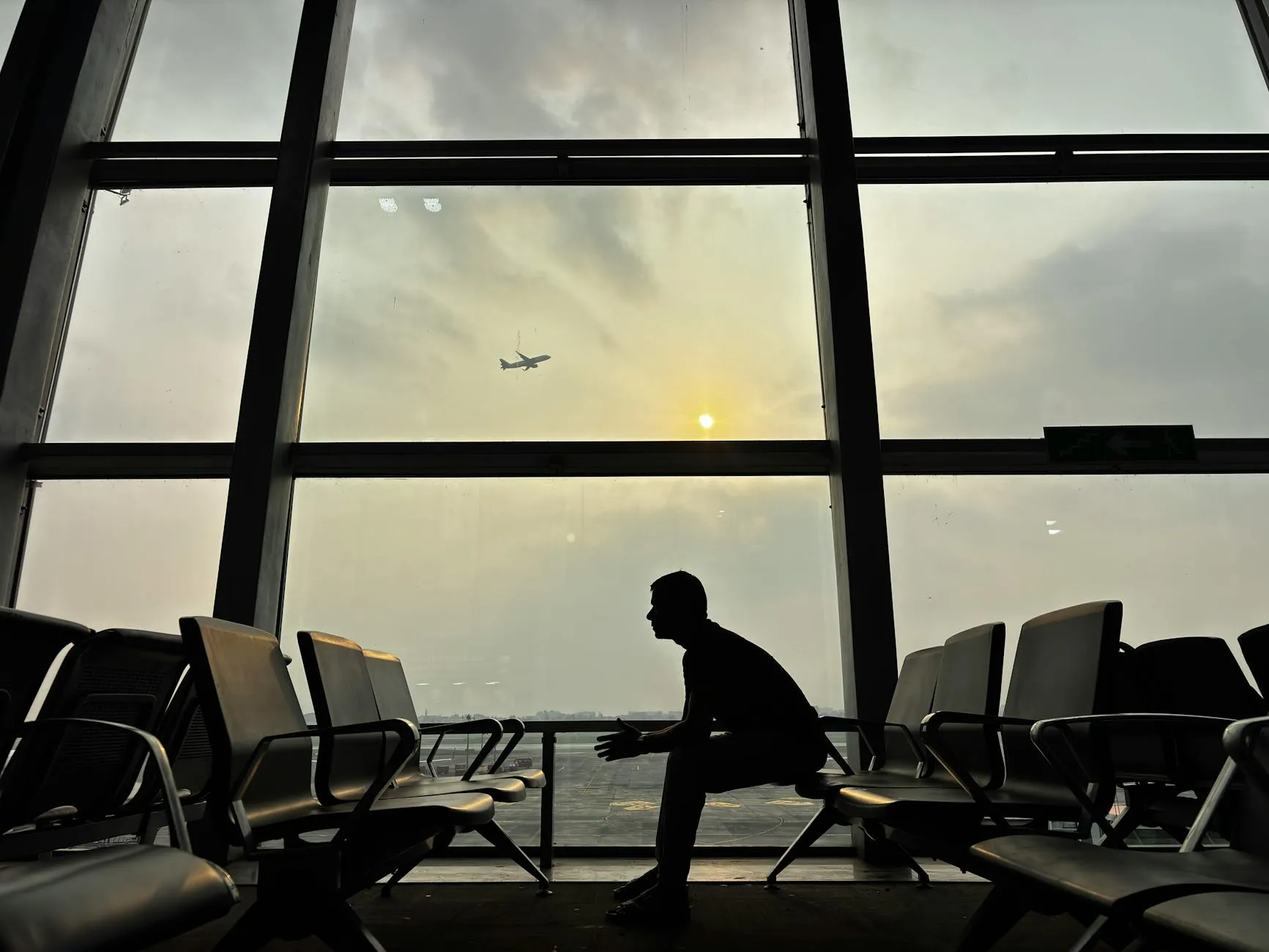
Durban King Shaka (DUR) — The Complete 2026 Airport Guide
King Shaka is one of the easiest big airports you will ever use — one clean, modern terminal, domestic and international under a single roof, and none of the terminal-shuffle chaos of an Incheon or a Heathrow. The catch isn’t inside the building; it’s that the airport sits 35 km north of Durban with no train, so the only decision that really matters is how you cover that last stretch — and whether Durban is even your final stop, because unless you’re Dubai, Doha or Istanbul bound, your long-haul almost certainly connects through Johannesburg.
Last verified: July 2026. Transport fares, lounge access and South Africa’s entry rules change often — confirm the specifics on your ticket and with official sources before you travel. Rand prices below are indicative and move with fuel and exchange rates.
Quick reference
| Detail | What you need to know |
|---|---|
| Airport | King Shaka International Airport, IATA DUR — Durban’s gateway, at La Mercy in KwaZulu-Natal. Opened 1 May 2010, replacing the old Durban International (which it inherited the DUR code from). Around 5.6 million passengers a year, South Africa’s third-busiest |
| Layout | One integrated terminal — domestic and international share the same building; departures upstairs, arrivals downstairs. No inter-terminal shuttle to worry about |
| Location | ~35 km north of central Durban on the N2; only ~11–18 km from Umhlanga and uMdloti. No rail link — road transfer only |
| Into town | Uber/Bolt from the official pickup zone ~R300–500 to central Durban (~30–40 min); metered taxi ~R450–650; shared airport shuttle from ~R100; pre-booked private transfer ~R600+ |
| Entry | UK, EU, US, Canada and Australia passport holders enter visa-free for up to 90 days — no visa, and no ETA required for you (South Africa’s new ETA targets visa-national countries, not visa-exempt Western travellers) |
| Watch out for | Unmarked/informal taxis · agreeing the fare before you ride · the Bidvest lounge being domestic-only · child-travel paperwork if a minor isn’t with both parents |
One terminal, and why that’s the good news
King Shaka opened on 1 May 2010, six weeks before the FIFA World Cup, and replaced the cramped old Durban International south of the city. What South Africa built at La Mercy is the opposite of the old airport: a single, purpose-built terminal where domestic and international flights operate side by side under one roof. Departures are on the upper level, arrivals on the lower level, and everything — check-in, security, gates, car hire, the shuttle rank — is within a short indoor walk. There is no Terminal 1 versus Terminal 2 decision to get wrong, no landside train, no 15-minute bus between buildings. For a mid-sized airport handling around 5.6 million passengers a year, it is genuinely painless.
The one structural thing to understand before you book is the route network. King Shaka is a domestic and regional powerhouse but a thin long-haul airport. Its bread and butter is the “Golden Triangle” — frequent hops to Johannesburg (OR Tambo) and Cape Town — plus regional African links. Intercontinentally, though, Durban is essentially served by the Gulf and Turkey: typically Emirates to Dubai, Qatar Airways to Doha and Turkish Airlines to Istanbul. If you’re flying in from London, New York or most of Europe, your realistic routing is a connection through Johannesburg or Cape Town, or one of those three hubs. Price both — sometimes the Gulf carrier straight into Durban beats the Joburg connection, sometimes it doesn’t.
Getting into Durban (and Umhlanga)
This is the part that matters, because the airport is 35 km out and there is no train. Everything is by road, and the sensible options split cleanly by budget and by how much you value certainty on arrival. Central Durban is roughly 30–40 minutes; the Umhlanga and uMdloti resort strip, much closer to the airport, is only about 15–20 minutes.
| Option | Approx price to central Durban | Time | Verdict |
|---|---|---|---|
| Uber / Bolt | ~R300–500 (~€16–27 / $18–30) | ~30–40 min | The default. Transparent app fare, official pickup zone, far cheaper than metered cabs |
| Metered airport taxi | ~R450–650 (~€25–35) | ~30–45 min | Marked ranks by arrivals; agree the fare or insist on the meter first |
| Shared airport shuttle | from ~R100 (~€5) | ~60–90 min | Cheapest, but shared and slower with multiple drops; roughly hourly |
| Private / hotel transfer | ~R600–1,000 (~€35–55) | ~30–40 min | Fixed price, meet-and-greet, driver waits — best for late arrivals or groups |
For Umhlanga, uMdloti or Ballito — where a lot of visitors actually stay — the numbers drop sharply: an Uber is often R150–250 and 15–20 minutes, and many hotels there run their own transfers. If you’re beach-bound rather than city-bound, you’re much closer than the “35 km from Durban” headline suggests.
There is no rail connection and no scheduled city bus into central Durban worth planning around, so don’t wait for one. Car hire is the other big option: all the major firms have desks in the terminal, and self-driving the KZN coast and the Drakensberg is straightforward if you’re comfortable driving on the left.
Entry: visa-free 90 days, and no ETA for you
Good news, and it’s simpler than the headlines suggest. If you hold a passport from the UK, the EU/Schengen area, the US, Canada, Australia or New Zealand, you enter South Africa visa-free for up to 90 days as a tourist. You get your entry stamp at the desk on arrival — no form to file in advance, no fee.
- Passport validity and blank pages. Your passport must be valid for at least 30 days beyond your intended departure from South Africa, and immigration expects blank pages for stamps — carry at least two clean pages to be safe. Travellers have been turned away at the desk for a full passport, so check before you fly.
- The ETA does not apply to you. South Africa is rolling out an Electronic Travel Authorisation, and you may see alarming headlines about it. As of 2026 the ETA is aimed at visa-national countries — the first phase covers passport holders from China, India, Indonesia and Mexico. Visa-exempt Western travellers are not required to apply; at most it will one day be an optional fast-track. Don’t pay a third-party site for an ETA you don’t need.
- No EES or ETIAS here. Those are European systems — they have nothing to do with entering South Africa. Ignore any site that tries to sell you one for this trip.
- Onward proof. As with most visa-free entries, have a return or onward ticket and an address for your first night ready in case you’re asked.
Travelling with children — South Africa is strict, but the rule was relaxed
South Africa is well known for tough child-travel documentation, so know exactly where you stand. The rule was eased for foreign families: a foreign minor travelling with both parents generally needs only a valid passport — no birth certificate required. But the strict paperwork kicks back in the moment that isn’t the case. If a minor is travelling with only one parent, with a non-parent, or unaccompanied, carry an unabridged (long-form) birth certificate showing both parents’ details, plus a parental consent affidavit (or a court order / death certificate where relevant) from the absent parent(s). Border officials do ask, and being turned around is a real risk — if any of those apply to your group, bring the documents.
Lounges: the one that catches Gulf-bound passengers
King Shaka has lounges, but there’s a trap in which one you can actually reach, and it depends entirely on whether you’re flying domestic or international — because the airside zones are separate even though the terminal is one building.
- Umphafa Premium Lounge — in the International Departures airside area. This is the one an Emirates, Qatar or Turkish passenger uses. It’s a pay-per-use lounge (bookable via Lounge Pass and similar programmes) open to international travellers, typically around 07:00–21:00. Showers, Wi-Fi, food and drinks.
- Bidvest Premier Lounge — a good lounge, but it’s on the Domestic Departures side only, on the 3rd floor after security. It takes Priority Pass and walk-in pay-in guests and runs roughly 05:00–21:00. If you’re flying internationally you cannot reach it — don’t count on your Priority Pass here for a Dubai or Doha flight.
- SLOW Lounge — FNB’s premium lounge, on the domestic side; access is essentially for eligible FNB/RMB cardholders and their guests, not a general walk-in.
Connections and timing
Because everything is under one roof, a straightforward domestic-to-domestic connection at King Shaka is quick and low-stress. The complications are the usual ones for a single-terminal international airport:
- Arriving international, connecting domestic (or vice versa): you clear immigration and re-clear security, and international arrivals feed to the lower level while domestic departures are upstairs — allow a comfortable buffer rather than the tightest legal minimum, especially with checked bags.
- Most long-haul connects elsewhere. Since Durban’s intercontinental network is thin, the bigger connection risk on your trip is usually at Johannesburg (OR Tambo) or Cape Town, not at DUR. If you’re self-connecting on separate tickets — a cheap domestic flight to catch a Gulf carrier out of Joburg, say — give yourself generous time to re-check bags and clear security again; nobody protects that connection but you.
DUR doesn’t publish a widely-quoted single minimum connection time, so treat your airline’s stated connection window as the floor and add margin — this is a leisure airport, not a slick mega-hub, and queues can be slow at peak.
Money, SIMs and practicalities
Currency: the South African rand (ZAR, “R”). Use bank ATMs in the terminal over the exchange bureaux for the better rate, and if an ATM offers to bill you in your home currency, decline and choose rand. Cards are widely accepted across Durban, but carry some cash for shuttles, tips and smaller vendors.
SIM and data: local prepaid SIMs (Vodacom, MTN, Cell C) are sold in the arrivals area — South Africa requires ID registration (RICA), which the vendor handles on the spot with your passport. An eSIM bought before you land is the least-hassle option if your phone supports one.
Power: South Africa’s rolling blackouts (load-shedding) have eased a lot but can still occur; the airport runs on backup power, so operations aren’t affected, but keep your devices charged and don’t rely on your accommodation always having power. Plugs are the local Type M / Type N three-prong — bring a South Africa-specific adapter, as a standard European two-pin won’t fit the older sockets.
Wi-Fi and basics: free airport Wi-Fi is available, and the terminal has the usual cafés, a handful of shops, car-hire desks, ATMs and pharmacies. It’s a comfortable place to wait, but it’s not a shopping-and-dining destination in its own right — eat in Durban or Umhlanga, where the food is the point.
Using DUR as your gateway to KwaZulu-Natal
King Shaka is the smart way into a part of South Africa a lot of first-timers skip. Within easy reach: Durban’s Golden Mile beachfront and uShaka Marine World; the warm-water beaches of Umhlanga and the KZN South Coast; the Drakensberg mountains a few hours inland; the Battlefields and Zulu heritage sites of the interior; and the Big Five reserves of Hluhluwe-iMfolozi and iSimangaliso up the north coast. If Cape Town and Kruger are the postcard South Africa, this coast is the warm, under-rated one — and DUR puts you right in it.
Frequently asked questions
How do I get from King Shaka Airport into Durban?+
By road only — there is no train. An Uber or Bolt from the official app pickup zone is the default at roughly R300–500 (about €16–27) and 30–40 minutes to central Durban. A metered taxi runs about R450–650, a shared airport shuttle from around R100 (slower, with multiple drops), and a pre-booked private transfer about R600–1,000 with a driver who waits. For Umhlanga and the north-coast resorts, it’s only 15–20 minutes and a good deal cheaper.
Is there a train or rail link from King Shaka Airport?+
No. King Shaka has no rail connection to Durban, and no city bus service worth planning a trip around. Every transfer is by road — Uber/Bolt, metered taxi, shared shuttle, private transfer or a hire car. Budget for a 35 km drive to central Durban (much less to Umhlanga).
Do UK, EU or US citizens need a visa or ETA for South Africa in 2026?+
No visa — passport holders from the UK, EU, US, Canada, Australia and New Zealand enter visa-free for up to 90 days as tourists, with the stamp given on arrival. You also do not need South Africa’s new ETA: that system targets visa-national countries (China, India, Indonesia and Mexico in its first phase), not visa-exempt Western travellers. Just make sure your passport is valid at least 30 days beyond departure and has blank pages.
Is King Shaka a single terminal, and how does it work?+
Yes — one integrated terminal handles both domestic and international flights. Departures are on the upper level and arrivals on the lower level, with check-in, security, gates, car hire and the transport rank all within a short indoor walk. There’s no inter-terminal shuttle and no separate international building to find.
Which airlines fly internationally (long-haul) from Durban?+
Durban’s intercontinental network is small and Gulf/Turkey-focused: typically Emirates to Dubai, Qatar Airways to Doha and Turkish Airlines to Istanbul, alongside regional African services. For most other long-haul journeys — Europe, the Americas, Asia — you’ll connect through Johannesburg (OR Tambo) or Cape Town. Compare the through-Joburg fare against the direct Gulf-carrier option, as either can win.
Which lounge can I use at King Shaka if I’m flying internationally?+
The Umphafa Premium Lounge in the International Departures area — that’s the one accessible to Emirates, Qatar and Turkish passengers, on a pay-per-use basis. The Bidvest Premier Lounge (which takes Priority Pass) and the FNB SLOW Lounge are both on the domestic side, so you can’t reach them on an international flight. Check whether your lounge programme covers Umphafa before relying on it.
What documents do I need to travel to South Africa with children?+
A foreign minor travelling with both parents generally needs only a valid passport — the old birth-certificate-for-everyone rule was relaxed. But if a child is travelling with just one parent, with a non-parent, or unaccompanied, carry an unabridged (long-form) birth certificate showing both parents plus a parental consent affidavit or court order from the absent parent(s). South African border officials do check, so bring the paperwork if any of those apply.
Is it safe to arrive at King Shaka Airport?+
Yes, with the same common-sense approach locals use. Book an Uber or Bolt through the app and meet your driver at the official pickup zone, or arrange a transfer in advance with a named company; if you take a metered taxi, agree the fare in rand before you set off. Avoid unmarked cars and anyone offering a lift inside the terminal, particularly after dark. Handled this way, arriving at DUR is straightforward.
At a glance
| Codes | DUR / FALE — King Shaka International Airport, La Mercy |
| Opened | 1 May 2010, replacing the old Durban International |
| Layout | One integrated terminal · departures upstairs, arrivals downstairs · no inter-terminal transfer |
| Distance to Durban | ~35 km north; ~11–18 km (15–20 min) to Umhlanga / uMdloti |
| Into the city | Uber/Bolt ~R300–500 · metered taxi ~R450–650 · shuttle from ~R100 · no rail |
| Long-haul | Typically Emirates (Dubai), Qatar (Doha), Turkish (Istanbul); most else connects via JNB/CPT |
| Entry | UK/EU/US/CA/AU visa-free 90 days; no ETA required; passport valid 30+ days beyond departure |
| Intl lounge | Umphafa Premium Lounge (international side); Bidvest/SLOW are domestic-only |
Before you fly
- 📊 Check what a good fare to Durban looks like — our price-check tool shows the typical deal range, including whether a Gulf-carrier direct beats a Johannesburg connection.
- 🧳 Baggage checker — confirm your airline’s carry-on and checked allowance before you pack.
- 🌍 South Africa travel guide — best time to go, regions, safety and how to get around.
🌍 Planning the trip? Read our South Africa travel guide — best time to go, where to stay, and how to get around.
More deals you might like
 Niš Constantine the Great Airport (INI) Airport Guide 2026 — Free Buses, Cheap Taxis, Real Dinars
 Norwich Airport (NWI) Airport Guide 2026 — The Airport Where Helicopters Outnumber Planes
 Stornoway Airport (SYY) Airport Guide 2026 — Four Miles, Four International Passengers
 Kerry Airport (KIR) Airport Guide 2026 — One Runway, Two Peninsulas