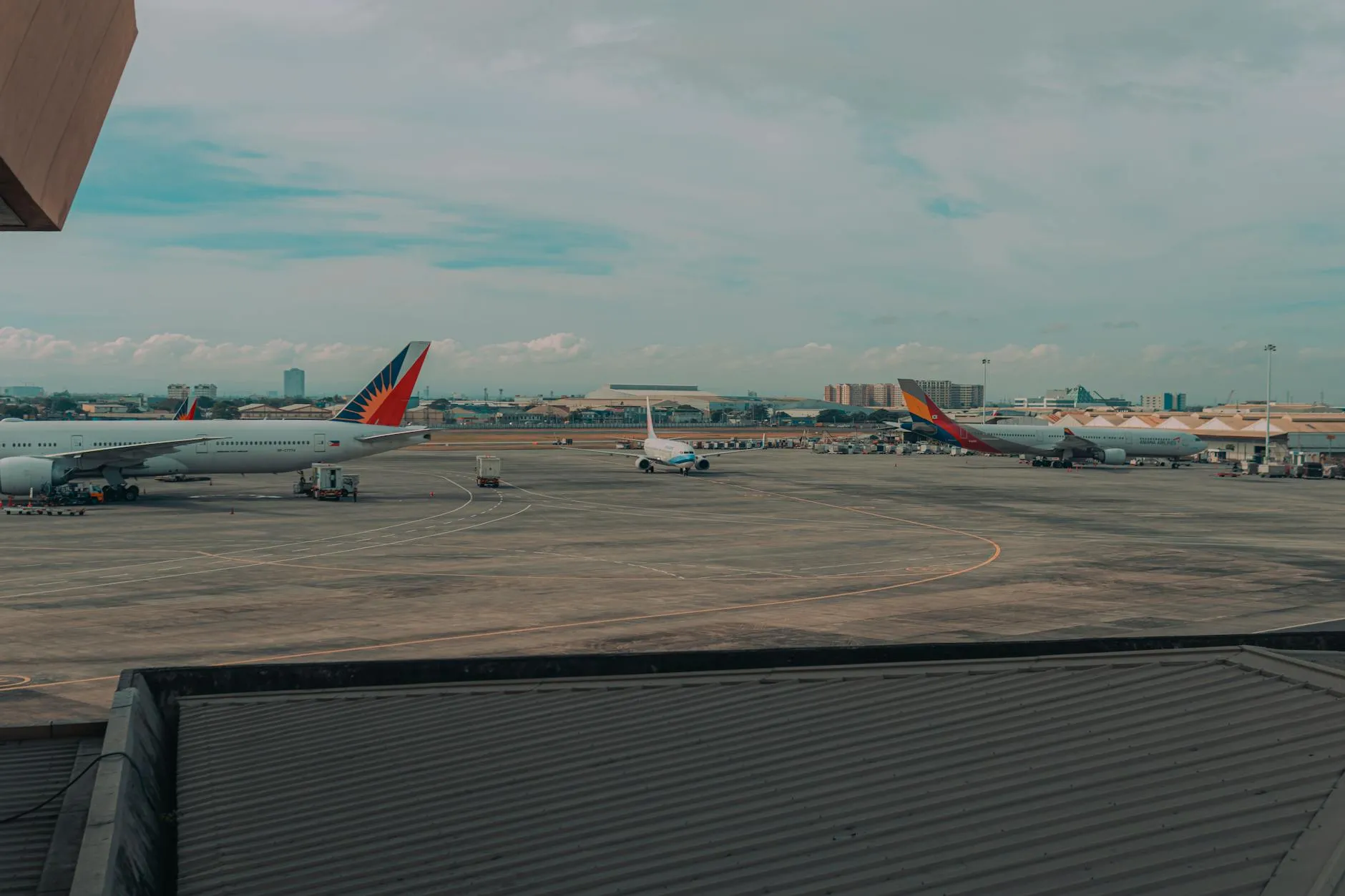
Manila Ninoy Aquino (MNL) — The Complete 2026 Airport Guide
Here is the one thing to burn into your memory before you fly to Manila: NAIA’s terminals are physically separate buildings with no walkway, no train and no airside link between them. If your ticket puts your two flights in different terminals, you must leave, sit in Manila traffic on a shuttle, and check in and clear security all over again. Get the terminal right and NAIA is a perfectly manageable airport in the middle of a rebuild. Get it wrong and you can miss a flight standing 3 km from your gate.
Last verified: July 2026. NAIA is mid-rehabilitation and its airline-to-terminal assignments are actively changing through 2026 — always confirm the terminal printed on your boarding pass and the current eTravel rules before you travel.
Quick reference
| Detail | What you need to know |
|---|---|
| Airport | Ninoy Aquino International Airport, IATA MNL — the Philippines’ main gateway; a record ~52 million passengers in 2025, and now under a private operator, New NAIA Infra Corp (NNIC) |
| Location | ~7 km south of Manila proper, right against Makati and Pasay — close on the map, but Metro Manila traffic can turn that into an hour or more |
| Terminals | T1 — Philippine Airlines international and most foreign carriers · T2 — PAL domestic · T3 — Cebu Pacific and many foreign airlines. They are separate buildings with no airside connection. (The old T4 was demolished; a new one is being rebuilt.) |
| Into the city | No airport train. Grab ~₱200–600 · metered taxi ~₱250–600 · fixed-rate coupon taxi ~₱500–700 · UBE Express airport bus from ₱150 |
| Entry | 30-day visa-free for US/UK/EU/Australia/Canada and 60+ nations. The eTravel QR is mandatory — register free within 72h at etravel.gov.ph. Onward/return ticket required |
| Watch out for | Wrong-terminal connections · airport taxi touts · Grab surge and the pickup queue · leaving too little time for a cross-terminal transfer |
The trap that catches everyone: the terminals are not connected
Most big hubs let you connect airside — you land, you follow the signs, you never touch immigration or a shuttle. Manila does not work like that. NAIA’s terminals are separate buildings, and there is no walkway, train or airside corridor between any of them. To go from one to another you exit into the arrivals hall, ride a landside shuttle on public roads, then queue for check-in and security again from scratch.
That matters because a lot of Manila itineraries split across terminals — a foreign long-haul into Terminal 1 or Terminal 3, then a domestic hop on Philippine Airlines out of Terminal 2, or a Cebu Pacific onward from Terminal 3. If your two flights are on one ticket the airline plans for this, but you still do the legwork. If you booked them separately (a “self-transfer”), you own the whole risk: a missed connection here is your problem, not the airline’s.
Which terminal? (and why it keeps changing in 2026)
NAIA is in the middle of a shake-up. In September 2024 the airport was handed to a private operator, New NAIA Infra Corp — a San Miguel-led consortium that includes the group behind Seoul’s Incheon airport — under a large public-private rehabilitation deal. Part of that plan is reshuffling airlines between terminals to spread the load, and several of those moves landed in March and April 2026. So an assignment you remember from a previous trip may simply be wrong now.
The safe framework as of mid-2026:
- Terminal 1 — Philippine Airlines’ international flights and most foreign carriers. AirAsia’s international flights moved into T1 on 29 March 2026.
- Terminal 2 — Philippine Airlines’ domestic flights (the “Centennial” terminal).
- Terminal 3 — Cebu Pacific (domestic and international), AirAsia domestic, and a long list of foreign airlines. On 29 March 2026 Air China, China Eastern, Vietnam Airlines, Royal Brunei and Shenzhen Airlines moved here from T1, and Japan Airlines followed on 1 April 2026.
- Terminal 4 — the old domestic terminal was demolished; a smaller replacement is being built and is not reliably in passenger use yet, so in practice you fly T1, T2 or T3 today.
Because the picture is genuinely fluid, treat any airline-to-terminal list — including this one — as a starting point and confirm on your boarding pass or the airline’s app before you travel. That is not a disclaimer; it is the single habit that prevents the wrong-terminal disaster.
The bigger picture: San Miguel is also building an entirely new Manila-area airport at Bulacan, north of the city, meant eventually to relieve NAIA. It is years away — for every 2026 trip, NAIA is your airport.
Getting into Makati, BGC and Manila
NAIA is barely 7 km from the city, so distance is never the problem — traffic is. There is no airport rail link (a subway connection is part of the long-term plan, not something you can use now), so every option below shares the same roads. In the peaks, roughly 7–10am and 5–8pm, a 20-minute run can become 90. Plan around the clock, not the map.
| Option | Approx price to Makati/BGC | Notes |
|---|---|---|
| Grab (ride-hail) | ₱200–600 (~$3.50–11 / €3–10) | The default for most visitors — price shown up front, tracked route. Expect surge in the peaks/rain and a wait at the designated pickup bay |
| Metered taxi (yellow airport / white regular) | ₱250–600 (~$4–11 / €4–10) | Use the official queue and take the dispatch slip. Insist on the meter; the white regular cabs are usually cheapest, the yellow airport cabs a bit dearer |
| Coupon taxi (fixed rate) | ₱500–700 (~$9–12 / €8–11) | Fixed price per destination from the marked COUPON TAXI desk — pricier, but no meter games and no haggling |
| UBE Express airport bus | from ₱150 (~$2.60 / €2.40) | Point-to-point coaches to hubs like PITX, Robinsons Place Manila and Araneta City (Cubao). Cheapest, but drops you at a transport hub, not your hotel; boards mainly from T3 |
Grab and taxis — the honest version
For most visitors Grab is the least stressful choice: the fare is agreed in the app before you get in, so there is nothing to argue about. The catches are real, though — during rush hour or rain the surge multiplier bites, and there can be a genuine queue at the airport’s ride-hail pickup point. If you take a taxi instead, go to the official dispatch queue rather than anyone who approaches you in the hall, make sure the meter is running (or that you are using a fixed-rate coupon cab), and keep the dispatch slip — it carries the complaint hotline. Ignore any driver offering a “special price” off-meter.
Buses
The UBE Express P2P coaches are the budget route into town — from about ₱150 to Metro Manila points such as PITX, Robinsons Place Manila and Araneta City in Cubao, with cash or a Beep card accepted and tickets buyable in advance. They run to transport hubs rather than to your door, so you will likely finish the trip with a short Grab. Note that some previous city-centre stops (for example the One Ayala route) have been temporarily suspended, so check the current route list before relying on a specific drop-off.
Entry: visa-free stays and the mandatory eTravel QR
Two things govern your arrival in Manila, and only one of them is a visa.
- Visa-free for 30 days. Passport holders from more than 60 countries — including the United States, the United Kingdom, all EU states, Australia and Canada — may enter the Philippines visa-free for up to 30 days (extendable at the Bureau of Immigration once you are in the country). No visa to apply for in advance.
- The eTravel QR is compulsory — and it is not a visa. Every arriving traveller must register on the official etravel.gov.ph system and carry the resulting QR code. It is free, takes a few minutes, generates the QR instantly, and can be filed from 72 hours before your flight. Being visa-free does not exempt you; each traveller, including children, needs their own registration.
- Green code vs red code. A complete, valid submission returns a green QR — you sail through the express/green customs lane without a scan. An incomplete or health-flagged one returns a red QR, which routes you to inspection and slows you down. Fill it in carefully and honestly to stay green.
- Onward or return ticket required. The eTravel form asks for your onward/return flight details, and airlines and immigration can and do ask to see proof of a ticket out of the Philippines within your permitted stay. Do not arrive on a one-way ticket without a plan.
Connections and minimum times
Because the terminals are separate, connection time at NAIA depends entirely on whether you change buildings.
- Same terminal, one ticket: around 90 minutes can work if you land on time and are already checked through — but that is a genuine minimum, not comfortable.
- Different terminals, one ticket: give yourself at least 3 hours. A domestic-to-international change (or the reverse) on Philippine Airlines is typically quoted around 3–4 hours precisely because of the terminal hop.
- Self-transfer on separate tickets across terminals: allow 4–5 hours or more. You will re-collect bags, exit, shuttle, re-check-in and re-clear security with no airline safety net.
To cross terminals, connecting passengers can use the operator’s free inter-terminal shuttle. Be clear-eyed about it: it runs landside on public roads (so it is subject to the same traffic as everything else), it is intended for passengers with an onward boarding pass, and reported frequency ranges from roughly every 15 minutes to closer to hourly depending on the source and time of day. If you are not a connecting passenger, or you would rather not wait, the paid UBE Express “NAIA Loop” (about ₱50, roughly 4am–8pm) circles the terminals, or just take a short Grab.
Lounges
Lounge coverage is thinner and more terminal-specific than at a mega-hub, and 2026 has reshuffled it, so check the current terminal before you rely on a card:
- Terminal 1 — the PAGSS Premium Lounge (walk-in and Priority Pass) and the Marhaba Lounge in international departures near Gate 9 (Priority Pass, long hours) are the reliable pay-in or card options.
- Terminal 3 — a large new shared premium lounge, the First Meridian Lounge (~2,600 m²), opened in 2026; the older Marhaba lounge at T3 closed in May 2026, so ignore stale listings pointing to it.
- Airline lounges — Philippine Airlines’ own Mabuhay lounges (T1/T2) and other carriers’ lounges follow their premium-cabin and alliance rules and are generally not walk-in.
If lounge access matters to you, confirm the lounge, its terminal and your access route (card vs walk-in vs boarding pass) on the day, because the assignments are still moving.
Food, money, Wi-Fi and the rebuild
The rehab is visible. Under NNIC the airport has been getting the basics fixed — working escalators and toilets, steadier power and air-conditioning, better immigration queuing, faster Wi-Fi and a fleet of new shuttle buses. It is a functional airport being made less painful rather than a showpiece; set expectations accordingly and it will beat its old reputation.
Food: the sit-down and grab-and-go choice is best in Terminal 3, which has the widest spread of restaurants and cafés; T1 and T2 are more limited. For a last real Filipino meal, look for local chains doing silog plates, lechon or Jollibee rather than the generic international outlets. Prices are reasonable by hub standards — a proper meal is usually in the low hundreds of pesos.
Money and SIM: use bank ATMs over the exchange counters for a better rate, and if an ATM offers to charge you in your home currency, decline and choose pesos. Local prepaid SIMs (Globe, Smart) and tourist eSIMs are sold in arrivals; buying an eSIM before you land is the smoothest way to have data the moment you need Grab and your eTravel QR.
Practicalities: free airport Wi-Fi is available (improved but not always fast); keep some small-denomination pesos for tips and the coupon/taxi dispatch. Turboprop flights have been progressively moved off NAIA through 2026, so if you are connecting to a small provincial airport, double-check whether your onward flight still departs from Manila or has shifted.
Frequently asked questions
Are NAIA’s terminals connected — can I transfer without leaving?+
No. NAIA’s terminals are separate buildings with no walkway, train or airside connection between them. To change terminals you exit into arrivals, take a landside shuttle or taxi on public roads, then check in and clear security again. Always check whether your two flights are in the same terminal, and if not, allow at least 3 hours (4–5 for a self-transfer on separate tickets).
Which terminal does my airline use at Manila (MNL)?+
As a rule of thumb in 2026: Terminal 1 for Philippine Airlines international and most foreign carriers (AirAsia international moved here in March 2026); Terminal 2 for PAL domestic; Terminal 3 for Cebu Pacific and many foreign airlines, with Air China, China Eastern, Vietnam Airlines, Royal Brunei, Shenzhen and Japan Airlines moving into T3 in March–April 2026. Assignments are actively changing during the rehabilitation, so confirm the terminal on your boarding pass or the airline app before you go.
Do I need a visa or the eTravel QR to enter the Philippines?+
Most Western passport holders (US, UK, EU, Australia, Canada and 60+ others) get 30 days visa-free, so no advance visa. But everyone must register for the free eTravel QR at etravel.gov.ph within 72 hours before arrival — it is mandatory and separate from any visa. You also need proof of an onward or return ticket. A complete submission returns a green QR for the fast lane; an incomplete one returns a red QR and inspection.
How do I get from NAIA to Makati or BGC, and how much?+
There is no airport train. Grab is the easiest for most visitors at roughly ₱200–600 (with surge in peaks/rain and a pickup queue); a metered taxi from the official queue is about ₱250–600; a fixed-rate coupon taxi runs ₱500–700; and UBE Express airport buses start around ₱150 but drop you at a hub, not your hotel. The airport is only ~7 km out, but Metro Manila traffic — worst around 7–10am and 5–8pm — is the real variable.
Is there an airport train or metro to central Manila?+
Not yet. NAIA has no direct rail link; a subway connection is part of the airport’s long-term rehabilitation plan but is not available now. For 2026, your realistic options are Grab, a metered or coupon taxi, or the UBE Express airport bus — all of which use the same roads and are therefore traffic-dependent.
How long should I leave for a connection at Manila?+
If both flights are in the same terminal and on one ticket, about 90 minutes is the bare minimum. If you change terminals, allow at least 3 hours (a PAL domestic-to-international transfer is usually quoted around 3–4 hours). For a self-transfer on separate tickets across terminals, give yourself 4–5 hours or more, because you re-collect bags, shuttle between buildings landside, and re-clear check-in and security.
Which lounges can I use at NAIA without a business-class ticket?+
In Terminal 1, the PAGSS Premium Lounge accepts walk-ins and Priority Pass, and the Marhaba Lounge near Gate 9 takes Priority Pass. In Terminal 3, the new First Meridian Lounge is the main shared premium option (the T3 Marhaba closed in May 2026). Airline lounges such as PAL’s Mabuhay lounges follow premium-cabin and alliance rules. Confirm the lounge’s current terminal on the day, as assignments are still moving.
Is NAIA safe and how bad is it really in 2026?+
It is much improved. Since a private operator (NNIC) took over in late 2024, the basics — power, air-conditioning, escalators, toilets, Wi-Fi, immigration queues and shuttle buses — have been upgraded, and 2025 was a record year for passengers. It is a busy, functional airport rather than a luxury one. The main hazards are practical: wrong-terminal connections, taxi touts in the arrivals hall (use the official queues), and Grab surge pricing at peak times.
At a glance
| Codes | MNL / RPLL — Ninoy Aquino International Airport, Manila |
| Terminals | T1 (PAL international + most foreign) · T2 (PAL domestic) · T3 (Cebu Pacific + many foreign) — no airside connection between them |
| Distance to city | ~7 km south of Manila proper; adjacent to Makati and Pasay — but traffic-bound |
| Into the city | No airport rail · Grab ~₱200–600 · metered taxi ~₱250–600 · coupon taxi ~₱500–700 · UBE Express bus from ₱150 |
| Entry | 30-day visa-free (US/UK/EU/AU/CA + 60 more) · mandatory free eTravel QR at etravel.gov.ph · onward ticket required |
| Cross-terminal transfer | Exit + landside shuttle + re-check-in; allow 3h+ (4–5h self-transfer) |
| Operator | New NAIA Infra Corp (San Miguel-led, with Incheon Airport Corp) — mid-rehabilitation |
| Wi-Fi | Free airport-wide (improved under the rehab) |
Before you fly
- 📊 Check what a good fare to Manila looks like — our price-check tool shows the typical deal range so you know a bargain when you see one.
- 🧳 Baggage checker — confirm your airline’s carry-on and checked allowance before you pack.
- 🏙️ Manila city guide — where to stay, what to eat and what’s actually worth your time.
- 🌏 Philippines travel guide — best time to go, the islands worth your flights, and how to get around.
🌏 Planning the trip? Read our Philippines travel guide — best time to go, which islands are worth the flights, and how to get around.