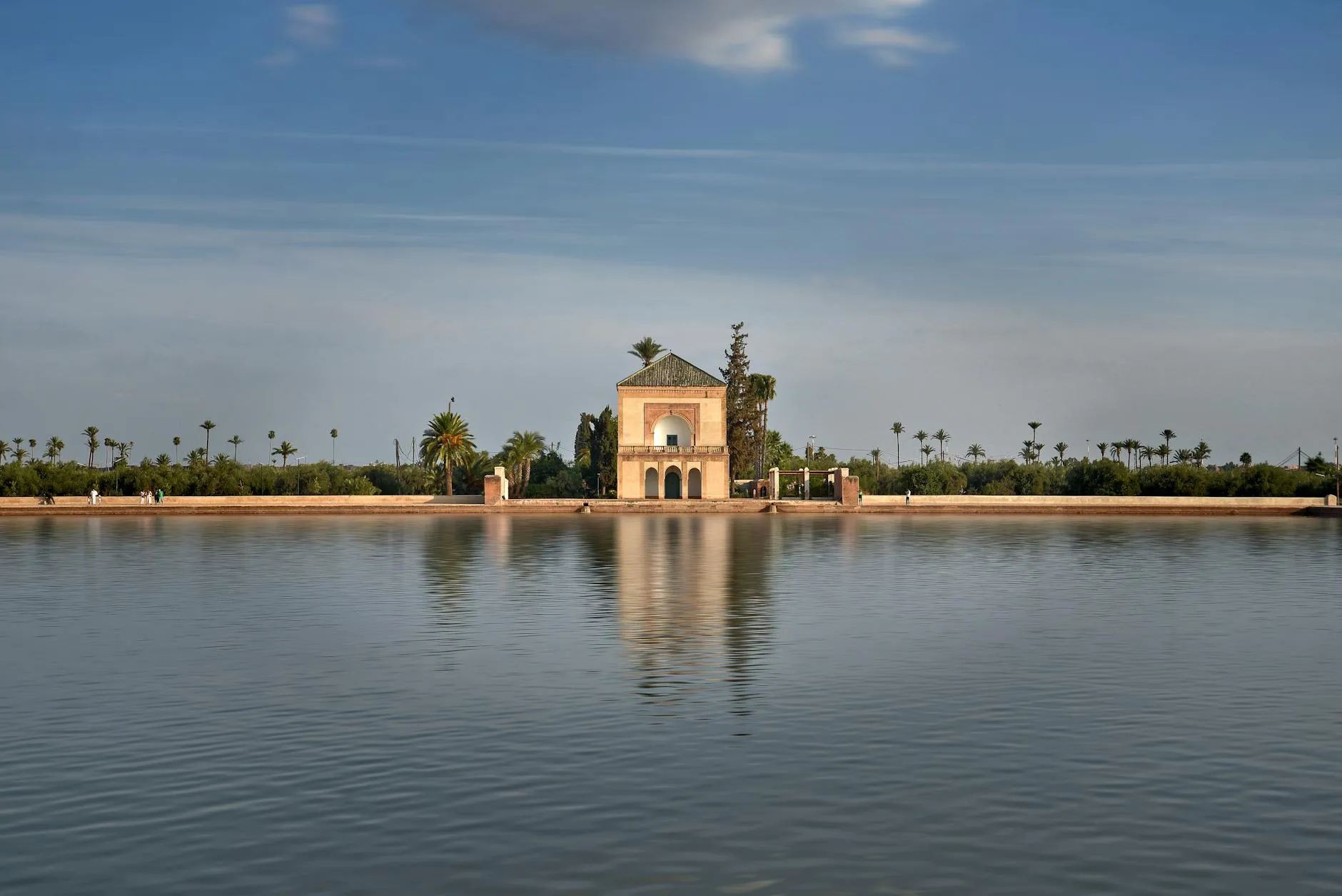
Marrakesh Menara (RAK) — The Complete 2026 Airport Guide
Menara is small, easy and only 6 km from the medina — so unlike a big hub, the terminal you land in barely matters here. What actually bites travellers is the walk out of the building: a notoriously slow passport queue, a taxi rank that will happily overcharge you, and a currency you cannot buy before you arrive. Get those three right and you are in a riad drinking mint tea within the hour.
Last verified: July 2026. Taxi fares, terminal works and Morocco’s entry rules change often — agree prices before you travel, and confirm the specifics on your ticket and at official signage.
Quick reference
| Detail | What you need to know |
|---|---|
| Airport | Marrakesh Menara Airport, IATA RAK / ICAO GMMX — Marrakech’s main gateway. Around 9.3 million passengers in 2024, up roughly a third on 2023 as low-cost Europe piled in |
| Location | ~6 km southwest of Jemaa el-Fna and the medina — a genuinely short hop, 15–20 minutes by road |
| Terminals | T1 (the big modern hall, most international flights) and T2 (older, domestic and some low-cost) sit in one connected building — you rarely need to know which is which. A major expansion is underway for the 2030 World Cup |
| Into the city | Bus 19 (Alsa) 30 MAD (~€3) to Jemaa el-Fna · taxi roughly 100–150 MAD (~€9–14) by day, more at night — agree the fare first · no airport train |
| Entry | Most EU, UK, US, Canadian and Australian passport holders get 90 days visa-free — a passport stamp, no visa. Official advice lists no arrival form (see the scam warning below) |
| Watch out for | The passport queue (slow, occasionally very slow in summer) · taxi overcharging · the closed dirham you can’t buy in advance · paid third-party “arrival card” sites |
The one that catches everyone: the taxi rank
Marrakech is a wonderful city and a hard-nosed one, and the airport taxi rank is where the two meet you first. There is no meter running on an airport run — the beige petit taxis are metered by law inside the city, but for airport pickups drivers quote a fixed price, and that price is whatever they think you’ll pay. Tired travellers off a budget flight routinely hand over two or three times the going rate because nobody told them what it should be.
Here is the honest picture. There is no single published official tariff you can point to — quoted “fixed” fares float between sources, and drivers open high. A fair price to the medina or Gueliz is roughly 100–150 MAD (~€9–14 / $10–16) by day, and 150–200 MAD or so after dark (an evening surcharge is normal and legitimate). Drivers will often open at 150–250. Your job is simple: agree the number before you touch the door handle, in dirhams, and don’t get in until you have.
One structural catch worth knowing: many riads in the medina are down lanes no car can enter. Your taxi drops you at the nearest gate (a bab) and a porter with a cart wheels your bags the last few minutes on foot — a small tip (10–20 MAD) is normal and worth it. If you’d rather skip the whole negotiation after a long day, a pre-booked private transfer to your riad door-area is the low-stress option; you pay a fixed price online and someone is waiting with your name.
Getting into Marrakech
It’s only 6 km, so nothing here is a saga — it’s about price and hassle, not distance. Here’s the honest comparison:
| Option | Price | Time to the medina | Verdict |
|---|---|---|---|
| Bus 19 (Alsa) | 30 MAD (~€3) — pay onboard, cash or card | ~30–40 min | Cheapest by far; runs ~every 30 min, roughly 06:00–21:00; stops at Jemaa el-Fna, Gueliz and the train station |
| Taxi (petit) | ~100–150 MAD day / 150–200+ night (~€9–19), negotiated | ~15–20 min | Fast and door-to-gate; only good value once you’ve agreed the fare |
| Private transfer | Fixed online, typically €15–25 / car | ~15–20 min | Zero haggling, driver waiting with your name — best after a late or long flight |
| Grand taxi | More than a petit taxi, negotiated | ~15–20 min | For groups or lots of luggage; still agree the price first |
Bus 19 — the traveller’s quiet win
The Alsa Bus 19 is the airport shuttle, and at 30 MAD it is one of the best-value airport buses anywhere. Catch it just outside the terminal; it runs roughly every half hour from about 06:00 to 21:00 (evening hours vary seasonally, so check the posted board) and calls at Jemaa el-Fna, the Gueliz new town and the Marrakech train station. You can pay the driver in cash or with a local card. If your riad is anywhere near the main square, it drops you within a short walk — with the same last-few-minutes-on-foot reality as a taxi.
Trains, Uber and the rest
There is no rail link at the airport. Marrakech does have a proper ONCF railway station (in Gueliz, with fast trains to Casablanca and the north), but you reach it by bus or taxi first — the airport itself has no platform. As part of the 2030 build-out, a high-speed line and new stations are planned for the region, but nothing serves the current airport today.
Ride-hailing: Uber pulled out of Morocco years ago, and although there are reports it has returned in some form, its legal status has long been contested and it is not something to rely on for an airport pickup — treat the bus, a negotiated taxi or a pre-booked transfer as your real options and don’t plan around an app that may not show up.
Entry, visas and the passport queue
The paperwork side of Morocco is easy for most Western travellers. The queue can be the opposite.
- Visa-free for 90 days. Citizens of the UK, Ireland, the US, Canada, Australia, New Zealand and EU/Schengen countries can visit Morocco without a visa for up to 90 days — you simply get a passport stamp at the desk. Morocco is not in the Schengen Area, so none of the EU’s EES or ETIAS systems apply here; this is a straight stamp-in.
- Passport validity differs by country — check yours. UK official advice asks for a passport valid at least three months beyond arrival; the US State Department asks for six months and a blank page. When in doubt, use the six-month rule and you’re covered.
- No arrival form, per official advice — and beware the paid “arrival card” sites. Neither the UK government nor the US State Department lists any mandatory arrival card or entry form to complete before you fly; you fill nothing in advance and get a stamp on arrival. Several third-party websites sell a paid “Morocco arrival card” or “AEVM” — official channels do not charge you to enter a country, so don’t pay these middlemen. If anything about your specific route worries you, ask your airline, not a search-ad website.
- The queue is the real hazard. RAK’s immigration hall is undersized for the traffic it now handles, and the wait is its worst-reviewed feature. On a good day you’re through in 10–30 minutes; with a bank of flights landing together — peak summer, and December — 30–60 minutes is common and multi-hour horror stories do happen. Land, and move briskly to the hall rather than dawdling at the loos; being near the front of a wave is worth a lot.
Money: the closed dirham you can’t buy in advance
This one genuinely surprises first-timers. The Moroccan dirham (MAD) is a “closed” currency: it is meant to circulate only inside Morocco, and it is illegal to import or export more than 2,000 MAD. In practice that means high-street bureaux back home either won’t sell you dirhams at all or offer a terrible rate — you effectively cannot stock up before you fly.
So plan to get your cash on arrival. There are ATMs and exchange desks in the arrivals hall; use a bank ATM over a bureau, and if a machine offers to bill you in your home currency, decline it and choose dirhams (the “conversion” is a poor rate). Morocco still runs heavily on cash — taxis, the medina souks, small cafés, the porter with your bags — so pull out enough for the first day or two. Card acceptance is fine in hotels, bigger restaurants and supermarkets, patchy everywhere else.
Inside the airport: terminals, food and lounges
Menara is a genuinely striking building — the white lattice screens and geometric arches are one of the nicer airport arrivals in the Mediterranean. Practically, it’s compact and connected: Terminal 1 is the big modern hall handling most international flights, Terminal 2 is the older section used for domestic services and some low-cost carriers, and they join under one roof, so the “which terminal” anxiety that dominates a place like Incheon or Heathrow mostly evaporates here. Arrivals are downstairs, departures upstairs, and you can walk it end to end.
The airport is in the middle of a major 2030 World Cup expansion — the terminal is being enlarged toward roughly 16 million passengers a year, and Morocco has separately announced an entirely new Marrakech airport at Sidi Zouine to take the long-haul load later this decade. For 2026 that mostly means you may meet construction hoardings and shifting layouts; give yourself a little extra buffer and follow the live signage rather than an old map.
Food, Wi-Fi and SIMs
Airside dining is functional rather than exciting — cafés, a few fast-food and grab-and-go counters, and prices marked up as airports everywhere do. Eat your first proper tagine in the medina, not here. There is free airport Wi-Fi (log in via the portal). For a local SIM or eSIM, the big Moroccan networks (Maroc Telecom, Orange, inwi) sell tourist data plans; a kiosk in arrivals is convenient, though an eSIM bought before you land is the least-hassle route and sidesteps the queue.
Lounges
Lounge provision at RAK is thin and, in 2026, in flux. The long-standing pay-in or Priority Pass option has been the Pearl Lounge in Terminal 1 (airside, after security) — but there have been reports of it being closed or caught up in the terminal construction, so treat it as “verify on the day” rather than a guaranteed amenity, and don’t build a long layover around it. If you have Priority Pass or a lounge-access card, check the current status in the app before you rely on it; otherwise plan to wait at the gate.
Connections and layovers
RAK is overwhelmingly a point-to-point leisure airport — most people fly in from Europe, spend a few days, and fly home. It is not a transit hub, so genuine airport-to-airport connections are uncommon and there’s no published minimum-connection culture to speak of. If you are connecting (typically onto a domestic Royal Air Maroc flight, or self-connecting on separate tickets), remember that the immigration queue and a single security screening are your real time costs, not terminal distance — everything is in one building. Leave a comfortable margin, because the passport hall, not the walk, is what runs long.
For most readers the more useful “layover” is the deliberate one: with the medina just 6 km away and a 30 MAD bus at the door, even a half-day gap is enough to see Jemaa el-Fna, the Koutoubia and a souk or two — just budget the immigration queue on the way in and out.
Frequently asked questions
How much should a taxi from Marrakech airport to the medina cost?+
There’s no single published official fare, so treat these as fair going rates: roughly 100–150 MAD (about €9–14 / $10–16) by day and 150–200 MAD after dark to the medina or Gueliz. Drivers often open higher, at 150–250 MAD. Agree the price in dirhams before you get in, carry small notes for change, and be ready to walk to the next car — there are always more. The cheapest option of all is Bus 19 at 30 MAD.
Is there a bus from Marrakech airport to the city centre?+
Yes — the Alsa Bus 19 airport shuttle costs 30 MAD (about €3), runs roughly every 30 minutes from about 06:00 to 21:00, and stops at Jemaa el-Fna, the Gueliz new town and the train station. You catch it just outside the terminal and pay onboard by cash or local card. It’s the best-value way into the city; the walk from the stop to a medina riad is the same last-few-minutes-on-foot as with any taxi.
Do I need a visa to visit Morocco in 2026?+
Most likely not. Citizens of the UK, Ireland, the US, Canada, Australia, New Zealand and EU/Schengen countries can enter Morocco visa-free for up to 90 days — you just get a passport stamp on arrival. Morocco is not in the Schengen Area, so EES and ETIAS don’t apply. Check your passport validity: UK advice asks for at least three months beyond arrival, the US for six months and a blank page.
Is there a Morocco arrival form or digital “arrival card” I have to fill in?+
Official UK and US government advice lists no mandatory arrival form for tourists — you complete nothing in advance and receive a stamp on arrival. Be wary of third-party websites selling a paid “Morocco arrival card” or “AEVM”: official channels don’t charge you to enter, so don’t pay these middlemen. If your specific route raises a question, confirm with your airline rather than a search-ad site.
Why can’t I buy Moroccan dirhams before my trip?+
The dirham (MAD) is a “closed” currency — it’s meant to stay inside Morocco, and it’s illegal to carry more than 2,000 MAD in or out. Most bureaux abroad won’t sell it, or offer a poor rate. Get your cash on arrival from a bank ATM in the arrivals hall (decline any offer to bill you in your home currency), and run your dirhams down before you fly home, since they’re near-useless elsewhere.
How long does immigration take at Marrakech airport?+
It varies a lot. On a quiet arrival you’ll clear passport control in 10–30 minutes; when several flights land together in peak season (July, August, December) 30–60 minutes is common and occasional multi-hour waits are reported — the hall is undersized for the traffic. Move promptly to the immigration hall to get ahead of the wave, and consider the airport’s paid fast-track service if you’re on a tight schedule.
Which terminal will I use at Marrakech Menara?+
It rarely matters. Terminal 1 is the main modern hall for most international flights and Terminal 2 handles domestic and some low-cost services, but they’re joined in one connected building, with arrivals downstairs and departures upstairs. The airport is being expanded for the 2030 World Cup, so expect construction hoardings and follow the live signage rather than an old map.
Is there a train from Marrakech airport?+
No — the airport has no rail link. Marrakech’s ONCF railway station (fast trains to Casablanca and the north) is in Gueliz, which you reach first by Bus 19 or taxi. High-speed rail and new stations are planned for the region under Morocco’s 2030 programme, but nothing serves the current airport today.
At a glance
| Codes | RAK / GMMX — Marrakesh Menara Airport |
| Terminals | T1 (main international) · T2 (domestic + some low-cost) · one connected building; major 2030 expansion underway |
| Distance to medina | ~6 km southwest of Jemaa el-Fna, 15–20 min by road |
| Cheapest into town | Alsa Bus 19, 30 MAD (~€3), ~every 30 min, to Jemaa el-Fna & the train station |
| Taxi | ~100–150 MAD day / 150–200+ night to the medina — no official meter, agree the fare first |
| Entry | 90 days visa-free for UK/US/EU/CA/AU; passport stamp, no arrival form per official advice |
| Currency | Dirham (MAD) — closed currency, can’t buy abroad; use arrivals ATMs, spend down before leaving |
| Wi-Fi | Free airport Wi-Fi via the portal |
Before you fly
- 📊 Check what a good fare to Marrakech looks like — our price-check tool shows the typical deal range so you know a bargain when you see one.
- 🧳 Baggage checker — confirm your airline’s carry-on and checked allowance before you pack (it matters on the budget carriers that dominate this route).
- 🏙️ Marrakech city guide — the souks, riads, tagines and how to navigate the medina once you’re in.
- 🌍 Morocco travel guide — the imperial cities, the Sahara, the coast and when to go.
🌍 Planning the trip? Read our Morocco travel guide — the imperial cities, the desert, the coast and the best time to go.
More deals you might like
 Niš Constantine the Great Airport (INI) Airport Guide 2026 — Free Buses, Cheap Taxis, Real Dinars
 Norwich Airport (NWI) Airport Guide 2026 — The Airport Where Helicopters Outnumber Planes
 Stornoway Airport (SYY) Airport Guide 2026 — Four Miles, Four International Passengers
 Kerry Airport (KIR) Airport Guide 2026 — One Runway, Two Peninsulas