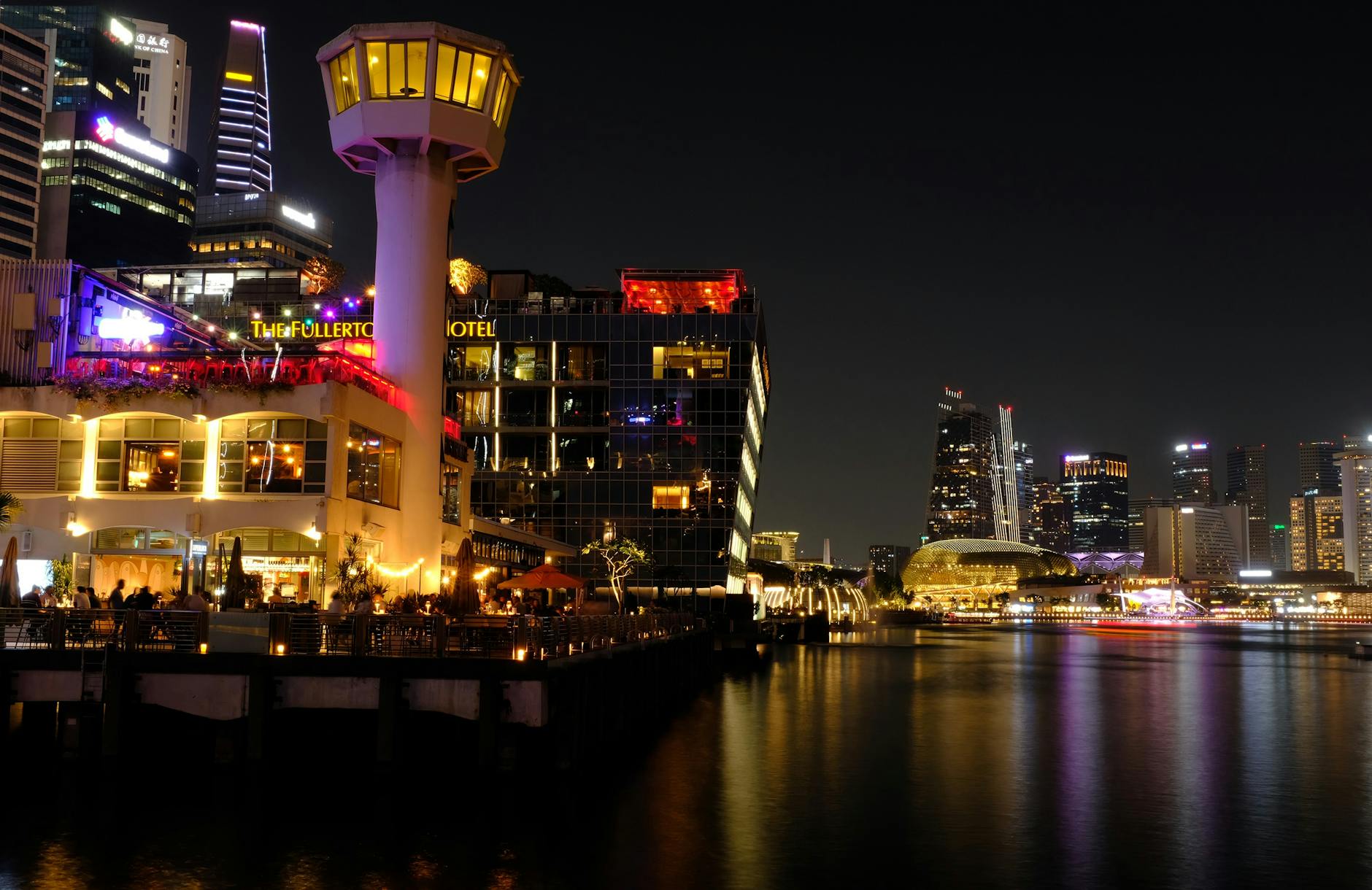
Singapore — The Complete City Guide 2026
Singapore Travel Guide 2026: What to Do, See, Eat & Avoid
Singapore Travel Guide 2026: What to Do, See, Eat & Avoid
*By a 20-Year Travel Editor | Last Verified: March 21, 2026*
- Why Singapore? An Editor’s Note
- Top Attractions in Singapore
- The Neighborhoods: Heartlands vs. High-Rises
- Where to Stay — By Budget
- The Hawker Rules: How to Eat Like a Local
- Where to Eat: Michelin vs. The Markets
- Singapore Nightlife: The “Speakeasy” Era
- Getting Around (SimplyGo 2026)
- The Editor’s “Golden Hour” Hacks
- Safety & Practical Information
- Frequently Asked Questions
I have covered Singapore for two decades, and the world’s most common mistake is treating this city as a 24-hour layover. Most visitors stay in a sterile loop: they see the “Crazy Rich Asians” skyline, walk the humid malls of Orchard Road, eat one overpriced satay at Newton Circus, and leave thinking Singapore is a “fine” city with no soul.
The gap is this: Singapore is not a shopping mall; it is a tropical laboratory. It is the only place on earth where 100-year-old rain trees grow through billion-dollar steel “Supertrees,” and where a Michelin-starred meal costs $6 and is served on a plastic tray. This guide is for the traveller who wants to see the “Garden City” turn into a “City in Nature”—the grit of the Geylang backlanes, the steam of the hawker centres, and the quiet precision of the world’s best infrastructure.
Gardens by the Bay — The Cloud Forest Hack
A $1 billion botanical project that defines the 21st-century city. While the “Supertrees” are free, the Cloud Forest conservatory is the soul of the park—a 35-metre indoor mountain covered in orchids and ferns.
- Price: Conservatories approx. $32 SGD | Supertree Observatory $14 SGD.
- Hours: 9:00 AM–9:00 PM.
- Editor’s Tip: Most people go at sunset. This is a mistake. Go at 9:00 AM sharp when the mist machines are at full power and the crowds are at their thinnest. The air is 24°C—the only “cool” breath you’ll get in Singapore all day.
Jewel Changi — The 24/7 Arrival
The “Rain Vortex” is the world’s tallest indoor waterfall. Because it’s outside the “transit” area, you can visit it whether you are flying or not.
- Price: Free to view waterfall. Canopy Park $8–14 SGD.
- Book: Jewel Changi Attractions
- Editor’s Tip: Take the Skytrain from Terminal 2 to Terminal 3. It passes right through the Jewel dome, giving you the best eye-level photo of the waterfall for free, without the 40-minute walk from the check-in counters.
National Gallery Singapore — The Colonial Heart
Housed in the former Supreme Court and City Hall, this is the largest collection of Southeast Asian art in the world. The architecture alone—two colonial giants joined by a modern veil of glass and steel—is worth the price.
- Price: $20 SGD (General Admission).
- Book: National Gallery Tickets
- Editor’s Tip: Go to the 6th-floor roof terrace (Smoke & Mirrors). You get a direct, unobstructed view of the Marina Bay Sands skyline across the Padang field—better than the view from the MBS itself.
Mandai Bird Paradise — The 2026 Standard
Opened in late 2023 and fully matured by 2026, this replaced the old Jurong Bird Park. It features eight walk-through aviaries that recreate different global biomes.
- Price: $49 SGD.
- Access: Use the new Mandai Shuttle from Khatib MRT.
- Editor’s Tip: Skip the “shows.” Instead, go to the Crimson Wetlands during the 10:30 AM feeding time. You will see hundreds of scarlet ibises take flight against a 20-metre waterfall. It is the most cinematic wildlife moment in Asia.
- Kampong Gelam: The Malay-Arab quarter. Gold-domed mosques meet street art and textile shops. The best area for evening walks.
- Katong & Joo Chiat: The Peranakan (Straits Chinese) heart. Famous for pastel-coloured shophouses and the city’s best Laksa.
- Tiong Bahru: 1930s Art Deco architecture. This is Singapore’s “Brooklyn”—indie bookstores, vinyl shops, and artisanal bakeries.
- Little India: A sensory overload of jasmine, spices, and gold shops. Visit the Tekka Centre for the most authentic breakfast in the city.
- Budget ($40–70 SGD): The Pod Boutique Capsule Hotel. Located in Kampong Gelam. High-design, private, and walkable to the best nightlife.
- Mid-Range ($180–280 SGD): Lloyd’s Inn. A minimalist, design-forward oasis hidden behind Orchard Road. It feels like a Japanese forest retreat.
- Splurge ($500+ SGD): Raffles Hotel Singapore. The “Grand Dame.” Even if you don’t stay here, walk the corridors—it is the only place where you can still feel the 19th-century colonial ghost of the city.
Avoid: Hotels in Geylang unless you are on an extreme budget (it’s the red-light district) or Sentosa (it’s an artificial island that disconnects you from the real city).
Singapore’s hawker culture is UNESCO-recognised. To survive, you must know three rules:
- The “Chope” (The Tissue Packet): If you see a packet of tissues or an umbrella on a stone table, the seat is taken. Do not sit there. This is a legally binding contract in Singapore.
- The Return: As of 2026, you must return your tray to the designated stations or face a $300 fine. There are no exceptions for tourists.
- The Queue: If a stall has a 20-minute queue and the one next to it has none, wait in the queue. Singaporeans are “Kiasu” (afraid to miss out)—the queue is the only review that matters.
- The Legend: Tian Tian Hainanese Chicken Rice (Maxwell Food Centre). Anthony Bourdain’s favourite. Still the benchmark for the national dish.
- The Budget Michelin: Hawker Chan (Chinatown). The world’s cheapest Michelin-starred meal. The Soya Sauce Chicken Rice is under $7 SGD.
- Mod-Sin (Modern Singaporean): Labyrinth. A Michelin-starred take on local dishes. Their “Chili Crab” is an ice cream—it sounds insane; it is genius.
- The Seafood Rule: Never eat Chili Crab at Boat Quay. It is a tourist trap. Go to Jumbo Seafood at East Coast Park or Keng Eng Kee (KEK) in Alexandra for the real, messy experience.
- The Library: Jigger & Pony (Amoy Street). Singapore’s best cocktail bar. No sign—look for the unmarked door. Top 10 in Asia.
- Rooftop: Ce La Vi (Marina Bay Sands). A $28 cocktail gets you the best view in the city—better value than the MBS Observation Deck.
- Late Night: The Clarke Quay riverside is a tourist trap. Instead, go to Neil Road in Chinatown—live music, cheap beer, and zero cruise ship passengers.
- SimplyGo: You do not need a transit card. Tap-on with your Phone (Apple/Google Pay) or Credit Card on all buses and trains.
- The Thomson-East Coast Line (TEL): This is the game-changer for 2026. It now connects the Airport directly to the City Center (Maxwell/Gardens by the Bay) and the East Coast (Marine Parade). Use it to save $30 in taxi fares.
- Grab: Download the Grab App before arrival. It is the Uber of Southeast Asia.
- The “Last Train”: Trains stop around midnight. After that, your only option is Grab, which implements a “Midnight Surcharge.”
These are the three windows that separate a tourist from someone who actually understands Singapore.
- The “Rail Corridor” Secret: Most tourists walk the Botanic Gardens. Instead, hike the Rail Corridor—a 24km former railway line turned into a “green corridor.” The section near the Bukit Timah Railway Station at 5:00 PM is the most beautiful urban wilderness in Asia.
- The “Spectra” Alternative: Don’t stand in the crush of people at Marina Bay Sands for the light show. Take the MRT to Bayfront, walk to the Supertree Grove, and lie on your back under the Supertrees for the Garden Rhapsody (7:45 PM & 8:45 PM). It is free, immersive, and feels like Avatar.
- The “Wet Market” 8 AM: Go to Tiong Bahru Market at 8:00 AM on a Tuesday. Watch the fishmongers and florist sellers, then have a $1.50 Kopi (local coffee) and a Lor Mee. You will see the Singapore that existed before the skyscrapers.
- The Humidity: It is not the heat; it is the 90% humidity. You will need two shirts a day. Most malls and trains are “Arctic” (18°C), so carry a light scarf or jacket for indoors.
- Chewing Gum: It is not “illegal to chew,” but it is illegal to sell or import. Do not bring more than a personal-use pack through customs.
- Laws: Drugs carry the death penalty. Vaping is strictly prohibited in 2026—customs will seize devices and fines start at $2,000.
- Tipping: Not required and often discouraged. A 10% “Service Charge” and 9% GST (as of 2026) are usually added to restaurant bills.
Is Singapore expensive? Yes. It is often ranked the world’s most expensive city. However, transportation and hawker food are incredibly cheap. A $200/day budget is mid-range; $80/day is doable if you stick to hawker stalls and free parks.
Can I drink the tap water? Yes. It is world-class. Carry a reusable bottle to save $4 per bottle at tourist sites.
When is the best time to visit? February to April is the “dry” season. Avoid November to January (monsoon)—the rain is horizontal and lasts for hours.
Do I need a car? Never. The MRT (Metro) is the best in the world. A car is a $150,000 liability here.
Final Editor’s Tip: If you have only 2 hours, go to the Henderson Waves bridge at sunset. You are 36 metres above the forest floor, with the monkeys in the trees on one side and the industrial shipping ports on the other. It is the entire Singapore story in one view.