Sydney Kingsford Smith (SYD) — The Complete 2026 Airport Guide
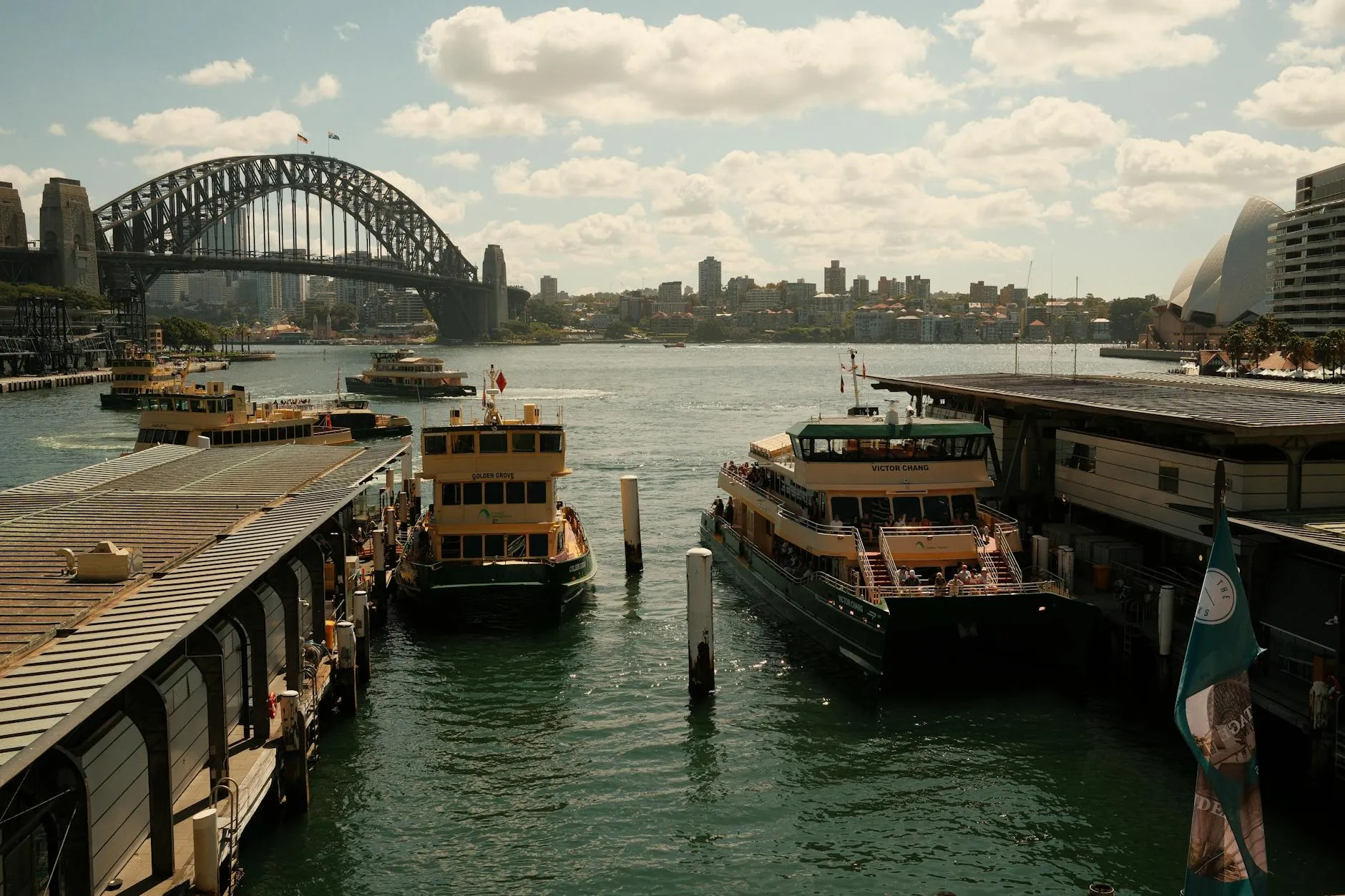
Sydney’s airport is only 8 km from the harbour, which makes it feel easy. It isn’t, quite. The international terminal (T1) and the two domestic terminals (T2 and T3) sit on opposite sides of the runways with no way to walk between them — so a Qantas connection from a domestic flight to an international one crosses the whole airport. Get the terminal, the transfer and the train’s notorious gate fee right, and Sydney is one of the smoothest arrivals in the world.
Last verified: July 2026. Fares, terminal assignments and Australia’s entry rules change often — confirm the specifics on your ticket, and on official signage and government sites, before you travel.
Quick reference
| Detail | What you need to know |
|---|---|
| Airport | Sydney Kingsford Smith International Airport, IATA SYD — Australia’s busiest airport and main international gateway; ~42.5 million passengers in 2025 |
| Location | ~8 km south of the CBD at Mascot — genuinely close, but the terminals are split across the runways |
| Terminals | T1 — International (all overseas flights). T3 — Qantas & QantasLink domestic. T2 — Virgin Australia, Jetstar and Rex domestic. T1 is on the far side of the runways from T2/T3 |
| Into the city | Airport Link train ~13 min to Central, ~A$21–22 with Opal (a station access fee is baked in) · capped taxi A$60 flat to the CBD · rideshare varies |
| Entry | Nearly everyone needs a visa before boarding: Europeans use the free eVisitor (651); US/Canadian/Japanese and similar passports use the ETA (601), A$20 via the app. No visa-on-arrival |
| Watch out for | The T1↔domestic split · the ~A$19 train gate fee on short trips · getting your visa before you fly · declaring all food at the border · the 11pm–6am curfew killing late flights |
The one thing to get right: three terminals, on two sides of the runways
Sydney’s terminals are not a single building with concourses. There are three, and they fall into two camps separated by the airfield:
- T1 — International. Every overseas flight, whichever airline, arrives and departs here. It sits on the north-western side of the runways.
- T3 — Qantas domestic. Qantas and QantasLink domestic flights only.
- T2 — the other domestic carriers. Virgin Australia, Jetstar and Rex. T2 and T3 sit next to each other on the eastern side of the runways, a short walk apart.
The trap is that the domestic terminals and the international terminal are roughly 4 km apart by road with the runways between them — you cannot walk from one side to the other. The catch that surprises people most: even a single-airline connection can cross the divide. Fly Qantas from Melbourne to Sydney and onward to London and you land at T3 but depart from T1. Qantas moves your checked bag, but you still have to move yourself.
Crossing between the terminals: the free T-Bus vs the paid train
There are two ways over, and the free one is the one to use.
The T-Bus — free, and the default
The T-Bus is a complimentary transfer shuttle running between T1 (International) and T2/T3 (Domestic). It leaves roughly every 15 minutes from about 05:30 to 22:30 and the ride is about 10 minutes. Pick it up on the Arrivals level — at T1 outside Arrival Hall B, at the domestic terminals outside each building. Have your boarding pass handy. This is the sensible choice for almost everyone connecting.
The Airport Link train — 2 minutes, but you pay for it
The Airport Link train also connects the International and Domestic stations, and the hop is genuinely quick — about 2 minutes, one stop. But it is not free: it costs around A$8.50 peak / A$7.30 off-peak per person with an Opal card or contactless payment, because you pass through the airport station gates. For a 2-minute ride that the T-Bus does for nothing, the train only makes sense if you are already at the platform, in a hurry, and travelling light.
Getting into the city — and the Station Access Fee catch
The airport is close, so every option is quick. The honest comparison is really about cost and group size:
| Option | Price (approx) | Time to CBD | Verdict |
|---|---|---|---|
| Airport Link train (T8) | ~A$21–22 (~€13 / $14) with Opal, off-peak | ~13 min to Central | Fastest and frequent — but the gate fee makes it pricey per head |
| Taxi (capped fare) | A$60 flat (~€36 / $39) to the CBD, tolls incl. | ~20–30 min | Beats the train once there are 3+ of you; fixed price, no meter surprises |
| Rideshare (Uber/Didi/Ola) | Typically ~A$45–60 (estimate; surges higher) | ~20–30 min | Designated pickup zones; can undercut or exceed the capped taxi |
| Route 400 bus + train | Standard Opal fare, no gate fee | ~40+ min | The fee-dodge: bus to Mascot/Rockdale, pick up a normal train |
Why the train costs what it costs — the Station Access Fee
The Airport Link stations (International and Domestic) are privately operated, and every tap in or out of them carries a Station Access Fee — a gate fee on top of the normal rail fare. As of 2026 that fee is about A$18.61 per adult with Opal/contactless (around A$19 on a single-trip ticket) and roughly A$16.64 for a child. The actual train portion to Central is only a few dollars, so a solo adult pays about A$21–22 all in for a 13-minute ride — the fee, not the distance, is what you’re paying for.
Two consequences worth planning around. First, for a family or group the per-person fee stacks up fast, and the flat A$60 capped taxi can be cheaper than four or five train tickets. Second, if you’re travelling light and thrifty, locals dodge the fee by taking the Route 400 bus to a non-airport station like Mascot or Rockdale and joining the ordinary rail network there — slower, but it strips the gate fee out entirely.
Entry: the visa you must get before you board
This is where visitors trip up. Australia has no visa-on-arrival — almost every foreign visitor must hold an approved travel authority before they check in, and the airline will not board you without one. Which one you use is fixed by your passport, not a preference:
- European passport holders → eVisitor (subclass 651), free. EU nationals, plus the UK and a handful of others, apply online through the government’s ImmiAccount. There’s no charge. It allows stays of up to 3 months at a time within a 12-month validity.
- US, Canadian, Japanese, Singaporean and similar passports → ETA (subclass 601), A$20. You apply through the official Australian ETA app: scan your passport’s chip with your phone, take a selfie, pay the A$20 (~€12 / $13) charge. Same 3-months-per-visit, 12-month validity. There’s a small service charge and processing is usually quick, but don’t leave it to the airport.
- Everyone else → a Visitor visa (subclass 600) or the relevant visa, applied for in advance, at a higher fee.
The key point for this audience: an American cannot use the free eVisitor, and a German cannot use the app-based ETA — your nationality decides. Both are electronic and linked to your passport, so there’s nothing to print. Apply on the official Australian Government sites only (immi.homeaffairs.gov.au and the Australian ETA app), never a paid lookalike.
At the border: SmartGate, the passenger card and biosecurity
Once you land, arrival is fast if you’re prepared:
- SmartGate. Australia’s automated e-passport gates handle most arrivals. Eligibility was broadened in 2025 and now covers ePassport holders from a wide list of countries; you need a biometric (chip) passport and generally to be 16 or older. You scan your passport, have your photo taken at the gate, and walk through — no officer queue.
- The Incoming Passenger Card. You still complete an Incoming Passenger Card — the yellow-and-white form usually handed out on the plane — declaring what you’re bringing in. A digital declaration is being trialled on some routes, but assume the paper card at Sydney and fill it in before you land. Pen in hand saves you a scramble.
- Biosecurity — declare your food. Australia’s biosecurity is genuinely strict, and this is the single most common way visitors get fined. Declare all food, plant material, wooden items and medicines on the card. Fresh fruit, vegetables, meat, dairy, eggs and seeds are largely prohibited. The rule that saves you: if you declare it, you won’t be penalised even if the item is taken off you — but failing to declare something that’s found can mean an on-the-spot fine or worse. When in doubt, tick “yes” and let the officer decide.
The curfew — and the new airport changing Sydney’s map
Sydney Kingsford Smith operates under a legislated 11pm to 6am curfew: with narrow exceptions (some small propeller aircraft, emergency and limited freight movements), jets can’t take off or land overnight. During the day a cap of 80 aircraft movements per hour also applies. For you as a passenger this means two things — there are no scheduled red-eye departures from SYD, and the early-morning window right after 6am is a crush as long-haul departures stack up. If you’re on a dawn flight, be early; if you’re arriving from Europe or the Americas, expect to land in that busy morning bank.
Western Sydney (Nancy-Bird Walton) opens in October 2026
Sydney is about to become a two-airport city. Western Sydney International Airport (WSI), named Nancy-Bird Walton, is scheduled to open to passengers on 25 October 2026, roughly 45 km west of the city near Badgerys Creek. It will be curfew-free and operate 24/7 — the first airport in New South Wales without a night curfew — and it gets its own Sydney Metro rail line. Launch service is modest at first: Jetstar starts domestic flights, with Air New Zealand and Singapore Airlines among the early international carriers.
Lounges
The lounge scene is concentrated in T1 International. If you’re flying Qantas or oneworld in a premium cabin, the Qantas First Lounge (the Marc Newson-designed flagship, with a spa and à la carte dining) and the Qantas International Business Lounge are the standouts — but they’re for eligible passengers and status holders, not walk-ins or Priority Pass.
For everyone else, T1 has several pay-in or card-access options:
- Plaza Premium Lounge — a paid/independent lounge in T1 departures with runway views, buffet, barista coffee and showers; walk-in access sold at the door.
- Aspire Lounge (run by Swissport, the former Etihad lounge) — Priority Pass accepted.
- SkyTeam Lounge — used by SkyTeam carriers, and accessible on Priority Pass for many cardholders (confirm current terms).
The domestic terminals have their own airline lounges — Qantas Club and the Qantas domestic Business Lounge in T3, the Virgin Australia Lounge in T2 — but these are membership/status products, not general pay-in lounges.
Connections and minimum times
Connections that stay within one side of the airport are easy. The one to respect is the domestic ↔ international transfer, because it crosses the runways.
A connection within T1 (international to international) is efficient — a tight-but-safe window is fine. A domestic-to-international transfer adds the T-Bus or train hop plus, on arrival, immigration and biosecurity. On a single through-ticket (e.g. Qantas domestic to Qantas international) the airline moves your bag and sets a published minimum, but give yourself 90 minutes or more across terminals. Self-connecting on separate tickets is two trips — collect your bag, cross to the other terminal, re-check in and clear security again — so allow 2.5 to 3 hours, more in the post-6am peak. And remember: nothing departs during the 11pm–6am curfew, so a very late arrival can mean overnighting for a morning onward flight.
Food, money and Wi-Fi
Food: T1 has the widest choice, with a food court and sit-down options across the departures level; the domestic terminals lean toward cafés and quick bites. Prices are Sydney-steep, and the city is only 13 minutes away if you’d rather wait.
Money: Australia is heavily card- and contactless-based, so you rarely need cash. Prefer bank ATMs over the exchange booths, and decline any offer to charge you in your home currency — pay in Australian dollars. An Opal card or a contactless bank card covers the train and every bus.
Wi-Fi & SIM: free Wi-Fi across the terminals; prepaid SIMs and eSIMs are sold in arrivals, though an eSIM bought before you land is the least-hassle route.
Frequently asked questions
Which terminal do I need at Sydney Airport?+
All international flights use T1. Qantas and QantasLink domestic flights use T3. Virgin Australia, Jetstar and Rex domestic flights use T2. T2 and T3 sit together on one side of the runways; T1 is about 4 km away on the other side, with no walking route between them — so any international-plus-domestic itinerary involves a terminal transfer.
How do I get from Sydney Airport to the city, and how much?+
The Airport Link train reaches Central in about 13 minutes and costs roughly A$21–22 for an adult with Opal, because a station access fee is added on top of the rail fare. A taxi is a fixed, capped A$60 to the CBD including tolls, which can be cheaper than the train for three or more people. Rideshare is typically similar. The airport is only 8 km from the centre.
Why is the airport train so expensive for such a short trip?+
Because of the Station Access Fee — a gate charge levied on every tap in or out of the privately run airport stations, about A$18.61 per adult in 2026, on top of the normal train fare. The rail portion to Central is only a few dollars, so nearly all of the ~A$21–22 total is the access fee. It’s per person, so groups often find the capped A$60 taxi better value.
Do I need a visa to visit Australia, and can I get it on arrival?+
Yes to the visa, no to on-arrival. Australia has no visa-on-arrival, so you must hold an approved travel authority before you board. European passport holders use the free eVisitor (subclass 651) via ImmiAccount; US, Canadian, Japanese and similar passports use the ETA (subclass 601), which costs A$20 through the official Australian ETA app. Which one applies is set by your nationality.
What’s the difference between the ETA and the eVisitor?+
They’re near-identical travel authorities (both allow up to 3 months per visit over 12 months) but split by passport. The eVisitor (651) is for European nationalities and is free, applied for online via ImmiAccount. The ETA (601) is for US/Canadian/Japanese/Singaporean and similar passports, costs A$20, and is applied for through the Australian ETA mobile app by scanning your passport chip and taking a selfie. You can’t choose the cheaper one — it’s fixed by your passport.
Can I bring food into Australia?+
You must declare all food, plant material, wooden items and medicines on your Incoming Passenger Card — biosecurity is strict. Fresh fruit, vegetables, meat, dairy, eggs and seeds are largely prohibited. The saving grace: if you declare something, you won’t be penalised even if it’s confiscated. Failing to declare an item that’s then found can bring an on-the-spot fine. When unsure, declare it.
How long should I leave for a connection at Sydney?+
Within T1 (international to international), a moderate window is fine. For a domestic-to-international transfer on a single ticket, allow at least 90 minutes because you must cross between the domestic and international terminals by bus or train. If you’re self-connecting on separate tickets, allow 2.5–3 hours to collect bags, transfer, re-check in and clear security — more during the busy post-6am morning peak.
Is Western Sydney Airport open yet, and will I use it?+
Not until 25 October 2026, when Western Sydney International (Nancy-Bird Walton), about 45 km west of the city, opens to passengers with a small initial network. It’s curfew-free and 24/7, with its own Metro line. For now and for most 2026 travel you’ll fly SYD Kingsford Smith — always check the airport code on your ticket, since “Sydney” now means two airports on opposite sides of the city.
At a glance
| Codes | SYD / YSSY — Sydney Kingsford Smith International Airport (Mascot) |
| Terminals | T1 International · T3 Qantas domestic · T2 Virgin/Jetstar/Rex domestic · T1 across the runways from T2/T3 |
| Transfer between terminals | Free T-Bus (~every 15 min, ~10 min ride) or the train (~A$8.50, 2 min) |
| Distance to CBD | ~8 km south |
| Fastest to city | Airport Link train, ~13 min to Central, ~A$21–22 with Opal |
| Fixed taxi fare | A$60 flat to the CBD (tolls included) |
| Entry | eVisitor (651, free) for Europeans · ETA (601, A$20 app) for US/CA/JP etc. · obtain before boarding |
| Curfew | 11pm–6am, no scheduled jet movements |
| New airport | Western Sydney (WSI / Nancy-Bird Walton) opens 25 Oct 2026, curfew-free, ~45 km west |
Before you fly
- 📊 Check what a good fare to Sydney looks like — our price-check tool shows the typical deal range so you know a bargain when you see one.
- 🧳 Baggage checker — confirm your airline’s carry-on and checked allowance before you pack.
- 🏙️ Sydney city guide — where to stay, eat and what’s actually worth your time in the city.
🌏 Planning the trip? Read our Sydney city guide — where to stay, what to eat, and how to get around.