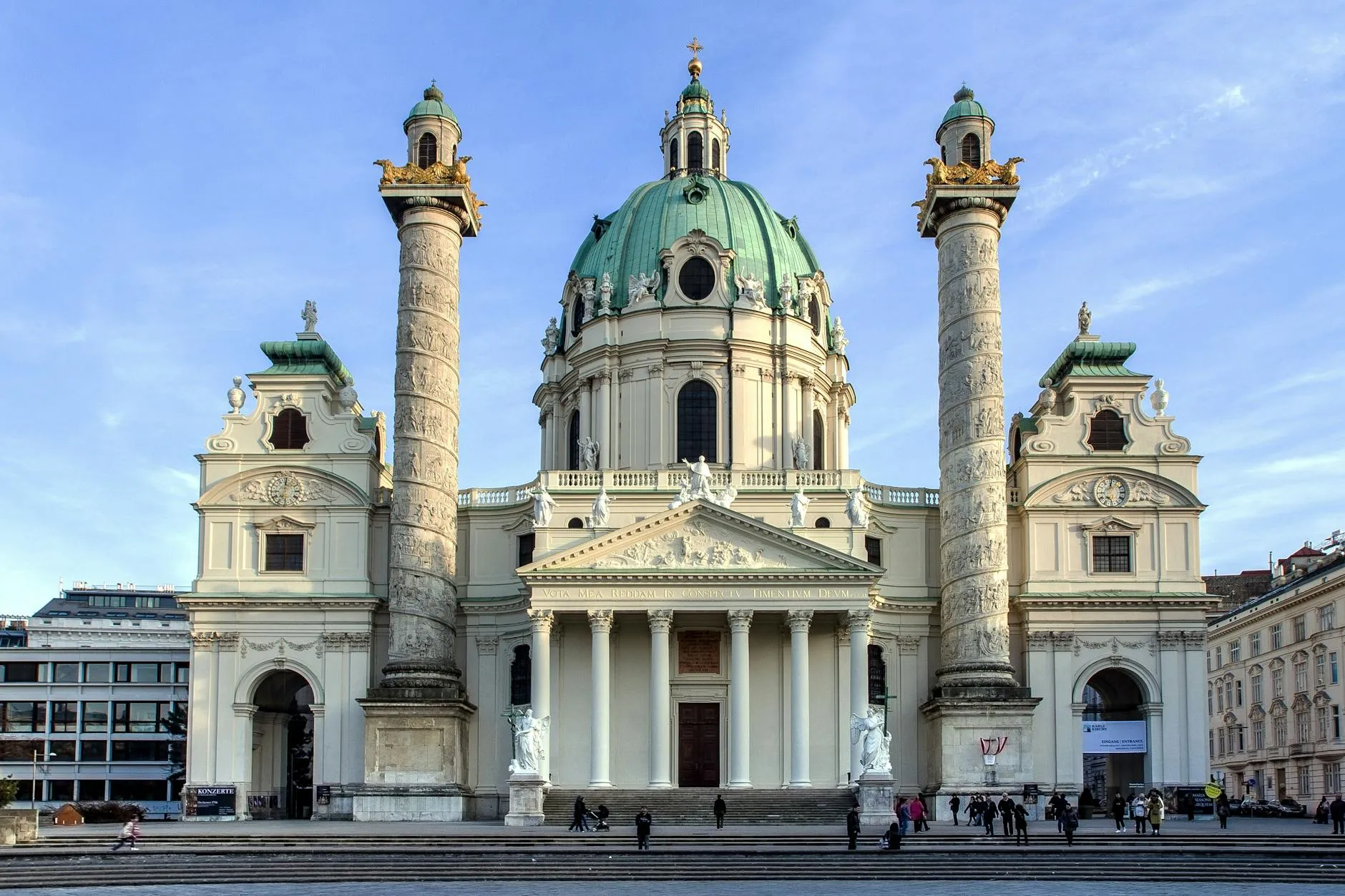
Vienna — The Complete City Guide 2026
Imperial palaces, world-class opera, legendary coffee houses, and the birthplace of the waltz — your complete guide to Austria’s elegant capital.
€90–150/day budget
Best: Apr–Jun, Sep–Oct
Table of Contents
- Editor’s Note: Tourist Vienna vs Real Vienna
- Top 12 Attractions
- Schönbrunn Palace — The Complete Guide
- The Hofburg — Imperial Heart of Vienna
- Vienna’s Neighbourhoods
- Where to Stay
- Kaffeehaus Culture — Vienna’s Living Rooms
- Coffee Types — The Complete Menu
- Schnitzel — A Vienna Religion
- Sachertorte — The Great Debate
- Traditional Viennese Food
- Wine & Heurige
- Michelin & Fine Dining
- Markets & Food Halls
- Vienna State Opera — Standing Room Secrets
- Classical Music Beyond the Opera
- Museums & Art
- Klimt & the Secession
- The Ringstrasse — A Walking Tour
- Hidden Vienna
- Parks & Outdoors
- The Danube & Danube Island
- Vienna with Kids
- Romantic Vienna
- Christmas Markets
- Day Trips from Vienna
- Getting Around
- Vienna Airport Guide
- Budget Breakdown
- German Phrases
- Practical Information
- FAQ
Editor’s Note: Tourist Vienna vs Real Vienna
Tourist Vienna is Schönbrunn selfies, a quick peek at the Spanish Riding School, and a slice of Sachertorte eaten standing up. Real Vienna is spending three hours in a Kaffeehaus reading newspapers on wooden sticks, arguing about whether Demel or Hotel Sacher makes the authentic torte, and discovering that “Gemütlichkeit” — that untranslatable sense of cozy contentment — isn’t just a cliché but a way of life.
Vienna regularly tops global livability rankings, and after a few days here you’ll understand why. This is a city that has elevated the art of living well to a science. The coffee is served with a glass of water (always), the schnitzel hangs over the edge of the plate (as it should), and the opera has standing room tickets for €15 (democracy at its finest). Vienna moves at its own pace — there’s no such thing as rushing here, just “Viennese efficiency,” which means everything works perfectly but only after a proper amount of deliberation.
The secret to Vienna is understanding that the city’s greatest attractions aren’t buildings but rituals. The ritual of afternoon coffee and cake. The ritual of the Sunday Heuriger wine garden visit. The ritual of complaining about everything while secretly being deeply satisfied. Vienna is, at its heart, a city that perfected the art of elegant melancholy — the music is sublime, the pastries are decadent, and there’s always a slight sense that the Empire’s best days are behind us. It’s absolutely wonderful.
Extending the trip? See our Prague city guide (4h by direct RegioJet or ÖBB train), Budapest city guide (2h40 by Railjet, the most civilised train journey in Europe), Munich city guide (4h by Railjet), and Berlin city guide (~8h by night train ÖBB Nightjet) for the same treatment.
Top 12 Attractions
| Attraction | Price (2026) | Hours | Pro Tip |
|---|---|---|---|
| Schönbrunn Palace | Grand Tour €29 / Imperial Tour €24 | 8:00-17:30 (summer 18:30) | Book online; arrive 8am sharp |
| Hofburg Palace | Sisi Museum + Apartments €18.50 | 9:00-17:30 | Audio guide included; Sisi fans need 2hrs |
| Belvedere | Upper €18.50 / Lower €16 / Combo €25 | 9:00-18:00 (Fri 21:00) | The Kiss is in Upper Belvedere |
| Kunsthistorisches Museum | €21 | Tue-Sun 10:00-18:00 (Thu 21:00) | Free first Sunday; Bruegel room essential |
| St. Stephen’s Cathedral | Free (towers €6-8, catacombs €6.50) | 6:00-22:00 | South Tower climb: 343 steps, best views |
| Vienna State Opera | Standing €15 / Seats €15-280 | Box office opens 2hrs pre-show | Standing tickets sell from 80min before |
| Spanish Riding School | Morning Exercise €18-25 / Performance €29-240 | Varies by event | Morning exercise tickets released 3 months ahead |
| Albertina | €18.90 | 10:00-18:00 (Wed/Fri 21:00) | Monet to Picasso permanent collection |
| Prater & Giant Ferris Wheel | €15 (wheel only) | 10:00-21:45 | Sunset rides most romantic |
| Naschmarkt | Free | Mon-Sat 6:00-19:30 | Saturday flea market extends to Kettenbrückengasse |
| Secession Building | €12 | Tue-Sun 10:00-18:00 | Klimt’s Beethoven Frieze in basement |
| Haus der Musik | €16 | 10:00-22:00 | Interactive; great for kids and music lovers |
Schönbrunn Palace — The Complete Guide
The summer residence of the Habsburgs isn’t just a palace — it’s a small city of 1,441 rooms, 500 acres of gardens, a zoo (the world’s oldest, founded 1752), a maze, a gloriette, and enough imperial excess to fuel a dozen Netflix series. This is where six-year-old Mozart performed for Empress Maria Theresa, where Franz Joseph was born and died, and where the last Habsburg emperor signed his abdication in 1918.
Which Tour to Choose
Imperial Tour (24 rooms, €24) — Covers the private apartments of Franz Joseph and Empress Elisabeth (“Sisi”). Takes about 40 minutes. Perfect if you’re short on time or have limited interest in 18th-century decorative arts. You’ll see the Walnut Room, the Millions Room (with its Indo-Persian miniatures worth, well, millions), and Sisi’s gymnasium where she maintained her famous 19-inch waist.
Grand Tour (44 rooms, €29) — Everything in the Imperial Tour plus the 18th-century state rooms used by Maria Theresa. This includes the Great Gallery (where the Congress of Vienna danced in 1815), the Chinese Cabinets with their priceless lacquer panels, and the Vieux-Laque Room. Allow 60-90 minutes. This is the one to book if you want the full experience.
Sisi Ticket (€44) — Combines Schönbrunn Grand Tour + Hofburg Imperial Apartments + Imperial Furniture Collection. Valid for one year. Best value for serious Habsburg enthusiasts.
The Gardens
The gardens are free (except the Privy Garden, €4.50, and the maze, €6). The walk to the Gloriette at the top of the hill takes about 20 minutes and rewards you with the money shot of Vienna — the palace below, the city skyline beyond. The Gloriette café serves adequate coffee and spectacular views. Palm House (€7) and Desert House (€7) are worth it for plant lovers.
Schönbrunn Zoo (Tiergarten) — €26 adults, €13 children. The world’s oldest zoo, founded by Francis I in 1752 as an imperial menagerie. Today it’s thoroughly modern and conservation-focused, with pandas (one of few European zoos to breed them successfully), elephants, and an excellent rainforest house. Allow 3-4 hours.
Practical Tips
Arrive at opening time (8:00am summer, 9:30am winter) to beat the tour groups that descend around 10:00am. Book online to skip the ticket queue — in summer, the line can exceed an hour. The palace is a 15-minute walk from Schönbrunn U4 metro station; follow the crowds. Café Residenz inside the palace serves solid Viennese pastries and the best coffee on site. The Christmas market here (mid-November to December 26) is the most atmospheric in Vienna.
The Hofburg — Imperial Heart of Vienna
For 600 years, this sprawling palace complex was the seat of Habsburg power, evolving from a medieval fortress into a city-within-a-city of 2,600 rooms, 19 courtyards, and 18 wings. Today it houses the Austrian president, the Spanish Riding School, the Austrian National Library, and enough museums to occupy a week.
The Sisi Museum & Imperial Apartments
The €18.50 combo ticket covers three main attractions: the Sisi Museum (tracking Empress Elisabeth’s life and tragic death), the Imperial Apartments (where Franz Joseph worked 12-hour days at his standing desk), and the Imperial Silver Collection (24,000 pieces of Habsburg dinner service). The Sisi Museum is surprisingly balanced — it doesn’t just romanticize the “fairy tale empress” but examines her depression, eating disorders, and obsessive exercise routines. Allow 90 minutes to 2 hours.
Imperial Treasury (Kaiserliche Schatzkammer)
Separate admission €14. This is where the Habsburgs kept their greatest treasures: the Imperial Crown of the Holy Roman Empire (10th century), the Austrian Imperial Crown, the Holy Lance (allegedly the spear that pierced Christ’s side), and a 2,680-carat Colombian emerald. One of Europe’s most important collections of medieval regalia.
Austrian National Library (Prunksaal)
€10 admission. The Baroque State Hall is arguably the most beautiful library in the world — 80 meters long, covered in frescoes, with 200,000 historic books in walnut shelving. The globe collection alone is worth the visit. Don’t miss the secret doors hidden in the bookshelves.
Spanish Riding School
Morning Exercise (€18-25, ~90 min) — Watching the Lipizzaner stallions train to classical music. No commentary, just elegant horsemanship. Book online months ahead.
Performances (€29-240) — Full classical dressage performances with elaborate costumes. About 80 minutes. Premium seats sell out months in advance.
Tours (€19) — 55-minute guided tour of the Winter Riding School and stables when no events are scheduled.
The white Lipizzaner horses are actually born dark and turn white between ages 4-10. Each horse trains for six years before performing. The school has operated continuously since 1572.
Vienna’s Neighbourhoods
Innere Stadt (1st District) — The Historic Centre
Everything within the Ringstrasse: St. Stephen’s Cathedral, the Hofburg, the opera, the Kärntner Strasse shopping street, and most of the famous coffeehouses. This is where you’ll spend most of your time, and where hotel prices are highest. The Graben pedestrian zone and Kohlmarkt (leading to the Hofburg) are the main arteries. Lovely for evening strolls when the tour groups have left.
Leopoldstadt (2nd District) — The Prater & Jewish Heritage
Once Vienna’s Jewish quarter, devastated in the Holocaust, now slowly gentrifying with cafes and galleries along the Karmelitermarkt. The Prater amusement park and its famous Giant Ferris Wheel are here. Also home to the Augarten porcelain factory and a growing food scene. Take the U1 to Praterstern.
Landstrasse (3rd District) — Belvedere & Embassies
The grand Belvedere Palace and its gardens dominate this district, which also holds the Hundertwasserhaus (a colorful apartment building by artist Friedensreich Hundertwasser), the KunstHausWien, and the Botanical Garden. Quieter than the center, good for a half-day combined with the Belvedere.
Wieden (4th District) & Margareten (5th District)
The Naschmarkt runs along the border of these two districts, which together form Vienna’s most vibrant neighborhood scene. Wieden has cafes, vintage shops, and the Karlskirche (one of Vienna’s most beautiful baroque churches). Margareten is more residential but has the Schlossquadrat cultural complex. Take the U4 to Kettenbrückengasse for the heart of the action.
Mariahilf (6th District) — Shopping & Hipster Vienna
Mariahilfer Strasse, Vienna’s main shopping street, runs through here with every chain store you can imagine. More interesting is the area around Gumpendorfer Strasse — called “Gumpe” by locals — with independent boutiques, bars, and restaurants. The Saturday flea market extension of the Naschmarkt is here.
Neubau (7th District) — Design & Boutiques
Vienna’s design district, with concept stores, galleries, and the MuseumsQuartier just across the way. The streets around Kirchengasse and Siebensterngasse are packed with independent fashion, homeware, and specialty food shops. Best neighborhood for contemporary Viennese shopping. Saturday afternoons are prime time.
Josefstadt (8th District) — Biedermeier Charm
Vienna’s smallest district is a time capsule of Biedermeier architecture (early 19th century), with the Theater in der Josefstadt (Austria’s oldest continuously operating theater), quiet cafes, and a residential feel. The Palais Auersperg hosts classical concerts. A pleasant neighborhood for evening walks.
Alsergrund (9th District) — Freud & Universities
The intellectual district: Sigmund Freud Museum (Berggasse 19, where he lived and worked for 47 years), medical university, and Liechtenstein City Palace. Also home to the Votivkirche, a stunning neo-Gothic church often missed by tourists. The streets around Servitengasse have a lovely, local feel with excellent small restaurants.
Where to Stay
Budget (€60-120/night)
Wombat’s City Hostel Naschmarkt — Vienna’s best hostel, directly at the Naschmarkt. Private rooms available. Excellent bar and social scene.
25hours Hotel Vienna at MuseumsQuartier — When on sale (check regularly), this design hotel drops to around €100. Circus theme, rooftop bar, great location.
Pension Nossek — Family-run pension on the Graben since 1909. Simple rooms, unbeatable location, old-world charm. Book months ahead.
Mid-Range (€150-250/night)
Hotel Altstadt Vienna — Boutique hotel in the 7th district with individually designed rooms, art collection, and excellent breakfast. Walking distance to MuseumsQuartier.
Hotel Rathaus Wein & Design — Each room decorated by an Austrian winemaker, with wines available for purchase. Near the Rathaus and Burgtheater.
Hollmann Beletage — Design hotel in a converted 19th-century building near Schwedenplatz. Excellent breakfast, honesty bar, very Viennese.
Luxury (€300+/night)
Hotel Sacher — The iconic address since 1876. Home of the original Sachertorte. Imperial grandeur, impeccable service, central location. From €400.
Park Hyatt Vienna — In a converted 1915 bank building. The spa is in the former gold vault. Contemporary luxury in a historic shell. From €450.
Rosewood Vienna — Opened 2022 in the former Erste Bank headquarters. The newest luxury option with Asaya spa and multiple restaurants. From €550.
Kaffeehaus Culture — Vienna’s Living Rooms
The Viennese coffeehouse isn’t a place to grab a quick espresso — it’s a secular church, a living room for people who need one, an institution UNESCO recognized as an Intangible Cultural Heritage in 2011. The tradition dates to 1683 when, legend has it, a Polish-Ukrainian merchant named Kolschitzky found sacks of coffee beans left behind by the retreating Ottoman army and opened Vienna’s first café.
The rules are simple: order once and you can stay all day. No one will pressure you to leave. Newspapers on wooden sticks are provided free (the sticks prevent creasing). Water comes automatically with your coffee, and refills are expected. The waiters (Herr Ober) are famously grumpy — this is tradition, not rudeness. Tip by rounding up the bill.
The Grand Coffeehouses
Café Central — The most famous, in the Palais Ferstel arcade. Trotsky played chess here; Peter Altenberg basically lived here; the regulars were so legendary that when someone asked if a revolution might start in Austria, a count replied “no, Herr Bronstein is playing chess.” Today it’s overrun with tourists but the atmosphere remains magnificent. Come at 8am opening or after 4pm. Expect a queue on weekends.
Café Sperl — The writers’ and artists’ café since 1880. Less touristy than Central, with genuine Viennese atmosphere. The interior hasn’t changed in over a century — green velvet, marble tables, newspaper racks, billiard table. Try the Sperl-Torte. Sunday afternoons feature live piano. This is the authentic experience.
Café Landtmann — The politicians’ and actors’ café, next to the Burgtheater and across from the Rathaus. Freud was a regular. The terrace is perfect for people-watching. More upscale than Sperl but less hectic than Central. Excellent Apfelstrudel.
Café Schwarzenberg — On the Ringstrasse with a large terrace. Traditional atmosphere, excellent breakfast, live piano on weekends. Popular with older Viennese — a window into pre-tourist Vienna.
Café Hawelka — The bohemian choice since 1939. Dark, smoky (well, it was), packed with art and memories. Open until 2am most nights. Famous for Buchteln (sweet yeast dumplings) served warm after 10pm only. Cash only.
Modern Specialty Coffee
Vienna has embraced third-wave coffee while preserving its traditions. These spots serve excellent single-origin beans for those who want something beyond the classic Melange:
Jonas Reindl — Named after the Viennese term for a cooking pot (also slang for coffee cup). Multiple locations. Excellent flat whites and local roasters.
Kaffeemodul — The pioneer of Vienna’s specialty scene. Small, standing-room only, exceptional espresso.
Kaffemik — Scandinavian-influenced, female-owned. Outstanding filter coffee. Near Karlsplatz.
POC Café — “People on Caffeine” in the 7th district. Great pastries to match the coffee.
Coffee Types — The Complete Menu
Ordering coffee in Vienna requires vocabulary. Here’s what you’ll encounter:
| Name | What It Is | Notes |
|---|---|---|
| Melange | Espresso topped with steamed milk foam | Vienna’s signature; similar to cappuccino but lighter |
| Kleiner/Großer Brauner | Small/large espresso with a splash of milk | The everyday order |
| Verlängerter | Espresso lengthened with hot water | Vienna’s americano |
| Einspänner | Espresso in a glass with whipped cream | Named after one-horse carriages; cream insulates |
| Fiaker | Espresso with rum and whipped cream | Named after horse-drawn carriages (Fiaker drivers) |
| Kaisermelange | Espresso with egg yolk, honey, and cognac | Rich, indulgent; Emperor Franz Joseph’s alleged favorite |
| Wiener Eiskaffee | Cold coffee with vanilla ice cream and whipped cream | Summer only; a meal more than a drink |
| Mokka/Schwarzer | Black coffee, no milk | Kleiner (single) or Großer (double) |
| Kapuziner | Espresso with a tiny bit of cream | The original cappuccino name; lighter than Italian version |
| Franziskaner | Like Melange but with more whipped cream | Named after Franciscan monks’ robes |
Pro tip: Never order just “coffee” — you’ll get a confused look. Pick something from the menu. And remember: the glass of water is mandatory, not optional. It’s for cleansing your palate.
Schnitzel — A Vienna Religion
Wiener Schnitzel is the city’s totemic dish: a veal cutlet pounded thin, breaded in flour, egg, and breadcrumbs, then fried in clarified butter until the coating puffs away from the meat in golden waves. It must be veal — pork is “Schnitzel Wiener Art” (Viennese-style) and considered a lesser order. The schnitzel should hang over the edge of the plate. It’s served with a wedge of lemon, lingonberry jam (Preiselbeeren), and either potato salad or parsley potatoes. Never, ever with sauce.
The Best Schnitzels in Vienna
Figlmüller — The most famous. Schnitzels the size of tennis rackets, crispy and light. Two locations: the tiny original on Wollzeile (always a queue) and the larger Bäckerstraße location. Around €20-24 for the classic. Yes, it’s touristy. Yes, it’s still excellent. Go at 11:30am opening to avoid the worst crowds.
Plachutta Wollzeile — Better known for Tafelspitz (boiled beef), but the schnitzel is exceptional. More refined atmosphere than Figlmüller, higher prices (€26-30), tablecloths and proper service. Reservations recommended.
Gasthaus Pöschl — Locals’ choice near St. Stephen’s. No frills, no tourists, just proper Viennese cooking. The schnitzel is textbook perfect. Around €18-20. Cash only.
Meissl & Schadn — The schnitzel specialists, with a menu of creative variations (though purists should stick to classic veal). Modern setting, extensive wine list. Around €25-30.
Zum Schwarzen Kameel — An Art Nouveau gem since 1618. The schnitzel in the restaurant (not the deli section) is superb. Expense-account territory (€30+) but worth it for the setting.
Skopik & Lohn — In the 2nd district, with a ceiling covered in black scribbles (by artist Otto Zitko). Excellent, modern-leaning schnitzel. Around €22-26.
Schnitzel Rules
- Never cut the schnitzel before photographing — the cross-section reveals whether it was properly made (coating should lift away from meat)
- Squeeze lemon generously over the entire surface
- The lingonberry jam is traditional — don’t skip it
- Drink beer (Ottakringer, the local brand) or Grüner Veltliner wine
- Finish everything — leaving schnitzel is considered poor form
Sachertorte — The Great Debate
The world’s most famous chocolate cake was invented in 1832 by 16-year-old apprentice Franz Sacher for Prince Metternich. Or was it? The truth is murkier, involving a decades-long legal battle between Hotel Sacher and Demel confectionery over who makes the “Original” Sachertorte. Hotel Sacher won the lawsuit in 1963 and can legally use the word “Original.” But is theirs better? Viennese have been arguing about this since the 1930s.
Hotel Sacher vs. Demel
Hotel Sacher — The “Original Sachertorte” has apricot jam in two layers (under the chocolate glaze and in the middle). Dense, intensely chocolatey, served with unsweetened whipped cream. €9.50 per slice at the hotel café. You can ship whole tortes worldwide (from €65). The café itself is opulent but often crowded with tourists pointing at the torte.
Demel — Their “Demel’s Sachertorte” (they legally can’t call it “Original”) has apricot jam only under the glaze. Some say it’s lighter; others say it’s just smaller. The Demel experience is arguably better — an imperial-era confectionery on Kohlmarkt with elaborate window displays, immaculate service, and a wider selection of pastries. €9.20 per slice.
The Verdict — Try both. Have Sacher’s for the history, Demel’s for the atmosphere, then decide for yourself. Or do what many Viennese do: skip both and get an Esterhazytorte (layers of almond meringue and buttercream) at a local Konditorei instead.
Other Essential Pastries
Apfelstrudel — Paper-thin dough wrapped around spiced apples, raisins, and breadcrumbs. Best warm with vanilla sauce or cream. Café Landtmann and Café Mozart do excellent versions.
Topfenstrudel — Similar to Apfelstrudel but filled with sweet quark (Topfen) cheese. Lighter than it sounds.
Kaiserschmarrn — Torn pancakes with raisins, dusted with powdered sugar, served with fruit compote. Named after Emperor Franz Joseph, who allegedly loved this dish. It’s substantial — more a meal than a dessert.
Palatschinken — Thin crêpes filled with apricot jam, Nutella, or curd cheese. Simple and perfect.
Punschkrapfen — Pink rum-soaked sponge cake with a neon pink icing. Looks garish, tastes magnificent. A true Viennese icon.
Mozartkugel — Pistachio marzipan, nougat, and dark chocolate balls. The Salzburg original (Fürst) is handmade; the red-and-gold Mirabell version (available everywhere) is mass-produced but still good.
Traditional Viennese Food
Beyond schnitzel, Vienna has a rich culinary tradition influenced by the former empire — Czech, Hungarian, Jewish, and Italian elements blend into something distinctly Viennese.
Must-Try Dishes
Tafelspitz — Boiled beef served in its broth with apple-horseradish sauce (Apfelkren), chive sauce, and roasted potatoes. Emperor Franz Joseph ate it daily. Plachutta (multiple locations) is the specialist — order the Tafelspitz Klassik. Around €30-35.
Beuschel — A ragout of veal heart and lungs in a creamy sauce with dumplings. Sounds challenging, tastes magnificent. Try at Gasthaus Pöschl or Zum Alten Fassl.
Zwiebelrostbraten — Beef sirloin topped with crispy fried onions. Comfort food at its finest.
Gulasch — The Hungarian-influenced beef stew with paprika, served with bread dumplings (Semmelknödel) or Nockerl (small dumplings). Café Sperl does a good version; Gasthaus Wild is excellent.
Backhendl — Fried chicken, Viennese style. The bird is butterflied, breaded like schnitzel, and fried golden. Usually served with potato salad. Making a comeback at modern Beisl restaurants.
Selchfleisch mit Sauerkraut — Smoked pork with sauerkraut and dumplings. Winter food, deeply satisfying.
Käsekrainer — A fat pork sausage filled with melted cheese, served at Würstelstände (sausage stands) across the city. Best eaten at 2am after several drinks. The stand at Hoher Markt is legendary.
Where to Eat Traditional Viennese
Gasthaus Wild — A 9th district institution with perfect comfort food. The owners breed their own pigs. Around €15-25 for mains.
Zum Alten Fassl — Deep in the 5th district, utterly authentic. Massive portions, friendly atmosphere, local crowd. Cash only.
Café Restaurant Weimar — 1960s-era café near the Volkstheater. Schnitzel, gulasch, Tafelspitz — all done right. Old-school Viennese ambiance.
Glacis Beisl — Inside the MuseumsQuartier, with a lovely garden. Modern takes on classics. More expensive but excellent quality.
Wine & Heurige
Vienna is the only major city in the world with significant wine production within its limits — over 700 hectares of vineyards in the hills surrounding the city. The signature grape is Wiener Gemischter Satz, a traditional field blend of multiple varieties planted together in the same vineyard. It’s fresh, complex, and uniquely Viennese.
The Heuriger Experience
A Heuriger (plural: Heurige) is a wine tavern where the winemaker sells their own wine from the current vintage. The tradition dates to a 1784 decree by Emperor Joseph II allowing winegrowers to serve their wine directly. Look for a pine branch (Buschen) above the door — it signals the Heuriger is open.
At a traditional Heuriger, you buy your wine at a counter (usually by the Viertel, a quarter-liter glass, €4-7) and your food from a buffet. This isn’t restaurant dining — it’s self-service, communal tables, and a relaxed atmosphere. Come with friends, stay for hours.
Best Heurige
Mayer am Pfarrplatz (Grinzing) — Beethoven lived in this building while composing his “Heiligenstadt Testament.” Tourist-heavy but genuinely historic. Good food, excellent Gemischter Satz. Bus 38A from Schottentor.
Wieninger (Stammersdorf) — More serious wines, less tourist traffic. Fritz Wieninger makes some of Vienna’s best Gemischter Satz. The courtyard is lovely. Tram 31 from Schottenring.
Fuhrgassl-Huber (Neustift am Walde) — Family-run, absolutely authentic, excellent cold cuts and cheeses. Packed with locals on weekends. Bus 35A from Spittelau.
Weingut Hajszan Neumann (Grinzing) — Biodynamic wines, modern approach, beautiful setting. Higher prices but worth it for wine enthusiasts.
10er Marie (Ottakring) — Not a classic Heuriger but a Buschenschank (simpler tavern) at the edge of a vineyard. Spectacular city views, bring your own picnic. Cash only.
Wine Bar Options
If you want to explore Austrian wine without the Heuriger trek:
Wein & Co — Multiple locations with extensive by-the-glass lists and knowledgeable staff.
Vinothek St. Stephan — In the catacombs beneath St. Stephen’s Cathedral. Atmospheric, good selection.
Mast Weinbistro — Natural wine focus, excellent food pairings, hip atmosphere.
Michelin & Fine Dining
Vienna’s fine dining scene has exploded in recent years. The 2026 Michelin Austria Guide lists 13 Vienna restaurants with stars — one three-star, four two-star, and eight one-star.
Three Stars
Steirereck im Stadtpark — Promoted to three Michelin stars in the 2026 Austria guide, making it the only three-star restaurant in all of Austria. Chef Heinz Reitbauer showcases Austrian ingredients (char from mountain streams, alpine dairy, foraged herbs) through an innovative lens in a stunning contemporary pavilion in Stadtpark. Tasting menus €245-320. Lunch is slightly easier to secure than dinner and equally excellent; book weeks ahead either way.
Two Stars
Silvio Nickol — At the Palais Coburg hotel, featuring creative European cuisine with Austrian touches. €220-280 tasting menus. Spectacular wine cellar tours available.
Vienna has a total of four two-star restaurants in the 2026 guide; the above is the editor’s pick. Verify the full current list at guide.michelin.com before booking.
One Star
Konstantin Filippou — Mediterranean-Austrian fusion in a sleek contemporary space. €175-215 menus. Less formal than Steirereck.
Amador — Spanish chef Juan Amador brings molecular techniques to Austrian ingredients. €180-250.
TIAN — Vegetarian fine dining that converted even meat lovers. €145-185 tasting menus. Lunch is excellent value at €55.
Edvard — In the Kempinski hotel. Modern Austrian with European influences. €165-220.
Das Loft — On the 18th floor of the Sofitel. Stunning views, Austrian-French cuisine. €120-180.
Mraz & Sohn — Father-and-son team in Brigittenau. More casual vibe, creative Austrian cooking. €120-165.
Excellent Non-Starred
Labstelle — Farm-to-table Austrian in a stunning historic building. Reasonable prices (mains €25-35) for the quality. Reservations essential.
Mochi — Japanese-Viennese fusion that sounds gimmicky but works beautifully. Excellent ramen and small plates.
O Boufés — Greek-influenced, seasonal, delightful. Small space, book ahead.
Heuer am Karlsplatz — Modern Austrian by a Steirereck alum. Great terrace in summer.
Markets & Food Halls
Naschmarkt
Vienna’s most famous market stretches 1.5 kilometers along the Wienzeile, from Karlsplatz to Kettenbrückengasse. It’s been a market since 1774 and today hosts about 120 fixed stands plus restaurants. The weekday market (Mon-Sat 6:00-19:30) sells produce, cheeses, spices, olives, fish, meat, and baked goods from around the world. Quality is high; prices reflect it.
The Saturday flea market extension (6:00-14:00) toward Kettenbrückengasse is a treasure hunt of antiques, vinyl, vintage clothes, and junk. Come early for the best finds.
Eat at: Neni (Middle Eastern, always packed), Umar (fish, excellent quality), Deli (Vietnamese banh mi), or simply graze from the stands.
Brunnenmarkt
In the 16th district (Ottakring), this is Vienna’s longest street market and its most multicultural. Turkish, Balkan, Asian, and African vendors sell produce at lower prices than the Naschmarkt. Less polished, more authentic. The adjacent Yppenplatz has become a foodie destination with excellent restaurants (Kent, Yppenplatz) and wine bars. Saturday morning is prime time.
Karmelitermarkt
In Leopoldstadt, this smaller market has a local, neighborhood feel. Organic farmers, artisan bakers, a great cheese stand. The surrounding streets have some of Vienna’s best new restaurants. Saturday farmers market 8:00-13:00.
Other Markets
Meiselmarkt — Working-class market in the 15th district. Budget-friendly, authentic.
Rochusmarkt — Small market in the 3rd district, good for a quick browse combined with Belvedere visit.
Kutschkermarkt — In the 18th district (Währing), organic-focused, upscale clientele.
Vienna State Opera — Standing Room Secrets
The Vienna State Opera (Wiener Staatsoper) is one of the world’s great opera houses, with 300+ performances per year and a rotating repertoire that rarely repeats. Seats are expensive and often sold out months ahead. But standing room tickets — €15 for some of the best opera on earth — are released 80 minutes before each performance. Here’s how to get them.
The Standing Room System
Standing room tickets (Stehplätze) go on sale at the box office exactly 80 minutes before curtain. The line starts forming 2-3 hours early for popular performances (new productions, star singers, Wagner). For regular repertoire on weeknights, arriving 90 minutes before curtain usually suffices.
There are 567 standing room spots: Parterre (ground floor, behind the orchestra seats), Balkon (first balcony), and Galerie (top balcony). Parterre offers the best sound; Galerie the best views of the stage. Request your preference at the box office.
Once you have your ticket, you’ll enter and find your spot along the railing. Bring a scarf to tie around the railing — this claims your spot. Then you can leave for the bathroom or bar and return before the performance starts.
Practical Tips
- Standing is genuinely standing — 3+ hours on your feet. Comfortable shoes are essential.
- Dress code is relaxed for standing room. Smart casual is fine; jeans are acceptable.
- The interval bars serve excellent open-faced sandwiches and sparkling wine.
- Check the repertoire at wiener-staatsoper.at — new productions and star-studded casts draw the longest lines.
- Weeknight performances (Tuesday-Thursday) are easiest to get standing room.
- If standing room is sold out or the line is insane, try the Volksoper instead — Vienna’s “other” opera house, focusing on operetta and lighter repertoire. Standing room €7.
Opera House Tours
If you can’t catch a performance, guided tours (€13, about 40 minutes) run multiple times daily. They cover the grand staircase, the Schwind Foyer with Gustav Mahler’s death mask, and the main auditorium. Tours in English available; check the schedule at the box office.
Classical Music Beyond the Opera
Vienna’s classical music scene extends far beyond the Staatsoper. Mozart, Beethoven, Schubert, Brahms, Strauss, Mahler, and Schönberg all lived and worked here. The city takes this heritage seriously — world-class performances happen nightly.
Major Venues
Musikverein — Home of the Vienna Philharmonic and the Großer Saal (Great Hall), possibly the most acoustically perfect concert venue on earth. New Year’s Day concert broadcast globally, regular subscriptions sold out years ahead. But individual tickets do appear — check musikverein.at regularly, and try standing room (€8) for sold-out concerts. Even if you’re not attending, tours (€9) are worthwhile.
Konzerthaus — Vienna’s other major concert hall, with three venues and a more adventurous programming policy (contemporary music, jazz, world music alongside classical). Standing room €6-7.
Theater an der Wien — Originally a theater (where Beethoven’s Fidelio premiered), now a dedicated opera house with new productions of baroque and 20th-century works. Edgier than Staatsoper, excellent quality.
Chamber Music & Recitals
Bösendorfer Salon — Intimate recitals in a piano showroom. Tickets around €25-35.
MuTh — The concert hall of the Vienna Boys’ Choir (Wiener Sängerknaben). Excellent acoustics. The choir performs here most Fridays at 17:00 (€39-99).
Palais Auersperg — Baroque palace hosting chamber music concerts in a candlelit setting. Tourist-oriented but genuinely atmospheric.
The Tourist Concerts
Vienna has numerous “Mozart concert” performances in historic venues — performers in period costume playing greatest hits. These are aimed squarely at tourists but can be enjoyable if you go in with appropriate expectations. Avoid the street hawkers selling tickets; book directly through venues if interested.
Museums & Art
The Big Three
Kunsthistorisches Museum (KHM) — The Habsburg art collection is one of the world’s greatest. Bruegel (the largest collection anywhere), Vermeer, Raphael, Velázquez, Caravaggio, Rubens, Dürer. The building itself — designed by the same architects as the opera house — is a masterpiece. Allow minimum 3 hours, ideally a full day. The café in the cupola is magnificent. €21, free first Sunday of month.
Belvedere — Two baroque palaces connected by gardens. The Upper Belvedere (€18.50) houses Klimt’s “The Kiss” — worth the price of admission alone — plus major works by Schiele, Kokoschka, and Austrian baroque masters. The Lower Belvedere (€16) hosts temporary exhibitions. Combined ticket €25. Friday evening openings until 21:00 are less crowded.
Albertina — One of the world’s largest graphic collections (over one million prints and drawings, including Dürer’s famous “Hare”), plus a superb modern art collection (Monet, Picasso, Rothko, Bacon) acquired through the Batliner donation. The palace itself, a former Habsburg residence, is gorgeous. €18.90.
The MuseumsQuartier
One of the world’s largest cultural complexes occupies the former imperial stables. The courtyard becomes Vienna’s communal living room in summer, with people lounging on the famous colored “Enzis” (outdoor furniture). Key venues:
Leopold Museum — The world’s largest Schiele collection, plus major Klimt works and Austrian modernism. €17.
mumok — Museum of Modern Art with pop art, Viennese Actionism, contemporary works. €15, free under 19.
Kunsthalle Wien — Contemporary exhibitions only. €11.
Specialist Museums
Sigmund Freud Museum — Berggasse 19, where Freud lived and worked from 1891-1938. The famous couch isn’t here (it’s in London), but the waiting room is preserved and the collection includes his antiquities. €15.
Wien Museum — Reopened 2023 after major renovation. City history from Roman times to today, with excellent Klimt, Schiele, and Vienna Secession holdings. Free permanent collection.
Jewish Museum Vienna — Two locations: Judenplatz (medieval synagogue excavations, Holocaust memorial) and Dorotheergasse (main museum). Combined ticket €15.
Haus der Musik — Interactive music museum that’s actually excellent for adults, not just kids. €16. Open until 22:00.
MAK — Museum of Applied Arts. Stunning permanent collection of furniture, textiles, and design, plus excellent contemporary exhibitions. €18, free Tuesdays 18:00-21:00.
Klimt & the Secession
Gustav Klimt (1862-1918) is Vienna’s most famous artist, and his work is inextricably linked with the city. The gold-leaf masterpieces, the erotic drawings, the decorative genius — Klimt defined Viennese art nouveau (Jugendstil) and the Secession movement.
Where to See Klimt
Belvedere — “The Kiss” (1907-08), the world’s most reproduced painting of romantic love. Also “Judith I” and major works from every period. This is the essential Klimt stop.
Secession Building — The “golden cabbage” building (for its ornate dome) that Klimt and colleagues built in 1897 as a manifesto for their new art movement. In the basement: the Beethoven Frieze (1902), a 34-meter painting cycle created for a Beethoven exhibition. €12.
Leopold Museum — Major Klimt holdings including “Death and Life” and the unfinished “Bride.” Also houses the world’s largest Egon Schiele collection.
MAK — Klimt’s design drawings and early decorative works.
Klimt Villa — The artist’s last studio, preserved as a museum. €10. A bit out of the way (Feldmühlgasse 11) but worth it for devoted fans.
Burgtheater — Klimt painted ceiling panels here in his early, more conventional style. Free to view from the lobby.
The Secession Movement
In 1897, Klimt and 18 other artists broke away from Vienna’s conservative art establishment to form the Secession. Their motto, inscribed above the Secession Building door: “To every age its art, to art its freedom.” Key figures alongside Klimt included Koloman Moser, Josef Hoffmann, Joseph Maria Olbrich (who designed the Secession Building), and later Egon Schiele and Oskar Kokoschka.
To trace the movement, combine the Secession Building with the Leopold Museum, the MAK (which holds major Wiener Werkstätte design works), and a walk through the Wienzeile to see Otto Wagner’s Jugendstil buildings (especially the golden-ornamented Majolikahaus).
The Ringstrasse — A Walking Tour
When the medieval city walls were demolished in 1857, Emperor Franz Joseph commissioned a grand boulevard to replace them. The Ringstrasse is a 5.3-kilometer showcase of 19th-century architecture — a UNESCO-listed sampler of historicism, with neo-Gothic, neo-Renaissance, neo-Baroque, and neo-Greek buildings standing side by side.
A Walking Route (Allow 2-3 Hours)
Start at Schwedenplatz (U1/U4). Walk south to the Ringstrasse and turn right (west). You’ll pass:
Urania — The 1910 observatory and adult education center. Art nouveau with a domed rooftop. Café with Danube Canal views.
Stadtpark — Vienna’s first public park (1862). The gilded Johann Strauss monument is the most photographed object in Vienna. Continue through the park to find the Kursalon (where Strauss performed) and Steirereck restaurant.
Schwarzenbergplatz — Dominated by the Soviet War Memorial (1945), with the Schwarzenberg and Belvedere palaces beyond.
Karlsplatz — Otto Wagner’s Jugendstil metro pavilions, Karlskirche (Vienna’s finest baroque church, €12.50 to climb to the dome frescoes), Musikverein.
Opera House — The first building completed on the Ring (1869). The architects committed suicide after public criticism.
Burggarten — Imperial garden with Mozart monument, palm house (now a café), and butterfly house (€8.50).
Hofburg — The imperial palace complex. Neue Burg wing faces the Ring.
Heldenplatz — Heroes’ Square, with equestrian statues of Prince Eugene and Archduke Charles. Site of Hitler’s 1938 Anschluss speech.
Volksgarten — Rose garden, Temple of Theseus (a miniature Parthenon), Elisabeth monument.
Parliament — Neo-Greek design (democracy = ancient Athens). Pallas Athena fountain out front.
Rathaus — Neo-Gothic town hall inspired by Brussels. The square hosts markets (Christmas, Easter), open-air film festival (summer), and ice skating (winter).
Burgtheater — Austria’s national theater. Neo-Renaissance. Klimt painted ceiling panels.
University — Neo-Renaissance. Sigmund Freud studied here.
Votivkirche — Neo-Gothic church built after Franz Joseph survived an assassination attempt (1853). Often overlooked by tourists; worth a look inside.
Continue to Schottentor (U2) to complete the circuit or hop on trams 1 or 2, which circle the entire Ring.
Hidden Vienna
Third Man Tour
Carol Reed’s 1949 noir masterpiece “The Third Man” was filmed entirely in Vienna, capturing the bombed-out post-war city. The Third Man Museum (Pressgasse 25, €10) houses an obsessive collection of memorabilia, while the Third Man Tour visits filming locations including the famous sewer chase sequence. You can actually enter the sewers on guided tours (€10, April-October) — the scene where Orson Welles emerges was filmed at the real Schanzelbrücke steps.
Zentralfriedhof
Vienna’s Central Cemetery (Gate 2, U3 to Simmering then tram 71) is an extraordinary necropolis where Beethoven, Brahms, Schubert, Johann Strauss Jr. and Sr., Gluck, and many more are buried in the Musicians’ Section (Ehrengräber). Mozart has a memorial here (his actual grave is in St. Marx Cemetery). Allow 2-3 hours; bring a map from the entrance.
Narrenturm
The “Fools’ Tower” in the old General Hospital grounds is now the Federal Pathological-Anatomical Museum — a collection of medical specimens, wax models, and anatomical preparations that’s not for the faint-hearted. €6, Wednesday afternoon and Saturday morning only.
Kirche am Steinhof
Otto Wagner’s Art Nouveau masterpiece (1907), on the grounds of a psychiatric hospital on Vienna’s western edge. The interior — with Koloman Moser’s stunning stained glass — is one of the most beautiful church spaces anywhere. Visits Saturday 16:00, Sunday 9:00-16:00. Take bus 48A from Hütteldorf.
Augarten Porcelain Factory
The second-oldest porcelain manufacturer in Europe (after Meissen), founded 1718. Tours (€8) show the hand-painting process. The Augarten park itself is beautiful, and the Vienna Boys’ Choir is based in the Augarten Palais.
Hundertwasserhaus
The architect Friedensreich Hundertwasser’s colorful, irregular apartment building (1985) is a tourist attraction, but since it’s residential you can only view the exterior. More satisfying: the KunstHausWien across the street, a museum dedicated to Hundertwasser in a building he redesigned. €14.
Parks & Outdoors
City Parks
Stadtpark — The Strauss monument, mature trees, Steirereck restaurant, Kursalon concerts. Pleasant for a stroll but not for recreation.
Prater — The former imperial hunting ground is now a vast public park with the famous amusement park (Wurstelprater), long tree-lined avenues for jogging and cycling, and the Lusthaus restaurant at the far end. The Hauptallee is 4.4 km of chestnut-lined promenading.
Augarten — Baroque park with the porcelain factory, flak towers (massive WWII anti-aircraft bunkers that couldn’t be demolished), and the oldest Baroque garden in Vienna.
Türkenschanzpark — Hilly, peaceful park in the 18th district with a small lake, playgrounds, and excellent autumn colors. Popular with locals, off the tourist radar.
Vienna Woods (Wienerwald)
The forested hills on Vienna’s western edge are protected as a UNESCO Biosphere Reserve. Excellent hiking trails are accessible by public transport:
Kahlenberg & Leopoldsberg — Take bus 38A from Heiligenstadt to the summit viewpoints. Walk between the two peaks (about 2km), then descend through vineyards to Nussdorf or Grinzing for a Heuriger visit. Outstanding city views.
Cobenzl — Another hilltop viewpoint with a café. Access via bus 38A from Heiligenstadt.
Lainzer Tiergarten — A former imperial hunting ground, now a nature reserve with wild boar and deer. The Hermesvilla (a retreat built for Empress Sisi) hosts exhibitions. Take U4 to Hietzing, then bus to Lainzer Tor.
Swimming
Vienna takes urban swimming seriously. In summer:
Gänsehäufel — A Danube island beach resort (30,000 daily visitors at peak). Nude and clothed sections. Entry about €7. Take U1 to Kaisermühlen, then bus 91A.
Alte Donau — The “Old Danube” is a calm backwater perfect for swimming, kayaking, and paddleboarding. Multiple access points along U1.
Donauinsel — The artificial island in the Danube has swimming spots and a floating swimming pool (Badeschiff). Free access.
Amalienbad — Stunning 1920s Art Deco indoor pool. €7.
The Danube & Danube Island
Vienna sits on the Danube (Donau), though the relationship is complicated. The river was extensively regulated in the 19th century, and what you see today is a series of engineered channels: the main river (Donau), the Donaukanal running through the city center, the Neue Donau flood channel, and the Alte Donau backwater.
Donauinsel
The 21-kilometer artificial island between the Neue Donau and the main river is Vienna’s summer playground — beaches, bike paths, barbecue areas, bars, and free access around the clock. The north is quieter; the south (near Reichsbrücke) has the Copa Cagrana strip of bars and restaurants. The Donauinselfest music festival (late June) draws three million visitors over three days.
Donaukanal
The canal running through the city center has been transformed with beach bars, street art, and restaurants along its banks. In summer, bars like Strandbar Herrmann and Adria Wien set up sand and deckchairs. The Ringturm to Schwedenplatz stretch is the most developed.
River Cruises
DDSG Blue Danube offers cruises on the Danube from Schwedenplatz. The Wachau day trip (to Melk and Krems) runs from April to October and combines stunning scenery with historic towns. Around €70-100 return, or take the boat one way and train back.
Vienna with Kids
Schönbrunn Zoo — The world’s oldest zoo is excellent. Pandas, elephants, rainforest house, playground. Allow half a day. €26 adults, €13 children.
Schönbrunn Maze — The hedge maze and labyrinth are pure fun. €6.
Haus der Musik — Interactive sound museum where kids can conduct the Vienna Philharmonic (virtually). €16.
Prater — The amusement park has rides for all ages, plus the historic Giant Ferris Wheel. Individual ride tickets or wristbands available.
Time Travel Vienna — A 5D cinema experience through Vienna’s history. Campy but kids love it. €24.
Natural History Museum — Dinosaurs, meteorites, and the 25,000-year-old Venus of Willendorf. €14 adults, free under 19.
Technisches Museum — Science and technology museum with extensive hands-on sections. €15 adults, free under 19.
ZOOM Kindermuseum — In the MuseumsQuartier. Interactive exhibitions for ages 0-14. Book sessions in advance.
Romantic Vienna
Dinner at Steirereck — Austria’s finest restaurant, in Stadtpark. Book weeks ahead.
Opera Standing Room — Sharing a standing spot at the Staatsoper, then champagne at the interval.
Fiaker Ride — Yes, it’s touristy. A horse-drawn carriage through the old town at dusk is still romantic. Negotiate the price (about €80-100 for 30 minutes).
Prater Ferris Wheel at Sunset — Book a private cabin with champagne (from €85) for the ultimate kitsch-romantic experience.
Heuriger Evening — Wine gardens in the Vienna Woods with local wine and sunset views.
Café Sperl — Candlelit evening in Vienna’s most atmospheric coffeehouse.
Schönbrunn Gloriette — Walk up to the hilltop pavilion at sunset, city spread below.
Belvedere Gardens — The formal baroque gardens between Upper and Lower Belvedere, especially in spring when the flowers are blooming.
Christmas Markets
Vienna’s Christkindlmärkte run from mid-November through December 26 (some until early January). The best:
Rathausplatz — The biggest and most famous. Ice skating, massive tree, huge selection of stalls. Crowded but essential.
Schönbrunn — Most atmospheric setting, in front of the illuminated palace. Artisan crafts, quality food stalls.
Spittelberg — Small, charming market in narrow lanes of the 7th district. Handmade crafts, less commercial feel.
Belvedere — In front of the Upper Belvedere palace. Smaller, less crowded, excellent hot punch.
Karlsplatz — Art and design focus, with handmade items from local artists. Quality over quantity.
Freyung — In the old town, focuses on traditional crafts and local food producers.
What to eat: Punsch (hot spiced punch, often spiked with rum), Glühwein (mulled wine), Maroni (roasted chestnuts), Kartoffelpuffer (potato pancakes), Lebkuchen (gingerbread).
Day Trips from Vienna
Wachau Valley
An hour west of Vienna, the Wachau is a 35-kilometer stretch of the Danube with terraced vineyards, medieval castles, and apricot orchards. UNESCO World Heritage. Key stops:
Melk Abbey — Spectacular baroque monastery with ornate library. €15.50.
Dürnstein — Where Richard the Lionheart was imprisoned (1192-93). Charming village with wine taverns and the ruined castle.
Krems — Wine town with the Kunsthalle Krems and excellent restaurants.
Best visited by boat (DDSG from Vienna, €70-100 return) or combine train to Krems with boat back. April-October for boat service.
Salzburg
Mozart’s birthplace, “The Sound of Music” town, and a UNESCO-listed old town. 2.5 hours by train (from €25 each way). Highlights: Mozart’s Birthplace (€15), Hohensalzburg Fortress (€16.30 with funicular), Mirabell Gardens, Getreidegasse shopping street, and the Salzburg Festival (July-August). A long but feasible day trip; overnight is better.
Bratislava
Slovakia’s capital is just 60 kilometers from Vienna — one hour by train (from €14), 75 minutes by boat (Twin City Liner, from €35 one way). A compact old town, reasonable prices, and a quirky edge. Good day trip for castle views, beer, and something completely different.
Baden bei Wien
A spa town 25 kilometers south of Vienna where Beethoven spent summers. Thermal baths (Römertherme, €18-25), imperial-era architecture, and the Arnulf Rainer Museum. 45 minutes by regional train. Combine with the Helenental hiking trail.
Eisenstadt & Neusiedlersee
Haydn’s city (the Esterházy Palace where he served, €18) and Austria’s largest lake (a birdwatching paradise, steppe lake shared with Hungary). Combine for a full day exploring Burgenland, Austria’s easternmost state. Wine region too — try Blaufränkisch reds.
Getting Around
Public Transport
Vienna’s public transport (Wiener Linien) is excellent — clean, efficient, and runs until about 00:30 (with night buses thereafter). Five U-Bahn (metro) lines, trams, and buses cover the city comprehensively.
Tickets (2026 prices)
- Single ticket: €2.70 (valid 60 minutes, one direction)
- 24-hour pass: €8.60
- 48-hour pass: €15.10
- 72-hour pass: €18.10
- Weekly pass (Mon-Mon): €19.70
Buy tickets from machines at stations or the WienMobil app. Validate paper tickets before boarding (not required for app tickets). Controllers check frequently — fines are €105.
Pro tip: The 24-hour pass is valid for exactly 24 hours from validation, not the calendar day. Validate at 2pm and it’s good until 2pm tomorrow.
City Card Options
Vienna City Card — From €18.90 (24h) to €28.90 (72h). Includes transport plus minor discounts (typically 10-25%) at attractions. Rarely worth it unless you’re doing a lot of museums. Do the math first.
Cycling
Vienna has 1,400+ kilometers of bike paths. WienMobil Rad (formerly CityBike) has docking stations across the city — first 30 minutes free, then €1/30 min. Register via the app.
Walking
The Innere Stadt is compact and best explored on foot. From the opera to the Hofburg is 10 minutes; Stephansplatz to Naschmarkt is 15 minutes. You can walk the entire Ringstrasse in about 90 minutes.
Vienna Airport Guide
Vienna International Airport (VIE) is 18 kilometers southeast of the city center. Well-connected and efficient.
Getting to/from the Airport
City Airport Train (CAT) — 16 minutes non-stop to Wien Mitte (connected to U3, U4). €14.90 single, €24.90 return. Runs every 30 minutes. Comfortable but expensive.
S-Bahn S7 — 25 minutes to Wien Mitte, stops at Rennweg, Praterstern, etc. €4.40 (just your regular transport ticket). Runs every 30 minutes. The budget option.
ÖBB Railjet — Some long-distance trains stop at the airport. Check oebb.at for direct connections to/from Vienna Hauptbahnhof (12 min, €4.40 as zonal fare or included in rail ticket).
Bus — Vienna Airport Lines runs buses to various points including Morzinplatz/Schwedenplatz (20 min, €9.50) and Westbahnhof (45 min, €9.50).
Taxi — Fixed fare €39 to the center (book in advance for this rate). Uber and Bolt also available.
Airport Tips
VIE has good lounges (including a pay-per-entry Primeclass lounge in the Schengen area, around €35). Shopping is extensive. The mezzanine level between check-in and security has quieter cafes. Security wait times are usually under 15 minutes outside peak hours.
Budget Breakdown
Budget Travel (€70-100/day)
- Hostel dorm or budget pension: €25-40
- Standing room opera ticket: €15
- Public transport 24h pass: €8.60
- Museum (one): €15-20
- Beisl lunch (schnitzel + drink): €18-25
- Coffee + cake: €10-15
- Würstelstand dinner: €8-12
Mid-Range (€150-250/day)
- Boutique hotel: €130-180
- Opera seat (gallery): €40-80
- Transport passes or occasional taxi: €15-25
- KHM or Belvedere + Albertina: €35-40
- Nice lunch: €25-40
- Kaffeehaus + pastries: €15-20
- Dinner at good Beisl: €40-60
- Heuriger evening: €30-50
Luxury (€400+/day)
- Five-star hotel: €350-600+
- Opera box seat: €200+
- Private car/taxi: €50-100
- Steirereck dinner: €200-350
- Schönbrunn VIP tour: €70
- Fiaker carriage ride: €80-100
Vienna Tourist Tax (Ortstaxe) — rate rising 1 July 2026
Vienna charges an Ortstaxe on every overnight stay in a hotel, B&B, apartment, or campsite. It is calculated as a percentage of the net accommodation cost (room rate after VAT, breakfast, and an 11% lump-sum deduction are removed), and is collected by the accommodation at check-out or prepaid through booking platforms:
- Through 30 June 2026: 3.2% of the net room rate. A €100/night hotel stay (incl. VAT, no breakfast) adds roughly €2.50 per night in Ortstaxe.
- From 1 July 2026: the rate rises to 5%. The same €100/night room then adds roughly €4 per night. A further jump to 8% is scheduled for July 2027.
Airbnb and Booking.com are required to collect and remit the Ortstaxe automatically, so for those bookings the tax is usually already in the total you see at checkout. Independent hotels and hostels typically collect it separately at the desk. Children under 15 are exempt. Source: wien.gv.at.
Free Vienna
- St. Stephen’s Cathedral (main church)
- Rathaus park and buildings
- Ringstrasse walk
- Naschmarkt (just browsing)
- Kunsthistorisches Museum (first Sunday of month)
- Wien Museum permanent collection
- Many churches with major art (baroque frescoes, etc.)
- Parks: Stadtpark, Prater, Augarten, Burggarten
- Donauinsel and beaches
German Phrases
German is the official language, though Viennese German (Wienerisch) has its own vocabulary and accent. English is widely spoken, especially in tourist areas, but making an effort with German is appreciated.
Essentials
- Hello: Grüß Gott (formal) / Servus (casual)
- Goodbye: Auf Wiedersehen / Baba (casual)
- Please: Bitte
- Thank you: Danke / Dankeschön
- Yes/No: Ja/Nein
- Excuse me: Entschuldigung
- Do you speak English?: Sprechen Sie Englisch?
- I don’t understand: Ich verstehe nicht
- The bill, please: Die Rechnung, bitte / Zahlen, bitte
- Cheers!: Prost!
Food & Drink
- Coffee: Kaffee (but order by type — Melange, etc.)
- Beer: Bier (ein kleines = small, ein großes = large)
- Wine: Wein (weiß = white, rot = red)
- Water (still): Leitungswasser / Mineralwasser (ohne Kohlensäure)
- With/without: Mit/Ohne
- Bon appétit: Mahlzeit / Guten Appetit
Viennese Quirks
- Schnitzel: “Ein Wiener” (not “ein Wiener Schnitzel”)
- Corner café: Kaffeehaus (never “Café”)
- White wine spritzer: Gespritzer (essential summer vocabulary)
- The classic Viennese non-answer: “Eh” (means “obviously” or “anyway”)
Practical Information
Money
Euro (€). Cards accepted almost everywhere, though smaller Beisl and market stands may be cash-only. ATMs (Bankomat) are everywhere.
Tipping
Round up or add 5-10% in restaurants. Kaffeehaus: round up to nearest euro. Taxi: round up. Not as essential as in the US, but appreciated for good service.
When to Visit
April-May: Pleasant temperatures, blooming parks, Easter markets. Shoulder season prices.
June-August: Summer in the city, Donauinsel swimming, outdoor concerts. August can be hot (30°C+).
September-October: Wine harvest, perfect weather, Heuriger season. Excellent time.
November-December: Christmas markets, ball season begins. Cold but magical.
January-March: Ball season continues, cheapest flights/hotels. Cold, grey, but indoor pleasures abound.
Opening Hours
Shops: Mon-Fri 9:00-18:30, Sat 9:00-17:00. Many closed Sunday (by law). Museums: typically 10:00-18:00, closed Monday. Restaurants: lunch 12:00-14:30, dinner 18:00-22:00 (kitchens close earlier).
Safety
Vienna is extremely safe. Pickpockets operate at tourist spots (Stephansplatz, Naschmarkt) but violent crime against tourists is nearly unheard of. Late-night transport is safe.
Electricity
230V, 50Hz, Type C/F plugs (standard European two-pin). US/UK visitors need adapters.
Phone & Internet
EU roaming applies for European mobile plans. Free wifi in most cafes and all major public areas. “Wien Free Wi-Fi” network in many squares and transport hubs.
Shopping in Vienna
Luxury & Designer
Kohlmarkt — Vienna’s most exclusive shopping street, connecting Michaelerplatz to the Graben. Flagship stores for Louis Vuitton, Chanel, Prada, Hermès. Also home to Demel confectionery and the historic jeweler A.E. Köchert (who created Empress Sisi’s famous diamond stars).
Golden Quarter — A luxury enclave around Tuchlauben featuring Armani, Bottega Veneta, Roberto Cavalli, Miu Miu, and the stunning Steffl department store with its rooftop bar.
High Street
Mariahilfer Strasse — Vienna’s longest shopping street (1.8 km) with every mainstream brand from H&M to Zara to IKEA. The pedestrianized section from Westbahnhof to Museumsplatz is the main draw. Busy on Saturdays.
Kärntner Strasse — Pedestrian street from the opera to Stephansplatz. Tourist-heavy with mainstream shops plus the historic Lobmeyr glass showroom (worth visiting even if not buying).
Independent & Design
Neubau (7th District) — Vienna’s design district. Kirchengasse, Lindengasse, and Neubaugasse are packed with concept stores (Das Möbel, Park, Rialto), indie fashion, vintage, and design objects.
Spittelberg — The narrow lanes between Burggasse and Siebensterngasse hold boutiques, galleries, and artisan workshops. Best explored on foot with no agenda.
Specialty Shops
J. & L. Lobmeyr — Crystal and glassware since 1823. Supplier to the Habsburgs. The chandeliers in the Metropolitan Opera came from here. Museum-quality pieces.
Augarten Porcelain — The second-oldest porcelain manufacturer in Europe. Factory shop with seconds and standard lines. Full-price boutique on Graben.
Altmann & Kühne — Chocolates in tiny handmade boxes designed by Wiener Werkstätte artists. Edible art. On Graben since 1928.
Xocolat Manufaktur — Modern artisan chocolates, excellent quality. Multiple locations.
Manner Shop — Vienna’s iconic pink wafer biscuits. The flagship on Stephansplatz sells every variation imaginable.
Zur Schwäbischen Jungfrau — Linen shop since 1720. Habsburg-era quality, prices to match. The shop itself is a time capsule.
Antiques & Flea Markets
Dorotheum — One of the world’s largest auction houses, founded 1707. The ground floor sells consignment items at fixed prices — browse even if not buying. Auctions are open to the public.
Naschmarkt Flea Market — Saturday mornings (6:00-14:00) at the Kettenbrückengasse end. Arrive early for the best antiques; late for bargaining leverage.
Flohmärkte Wien — Various rotating flea markets throughout the city. Check flohmarkt.at for schedules.
Ball Season
Vienna’s ball season (Ballsaison) runs from November to February, with over 450 balls held across the city. This isn’t some tourist recreation — it’s a living tradition where Viennese society gathers to waltz in historic venues. Many balls are open to the public.
The Major Balls
Vienna Opera Ball (Opernball) — The most famous, held in the State Opera in late February. Black tie, celebrities, €450+ ticket prices, months-long waitlists. Watch on TV unless you have connections.
Philharmonic Ball (Philharmonikerball) — At the Musikverein in late January. Elegant, musical, arguably the most prestigious after the Opernball. €340-500.
Coffeehouse Ball (Kaffeesiederball) — Hosted by the Coffeehouse Guild at the Hofburg. Unlimited coffee, Viennese atmosphere. Around €140. More accessible than the elite balls.
Jägerball — Hunters’ ball with folk music alongside waltzes. Lederhosen welcome. At the Hofburg. Around €100.
Rainbow Ball — Vienna’s LGBTQ+ ball, at the Parkhotel Schönbrunn. Inclusive, joyful, popular. Around €90.
How to Attend
Most balls require formal attire: floor-length gown for women, tails or tuxedo for men. Tickets go on sale months in advance. If you can’t waltz, lessons are available (Elmayer dance school is the traditional choice). Many balls include a midnight quadrille — learn the basic steps beforehand or watch from the sidelines. The atmosphere is worth experiencing even without dancing.
Architecture Walking Tours
Jugendstil & Secession Trail
Start at the Secession Building (1898, Joseph Maria Olbrich) — the golden “cabbage” dome, Klimt’s Beethoven Frieze in the basement. Walk along the Wienzeile to see Otto Wagner’s Majolikahaus (No. 40, flower-tile façade) and Medallion House (No. 38, gold decorations). Continue to Karlsplatz for Wagner’s metro pavilions (1899) — green copper and gold trim. End at the Postsparkasse (Georg-Coch-Platz) — Wagner’s 1906 masterpiece of functional modernism. Allow 2-3 hours.
Red Vienna (1920s Social Housing)
After WWI, Socialist Vienna built massive public housing complexes that remain architectural landmarks. Karl-Marx-Hof (Heiligenstadt, U4) is the most famous — 1.1 kilometers long, 1,382 apartments, with courtyard gardens and communal facilities. Take the Karl-Marx-Hof walking tour or simply walk through and admire. Also see Reumannhof (U1 Reumannplatz) and Rabenhof (Erdbergstraße) for variations on the theme.
Contemporary Architecture
MuseumsQuartier — The contrast between the baroque stables and the modern museum insertions (mumok, Leopold) is striking. The DC Tower 1 (Donau City) is Austria’s tallest building at 250m — views from the 57th floor café. Gasometer (Simmering, U3) transformed four 19th-century gas tanks into apartment complexes. The Zaha Hadid Library at the University of Economics is a swooping piece of Hadid signature style.
2026 Updates & Events
Major 2026 Events
Vienna Festival (Wiener Festwochen) — May 9 – June 15, 2026. Theatre, dance, music, visual arts. International program in venues across the city.
Jazz Fest Wien — Late June through early July at the Opera House and other venues.
ImPulsTanz — July 9 – August 9, 2026. Europe’s largest contemporary dance festival.
Viennale — October, Vienna’s international film festival.
Donauinselfest — Late June. Europe’s largest open-air music festival on the Danube Island. Free entry, 3 million visitors over three days.
2026 Price & Transport Changes
Transport fares: Wiener Linien increased single tickets to €2.70 and 24-hour passes to €8.60 from January 1, 2026.
Museum prices: Kunsthistorisches Museum now €21 (up from €18), Belvedere Upper €18.50 (up from €16.50). Most museums have implemented online booking systems with timed entry.
Opera standing room: Still €15, unchanged and still the best cultural bargain in Vienna.
Construction & Closures
U2/U5 Metro Extension: The U2 extension to Matzleinsdorfer Platz and the new U5 line are under construction, causing some surface disruptions around Rathaus and Neubaugasse. Completion expected 2028.
Stephansplatz: Pedestrian zone improvements continue through 2026 with minimal visitor impact.
Sustainability Initiatives
Vienna was named Europe’s greenest city in 2025 and continues expanding car-free zones. The 1st district (Innere Stadt) has restricted vehicle access; consider this when planning hotel transfers. E-scooter regulations tightened — helmets recommended, parking only in designated areas.
Frequently Asked Questions
Is the Vienna Pass worth it?
Probably not. It includes public transport, hop-on buses, and some attractions, but most major sites aren’t included (Schönbrunn tour, opera, etc.). Do the math based on your specific plans. The 24/48/72-hour transport passes plus individual museum tickets usually work out better.
How many days do I need in Vienna?
Minimum 3 days to hit the essentials (Schönbrunn, Hofburg, Belvedere/KHM, one opera, one Kaffeehaus ritual). 5 days lets you dig deeper and take a day trip. A week allows proper exploration without rushing.
Can I drink the tap water?
Absolutely. Vienna’s tap water comes from the Alps and is exceptional. Bringing your own bottle and refilling is encouraged.
What’s the best way to get opera tickets?
For seats: book 2-3 months ahead at wiener-staatsoper.at. For standing room: queue 80+ minutes before the performance. For last-minute seats: check at the box office 1-2 hours before curtain for returns (rare but possible).
Is Vienna expensive?
It’s a major Western European capital, so yes. Comparable to Paris or Amsterdam. Budget travelers can manage on €70-100/day with careful choices. The free coffee refills and long Kaffeehaus sits, plus excellent public transport, help control costs.
What’s the tipping culture?
Round up or add 5-10% in restaurants (give it directly to the server, saying the total amount). Kaffeehaus: round up to the nearest euro. Exact change is fine for quick transactions. Don’t leave tip on the table.
Do I need a visa or ETIAS to enter Austria?
Austria is part of the Schengen Area. EU/EEA/Swiss citizens can enter with a national ID card and stay as long as they like. Visa-exempt non-EU nationals (US, UK, Canadian, Australian, Japanese, and around 60 other nationalities) can enter visa-free for up to 90 days in any 180-day period across the entire Schengen Area, with a passport valid for at least three months beyond planned departure. EU ETIAS (the €20 electronic travel authorisation) has been repeatedly delayed — as of April 2026 it is NOT yet in force. The European Council pushed the go-live to a date that has not been announced, after which there will be a six-month transitional grace period before it becomes mandatory (around April 2027), with strict enforcement from roughly October 2027. Until launch, no ETIAS is required for Austria. Check travel-europe.europa.eu/etias before booking for late-2026 travel. Not to be confused with the UK ETA, which applies only to the UK.
Do I need to speak German?
In tourist areas, English is widely understood. Learning basic pleasantries (Grüß Gott, Danke, Bitte) is appreciated. Menu translations are common in the center but rarer in neighborhood Beisl.
What about the famous Viennese rudeness?
The grumpy waiter, the curt shopkeeper — it’s real, but it’s not personal. Viennese communication style is direct, ironic, and slightly melancholic. A waiter who ignores you isn’t rude; he’s giving you space to enjoy your coffee for three hours without being bothered. Once you understand this, the “rudeness” becomes part of the charm.
Cheapest Flights to Vienna
We track flight deals to Vienna from 3 cities worldwide. Here are the best recent fares:
Flight Deals from Vienna
Looking for cheap flights departing Vienna? Here are deals to 15 destinations:
- Vienna to Yerevan, Armenia from €203
- Vienna to Almaty, Kazakhstan from €256
- Vienna to Muscat, Oman from €297
- Vienna to Mumbai, India from €302
- Vienna to Chicago, USA from €307
- Vienna to New York, USA from €309
- Vienna to Boston, USA from €329
- Vienna to Nairobi, Kenya from €374
- Vienna to Bengaluru, India from €376
- Vienna to Manila, Philippines from €389
- Vienna to Colombo, Sri Lanka from €407
- Vienna to Toronto, Canada from €410
- Vienna to Tashkent, Uzbekistan from €412
- Vienna to Hong Kong from €413
- Vienna to Bali, Indonesia from €439
Prices are based on recent deals and may no longer be available. Browse all flight deals