Copenhagen — The Complete City Guide 2026
Copenhagen is the city that reinvented what Scandinavian food could be, then reinvented itself again when the restaurant that started it all closed down. It is a city of copper spires and coloured harbour houses, of design museums and harbour baths, of bikes outnumbering cars and pastries that justify the calories. The Danish krone (DKK) is pegged to the euro (€1 ≈ 7.46 kr), and yes — Copenhagen is expensive. But it is also a city where the best experiences are often free: cycling along the harbour, swimming in clean harbour water, wandering through Christiania, or watching the light change over Nyhavn at midnight in June.
Last verified: April 2026. Every price, opening hour, and practical detail in this guide has been checked against current sources. All prices are in Danish kroner (DKK / kr); €1 ≈ 7.46 kr / $1 ≈ 6.38 kr / £1 ≈ 8.65 kr at time of writing. Copenhagen is one of the most expensive cities in Europe — but the Copenhagen Card can save significant money if you plan to visit multiple attractions.
Why Copenhagen? An Editor’s Note
Copenhagen spent the 2010s becoming the most important food city in Europe. Noma, which opened in 2003 and closed as a daily restaurant in late 2024, didn’t just win awards — it created a philosophy. Forage local, ferment everything, strip away the French playbook, and find beauty in the things that grow in Scandinavian soil and swim in Nordic seas. That philosophy didn’t die with Noma’s nightly service. It spread. Copenhagen now has more Michelin stars per capita than almost any city on earth, a generation of chefs trained in the Noma system running their own restaurants, and a food culture that extends from three-star tasting menus to a DKK 45 hot dog from a street cart that takes its craft just as seriously.
But food is only part of it. Copenhagen is one of the world’s most liveable cities: 62% of residents cycle to work, the harbour is clean enough to swim in, design is a national obsession, and hygge — that untranslatable Danish concept of cosy contentment — is not a marketing gimmick but a genuine cultural value you’ll feel in every candlelit café and wine bar. Come for the food, stay for the feeling.
Table of Contents
- Top Attractions & 2026 Prices
- Tivoli Gardens In-Depth
- New Nordic Food & Danish Classics
- Smørrebrød Deep-Dive
- Street Food & Snacks
- Fine Dining & Michelin 2026
- Coffee & Pastries
- Beer, Wine & Drinking Culture
- Neighbourhoods
- Christiania
- Design & Architecture
- Harbour Life & Swimming
- Cycling Copenhagen
- Nightlife
- Shopping
- Getting Around
- Copenhagen Card
- Day Trips
- Budget & Money
- Weather & Best Time to Visit
- Safety & Tips
- What’s New in 2026
- How Many Days?
- Frequently Asked Questions
- Explore More Guides
Top Attractions & Verified 2026 Prices
| Attraction | Price | Hours |
|---|---|---|
| Tivoli Gardens (entry only) | ~170 kr (dynamic pricing 150–230) | 11:00–23:00 (varies by season) |
| Tivoli unlimited rides | 429–539 kr (entry + rides) | See above |
| Rosenborg Castle | 140 kr | 10:00–16:00 (Jun–Aug to 17:00) |
| Amalienborg Museum | 125 kr | 10:00–16:00 (Tue–Sun) |
| Round Tower (Rundetårn) | 60 kr | 10:00–18:00 (to 20:00 summer) |
| Christiansborg — Royal Reception Rooms | 140 kr (combo 200 kr) | 10:00–17:00 (Tue–Sun) |
| Christiansborg — Tower | Free | 11:00–21:00 (Tue–Sun) |
| National Museum of Denmark | Free (temp. exhibitions 150 kr) | 10:00–17:00 (Tue–Sun) |
| Ny Carlsberg Glyptotek | 125 kr (free Tuesdays) | 11:00–18:00 (Thu to 21:00) |
| Designmuseum Danmark | 140 kr | 10:00–18:00 (Wed to 20:00) |
| Church of Our Saviour (tower) | 70 kr | 09:30–19:00 (summer) |
| Louisiana Museum (Humlebæk) | 145 kr | 11:00–22:00 (Tue–Fri), 11:00–18:00 (Sat–Sun) |
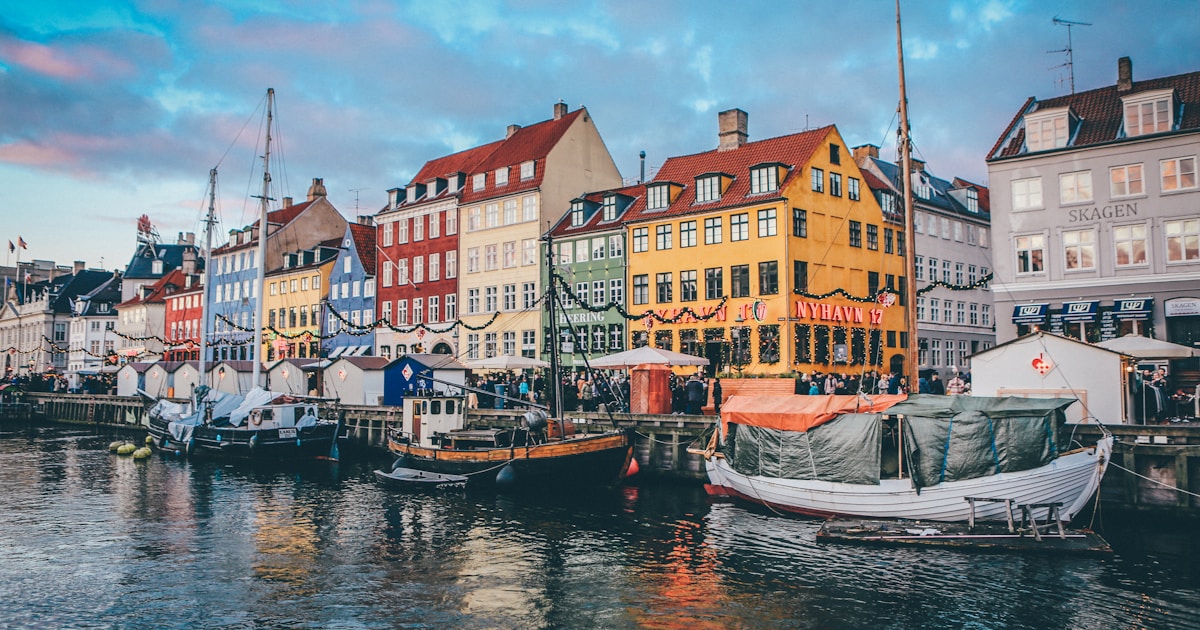
Nyhavn
The most photographed spot in Denmark: a 17th-century harbour lined with colourful townhouses, wooden ships, and café terraces. Hans Christian Andersen lived at No. 18, 20, and 67. Free to walk along at any hour. The tourist-facing restaurants on the quay are overpriced — grab a beer from a nearby shop and sit on the quayside with the locals instead. Nyhavn is at its best in the golden hour before sunset.
The Little Mermaid (Den Lille Havfrue)
Edvard Eriksen’s bronze statue, on the harbour near Langelinie, has been Copenhagen’s symbol since 1913. She is much smaller than you expect (1.25 metres tall). The area around her is always crowded with tour groups. Worth a brief stop but not a destination. Free.
Rosenborg Castle
A Renaissance castle built by Christian IV in 1606, set in the beautiful King’s Garden (Kongens Have). Inside: royal treasures including the Danish Crown Jewels, the coronation throne, and jewel-encrusted swords. The gardens are free and perfect for a picnic. 140 kr. Included in Copenhagen Card.
Christiansborg Palace
The seat of the Danish Parliament, Supreme Court, and Prime Minister — the only building in the world housing all three branches of government. Three separate paid exhibitions: Royal Reception Rooms (140 kr, the most impressive), Ruins (65 kr, medieval foundations beneath the palace), and the Tower (free, best free view in Copenhagen, open until 21:00). A combined ticket (200 kr) covers all three paid exhibitions.
Round Tower (Rundetårn)
A 17th-century astronomical observatory with a unique spiral ramp (no stairs) leading to the top. Christian IV built it so he could ride his horse to the top. The view over Copenhagen’s rooftops is lovely. 60 kr. A glass floor at the top lets you look 25 metres straight down. Note: the observatory is currently under restoration.
Church of Our Saviour (Vor Frelsers Kirke)
In Christianshavn, famous for its external spiral staircase winding around the spire. Climb 400 steps for a panoramic view over Copenhagen. The last section is outside and the staircase narrows — not for those with vertigo. 70 kr for the tower (church is free). Closed in bad weather and in winter.
National Museum of Denmark
Denmark’s largest museum of cultural history. Viking artefacts, Bronze Age sun chariots, ethnographic collections, and a Victorian-era apartment preserved intact. Free permanent collection (temporary exhibitions 150 kr). One of the best free museums in Europe. Budget 2–3 hours.
Ny Carlsberg Glyptotek
An art museum founded by the son of the Carlsberg brewery founder. Extraordinary collection of ancient Egyptian, Greek, and Roman art plus French Impressionists (Monet, Degas, Gauguin, Rodin). The winter garden with tropical palms under a glass dome is stunning. 125 kr. Free on Tuesdays (permanent collection).
Tivoli Gardens In-Depth
The world’s second-oldest amusement park (opened 1843), right in the centre of Copenhagen next to the main train station. Walt Disney visited Tivoli and was inspired to create Disneyland. It is not a theme park in the modern sense — it is a pleasure garden: rides, concert halls, theatres, restaurants, flower gardens, and illuminated buildings.
- Entry only: ~170 kr (dynamic pricing 150–230 kr depending on date; gives access to the gardens, shows, and atmosphere; rides cost extra individually, 30–85 kr each).
- Unlimited Rides: 429–539 kr (entry + all-day ride pass, varies by date). Best value for families and ride enthusiasts.
- Seasons: Summer (mid-April–September), Halloween (October), and Christmas (mid-November–end of December). Closed January–March.
- Concerts: The Friday Rock concert series (summer Fridays, free with entry) attracts major international acts.
New Nordic Food & Danish Classics
Copenhagen’s food revolution began with Noma in 2003 and has since transformed the entire city. The “New Nordic” philosophy — local, seasonal, foraged, fermented — now influences everything from fine dining to street food stalls.
| Dish | Description | Typical Price |
|---|---|---|
| Smørrebrød | Open-faced rye bread sandwiches — Denmark’s national dish (see deep-dive) | 65–145 kr each |
| Frikadeller | Danish pork meatballs with potatoes, gravy, red cabbage & pickled cucumber | 145–195 kr |
| Stegt flæsk | Crispy fried pork belly with parsley sauce & potatoes — Denmark’s national dish (voted) | 135–185 kr |
| Flæskesteg | Roast pork with crackling, red cabbage & caramelised potatoes | 155–225 kr |
| Rødgrød med fløde | Red berry compote with cream — a pronunciation test & dessert | 55–85 kr |
| Pølser (hot dogs) | Danish hot dogs from street carts with remoulade, crispy onions, pickles | 40–65 kr |
| Wienerbrød | “Danish pastries” — actually from Vienna, perfected in Denmark | 35–60 kr each |
| Kanelsnegl | Danish cinnamon rolls — flat, buttery, with cardamom | 35–55 kr |
| Hakkebøf | Danish-style beef patty with caramelised onions & gravy | 125–175 kr |
| Rugbrød | Dense Danish rye bread — the foundation of smørrebrød | 30–50 kr (bakery loaf) |
Where to Eat Danish Classics
Schønnemann (Hauser Plads 16) — Copenhagen’s oldest smørrebrød restaurant, open since 1877. The definitive experience. Smørrebrød from 95–165 kr. Lunch only (11:30–17:00). Reservations essential.
Café Halvvejen (Kristen Bernikows Gade 11) — Traditional Danish pub with stegt flæsk and frikadeller at fair prices. Mains 125–175 kr.
Dalle Valle — A classic Danish brunch/lunch buffet chain. Affordable all-you-can-eat Scandinavian food.
Told & Snaps (Toldbodgade 2) — Traditional Danish lunch near Nyhavn without the tourist markup. Smørrebrød and snaps. 85–145 kr per piece.
Smørrebrød Deep-Dive
Smørrebrød (“buttered bread”) is Denmark’s most important culinary tradition. A slice of dense rye bread (rugbrød) is the base, topped with carefully composed layers of protein, garnish, and sauce. This is not a sandwich — it is architecture. You eat it with a knife and fork.
Classic Toppings
- Stjerneskud (“shooting star”) — Fried and steamed fish fillet with shrimp, lemon, caviar, and asparagus. The showpiece.
- Dyrlægens natmad (“the veterinarian’s midnight snack”) — Liver pâté, corned beef, onion rings, and aspic.
- Kartoffelsmad — Potato slices with mayonnaise, crispy onions, and chives.
- Sild — Herring, prepared multiple ways: pickled, curried, fried.
- Røget ål — Smoked eel with scrambled eggs.
- Tartar — Raw beef tartare with capers, onion, and raw egg yolk.
Etiquette: Eat smørrebrød from lightest to heaviest: herring first, then other fish, then meat, then cheese. Drink snaps (aquavit) with herring — beer or wine with the rest. Three pieces make a full lunch.
Best Smørrebrød in Copenhagen
Schønnemann — The gold standard since 1877. 95–165 kr per piece.
Aamans (Oster Farimagsgade 10) — Modern takes from chef Adam Aamann. 85–135 kr.
Selma (Rømersgade 20) — Casual, creative, excellent value. 75–120 kr.
Palægade (Palægade 8) — Tiny, beautiful, run by former Noma cooks. 95–145 kr.
Street Food & Snacks
Pølser (Danish Hot Dogs)
The Danish hot dog (pølse) from a street cart (pølsevogn) is a national institution. A red sausage in a bun with remoulade (a sweet pickle-mustard sauce), raw and crispy fried onions, pickled cucumber, ketchup, and mustard. 40–65 kr. The carts are being gradually replaced, but you’ll still find them near train stations and tourist spots. Harry’s Place and DOP (Den Økologiske Pølsemand) are the best known.
Reffen (Street Food Market)
Copenhagen’s street food market on Refshaleøen, an island in the harbour. 40+ food stalls from around the world: Korean BBQ, Mexican tacos, Neapolitan pizza, Japanese ramen, Danish fish and chips. Dishes from 65–120 kr. Great atmosphere, harbour views, fire pits in winter. Open April–December (Thu–Sun in shoulder season, daily in summer). Free entry; food purchased from individual stalls.
Torvehallerne
A covered market in two glass halls near Nørreport station. High-quality food stalls, delis, fishmongers, and cafés. More upscale than Reffen — good for Danish specialties like smørrebrød, østershaps (oyster bar), fresh juice, and pastries. Budget 75–150 kr for a meal.
Danish Pastries (Wienerbrød)
Flaky, buttery, and less sweet than their international imitators. The best bakeries: Meyers Bageri (multiple locations, 40–55 kr), Juno the Bakery (Vesterbro, sells out early), Hart Bageri (Frederiksberg, started by an ex-Noma bread baker, 45–65 kr), and Andersen & Maillard (Nørrebro).
Fine Dining & Michelin 2026
Copenhagen has one of the highest concentrations of Michelin stars in the world. The post-Noma generation of chefs has made the city a global fine dining destination.
Michelin-Starred Restaurants (2026)
| Restaurant | Stars | Cuisine | Tasting Menu |
|---|---|---|---|
| Noma | ⭐⭐⭐ | New Nordic (seasonal pop-ups) | Varies by event |
| Geranium | ⭐⭐⭐ | New Nordic / vegetarian-forward | ~4,200 kr |
| Jordnær | ⭐⭐⭐ | Seafood / Nordic luxury | 3,200–3,800 kr |
| Alchemist | ⭐⭐ | Theatrical / holistic (50 courses) | ~5,600 kr |
| Kadeau | ⭐⭐ | Bornholm-inspired Nordic | 2,800–3,200 kr |
| Koan | ⭐⭐ | New Nordic / Asian fusion | 2,500–3,200 kr |
| Marchal | ⭐ | French-Nordic at Hotel d’Angleterre | 1,800–2,200 kr |
| Formel B | ⭐ | Modern European | 1,200–1,500 kr |
| JATAK | ⭐ | New Nordic tasting menu | 1,400–1,800 kr |
| Alouette | ⭐ | Nordic-French fine dining | 1,400–1,800 kr |
| Aure | ⭐ | Modern Scandinavian | 1,200–1,600 kr |
| The Samuel | ⭐ | Contemporary Nordic | 1,200–1,600 kr |
The Noma Legacy
Noma closed as a daily restaurant in late 2024 and transitioned to Noma Projects — a food lab, pop-up, and experimental dining model. It retains its three Michelin stars and operates seasonal pop-up events (including an LA pop-up running March–June 2026). René Redzepi’s restaurant that started the New Nordic movement may no longer serve nightly dinners, but Noma’s DNA is everywhere in Copenhagen: dozens of alumni run their own restaurants, and the foraging-fermentation-local philosophy has become Copenhagen’s default setting. Key Noma alumni restaurants include 108 (now closed), Amass, Relæ (now Bror), Sanchez (tacos), and Hart Bageri (bread).
Great Restaurants Under 500 kr
Bror (St. Peders Stræde 24A) — Two Noma alumni cooking nose-to-tail Nordic. Tasting menu from 450 kr.
Pony (Vesterbrogade 135) — Kadeau’s casual sister restaurant. Fixed menu from 395 kr.
Sanchez (Istedgade 60, Vesterbro) — By a Noma-trained Mexican-Danish chef. Tacos from 55 kr each.
Mirabelle (Nørrebro) — Natural wine bar with seasonal small plates. 75–145 kr per dish.
Gasoline Grill (Landgreven 10) — A burger joint in a former petrol station. Widely considered the best burgers in Copenhagen. 75–110 kr.
Coffee & Pastries
Copenhagen takes coffee as seriously as food. Third-wave roasters dominate, and the Danish concept of “hygge” finds its purest expression in a café with a candle, a cardamom bun, and a flat white.
The Coffee Collective (Jægersborggade 10, Nørrebro + others) — Copenhagen’s most influential roaster. Filter from 40 kr, flat white 50 kr.
Prolog (Højbro Plads 12) — Central location, excellent speciality coffee. 40–55 kr.
Democratic Coffee (Kristen Bernikows Gade 1) — Sustainability-focused, good pastries. 35–50 kr.
Original Coffee (multiple locations) — Local chain with consistently good quality. 35–50 kr.
Juno the Bakery (Vesterbro) — Croissants and kanelsnegle that sell out by mid-morning. 35–55 kr. Go early.
Hart Bageri (Gammel Kongevej, Frederiksberg) — Founded by Noma’s bread baker Richard Hart. Sourdough, pastries, and some of the best bread in Europe. 45–65 kr for pastries.
Beer, Wine & Drinking Culture
Denmark is a serious beer country. Carlsberg was founded here in 1847, but the real story now is craft beer.
Mikkeller — Copenhagen’s most famous craft brewery, with multiple bars across the city. Mikkeller Bar (Vesterbro) is the flagship. 55–85 kr per beer. Their Mikkeller & Friends bottle shop in Nørrebro is paradise for beer geeks.
Warpigs (Flæsketorvet, Meatpacking District) — A Mikkeller/Three Floyds collaboration brewpub. BBQ and craft beer in a massive hall. 55–80 kr per beer. The BBQ is excellent.
Taphouse (Lavendelstræde 15) — 61 taps of Danish and international craft. 50–80 kr.
Natural wine: Copenhagen is the European capital of natural wine. Ved Stranden 10 (a wine bar on the canal), Rudo (Vesterbro), and Pompette (Nørrebro) are essential. Glasses from 85–130 kr.
Snaps (aquavit): The traditional Danish spirit, flavoured with caraway, dill, or other herbs. Drunk ice-cold with smørrebrød and herring. A shot at a restaurant: 50–85 kr.
Neighbourhoods
Indre By (City Centre)
The historic centre: Strøget (Europe’s longest pedestrian street), Nyhavn, Kongens Nytorv, and the Royal district. Most tourist attractions are here. Accommodation is expensive but convenient. Eat one street back from the main thoroughfares for better value.
Vesterbro
The former red-light district, now Copenhagen’s trendiest neighbourhood. The Meatpacking District (Kødbyen) is the epicentre: converted slaughterhouses turned into restaurants (Warpigs, Fleisch, Paté Paté), galleries, and nightclubs. Istedgade is the main street — gritty to glam in a few blocks. Juno, Sanchez, Rudo wine bar are all here.
Nørrebro
Multicultural, creative, and the most diverse neighbourhood. Jægersborggade is the destination street: Coffee Collective, ceramics studios, natural wine bars, and Bæst (Michelin Bib Gourmand pizza with house-made mozzarella). Assistens Cemetery — where Hans Christian Andersen and Søren Kierkegaard are buried — doubles as a park where locals sunbathe.
Christianshavn
Copenhagen’s canal district, modelled on Amsterdam. The Church of Our Saviour spire, houseboats on the canals, and the entrance to Christiania. Quieter and more residential than the centre. Some excellent restaurants.
Frederiksberg
An independent municipality surrounded by Copenhagen. Green, affluent, and residential. Frederiksberg Have (gardens) is one of the city’s best parks. The Copenhagen Zoo is here. Good for a quieter base.
Østerbro
Upscale and family-friendly. Fælledparken (Copenhagen’s largest park) is here. The Kastellet (star-shaped fortress) and the Little Mermaid are on its eastern edge. Good brunch scene.
Islands Brygge & Amager
South of the centre, across the harbour. Islands Brygge harbour bath (free) is the most popular open-water swimming spot. The area has a young, relaxed vibe. Amager Strandpark is a 4.6 km beach 15 minutes from the centre by metro.
Christiania
The Freetown Christiania is a self-proclaimed autonomous neighbourhood in Christianshavn, established by squatters in 1971 on the site of an abandoned military barracks. For over 50 years it has operated with its own rules, its own governance, and a famously relaxed attitude to cannabis.
What to expect in 2026: In April 2024, Christiania residents themselves demolished Pusher Street — the notorious cannabis market — following years of escalating gang violence. The area is now being redeveloped by the community into housing and shared space. The rest of Christiania — the car-free paths, artist workshops, handmade houses, lakeside areas, concert venue Loppen, organic restaurant Morgenstedet, and craft beer at Nemoland — remains vibrant. Photography is now generally permitted throughout (the old “no photos on Pusher Street” rule is gone with the street itself). The entrance is free; it’s a functioning neighbourhood, not a tourist attraction. Be respectful.
Design & Architecture
Danish design is a national identity marker. Copenhagen is where you see it lived.
Designmuseum Danmark (Bredgade 68) — The definitive collection: Arne Jacobsen chairs, PH lamps, Royal Copenhagen porcelain, Kay Bojesen toys, Bang & Olufsen, and the story of Danish design from craft to industry. 140 kr. A must for anyone interested in design.
Louisiana Museum of Modern Art (Humlebæk, 35 min by train) — Arguably Scandinavia’s finest art museum. The setting is extraordinary: a modernist villa on the coast with sculpture gardens overlooking the Øresund strait. World-class exhibitions. 145 kr. Allow a full half-day. Included in Copenhagen Card.
Superkilen (Nørrebro) — A public park designed by BIG (Bjarke Ingels Group), with objects collected from 60 countries representing the neighbourhood’s multicultural residents. Free.
The Royal Danish Playhouse & Opera House — Two striking waterfront buildings by Henning Larsen and Lundgaard & Tranberg. Walk along the harbour promenade to see both.
Copenhagen Contemporary (CC) — A post-industrial contemporary art space on Refshaleøen. Rotating exhibitions, often large-scale installations. 120 kr.
Harbour Life & Swimming
Copenhagen’s harbour is clean enough to swim in — a remarkable achievement for a capital city and a source of enormous local pride.
Islands Brygge Harbour Bath — Five pools (including a diving platform) in the harbour, open June–September. Free. The most popular swimming spot in the city. Packed on sunny days.
Kalvebod Bølge — A striking wooden wave-shaped promenade near the harbour. Swimming, kayaking, sunbathing. Free.
Sluseholmen Harbour Bath — Quieter than Islands Brygge. Free.
GoBoat — Self-drive solar-powered boats for up to 8 people. Bring a picnic and cruise the canals. 499 kr/hour (split between friends, it’s reasonable). An unmissable Copenhagen experience.
Kayak Republic — Kayak rentals on the harbour. From 100 kr/hour. Paddle through the canals of Christianshavn.
Cycling Copenhagen
Copenhagen is the world’s most bike-friendly city. 62% of residents cycle to work. There are 400+ km of dedicated cycle lanes. You should cycle. It is the best way to experience the city.
Donkey Republic — App-based bike rental, the most popular option for tourists. 99 kr/24h day deal (or hourly rates). Bikes are scattered throughout the city; unlock via the app.
Note: The Bycyklen city bike scheme has shut down. Donkey Republic is now the main bike-share option. Many hotels and hostels also offer free or cheap bike loans to guests.
Nightlife
Copenhagen’s nightlife is concentrated in three areas: Vesterbro/Kødbyen (Meatpacking District), Nørrebro, and the centre around Gothersgade.
Kødbyen (Meatpacking District) — The main nightlife zone. Converted slaughterhouses with clubs and bars: Jolene (electronic/alternative), Bakken (drinks and dancing), KB3 (club nights). Most places are free entry before midnight; cover charges 100–200 kr after.
Rust (Nørrebro) — Live music and DJs. One of Copenhagen’s longest-running clubs.
Culture Box (Kronprinsessegade 54) — The serious techno/electronic club. Three rooms, international DJs.
Lidkoeb (Vesterbro) — A three-storey cocktail bar in a former pharmacy. Top-floor whisky bar is the highlight. Cocktails 110–145 kr.
Ruby (Nybrogade 10) — Consistently ranked among the world’s best cocktail bars. No sign outside — ring the doorbell. Cocktails 125–165 kr.
Shopping
Strøget — Europe’s longest pedestrian shopping street (1.1 km). International brands dominate, but Illums Bolighus (Danish design department store) and Royal Copenhagen (porcelain) are worth visiting.
Jægersborggade (Nørrebro) — The coolest shopping street in Copenhagen: independent ceramicists, designers, coffee roasters, and natural wine.
Hay House (Pillestræde 29–31) — Hay’s flagship store for colourful, affordable Danish design.
Stilleben (Frederiksborggade 22) — Danish and Scandinavian ceramics and design objects.
Normann Copenhagen (Østerbro) — Flagship showroom for one of Denmark’s biggest design brands.
Løppemarkeder (flea markets) — Weekend flea markets at Israels Plads and various pop-up locations.
Getting Around
| Transport | Price | Notes |
|---|---|---|
| Single ticket (2 zones) | 24 kr | Metro, bus, train within 2 zones, 75 min |
| Single ticket (3 zones, airport) | 30 kr | Airport to city centre |
| 24-hour CityPass Small | 100 kr | Unlimited travel, zones 1–4 |
| 72-hour CityPass Small | 220 kr | Unlimited travel, zones 1–4 |
| Metro (airport → centre) | 30 kr | M2 line, 15 min to Nørreport |
| Bike (Donkey Republic) | 99 kr/day | App-based, hourly rates also available |
| Bolt/Uber (airport) | 200–350 kr | To centre, 20–30 min |
From Copenhagen Airport (Kastrup)
The airport is only 8 km from the city centre — one of the best-connected airports in Europe.
Metro M2 — The easiest option. Trains every 4–6 minutes, 24/7. 30 kr (3-zone ticket), 15 minutes to Nørreport (city centre). Buy at the machine or use the DOT Tickets app (Rejsekort is the local transport card).
Train (DSB) — Direct trains to København H (Central Station). 30 kr, 14 minutes. Less frequent than metro but goes directly to the main station.
Bolt or Uber — 200–350 kr to the centre. 20–30 minutes depending on traffic.
Metro & Bus
The Copenhagen Metro runs 24/7, driverless. Two main lines (M1, M2) plus the City Circle (M3) which loops through the centre and Nyhavn. M4 extends to Nordhavn. Buses fill the gaps. The system is zone-based — most central trips are 2 zones.
Copenhagen Card
The Copenhagen Card is the city’s all-in-one sightseeing and transport pass. In an expensive city, it can save significant money.
| Duration | Adult | Child (10–15) | Includes |
|---|---|---|---|
| 24 hours | 589 kr | 319 kr | 80+ attractions + unlimited transport |
| 48 hours | 859 kr | 459 kr | Same |
| 72 hours | 1,039 kr | 549 kr | Same |
| 120 hours | 1,419 kr | 719 kr | Same |
What’s included: Free entry to 80+ attractions (Tivoli, Rosenborg, Amalienborg, Round Tower, Glyptotek, Designmuseum, Louisiana, Christiansborg, Copenhagen Zoo, Church of Our Saviour, canal boat tour, and many more). Unlimited public transport (metro, bus, train) including to/from the airport. Harbour boat tours included.
What’s NOT included: Tivoli rides (entry only), Alchemist/Geranium dinner, Christiania (free anyway), GoBoat, bike rental.
Is it worth it? If you visit Tivoli (~170 kr) + Rosenborg (140 kr) + Louisiana (145 kr) + one canal tour (110 kr) = 565 kr. The 24-hour card costs 589 kr and includes unlimited transport too. Add one more attraction and it pays for itself easily.
Day Trips from Copenhagen
Malmö, Sweden
Cross the Øresund Bridge to Sweden. Malmö is 35 minutes by train from Copenhagen Central. The bridge crossing itself is an experience. In Malmö: Turning Torso (Scandinavia’s tallest building), Malmöhus Castle, and excellent falafel on Möllan (Malmö has Sweden’s best Middle Eastern food). Train: 77–91 kr each way (DSB/Skånetrafiken). Bring your passport — random checks on the bridge.
Helsingør & Kronborg Castle (Hamlet’s Castle)
The UNESCO-listed castle that Shakespeare used as the setting for Hamlet (he called it “Elsinore”). A magnificent Renaissance fortress on the coast, with views across to Sweden. Castle: 145 kr (summer). The town of Helsingør is charming with a medieval centre and the excellent M/S Maritime Museum (145 kr, designed by BIG architects). Train from Copenhagen: 45 min, ~78 kr each way. You can also take the ferry to Helsingborg, Sweden from here (45 kr, 20 min).
Louisiana Museum of Modern Art
See the Design section above. 35 minutes by train to Humlebæk. 145 kr (free with Copenhagen Card). One of the world’s finest art museums. Included in Copenhagen Card.
Roskilde
The former Viking capital, 25 minutes by train. Roskilde Cathedral (UNESCO, 70 kr — 80 kr from July 1) — burial place of 39 Danish monarchs. The Viking Ship Museum (160 kr, reduced in winter) has five original Viking ships pulled from the fjord. In summer you can sail a reconstructed Viking ship. Train: ~75 kr each way.
Dragør
A picture-perfect fishing village 12 km south of Copenhagen, with yellow-washed houses, cobblestone lanes, and the harbour. Bus 350S from Nørreport (included in transport pass), 40 minutes. A lovely half-day escape.
Budget & Money
| Category | Budget | Mid-Range | Luxury |
|---|---|---|---|
| Accommodation | 250–500 kr dorm | 900–1,800 kr | 2,500–6,000 kr+ |
| Food (per day) | 200–400 kr | 500–1,000 kr | 1,500–4,000 kr |
| Transport (per day) | 0 kr (bike/walk) | 100 kr (day pass) | 200–400 kr |
| Beer (0.5L) | 40–65 kr | 65–85 kr | 85–130 kr |
| Daily Total | 500–1,000 kr (~€67–134) | 1,500–3,000 kr (~€200–400) | 4,500–10,000+ kr (~€600–1,340+) |
Currency & Payments
Denmark uses the Danish krone (DKK / kr), NOT the euro. The krone is pegged to the euro at approximately 7.46 kr/€1. Copenhagen is essentially cashless — cards are accepted everywhere, including street food stalls, hot dog carts, and public toilets. Many places do not accept cash at all. A Visa or Mastercard debit/credit card (contactless) is all you need. Revolut and Wise work perfectly.
Weather & Best Time to Visit
Summer (Jun–Aug): The best time. Warm (18–25°C), very long days (sunrise 04:30, sunset 22:00 in June). Outdoor life in full swing — harbour baths, cycling, rooftop bars. Peak tourist season.
Spring (Apr–May): Cool but pleasant (8–16°C). Tivoli opens mid-April. Cherry blossoms in the cemetery. Fewer crowds.
Autumn (Sep–Oct): Crisp and golden (6–15°C). Hygge season begins. Great for food festivals (Copenhagen Cooking in August/September).
Winter (Nov–Mar): Dark and cold (0–5°C). Tivoli Christmas market (mid-November–December) is magical. Expect 7 hours of daylight in December. Hygge at its peak — candles, wine bars, warm restaurants.
Best months: June–August for outdoor life. December for Tivoli Christmas and hygge.
Safety & Tips
Copenhagen is one of the safest cities in Europe. Crime against tourists is very rare.
- Pickpockets: Rare but present on Strøget, in Tivoli, and on busy metro lines. Standard awareness.
- Christiania: Generally safe during the day. Pusher Street was demolished in 2024; the area is calmer but exercise normal caution at night.
- Cycling safety: The biggest risk for tourists is stepping into a bike lane. Always look left before crossing — cyclists have right of way and travel fast.
- Tipping: Not expected in Denmark. Service is included. Rounding up by 10–20 kr or leaving 5–10% for exceptional service is appreciated but never required.
- Tap water: Excellent. Copenhagen’s tap water is some of the best in Europe. No need to buy bottled.
What’s New in 2026
Noma: Noma closed as a daily restaurant in late 2024 and transitioned to Noma Projects — a food lab, pop-ups, and experimental dining events. Noma retains its 3 Michelin stars and is running an LA pop-up March–June 2026. Check nomacph.dk for current offerings.
Christiania redevelopment: Pusher Street was demolished by residents in April 2024. The area is being redeveloped into housing and community space. The rest of Christiania remains open and vibrant.
Metro M4: The Nordhavn extension is operational, connecting the new waterfront developments. Sydhavn extension is under construction.
Water Culture Centre: A new aquatic centre on Papirøen is scheduled to open in 2026, adding to Copenhagen’s harbour life.
Direct train Prague–Copenhagen–Berlin: A new direct rail service launches May 1, 2026, connecting Copenhagen to Prague via Berlin without changes.
Verner Panton Centennial: 2026 marks the 100th anniversary of Danish designer Verner Panton. Expect exhibitions across Copenhagen’s design institutions.
Distortion 2026: June 3–7. Copenhagen’s street festival — free street parties Wednesday–Friday, paid events Saturday.
Copenhagen Jazz Festival 2026: July 3–12. Ten days of jazz across 100+ venues. Many free concerts.
Copenhagen Cooking 2026: August 21–30. Denmark’s largest food festival.
Entry requirements: Denmark is in the Schengen Area. EU/EEA citizens need only an ID card. Non-EU visa-exempt nationals can stay 90 days in any 180-day period. ETIAS is not yet in effect as of April 2026.
Cashless city: Copenhagen is now almost entirely cashless. Carry a card (Visa/Mastercard contactless). Some places actively refuse cash.
How Many Days in Copenhagen?
2 days: Nyhavn, Tivoli, Strøget, smørrebrød at Schønnemann, harbour swim, Christiania.
4 days: Add Rosenborg, Louisiana, cycling Nørrebro/Vesterbro, Torvehallerne, Reffen, Meatpacking District nightlife, Designmuseum.
6+ days: Add Malmö day trip, Helsingør & Kronborg, Roskilde Vikings, deeper neighbourhood exploration, a tasting menu dinner.
Frequently Asked Questions
How many days do I need in Copenhagen?
Three days is ideal. Two covers the highlights, four lets you add day trips and deeper neighbourhood exploration.
Is Copenhagen really that expensive?
Yes, it’s one of Europe’s most expensive cities. But smart choices help: free museums, harbour swimming, cycling instead of taxis, lunch smørrebrød instead of dinner tasting menus, and the Copenhagen Card for sightseeing.
Is Noma still open?
Noma closed as a daily restaurant in late 2024. It transitioned to Noma Projects — a food lab and pop-up model. The New Nordic food culture it created lives on in dozens of Copenhagen restaurants run by Noma alumni.
Is Copenhagen safe?
Very safe. The biggest risk for tourists is stepping into a bike lane. Standard pickpocket awareness on Strøget and in Tivoli.
Do I need cash in Copenhagen?
No. Copenhagen is essentially cashless. Visa/Mastercard contactless is accepted everywhere. Some places actively refuse cash.
Can I swim in the harbour?
Yes. Copenhagen’s harbour water is clean enough to swim in. Islands Brygge harbour bath is free and open June–September.
Is the Copenhagen Card worth it?
If you plan to visit 3+ paid attractions and use public transport, yes. Tivoli + Rosenborg + Louisiana + one more attraction plus transport makes the 589 kr 24-hour card pay for itself.
When is the best time to visit?
June–August for outdoor life, long days, and harbour swimming. December for Tivoli Christmas and peak hygge.
Explore More Guides
- 🇳🇴 Oslo City Guide 2026
- 🇵🇱 Krakow City Guide 2026
- 🇨🇿 Prague City Guide 2026
- 🇩🇪 Munich City Guide 2026
- 🇦🇹 Vienna City Guide 2026
- 🇭🇺 Budapest City Guide 2026
- 🇪🇸 Madrid City Guide 2026
- 🇮🇹 Naples City Guide 2026
This guide was researched and written by the AiFly editorial team. Last verified April 2026. Prices and opening hours are subject to change — always confirm locally. AiFly may earn a commission from partner links at no extra cost to you.