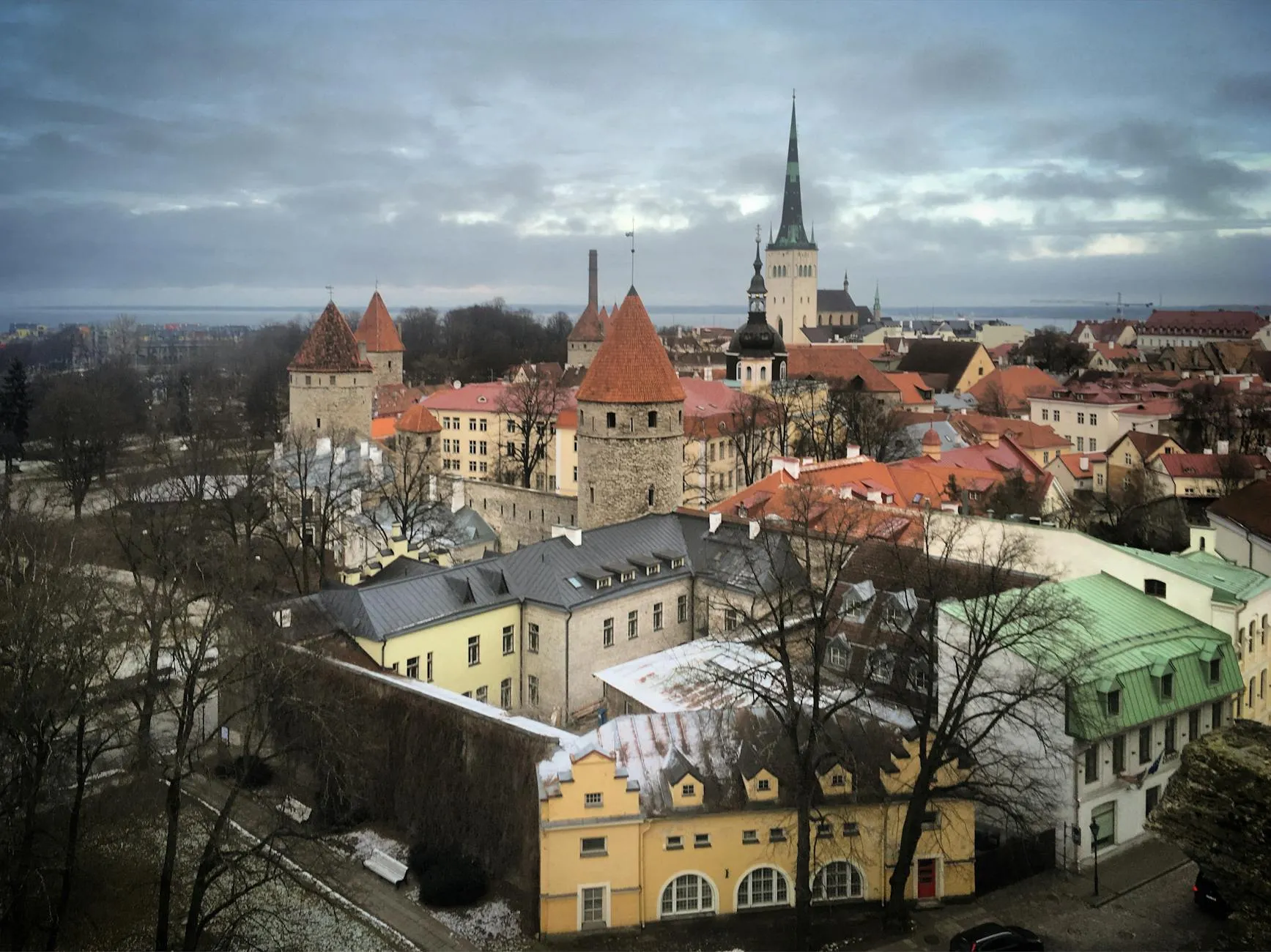
Tallinn — The Complete City Guide 2026
Medieval towers, digital innovation, Baltic design, and craft beer — your complete guide to Estonia’s fairy-tale capital.
€60–100/day budget
Best: May–Sep
Last verified: March 2026. Every price, opening hour, and booking link in this guide has been checked against official sources. Verify at the listed URLs before visiting — Tallinn changes faster than its medieval walls suggest.
Why Tallinn? An Editor’s Note
If Riga is the “Paris of the East” with its sweeping Art Nouveau boulevards, Tallinn is the “Stockholm of the East” — cleaner, tighter, more architecturally precise, and operating on a level of digital infrastructure that would embarrass capitals ten times its size. By 2026, Tallinn has fully embraced its designation as a European Green Capital: the city centre is increasingly car-free, laced with urban gardens, and hyper-connected in ways that mean you can arrive with only a phone and never need cash, a paper ticket, or a printed map.
The problem — and every good city guide starts with the problem — is that the tourist infrastructure sells you only one layer of a city that has three. Visitors arrive on the Helsinki ferry, walk through the Viru Gates, take the Town Hall Square photograph, queue at a medieval-themed restaurant where a server in a doublet brings them elk soup for €28, and leave believing they have seen Tallinn. They have seen its most photographed exterior.
To understand Tallinn you must view it as three distinct cities occupying the same limestone ridge and its industrial waterfront. The Upper Crust (Toompea): the fortified seat of power, limestone and parliament buildings and views that have not fundamentally changed since the 17th century. The Merchant Soul (Old Town, Vanalinn): a 13th-century maze of Hanseatic warehouses, guild halls, and a pharmacy that has dispensed medicine continuously since 1422 — the oldest in Europe. And the Industrial Rebirth: Telliskivi, Noblessner, Kopli, and the Rotermann Quarter — where Tallinn residents actually live, work, start companies, and spend their evenings. This guide covers all three. It is opinionated by design. A guide that recommends everything recommends nothing.
Who this guide is for: Design lovers, tech enthusiasts, history obsessives, and food travellers who have no patience for grime. Couples, solo explorers, people who want to understand a place rather than merely photograph it. Budget to luxury. A long weekend to a week.
Extending the trip? See our Riga city guide (4 hours by Lux Express), Vilnius city guide (8 hours by bus or 1 hour flight), and Copenhagen city guide for the same treatment. Helsinki is 2 hours by ferry — the day-trip route is on the Best Time to Visit section below.
Table of Contents
Top Attractions in Tallinn
1. Toompea — The Fortified Upper Town
Toompea has been the seat of power on this limestone ridge for over 800 years. The plateau rises 20 metres above the Lower Town — naturally defensible, commanding views east across the Gulf of Finland and west to the Estonian archipelago — and standing at its edge in early morning, when the ferry groups from Helsinki have not yet reached the viewpoints, the quality of silence here is specific: the sound of a city that hasn’t quite woken up yet below a hill that has been watching cities wake up for eight centuries.
The castle is a palimpsest of occupations: Danish foundations from the 13th century, modifications by the Teutonic Knights, Swedish towers added in the 16th century, and pink baroque administrative buildings imposed by Catherine the Great in the 1770s. The result is one of Europe’s most architecturally layered fortresses, currently housing Estonia’s Riigikogu parliament. Tall Hermann (Pikk Hermann), the original Danish tower at the south-west corner — 45.6 metres, the highest point in Old Town — has flown the blue-black-white Estonian national flag continuously since 1991. During Soviet occupation it was raised secretly on the night of 24 February 1989, filmed by Western journalists, and broadcast worldwide. The USSR collapsed two years later.
The Alexander Nevsky Cathedral (1900) is the unavoidable counterpoint: a deliberate Tsarist political statement, positioned at Toompea’s most prominent point to assert Russian cultural dominance over the Baltic-German nobility. Five onion domes and an interior of floor-to-ceiling Byzantine mosaics. Estonians have always had a complicated relationship with this building. Both reactions — beauty and discomfort — are correct.
Price: Free to walk; Cathedral free entry (donations welcome) Hours: Toompea viewpoints always open; Cathedral Mon—Sat 8am—7pm, Sun 8am—8pm How to get there: Walk up the Long Leg Gate Tower (Pikk jalg) or Short Leg Gate Tower (Lühike jalg) from Lower Town. Access: Cobblestone lanes throughout — challenging for wheelchairs. Patkuli viewpoint is accessible.
Editor’s tip: The Kohtuotsa viewing platform at the north edge of Toompea is the definitive Old Town panorama. In June 2026, sunrise is at 4:00 AM. If you are a photographer, go then — you will have the red-rooftops view entirely to yourself, and the low light hits St. Olaf’s spire perfectly. By 11:00 AM these viewpoints are difficult to use for anything except managing other people’s elbows.
2. Old Town — Secrets Beyond the Postcards
Town Hall Square (Raekoja plats) is the photographic icon and it deserves its reputation: a complete, intact medieval market square anchored by a 1404 Gothic Town Hall with a 64-metre spire topped by the weathervane figure of Old Thomas (Vana Toomas), who has watched over the city since 1530. The Town Hall Pharmacy at Raekoja Plats 11 — operational as a pharmacy since at least 1422 — is the oldest continuously trading pharmacy in Europe. Its 17th-century interior fittings (wooden drawers, ceramic jars) are not replica. It still dispenses medicines.
The cruise ship crowds stick to the square and Viru Street. The real magic of the Old Town is in the passages they miss. St. Catherine’s Passage (Katariina käik) — a narrow medieval alley running parallel to Müürivahe, connecting Vene Street to the town wall — is, in the considered judgement of travel editors who have worked Northern Europe for two decades, the most beautiful street in the region. Open-studio craftspeople (glassblowers, leatherworkers, ceramic artists) still occupy their workshops using techniques unchanged for 400 years. The passage is too narrow for tour groups and too unmarked for casual visitors; it is almost always quiet.
On Vene Street itself: find the Masters’ Courtyard (Meistrite Hoov). Tucked into a medieval courtyard behind an unmarked door, it contains a cluster of artisan workshops and, at its centre, Chocolaterie Pierre — a café that occupies the interior of what appears to be a 19th-century apothecary, overfilled with antiques, cases of chocolates, and the specific atmosphere of a place that has no interest in being discovered by anyone who didn’t already know about it. It is the best place in the city to hide from the Baltic wind.
Price: Free to walk; Town Hall tower €5; Town Hall Pharmacy free entry Hours: Tower May—Sep daily 10am—6pm; Pharmacy Mon—Sat 9am—7pm Access: Square and main streets flat and cobbled. St. Catherine’s Passage is uneven and narrow.
Editor’s tip: The weekly outdoor market on Town Hall Square runs Saturday mornings from 8am — local artisans, preserved foods, woollen goods, and the best prices in the city for linen and knitwear. Avoid the medieval craft shops on the surrounding lanes for anything you intend to actually use. The market is priced for residents.
3. Seaplane Harbour (Lennusadam) — Maritime Engineering at Scale
This is not a “boats on sticks” museum. Three enormous early 20th-century seaplane hangars on Tallinn’s northern waterfront, built between 1916—1917 using reinforced concrete parabolic arches — a structural technique so advanced for its time that the engineers couldn’t fully calculate why it worked. Each hangar runs 115 metres long, 48 metres wide, 17 metres at the apex, with no internal columns. The acoustics inside are extraordinary in the way that only very large, very old concrete spaces can be.
Inside: the Suur Tõll, the world’s oldest surviving ice-breaking steam ship (launched 1914), moored in the largest hangar. The Lembit — a full-size submarine built in Britain in 1936 for the Estonian Navy, one of the last surviving submarines from World War II — which you can board and walk through. The Fat Margaret Tower, a 16th-century artillery bastion at the Old Town’s seafront entrance, is accessible via a combined ticket. In 2026, a new Cyber-Maritime wing has opened showcasing Estonia’s autonomous underwater drone technology — a reminder that the country that built Skype is now building seabed infrastructure.
Price: Adult €22, student €11, family €40; free with Tallinn Card; combined Lennusadam + Fat Margaret Tower available Book: meremuuseum.ee Hours: May—Sep daily 10am—7pm; Oct—Apr Tue—Sun 10am—6pm, closed Mon How to get there: Bus 73 from city centre drops directly at the door. Or 25-minute walk along the seafront promenade from Old Town. Access: All hangars ground level, wide floors. Submarine has narrow hatch entry.
Editor’s tip: Arrive at 10:00 AM to avoid school groups, which typically arrive between 10:30 and 11:30. The outdoor café on the jetty behind the hangars (open May—September) serves the best water-level view of Tallinn’s Old Town. Order something and take your time with it.
4. Kumu Art Museum
The largest art museum in the Baltic states, built into the slope of the Lasnamäe limestone escarpment east of Kadriorg Park — a 2006 limestone-and-glass building by Finnish architect Pekka Vapaavuori that won the European Museum of the Year in 2008. The walk through Kadriorg Park to reach it (15 minutes from the Kadriorg tram stop) is half the reason to go: Peter the Great’s baroque park, the Japanese Garden at the park’s northern edge (now at peak maturity in 2026), the formal rose beds around the palace, and the pine forest beyond.
Kumu doesn’t just show art — it explains how Estonia survived the 20th century. The permanent collection of Estonian art from the 18th century to the present is comprehensive and intelligently curated; the temporary exhibitions are consistently ambitious. The Soviet-era floor is the most essential section for any visitor who wants to understand Tallinn past the cobblestones: works produced under and around the constraints of socialist realism, documenting the parallel private aesthetics that Estonian artists maintained against official production. It is chilling and necessary.
Price: Adult €16, student €8; combined Kumu + Kadriorg Palace €18 Book: kumu.ekm.ee Hours: Tue—Sun 10am—6pm, Wed until 8pm, closed Mon How to get there: Tram 1 or 3 to Kadriorg stop, then walk through the park (15 minutes). Access: Fully wheelchair accessible — lifts to all levels including the terrace.
Editor’s tip: Wednesday evening (open until 8pm) is the quietest visit of the week. The Kumu café on the ground floor is one of the better lunch options in the city — seasonal Estonian food at museum prices, with floor-to-ceiling windows over the park.
5. Fotografiska Tallinn
The Stockholm photography institution’s Tallinn outpost, in a 1905 converted power station on the edge of Old Town. Three to four rotating exhibitions of international-standard photography at any given time — typically one established major name, one emerging Baltic or Nordic artist, and one documentary programme. The quality of curation is genuinely high and consistently exceeds what you might expect in a capital of 450,000.
The conversion preserved the industrial ironwork, original brick, and height of the generating hall while adding contemporary gallery spaces across four floors. The rooftop bar and terrace is, in 2026, the gold standard for zero-waste mixology in Tallinn — cocktails built from fermented kitchen scraps, surplus produce, and foraged ingredients that sound like a provocation and deliver like a very good bar. The rooftop also has the best elevated view of Toompea from the east. The ground-floor restaurant operates a kitchen that Michelin observers have circled; the set lunch on weekdays (€22) is one of the best-value meals in the city centre.
Price: Adult €14—17 (dynamic off-peak / peak), student €11—14, children under 15 free Book: tallinn.fotografiska.com — advance booking recommended on weekends; top-tier dinner slots release exactly 30 days in advance at midnight Hours: Daily 10am—11pm; café open until midnight Fri—Sat Access: Fully wheelchair accessible — lifts to all floors and rooftop terrace.
Editor’s tip: The “Midnight Rule” applies here: the best dinner slots release exactly 30 days out. Set a calendar reminder. The zero-waste cocktail menu changes monthly — ask the bar staff what’s in season. In summer, the rooftop at sunset is the most sought-after hour in Tallinn hospitality.
6. Rotermann Quarter — Architecture and the Best Bakery in the EU
A lesson in contemporary architecture on the edge of Old Town: 19th-century grain elevators and limestone warehouses converted and interspersed with precision glass-and-steel buildings by international architects, creating a quarter that reads as a coherent architectural dialogue between eras rather than the usual collision. By 2026 it is the best cluster of work-from-anywhere cafés in the city — faster Wi-Fi than most London or New York home connections, excellent coffee, full of Estonian tech workers rather than tourists.
The non-negotiable stop is Røst Bakery. Queue is unavoidable; it is worth it. Their sourdough loaves are arguably among the finest in the EU — the crust-to-crumb ratio is exactly right, the fermentation is slow and audible in the flavour. The cardamom buns, a Nordic inheritance, are made with fresh cardamom ground to order and consumed warm. Arrive before 9:00 AM for the best selection. Budget €4—6 for pastry and coffee.
How to get there: 5-minute walk from Old Town through Viru Gate, turn right at the port. Access: Fully paved and flat throughout — best accessibility of any central Tallinn district.
Editor’s tip: Rotermann is where you go for a productive morning — breakfast at Røst, two hours of work at one of the glass-fronted cafés with your laptop, and then walk to the ferry terminal or Noblessner waterfront. It is not the most atmospheric district in Tallinn but it is the most functional, and it is the only area of the centre where you feel unambiguously in a 21st-century Baltic capital rather than a medieval theme park.
7. Linnahall — The Soviet Acropolis
Built in 1980 for the Moscow Olympics sailing events, Linnahall is a stepped concrete pyramid the size of a city block, sitting directly on the waterfront between the Old Town port and Noblessner. Its architect Raine Karp designed it as a monument to Soviet cultural aspiration — an open-air concert venue and seafront promenade in raw concrete on a scale intended to declare that this small Baltic republic had arrived culturally. The building hosted 70,000 spectators at its opening.
Since 1991, Linnahall has been neither demolished nor restored. It sits, gradually deteriorating, with its stepped terraces open and entirely free to walk. Locals use it as a sunset viewing platform, a skateboarding space, a place to watch the Helsinki ferries depart. The scale of it, and the quality of the light off the water, make it one of the more remarkable urban spaces in Northern Europe. Whatever the eventual decision about its future — demolish, restore, develop — it is worth visiting now, while it remains in this specific state of beautiful, melancholy neglect.
Price: Free Hours: Always open How to get there: 15-minute walk from Old Town along the seafront. Access: Wide concrete steps throughout — uneven and degraded in places.
Editor’s tip: The stepped terraces on the west side at sunset — when the light comes off the water and the Old Town towers are visible across the bay — are the best free photography location in Tallinn. Arrive with a camera and an hour.
8. Kiek in de Kök & the Bastion Tunnels
The name is medieval Low German for “Peep into the Kitchen” — a reference to the tower’s height and the guards’ ability to look directly into the kitchen windows below. Kiek in de Kök is the largest surviving medieval tower: 38 metres tall, walls up to 4 metres thick, built 1475—1483 to house 8 cannons per floor on six fighting levels. Swedish artillery hit it in 1577 and the cannonballs remain embedded in the walls. The exhibitions — on Tallinn’s military history and early artillery — are well-presented with one of the best collections of medieval siege warfare objects in the Baltic states.
The Bastion Tunnels beneath the tower are the highlight. Built by the Swedes in the 17th century, used as a Soviet bomb shelter in the Cold War, and for a period in the 1990s as informal housing for a community of Tallinn’s homeless population. The guided tunnel tour is atmospheric: narrow corridors hacked from limestone, candlelit alcoves, the particular silence that only underground medieval stone achieves. The atmosphere here — especially in the evening — does not exist in any other European capital.
Price: Combined tower + tunnels adult €15, student €8; tunnels guided tour adult €10 Book: linnamuuseum.ee — advance booking recommended in summer Hours: Tue—Sun 10am—6pm, closed Mon. Tunnel tours typically 11am, 1pm, 3pm daily. Access: Tower and tunnels have steep stairs and narrow passages — not wheelchair accessible.
Editor’s tip: Book the evening tunnel tour slot if available. Wear shoes with grip — the tunnel floors are uneven and occasionally damp. This is the most underrated experience in Tallinn for anyone who has already done the standard Old Town circuit.
Museum of Occupations and Freedom (Vabamu)
Sobering documentation of the Soviet and Nazi occupations of Estonia (1940–1991). Personal stories, resistance history, deportation records, film interviews. Essential for understanding the Baltic experience — the new “Freedom Wing” addition opened in 2021 and turns the narrative from occupation toward independence. Price: €15 adult / €8 student. Hours: Tue–Sun 10am–6pm. vabamu.ee
PROTO Invention Factory
Interactive science museum built into a former shipbuilding hall near the Seaplane Harbour — steampunk aesthetic, 19th-century engineering recreated as hands-on exhibits, and the best rainy-day option for families with children. Works for adults too if you like Jules Verne. Price: €19 adult. proto.ee
Estonian History Museum — Maarjamäe Palace
Estonia’s story from the Ice Age to independence, housed in a 19th-century palace complex north-east of the centre. The Maarjamäe grounds include Soviet memorials (now being repurposed) and the Memory Film Theater. A timeline approach that makes complex Baltic history accessible. Price: €14 adult. ajaloomuuseum.ee
Tallinn City Museum
Medieval city history through artefacts, models, and multimedia inside a 14th-century merchant’s house. Good Old Town context in 60 minutes. Price: €8 adult. linnamuuseum.ee
Tallinn’s Best Neighbourhoods
Noblessner — The Seafront Transformation
Once a secret submarine shipyard (the Imperial Russian Navy built submarines here in complete secrecy during World War I), Noblessner is now the most expensive real estate in the Baltics and the most genuinely stylish district in Tallinn. The conversion of the former shipyard buildings into galleries, restaurants, and studios happened faster and with more architectural integrity than comparable transformations in Riga or Vilnius, and by 2026 the result is a waterfront quarter that feels credibly European without trying hard to prove it.
The Kai Art Center here — Tallinn’s most ambitious contemporary art institution — runs regular late-night openings on Thursdays with local DJs and programming that sits at the intersection of visual art, music, and performance. It is the most sophisticated night out in the city: not a nightclub, not a gallery opening — something between both, and more interesting than either. Check the programme at kai.ee before you arrive in Tallinn.
The Patarei Sea Fortress — a 19th-century fortress later used as a Soviet prison — sits at the border of Noblessner and Kalamaja. In May 2026 it reopens as the International Memorial Museum for the Victims of Communism, alongside workspaces, cultural venues, and eateries in the wider complex. Before the reopening, the interior is closed but the exterior can be walked freely; occasional small-group architectural tours are run by the Estonian Centre for Architecture (check arhitektuurikeskus.ee for dates). After May, the memorial museum is the more essential visit — one of the rawest legible records of Soviet repression in the Baltics.
The Iglupark saunas in Noblessner — private igloo-shaped wood-fired saunas installed directly on the pier, available for hire with access to the Baltic Sea immediately below — represent the most contemporary version of Estonian sauna culture: the same principles (heat, steam, cold plunge, silence), different aesthetics. In 2025—2026 the Cold Plunge trend has become central to Tallinn’s outdoor wellness culture; people are jumping directly into the Gulf of Finland between sauna sessions in temperatures that would constitute a medical emergency in most other cities. Book via iglupark.ee.
Telliskivi — The Creative City
The cluster of repurposed early 20th-century industrial buildings 10 minutes west of Old Town that has been Tallinn’s cultural anchor since approximately 2012. The comparison — “Brooklyn,” “Prenzlauer Berg,” “Shoreditch” — is made constantly and is also, at this point, inadequate, because Telliskivi has developed an identity specific enough that it no longer needs the comparison. By 2026 it is where the offices of Estonian tech startups share buildings with craft coffee roasters, design studios, a cinema, a climbing wall, and F-hoone restaurant (vast former factory hall, European café-restaurant menu, local prices, reliably excellent).
The weekend flea market (Saturday and Sunday, 10am—5pm, year-round) is the best in Tallinn for Soviet-era Estonian design objects — enamelware, textiles, jewellery, posters — at non-tourist prices. Arrive before 11am for the best selection. The Balti Jaam Market immediately adjacent is Tallinn’s best everyday food market: Soviet-era structure now occupied by independent food stalls, local vegetable sellers, Georgian bakeries, and honest prices for fresh produce and smoked fish. Go to the second floor for antiques. For lunch: find Samsara for Uzbek and Central Asian food — a nod to Estonia’s Soviet-era connections, high-quality and cheap (mains €8—12).
Kopli — The “Next” Big Thing
For the true insider, head 15 minutes further west by tram to the Põhjala Factory (Põhjala tehas) at the tip of the Kopli peninsula. This is what Telliskivi was ten years ago — raw industrial space, genuine community use, not yet optimised for tourism. The Põhjala Brewery operates its full 24-tap experience here (the Cellar Series barrel-aged beers are globally recognised and available nowhere else in this range). Botik, a bar inside the factory complex, is decorated to feel like an indoor forest — unusual and more successful than it sounds. The community gardens running along the peninsula are the best urban growing spaces in Tallinn. Come on a weekend afternoon to understand what the city actually looks like when it’s not performing.
Kalamaja — Wooden Houses and Actual Residents
Immediately west of Old Town, Kalamaja’s 19th and early 20th-century timber houses — two-storey wooden structures with decorative fretwork, coloured paint emphasising the wood grain, small gardens behind wrought-iron gates — are lived-in houses that happened to survive, not preserved heritage buildings. Walking Kotzebue, Kopli, and Telliskivi streets on a weekend morning is the most accurate representation of what Tallinn residents consider normal life. The neighbourhood has independent coffee shops, natural wine bars, and the oldest public bathhouse in the city — all within a 20-minute walk of Old Town, visited by none of the people who arrived on the ferry from Helsinki this morning.
Kadriorg and the Eastern Districts
Two kilometres east: the baroque park Peter the Great built for his wife Catherine (finished in 1736, three years after Peter died and never saw it completed), surrounding the Kadriorg Palace now housing Estonian and Western European art. Wide tree-lined streets, foreign embassy residences, the best cycling route in Tallinn (from Kadriorg along the coast to Pirita, 6 kilometres). The Japanese Garden within the park is at peak maturity in 2026 — an unexpected element of Peter the Great’s Baltic landscape project that has been growing undisturbed for over a century.
Pirita
Beach district 6 km north-east of the centre. The 1980 Olympic sailing venue is here, along with Tallinn’s main city beach and the ruins of the Pirita Convent (destroyed in the Livonian War, 1577). Popular in summer for swimming, paddleboarding, and a long waterfront promenade that locals walk at sunset. A short tram-and-bus combo from the Old Town, around 20 minutes. Not a replacement for the Kalamaja/Noblessner circuit, but a genuinely different Tallinn — greener, quieter, more suburban.
Where to Stay in Tallinn — By Budget
Budget (under €60/night): Tallinn Backpackers (Olevimägi 11, Old Town) — small, well-run, genuinely helpful staff with local knowledge. Vana Tom Hostel (Väike-Karja 1) is similarly well-regarded and within 5 minutes of Town Hall Square.
Mid-range (€60—150/night): Castello di Charme (Toompea 6) — boutique in a medieval stone building on Toompea, 10 rooms. Tabinoya Tallinn — design guesthouse in Kalamaja, five minutes from Telliskivi, feels nothing like a hotel. Tallink City Hotel (Sadama 1) — functional, well-located near ferry terminals, reliable.
Luxury (€150+/night): Hotel Telegraaf (Vene 9) — the best hotel in Old Town; a converted 19th-century telegraph office with a spa and restaurant that both work. The von Stackelberg Hotel (Toompuiestee 23) — Baltic baronial house, extraordinary breakfast, book two months ahead in summer. L’Ermitage (Toompuiestee 19) — closer to Kadriorg, slightly more serious and slightly less central, excellent.
Important note: Old Town hotels carry a premium only partly justified by location. For the same price, a hotel in Kalamaja or near Rotermann Quarter offers a more honest experience and is a 15-minute walk from everything. The premium on staying inside medieval walls is mostly atmospheric.
Where to Eat in Tallinn
Estonian Food: What to Know First
Estonian cuisine is built on rye bread, pork, dairy, foraged ingredients (mushrooms, berries, nettles, sorrel), Baltic and river fish, and mulgikapsad — braised sauerkraut with barley and pork belly, cooked for several hours until the flavours are indistinguishable from each other. Black bread (must leib) is the cultural foundation: denser and more complex than anything described as rye bread in Western Europe, served with butter at every meal and available at every bakery for €1—2 a loaf. Take one on the plane home. The Estonian food renaissance since 2012 is genuine — this is now a serious food city, not just a medieval-themed one.
Lee Restaurant (Uus 31, Old Town) — the current peak of Tallinn fine dining. “Estonian ingredients, global techniques” is the stated philosophy; the execution justifies the claim. Tasting menus €65—85; book two weeks in advance at lee-restoran.ee, or use the 30-day midnight rule: top tables release exactly 30 days out at midnight. Order the Kohuke dessert — a gourmet interpretation of the Soviet-era curd snack (kohuke: a foil-wrapped bar of sweetened quark, eaten by every Estonian child since the 1960s) that works both as a dish and as a piece of cultural commentary.
NOA Chef’s Hall (Ranna tee 3, Pirita, 6km from centre) — Nordic-Estonian cuisine in a glass-box restaurant cantilevered over the Gulf of Finland. The most technically accomplished kitchen in Tallinn; the floor-to-ceiling windows at sunset make it feel like dining on a ship. Tasting menu €95. Dinner only; book two weeks ahead in summer via noaresto.ee.
Fotografiska Restaurant (Uus 16, Old Town) — zero-waste kitchen at Michelin-adjacent level, set lunch €22 weekdays. Book sunset dinners via the 30-day midnight rule (see Fotografiska section above).
F-hoone (Telliskivi 60a, Telliskivi) — the social centre of Tallinn’s creative economy. European café-restaurant menu in a vast former factory hall. Open from breakfast through dinner. Mains €12—18. No reservations for small groups; queue at peak times.
Røst Bakery (Rotermann Quarter) — queue unavoidable, worth it. Sourdough and cardamom buns. Arrive before 9am. €4—6 per item.
Samsara at Balti Jaam Market — Uzbek and Central Asian food on the second floor of the market building. Mains €8—12. The most unexpected and most satisfying lunch option in Kalamaja.
To avoid: Olde Hansa on Vana Turg — medieval theme restaurant with costumed servers and main courses at €25—35. The food is not bad; the prices are not justified. Everything on the menu at half the price exists three minutes away in Kalamaja.
Traditional Dishes Worth Knowing
Verivorst (blood sausage): Estonian Christmas tradition — blood sausage served with lingonberry jam. Available year-round at traditional restaurants. An acquired taste but deeply Estonian.
Sült (meat jelly): Pork in aspic, served cold with mustard and pickles. Soviet-era staple turned nostalgic comfort food. Genuinely good when done right.
Kiluvõileib: The Estonian sprat sandwich — black rye bread, butter, sprats, hard-boiled egg, spring onion. The national open sandwich. Order it at any kohvik (café).
Kama: A flour blend of roasted barley, rye, oat, and pea — mixed with kefir, buttermilk, or yoghurt and eaten with a spoon. Sounds bizarre; tastes like a savoury cereal. Pre-industrial hiking food.
Mulgikapsad: Sauerkraut slow-cooked with barley groats and pork. The Mulgi region’s signature comfort dish — winter food that makes sense in the Estonian climate.
Kohuke: Chocolate-covered quark snack bars sold in every shop. The unofficial national sweet. Try the plain vanilla first.
More Traditional Restaurants
Rataskaevu 16: Old Town institution just off Town Hall Square. Traditional Estonian done well — elk roast, sauerkraut, black bread. Reservation essential. €25–40 mains.
Leib Resto ja Aed: Tucked in a walled courtyard garden beside the Old Town walls. Farm-to-table Estonian with a New Nordic lean. The garden is the reason — lunch on a sunny day here is one of the best things in Tallinn. leibresto.ee
Michelin & Fine Dining
Michelin expanded the Main Guide to Estonia in 2024, making Tallinn one of the last European capitals to join the starred world. The first Estonian guide introduced starred, Green Star, Bib Gourmand, and Michelin Selected categories across the country.
Two Stars
180° by Matthias Diether: Currently holds two Michelin stars — Estonia’s highest-rated restaurant and one of the most decorated in the eastern Baltic. German-born chef Matthias Diether runs a tasting-menu-only format from a sleek waterfront space at the Telegraaf/Noblessner axis. Reservations open weeks ahead and sell out fast; the tasting menu sits in the €180–220 range with a wine pairing option at roughly half that again. 180degrees.ee
Michelin Selected & Noteworthy
Several other Tallinn restaurants feature in the Michelin Guide under the Selected category without currently holding a star — including the fine-dining names you’ll find in the Where to Eat section above (NOA Chef’s Hall, Lee, Fotografiska). The guide’s expansion into Estonia was itself the story in 2024; more stars are widely expected as the Baltic scene deepens.
Note: Michelin’s official listings are the authoritative source — check the current Michelin Guide Estonia page before booking.
Bars, Craft Beer and Nightlife
Põhjala Factory Taproom (Kopli peninsula) — the brewery taproom of Estonia’s best craft brewery, 24 taps on the full range. The Cellar Series barrel-aged beers are globally recognised and available here in selections not found elsewhere. Outdoor area in summer is the best beer garden in Tallinn. Check põhjala.ee for current hours.
Kai Art Center (Noblessner) — Thursday late-night openings with local DJs and arts programming. The most sophisticated night in Tallinn. Check kai.ee for programme.
Koht (Telliskivi 60a) — natural and low-intervention wine bar, serious list, excellent small plates. Best wine bar in Tallinn.
Von Krahli Baar (Rataskaevu 10—12, Old Town) — cultural institution attached to Von Krahli Theatre. Where serious Tallinn residents have been drinking since the 1990s. Cheap drinks, no theme, occasional live music. The antidote to the stag-party strip three minutes away.
Õllenaut (Pikk 40, Old Town) — 40 craft beer taps in a medieval cellar, range includes Estonian, Latvian, and Lithuanian breweries. The best-stocked craft beer bar inside Old Town; tourist-zone pricing but fair for the range.
Must Puudel (Müürivahe 20, Old Town) — jazz bar, beloved, small and dark, live music several nights a week. The only venue in Old Town that feels like it belongs to the city.
Depeche Mode Bar (Nunne 4, Old Town) — exactly what it says. Three floors, every album, every B-side, extremely popular with Estonians of a certain age. Inexplicable and wonderful.
Estonian Spirits
Vana Tallinn: The national liqueur — dark rum base, citrus, vanilla, cinnamon. Invented in 1960, sold in the distinctive bottle you’ll see behind every bar. Best served neat and cold, or stirred into coffee on a cold day. The cherry-liqueur variant (Vana Tallinn Cream) is softer and sweeter.
Moe Vodka: Estonia’s premium small-batch vodka from the Moe distillery. Clean, mineral, and noticeably better than the mass-market options.
Mullfest: A craft kvass (lightly fermented rye bread drink) brewer making non-alcoholic alternatives and low-ABV experiments worth trying for the cultural curiosity alone.
More Cocktail & Craft Beer Bars
Frank: Tiny hidden cocktail bar in the Old Town — prohibition-era aesthetic, short list of perfectly made classics. Find the unmarked door on Sauna Street. frankbar.ee
Whisper Sister: Cocktail bar and listening room in Kalamaja. Vinyl-only music policy, limited seats, reservation strongly advised.
Pudel Baar: Tallinn’s original craft beer bar (Põhjala was a brewery first; Pudel was a bar first). Tiny, wood-panelled, bottle-list pinned to the wall, locals only on a Tuesday night.
Sauna Culture — A Non-Negotiable
The sauna is not a spa amenity in Estonian culture. It is a social institution — closer in function to a pub — and the Estonians take it to another level of ritual than the Finnish version that most visitors have encountered. UNESCO added Estonian sauna culture to its Intangible Cultural Heritage list in 2023. Understanding this changes how you approach it.
The smoke sauna (suitsusaun) is the traditional form: heated by an open fire under stones with no chimney, so smoke permeates the entire structure and is vented only before bathing begins. The vihtlemine — striking the body with a birch whisk bundled with leaves — is not decorative. It opens the pores, improves circulation, and produces the specific smell of a birch tree in steam that is one of the more physiologically direct experiences available in any city in Europe.
Iglupark (Noblessner Pier) — private igloo-shaped wood-fired saunas on the pier with direct access to the Gulf of Finland. The contemporary version: same principles, designed spaces, cold plunge directly into the sea. The Cold Plunge trend is at full peak in 2026. Book via iglupark.ee; private hire from €25/hour. Swimwear appropriate here.
Kalma Saun (Vana-Kalamaja 9a, Kalamaja) — the oldest public bathhouse in Tallinn, opened 1928, still operating as a neighbourhood institution. Separate men’s and women’s sections. Birch bundles for rent. Beer from a hatch in the wall. €8 entry, cash only. Open Mon, Wed, Fri, Sat. This is not fancy — wood-fired, loud, full of local grandfathers. This is the real Tallinn. Go for two hours, leave reorganised.
Estonian Open Air Museum Smoke Sauna — traditional rural smoke sauna session guided by a heritage interpreter, including birch whisk treatment and the full ritual sequence. Book at least a week ahead at vabaohupuuseum.ee. €25 per person. The most authentic version available to visitors.
What to know: Estonian saunas run 80—95°C. Nudity is standard in gender-segregated saunas; swimwear is fine in mixed settings. Do not rush — the point is the time, not the heat. Beer or kvass during cooling breaks is the traditional accompaniment.
Tallinn as a Digital Nation: What to Know
Estonia has a population of 1.3 million and has produced Skype (2003, built entirely by Estonian engineers), Wise (international money transfer, founded Tallinn 2011), Bolt (ride-hailing, founded by a 19-year-old in 2013, now operating in 45 countries), and Starship Technologies — whose six-wheeled white delivery robots you will see navigating Tallinn’s pavements on autonomous delivery routes. They are headquartered here. Do not trip over them; in the estimation of the local residents who grew up with them, they have the right of way.
Estonia is also the world’s most digitally advanced small government: first national online voting system (2005, operational continuously), e-Residency (a digital identity available to non-citizens allowing EU company registration — over 100,000 people from 170 countries hold one), and tax returns that take four minutes. The public sector friction that defines most European countries — the queue, the form in triplicate, the office hour that conflicts with your schedule — essentially does not exist here for residents.
By 2026, the city centre is increasingly car-free. The Bolt app handles everything for visitors: ride-hailing (no Uber here, Bolt is the only option), electric scooters, Bolt Drive car-sharing for day trips. Cash is dead: contactless payment works on all trams and buses via the front-door validator (Visa/Mastercard tap-and-go), in every café, market stall, and pharmacy. You can spend an entire week in Tallinn without touching physical money.
For the digitally curious: the Palo Alto Club in the city centre and any public library offer fast public Wi-Fi — the National Library connection is faster than most home broadband in London or New York. The Ülemiste City business park adjacent to the airport (accessible via tram) offers scheduled walking tours of its campus — Europe’s largest from-scratch business park, home to 400 companies — by appointment at ulemistecity.ee.
e-Residency for visitors: Anyone in the world can apply for Estonian e-Residency online, receive a digital ID card, and open an EU company from their laptop. The programme has issued over 100,000 cards to date. More info and application at e-resident.gov.ee. It’s not a visa — it’s a digital identity — but it’s one of the clearest signals of how seriously Estonia takes its digital-nation pitch.
Getting Around Tallinn
Old Town is 1.5 kilometres across and entirely walkable. For everything beyond it, Tallinn has trams, buses, and trolleybuses running from 6am to midnight.
Trams: Line 1 and 3 reach Kadriorg in 10 minutes from the centre. Line 2 connects to Telliskivi and Kalamaja in under 10 minutes. Line 4 connects the airport to the city centre in 17 minutes — one of the best airport-to-centre connections in Northern Europe. Avoid airport taxis.
Fares: The Ühiskaart (€2 card, available at any R-Kiosk newsagent) accepts reloaded credit. A 5-day pass is €15. Contactless payment (Visa/Mastercard) is available on all orange front-door validators on trams and buses in 2026 — tap and go. Single journey €1.50 via app or card; €2 on board. Inspectors operate; fines are €40.
Bolt: The Estonian app handles ride-hailing (€5—8 for most city journeys), electric scooters, and Bolt Drive car-sharing for day trips. Traditional taxi ranks outside ferry terminals and the train station charge consistently more for the same journey — use the app.
Cycling: Cycle path network around Old Town; Bolt and CityBike stations throughout the city. The ride from Kadriorg to Pirita along the coast (6 kilometres) is the best morning hour in Tallinn.
Ferry to Helsinki: 2—2.5 hours, multiple daily departures year-round, €40—70 return. Combining Tallinn and Helsinki in a single trip — two capitals sharing a bay, a history, a linguistic kinship, and entirely different characters — is the best use of the ferry route.
Best Time to Visit Tallinn
Tallinn has four genuinely distinct seasons and no good argument for any of them being wrong. What you get is a trade-off between daylight, crowd density, hotel price, and atmosphere. The month-by-month table below is the honest version; the prose under it is where to lean depending on what you’re optimising for.
| Month | High / Low | Daylight | Rain/snow days | Key events & notes |
|---|---|---|---|---|
| January | −2 / −7 °C | 7 hrs | ~14 | Christmas market runs through ~7 Jan; lowest hotel prices of the year; sauna season peaks |
| February | −2 / −8 °C | 9 hrs | ~12 | Independence Day 24 Feb (free concerts, parade on Vabaduse väljak) |
| March | 2 / −4 °C | 12 hrs | ~11 | Thaw begins; Tallinn Music Week usually early April (sometimes late March) |
| April | 9 / 1 °C | 14 hrs | ~10 | Tallinn Music Week, Jazzkaar; blossom in Kadriorg late month |
| May | 15 / 6 °C | 17 hrs | ~9 | Sweet spot. Outdoor cafés open; cruise season not yet peaking |
| June | 19 / 10 °C | 19 hrs | ~10 | White nights 20—25 Jun; Jaanipäev (Midsummer) 23—24 Jun — city half-empties, book ahead |
| July | 22 / 13 °C | 18 hrs | ~11 | Peak cruise traffic; warmest month; book rooms 2—3 months ahead |
| August | 21 / 12 °C | 15 hrs | ~12 | Birgitta Festival at Pirita Convent ruins (opera); Tallinn Maritime Days |
| September | 16 / 9 °C | 13 hrs | ~12 | Sweet spot. Mushroom season; golden light; cruise traffic drops after mid-month |
| October | 10 / 4 °C | 11 hrs | ~13 | Autumn foliage peaks in Kadriorg; prices drop from mid-month; PÖFF Black Nights Film Festival begins late Oct |
| November | 4 / 0 °C | 8 hrs | ~14 | PÖFF runs most of the month; Christmas market sets up late Nov |
| December | 0 / −4 °C | 6 hrs | ~14 | Christmas market on Town Hall Square — repeatedly voted Europe’s best; sunset 3:30 pm |
May and September are the sweet spots — reasonable prices, no cruise crowds, weather 12—18 °C, the city operating normally rather than for tourists. September particularly: mushroom season at peak, light quality in Old Town exceptional, Fotografiska’s autumn programme typically its strongest.
June—August gives you the best weather and the longest days (the June white nights mean the sky never fully darkens), outdoor cafés operational, Kadriorg rose gardens in bloom. It is also the most expensive accommodation and the most cruise-ship day traffic. Pack for “four seasons” regardless: even in July, a Baltic sea breeze can drop the temperature to 12 °C in an hour.
December is Tallinn at its most photographable. The Christmas market has won European Best Christmas Market multiple times, and for good reason. Old Town in snow is extraordinary. Accommodation cheaper than summer; layers mandatory.
January—March is cold (−5 to −15 °C with wind), dark (sunset at 3:30 pm in December), deeply local. Hotel prices at their lowest. The sauna culture makes complete physiological sense in February. For the right visitor — quiet, interior, good food and drink — it is the most honest version of the city.
Sample Itineraries
Three planned days cover the city in real walking-order. Timings are in sensible blocks, not minute-by-minute — weather and your own pace will move things around. Every route is set up so you can bail early or extend by one bar without breaking the shape of the day.
Day 1 — The Essentials (Old Town + Toompea)
- 08:30 — Coffee and pastry at Røst Bakery in Rotermann (arrive before the queue forms). €5—8.
- 09:15 — Walk into Old Town via Viru Gates while the square is still empty. Town Hall Square, Town Hall Pharmacy (free to enter), St Catherine’s Passage.
- 10:30 — Climb up to Toompea: Kohtuotsa and Patkuli viewpoints, Alexander Nevsky Cathedral (free), walk past Tall Hermann tower.
- 12:30 — Lunch at Rataskaevu 16 in Old Town (book 24—48 hours ahead; elk stew is the move) or Leib Resto ja Aed for a quieter garden option. €20—30.
- 14:30 — Kiek in de Kök & the Bastion Tunnels (90 minutes, €14). The tunnels are the only way to understand Tallinn’s defensive geometry.
- 16:30 — Return to the Lower Town via Danish King’s Garden. Afternoon coffee at Reval Café or the Town Hall Pharmacy café.
- 19:30 — Dinner at Lee Restaurant (modern Estonian, €45—85 tasting) or Von Krahli Aed for vegetarian-forward fine dining at half the price.
- 21:30 — Nightcap at Põrgu (craft beer cellar) or Depeche Mode Bar (one of the strangest single-artist tribute bars in Europe, and a genuine local institution).
Day 2 — Industrial Rebirth (Kalamaja, Telliskivi, Noblessner)
- 09:00 — Walk through Kalamaja’s wooden-house streets — Kotzebue, Vana-Kalamaja, Salme. This is lived-in Tallinn.
- 10:00 — Seaplane Harbour (Lennusadam) — 2 hours minimum, €22. Submarine, ice-breaker, seaplane hangars, the new 2026 Cyber-Maritime wing.
- 12:30 — Walk back along the seafront promenade. Pause at Linnahall for the Soviet acropolis photograph.
- 13:30 — Lunch at Balti Jaam Market: Samsara for Uzbek dumplings, or the second-floor smokehouse for fresh fish. €8—15.
- 15:00 — Telliskivi Creative City: weekend flea market, F-hoone café, PROTO Invention Factory (€19) if you have kids or if Estonian inventors interest you.
- 17:30 — Bolt to Noblessner. Walk the waterfront; see the Kai Art Center exhibitions; photograph the gantry cranes at golden hour.
- 19:30 — Dinner at 180° by Matthias Diether (2★ Michelin, book 30+ days ahead, €180—240 tasting) or Lore Bistroo in Noblessner for casual waterfront €30—45.
- 22:00 — Iglupark wood-fired sauna with Baltic cold plunge between sessions (€55—90 for 2 hours for two). Book ahead at iglupark.ee.
Day 3 — Kadriorg & Soft Culture
- 09:30 — Tram 1 or 3 to Kadriorg. Walk through the baroque park, the Japanese Garden, and the palace grounds. Free.
- 10:30 — Kumu Art Museum (€16) — 2 hours. The Soviet-era floor is the section to prioritise.
- 13:00 — Lunch at the Kumu café (seasonal Estonian, floor-to-ceiling park views) or walk 10 minutes to NOP in Kadriorg for organic brunch.
- 14:30 — Cycle or walk the coastal path to Pirita (6 km each way). St Birgitta’s Convent ruins (free outside the fenced area, €4 inside), Pirita beach, yacht club views back to Old Town.
- 17:30 — Return via Kadriorg. Fotografiska Tallinn (€14—17 dynamic) for the late-afternoon exhibition slot. The rooftop bar for zero-waste cocktails at sunset.
- 20:00 — Dinner at NOA Chef’s Hall (modern Nordic, sea views from Viimsi, €60—90) or Sfäär in Rotermann for a less formal €30—45 option.
Day 4 (optional) — Lahemaa & Hara Submarine Base
Rent a Bolt Drive car for 4—6 hours (€40—60). Viru Bog boardwalk at 07:00, Altja fishing village for smoked fish and black bread, Palmse Manor if you want the aristocratic side. Return via Hara Submarine Base at golden hour — the single best accidental-architecture photograph you will take in Estonia. Back in Tallinn by 17:00 for a long dinner. See the Day Trips section below for the full version.
Best Day Under €25 (Budget Itinerary)
Everything free or nearly free, and genuinely among the best experiences in the city. No corner-cutting — this is what most Tallinn residents actually do on a good weekend.
- Dawn walk up to Toompea — both viewpoints, empty at 07:00. Free.
- Coffee and pastry at Røst Bakery (Rotermann). €5—7.
- Old Town self-guided walk — St Catherine’s Passage, Masters’ Courtyard, Town Hall Square, Town Hall Pharmacy. Free.
- Lunch at Balti Jaam Market — Samsara Uzbek dumplings or smokehouse fish. €8—10.
- Kalamaja wooden-house walk — Kotzebue and Salme streets. Free.
- Telliskivi flea market browse (Sat/Sun) or F-hoone café coffee. Free / €3.
- Beer at Põhjala Factory taproom in Kopli — tram 2, 15 minutes. €5—6.
- Total: ~€21—26. Six hours of walking. One of the city’s better days regardless of budget.
Rainy Day Plan (Four Indoor Worlds + Heat)
Tallinn in heavy rain is where the indoor infrastructure earns its reputation. This plan is four world-class buildings, no outdoor exposure longer than the walk between tram stops, and a sauna to finish.
- 10:00—12:30 — Kumu Art Museum (€16). Tram 1 or 3 to Kadriorg, covered entry. Start with the Soviet-era floor.
- 13:00—14:00 — Lunch at Kumu café, then Bolt to Old Town (€5).
- 14:30—17:00 — Fotografiska Tallinn (€14—17). Two exhibitions, café, top-floor bar for a single cocktail as the light changes outside the big windows.
- 17:30—19:30 — Seaplane Harbour (€22). Late-afternoon slot is the quietest; the submarine is indoors, the main hangars are indoors, the whole thing is under a concrete parabolic roof.
- 20:30—22:00 — Kalma Saun (€15—20), oldest public bathhouse in Tallinn. The correct way to end a wet Baltic day.
- Total: ~€70—85 plus food. Four serious cultural hits and a sauna.
Daily Budget Breakdown
Tallinn is significantly cheaper than Helsinki, Stockholm, or Copenhagen — roughly 40—60% lower on hotels and restaurants for the same standard of visit. It is broadly comparable to Riga and Vilnius, and clearly cheaper than any major Western European capital. The tiers below assume a couple sharing a double room; solo travellers can subtract roughly 30% at each tier.
| Category | Budget (€60—80/day) | Mid-Range (€120—200/day) | Luxury (€250+/day) |
|---|---|---|---|
| Accommodation | Hostel dorm €15—25 or Airbnb room €40—55 | Boutique hotel €90—140 (Savoy, Schlössle low-season) | Telegraaf / Three Sisters €180—350 |
| Breakfast | Bakery pastry & coffee €5 | Café brunch €12—18 (NOP, Røst) | Hotel breakfast €20—30 |
| Lunch | Balti Jaam Market €8—12 | Sit-down lunch €18—28 (F-hoone, Sfäär) | Set lunch at Fotografiska €22 or Lee lunch €30—40 |
| Dinner | Cellar kitchen or pizza €12—18 | Proper restaurant €35—55 (Leib, Rataskaevu 16) | Lee tasting €65—85, NOA €60—90, 180° €180—240 |
| Attractions | 1 paid museum €14—16, rest free walking | 2—3 museums €30—45 or Tallinn Card €32/24h | Museums + Kai Art Center late night + private tour €60—100 |
| Transport | Walk + 1—2 tram tickets €3 | Bolt around city €10—15 | Bolt + Bolt Drive day rental for Lahemaa €40—60 |
| Evening | One beer at Põhjala or Von Krahli €5—6 | Cocktails at Fotografiska rooftop €25—35 | Iglupark private sauna €55—90 or Kai Art Center Thursday €15 + dinner |
Honest notes on the tiers. Budget tier is genuinely viable in Tallinn — the city’s best experiences (Old Town walking, Kalamaja, Linnahall, the waterfront, most viewpoints, the flea market) are free, and market-level food is both excellent and cheap. Mid-range is where most visitors should sit: it unlocks the Michelin-adjacent dining scene and the boutique historic hotels without needing the top tier. Luxury in Tallinn is genuinely luxurious by any standard — the food scene now rivals Copenhagen at roughly 60 % of the price, and the hotel building stock in Old Town is medieval merchant houses rather than chains. A 3-night luxury stay here costs what 3 nights at a mid-range Copenhagen hotel would.
Day Trips from Tallinn
Lahemaa National Park — The Essential Day Trip
Seventy kilometres east of Tallinn, Lahemaa was established in 1971 as the first national park in the Soviet Union — an act of environmental protection that was implicitly also an act of Estonian cultural preservation. The park covers 725 square kilometres of coastal forest, limestone cliff, raised bog, river valley, and Baltic shoreline.
The Viru Bog (Viru raba) boardwalk — 3.5 kilometres circular through an open raised bog — has been fully renovated in 2026 and is now the most accessible introduction to the specific Baltic landscape that defines Estonia beyond the cities. Sphagnum moss at eye level, cloudberries in autumn, open water reflecting skies that feel larger than normal, a quality of silence different from forest silence and difficult to describe without having experienced it. Walking over the prehistoric peat bog at dawn, when the mist is rising off the dark water, is the closest thing to a spiritual experience that any non-religious, design-literate traveller is likely to encounter in this part of the world. In summer you can swim in the bog pools — the water is dark, naturally acidic, and incredibly soft against the skin.
Insider tip: Don’t take a bus tour. Rent a Bolt Drive car for 4 hours (€30—40). Drive to the Viru Bog trailhead at 6:00 AM before the coach tours arrive. Walk the boardwalk, swim if the season is right, stop at Altja fishing village for smoked fish and black bread at the village inn on the way back.
On the return journey: stop at Hara Submarine Base. A haunting, derelict concrete pier built by the Soviet Navy to “demagnetise” submarines — stripping their magnetic signature to reduce sonar detection. The facility closed in 1994 and has been slowly returning to forest and sea since. The pier structure extending over the water, with its industrial infrastructure now inhabited by cormorants and seagrass, is one of the finest pieces of accidental architecture in Estonia. A photographer’s dream. Free; no facilities.
Getting there: By car: 1 hour on E20. By bus: from Tallinn bus station to Palmse, 1.5 hours (infrequent — check tpilet.ee). For full flexibility, rental car strongly recommended.
Rummu Quarry — The Submerged Prison
One hour south-west of Tallinn: a limestone quarry worked by Soviet-era prison labour, partially flooded after the pumps were turned off in 1991. The underwater ruins of the former quarry infrastructure — cells, walls, machinery — are visible through the clear water from the surface. In 2026, the “Lightboard” night tours (paddleboarding over the underwater ruins with LED boards, creating an illuminated view of the submerged prison below) are the premier adventure activity in the Tallinn region. Book via rummuadventure.ee; operates May—September. Daytime entry (swimming, cliff jumping) is free.
Tallinn Safety & Practical Information
Safety: One of the safest capitals in Europe. Petty theft in Old Town and near the ferry terminal exists at low levels in peak tourist season — standard vigilance applies. Stag party districts on Müürivahe and Pikk streets can be rowdy on Friday and Saturday nights. The rest of the city, including Kalamaja, Noblessner, and Kadriorg, presents no notable safety concerns at any time.
Currency: Euro (€). Estonia joined the Eurozone in 2011. Cash is essentially unnecessary — contactless payment works on public transport, in every café, market stall, and pharmacy. Bring a small amount of cash for Kalma Saun and any outdoor market vendor without a card reader.
Language: Estonian — a Finno-Ugric language related to Finnish, unrelated to any Indo-European language. English is spoken confidently across hospitality, tourism, and the service sector in Tallinn. No language barriers in any normal visitor interaction. Russian is widely understood among older residents (approximately 25% of the country’s population), particularly in eastern regions.
Connectivity: Among the best public Wi-Fi coverage in Europe — essentially every café, hotel, and public space. Mobile data works throughout Estonia including in Lahemaa. The Bolt app is your single most important download: taxis, scooters, car hire, and food delivery from one account.
Tipping: 10% appreciated at sit-down restaurants when service was attentive. Round up taxi fares via app. Nothing expected at cafés unless table service applies.
Tourist Information: Tallinn Tourist Information Centre, Niguliste 2 (Old Town). Open daily 9am—6pm summer; reduced hours winter. Free maps, genuinely knowledgeable staff.
Emergency Numbers
General emergency: 112 (police, fire, ambulance — the pan-EU number).
Police non-emergency: 110.
Tallinn Central Hospital: +372 620 7000.
The 112 dispatchers speak English fluently — Estonia’s emergency services are one of the more effective public systems in Europe.
Visa & ETIAS (Entry Requirements)
Estonia is a full Schengen member, so the standard Schengen 90/180-day rule applies: most non-EU visitors (UK, US, Canada, Australia, NZ, most of Latin America and Asia) can enter visa-free for up to 90 days in any rolling 180-day period.
ETIAS — the European Travel Information and Authorisation System — is the forthcoming pre-travel authorisation for visa-exempt visitors to the Schengen area. As of April 2026, ETIAS is targeted for has no confirmed launch date with a grace period for travellers who arrive without one during the early rollout. Until ETIAS is officially live, no pre-travel authorisation is required for standard tourist stays. EU/EEA/Swiss citizens retain unrestricted freedom of movement and don’t need ETIAS.
Not to be confused with: the UK’s ETA (Electronic Travel Authorisation), which covers entry to the United Kingdom and is unrelated to Estonian/Schengen travel.
Hidden Tallinn
Beyond the obvious medieval attractions, Tallinn rewards exploration. Soviet ruins, hidden bars, local hangouts — the city reveals itself gradually.
Soviet Remnants
Lasnamäe: Soviet housing district on the eastern edge — massive apartment blocks housing much of Tallinn’s Russian-speaking population. Not touristy but architecturally interesting for Soviet urbanism.
Local Secrets
Teletorn TV Tower: 314m television tower with observation deck and floor restaurant. Less crowded than Old Town viewpoints. 20 min by bus. €15. teletorn.ee
Nõmme: Garden suburb built in the 1920s-30s. Wooden houses, pine forests, traditional Estonian atmosphere far from tourism. Take the train from Balti Jaam (10 min).
Secret Soviet tunnels: Underground tunnels beneath Toompea have been partially opened for tours. Part of Soviet defensive infrastructure. Ask at the tourism office or check Tallinn Underground Tours.
Romantic Tallinn
Tallinn’s medieval walls, cobblestone streets, and candlelit cellars make it unexpectedly romantic. The Old Town at night feels like stepping back centuries.
Romantic Experiences
Old Town at night: The medieval streets empty after tourist hours. Walk the walls (Kiek in de Kök section), find a cellar wine bar, and watch the lights on St. Olav’s Church.
Kohtuotsa viewing platform: Sunset views over the Old Town and out to the sea. Pack wine and cheese from the market.
Kadriorg Palace gardens: Formal baroque gardens surrounding Peter the Great’s palace. Peaceful walks, swans on the pond, palace cafe for coffee.
Horse-drawn carriage: Available in the Old Town main square. Touristy but atmospheric in snow or at sunset. €30-50 for 20 min.
Romantic Dining
Tchaikovsky: Russian fine dining in the Hotel Telegraaf. Chandeliers, live piano, caviar service. Old-world romance. €50-80 per person. telegraafhotel.com/tchaikovsky
Cru: Wine bar and restaurant with intimate atmosphere. Estonian and European cuisine, exceptional wine selection. Viru 8. cru.ee
Dominic: Elegant restaurant in an Old Town merchant’s house. White tablecloths, seasonal menu, professional service. Vene 10. restoran-dominic.ee
Romantic Stays
Hotel Telegraaf: Five-star in a 19th-century building. Spa, elegant rooms, central location. €150-300/night. telegraafhotel.com
Savoy Boutique Hotel: Art Deco elegance with excellent restaurant. Suur-Karja 17. €100-200/night.
Three Sisters Hotel: Three medieval merchants’ houses combined into a luxury hotel. Historic character, modern comfort. Pikk 71. €200-400/night. threesistershotel.com
Frequently Asked Questions
How many days do you need in Tallinn?
Three days is the comfortable minimum for Old Town, Kadriorg, Kalamaja/Telliskivi, and one serious restaurant meal. Four days adds a Lahemaa day trip and a proper sauna session. A week is very possible — there is enough city — but you will spend days three onwards in the neighbourhoods rather than the Old Town, which is the better use of time anyway. Tallinn is smaller than it appears on the map; its density rewards slow movement rather than efficient coverage.
Is Tallinn expensive?
Significantly cheaper than Helsinki, Stockholm, or Copenhagen; broadly comparable to Riga and Vilnius; much cheaper than Paris, London, or Amsterdam for the same standard of hotel and meal. A tasting menu at Lee Restaurant is €65—85. A beer at Põhjala Factory taproom is €5—6. A tram journey is €1.50. Museum admissions run €8—18. Accommodation ranges from €15 hostel dorms to €200+ at the best hotels. The city’s food scene now “rivals Copenhagen at 60% of the price” — that is a precise description, not a marketing claim.
Can you do a day trip to Tallinn from Helsinki?
Yes — the fast ferry takes 2—2.5 hours each way; with an early departure you have 6—7 hours and return the same evening. Enough for Old Town and Kadriorg. Multiple operators run the route daily; book in advance in summer. Return combined ticket €40—70. However: if you can spare a night, the city reveals itself differently after the day-trippers leave. The morning light on the Old Town towers when the ferry crowds haven’t arrived yet is the most accurate impression of what Tallinn actually is.
What is the best way to get from Tallinn Airport to the city?
Tram 4 runs directly from the airport to the city centre in roughly 20 minutes; fare €1.50 with contactless tap or €2 cash from the driver. Frequency is 10—15 minutes in peak hours. A second airport branch has been added in early 2026 to improve turnaround. A Bolt taxi is €6—9 and takes 10 minutes. There is no reason to use the airport taxi rank or pre-booked transfers. TLL is consistently voted “cosiest airport in Europe” — the transit experience is proportionally untraumatic.
Is the Old Town worth visiting or is it just for tourists?
Both are true. The Old Town is a genuine UNESCO World Heritage medieval city — Katariina käik, the Masters’ Courtyard, Kiek in de Kök, the Town Hall Pharmacy — and it deserves the time you give it. It is also, particularly between 10am and 6pm in June—August, heavily managed for cruise-ship day trippers. The solution is timing and navigation: morning arrival, the back alleys rather than the main circuit, and then move to Kalamaja and Noblessner by early afternoon. The Old Town in the early morning — before 9am, in any season — is one of the more extraordinary urban experiences in Northern Europe.
Should I visit in winter?
Yes, with preparation. The Christmas market (November—January) is one of Europe’s best and worth building a trip around. The rest of winter is cold (−10 to −15°C with wind), dark (sunset at 3:30pm in December), and deeply local. Hotel prices are lowest; the sauna culture makes complete physiological sense. For the right traveller — someone who prefers understanding a place to photographing it — winter Tallinn is the city at its most honest and most legible. Bring a proper winter coat, wool layers, and waterproof boots with grip.
Flight Deals from Tallinn
Looking for cheap flights departing Tallinn? Here are deals to 2 destinations:
Prices are based on recent deals and may no longer be available. Browse all flight deals