Aeropuerto Internacional de Cozumel (CZM) — Airport Guide 2026
The Cozumel Reefs National Marine Park diver fee doubled on 1 January 2026 to 218.32 MXN per person per day — the first increase since 2020, and the most concrete reason to re-read the numbers before you book a multi-day dive trip here.
Quick Reference
CZM / MMCZ
Aeropuerto Internacional de Cozumel
~3 km (1.8 mi) north of San Miguel de Cozumel, Quintana Roo
1 terminal, ~8 gates, 1 runway
~600,000+
Mexican peso (MXN); USD accepted almost everywhere at poor rates
~17.3 MXN = 1 USD; ~20.2 MXN = 1 EUR (verify before travel)
Digital FMM, passport-stamp on arrival, up to 180 days
~983 MXN, bundled into airfare
Visitax — 283 MXN/person, online only at visitax.gob.mx
~150–250 MXN per car (fixed zone, not per person)
No Uber/Lyft; Eiby app for in-town hailing only
~280–330 MXN one-way, 30–40 min, Ultramar/Winjet from Playa del Carmen
Caral VIP — Priority Pass, LoungeKey, Diners Club, Amex Platinum
218.32 MXN/day (raised 1 Jan 2026 from 108 MXN)
United, American, Delta, Southwest, WestJet, Air Canada, Aeroméxico, Sun Country
Not potable — bottled/filtered only
Jun–Nov (peak risk Aug–Oct)
Dec–Apr (dry, operationally safe)
🏢 The Airport’s Place in a Cruise-Dominated Island
Cozumel processes roughly four million cruise passengers a year across three piers. The airport handles around 600,000. That ratio explains the terminal’s scale, the taxi union’s leverage, and why CZM has one lounge and a short baggage carousel rather than anything resembling a hub.
The three piers are distinct enough to matter: Punta Langosta sits in the centre of San Miguel, walkable straight into town, used by lines whose itineraries include a downtown stop. The International Pier, about 3 km south, handles Royal Caribbean and Celebrity. Puerta Maya, the highest-volume of the three and operated by Carnival Corporation, is the main berth for Carnival, Princess, and Holland America. On a busy day, four or five mega-ships can land tens of thousands of day-trippers who shop, dive, and re-board by late afternoon. None of them queue at the airport carousel or clear immigration the way you do.
The airport, then, is for the people who actually stay: divers, second-home owners, beach travellers booking a week rather than an afternoon. That makes it small, calm, and reasonably quick — from wheels-down to standing at the curb with your bag, 25 to 40 minutes is realistic, and a chunk of that is immigration when two widebodies land together.
The terminal carries the basics: cafés, duty-free, souvenir shops, ATMs, currency exchange, car-rental desks, and free wifi. One baggage carousel does most of the work. There is no airside train, no satellite concourse, no satellite gates requiring a bus — the farthest gate is a couple of minutes from immigration on foot. The runway handles narrowbody jets and occasional widebody charters. Do not plan to spend hours here pre-flight; there is enough to fill a normal boarding window and no reason to arrive four hours early except in peak winter, when check-in queues occasionally extend.
✈️ Carriers and Seasonal Routes
Carriers are overwhelmingly US and Canadian, and most are seasonal. United, American, Delta, Southwest, Sun Country, and Frontier run US routes from hubs including Houston, Dallas/Fort Worth, Atlanta, Charlotte, Miami, and Minneapolis. WestJet and Air Canada cover Toronto, Montréal, Calgary, and Vancouver through the winter season. Aeroméxico handles the domestic link to Mexico City.
Winter — December through April — is dense. In shoulder and summer months the direct-route map thins sharply, which is precisely when the Playa del Carmen ferry stops being a curiosity and becomes the main logistics tool. A route that ran nonstop last January may route through Cancún or Mexico City in September. Verify your specific itinerary against current schedules before booking, not after.
🛂 Border, Visa, FMM, and Visitax
Travellers from the United States, Canada, the UK, the EU, Australia, New Zealand, Japan, and a long list of other countries enter visa-free as tourists. The exemption rules are specific: nationals of countries not on the visa-exempt list need a Mexican visa, or may qualify under the rule that a valid US, Canadian, UK, Japanese, or certain European-country visa permits visa-free entry. Check your nationality against the Instituto Nacional de Migración (INM) list before booking.
The FMM — Forma Migratoria Múltiple — is no longer a green paper card at the major Quintana Roo airports including Cozumel. The process is now digital and stamp-based: an officer scans your passport, assigns your authorised stay, stamps the passport, and writes the number of days by hand. Up to 180 days is the legal maximum, but the officer can and increasingly does grant fewer days based on your stated plans and onward ticket. Check the number written before you leave the booth — if you got 30 days when you expected 90, that is the moment to ask. The FMM fee of approximately 983 MXN is bundled into your airline ticket; there is nothing extra to pay at the airport.
⚠️ Visitax — Pay It Before You Land
Visitax is a Quintana Roo state tourist tax of 283 MXN per person (about 16 USD), charged on every non-resident visitor regardless of age. Pay it online only at visitax.gob.mx — it generates a QR code as proof. The top Google results for “pay Visitax” are largely third-party broker sites that clone the government page’s design and charge 30–40 USD for a 16-dollar tax. Use the .gob.mx portal only.
No yellow-fever certificate is required for arrivals from the US, Canada, or Europe. There is no malaria prophylaxis requirement for Cozumel itself.
💱 Currency and Money
The currency is the Mexican peso. In May 2026 the rate sat at roughly 17.3 MXN to the US dollar and 20.2 MXN to the euro — verify the live rate before travel, since it moves.
Cozumel is unusual in Mexico in that US dollars are accepted at nearly every tourist-facing business. The catch is the posted exchange rate, which typically runs around 16:1 when the market rate is 17-plus, quietly costing 5–8% on every dollar transaction. Pay in pesos.
💳 Skip the Terminal ATMs
Bank-branded ATMs in town — Santander, BBVA, HSBC — give better rates and lower fees than the off-brand machines in the terminal and at the piers. Notes come in 20, 50, 100, 200, 500, and 1,000 pesos; the 20-peso note has largely been replaced by a coin. Carry small bills — taxi drivers and market vendors rarely break a 500 cleanly.
Always decline the “would you like to be charged in your home currency” prompt on any card terminal or ATM. Dynamic currency conversion adds a built-in 4–8% markup on every transaction. There is no benefit to accepting it.
🚆 Getting Around: Taxis, Eiby, the Ferry, and Rentals
🚕 Airport Taxis
Cozumel runs on fixed zone rates, not meters. From the airport, buy a ticket at the authorised transport desk before walking out — the fare is set by destination zone. To central San Miguel: roughly 150–250 MXN per car for one to four passengers, depending on exact destination. To the southern hotel zone or a resort it climbs to 300–500 MXN or more. Confirm the price at the desk before getting in, and confirm it is per car and not per person — the per-person quote is a documented overcharge tactic. Have pesos ready.
One structural quirk: airport taxis are licensed to carry you out of the airport, but ordinary town taxis are not permitted to drive into the airport to collect you on departure. Your hotel or a street cab handles the return ride — that is the normal arrangement, not a workaround.
📱 No Uber, but There Is Eiby
As of 2026 there is no Uber or Lyft operating on Cozumel. The taxi union has kept ride-hailing off the island, and the situation for drivers who have tried has been hostile. The local alternative is Eiby, a Mexican ride-hailing app that operates with the union’s tolerance and gives you app-based pricing and hailing for in-town journeys. Download it before you arrive. It does not change the airport pickup rules — the authorised-desk taxi is still how you leave the terminal.
⛴️ The Ferry from Playa del Carmen
⛴️ CUN + Ferry — Often Cheaper Than Direct
Outside peak winter, flying into Cancún (CUN) and taking a shuttle or ADO bus to Playa del Carmen, then crossing by Ultramar or Winjet ferry for about 280–330 MXN one-way (16–19 USD), is frequently cheaper than a direct CZM flight. The crossing takes 30–40 minutes and docks in central San Miguel — walking distance from town, more convenient than the airport for anyone staying downtown. Combined departures run roughly every 30–60 minutes from about 06:00 to 22:00. Verify the current timetable before relying on it, as departures shift seasonally.
Ultramar runs the larger, more reliable catamarans. Buy at the terminal counter or online.
🛵 Rental Scooters and Cars
Cozumel rewards having your own wheels, because the single coastal ring road is uncomplicated and the southern and eastern loop is the main reason to leave San Miguel. Scooters rent for about 25–40 USD (roughly 450–700 MXN) per day from operators on the Avenida strip in central San Miguel. Economy cars run roughly 25–60 USD (450–1,100 MXN) per day, before GPS, child seats, and the mandatory local liability insurance that routinely doubles the advertised base rate at the counter. Get the all-in price in writing before you agree.
A car or scooter turns the southern circuit — Punta Sur, the east-coast beaches, San Gervasio — into a half-day on your own schedule instead of an expensive organised ride.
There is no meaningful public bus network for visitors. Plan around taxis, the ferry, and your own rental.
🛋️ Lounges: Caral VIP, and What CZM Does Not Have
There is one lounge: the Caral VIP Lounge, airside after security near Gate 6. It accepts Priority Pass, LoungeKey, Diners Club, and American Express (it appears on the Amex Platinum lounge benefit list), plus walk-up paid entry at the door. Inside: seating, wifi, TVs, snacks and refreshments, and a bar where complimentary alcohol is limited to beer and wine with a cap of roughly three drinks per adult. Maximum stay is around three hours, and hours follow the flight schedule rather than running fixed all day — an early or very late flight may find it shut. Children under five enter free with an adult.
There is no airline-branded flagship lounge at CZM — no United Club, no Delta Sky Club, no Amex Centurion. The Caral is the entire lounge offering. If your card’s only lounge benefit is a Centurion or a specific airline club, it buys you nothing here. Given the terminal’s scale, the lounge’s genuine value is a quiet seat and reliable wifi away from a small, sometimes crowded gate area rather than a luxury experience.
🍽️ Food Before You Fly — and Where to Actually Eat
Airport food at CZM is priced like airport food everywhere. A coffee and a pastry that would cost 60–90 MXN in town runs 120–180 MXN airside, and a sit-down plate climbs past 300 MXN for something you would pay half for in San Miguel. Eat in town before you head to the airport.
The food worth seeking out is Yucatecan — a distinct regional tradition with its own repertoire. The signature dish is cochinita pibil: pork marinated in achiote paste and Seville (bitter) orange, wrapped in banana leaf, slow-roasted until it shreds, and served with pickled red onion and habanero. A proper plate in town runs roughly 120–200 MXN. Also look for tikin xic (achiote-marinated grilled fish), panuchos and salbutes (fried tortilla antojitos with meat and pickled onion), and sopa de lima, a lime-and-turkey soup. These are the dishes that tell you where you are; the cruise-pier menus in four languages are not.
Two long-standing San Miguel restaurants are reliable anchors. La Choza, on Avenida 10, has been open since 1989 and trades specifically on homestyle Yucatecan cooking — the cochinita pibil is the dish to order, and it draws a mix of divers and islanders without becoming a cruise-bus stop. Guido’s has been operating since the late 1970s, leans Swiss-Italian, has a garden patio, and serves a carbonara that islanders argue about in exactly the way that indicates it is worth an opinion. The room is small and books out in high season — reserve for dinner.
For cheaper reliable eating, the taquería and cevichería counters a few blocks back from the cruise piers cook better and charge less than the menu-in-four-languages places facing the water. Three tacos and a drink at a working taquería near the central plaza runs 80–120 MXN. A whole grilled fish or a ceviche at a working seafood spot off the Malecón lands around 180–280 MXN; the equivalent at a pier-facing terrace with a costumed hostess is a different price entirely.
On duty-free: worthwhile buys are Mexican spirits — a reposado tequila or an artisanal mezcal you tried on the island — and local vanilla. Compare the airport price against a town liquor store before assuming duty-free is cheaper; on mid-range tequila the in-town shelf price often wins, and the duty-free advantage only kicks in on premium bottles. There is no electronics or luxury-goods shopping at CZM.
🤿 Diving, the Marine Park, and the 2026 Fee
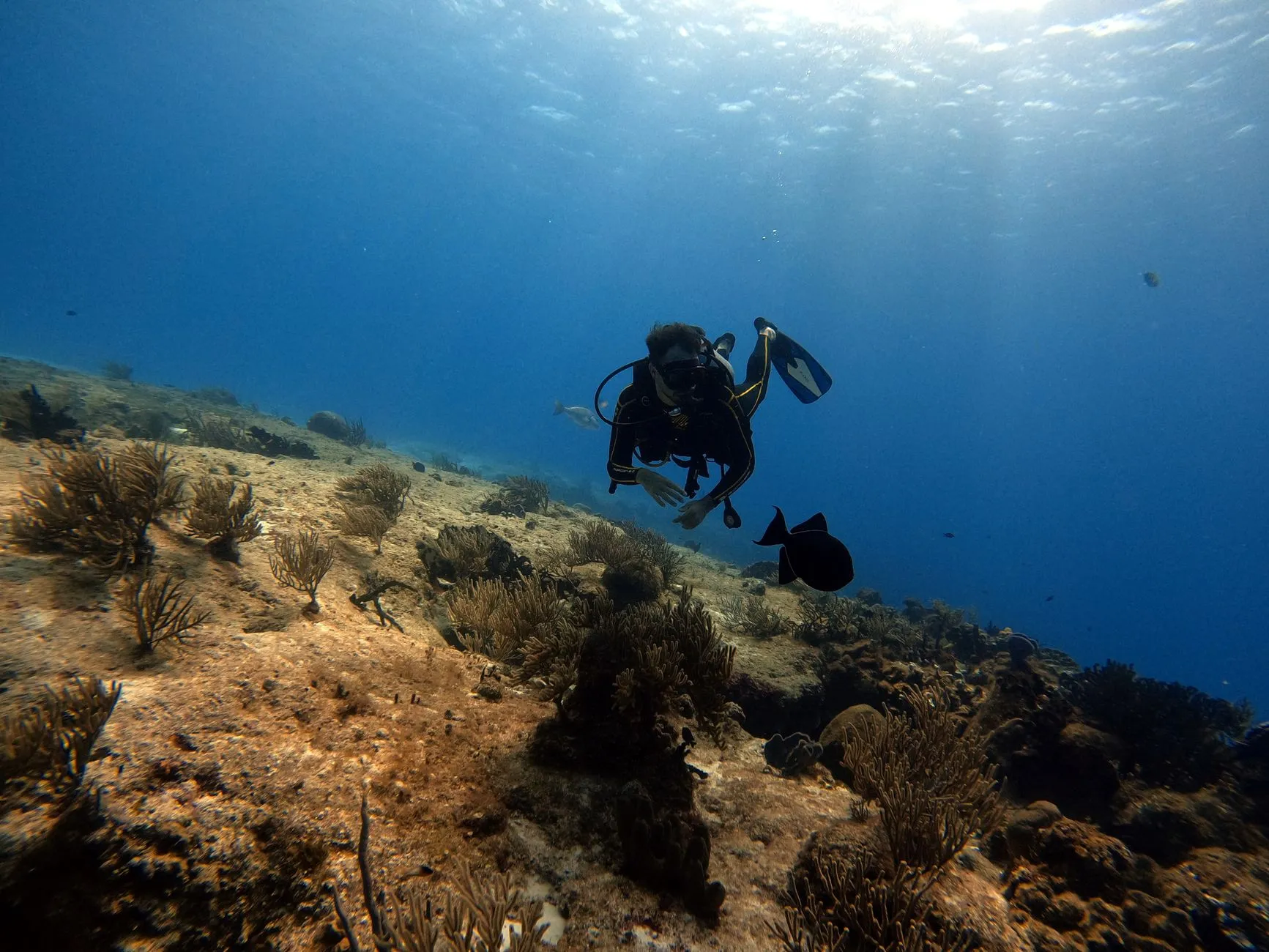
Cozumel diving is drift diving. You descend, the current moves you along the wall, and the boat meets you where you surface. It is not the place to book with the cheapest operator who skips the pre-dive briefing.
The reef system runs down the island’s leeward (west) coast, and the named sites sit inside the Parque Nacional Arrecifes de Cozumel. Palancar — split into Gardens, Caves, Horseshoe, and Bricks — is the main site: gentle coral heads, reliable turtles, and a drift that works for newly certified divers. Santa Rosa Wall and Columbia Deep are the advanced wall dives with strong current. Chankanaab, beside the park of the same name, is the shallow training reef.
⚠️ Marine Park Fee Doubled on 1 January 2026
The daily park diver fee rose to 218.32 MXN per person per day (about 13 USD), up from the long-standing 108 MXN — the first increase since 2020, federally mandated. Snorkellers entering the park pay it too. An annual pass runs about 1,811 MXN. Most reputable dive operators fold the daily fee into their package price, but confirm whether it is bundled or added separately, because on a five-day trip it is a real line item at the new rate.
A two-tank morning dive with a reputable shop runs roughly 80–130 USD before the park fee. Gear rental adds 20–35 USD if you did not bring your own.
⚠️ Do Not Dive and Fly the Same Day
Standard guidance is a minimum 18–24 hour surface interval after diving before flying, and longer after multiple dives or deep profiles, to avoid decompression risk. If your last dive is the morning of an afternoon departure, you have a planning problem. Schedule your final dive day for at least the day before your flight.
🌴 Beyond the Reefs: Punta Sur, San Gervasio, the East Coast
The southern and eastern loop is the island’s best terrestrial half-day, and it requires wheels.
Punta Sur Eco Beach Park, at the southern tip, charges about 25 USD adult admission, cash only, and is roughly 30–40 minutes from the airport down the west coast. It has the Celarain lighthouse, a crocodile lagoon, and quiet beaches. Not a day-filler — a focused two-to-three hour stop.
Chankanaab, about 9 km south of San Miguel and around 20 minutes from the airport, charges roughly 31 USD adult entry plus a mandatory marine-mammal protection charge. It is the snorkel-and-beach park option for non-divers who want organised access to the reef without booking a dive operation.
San Gervasio, the island’s Maya site, sits in the island’s interior — about 25–30 minutes’ drive from the airport, with admission around 14.50 USD, cash only. It was a pilgrimage centre to the goddess Ix Chel, and it is now a modest cluster of ruins in the jungle. It rewards an hour and a genuine interest in Maya history; it is not a spectacular site by the standards of Chichén Itzá or Uxmal.
🏖️ East Coast: Beach Bars, Not Swimming
The eastern (windward) coast is undeveloped and visually striking. It is largely unswimmable in most conditions — surf and current make it dangerous, and the no-swimming signs exist because people drown there regularly. The beach bars near Punta Morena are for a beer and a view. Do not treat the posted warnings as suggestions.
⏱️ The Layover Calculation
With a three-hour gap between flights, a round trip to central San Miguel is 20–30 minutes each way by taxi — leaving roughly 90 minutes of usable town time. That is enough for a quick cochinita lunch on the Malecón. Punta Sur, San Gervasio, or any dive are not viable on any normal layover once you account for travel time in both directions, the activity itself, and the recommendation to be back airside 60–90 minutes before an international departure. Figure 30–40 minutes each way for anything south of town, before you add the time you actually spend there.
🔧 Practical Notes
Connectivity. The terminal has free wifi — functional, not fast. For a stay, Telcel has the best island coverage and sells prepaid tourist data packages cheaply in town and at convenience stores. A prepaid eSIM bought before you land skips the queue entirely.
Safety. Cozumel is a tourism-dependent island economy with low violent-crime exposure for visitors relative to the mainland Riviera Maya. The realistic risks are transactional: the per-person taxi overcharge (always confirm per-car pricing), the Visitax broker sites, dynamic currency conversion on card terminals, and opportunistic theft from unattended gear on beaches or in open rentals.
Hurricanes. The western Caribbean hurricane season runs June through November, with real risk concentrated August through October. Hurricane Wilma in 2005 is the local benchmark for how serious a direct hit can be — the island was closed for days. Flying in those months means lower prices and fewer crowds against a genuine operational risk. Travel insurance that covers hurricane disruption is not optional in that window. December through April is the dry-season, peak-price, operationally safe period.
Tap water is not potable. Use bottled or filtered water, which every hotel and restaurant provides as a matter of course.
Tipping runs 10–15% in restaurants (check whether propina is already added to the bill), 20–50 MXN per service for porters and dive crew, and rounding up for taxis.
❓ Frequently Asked Questions
📊 At a Glance — CZM 2026
| Feature | 2026 Detail |
|---|---|
| IATA / ICAO code | CZM / MMCZ |
| Distance to San Miguel | ~3 km (1.8 mi) north |
| Terminal layout | 1 terminal, ~8 gates, 1 runway |
| Annual air passengers | ~600,000+ |
| Cruise arrivals (context) | ~4 million/yr across 3 piers |
| Cruise piers | Punta Langosta (downtown), International Pier (Royal Caribbean/Celebrity), Puerta Maya (Carnival Corp) |
| Currency | Mexican peso; ~17.3 MXN/USD, ~20.2 MXN/EUR (May 2026) |
| Entry permit | Digital FMM, passport-stamp, up to 180 days |
| FMM fee | ~983 MXN, bundled into airfare |
| Visitax | 283 MXN/person, online only (visitax.gob.mx) |
| Airport taxi to town | ~150–250 MXN per car (fixed zone) |
| Rideshare | No Uber/Lyft; Eiby app for in-town only |
| Ferry from Playa del Carmen | ~280–330 MXN one-way, 30–40 min, Ultramar/Winjet |
| Scooter rental | ~25–40 USD (450–700 MXN)/day |
| Car rental | ~25–60 USD (450–1,100 MXN)/day economy |
| Lounge | Caral VIP — Priority Pass / LoungeKey / Diners Club / Amex |
| Marine park diver fee | 218.32 MXN/day (raised 1 Jan 2026 from 108 MXN) |
| Annual marine park pass | ~1,811 MXN |
| San Gervasio admission | ~14.50 USD (cash only) |
| Punta Sur admission | ~25 USD adult (cash only) |
| Chankanaab admission | ~31 USD adult + marine-mammal charge |
| Tap water | Not potable — bottled/filtered only |
| Hurricane season | Jun–Nov (peak Aug–Oct) |
| Peak travel season | Dec–Apr (dry, highest prices) |