Liverpool John Lennon Airport (LPL) — Airport Guide 2026
Quick Reference
Liverpool John Lennon Airport
LPL / EGGP
Speke, about 11 km south-east of Liverpool, England
One terminal; low-cost and leisure focused; over 5 million passengers a year
easyJet, Ryanair and Jet2 run most of it; Wizz Air and others seasonally
UK — Border Force; no EES/ETIAS; UK ETA (£20) required for visa-exempt visitors; pounds sterling
Pound sterling (£ / GBP)
Bus 500 AirLink to the centre (~30 min); 24-hour 86A via Liverpool South Parkway rail; taxi
No station at the terminal — nearest is Liverpool South Parkway, reached by bus
Aspire Lounge and Luxe by Aspire in departures (pay-in / pre-book)
🛫 1. What Liverpool John Lennon Airport is
Liverpool’s airport is a low-cost and leisure base about 11 km south-east of the city in Speke, named — unusually — after a musician: John Lennon, with the slogan “Above us only sky” lifted from Imagine. It is a single-terminal airport carrying over five million passengers a year, and the bulk of its flying is easyJet, Ryanair and Jet2 on European city and holiday routes, with a thinner band of seasonal and Eastern European service.
The genuine recent change is route growth. Through 2026 easyJet and Ryanair have been expanding here — more aircraft and new destinations, with Marrakesh, Tirana and Warsaw among the summer 2026 additions, reflecting both holiday demand and stronger Eastern European links. So the map of where you can fly direct from Liverpool is wider than it was, even if the airport itself remains a compact low-cost operation rather than a growing hub with frills.
For booking, this is a point-to-point budget airport, so the fares are cheap and the carriers are strict — expect to pay for bags and seats, and to sort check-in online. There is no real connecting role here, so think of it as a direct-flight airport for Liverpool and the north-west rather than somewhere you transit.
The choice that often comes up is Liverpool against Manchester, about an hour away, which is the region’s far bigger airport with long-haul flights and a direct rail link. Manchester has the wider route map; Liverpool’s advantage is that it is small and quick to move through, and frequently cheaper for the budget European routes it does fly. If you are heading to the north-west or north Wales on a short-haul European trip, Liverpool is usually the easier door; for long-haul or a route Liverpool does not serve, Manchester is the one.
🛂 2. The border: the UK, ETA and no EES
The UK runs its own border, so the European systems do not apply here — there is no EES and no ETIAS at Liverpool, and the currency is the pound. What there is, instead, is the UK’s own pre-travel requirement.
Most visa-exempt visitors now need a UK Electronic Travel Authorisation (ETA) before they fly. It applies to EU, EEA and Swiss nationals as well as visitors from further afield, costs £20, is applied for online or through the UK ETA app, and once granted is valid for two years and multiple trips. British and Irish citizens do not need one. Sort it before you travel — it is not a visa, but without it you can be refused boarding.
The point that catches British travellers out is the reverse direction: EES and ETIAS are EU systems, so they do not affect your arrival into Liverpool, but they do apply when you fly from here to the Schengen area. The EU’s Entry/Exit System went live in April 2026, so on arrival in Spain, France, Italy or elsewhere in Schengen you now face biometric registration — a Liverpool departure board full of Mediterranean flights means a lot of passengers meeting that on the other end.
🚆 3. Getting into Liverpool
The airport is about 11 km from the city centre, and there is no rail station at the terminal, so the bus is the mainstay — but the connections are good and frequent.
The 500 AirLink (Arriva) is the fastest into town, running to the city centre — Liverpool ONE bus station and near Lime Street rail station — in about 30 minutes, every 30 minutes from early morning to around midnight. The 86A runs 24 hours a day at high frequency and passes Liverpool South Parkway, the nearest railway station, which is the way to reach the wider rail network and Merseyrail; combined bus-and-rail tickets are sold at staffed Merseyrail stations. A single bus fare is a few pounds, paid by contactless on board. Taxis wait outside the terminal for a quick ride into the centre.
The honest note on timing is the late hours: the fast 500 stops around midnight, so a late arrival may mean the 24-hour 86A or a taxi instead — check the last 500 against your flight if you land in the evening. For most arrivals this is a short, cheap transfer rather than a journey, and there is no layover math to speak of, since Liverpool is a destination airport, not a connecting one.
🛬 4. The terminal and the lounge
Liverpool works from a single terminal, and it is a straightforward low-cost airport: easy enough off-peak, busier at the morning and holiday departure waves when the low-cost flights bunch. Check your airline’s bag and check-in rules before you arrive, since the budget carriers charge for what they can, and leave the usual buffer at the peaks.
There is a lounge if you want to escape the bustle. The Aspire Lounge, with a step-up Luxe by Aspire option, sits in departures and is open to any traveller with a boarding pass who pays in or pre-books, regardless of airline or class. If you hold Priority Pass or a lounge-bearing card, check whether it covers the Liverpool Aspire before relying on it; otherwise the pre-book rate is the way in. The general terminal has the usual cafés and a couple of shops for a quick coffee and a bite.
The eating worth doing is in the city rather than the terminal. What is worth carrying home from Liverpool tends to be Beatles-related — records, books and memorabilia from the city’s shops and the Cavern quarter — alongside the usual British high-street fare, bought in town rather than at airport prices.
🌅 5. The reason to come: Liverpool
Liverpool is a genuine city break rather than a transfer point, and its draw is a rare combination of music history, a dramatic waterfront and a distinct, warm local culture. The airport’s name is the clue to the biggest pull.
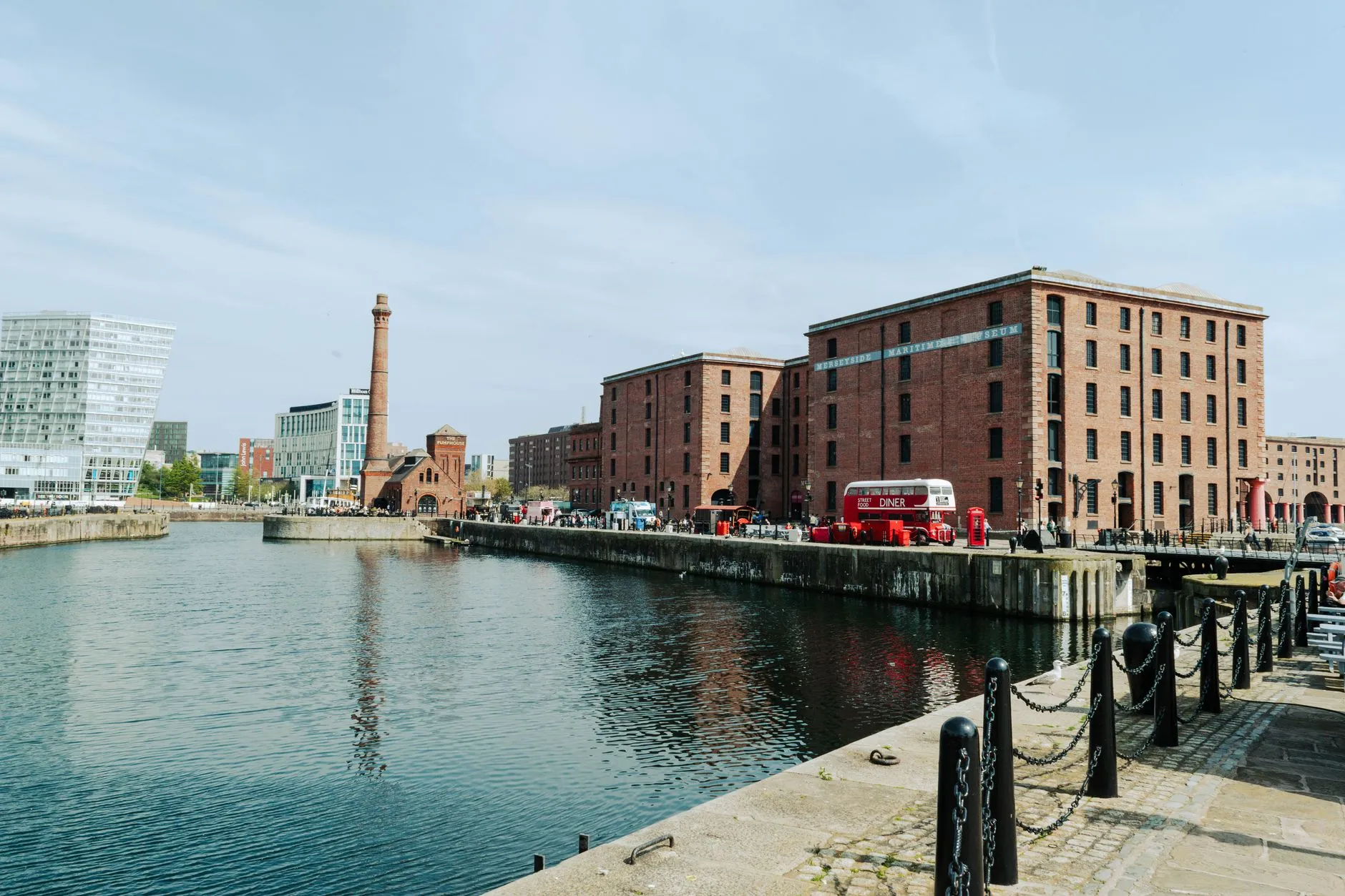
This is the Beatles’ city, and it takes that seriously: the rebuilt Cavern Club on Mathew Street where they played, the Beatles Story museum down at the Royal Albert Dock, and the real Penny Lane and Strawberry Field that the songs are named for, with Magical Mystery Tour buses linking the sites. The Royal Albert Dock is the heart of the waterfront — a restored Victorian dock complex of museums, bars and the Tate Liverpool gallery — backed by the Three Graces, the trio of grand buildings led by the Royal Liver Building with its mythical Liver Birds on top. Liverpool lost its UNESCO World Heritage listing in 2021 over new dock development, which is worth knowing, but the historic waterfront itself remains the city’s signature.
Beyond the headline sights, Liverpool has a strong contemporary side worth a little time: the Baltic Triangle, a former warehouse district turned into a cluster of bars, street food and music venues, is where much of the city’s nightlife has shifted. Just up the coast, Crosby Beach holds Antony Gormley’s Another Place — a hundred life-size cast-iron figures standing in the sand and tide, a genuinely striking free sight reachable by Merseyrail. The walkable, good-value city centre and these add-ons make Liverpool more than a one-museum visit.
Football is the other religion here: Anfield, home of Liverpool FC, runs stadium tours, and Everton have moved to a new waterfront stadium at Bramley-Moore Dock, so a matchday or a tour is a real draw for many visitors. Add a strong nightlife and music scene and a city centre that is walkable and good value, and Liverpool rewards a couple of days. There is no separate aifly Liverpool guide, so the short version is to give the waterfront, the Beatles sites and a night out their due — and, if your timing suits, the football.
❓ 6. FAQ
📋 7. At a glance
| Item | Detail |
|---|---|
| Airport | Liverpool John Lennon (LPL / EGGP), Speke, ~11 km south-east of Liverpool |
| Terminal | One terminal; low-cost / leisure; over 5 million passengers a year |
| Recent change | 2026 easyJet/Ryanair route growth — new summer routes including Marrakesh, Tirana and Warsaw |
| Carriers | easyJet, Ryanair, Jet2; Wizz Air and others seasonally |
| To the city | Bus 500 AirLink to the centre ~30 min (to ~midnight); 24-hour 86A via Liverpool South Parkway rail; taxi; ~11 km |
| Border | UK — Border Force; no EES/ETIAS; UK ETA (£20) for visa-exempt visitors; pounds |
| Currency | Pound sterling (£ / GBP) |
| Lounge | Aspire Lounge and Luxe by Aspire in departures (pay-in / pre-book) |
| Worth your time | The Beatles sites, the Royal Albert Dock waterfront and the Three Graces, and the football at Anfield and the new Everton stadium |
🔗 8. Explore More
- Manchester Airport (MAN) guide — the much bigger north-west hub about an hour away, with long-haul and a direct rail link
- East Midlands Airport (EMA) guide — another UK low-cost and leisure airport, for comparing budget options