Phu Bai International Airport (HUI) — Airport Guide 2026
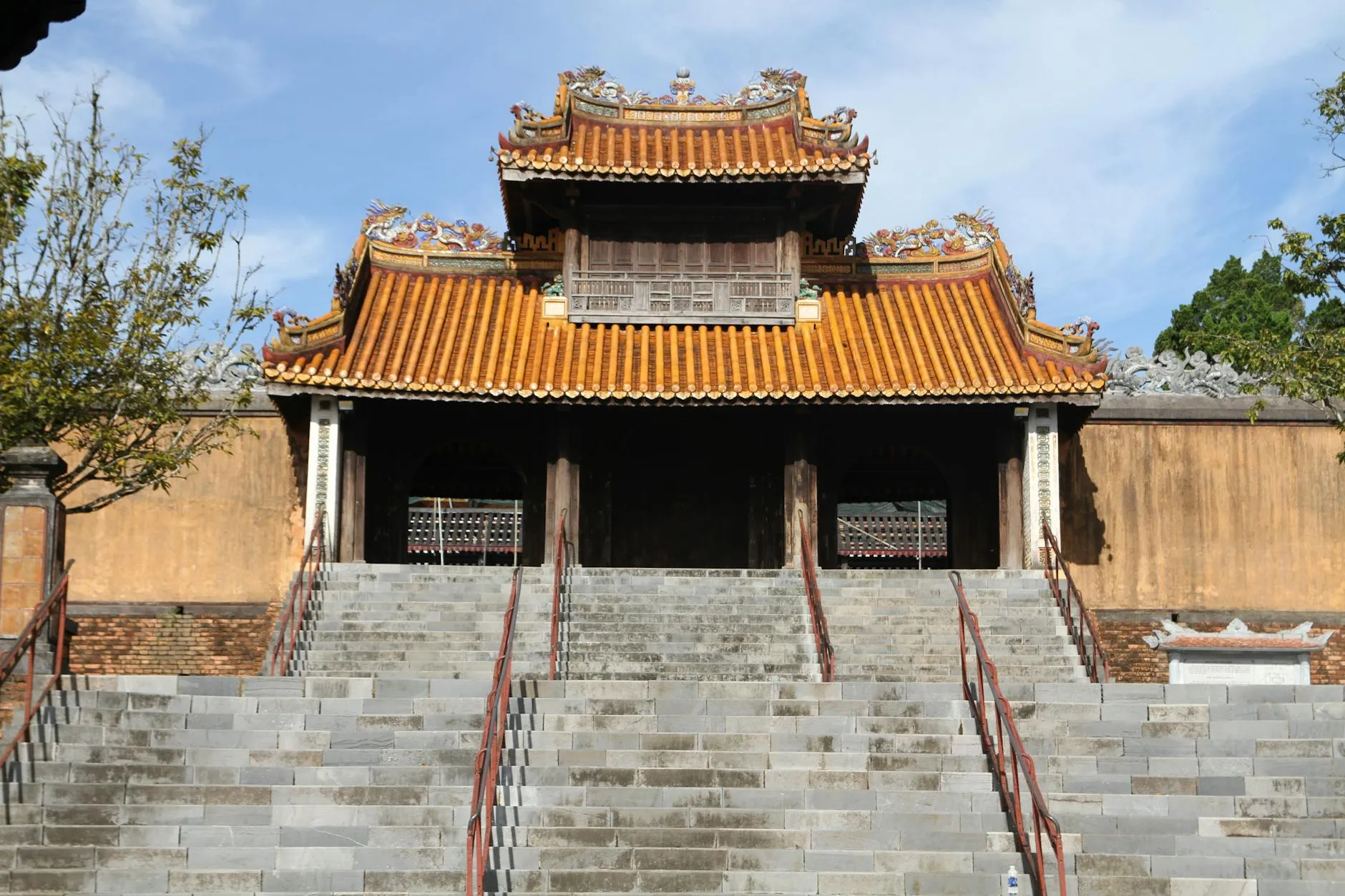
Terminal T2, which opened in 2023 with a roofline modelled on Hue’s Nguyen-dynasty palaces, handles almost exclusively domestic traffic in 2026 — a handful of domestic routes, four carriers, and a connection gap that makes the 15-km drive into the Imperial City the only real reason to pass through.
Quick Reference
HUI / VVPB
Phu Bai International Airport
13–15 km southeast of central Hue, Thua Thien Hue province, central Vietnam
Single building (T2), opened 2023, Hue royal-architecture roofline
~5 million passengers/year (4M domestic, 1M international)
Vietnam Airlines, VietJet Air, Pacific Airlines, Bamboo Airways
Hanoi (HAN) and Ho Chi Minh City (SGN) trunk routes, plus Da Lat on Vietnam Airlines; international = charter/seasonal only
160,000–318,000 VND (~USD 6–12), 20–30 min
Lines 02, 07, 10 and 11 — 7,000–10,000 VND, ~45 min, route #2 runs ~04:45–21:45
Grab banned from airport pickup; drop-off at departures is fine
SH Premium Lounge Phu Bai, Domestic Departures airside, Priority Pass, 06:00–22:00
VND; ~26,330/USD, ~30,700/EUR (May 2026)
USD 25 single / USD 50 multiple, up to 90 days, evisa.gov.vn
45 days (UK, most of W. Europe, Japan, South Korea); 30 days (ASEAN)
12 EU states added to 45-day exemption (Aug 2025, in force through 2028)
200,000 VND (~USD 7.50), daily 06:30–17:30
6+ h in daylight for Imperial City; under 4 h, stay airside
Vietnam national only — no EU or US pre-clearance applies
🏢 Terminal & the Carrier Picture
Phu Bai runs on a single passenger building. T2, the replacement for the old terminal, opened in 2023 and is designed for roughly five million passengers a year, though actual throughput in 2026 is well under that. The architecture — stacked tiled rooflines that echo the citadel up the road — is a deliberate reference to the Nguyen court, and unlike most regional airport gestures at local identity, it reads clearly rather than decoratively. One building means no inter-terminal connections, no airside shuttle, and no ambiguity about where anything is.
The carrier picture is straightforward and limited. Vietnam Airlines, VietJet Air, Pacific Airlines, and Bamboo Airways all operate here. Hanoi (HAN) and Ho Chi Minh City (SGN) are the trunk routes, and Vietnam Airlines also advertises Da Lat on its own Hue page. It is a small domestic map, but not a closed one, so check the current timetable. Various routes to Bangkok, Singapore, Tokyo, and Seoul appear in promotional materials and older route databases, but as of mid-2026, scheduled international service does not exist in any reliable sense. Charter and seasonal flights come and go; a Korean carrier link has been discussed publicly by Airports Corporation of Vietnam; nothing is confirmed for year-round operations.
⚠️ Verify international routes before booking
Any itinerary that depends on a connecting international departure from HUI should be confirmed directly with the airline before ticketing. Seasonal charters are not reliable schedule infrastructure.
For practical purposes, plan around a short domestic route list. International arrivals in Vietnam clear customs at their first port of entry — typically Noi Bai (HAN) or Tan Son Nhat (SGN) — and continue to Hue on a domestic leg.
🛂 Border & Visa
Vietnam’s entry system has two lanes: the e-Visa, and unilateral visa exemption if your nationality qualifies.
🌐 The e-Visa
The government e-Visa is issued for up to 90 days, single-entry at USD 25 or multiple-entry at USD 50, applied for at evisa.gov.vn. Processing normally runs three to five working days. You upload a passport-bio scan and a plain passport photo, pay by card, and carry a passport with at least six months’ validity and two blank pages on arrival. The e-Visa cannot be extended — departure before expiry is the only option.
One rule catches people out: the e-Visa specifies a named port of first entry, and your first landing in Vietnam must be through that port. Phu Bai is one of roughly 13 airports on the approved list, so you can name HUI as entry, but if you named Noi Bai or Tan Son Nhat and attempt to enter through Hue, you will be refused. After the first stamp, subsequent entries can use any approved port.
🛂 e-Visa port rule
The named entry airport on your e-Visa is binding for your first arrival only. If you plan to fly into Hanoi first and then continue to Hue domestically, name Noi Bai — not HUI — as your port of entry.
🏷️ Visa Exemption
Vietnam waives the visa unilaterally for citizens of roughly three dozen countries. The UK, Germany, France, Italy, Spain, Japan, and South Korea receive 45 days. Most ASEAN countries — Singapore, Malaysia, Thailand, Indonesia, the Philippines, and others — receive 30 days. Six months’ passport validity and blank pages are still required, and the exemption is a maximum stay, not a multiple-entry right: re-entries consume the same clock unless a new exemption period begins after departure.
📋 August 2025 exemption expansion
Under Resolution 229/NQ-CP, effective 15 August 2025 and in force through 2028, Vietnam extended 45-day visa-free entry to twelve additional European countries: Belgium, Bulgaria, Croatia, the Czech Republic, Hungary, Luxembourg, the Netherlands, Poland, Romania, Slovakia, Slovenia, and Switzerland. If you hold one of those passports, you no longer need an e-Visa for a standard tourist visit.
One clarification worth making explicit: the separate visa-free arrangement that applies to Phu Quoc island does not extend to Phu Bai or any other part of mainland Vietnam. Whatever your standard Vietnam exemption is, that is what applies here, and there is no airport-specific scheme.
🚕 Getting Into Hue
National Highway 1 runs the 13 to 15 km southeast between Phu Bai and central Hue. In reasonable conditions the drive takes 20 to 30 minutes; it can stretch in city traffic.
🚖 Licensed Taxis & Private Transfers
Most arrivals take a taxi or a pre-booked car. Metered, airport-licensed taxis start around 160,000 VND a trip and run to roughly 318,000 VND into the centre — call it USD 6–12. Fixed-price private transfers are in the same range and remove the negotiation. The usual trap applies: agree the fare or confirm the meter before getting in, and use the signed rank outside arrivals rather than the drivers who approach inside the terminal. Unmarked freelancers operate in most Vietnamese regional airports and tend to quote prices that diverge sharply from the metered rate.
⚠️ Ignore unsolicited offers inside the terminal
Drivers approaching you in the arrivals hall before you reach the official rank are almost never operating metered vehicles. The signed taxi rank is outside; walk past everyone inside to get to it.
📱 The Grab Situation
Grab is banned from picking up passengers at the terminal. The app may display available cars, but they cannot collect you at the kerb. This effectively forces arrivals into the licensed pool whether they prefer the app or not. Coming the other way — heading to departures — Grab drop-off is permitted normally.
🚌 Public Bus
Route #2 runs roughly 04:45 to 21:45 and connects the airport to the city for 7,000–10,000 VND. The journey takes about 45 minutes. Vietnam Airlines lists four city lines serving Phu Bai in all — 02, 07, 10 and 11 — at the same fare band, and route #11 operates on shorter hours. The price is genuinely very cheap, and the route works; the caveat is that buses have been reported to pass without stopping when flagged from the highway access point outside the terminal. Treat it as an option for unhurried travellers without tight connections, not a reliable tool for timing-sensitive journeys.
🚐 Shared Minivans & the Vietnam Airlines Question
Shared minivans operate at around 100,000 VND, depart when full, and have limited luggage space — reasonable if you are travelling light and not in a hurry. The Vietnam Airlines carrier shuttle operated before the pandemic; it was suspended as of September 2023 and should not be relied on without current confirmation that it has resumed.
🛋️ Lounge
One lounge: the SH Premium Lounge Phu Bai, airside in Domestic Departures on the second floor beside Gates 6–8, open 06:00 to 22:00 and accepting Priority Pass with a three-hour maximum stay. That is the complete lounge inventory.
🛋️ SH Premium Lounge — domestic, Priority Pass, 06:00–22:00
The lounge is airside in Domestic Departures on the second floor beside Gates 6–8, with a three-hour maximum stay. Priority Pass access was confirmed for May 2026. DragonPass and LoungeKey were not verified at this lounge — contact the lounge directly before counting on them. Vietnam Airlines full-fare passengers in eligible cabins typically use the same room.
A regional airport on a short domestic route list does not produce a competitive lounge environment. Treat this as a functional place to sit, charge a phone, and avoid the gate chairs — not a reason to arrive early.
🍜 Food Before You Fly
Inside T2, the options are what you would expect from a single-terminal regional airport: Vietnamese coffee counters, quick-service noodle bowls, bánh mì, packaged snacks, and convenience kiosks. Card and QR payment (VietQR-style) are increasingly accepted, but small-denomination dong is worth having. Nothing here changes the calculus of your journey.
The eating argument for going into Hue is real. The city was the Nguyen imperial capital, and its food tradition is built around dozens of small, precise dishes rather than the larger plates typical of Hanoi or Saigon. The things worth seeking out: bún bò Huế, the city’s lemongrass-and-chilli beef noodle soup (not to be confused with the milder southern versions); bánh khoái, a crisp folded rice-flour pancake served with shrimp and pork; cơm hến, cold rice with tiny Perfume River clams dressed with chilli and fermented shrimp paste; and the family of tiny steamed rice cakes — bánh bèo, bánh nậm, bánh lọc — eaten in sets of six or eight from a street stall. These are dishes that require the city. If the layover gets you to a Hue street kitchen, the airport food becomes irrelevant.
💡 Layover Reality: the Imperial City Run
The only question that matters for a layover at HUI is whether you can reach the Hue Imperial City and return without missing your flight.
The Imperial City — the walled Nguyen-dynasty citadel, a UNESCO World Heritage site — is the headline. Adult entry is 200,000 VND (~USD 7.50), daily 06:30–17:30. The site is large; walking the main enclosures from Ngô Môn gate to Thái Hòa Palace and through the inner courts takes 90 minutes at a reasonable pace, and two hours is more realistic if you are paying attention rather than sprinting.
The transit arithmetic is less forgiving. Airport to the citadel — across the Perfume River from the modern centre — runs 20–30 minutes each way by taxi, making the round-trip drive alone 40–60 minutes. Add two hours at the site, a return buffer of 90 minutes for domestic check-in and security (more for any international charter), and call the minimum plausible ground time five to six hours. In daylight, before 17:30.
💡 The 4-hour rule
A layover of six hours or more, in daylight, makes the Imperial City viable. Four hours or fewer does not — the round-trip drive consumes the margin and leaves no buffer for traffic or gate delays. Under four hours, stay airside.
Two further constraints: the combined royal-tombs ticket (530,000 VND, valid two days, covering the Minh Mạng, Tự Đức, and Khải Định tombs south of the city) involves sites spread across many kilometres of Highway 49 and requires its own half-day — it is not a layover option. And the citadel closes at 17:30, so an evening connection means at best a Hue dinner, not the headline sight.
🔧 Practical Notes
Currency. The Vietnamese dong (VND) is a closed currency — buy it in Vietnam, not before. As of May 2026, approximately 26,330 VND buys 1 US dollar and 30,700 VND buys 1 euro. Airport exchange counters carry a markup over city banks and ATMs; change a small sum at the airport to cover the taxi into town, then use a city ATM for anything larger. Card and QR payment cover most urban transactions in Hue, but street food stalls, market sellers, and the public bus run on cash.
Connectivity. Free Wi-Fi is available in the terminal. For data in the city, a Vietnamese SIM card or eSIM is cheap and widely sold — at the airport counter or in town, with your passport — and gives 4G/5G access for maps, Grab once you are in the city, and payment apps.
Entry documents. Carry a passport valid at least six months beyond arrival with two blank pages, regardless of whether you are using an e-Visa or an exemption. EU entry systems and US pre-clearance do not apply here; Phu Bai operates under Vietnam’s national border regime only.
❓ Frequently Asked Questions
📊 At a Glance — HUI 2026
| Item | Detail |
|---|---|
| IATA / ICAO | HUI / VVPB |
| Terminal | Single building (T2), opened 2023 |
| Annual capacity | ~5 million passengers |
| Distance to Hue | 13–15 km southeast, National Highway 1 |
| Drive time | 20–30 min by taxi; ~45 min on public bus |
| Taxi / private fare | 160,000–318,000 VND (~USD 6–12) |
| Public bus fare | 7,000–10,000 VND (lines 02/07/10/11, route #2 ~04:45–21:45) |
| Ride-hail | No airport pickup; drop-off only |
| Based carriers | Vietnam Airlines, VietJet, Pacific Airlines, Bamboo Airways |
| Scheduled routes | HAN, SGN trunk routes + Da Lat (Vietnam Airlines); international charter/seasonal |
| Lounge | SH Premium Lounge Phu Bai (Domestic Departures airside, Priority Pass, 06:00–22:00, 3h max) |
| Currency | VND; ~26,330/USD, ~30,700/EUR (May 2026) |
| e-Visa | USD 25 single / USD 50 multiple, ≤90 days, evisa.gov.vn |
| Visa exemption | 45 days (UK/W. Europe/JP/KR); 30 days (ASEAN) |
| 2026 exemption change | 12 EU states added (Aug 2025–2028) |
| Imperial City entry | 200,000 VND (~USD 7.50), daily 06:30–17:30 |
| Royal-tombs combo | 530,000 VND, 2-day validity (not layover-viable) |
| Layover threshold | 6+ h in daylight; under 4 h, stay airside |
| Border | Vietnam national regime; no EU or US systems apply |