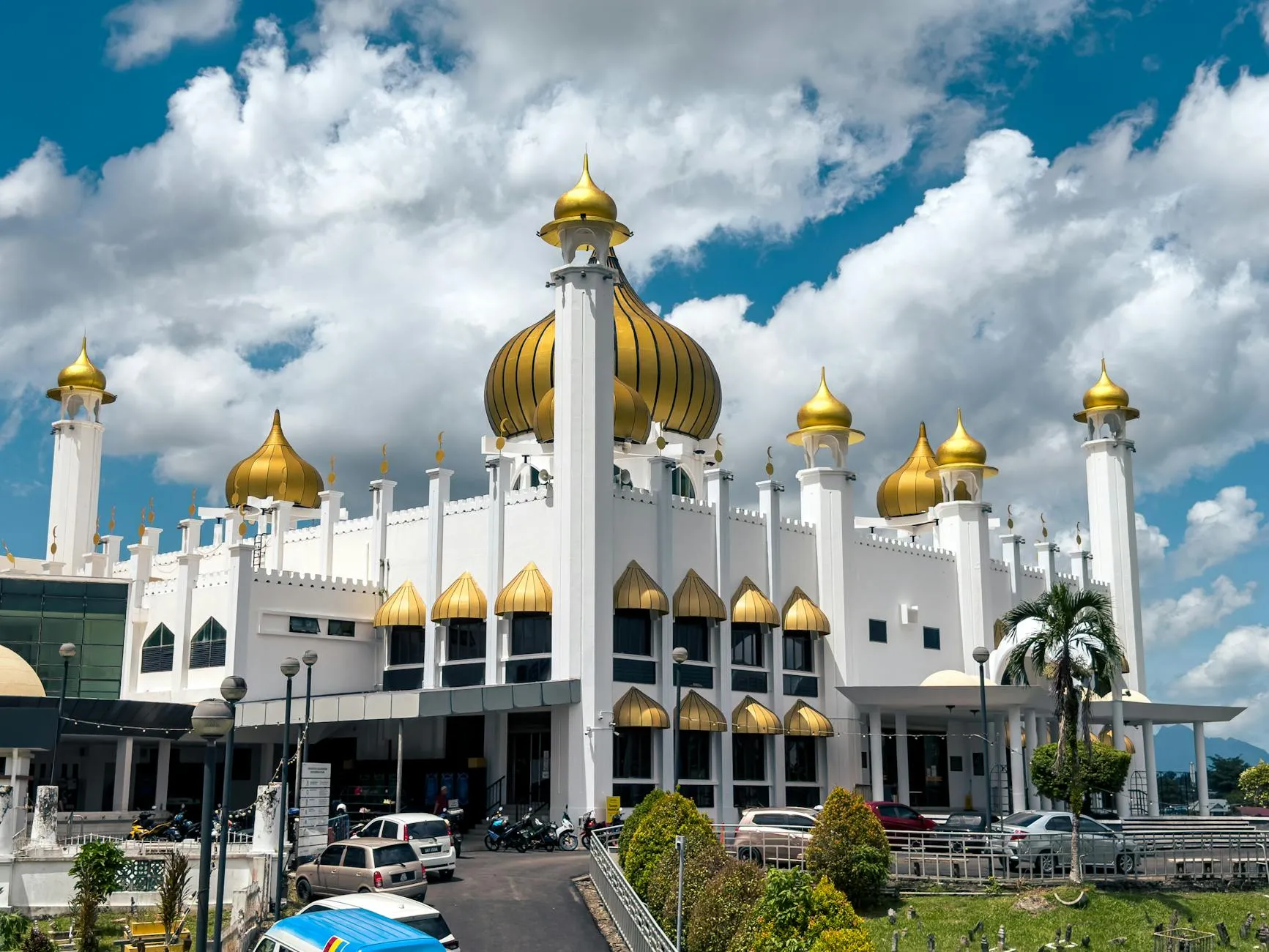
Kuching International Airport (KCH) — Airport Guide 2026
AirBorneo replaced MASwings on 1 January 2026, making Kuching the base for Sarawak’s new state carrier — and if you booked a MASwings ticket before New Year’s Day, you now hold an AirBorneo booking under a different name.
Quick Reference
KCH / WBGG
~11 km south of central Kuching, Sarawak, Malaysian Borneo
Single terminal; domestic and international under one roof
Malaysian ringgit (MYR, RM) — ≈ RM3.97/US$1, ≈ RM4.60/€1 (May 2026)
No airport bus; taxi coupon RM30 normal / RM45 executive, or Grab ≈ RM11–15; ~20–30 min
+50% on taxi fare 00:00–06:00
AirAsia (operating base, largest); Malaysia Airlines (secondary hub); AirBorneo (Sarawak state carrier from 1 Jan 2026)
Malaysia visa-free (90 or 30 days by nationality) or eVisa; Sarawak issues its own separate entry stamp
MDAC mandatory, free, file within 3 days of arrival; Singapore citizens exempt
Travel Club (opp. Gate 6) — domestic side only
None
City waterfront viable ~4–5 hrs; Semenggoh/Bako need a full day; stay airside under ~3 hrs
🏢 The Terminal & Who Flies Here
Kuching runs on a single terminal building, domestic and international under one roof — no inter-terminal shuttle, no guesswork about which building you need. That simplicity has a flip side: the airside is compact for an airport handling well over five million passengers a year, and the international side in particular is thin on facilities.
AirAsia dominates the schedule with roughly 230 departures a week — short domestic and regional routes across Borneo, Peninsular Malaysia, and nearby Southeast Asia. Malaysia Airlines runs a secondary hub with its own domestic and trunk routes. Batik Air Malaysia, Scoot, Royal Brunei and Indonesia AirAsia fill out the board, with Batik Air also running Kuching–Guangzhou. The realistic picture is a regional airport with a modest international layer.
✈️ AirBorneo — the 2026 Carrier Swap
⚠️ MASwings is gone — check your booking
AirBorneo, owned by the Sarawak government, took over the MASwings operation on 1 January 2026 and now flies the rural Borneo turboprop network; the first AirBorneo-branded departures ran on 2 January. Legacy MASwings tickets stay valid with no change to flight times or dates, and tickets for travel from 14 January 2026 were reissued under AirBorneo — if yours is unclear, call AirBorneo on 1-300-22-1388 or +60 82-537 555. Kuching–Kuala Lumpur has flown twice daily since 20 July 2026; Singapore, Kota Kinabalu and Jakarta are announced but not yet launched.
AirBorneo operates turboprops on the small-strip interior routes — the kind of flying that connects Sarawak’s longhouse communities to the coast — and, since 20 July 2026, a twice-daily jet to Kuala Lumpur. The rest of its trunk network is announced rather than flying.
🔄 Self-Connections at Kuching
A lot of cheap regional travel through here involves point-to-point tickets with no through-checked baggage — Kuching is a frequent self-connection point onto AirAsia. On a self-connection, you clear immigration, collect your bag, and re-check it. That means encountering Sarawak’s separate immigration stamp even on what feels like a technical stop. Read the border section before assuming a short connection is painless.
🛂 Border & Visa — Two Layers, Not One
Sarawak is the part of this guide that catches people off guard. Malaysia’s national visa rules apply here, but Sarawak also controls its own immigration and stamps you in separately from Peninsular Malaysia. You need to understand both layers.
🌏 Malaysia’s National Visa Position
Citizens of the United States, United Kingdom, EU member states, Japan, Australia and Canada enter visa-free for up to 90 days. Citizens of India, China and most ASEAN countries get 30 days visa-free — with a catch for Chinese passport holders, who from early 2026 face a cumulative cap of 90 days within any 180-day period. Pakistan, Bangladesh, Nepal, Nigeria and most sub-Saharan African countries need a visa arranged in advance, either as an eVisa or through a Malaysian mission. Confirm your own passport’s allowance against an official Malaysian source before you book.
⚠️ MDAC — Mandatory, Free, and Widely Faked
Every foreign visitor must file the Malaysia Digital Arrival Card online before arriving — by air, land, or sea. It is free on the official Malaysian Immigration Department portal, filed within three days of arrival. Third-party sites charge a “service fee” for what costs nothing through the government. Singapore citizens, Malaysian permanent residents and diplomatic-passport holders are exempt. A visa exemption does not exempt you from the MDAC.
🖊️ Sarawak’s Separate Entry Stamp
Under the terms of Malaysia’s 1963 formation, Sarawak retained autonomous immigration control. In practice, Sarawak issues its own entry stamp when you land — commonly a 30-day permit — and that allowance is counted independently of any stay on the Peninsula.
A traveller who flew into Kuala Lumpur and connected to Kuching is stamped in twice: once for Malaysia at KUL, again for Sarawak at KCH. Your 90-day national visa-free entry does not automatically mean 90 days in Sarawak. Read the stamp you actually receive. Even Malaysian citizens from the Peninsula pass through this control and show ID.
🖊️ Read Your Sarawak Stamp
The permitted stay shown on your Sarawak stamp is what controls your legal time in the state — not your national visa-free allowance, and not a number you should assume. The most common mistake is a traveller who believes their 90-day national entry covers their time in Sarawak without noticing the stamp says 30.
🚖 Getting Into Kuching
The airport is about 11 km south of the centre — a 20-to-30-minute drive in normal traffic. There is no direct public bus from the terminal into the city.
🚌 No Airport Bus — Don’t Plan Around One
Kuching’s city bus network runs through the urban area but is not designed for airport passengers. Reaching it means walking roughly a kilometre along a busy road outside the terminal grounds — not practical with luggage, and not in the heat. The planned Kuching Urban Transportation System (autonomous rapid transit) is not yet carrying passengers on an airport link.
🎟️ Taxi Coupon — Fixed Fare, No Negotiation
The reliable option is the fixed-fare taxi coupon bought at the official counter in the Arrivals Hall (Level 1). Pay at the counter, hand the coupon to the driver — this removes the overcharge conversation entirely, and removes the need to deal with anyone approaching you inside the terminal offering a ride. The fare to the city runs RM30 in a normal taxi (roughly US$7.50 / €6.50) or RM45 in an executive one — Malaysia Airports publishes those two fixed classes, not a range. Expect a 50% surcharge between midnight and 06:00. Confirm the current figure at the counter on the day.
📱 Grab
📱 Grab First
Grab handles rideshare across Southeast Asia and works well at Kuching — recent fares to the waterfront sit around RM11–15, roughly half the coupon price. The app handles payment and routing. Pick up from the designated rideshare point (follow the in-app pin, not the taxi rank). If you have a local or travel SIM, this is the default.
🛋️ Lounges — The Domestic-Side Problem
Kuching’s lounges are all on the domestic side of the airport. There is no airside lounge for international departures. If you are flying internationally out of KCH, your Priority Pass, DragonPass or Amex Platinum buys you nothing once you are past the international gates — worth knowing before you factor a lounge into a long transit.
⚠️ All Lounges Are Domestic-Side Only
Every lounge at KCH sits airside on the domestic side. International departure passengers have no lounge access past their gates. Plan accordingly — eat and rest before clearing international security.
Travel Club Lounge, opposite Gate 6 on the domestic side, is the only lounge Priority Pass lists at Kuching. It takes Priority Pass, runs around the clock (00:00–23:59) with a three-hour cap per visit, and admits children under six free.
Malaysia Airlines Golden Lounge. Malaysia Airlines’ own lounge pages currently cover KLIA only — Satellite, Regional and Domestic — and its Golden Lounge eligibility terms are written for KLIA. If one at Kuching matters to your plans, check it with the airline before you travel. Either way a Golden Lounge does not accept Priority Pass, LoungeKey or DragonPass; entry is for business-class passengers and Enrich Gold/Platinum or oneworld Sapphire/Emerald members.
🍜 Food Before You Fly
Sarawak’s food is genuinely distinct from Peninsular Malaysian cooking, and the airport is a serviceable but not remarkable introduction to it.
Kolo mee is the everyday breakfast: springy egg noodles tossed dry in a light seasoning and shallot oil, topped with char siu and minced pork, with the sauce served separately rather than in a soup. It is not a bowl of soup — the dry toss is the point.
Sarawak laksa is the dish that draws the most attention. A prawn-and-coconut broth built on a sambar-style spice paste, served with rice vermicelli, shredded chicken, prawns and egg. It is distinct from the curry laksa common on the Peninsula and from Penang’s tamarind-based asam laksa — enough of its own thing that comparing it to either one is a distraction.
Kek lapis Sarawak is the layered cake the state is known for: thin coloured layers baked one at a time into geometric patterns, sold in sealed blocks. It travels well and is a common edible souvenir.
🍜 Eat in the City, Not the Airport
The terminal’s landside food court does serviceable versions of the local staples. The real kolo mee and laksa are in the old town coffee shops and waterfront hawker stalls — better and cheaper. If you have time before a flight, eat landside before security; airside choice on the domestic side is limited and international airside thinner still.
🛍️ Duty-Free & What’s Worth Buying
International departures carry the standard duty-free run of liquor, tobacco and perfume. The Sarawak-specific buys are kek lapis in sealed blocks, Sarawak pepper (the state is a major producer), and local kopi. All of these are cheaper in the city’s markets than airside. Buy in town and treat the gate shops as a backup.
💡 Layover Maths — City Yes, Wildlife No
Kuching is more layover-viable than most regional Borneo airports because the 11 km from terminal to centre takes 20–30 minutes by taxi or Grab, not the hour-plus that larger hub airports demand. The city is realistic; the wildlife is not.
💡 The Viable Layover Window: ~4–5 Hours
Round-trip transfer runs roughly 40–60 minutes total. On a stop of around four to five hours, cleared of immigration with a confident return buffer, the Sarawak River waterfront, the old town shophouses and a kolo-mee lunch are all achievable. Factor international check-in and security back in at the rear. Under about three hours, stay in the terminal.
The city — the Sarawak River waterfront, the old town shophouses, the Indian and Chinese street grid, the Cat Museum, the colonial-era buildings along the riverbank — is a genuine half-day. It is close enough to be layover material.
The wildlife is not. Semenggoh Nature Reserve (semi-wild orangutans) is roughly 20–24 km from the city and has only fixed morning and afternoon feeding sessions. You are on its timetable, not yours. Bako National Park (proboscis monkeys) is further still, reached by a road transfer plus a tide-dependent boat from Bako village — a full-day outing at minimum, controlled by boat schedules and tides you cannot override. Attempting Bako against a flight time is how people miss flights.
⚠️ Semenggoh and Bako Are Full-Day Trips
Neither wildlife reserve fits a normal layover. Semenggoh’s feeding sessions are fixed; Bako’s boat is tide-dependent. On a layover of anything under a full day with an early start, neither is viable. The waterfront is the honest alternative.
🔧 Practical Notes
Payment. Malaysia is card-friendly and Kuching is no exception, but cash matters at hawker stalls, markets and for the taxi coupon. Carry some ringgit for the small stuff; cards and Grab’s in-app payment cover the rest.
Connectivity. Malaysian SIMs and travel eSIMs work normally — no national app-blocking. A prepaid SIM or eSIM is worth having for Grab and maps; airport and city Wi-Fi is widely available if you prefer to wait.
Currency. The ringgit traded at roughly RM3.97 to the US dollar and RM4.60 to the euro as of May 2026. Airport exchange counters apply a markup — change only what you need there and use a city ATM or card payment for the rest.
❓ FAQ
📊 At a Glance — KCH 2026
| Item | Detail |
|---|---|
| IATA / ICAO | KCH / WBGG |
| Distance to centre | ~11 km south of Kuching |
| Terminals | Single; domestic + international under one roof |
| To city | No airport bus; taxi coupon RM30 normal / RM45 executive, or Grab ≈ RM11–15; ~20–30 min |
| Midnight surcharge | +50% on taxi fare 00:00–06:00 |
| Currency | MYR (RM); ≈ RM3.97/US$1, ≈ RM4.60/€1 (May 2026) |
| Payment | Cards + Grab in cities; cash for hawkers, markets, taxi coupon |
| Border (national) | Visa-free 90 days (US/UK/EU/JP/AU/CA) or 30 days (India/China/ASEAN); eVisa for others |
| Sarawak immigration | Separate entry stamp on arrival (commonly 30 days), counted independently of the Peninsula |
| Arrival card | MDAC mandatory, free, file within 3 days; Singapore citizens exempt |
| Priority Pass lounge | Travel Club (opp. Gate 6) — domestic side; the only lounge Priority Pass lists |
| International airside lounge | None |
| Based carriers | AirAsia (base, largest); Malaysia Airlines (secondary hub); AirBorneo (state carrier from 1 Jan 2026) |
| Layover verdict | City waterfront viable ~4–5 hrs; Semenggoh/Bako need a full day; stay airside under ~3 hrs |