Siem Reap–Angkor International Airport (SAI) — Airport Guide 2026
Cambodia’s main gateway for Angkor Wat moved fifty kilometres east on 16 October 2023, and that single relocation changes almost every calculation a traveller makes — the transfer cost, the transfer time, the layover math, and the stale lounge listings that still show the wrong airport code.
Quick Reference
Siem Reap–Angkor International Airport
SAI / VDSA
Old Siem Reap International (REP), closed to commercial traffic
16 October 2023
~50 km east of Siem Reap town; ~51 km from Angkor Wat
Single passenger terminal, domestic + international
~7 million pax/year; expansion to ~12M planned by ~2030
US dollar de facto; Cambodian riel (KHR) as small change — ~4,000 KHR ≈ US$1
e-Visa (evisa.gov.kh) or visa on arrival, US$30 tourist; free e-Arrival card mandatory
US$9 one-way; ~US$15 round trip; ~9 daily departures
US$25–35 (1–3 passengers); door to door
55–90 minutes depending on traffic
Angkor Lounge — Priority Pass + DragonPass, Level 3 airside, 06:00–21:00
Air Cambodia, Bangkok Airways, Vietnam Airlines, Singapore Airlines, Emirates, IndiGo
🏢 Terminal & Carriers
SAI opened because REP, the old airport about 8 km from town, had nowhere left to expand — the Angkor Archaeological Park’s protected airspace and sightlines capped its footprint. The replacement was built east across flat farmland, which solved the expansion problem and created the transfer problem.
It is a single passenger terminal handling domestic and international flights together, designed for around seven million passengers a year in its first phase. A second phase pushing capacity toward twelve million is planned by the end of the decade; anything beyond that is a projection.
The route map is regional, with a few long-haul exceptions. Air Cambodia, the national carrier, runs to Ho Chi Minh City, Da Nang, Shenzhen and domestic Phnom Penh. Bangkok Airways and Thai Airways both serve Bangkok. AirAsia Cambodia and Thai AirAsia connect Kuala Lumpur, Phnom Penh and Phu Quoc. Vietnam Airlines and VietJet cover Hanoi, Ho Chi Minh City and Luang Prabang. Singapore Airlines operates from Singapore. China Eastern, Lao Airlines and IndiGo (from Kolkata) round out the regional picture. Emirates runs a Dubai service routed via Bangkok.
If you are arriving from Europe or the Americas, you are routing through Bangkok, Singapore or one of the Vietnam hubs. That is where your connection stress lives, not at SAI itself.
🛂 Border & Visa
Most nationalities need a visa for Cambodia. The two reliable routes are an e-Visa in advance or a visa on arrival at the airport.
📋 e-Visa
Apply at evisa.gov.kh before you fly. The tourist T-class e-Visa costs US$30 plus a small processing fee and covers a 30-day stay. A crowded market of third-party sites front the same form and quote US$36–US$70 for the same result; they are not faster, they are not official, and the extra money is their margin. Use the .gov.kh domain only.
🖊️ Visa on Arrival
The same 30-day tourist visa is available at the immigration counter on landing for US$30. Card payment is now accepted alongside cash, which removes the old requirement to carry exact US dollars and a spare passport photo. The trade-off is the queue — at peak inbound banks it is slower than clearing with an e-Visa already stamped.
🌏 ASEAN Nationals
ASEAN passports enter visa-free, but the allowance is set by bilateral treaty and is not uniform across nationalities. Most get between 14 and 30 days; the Philippines allowance, for instance, is shorter than several of its neighbours. Check your specific entitlement rather than assuming 30 days.
📱 The e-Arrival Card
The Cambodia e-Arrival (CeA) is separate from your visa and mandatory for every air passenger. It folds immigration, health and customs into a single digital form, filed within seven days before landing at arrival.gov.kh or the official app. It is free. Any site charging for it is not the government. Fill it out before boarding so it is not the thing holding you up at the immigration desk.
⚠️ e-Arrival is mandatory — not optional
Every air arrival must complete the Cambodia e-Arrival (CeA) at arrival.gov.kh before landing. No charge, but no clearance without it. Fill it out on the plane if you forgot; do not count on airport wifi being fast enough to do it at the desk.
🚌 Getting to Siem Reap
The airport is roughly 50 km east of town. Budget 55 to 90 minutes depending on traffic. The old REP was a 15-minute tuk-tuk from the guesthouse strip; SAI is a committed road journey, and the cost and time gap between transport options matters.
🚌 Official Shuttle — US$9 One-Way
The cheapest fixed-price option runs roughly nine times a day, timed to meet inbound flight banks. It drops at a central point in town rather than your door — fine if you are travelling light, less useful at midnight with luggage and a hotel on the edge of town. Buy a round trip on arrival for about US$15 if you want the return locked in.
🚕 Private Taxi or Pre-Booked Transfer
A private car or airport taxi runs US$25–35 for one to three passengers. This is the default for most visitors and the only sensible option late at night. Arrange it through your hotel or a booking platform before landing so a name-board is waiting in arrivals — that sidesteps the unmarked-car touts in the hall who offer a “special price” and renegotiate at the kerb.
🚐 Shared Minivan
Shared minivans run roughly 49,000 KHR (about US$12) per seat and take around an hour, departing when full. Cheaper than a private car; slower if the van sits waiting for a full complement.
🛺 Tuk-Tuk
Tuk-tuks do make the airport run — typically 60,000–100,000 KHR (about US$15–25) for up to four people — but 50 km in an open three-wheeler is a long, dusty journey in Cambodian heat and is not faster than a car. Worth it if you want the experience; not if you want to arrive coherent.
📱 Grab & PassApp
Both apps work in Siem Reap and price the trip from around 100,000 KHR (about US$25). The metered, visible-before-you-confirm price is their main advantage over the taxi rank. No rail link to the airport exists and none is planned.
🛋️ Lounge
SAI has one independent lounge worth naming: the Angkor Lounge, airside in International Departures on Level 3, near gates 1–3 past the duty-free run. It is on both the Priority Pass and DragonPass networks; pay-per-use entry is available if you hold neither. Published hours are 06:00–21:00 daily, with a four-hour maximum stay per visit. Standard offering: seating, air conditioning, hot and cold food, alcoholic and soft drinks, wifi, flight-information screens.
⚠️ Ignore Plaza Premium listings for Siem Reap
Some lounge directories still show a Plaza Premium entry under the old REP code. REP is closed to commercial flights. Any Plaza Premium reference for Siem Reap should be treated as stale data; confirm independently before relying on it. The lounge that is actually open at SAI is the Angkor Lounge.
🍽️ Food at the Airport and in Town
The terminal has the standard airside offer — coffee, noodle and rice dishes, sandwiches, packaged snacks, priced in US dollars at airport rather than street rates. It is functional. If you have time and a lounge card, the Angkor Lounge food is the better use of it.
The food worth thinking about is in town, an hour’s drive away. Siem Reap’s Khmer kitchen is its own thing rather than a milder version of Thai.
🐟 Fish Amok — the dish to order first
A coconut-and-lemongrass fish curry steamed soft in a banana-leaf cup, thickened with kroeung spice paste. It appears on almost every menu in tourist Siem Reap; quality varies considerably between the Pub Street boards and the restaurants a few streets back.
Lok lak — stir-fried beef over rice with a lime-and-Kampot-pepper dip — is the everyday plate that locals actually order rather than the one that gets pushed to tourists. Kampot pepper, grown on Cambodia’s south coast, is a genuine regional product worth the premium in better kitchens; it is not a marketing invention.
The night-market and Pub Street area near the Old Market (Psar Chas) is where most visitors eat. For a lower mark-up, the local restaurants a few streets back from the river charge in riel and in dollars and cost a fraction of what the Pub Street boards quote.
💡 Layover Math: Whether Angkor Is Actually Reachable
The airport is roughly 51 km from Angkor Wat. A round trip by car is two to three hours of driving before you add any time at the temples. Factor in clearing immigration on return and being airside at least 90 minutes to two hours before your onward flight. That arithmetic governs everything below.
⏱️ The honest layover calculator
A 55-minute drive each way, 90 minutes return buffer: you need to start heading back to the airport within two hours of arriving at the temples. On a 6-hour layover, that leaves you roughly an hour at Angkor after driving time — which is not how Angkor Wat is meant to be seen.
Under 6 hours: Stay airside. The time does not work.
6–8 hours: You could reach town for a meal at a stretch, but Angkor Wat itself is not a sensible target. The park requires a ticket, a circuit and time; an hour at the temple is not worth the stress of racing back.
12 hours or more, daytime: A quick temple visit becomes feasible with a private car arranged in advance. You still need an Angkor pass — the 1-day pass is US$37 (2026), sold by Angkor Enterprise online, at its office on Road 60, or at self-service kiosks. The 3-day pass is US$62; the 7-day pass is US$72.
🌅 Evening arrival tip — pass timing
An Angkor pass bought after about 5pm is valid for that evening’s sunset at a temple like Phnom Bakheng and for the following full day. If you have an evening-arrival layover of reasonable length and an early morning flight, a sunset visit is a more honest use of the ticket than an hour-long sprint in midday heat.
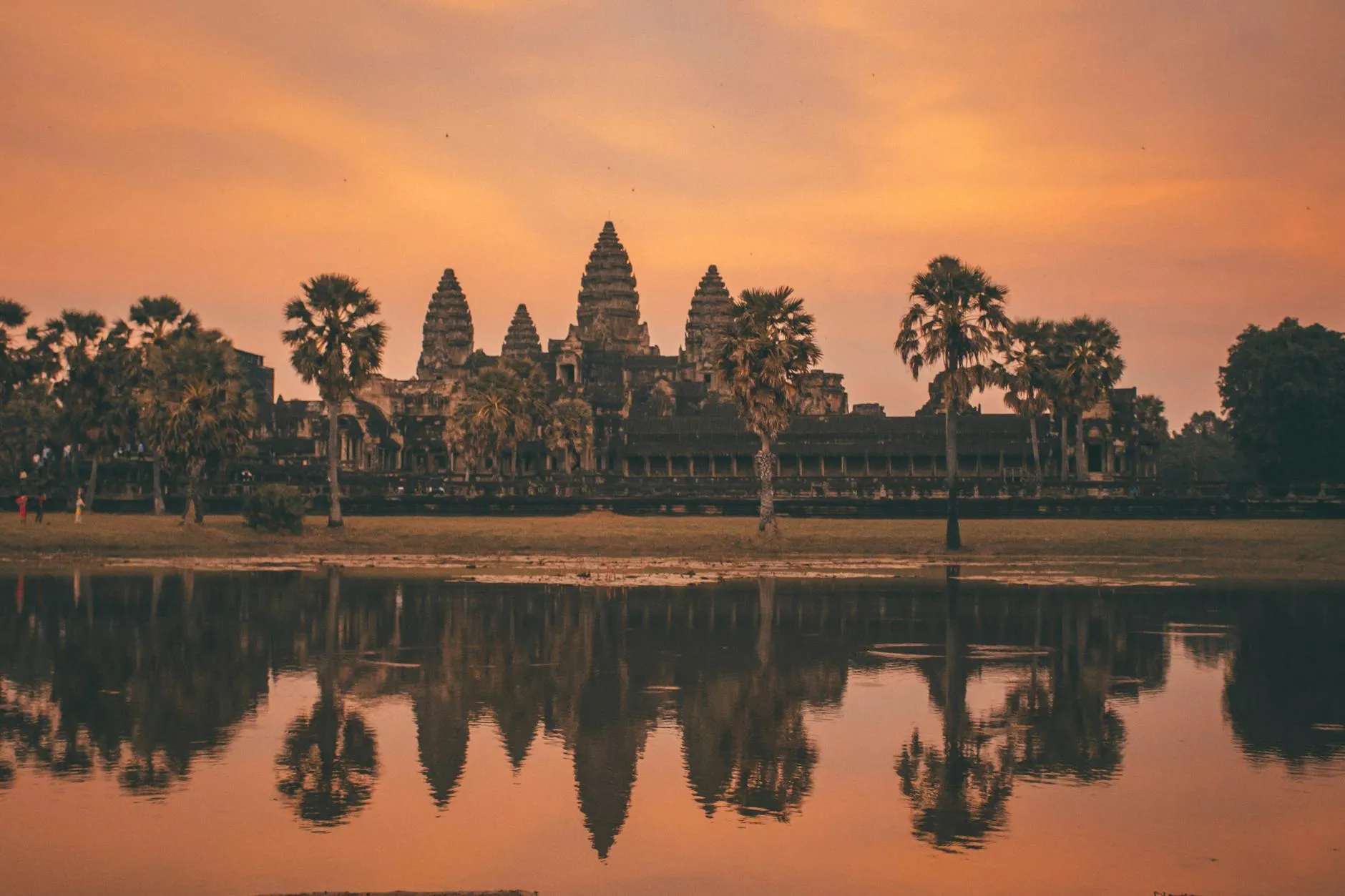
For a genuine first visit to Angkor Wat — the moat, the causeway, the central towers, the bas-reliefs — give it a full day and an overnight in Siem Reap. A layover is not the right format.
💵 Currency & Practical Notes
💲 The Dollar Reality
Cambodia is effectively dollarised. US dollars are the everyday currency for hotels, taxis, tours, restaurants, the airport shuttle and your visa. The Cambodian riel (KHR) functions as small change at roughly 4,000 KHR to US$1 — pay for a US$4.50 coffee with a US$5 note and you get about 2,000 riel back.
⚠️ Carry clean, unmarked, untorn dollar bills
Vendors and even banks routinely refuse damaged US dollar notes. A torn US$20 can be genuinely difficult to spend. Check your bills before you leave home.
ATMs at SAI dispense both currencies and default to dollars. The airport bureau de change exists but applies a tourist-rate markup — change only what you need to get out of the terminal, and draw the rest from a town ATM.
📶 Connectivity
Buy a local SIM or eSIM on arrival. Cambodian operators sell tourist SIMs cheaply; coverage in Siem Reap is solid. Terminal wifi is available, but an eSIM activated before you land is the smoother option, particularly if you need maps and translation the moment you exit the terminal.
❓ FAQ
📊 At a Glance — SAI 2026
| Item | Detail |
|---|---|
| Airport name | Siem Reap–Angkor International Airport |
| IATA / ICAO | SAI / VDSA |
| Opened / replaced | 16 October 2023; replaced old Siem Reap (REP) |
| Distance to town | ~50 km east, 55–90 min drive |
| Distance to Angkor Wat | ~51 km |
| Terminal | Single passenger terminal (domestic + international) |
| First-phase capacity | ~7 million pax/year (~12M planned by ~2030) |
| Tourist visa | US$30 e-Visa (evisa.gov.kh) or visa on arrival |
| Arrival card | Free Cambodia e-Arrival (CeA), mandatory, filed ≤7 days pre-travel |
| Currency | US dollar de facto; riel as change (~4,000 KHR ≈ US$1) |
| Airport shuttle bus | US$9 one-way (~US$15 round trip) |
| Taxi / transfer | ~US$25–35 (1–3 pax), door to door |
| Shared minivan | ~49,000 KHR (~US$12) per seat |
| Tuk-tuk | ~60,000–100,000 KHR (~US$15–25) |
| Ride-hailing (Grab/PassApp) | From ~100,000 KHR (~US$25) |
| Rail link | None |
| Lounge | Angkor Lounge — Priority Pass + DragonPass, Level 3 airside, 06:00–21:00 |
| Key carriers | Air Cambodia, Bangkok Airways, Vietnam Airlines, Singapore Airlines, Emirates, IndiGo |
| Angkor 1-day pass | US$37 (2026); US$62 / US$72 for 3-day / 7-day |
| Layover verdict | Not a practical layover airport for Angkor; the temples need a full day |