Aktau International Airport (SCO) — Airport Guide 2026
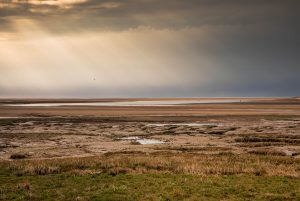
The airport that serves the Mangystau steppe sits 21 km north of Aktau on a flat Caspian shelf — built to handle oil-industry traffic and, increasingly, the travellers who come for the chalk canyons and underground mosques about 100 km inland.
Quick Reference
SCO / UATE
21 km direct, ~25 km by road; 30–35 min drive
Kazakhstani tenge (KZT); ≈487 KZT = 1 USD, ≈558 KZT = 1 EUR (May 2026)
Visa-free 30 days, ~50 nationalities incl. EU, UK, US, Canada, Australia
Kazakhstan passport control only
Route No. 6, 70 KZT card / 100 KZT cash — verify it’s running
Yandex Go / inDrive ≈5,000–6,000 KZT
Opens at 8,000–10,000 KZT for tourists; use the app instead
Taxi STAR, main hall, left of entrance, first floor
One paid CIP hall (15,000 KZT arrivals / 20,000 KZT departures); no Priority Pass
Air Astana, SCAT, FlyArystan, Pegasus, Azerbaijan Airlines, Aeroflot
Single building, opened 2009
Desalinated Caspian; filter or buy bottled
Beeline (eSIM only), Kcell, Tele2
Not expected; ~10% at upper-end restaurants only
🏗️ Terminal, Runway & History
Aktau operates out of one passenger terminal, which means kerb to gate takes a few minutes: one baggage hall, no satellite concourse, no airside train. The terminal opened in 2009 with a stated throughput of roughly 450 passengers per hour across about 13,400 m² of floor space. Treat claims of a “new terminal” as 2009-new — it is a mature building, not a recent opening.
The airport began as Shevchenko-Central in 1983, named for the closed Soviet settlement it served, a city built around a uranium mine and the BN-350 fast-breeder reactor that desalinated Caspian water to make the site habitable. The city was renamed Aktau after independence; the airport became a joint-stock company in November 1996 and passed to the ATM Group under a 30-year concession in 2007. Annual passenger throughput has historically run around a million: 1,023,900 in 2018, dipping in 2020, rebounding past 1.3 million in 2021 — consistently placing SCO in Kazakhstan’s top four airports by volume.
The single runway, designated 11/29, runs 3,052 m and is rated for aircraft up to Boeing 747 and Antonov An-124 size, a legacy of the airport’s cargo and industrial role rather than its passenger base. Elevation is 22 m above sea level; there is none of the altitude adjustment that some Central Asian airports require. Inside, facilities include jet bridges (officially described as telescopic ladders in airport literature), electronic check-in desks, flight-information displays, X-ray screening, lifts and escalators. Airside is functional and thin: a few cafés, a small duty-free zone, the paid CIP lounge, and little else. Arrive with enough time to clear formalities and not much more.
For the record: on 25 December 2024, Azerbaijan Airlines Flight 8243, an Embraer 190 on approach to Aktau, crashed near the airport during an attempted emergency landing; 29 of the 67 people on board survived. The airport remained operational.
🛂 Border, Visa & Entry
Kazakhstan grants visa-free entry for up to 30 calendar days per entry to around 50 nationalities, with stays capped at 90 days within any 180-day window. That list covers all 27 EU member states, the United Kingdom, the United States, Canada and Australia. US citizens get the 30-day allowance for all travel purposes except employment and missionary work. India and Iran sit on a separate, shorter 14-day unilateral track at time of writing — verify your specific nationality against the current list before flying, as Kazakhstan adjusts the roster periodically without much advance notice.
The process at SCO is a single passport-control stamp, nothing more. No arrival fee, no e-visa step, no online pre-registration for visa-free nationalities. None of the EU’s entry-exit or travel-authorisation systems has any bearing here, and no US pre-travel authorisation applies either. Border officers at SCO are accustomed to steady oil-industry traffic and process the visa-free queue quickly. Carry your onward or return ticket in case it is requested.
Registration: visa-free arrivals by air are generally registered automatically through the passport-control system, so a separate migration-police visit is not normally required for short tourist stays. Arriving overland or staying at a private address rather than a hotel makes the rules more involved. A hotel handles registration as part of check-in — the simplest path for a short trip.
⚠️ India and Iran: 14-day track
Citizens of India and Iran are on a separate, shorter unilateral visa-free arrangement — 14 days at time of writing, not the standard 30. Verify current terms before booking; Kazakhstan adjusts this list without much warning.
💰 Currency & Payments
Kazakhstan’s currency is the tenge (KZT). As of late May 2026, the rate sits at roughly 487 KZT to the US dollar and 558 KZT to the euro. To orient prices in this guide: a 5,000-tenge app taxi is about 10 USD or 9 EUR; the 20,000-tenge departure lounge is about 41 USD or 36 EUR. Notes in circulation run 200, 500, 1,000, 2,000, 5,000, 10,000 and 20,000 KZT.
The airport has ATMs and at least one currency-exchange counter. Both carry airport-rate premiums. Change enough at the airport for the taxi or bus and do the rest at a Halyk or Kaspi ATM in the city, where rates are considerably closer to market.
Aktau is unusually card-friendly for the region. Kaspi.kz dominates domestic payments, and contactless Visa and Mastercard work in most city restaurants, supermarkets and chains. The exceptions that matter: the airport public bus, which prices cash at 100 KZT (versus 70 KZT on a local transit card), and the Mangystau desert, where there is no phone signal, no card terminal and no ATM for hundreds of kilometres.
💸 Desert = cash, full amount, in advance
There are no ATMs, no card terminals, and no phone signal anywhere in Mangystau’s interior. Draw enough tenge in Aktau to cover the entire trip before you leave — not just a buffer.
🚆 Getting Into the City
The airport is about 21 km from central Aktau in a straight line, roughly 25 km by road, and the drive takes 30–35 minutes in normal traffic. There is no rail link and no metro — Aktau has neither.
📱 App Taxi — Yandex Go and inDrive
The default. Yandex Go operates in Aktau and showed metered fares of roughly 5,000–6,000 KZT (about 10–12 USD) from the airport through 2025. inDrive, where you propose the fare, also works here and tends to run a little lower. Both need mobile data — either sort a SIM or eSIM before landing, or use the terminal’s wifi to book before you exit. The advantage over a kerbside car is an agreed price before you get in.
🚗 Yandex Go: ≈5,000–6,000 KZT to the city
Book inside the terminal on wifi before walking out. Fixes the fare before you deal with anyone at the kerb. inDrive is an alternative and often cheaper if you set the offer yourself.
🚕 Kerbside Taxi and Taxi STAR
Drivers at arrivals open at 8,000–10,000 KZT for tourists. Firm haggling brings that down, but nowhere near what locals pay. If you want a fixed counter rather than kerb theatre, the official airport taxi is Taxi STAR, located in the main hall to the left of the entrance on the first floor. For everyone else: open the app.
⚠️ Skip the kerb tout
The kerbside ask starts at 8,000–10,000 KZT for the same 30-minute run that Yandex Go does for 5,000–6,000. Either use Taxi STAR at the counter inside or book via the app.
🚌 Bus No. 6
City bus Route No. 6 on the Airport–Aktau–Warm Beach line stops outside the terminal. Fare: 70 KZT by local transit card or 100 KZT cash — roughly 15–20 US cents. Approximate hours: 7:00 to 21:00. Journey time into the centre: 30–45 minutes depending on stops.
One serious caveat: the line was reported suspended as of mid-2025 due to capital repair works on the runway and access road. Verify the airport stop is active before counting on it. Treat the bus as a daytime, light-luggage option, not a guaranteed one — and not after 21:00.
🚌 Bus No. 6 — confirm before relying on it
70 KZT by transit card / 100 KZT cash. Reported suspended in mid-2025 for runway and road works. Check whether the airport stop is currently active. Last service approximately 21:00.
🏨 Hotel Transfer
Most Aktau hotels arrange airport pickup at a fixed price agreed at booking. For late-night arrivals, first visits, or groups with luggage, this removes every variable — and given how thin the public-transport net is after 21:00, worth paying for on day one.
🛋️ Lounges
There is one lounge at SCO. It is a paid CIP (Comfort Class) hall. There is no Priority Pass, LoungeKey or DragonPass lounge at the airport — if you hold any of those cards, they buy you nothing here.
The CIP hall charges per entry: 15,000 KZT (about 31 USD) for arrivals and 20,000 KZT (about 41 USD) for departures. Children aged 2–12 pay half price; there is a 2,000 KZT charge for greeters or well-wishers who accompany you in. You get a quiet seating area, wireless internet, a TV and printed press, and a paid bar — drinks and snacks are pay-as-you-go, not complimentary. The departures package adds priority boarding and a dedicated minibus to the aircraft; the arrivals package includes baggage handling while you wait. The hall runs around the clock and can be pre-booked by phone or WhatsApp through the airport.
For a long evening wait in a terminal with few alternatives, 20,000 KZT buys calm and a working connection. For a 90-minute transit it is hard to justify. There is no separate airline-operated business lounge, so Air Astana and SCAT premium passengers go through the same CIP hall.
🛋️ CIP lounge — 20,000 KZT departures, bar is pay-as-you-go
The only lounge at SCO. No Priority Pass, LoungeKey or DragonPass accepted. Bar charges separately — this is not an open lounge. Pre-book by phone or WhatsApp if you want to guarantee access.
🍽️ Food Before You Fly
Airside catering is a handful of cafés and a small duty-free zone at airport-premium prices. Buy a bottle of water and something to hold you over; plan the real meal in the city, where the same money goes considerably further.
Aktau’s food is Kazakh with a Caspian seafood strand. Beshbarmak — boiled meat (traditionally horse or mutton) over wide flat noodles, eaten by hand; the name means “five fingers” — is the national dish and the obvious first order in a local restaurant. Plov (pilaf) is the everyday rice-and-meat staple, frequently made with horse meat in this region, and the cheapest filling meal on any menu. What separates Aktau from inland Kazakhstan is the fish: this is a Caspian port, so Caspian sturgeon appears smoked and salted, and zhaya — a cured sturgeon preparation — is a local speciality you will not find in Almaty or Astana. Expect caviar and sturgeon to carry a premium even here, but a plate of grilled local fish in town costs a fraction of what airport cafés imply.
A sit-down plov or beshbarmak at a city café runs roughly 1,500–3,000 KZT (about 3–6 USD). Tea (chai) is the default drink and poured generously. The region is majority Muslim; alcohol is available but is not the centre of restaurant culture.
🐟 Zhaya — cured Caspian sturgeon
The local speciality not found inland. Ask your hotel for a current fish restaurant on the Caspian seafront promenade — the better fish places cluster along that stretch. This guide names no specific restaurant, because reliable current confirmation from outside Kazakhstan is not available.
Duty-free at SCO covers spirits, tobacco, perfume and confectionery at limited range. There is no reason to treat it as a shopping stop. For a souvenir worth having, buy in the city: Kazakh felt goods, dried fruit and local cognac-style brandies are more interesting than what sits on the airside shelves.
💡 Aktau City, the Desert & Layover Reality
The Mangystau attractions are why most leisure travellers fly to SCO. Two facts frame everything below: they are far, and none are reachable on a layover.
🏙️ Aktau City (21–25 km, 30–35 min)
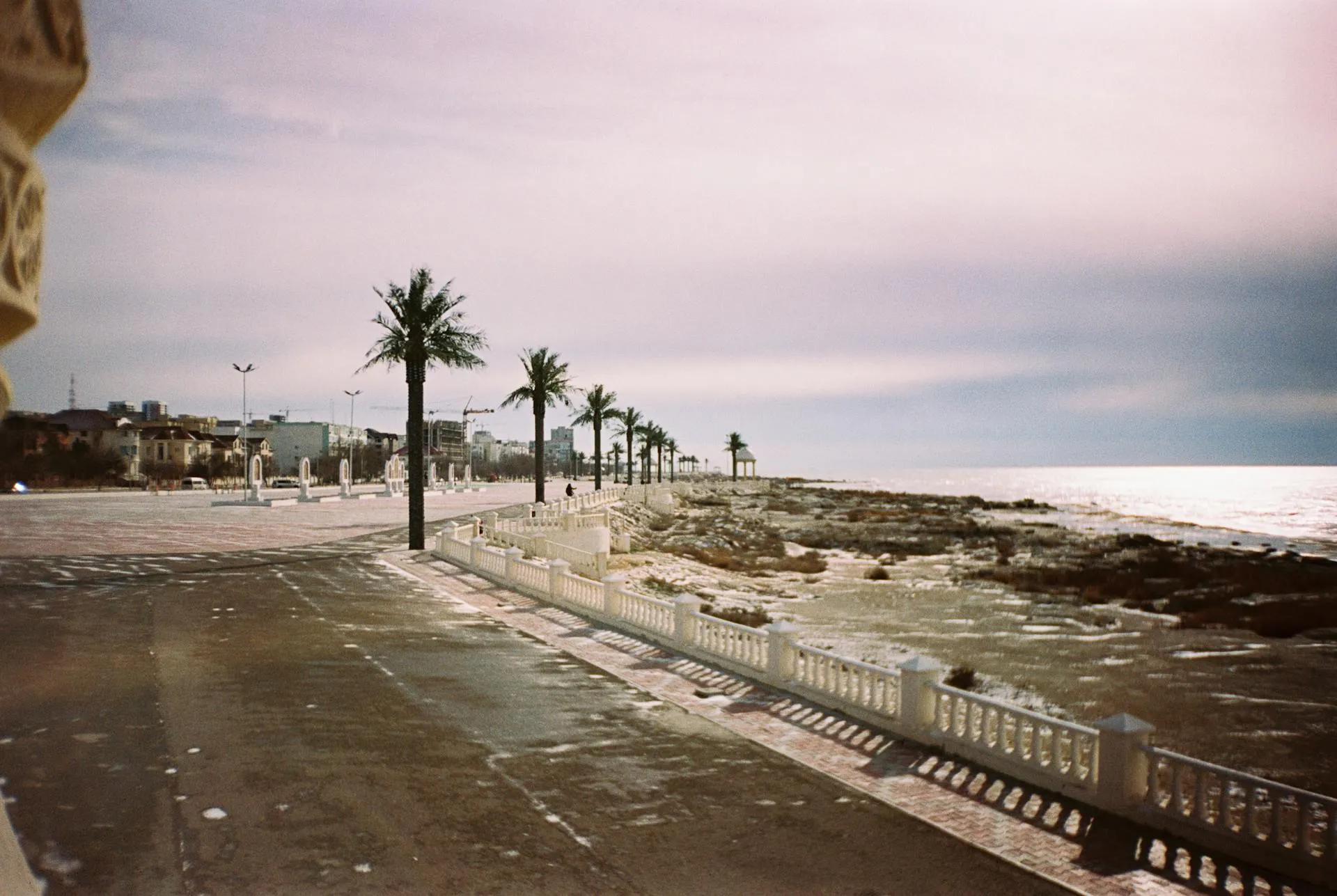
The only realistic option on a short connection. The Caspian seafront promenade is the centre of city life, with a WWII-monument lighthouse on the cliff above the water and a sequence of Soviet-era apartment blocks numbered rather than named — Aktau has no street names; navigation runs by microdistrict-building-apartment number (e.g. 14-25-5), a direct inheritance from its origins as a closed settlement. A walk along the promenade and a meal of Caspian fish is a comfortable half-day. That is the outer limit of a short layover.
🗺️ The Mangystau Desert — What Is Out There
Everything below requires a 4WD and a driver, and none of it is reachable between flights.
Torysh, the Valley of Balls (~100 km, ~1.5 h). Near-spherical stone concretions scattered across the steppe — the closest of the major Mangystau oddities to the city and typically the first stop on a desert tour.
Sherkala Mountain (~170 km, ~2.5 h). An isolated dome-shaped massif near the Airakty “Valley of Castles” — a characteristic Mangystau silhouette and a standard tour stop.
Tuzbair salt flat (~250 km, ~4 h). A white salt pan beneath a chalk escarpment, reached only by 4WD over a mix of road and off-road surface.
Bozzhyra (~4 h each way). The signature landscape — white chalk pinnacles and canyon walls dropping into what was the floor of an ancient sea. The standard one-day tour from Aktau runs roughly four hours out, an hour on-site, and four hours back: a nine-plus-hour day at minimum.
Shopan-Ata and Beket-Ata (~285 km east, ~4–5 h one-way). The two most important pilgrimage sites in western Kazakhstan, both carved into the rock. Beket-Ata is the resting place of the 18th-century Sufi teacher Beket-Ata (1750–1813), at the bottom of a desert canyon. Shopan-Ata, a 10th-century necropolis, is about 69 km before it on the road from Aktau and is usually combined with the same trip. Both are active pilgrimage destinations, not tourist sites; dress modestly and follow local custom.
⏱️ Layover Math, Stated Plainly
A round trip to Bozzhyra is eight hours of driving, minimum, before any time on-site. Beket-Ata is eight to ten hours round-trip. Add a two-to-three-hour return-security buffer for an international departure — be back airside with enough time — and neither fits any realistic layover. Even a 14-hour connection barely fits Bozzhyra, and only with a pre-arranged 4WD waiting at arrivals with no delays. Realistically, the desert is a two-to-four-day commitment with overnight stays. On a connection, walk the promenade and leave Mangystau for a trip you actually plan around.
⚠️ Mangystau is not a layover stop
Bozzhyra: 8 hours of driving round-trip minimum. Beket-Ata: 8–10 hours round-trip. Both require a 4WD and driver. Add 2–3 hours back airside before an international departure. Even a 14-hour layover fits Bozzhyra only at a punishing pace with a vehicle waiting at arrivals. The desert takes two to four days with overnight stays.
📶 Connectivity, SIM & Practical Notes
📱 SIM and Coverage
The terminal has wifi. For data beyond it, buy a local SIM from Beeline, Kcell or Tele2 — all available at city shops and some airport kiosks, with passport registration required under Kazakh law for a physical SIM. Only Beeline currently supports eSIM activation. If your phone is eSIM-only, Beeline is the only functional option. Buying a Beeline travel eSIM before departure gets you data for that first Yandex Go booking before you exit the terminal, which matters. Coverage is strong in Aktau and on main roads; it disappears entirely in the deep desert — the single most important connectivity fact for any Mangystau trip.
🗺️ Addresses
Aktau has no street names. Navigation runs by microdistrict-building-apartment number (e.g. 14-25-5). Get your destination as a number sequence before you set off, not as a street address. Drivers know the system; a conventional street name will not help anyone.
🌡️ Health and Desert Safety
No vaccinations are required for entry to Kazakhstan. Aktau’s tap water is desalinated Caspian water — technically potable as it leaves the plant, but the distribution network is old and most residents filter or buy bottled. Do the same.
The desert is a separate category of risk. There is no shade, no water source and no fast rescue anywhere in Mangystau’s interior. The standard advice — bring more water than you think you need — understates it. Summers are hot and dry, and weather on the steppe turns quickly.
💬 Language and Tipping
Aktau is a Russian- and Kazakh-speaking city; English is limited. A translation app and a few Russian phrases move things along considerably. Tipping is not expected: round up the bill at a café, leave around 10% at upper-end restaurants if service warrants it, and pay taxis and the bus as quoted with no additional tip.
❓ Frequently Asked Questions
📊 At a Glance — SCO 2026
| Category | Detail |
|---|---|
| Airport name | Aktau International Airport |
| IATA / ICAO | SCO / UATE |
| City served | Aktau, Mangystau Region, Kazakhstan |
| Distance to city | 21 km direct / ~25 km by road |
| Drive time to city | 30–35 minutes |
| Terminal | One passenger terminal (opened 2009) |
| Runway | 11/29, 3,052 m; rated for B747 and An-124 |
| Elevation | 22 m (72 ft) |
| Annual capacity | ~2 million passengers |
| Historical throughput | ~1,023,900 (2018); >1.3 million (2021) |
| Opened | 1983 as Shevchenko-Central; current terminal 2009 |
| Concession | ATM Group, 30-year from 2007 |
| Currency | KZT; ≈487/USD, ≈558/EUR (May 2026) |
| Visa | Visa-free 30 days, ~50 nationalities; 90-day cap per 180-day window |
| App taxi to city | Yandex Go / inDrive ≈5,000–6,000 KZT |
| Official airport taxi | Taxi STAR, main hall, left of entrance, first floor |
| Public bus | Route No. 6, 70 KZT card / 100 KZT cash, ~7:00–21:00 (verify active) |
| Lounge | One paid CIP hall; 15,000 KZT arrivals / 20,000 KZT departures; no Priority Pass |
| Main carriers | Air Astana, SCAT, FlyArystan, Pegasus, Azerbaijan Airlines, Aeroflot |
| SIM operators | Beeline (eSIM), Kcell, Tele2 |
| Tap water | Desalinated; filter or buy bottled |
| Key excursions | Aktau promenade (25 km, 30 min) · Torysh (100 km, 1.5 h) · Sherkala (170 km, 2.5 h) · Tuzbair (250 km, 4 h) · Bozzhyra (~4 h each way) · Beket-Ata (285 km, ~5 h one-way) |
| Tipping | Not expected; ~10% at upper-end restaurants only |