Sacramento International Airport (SMF) — Airport Guide 2026
California’s fourth-busiest airport sits 16 km north-west of the state capital — a calm, domestic-focused airport that punches below its weight on lounges but above it on local food and a genuinely walkable city core when you have time to reach it.
Quick Reference
Sacramento International Airport
SMF / KSMF
~16 km north-west of downtown Sacramento, California
Terminal A & Terminal B; Terminal B connects to its concourse via automated people-mover; free shuttle between terminals
None
SacRT Route 142 + Yolobus 42A/42B → J Street, L Street, Capitol Mall; every 20–30 min, $2.50 single / $7 day pass
~$30–40, ~20–25 min
US dollar ($)
US — ESTA for Visa Waiver nationals; most international arrivals connect via SFO or LAX
No confirmed Priority Pass sit-down lounge — check the app; gate areas are comfortable
Southwest (largest), Alaska, Delta, United, American, Frontier
SacRT/Yolobus or rideshare → Old Sacramento + Capitol + Tower Bridge (needs 4–5 hr)
🏢 Terminal Layout
Two terminals — A and the newer B — served by a free inter-terminal shuttle. Terminal B’s airside concourse connects via an automated people-mover, which is the modern half of the airport. The network is overwhelmingly domestic: West Coast, Mountain West, major connecting hubs. Southwest runs the most capacity; Alaska, Delta, United and American round out the main carriers; Frontier adds low-cost options. International flying is thin — a handful of routes to Mexico, nothing long-haul. For most international visitors, Sacramento is reached on a domestic hop from San Francisco or Los Angeles after clearing US CBP at the gateway.
The airport clears quickly outside peak periods. Security lanes move; the terminals are not maze-like. It is a functional regional airport without the sprawl or the delays of the Bay Area alternatives.
⚠️ SMF ≠ SAC
Sacramento Executive Airport (SAC) is a general-aviation field. If your ticket says SMF, you want Sacramento International. Wrong airport is a long taxi ride in the wrong direction.
🛂 Border & Entry
US Customs and Border Protection processes international arrivals, but most travellers reaching Sacramento on international tickets never see SMF’s CBP hall — they cleared passport control at their US gateway (SFO, LAX) and are on a domestic connection by the time they land here.
- ESTA covers Visa Waiver Programme nationals (UK, most of the EU, Japan, Australia, and others) for stays up to 90 days — apply online before departure; approval is usually instant.
- Global Entry, MPC, and APC kiosks expedite eligible arrivals.
- Nationals who require a US visa need it before flying; no visa-on-arrival exists.
The currency throughout is the US dollar.
🚌 Getting Into the City
There is no light rail to SMF. Sacramento’s SacRT light rail is a solid city network, but it stops well short of the airport — so the choice is bus or rideshare.
🚍 SacRT Route 142 + Yolobus 42A/42B
SacRT Route 142 combined with Yolobus routes 42A and 42B connects both Terminal A and Terminal B to downtown Sacramento, dropping along J Street, L Street and Capitol Mall. Frequency is roughly every 20–30 minutes, seven days a week. The SacRT single fare is about $2.50; a day pass is $7; reduced fares apply for seniors, disabled passengers and students.
🚌 Bus to downtown — $2.50, 20–30 min
SacRT Route 142 + Yolobus 42A/42B serves both terminals. Pick it up outside arrivals; the day pass ($7) covers the return. Budget option, straightforward route.
🚗 Rideshare & Taxi
Rideshare and taxis run approximately $30–40 and take 20–25 minutes, depending on traffic on I-5. The price gap relative to the bus is real; whether it matters depends on your bag situation. For a solo traveller with a carry-on, the bus is fine. For two people with luggage, the rideshare math shifts.
🛋️ Lounges
Lounge access at Sacramento is genuinely thin. SMF does not have a confirmed Priority Pass sit-down lounge — the kind that’s reliably open, reliably staffed, reliably on the app. Airline contract lounge offerings here are limited compared with a hub airport.
⚠️ Caution — Priority Pass holders: check the app, not assumptions
SMF’s lounge situation changes. Do not assume your card gets you a lounge here. Pull up the app before your trip; if nothing shows, plan around the gate areas.
The gate areas themselves are comfortable and well-served with food and coffee, so the absence of a lounge is an inconvenience, not a disaster. If a lounge is a hard requirement, SMF is an airport where it may not be available.
🍽️ Food Before You Fly
Sacramento calls itself America’s Farm-to-Fork Capital, and the claim is grounded in geography, not marketing. The airport sits in the Central Valley — one of the most productive agricultural regions in the country. The region grows a substantial share of the nation’s processing tomatoes, along with stone fruit, almonds, and the kind of seasonal produce that restaurants in more famous food cities import from here.
The dining scene in the city leans hard into local-sourced, seasonal cooking. The southern edge of California wine country runs through here — the Lodi vineyards sit just south of the city, less famous than Napa but making solid wines at more honest prices.
🍑 What to eat before you board
Anything farm-to-fork that’s seasonal. Stone fruit in summer, tomato-forward dishes year-round. For a carry-home: local almonds or California olive oil. For a last glass: a Lodi-region wine rather than the more expensive Napa equivalent.
Prices are in US dollars; tipping around 18–20% is standard in sit-down restaurants and expected.
💡 Insider: Layovers & the City
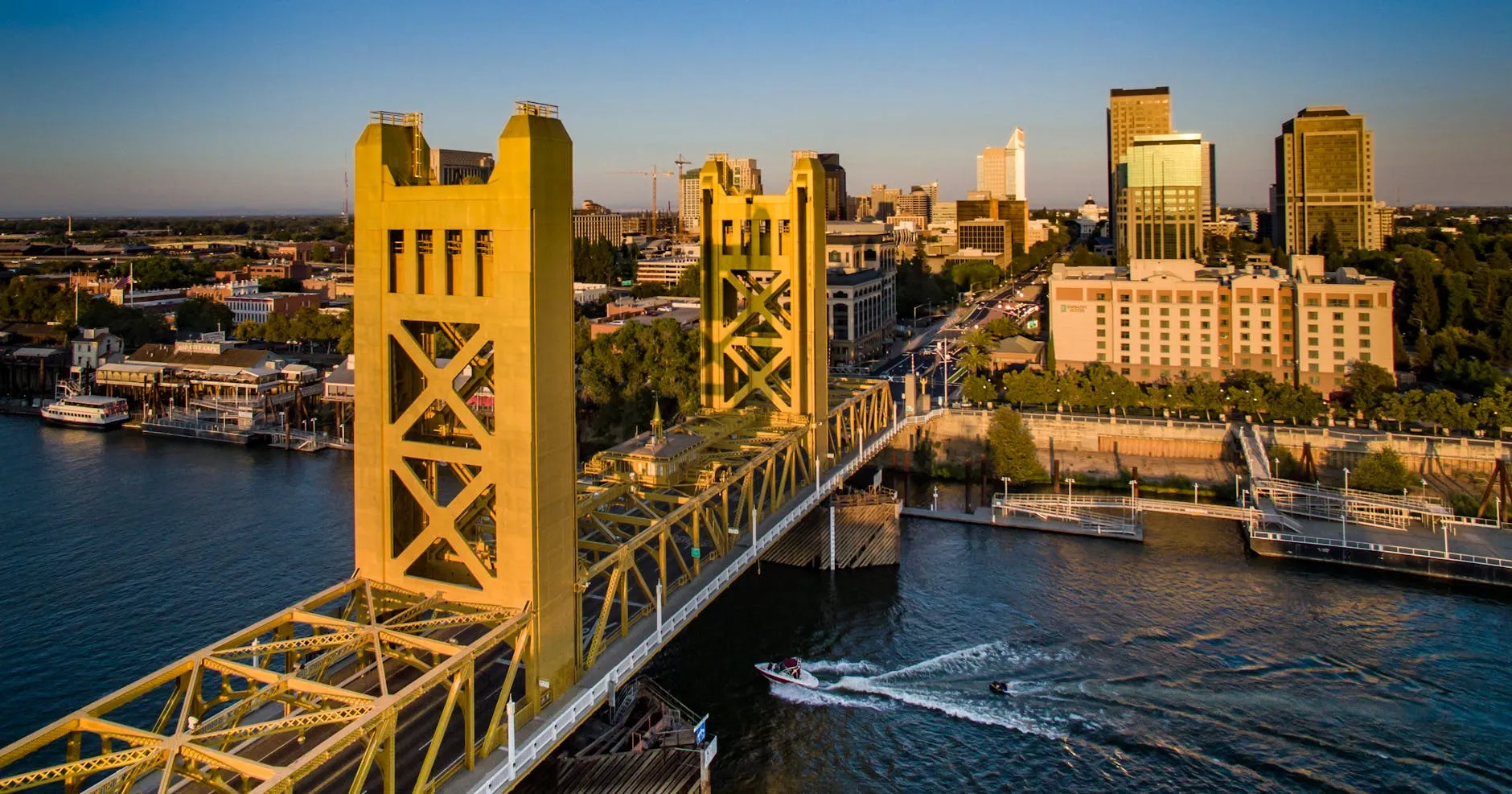
Sacramento’s history is the Gold Rush, which left behind Old Sacramento — a riverfront district of wooden sidewalks, 19th-century facades, the California State Railroad Museum, and paddle-wheelers on the Sacramento River. The California State Capitol, with its white dome and surrounding park, anchors the government district a few blocks inland. The Tower Bridge — a golden vertical-lift bridge over the Sacramento River — is the city’s most-photographed landmark and sits between the two.
Beyond the city: Lake Tahoe is roughly two hours east into the Sierra; Napa and Sonoma wine country is about 90 minutes west.
⏱️ Layover math — Old Sacramento + Capitol + Tower Bridge
These three sites sit close together by the river, about 20–30 minutes from the airport by rideshare or bus. A 4–5 hour layover covers all three with a 90-minute return buffer. Under three hours, stay airside — the transit time each way eats the window.
🏔️ Tahoe and Napa are not layovers
Both are full-day trips. Lake Tahoe is two hours each way; Napa is 90 minutes. Unless you have a seven-hour connection and aggressive instincts, neither works. Treat them as reasons to come back, not reasons to rush.
The compact riverfront core — Old Sacramento to the Capitol to the Tower Bridge — is the efficient layover target. They’re walkable from each other once you’re downtown. Don’t try to add the midtown grid or the Tower District on top of it unless you know the city.
♿ Accessibility
Reduced-mobility assistance is free — arrange it through your airline before travel. Both terminals are accessible.
🌍 Planning the trip? Read our California travel guide — best time to go, where to stay, and how to get around.
❓ Frequently Asked Questions
📊 At a glance — SMF 2026
| Feature | Current Data |
|---|---|
| Official name | Sacramento International Airport |
| IATA / ICAO | SMF / KSMF |
| Location | ~16 km north-west of downtown Sacramento, California |
| State rank | Fourth-busiest airport in California |
| Terminals | Terminal A & Terminal B; B has automated people-mover to concourse; free inter-terminal shuttle |
| Rail to centre | None — SacRT light rail does not reach the airport |
| Bus to centre | SacRT Route 142 + Yolobus 42A/42B → downtown (both terminals), every 20–30 min, ~$2.50 single / $7 day pass |
| Taxi / rideshare | ~$30–40, ~20–25 min |
| Currency | US dollar ($) |
| Border | US; mostly domestic; ESTA (Visa Waiver) for limited international arrivals |
| Lounges | No confirmed Priority Pass sit-down lounge; check app; gate areas otherwise |
| Dominant carriers | Southwest (largest); Alaska, Delta, United, American, Frontier |
| International routes | Limited — primarily Mexico; most international arrivals connect via SFO or LAX |
| Best layover move | Rideshare or SacRT/Yolobus to Old Sacramento + California State Capitol + Tower Bridge (4–5 hr layover) |
| Not layover-viable | Lake Tahoe (~2 hr each way), Napa/Sonoma (~90 min each way) |