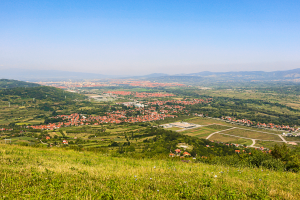
Udon Thani Airport (UTH) — Airport Guide 2026
Quick Reference
Udon Thani International Airport
UTH / VTUD
Udon Thani, Isan (northeastern Thailand)
About 3 km south of central Udon Thani
Two terminals; currently domestic-only scheduled service; ~2.0M passengers in 2025
Thai AirAsia, Thai Lion Air, Nok Air, Thai Airways, Vietjet Thailand — all domestic
Thailand
Thai baht (฿ / THB)
Taxi ~฿60, city bus ~฿20, songthaew, Grab; ~3 km, 10–15 min
Airport bus to the Nong Khai Friendship Bridge, ~฿150, 4 daily synced to flights
The Coral Executive Lounge, Terminal 2 (Priority Pass; walk-in ~฿1,400; 06:00–21:00)
🛫 1. What Udon Thani Airport is
Udon Thani is the main airport for the upper Isan region of northeastern Thailand, and the honest framing is that it is a busy domestic airport with an international name. It carried around 2 million passengers in 2025, but all its scheduled service is domestic — Thai AirAsia, Thai Lion Air and Nok Air run the bulk of it, with Thai Airways and Vietjet Thailand filling in, on routes to Bangkok’s two airports, Chiang Mai, Phuket, Hat Yai and a few other Thai cities. The “International” in the name reflects its facilities and its role as an entry point for Laos, not a current roster of international flights.
There is no major new terminal or rail link to announce here; what defines the airport is its two purposes. The first is being the air link for a large, under-touristed region of Thailand that most foreign visitors skip. The second, and the reason a fair number of travellers pass through at all, is that it is the cheapest and easiest way to reach Vientiane, the capital of Laos, which sits just across the Mekong about an hour north.
For booking, the pattern is simple: this is a domestic hop within Thailand, almost always to or from Bangkok, and the low-cost carriers price it cheaply if you book ahead. If Laos is your real target, flying a budget fare into Udon Thani and crossing overland is routinely cheaper than flying into Vientiane direct — more on that below.
🛂 2. The border: Thailand, and the Laos crossing
Thailand sits in no European system, and the currency is the Thai baht. Because Udon Thani has no scheduled international flights, you will normally clear Thai immigration at Bangkok or wherever you first land, not here — but the rules changed recently and are worth getting right.
From 15 September 2026, Thailand’s visa-exempt stay is 30 days per entry for eligible nationalities (the UK, US, EU, Australia and others), down from 60 days, under four Interior Ministry notifications published in the Royal Gazette on 31 August 2026. Arrivals up to 14 September 2026 still get 60 days, and a stay already stamped in your passport stands, but plan on 30 unless you hold a visa. The eligible list was trimmed with the change, from 93 nationalities to 60 countries and territories, so check your own passport against an official Thai source. Separately, and regardless of visa status, every arrival must file the free TDAC (Thailand Digital Arrival Card) online within 72 hours before arriving — it has been mandatory since 1 May 2025, it is not a visa, and it is a separate step you complete before you reach immigration.
The Laos crossing is its own small border exercise. From the Nong Khai Friendship Bridge you cross into Laos, where most nationalities buy a Lao visa on arrival at the bridge (around US$30–42 depending on passport, payable in cash), and Vientiane is roughly 25 km further on. Coming back into Thailand you file the TDAC again and get a fresh 30-day exemption stamp — straightforward, but build the time in, because the bridge formalities on a busy day are not quick.
🚆 3. Getting into Udon Thani
The airport is only about 3 km from the city centre, so this is one of the shortest airport runs in Thailand — a 10-to-15-minute hop rather than a journey.
A metered taxi from the rank into town costs around ฿60, the local city bus is about ฿20, and songthaew (the shared pickup-truck taxis) and Grab also serve the airport. With a fare this short, a taxi or Grab is the painless choice; the bus only really pays off if you are counting every baht. There is no airport rail — Udon Thani’s train station, on the Bangkok–Nong Khai line, is in the city itself, not at the airport.
For most arrivals this is an arrival point, not a connection, so there is little layover math to do. If you are tight-connecting a domestic flight here onto the Laos bus, note that the bridge buses are timed to flight arrivals but run only a few times a day, so check the schedule at the taxi desk on landing rather than assuming one is waiting.
🌏 4. The real reason many people use UTH: the run to Vientiane
This is the operational heart of the guide, because for a large share of foreign travellers Udon Thani is not the destination — it is the back door into Laos.
Direct airport buses to the Nong Khai Friendship Bridge leave roughly four times a day, timed to flight arrivals, and cost about ฿150; you buy the ticket at the airport taxi desk. The bus drops you at the bridge, you clear Thai exit and Lao entry (with the visa on arrival if you need one), and from the Lao side it is a short onward ride into Vientiane. The whole thing from plane to the Lao capital is a half-day at most.
The reason to do it this way is money. Direct flights into Vientiane’s Wattay Airport are often far pricier than a budget domestic fare into Udon Thani, so the fly-to-Udon-then-cross route can save a meaningful amount, which is exactly why the dedicated bridge bus exists. The honest catch is the time and the two-border faff, so it suits the unhurried more than someone on a tight schedule.
If you would rather not deal with the public bus, the airport taxi desk and the hotels arrange private transfers across to Nong Khai or all the way to Vientiane, at a markup. Agree the price and what is included — whether it waits for you at the border — before you set off.
🛬 5. The terminal, the lounge and the food
Udon Thani operates from two terminal buildings, and as a domestic airport it is an easy, low-stress place to move through; the usual hour or so before a flight is plenty outside the busiest departure waves. The facilities are modest but adequate, with the standard cafés and convenience shops.
On lounges, there is one worth knowing: The Coral Executive Lounge, in Terminal 2, is on the Priority Pass network and also takes walk-ins at around ฿1,400, with the usual drinks and snacks. It is open 06:00–21:00. If you hold Priority Pass, it is a genuine perk at an airport this size; if you do not, the walk-in price is steep for a short domestic wait.
The eating worth doing is Isan food, which is one of the best regional cuisines in Thailand and far better in the city than at the terminal. The local staples are som tam (the fiery green-papaya salad), grilled gai yang chicken, sticky rice, and the fermented Isan sausage, sai krok Isan. What is worth carrying home from this region is edible and cheap — packets of the sausages and snacks from the markets — rather than anything from the airport shops; the Ban Chiang pottery replicas sold around town are the other characteristic souvenir.
🌅 6. The reason to come: Udon Thani and Isan
If Udon Thani is your actual destination rather than a stop on the way to Laos, it is an honest, unflashy Thai provincial city with a couple of genuine draws and a distinctive history, not a resort.
The standout sight is seasonal: the Red Lotus Sea (Talay Bua Daeng) on Nong Han lake, about 45 minutes south of the city, where the water fills with pink-red lotus blooms and small boats take you out among them. It only works in the cool season, roughly December to February, and only in the morning when the flowers are open — go at the wrong time of year and it is just a lake, so this is one to plan the trip around rather than hope for.
The other serious site is Ban Chiang, a UNESCO World Heritage archaeological site about 50 km east, where excavations revealed one of Southeast Asia’s most important prehistoric Bronze Age settlements, with a good on-site museum. It is a real piece of history rather than a tourist set-piece, and worth the trip for anyone interested in the deep past of the region.
Udon Thani also carries an unusual recent history that shapes its present character: it hosted a major US air base during the Vietnam War, and that left a lasting Western expat and retiree community, which is why a mid-sized Isan city has more farang-oriented bars and restaurants than its size would suggest. That is part of the texture rather than a reason to visit, but it explains the place. There is no separate aifly Udon Thani guide, so the short version is this: come for the Red Lotus Sea in the cool season, Ban Chiang any time, and the Isan food throughout — or just pass through on your way across the river.
❓ 7. FAQ
📋 8. At a glance
| Item | Detail |
|---|---|
| Airport | Udon Thani International (UTH / VTUD), ~3 km south of the city |
| Terminal | Two terminals; domestic-only scheduled service; ~2.0M passengers (2025) |
| Recent change | No major terminal change; visa-exempt stay cut 60→30 days per entry from 15 September 2026 and TDAC now mandatory |
| Carriers | Thai AirAsia, Thai Lion Air, Nok Air, Thai Airways, Vietjet Thailand — all domestic |
| To the city | Taxi ~฿60, city bus ~฿20, songthaew, Grab; ~3 km, 10–15 min; no airport rail |
| To Laos | Airport bus to the Nong Khai Friendship Bridge ~฿150, ~4 daily; cross to Vientiane (Lao visa on arrival at the bridge) |
| Border | Thailand |
| Currency | Thai baht (฿ / THB); cards in malls/hotels, cash for buses, markets, the Laos crossing |
| Lounge | The Coral Executive Lounge, Terminal 2 (Priority Pass; walk-in ~฿1,400; 06:00–21:00) |
| Worth your time | The Red Lotus Sea (cool season), Ban Chiang UNESCO site, Isan food — or the cheap crossing to Vientiane |
🔗 9. Explore More
- Vientiane Wattay Airport (VTE) guide — the Lao capital across the Mekong, the destination many UTH travellers are really heading to
- Surat Thani Airport (URT) guide — another budget-fare Thai regional airport, for the gulf islands