Accra Kotoka (ACC) — The Complete 2026 Airport Guide
You will still see it called Kotoka on every ticket, board and taxi sign — it was officially renamed Accra International Airport in February 2026, but the code is still ACC and that change alters nothing about your trip. What will change your trip: unless you hold an African passport you need a visa sorted before you fly, everyone needs a physical yellow-fever card or they can be refused entry, and the arrivals taxi rank is a place to be careful, not casual.
Last verified: July 2026. Visa fees, transport prices and entry rules for Ghana change often — confirm the specifics on the official portals and at the counter before you travel.
Quick reference
| Detail | What you need to know |
|---|---|
| Airport | Accra International Airport — long known as Kotoka International, renamed 23 Feb 2026. IATA ACC, ICAO DGAA. Ghana’s main gateway; a record ~3.62 million passengers in 2025 |
| Terminals | Terminal 3 handles every international flight (opened 2018, 5M capacity). Terminal 2 is domestic only. Terminal 1 is closed to scheduled flights |
| Location | ~9–10 km from central Accra, next to Osu and East Legon — 20–30 minutes by car, longer in traffic |
| Into the city | No train or metro. Ride-hailing (Uber, Bolt, Yango) with the price fixed in the app is the smart choice — roughly GHS 30–90 (~$3–8) to most central districts. Airport taxis: agree the fare first |
| Entry (Westerners) | EU, UK, US, Canadian and Australian travellers need a visa arranged in advance via the official e-Visa portal — you cannot reliably turn up and buy one |
| Non-negotiable | A physical yellow-fever certificate (the yellow card) — checked by Port Health before immigration; photos and scans are not accepted |
The 2026 headline: “Accra International” now — but your ticket still says Kotoka
On 23 February 2026 the airport’s official name reverted to Accra International Airport, dropping the “Kotoka” it had carried for decades. The change is a political one — a long-running debate about naming the country’s front door after General Emmanuel Kotoka, whose 1966 coup overthrew Kwame Nkrumah, the president who built the airport. For a traveller, though, it is close to a non-event: the IATA code is still ACC, the ICAO code is still DGAA, and airlines, booking sites, maps and taxi drivers will keep saying “Kotoka” for years. Book to ACC and you are in the right place.
What actually deserves your attention before you fly to Accra is a short, unglamorous list: get your visa sorted at home (Western passports cannot count on buying one at the airport), carry the physical yellow-fever card or risk being turned back at the health desk, and have a plan for the taxi rank so the touts do not set your first-hour mood. Get those three right and Accra is one of the easier West African arrivals. The rest of this guide is mostly those three, in detail.
Terminals: one building that matters
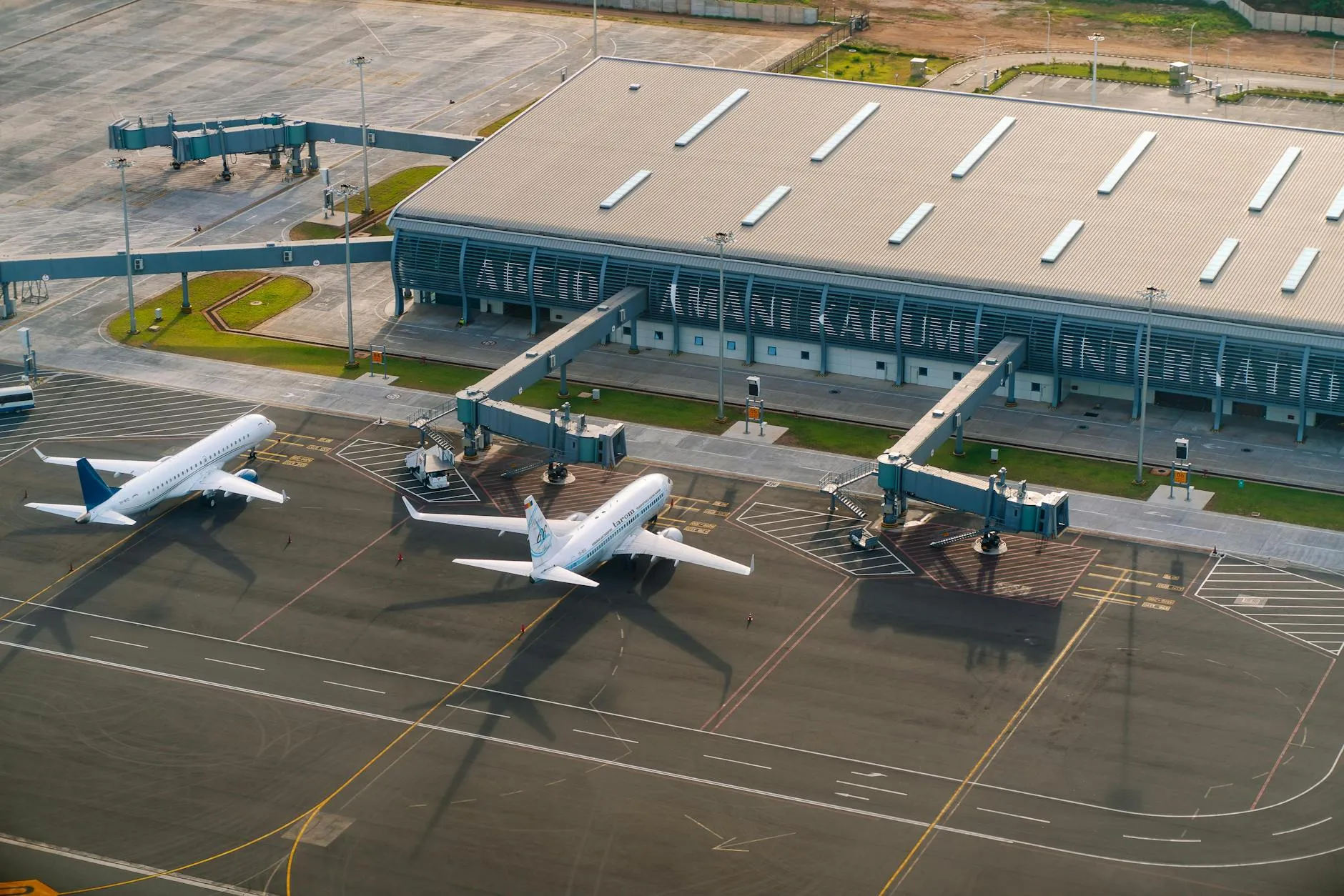
For an international traveller, Accra is refreshingly simple. Terminal 3 is the only terminal you will use. Opened in 2018 as a $274 million build, it handles 100% of international and long-haul flights, is rated for around 5 million passengers a year (with room to grow to 6.5 million), has six air-bridges and can take aircraft up to the Airbus A380. It is a modern, air-conditioned terminal with proper lounges and duty-free — a world away from the old international hall.
Terminal 2 is domestic only — flights to Kumasi, Tamale, Takoradi and Ho on carriers like PassionAir and Africa World Airlines. Terminal 1, the original international building, no longer takes scheduled passenger flights and is slated to be redeveloped. If you are connecting from an intercontinental flight onto a Ghana domestic hop, that means a move from T3 to T2 — they are on the same airport but not connected airside, so you collect bags, clear into Ghana, and make your way over. Budget time for it.
Entry: the visa and the yellow card are the whole game
This is the section that catches people out, so read it twice. Two documents decide whether you walk into Ghana smoothly: your visa and your yellow-fever certificate.
If you hold an EU, UK, US, Canadian or Australian passport — arrange the visa before you fly
Ghana is not a visa-on-arrival country for Western tourists. You need a visa sorted in advance, and in 2026 the standard route is the government’s e-Visa portal at evisa.immigration.gov.gh (launched 25 May 2026). You apply online, upload your passport bio page and photo, pay, and receive an authorisation by email to show on arrival.
Be ready for it to be slow and not cheap. At launch the official portal listed the tourist e-Visa at around $260 for single entry and $468 for multiple entry, with faster processing available at higher fees; standard turnaround runs to several business days. Fees and timings on government visa systems move, so treat those as the shape of it and confirm the live figure on the portal — but plan for a few hundred dollars and apply at least two to three weeks ahead, not the night before.
If you hold an African passport — it just got much easier
From 25 May 2026 (Africa Day), Ghana grants visa-free entry to all African passport holders. In practice that means a free online travel authorisation rather than a paid visa — you still register in advance so you are screened, but there is no fee, and the stay is generous. It is part of a wider continental push on free movement; Ghana joined Rwanda, Benin, The Gambia and Seychelles in opening its doors to fellow Africans.
The yellow-fever card is mandatory — and they check it
Everyone entering Ghana must show proof of yellow-fever vaccination. This is not a formality you can talk your way past: at Accra a Port Health desk checks your International Certificate of Vaccination (the physical “yellow card”) before you reach passport control. It must be the real booklet, stamped by an authorised centre — photos, scans and phone screenshots are not accepted — and the dose must have been given at least 10 days before you land. Turn up without it and you can be vaccinated on the spot or refused entry; neither is a plan you want. Pack the card somewhere you can reach it before immigration, not buried in your hold bag.
Two more small things: your passport should have at least six months’ validity and a couple of blank pages, and there is no departure tax to pay at the airport — it is built into your ticket.
Getting into Accra without getting fleeced
Accra has no airport train and no metro, so this comes down to a taxi or a ride-hailing app — and the gap between doing it well and doing it badly is large. The airport is close (roughly 9–10 km from the centre, 20–30 minutes in light traffic, a good deal more at rush hour), so the trip should be cheap. The catch is the arrivals hall.
Use an app — Uber, Bolt or Yango
Uber, Bolt and Yango all operate in Accra, and they are the traveller’s best friend here for one reason: the price is fixed in the app before you accept, so there is nothing to argue about. Expect roughly GHS 30–90 (about $3–8) to central districts like Osu, Airport Residential, Cantonments or Circle, depending on distance and traffic; Yango often prices a touch lower. Order the ride from inside or just outside the terminal, and here is the local wrinkle — drivers usually cannot pull up to the arrivals door. The app will direct you to a designated pickup point at the car park or a nearby meeting spot; check the car’s plate against the app before you get in, and share the trip if you are travelling alone or at night.
If you take an airport taxi, agree the fare first — out loud, before you move
The marked airport taxis are legitimate, but Accra’s arrivals rank has a long-standing reputation for quoting new arrivals two to three times the going rate. There is no meter you can rely on, so the rule is simple and non-negotiable: agree the full price in cedis before you put a bag in the boot, and do not accept the first number. Ignore the freelancers who approach you inside the hall offering “taxi, taxi” — use the official queue or, better, the app. A fair metered-style ride into the centre is modest; the touts count on you not knowing that.
| Option | Rough cost to central Accra | Notes |
|---|---|---|
| Ride-hailing (Uber / Bolt / Yango) | GHS 30–90 (~$3–8 / €3–7) | Price fixed in-app — the safe default. Meet the driver at the designated pickup point |
| Airport taxi | Agree before you go — aim well under the first quote | No reliable meter; touts overcharge arrivals. Settle the price in cedis up front |
| Hotel shuttle / pre-booked car | Set in advance | Best for late arrivals or first-time visitors; driver meets you with a name board |
Rates in mid-2026 sit around GHS 12 to the US dollar and GHS 13.5 to the euro, and the conversions above use that. Cedis (GHS) are the only currency that matters on the ground — see the money note below for how to get them well.
Lounges
Terminal 3 has three independent lounges airside, all on the international side, and all take Priority Pass as well as pay-at-the-door walk-ins — handy if you are early for a long-haul or holding a lounge card:
- Akwaaba Pearl Lounge — airside on Level 5, open 24 hours, with a four-hour maximum stay. The largest of the three.
- Sanbra Priority Lounge — airside on Level 3 in the main departure hall, opposite Gate C3, open 24 hours, four-hour stay.
- Adinkra Lounge — airside past security (turn right towards Gate C4), open roughly 06:00–23:00.
If you are flying a premium cabin on British Airways, Emirates, Qatar, Turkish or the like, you will be pointed to the relevant contract lounge among these. For everyone else, a Priority Pass or the walk-in fee gets you air-conditioning, decent food and reliable Wi-Fi — worth it given how warm and busy the general gate area gets in the evening long-haul rush.
Connections and minimum times
Because all international flights now use Terminal 3, most connections through Accra are within a single building, which keeps things simple. Ethiopian, Turkish, Emirates, Qatar and Kenya Airways all use Accra as a stop on wider networks, and many “connections” here are actually the same aircraft continuing after a one-stop halt — you may not even change planes.
For a genuine change of flights within T3, give yourself a comfortable buffer and confirm the minimum with your airline — there is no single published connecting time worth quoting for every case, and it depends on whether you clear immigration, re-check bags, or stay airside. The one connection that needs real time is international-to-domestic: that means clearing into Ghana, collecting your bag and moving from T3 to the separate domestic Terminal 2, which is not a quick airside walk. Treat that as leaving and re-entering the airport, and do not book it tight.
Food, money and Wi-Fi
Money: the cedi (GHS) is a closed currency you cannot get before you arrive, so plan to draw cash on the ground. Use a bank ATM over the exchange desks for a better rate, and if an ATM offers to bill you in your home currency, decline it and choose cedis. Carry some cash — plenty of taxis, market stalls and small vendors are cash-only — but cards work fine in hotels and larger restaurants, and the ride-hailing apps let you pay by card so you need less cash than you might think.
SIM and data: a local MTN or Telecel SIM (or an eSIM bought before you land) is cheap and makes the ride-hailing apps far easier to use; registration needs your passport. Terminal 3 has free Wi-Fi, but it is patchy, so having your own data from the moment you land is the difference between ordering a Bolt smoothly and standing in the arrivals hall negotiating with a tout.
Food and practicalities: Terminal 3 has cafés, bars and grab-and-go outlets airside, plus duty-free; prices are airport-marked, so eat before you come if you are counting cedis. The terminal is fully air-conditioned, there are pharmacies and a medical point, and the departures process — with security, Port Health and immigration — can be slow at peak, so the standard three hours before a long-haul international departure is sensible here, not cautious.
Frequently asked questions
Is it Kotoka or Accra International Airport now?+
Both names refer to the same place. The airport was officially renamed from Kotoka International Airport to Accra International Airport on 23 February 2026, but the IATA code remains ACC and the ICAO code DGAA. Airlines, booking sites, maps and taxi drivers will keep calling it Kotoka for a long time, so you will see both — book to ACC and you are correct either way.
Do I need a visa to visit Ghana as a tourist in 2026?+
If you hold an EU, UK, US, Canadian or Australian passport, yes — and you should arrange it before you fly. The standard route is the official e-Visa portal at evisa.immigration.gov.gh (launched 25 May 2026); at launch it listed roughly $260 for single entry and $468 for multiple entry, with faster processing costing more. Fees change, so confirm on the portal and apply two to three weeks ahead. African passport holders enter visa-free (a free online authorisation) since 25 May 2026.
Is there a visa on arrival at Accra airport?+
Not as a normal option for tourists. Ghana can issue an Emergency Entry Visa at the airport, but it is intended for narrow cases such as travellers from countries with no Ghanaian mission or genuine short-notice necessity — not for people who simply did not apply. If you are eligible for the e-Visa, get it in advance; do not fly hoping to buy one on landing.
Do I really need a yellow-fever certificate for Ghana?+
Yes, and it is enforced. A Port Health desk at Accra checks your physical International Certificate of Vaccination — the “yellow card” — before you reach passport control. Photos and scans are not accepted; it must be the stamped booklet, and the vaccination must be at least 10 days old. Without it you can be vaccinated on the spot or refused entry, so pack the card where you can reach it easily.
How do I get from Accra airport into the city, and how much?+
There is no airport train or metro. Use a ride-hailing app — Uber, Bolt or Yango — because the price is fixed in the app before you accept: expect roughly GHS 30–90 (about $3–8) to central districts like Osu or Cantonments, 20–30 minutes in light traffic. Drivers usually meet you at a designated pickup point rather than the arrivals door. If you take an airport taxi instead, agree the full fare in cedis before you move — the arrivals rank is known for overcharging new arrivals.
Which terminal do international flights use at Accra?+
All of them use Terminal 3, the modern terminal opened in 2018. Terminal 2 handles domestic flights only (Kumasi, Tamale, Takoradi, Ho), and the original Terminal 1 no longer takes scheduled flights. Because international traffic is all in one building, there is no wrong-terminal risk for arriving or departing internationally.
Which lounges can I use at Accra Terminal 3?+
Three airside lounges take Priority Pass and paid walk-ins: the Akwaaba Pearl Lounge (Level 5, open 24 hours), the Sanbra Priority Lounge (Level 3, opposite Gate C3, open 24 hours) and the Adinkra Lounge (near Gate C4, roughly 06:00–23:00). All are on the international side of Terminal 3.
How much cash should I bring, and can I get cedis before I arrive?+
The Ghanaian cedi is a closed currency, so you generally cannot buy it before you travel — draw it from a bank ATM on arrival and choose to be billed in cedis, not your home currency, for a better rate. Cards work in hotels, larger restaurants and the ride-hailing apps, but keep some cash for taxis, markets and small vendors, who are often cash-only.
At a glance
| Codes | ACC / DGAA — Accra International Airport (formerly Kotoka International) |
| Terminals | T3 all international · T2 domestic only · T1 closed to scheduled flights |
| Distance to Accra | ~9–10 km, 20–30 min by car (longer in traffic) |
| Into the city | No rail/metro · Uber, Bolt, Yango ~GHS 30–90 (~$3–8) · agree taxi fares first |
| Visa (Westerners) | Required in advance via evisa.immigration.gov.gh; plan for a few hundred dollars |
| Visa (Africans) | Visa-free (free online authorisation) since 25 May 2026 |
| Yellow fever | Mandatory physical yellow card — checked before immigration; no photos/scans |
| Lounges | Akwaaba Pearl · Sanbra · Adinkra — all Priority Pass, airside T3 |
Before you fly
- 📊 Check what a good fare to Accra looks like — our price-check tool shows the typical deal range so you know a bargain when you see one.
- 🧳 Baggage checker — confirm your airline’s carry-on and checked allowance before you pack.
- 🌍 Ghana travel guide — Accra, the Cape Coast castles, Kakum and when to go.
🌍 Planning the trip? Read our Ghana travel guide — best time to go, where to stay, and how to get around.