Vilnius — The Complete City Guide 2026
Baroque churches, street art, hidden courtyards, and the world’s most underrated food scene — your complete guide to Lithuania’s charming capital.
€50–90/day budget
Best: May–Sep
Last verified: March 2026. Every price, opening hour, and booking link in this guide has been checked against official sources. Verify at the listed URLs before visiting — Vilnius moves faster than its Baroque facades suggest.
Why Vilnius? An Editor’s Note
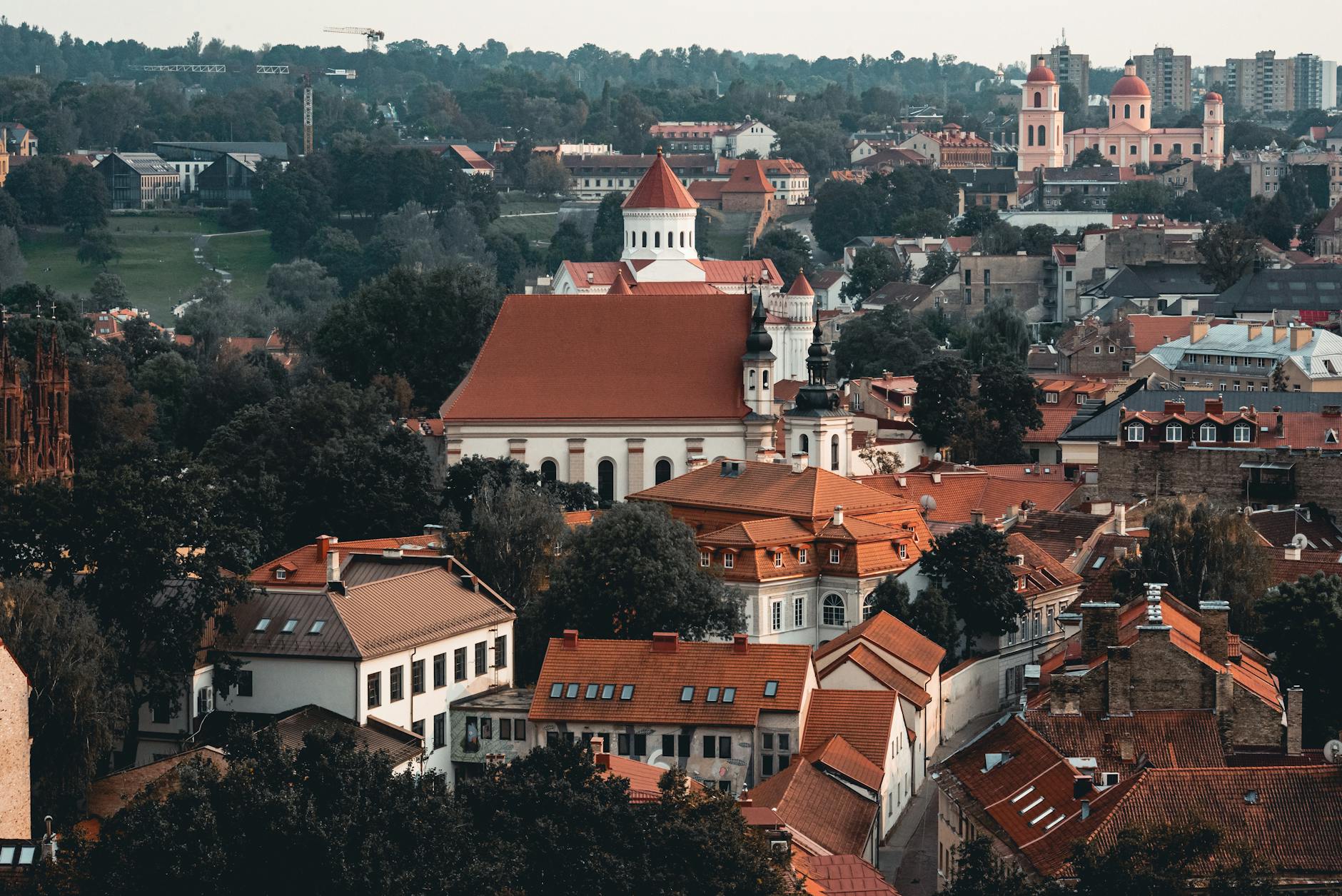
The standard misunderstanding about Vilnius is that it is a city you see. It isn’t. It is a city you push open doors to find. The Old Town — one of the largest historic centres in Europe, a UNESCO World Heritage Site since 1994, built during Vilnius’s era as capital of the Grand Duchy of Lithuania that stretched from the Baltic to the Black Sea — reveals almost nothing from the street. You walk past 16th-century Baroque facades on Pilies Street or Didžioji Street and see a continuous wall of stone and plaster. Then you push open a heavy wooden door, step through a vaulted passageway, and find yourself in a completely unexpected Italianate courtyard: a space of cobblestones, arcaded loggias, and sky visible only as a rectangle overhead, inhabited by three people with coffee and a cat. This happens repeatedly. It is the city’s defining structural characteristic — architecture designed to conceal beauty rather than advertise it.
Vilnius was, for centuries, known as “Jerusalem of the North” — a reference to the extraordinary concentration of Jewish intellectual life here before the Holocaust reduced a community of 100,000 to fewer than 10,000 survivors. It was a capital of the Polish-Lithuanian Commonwealth, an occupied city under Russian and then Soviet administration, and the site of the most significant acts of Baltic resistance to Soviet rule in the early 1990s. All of this history is physically present in the city — in the former KGB headquarters, in the ghetto streets of the Old Town, in the mass grave sites outside the city — and it is inseparable from the contemporary Vilnius of craft beer bars, hot air balloons over Baroque church towers, and a tech economy that has made it one of the fastest-growing startup capitals in the EU.
In 2026, Vilnius has moved past its memorable “G-Spot of Europe” tourism marketing and into a more considered “Greenest Capital” identity — car-free zones expanding, urban forests being planted, electric scooters competing with hot air balloon sightings for the city’s most characteristic form of transport. The combination is specific to this city and does not exist anywhere else in the Baltic.
Who this guide is for: History obsessives, food travellers, design-literate visitors, and anyone willing to push open heavy wooden doors. Couples, solo explorers, people who want to be surprised. A long weekend to a week.
Extending the trip? See our Riga city guide (4h by Lux Express bus), Tallinn city guide (6h by bus through Riga, or 1h flight), and Krakow city guide (1h30 flight via LOT or Wizz) for the same treatment.
Table of Contents
Top Attractions in Vilnius
1. Gediminas Tower & Castle Hill
The founding symbol of Vilnius and Lithuania’s most photographed monument: a single remaining Gothic tower from the Upper Castle, sitting on a wooded hill 48 metres above Cathedral Square. Gediminas Tower was built in the 14th century, and the legend of its founding — Grand Duke Gediminas dreamed of an iron wolf howling from this hill, interpreted by the pagan high priest as a sign to build a great city — is not just mythology but a statement of deliberate origin: Vilnius was chosen, founded by will, not discovered by accident.
The tower contains a permanent exhibition on the history of the castle complex and Vilnius’s founding, including the original brick and stonework visible in the walls. The view from the top is the definitive orientation for any visit: Cathedral Square directly below, the red rooftops of the Old Town spreading south into the Neris river bend, the three hills of the city (Gediminas, Three Crosses, Belfry) visible in a single panorama. On a clear day, the balloon flights over the Old Town that have become one of Vilnius’s signature images are visible from here — a detail that makes the founding legend feel appropriately surreal.
The walk to the tower is itself worthwhile: either via the funicular (2 minutes, €1) or the wooded hillside path (10 minutes, free, steep). At the summit, the Three Crosses monument on the adjacent hill — three white crosses commemorating Franciscan missionaries martyred on this hill — is visible on the horizon. Both sites, together, are the best introduction to Lithuanian historical symbolism available without a guide.
Price: Tower admission adult €5, student €2.50; funicular €1 each way (or walk free) Book: lnm.lt Hours: Daily Apr—Sep 10am—9pm; Oct—Mar 10am—6pm How to get there: 10-minute walk from Cathedral Square. Access: Funicular reaches the lower tower entrance. Tower interior has steep spiral stairs — not wheelchair accessible.
Editor’s tip: The Hill at dusk is the correct time for photography — the warm light hits the cathedral and the Old Town rooftops simultaneously. Come up an hour before sunset and stay until the light dies. Take the hillside path down rather than the funicular; it passes through mature oak forest and deposits you in the Bernardine Gardens, which are pleasant in any season.
2. Lukiškės Prison 2.0 — From Incarceration to Innovation
The most successful urban regeneration project in the Baltics. A notorious prison that operated for over 100 years and was the site of mass executions during both Nazi and Soviet occupation — the building where Lithuanian resistance fighters were held before being shot or deported — closed in 2019 and was converted into a cultural hub that now houses over 250 independent artist studios, galleries, event spaces, a restaurant, and in 2026, a fully operational high-tech immersive history museum in the converted Cell Block B.
The conversion did something that most such projects don’t: it kept the institutional reality of the space intact rather than erasing it. The original cell doors, the iron walkways, the light shafts designed to disorient prisoners — all remain. The artist studios are literally inside the cells, with the original bars still on the doors. Walking through an active creative space that retains the unmistakeable atmosphere of its former function creates a specific kind of dissonance that no designed cultural institution could replicate. This is what urban regeneration looks like when it’s done honestly.
The night tours — available on selected evenings — are the highest-priority booking in Vilnius. The daytime atmosphere has become festive and creative; the night tour, with torchlight in the execution courtyard and the guide’s account of what happened here, is something different and more appropriate to the weight of the place. Check the schedule carefully; concerts in the prison courtyard are equally recommended — there is no more psychologically complex performance space in the Baltics.
Price: Day guided tour €15—20; Night tour €20—25; Cell Block B museum €12 Book: lukiskiumale.lt — advance booking essential for night tours, which fill weeks ahead Hours: Generally open daily from 10am; specific tours and events at varying times — check website. How to get there: 10-minute walk from Cathedral Square via Gedimino prospektas. Access: Ground floor of courtyard accessible. Cell blocks have stairs — limited accessibility in older sections.
Editor’s tip: Book the Night Tour. It is genuinely chilling in a way the daytime visit cannot be — the atmosphere in near-darkness is impossible to manufacture — and it avoids the festival-market energy that the daytime experience now carries. After the night tour, do not make any social plans. Give it two hours. Also check the concert schedule at lukiskiumale.lt; seeing a band or DJ in the prison courtyard is a distinctively Vilnius experience that exists nowhere else.
3. KGB Museum — Museum of Occupations and Freedom Fights
Located in the former KGB headquarters on Gedimino prospektas — the building where Lithuanian resistance fighters were interrogated, tortured, and executed during Soviet occupation. The museum occupies the building exactly as it was when the KGB vacated it following Lithuanian independence in 1991: the interrogation rooms, the isolation cells, and most significantly, the basement execution chambers, which remain preserved exactly as they were found. Bullet holes are still in the walls. The drain in the floor of the execution room — installed so the blood could be hosed away — remains visible.
This is an essential, sombre counterweight to the city’s beauty. It is not a comfortable visit. The exhibitions document in extraordinary detail the systematic deportation of Lithuanian civilians to Siberia — between 1941 and 1953, approximately 280,000 Lithuanians were deported; tens of thousands did not return — the fate of the resistance fighters who were hanged or shot in these cellars, and the mechanisms by which a police state maintains its control over a population. Seeing this building immediately before or after the Palace of the Grand Dukes nearby creates the full historical arc of this city: the medieval apogee, the centuries of occupation, the Soviet endpoint.
Price: Adult €8, student €4 Book: genocid.lt — no advance booking usually needed, but check for current tour availability Hours: Tue—Sat 10am—6pm, Sun 10am—5pm. Closed Mondays and Tuesdays. Access: Lift to all floors. Basement accessible via stairs only — check with museum for arrangements.
Editor’s tip: This is intensely heavy. Do not book anything — restaurant, tour, social engagement — for the two hours after your visit. Eat the time. After you leave, walk directly to Lukiškės Square across the street. The square was, under Soviet rule, the site of mass political rallies. On 13 January 1991, at the decisive moment of Lithuania’s independence, the square filled with civilians who came to defend parliament against Soviet tanks. Sit there for a while before going anywhere else.
4. Palace of the Grand Dukes of Lithuania
A reconstruction — built between 2002 and 2018 on the foundations of the original 15th-century royal palace that was demolished by Russian Imperial authorities in 1801 — but one executed with archaeological integrity that lifts it well above the category of “replica.” The excavations during construction uncovered the original stone foundations, Gothic vaulting, and artefacts spanning 500 years of the Grand Duchy of Lithuania at the height of its power, when it was the largest state in Europe. These original structures are preserved in place and accessible under glass floors throughout the complex.
The museum is substantial — four distinct routes, covering archaeology, royal apartments, medieval Lithuanian culture, and temporary exhibitions. Most visitors attempt all four and arrive at museum fatigue by the third. The correct strategy: choose Route I (Archaeology) for the glass floor excavation sections, which are the genuine revelation — medieval stone foundations, Gothic column bases, and the specific texture of 13th-century mortar visible at eye level — and Route IV (Museum Exhibitions) for the artefact collections. Together they take approximately 90 minutes and leave you wanting more rather than needing to sit down.
Price: All routes (I–IV combined) €12 adult; individual routes €3–7 (Route II is the main residential interiors at €7); student/senior discounts; combo ticket with multi-route discount up to 50% Book: valdovurumai.lt Hours: Tue—Sun 10am—6pm, Thu until 8pm, closed Mon Access: Fully wheelchair accessible — lifts to all levels, ramps over archaeological sections.
Editor’s tip: The glass floors over the original 13th-century stone foundations are the highlight. Stop above each section and look at the stonework directly below your feet — not the signage, the stone. You are standing on the literal structural foundation of a state that, at its peak, contained 100 ethnic groups, 12 official languages, and three major religions simultaneously. That fact requires the original stone to become real.
5. Vilnius University — The Hidden Masterpiece
Established in 1570, Vilnius University is one of the oldest universities in Central and Eastern Europe, and its campus — 13 interconnected courtyards of Renaissance and Baroque architecture covering a full city block in the Old Town — is the most undervisited world-class architectural ensemble in the Baltic states. This is not an exaggeration for effect. Visitors who book a guided tour of the Vilnius University Library and see the Smuglewicz Hall — a baroque library adorned with ceiling frescoes by Franciszek Smuglewicz, painted in the 1780s — consistently describe it as the finest room they have encountered in the Baltics, and more beautiful, in terms of the completeness of its decorative programme, than the Long Room in Trinity College Dublin.
The difference is that Trinity College Dublin has a marketing budget, and Vilnius University Library does not. The Hall is almost always quiet. The frescoes — allegorical figures representing the arts and sciences, executed in the late-Enlightenment painterly vocabulary that Smuglewicz learned in Rome — are in exceptional condition. The room feels, as one editor noted, like a set from Umberto Eco’s The Name of the Rose: the specific atmosphere of medieval scholarship preserved in amber and absolutely, gloriously alive.
The University’s courtyard complex — navigable on self-guided walks from the main entrance on Universiteto Street — contains the Observatory Courtyard (18th century astronomical instruments visible), the Grand Courtyard with its Baroque arcades, and St. John’s Church, whose 68-metre belfry tower is the best free elevated view in the Old Town.
Price: Library guided tour (includes Smuglewicz Hall) adult €5, student €3; university courtyards free to walk; St. John’s belfry €3 Book: Library tour booking at mb.vu.lt — advance booking required and strongly recommended Hours: University courtyards daily 9am—8pm; Library tours at scheduled times (check website); Belfry Apr—Oct 10am—7pm. Access: Grand courtyard accessible. Library has steps to upper hall — contact in advance for mobility arrangements.
Editor’s tip: Do not just walk into the courtyard without booking the library tour. The courtyard is beautiful; the library is extraordinary. These are different categories. Book the tour as far in advance as possible — ideally before you book your flights.
6. Cathedral Square & the Belfry Tile
Vilnius Cathedral — the National Sanctuary of Lithuania, a neoclassical white rectangle that has been burned, converted to a palace under Napoleon, closed as an art gallery under Soviet occupation, and reconsecrated in 1989 — stands at the geometric centre of the city at the foot of Gediminas Hill. The adjacent belfry (originally a defensive tower from the 14th-century castle complex, later converted to bell-ringing use) is one of Vilnius’s most distinctive silhouettes.
The Cathedral Square itself is the city’s largest public gathering space — the site of the 1989 Baltic Way, when 2 million people formed a human chain from Vilnius to Tallinn to Riga on 23 August 1989, demanding independence from the Soviet Union simultaneously across all three Baltic states. A tile embedded in the square’s pavement marks the exact spot in Vilnius. It is called the stebuklas — miracle. Locals say that if you spin three times clockwise on the tile and make a wish, it comes true. Whether or not you believe this, you will see Vilnius residents doing it, which is both charming and a reminder that this square has always been a site of collective meaning.
Price: Cathedral free entry; crypt tour adult €3 Hours: Cathedral daily 7am—7pm; crypt tours Tue—Sat 10am—5pm Access: Cathedral fully accessible at ground level. Crypt has stairs.
Editor’s tip: Find the stebuklas tile. It is not signposted — it is a small square stone in the pavement, slightly worn, to the south of the belfry. Spin clockwise three times. This is non-negotiable regardless of your views on pagan wishing rituals.
7. Gate of Dawn (Aušros Vartai)
The sole surviving gate of the original city wall (Vilnius had nine city gates; this is the only one still standing), and inside its upper chapel: the Black Madonna of Vilnius, a 17th-century icon of the Virgin Mary venerated by Catholics and Orthodox Christians alike, displayed on a silver altar behind a grille in a small chapel above the gate arch. The chapel is accessible via a narrow side staircase; the image, in its elaborate silver-and-gold vestments, is among the most venerated religious objects in Central and Eastern Europe.
On significant feast days the street below the gate is filled with pilgrims on their knees. The religiosity is genuine, concentrated, and not performative. If you are not a believer this remains remarkable to witness. If you are, the accumulated centuries of prayer in this space are palpable in a way that is difficult to attribute to anything except the duration of the devotion.
Immediately south of the gate, the street opens into the area of the former Jewish Ghetto — the most densely occupied Jewish quarter in 18th-century Europe, known as the “Jerusalem of the North.” The Great Synagogue, the largest in the world at the time of its construction, was destroyed by the Nazis and Soviet authorities. Its foundations are now partly beneath a primary school; the outline of the original building is marked in the school’s playground. A small surviving building — the Choral Synagogue on Pylimo Street — still holds services.
Price: Free Hours: Gate and chapel daily from early morning. Chapel hours vary with service schedules. Access: Gate arch accessible at street level. Chapel staircase is narrow — not wheelchair accessible.
Editor’s tip: Come on a weekday morning. The stream of worshippers and pilgrims arriving through the gate while the city is still waking up is the most layered 20-minute observation available in Vilnius: the medieval gate, the Catholic shrine, the Jewish heritage immediately south, the Baroque church facades — 600 years of history in a single compressed view.
8. St. Anne’s Church & the Bernardine Complex
St. Anne’s Church — built in the early 16th century in a style best described as Baltic Gothic Flamboyant — is the most photographed building in Vilnius and, by the judgement of most architectural historians who have written about it, the most beautiful Gothic church in the Baltic states. Napoleon, having occupied Vilnius in 1812, reportedly said he wished he could carry it back to Paris on his hand. He couldn’t. It remains here, on a narrow street at the edge of the Old Town near the Vilnele river, in the same condition it was in when Napoleon saw it: 33 types of brick used in the facade, each cut to a specific angle, the whole composition resolved into a set of pinnacles and tracery that appears impossibly light for the scale of the building.
Adjacent, connected by a passageway, is the Bernardine Church — larger, also Gothic, built in the early 16th century by Franciscan monks and displaying some of the finest Late Gothic stone carving in Lithuania in its doorways and vaulting. The two churches form a complex, and the square in front of them — Maironio Street, with the Vilnele river behind the church gardens — is the most beautifully composed public space in the Old Town.
Price: St. Anne’s: free entry (donations welcome); Bernardine Church: free Hours: St. Anne’s Mon—Sat 10am—6pm, Sun 7am—7pm. Bernardine Church daily for services and visits. Access: St. Anne’s ground level is accessible. Interior has uneven stone floors.
Editor’s tip: Photograph St. Anne’s in the morning from the bridge over the Vilnele river (Maironio bridge) when the light comes from the east — the brick colour in morning light is significantly different from afternoon and the pinnacles read against the sky rather than against buildings. Most photos you have seen of this church were taken in the afternoon.
Vilnius’s Best Neighbourhoods
Užupis — The Independent Republic
Across the Vilnelė river from the Old Town: a district of artists, writers, and musicians that declared itself an independent republic on 1 April 1997 — date chosen deliberately for both its proximity to April Fools’ Day and the Lithuanian date of restoration of independence. Užupis has its own president (currently the artist Romas Lileikis, perpetually re-elected), its own anthem, its own army (11 members), its own currency, and its own constitution — 41 articles, posted in 40 languages on mirrored plaques on Paupio Street. Article 1: “Every person has the right to live by the River Vilnelė, while the River Vilnelė has the right to flow past every person.” Article 12: “A dog has the right to be a dog.” Article 38: “Do not surrender.”
The border crossing — a bridge over the Vilnelė with a passport control booth staffed by a single guard on significant dates — now issues its own “Užupis Passport.” In 2026, the official border stamp has become controversial when placed in national passports (some officials have objected); the workaround is the Užupis Information Center Magnetai ir stebuklai (Magnets and Miracles) on Užupio Street, which sells the official Užupis Passport specifically for this purpose. Buy one and stamp it here.
The neighbourhood beyond the performance of independence is a genuinely living creative community: independent galleries, musician’s studios, bookshops, and the specific atmosphere of a place that has kept its rents low enough to remain habitable for the people who made it interesting. ŠnekuTis bar (see bars section) is the neighbourhood’s centre of gravity.
Paupys — The New Foodie District
Directly adjacent to Užupis, Paupys (literally “by the river”) was a former industrial zone that has been converted over the last five years into the trendiest district in the city — but with more architectural care than most such transformations. The anchor is the Paupys Market, now the city’s best food hall and, in 2026, firmly established as the “communal living room” of Vilnius. The market operates across ground floor and mezzanine with independent food stalls, a dedicated “Winter Garden” section with the best light in the building (southeast-facing glass, morning to early afternoon), and the kind of crowd on Sunday mornings — young professionals, families, couples, artists from Užupis crossing the bridge — that tells you this is where the city actually lives rather than performs.
Sunday brunch at Paupys is the most “contemporary Vilnius” experience available. Arrive after 10am, take a tray around the stalls, find a table in the Winter Garden section, and stay for two hours. This is how the city looks when it’s not managing your visit.
Naujamiestis — The 2026 Tech Boom
The “New Town” south-west of the Old Town is where Vilnius’s technology economy is physically concentrated and visible. The massive Nord Security and Surfshark campuses — among the most significant cybersecurity companies in Europe, both based here — anchor a district of refurbished industrial buildings now occupied by IT firms, fintech startups, and creative agencies. By 2026, Vilnius has become one of the fastest-growing startup ecosystems in the EU, and Naujamiestis is where that growth has landed.
The visitor interest is on T. Ševčenkos Street: a cluster of “industrial loft” bars occupying former factory spaces that represent the best bar scene in Vilnius outside Užupis. At the end of this street: Kablio (The Hook) — simultaneously a cultural centre, a skate park, and a nightclub, occupying a converted warehouse with a programme that runs from contemporary art exhibitions during the day to the best DJ nights in the city after midnight. Kablio is the most genuinely multi-use cultural venue in the Baltic states and the single best answer to the question “what is Vilnius’s nightlife actually like?”
Where to Stay in Vilnius — By Budget
Budget (under €50/night): Jimmy Jumps House (Savičiaus 12, Old Town) — the most consistently well-reviewed hostel in Vilnius; small, clean, genuinely helpful staff. Old Town Hostel (Aušros vartų 20) — more central, slightly larger, in a historic building near Gate of Dawn.
Mid-range (€50—130/night): Artagonist (Šv. Ignoto 4, Old Town) — design hotel in a converted 17th-century building with exposed brick and arched ceilings. Nine O’ Five (Šv. Dvasios 7) — boutique in a Baroque Old Town building, 14 rooms, excellent breakfast. For the best neighbourhood base, any guesthouse in Užupis or Paupys puts you in the city’s most interesting area rather than its most photographed.
Luxury (€130+/night): Hotel Stikliai (Gaono 7, Old Town) — the definitive luxury address in Vilnius; a 17th-century building with a courtyard, spa, and a restaurant that competes with the best in the city. Kempinski Hotel Cathedral Square (Universiteto 14) — faces Gediminas Hill, pool, the most reliably international standard of service in Vilnius.
Important note: Avoid staying on Pilies Street itself — it is the tourist spine and the ambient noise is incompatible with sleeping before midnight in summer. One block off in any direction and the Old Town becomes genuinely quiet at night. Naujamiestis and Užupis are the best options for visitors who want to experience the city from a local perspective rather than a hotel corridor.
Where to Eat in Vilnius
Lithuanian Food: What to Know First
Lithuanian cuisine is earthy, heavy, and — since approximately 2015 — increasingly sophisticated. The foundation is root vegetables, pork, dairy (sour cream appears on almost everything), foraged mushrooms and berries, rye bread, and the cold-weather cooking logic of a country that spent centuries being agriculturally self-sufficient or not surviving. The national dishes are not delicate. They are substantial.
Šaltibarščiai — pink soup — is the seasonal counterpoint: a cold beet and kefir soup, bracingly acidic and vivid pink, served in summer with hot boiled potatoes on the side. The temperature contrast (cold pink soup, hot potatoes, sour cream) is specifically Lithuanian and tastes nothing like anything else. In 2026, Vilnius holds an annual Pink Soup Festival in June — a public celebration of a dish that is genuinely beloved by the population and genuinely baffling to most first-time visitors. It is worth timing a June visit to coincide with it.
Cepelinai (zeppelins) — enormous potato dumplings stuffed with minced meat or curd, served with sour cream and pork cracklings — are the national comfort food. They are a full meal in one object. Do not underestimate the size before ordering.
Džiaugsmas (Odminių 3, Old Town) — the best restaurant in Lithuania by the consistent assessment of the local food press and the Michelin Guide observers who have been circling it since 2023. “Modern Lithuanian” with zero pretension: the deep-fried sourdough bread with cod roe is a permanent fixture and the benchmark against which every other amuse-bouche in Vilnius is measured. The tasting menu runs €55—70. Book 10 days ahead via dziaugsmas.com — tables are not easily available without a reservation.
Paupys Market stalls — the Sunday morning food hall experience described above; the best and most honest cross-section of what Vilnius is cooking in 2026. Budget €8—15 for a complete meal from multiple stalls.
Etno Dvaras (Pilies 16, Old Town) — a chain, which normally is not a recommendation. For traditional cepelinai and šaltibarščiai, however, their quality control is the most consistent available for first-time visitors. The cepelinai are made to the same recipe at every table and the execution is reliable. Mains €8—14. No advance booking needed.
Sweet Root (Užupio 22, Užupis) — the understated rival to Džiaugsmas for the title of finest contemporary Lithuanian kitchen. Garden-to-table philosophy, fermentation programme, wild-foraged ingredients. Tasting menu €60—80. Book via sweetroot.lt.
To avoid: The restaurants on the main stretch of Pilies Street for anything beyond a quick lunch. Tourist-facing menus, average food at inflated prices. The city’s best food is consistently one neighbourhood away from wherever the cruise visitors and stag parties are.
Michelin Guide Lithuania 2026
Michelin launched in Lithuania in 2024 and the 2026 third edition covers 37 restaurants. Four one-star restaurants in Vilnius all retained their stars in 2026:
- Demo (★): Contemporary European fine dining in a light-filled room.
- Džiaugsmas (★): Odminių 3 — see above. Lithuania’s most consistent modern kitchen.
- Pas mus (★): Chef Vita Bartininkaitė’s intimate, home-like room; seasonal and foraged ingredients.
- Nineteen18 (★): Contemporary Lithuanian at the Radisson Blu — named for the year of Lithuanian independence. Creative takes on tradition. €50-80.
Michelin-selected (in the guide, not starred): Sweet Root (see above), Ertlio Namas, Lokys, and ~20 others.
More Traditional Lithuanian Food & Where to Find It
Beyond cepelinai and šaltibarščiai, the essential dishes you should try:
- Kepta duona: Deep-fried rye bread strips rubbed with garlic, served with cheese sauce. The ultimate Lithuanian bar snack. €3-5 with a beer.
- Bulviniai blynai: Potato pancakes — crisper and thinner than cepelinai, served with sour cream. €4-8.
- Kibinai: Crimean Karaite crescent pastries filled with mutton or other meats. Best from the Karaite community in Trakai. €2-4 each.
- Skilandis: Cold-smoked pork sausage — acquired taste, prized locally. Find at markets.
Ertlio Namas (Šv. Jono 7, Old Town) — traditional Lithuanian in a historic building. Cepelinai, smoked meats, game. Garden seating. The upstairs room is a more refined fine-dining space (€40-60). ertlionamas.lt
Lokys (Stiklių 8) — “The Bear,” serving Lithuanian and game dishes since 1972. Wild boar, venison, even beaver. Medieval cellar atmosphere. lokys.lt
Forto Dvaras — reliable chain for reasonably-priced traditional Lithuanian food, good for sampling multiple dishes in one meal. Multiple locations. fortodvaras.lt
Markets
Halės Turgus (Pylimo 58) — Vilnius’s covered market since 1906. Vegetables, dairy, meats, bread, local cheeses. The place to buy Lithuanian products. halesturgus.lt
Tymo Turgus (Maironio 11) — smaller market with a Saturday farmers’ market; more artisan-focused.
Bars, Farmhouse Beer and Nightlife
Lithuania is a beer country, not a wine country — and specifically a farmhouse ale country. Kaimiškas — Lithuanian farmhouse ale, also called alus in its traditional form — is unfiltered, often unpasteurised, sometimes made with wild yeast, high in alcohol (5—8%), and tastes like nothing else produced in Europe. It is the most direct expression of Lithuanian brewing culture that predates the industrialisation of alcohol production, and it is undergoing an international revival of interest that has reached London and New York but is still best experienced here, at source.
ŠnekuTis (Užupio 2, Užupis) — the most authentic and most peculiar bar in Vilnius. A wooden house, several rooms, mismatched furniture, a wall covered in newspaper, and a rotating selection of Lithuanian farmhouse ales that are not available anywhere else in the city. The atmosphere on a Friday evening — Užupis artists, university students, locals who have been coming since the 1990s — is the specific Vilnius vibe that all the bars in the Old Town are trying to sell and cannot replicate. Cash preferred. No cocktail menu. Essential.
Kablio (T. Ševčenkos 23, Naujamiestis) — cultural centre and nightclub; the best DJ nights in Vilnius after midnight on weekends. Check the programme at kablio.lt — the daytime art programme is as strong as the nighttime one, which is unusual and worth noting.
Snekucius Craft Beer Bar (Islandijos 4) — 40 taps of Lithuanian, Latvian, and Estonian craft beers with a serious focus on regional farmhouse styles. The most comprehensively stocked craft beer bar in Vilnius.
Alaus biblioteka (Beer Library, Šv. Kazimiero 9, Old Town) — an actual library of bottles, 600+ labels from Lithuanian microbreweries, with a tasting flight system. The best way to understand the depth of Lithuanian brewing culture in a single sitting.
In Vino (Aušros vartų 7, Old Town) — natural wine bar and restaurant in a courtyard off the main tourist street, beloved by the local food and wine community. The best wine bar in Vilnius by considerable margin. Good charcuterie. Small plates €8—15.
Additional Bars Worth a Stop
Bambalynė (Stiklių 7) — Vilnius’s craft beer temple, 20 taps of Lithuanian and international craft beers plus bottles. Knowledgeable staff can walk you through the local scene. bambalyne.lt
Būsi Trečias (Totorių 18) — “You’ll be third.” Tiny pub always packed with locals, Lithuanian craft beers, cheap prices, authentic.
Špunka (Užupio 9) — punk-rock craft beer bar in Užupis. Local and Baltic beers, unpretentious crowd.
Cocktail Bars
Alchemikas (Šv. Ignoto 11) — Vilnius’s best cocktail bar. Speakeasy atmosphere, creative menu, bartenders who care. Book weekends. alchemikas.lt
Nomads (Šv. Kazimiero 1) — craft cocktails in a stylish space, good music, late hours, popular with the creative crowd.
Prohibicija (Vilniaus 28) — 1920s-themed cocktail bar playing on the prohibition concept. Classic cocktails, occasional live jazz.
Lithuanian Spirits
Beyond farmhouse beer, try traditional Lithuanian spirits: Midus (fermented honey mead, Lithuania’s oldest alcoholic drink), Starka (aged rye spirit, often 10+ years in oak), Trejos Devynerios (“three nines” — herbal liqueur with 27 herbs), and 999 (popular bitter-sweet herbal liqueur). Bambalynė and better Old Town bars stock all four.
Hot Air Balloons — The Vilnius Ritual
Vilnius is one of the very few European capitals where hot air balloons are permitted to fly directly over the Old Town, and the result — balloons drifting at rooftop level past Baroque church towers, rising over the Gediminas Hill and out across the Neris river — is visually specific to this city. The balloon flights have become the defining Vilnius image precisely because they are real: this is not an occasional event but a regular morning occurrence from April to October when conditions permit.
For visitors: balloon flights operate most clear mornings at sunrise and evenings before sunset. The sunset flight is the correct choice — the low light on the Baroque architecture from above is the best urban photography in Lithuania. Flights typically last 45—60 minutes and land in the surrounding fields outside the city, with transport back provided. Cost: approximately €150 per person.
Book: Oreivystės centras (oreivis.lt) or Balti Flying (baltiflying.lt) — both are established operators with safety records. Book the evening of your arrival if weather is clear; this is the single best way to orient yourself to the Baroque layout of the city before you spend three days walking through it.
Editor’s tip: Book a balloon flight for your first evening in Vilnius. The aerial view of the Old Town makes the whole subsequent visit legible in a way that ground-level exploration alone takes days to accumulate. The balloon experience at sunset over Baroque towers is not a tourist gimmick — it is a genuinely specific experience that exists almost nowhere else in Europe.
Getting Around Vilnius
The Old Town is navigable on foot — the main axis from Cathedral Square to Gate of Dawn is under 1.5 kilometres. For destinations beyond (Lukiškės Prison, Naujamiestis, airport), Vilnius has a tram and bus network that is functional and inexpensive.
The airport train: The train from Vilnius Airport (VNO) to Vilnius Central Station takes 7 minutes and costs €0.80 — the best airport-to-city connection in the Baltics and one of the best in Europe by price-to-time ratio. The new departure terminal (opened late 2025) has ended the era of the cramped Soviet-era arrival hall. Trains run frequently; check ltglink.lt for current timetable.
Public transport: Trams and buses cover the city comprehensively. Download the m.Ticket app for mobile ticketing. In 2026, contactless bank card payment is available on all yellow validators on trams and buses — tap and go. Useful third-party app: Trafi (trafi.com) for real-time arrivals and route planning.
| Ticket | Price (2026) | Notes |
|---|---|---|
| Single ticket (app) | €0.65 | 30 min with transfers |
| Single ticket (driver) | €1.00 | Exact change recommended |
| 60-minute ticket | €0.90 | Via app or kiosks |
| 24-hour ticket | €3.50 | Unlimited rides |
| 72-hour ticket | €6.00 | Best for 2–3-day trips |
Vilniečio kortelė: Reloadable city transport card from kiosks (€1.50 for the card). Gives the best per-journey fares but requires registration — worth it only for longer stays. Short-trip visitors should stick with the m.Ticket app or contactless bank card.
Bolt: The Estonian app operates in Vilnius for ride-hailing and electric scooters. No Uber — Bolt is the only ride-hailing option. Scooters are available throughout the Old Town and are genuinely useful for the 2—3 kilometre journeys that are too long to walk and too short for a taxi. Helmet is not legally required but recommended.
On foot: Vilnius rewards walking more than almost any city its size. The hidden courtyard principle means that every street has something behind it that requires slow movement and attention. Budget more time than any map suggests — you will stop frequently and this is the point.
Best Time to Visit Vilnius
June—August: The best weather (22—26°C on good days), balloon flights operating most mornings and evenings, Paupys and Užupis at peak energy, Pink Soup Festival in June, Summer Solstice (Rasos) celebrations on the shortest night of the year. The most expensive and most crowded period; book accommodation two months ahead for peak summer weekends.
May and September: The ideal window — prices reasonable, crowds manageable, weather pleasant (14—20°C), the city operating at normal pace. September specifically: the foliage in the Bernardine Gardens and Gediminas Hill turns, mushroom season peaks in the markets, the cultural calendar is at its most active.
March: The Kaziukas Fair — one of Lithuania’s oldest traditional markets, operating since the 17th century, filling the streets around the Cathedral and Old Town with folk crafts, food, and palm-woven decorative objects — makes early March a specific and worthwhile reason to visit. The city is cold (−2 to +8°C) but the market energy is significant.
December—January: Vilnius Christmas market on Cathedral Square. The city in snow and frost is architecturally spectacular — the Baroque towers and the white facades create a specific quality of winter light. Cold (−5 to −15°C), quiet, cheap. For visitors who want to experience the city without tourist overlay, midwinter is the most honest version.
Day Trips from Vilnius
Trakai Island Castle — The Postcard Shot, Done Right
28 kilometres west of Vilnius: a 14th-century brick castle built on an island in Lake Galvė, connected to the shore by wooden bridges, surrounded by water in three directions, and — by the judgement of every photographer who has visited Lithuania — one of the most perfectly composed historic monuments in the Baltics. The castle has been substantially restored and houses a museum of medieval Lithuanian history.
Most visitors do Trakai as an efficient day trip: arrive, photograph the castle, leave. The correct Trakai day includes the castle and a visit to a Karaite restaurant for kibinai. The Karaites — a Turkic ethnic minority brought to Trakai by Grand Duke Vytautas in the 14th century to serve as his personal guards — have lived in Trakai continuously for 600 years and number approximately 300 people in Lithuania today. Their food culture, maintained in near-isolation, produced kibinai: small crimped savory pastries filled with mutton and onion, identical to the chebureki of Central Asia, served hot at the small Karaite restaurants along the lakeside road. The Karaite community is one of the most extraordinary cultural survivals in Europe and the kibinai are excellent. Do both.
Transport: Bus or suburban train from Vilnius Station (40 minutes, €2—3). Trains are less frequent — check schedules. By Bolt Drive car rental: 35 minutes, €25—30 for the round trip.
Kernavė — The Troy of Lithuania
37 kilometres north-west of Vilnius: a UNESCO World Heritage Site consisting of five massive hill forts from the 13th century, rising above a bend in the Neris river in a sequence that is among the most dramatic archaeological landscapes in the Baltic states. Kernavė was the first capital of Lithuania before Vilnius, and the earthwork fortifications — some of the largest in the Baltic — have remained essentially untouched since the city was abandoned in the 14th century.
The site is most powerful during the Summer Solstice. Every year on 23 June (Rasos — the Lithuanian midsummer festival, a combination of the ancient pagan Rasa ritual and the Christian feast of St. John), the hill forts at Kernavė fill with bonfires, folk music, traditional dancing, and a ceremony that begins at sunset and ends at dawn. It is one of the most significant cultural events on the Lithuanian calendar and it is almost entirely unknown outside Lithuania. Coming to Vilnius in late June and spending the solstice night at Kernavė is the highest-priority recommendation in this guide for visitors who have more than two days.
Transport: By car (35 minutes) recommended — public transport connections are limited. Bolt Drive or rental car from €25.
Vilnius Safety & Practical Information
Safety: Vilnius is one of the safer capitals in the EU — violent crime rates are low, street-level harassment is rare, and the Old Town in particular is heavily pedestrianised and well-lit. Petty theft exists at low levels near Cathedral Square and the bus station; standard vigilance applies. Stag party groups (Vilnius became popular for budget bachelor parties due to cheap flights and cheap alcohol in the early 2010s) are a presence on Pilies Street and some Old Town bars on Friday and Saturday nights — manageable but worth knowing if you are sensitive to that atmosphere.
Currency: Euro (€). Lithuania joined the Eurozone in 2015. Cash is nearly obsolete in the city — contactless payment works on public transport, in every restaurant, café, and market stall. Even street vendors at the Kaziukas Fair take card. Bring a small amount of cash for ŠnekuTis and any small neighbourhood establishment without a card reader.
Language: Lithuanian — an Indo-European language considered by linguists to be the closest living language to Proto-Indo-European, preserving grammatical features that disappeared from most European languages 2,000 years ago. It bears no resemblance to anything else you have ever heard. English is spoken confidently by anyone under 40 in the tourism, hospitality, and tech sectors. Russian is understood by older residents but its use as a tourist language has declined significantly since 2022.
Connectivity: Strong public Wi-Fi throughout the Old Town, Paupys, and Naujamiestis. Mobile data works everywhere. Bolt handles transport; m.Ticket handles public transit; contactless payment handles everything else.
Tipping: 10% is appreciated at sit-down restaurants. Round up taxi fares. Nothing expected at cafés or bars unless table service applies.
Tourist Information: Vilnius Tourist Information Centre, Vilniaus 22. Open daily 9am—7pm (summer), reduced hours winter. The staff at this office are consistently among the most useful in any Baltic capital — not a tourist-brochure operation.
Visa & ETIAS: Lithuania is in the Schengen Area. EU/EEA citizens: no visa, freedom of movement. US, UK, Canada, Australia, New Zealand, Japan, and most other Western passports: visa-free for up to 90 days in any 180-day period. ETIAS, the EU’s new visa-waiver travel authorisation (not a visa), has a current target launch of Q4 2026 with a grace period before it becomes mandatory in 2027. Expect around €20, valid three years. ETIAS is separate from the UK’s ETA, which only applies to travel to Britain.
Weather snapshot: Winter (Dec–Feb) is cold, often below -10°C, with snow — dress in layers with waterproof boots. Summer (Jun–Aug) is pleasant 20–25°C with very long days (sunset after 10pm in June). Occasional 30°C+ heatwaves. Shoulder months (May, September) are often the best combination of weather and crowds.
Emergency: 112 (EU-wide, police/fire/ambulance). Non-emergency police: +370 5 271 9731.
Coffee Culture
Vilnius has developed a serious specialty coffee scene. Third-wave roasters compete with traditional European-style cafes, and the prices (€2-4 for excellent espresso) make daily café visits affordable.
Specialty Roasters
Crooked Nose & Coffee Stories: Vilnius’s flagship specialty roaster. The Stiklių Str. location is the mothership — single origins, pour-overs, knowledgeable baristas. Their beans are served throughout the city. crookednose.lt
Coffee1: Minimalist micro-roastery near the Town Hall. Small space, exceptional beans, serious about extraction. Pilies g. 31.
Caffeine: Popular chain (5 locations) with consistent quality. Good pastries, laptop-friendly, reliable WiFi. caffeine.lt
Traditional Cafes
Literatų Kiemas: Hidden courtyard cafe accessed through Literatų g. 7. The courtyard walls are covered with ceramic art plaques honoring Lithuanian writers. Atmospheric for coffee and cake.
Ponių Laimė: Soviet nostalgia cafe with vintage decor, board games, and comfort food. More vibe than coffee quality, but charming. Stiklių g. 10.
Amandus: French-style patisserie and cafe in the old town. Excellent pastries, proper espresso, outdoor seating in summer. Aušros Vartų g. 13.
Work-Friendly Spaces
LofTas: Co-working space and event venue with a cafe. Day passes available for visiting remote workers. Švitrigailos g. 29. loftas.lt
Craft & Draft: Beer-focused but serves good coffee during the day. Large tables, power outlets, creative crowd. Trakų g. 2.
Parks & Outdoor Vilnius
Despite being a city, Vilnius is remarkably green. The Neris River, surrounding forests, and well-maintained parks make escaping into nature easy.
Vingis Park
Vilnius’s largest park (162 hectares) on the Neris River — forested trails, an open-air amphitheater (hosts the famous Song Festival), running/cycling paths, and beach volleyball courts. Popular with joggers and families.
Access: Bus/trolleybus to Žvėrynas or walk from the center (2.5km). The riverside path from the White Bridge is scenic.
Bernardinai Garden
Restored 16th-century garden below Gediminas Hill. Formal flowerbeds, walking paths, playgrounds, and the oldest tree in Vilnius (a 400-year-old oak). In summer, outdoor cinema screenings. In winter, ice skating rink.
Paneriai Memorial
Sobering but important — the forest where 100,000 people (primarily Jews, but also Poles and Soviet POWs) were murdered by Nazis and Lithuanian collaborators 1941-1944. Small museum, memorial paths, mass grave sites. Free admission. jmuseum.lt/paneriai
Verkiai Regional Park
On Vilnius’s northern edge — forests, the Neris River, walking trails, and the 18th-century Verkiai Manor. Popular for autumn foliage and spring wildflowers. Accessible by bus (15, 10) from the center.
Swimming & Water
Žirmūnai Beach: Sandy beach on the Neris River, popular in summer. Basic facilities, lifeguards, volleyball.
Lake Tapeliai: Clear lake 8km from center with swimming, SUP rental, and forest surroundings. Bus 25 from Lukiškės Square.
Vilnius with Kids
Vilnius is family-friendly, with parks, interactive museums, and a relaxed attitude toward children in restaurants and cafes.
Family Attractions
Energy and Technology Museum: Hands-on science exhibits in a former power plant. Kids can operate machines, learn about electricity, and explore industrial heritage. emuziejus.lt
Bernardinai Garden: Playgrounds, ducks to feed, ice cream vendors in summer. The castle on the hill (Gediminas Tower) is a short funicular ride away.
Belmontas: Watermill complex 7km from center with playgrounds, rope courses, mini-golf, and riverside restaurants. Popular for family weekend outings. belmontas.lt
Akropolis: Shopping mall with cinema, bowling, ice skating rink, and indoor playground. Rainy day option. Ozo g. 25.
Free & Cheap Activities
- Gediminas Tower funicular: Short ride up the hill (€2), castle ruins at top, great views.
- Cat Cafe Kačių Kavinė: Pay per hour to play with rescue cats. Kids love it. Vilniaus g. 35.
- Užupis exploration: The quirky “republic” entertains kids with its bridge, statues, and street art.
- River walk: The path along the Neris from the White Bridge to Vingis Park is flat and stroller-friendly.
Romantic Vilnius
Vilnius’s Baroque churches, cobblestone streets, and candlelit restaurants make it surprisingly romantic. The UNESCO Old Town at night is made for couples.
Romantic Experiences
Sunset from Gediminas Tower: Take the funicular up as the sun sets over the Old Town. The changing light on the red-tiled roofs is magical.
Užupis evening: The bohemian district is quieter after dark. Walk along the Vilnelė River, find a hidden courtyard bar, and discover the Užupis Constitution wall together.
Hot air balloon: Vilnius is one of few capitals where you can balloon directly over the old town. Dawn flights offer the best light. From €99/person. ballooning.lt
Spa hotels: Several hotels offer couples’ spa packages — Hotel Pacai (17th-century palace), Grand Resort Bad Ragaz (mineral baths), and Art Boutique Hotel (Art Nouveau).
Romantic Restaurants
Sweet Root: Hyper-local Nordic cuisine in an intimate Užupis space — garden-to-table philosophy, wild-foraged ingredients. In the Michelin Guide Lithuania selection (not starred — Lithuania’s four 1-star restaurants are Demo, Džiaugsmas, Pas mus, and Nineteen18; earlier editions of this guide wrongly called Sweet Root “the first Michelin-starred restaurant”). €80-120 tasting menus. Reserve ahead. Užupio g. 22. sweetroot.lt
Dziaugsmas: “Joy” — fine dining in a restored 16th-century building. Lithuanian ingredients, French technique. Šv. Ignoto g. 16. dziaugsmas.lt
Gaspar’s: Steakhouse with a sophisticated vibe. Dry-aged beef, excellent wine list, candlelit atmosphere. Didžioji g. 26. gaspars.lt
Romantic Stays
Hotel Pacai: Design hotel in a 17th-century palace. Stunning interiors, riverside location, excellent restaurant. Didžioji g. 7. designhotels.com/hotel-pacai
Artagonist Art Hotel: Art-focused boutique hotel with original works throughout. Rooftop terrace with Old Town views. Stiklių g. 15. artagonist.lt
Hidden Vilnius
Beyond the obvious attractions, Vilnius rewards exploration. Hidden courtyards, secret bars, forgotten neighborhoods — the city reveals itself slowly.
Hidden Courtyards
Literatų Kiemas: Enter through Literatų g. 7 to find a courtyard covered in ceramic art plaques honoring Lithuanian writers. A collaborative art project that grows each year.
Stiklių Street courtyards: Many buildings on Stiklių (Glass Street) have hidden courtyards dating to the Jewish quarter era. Push open gates marked “kiemas” to explore.
Vilnius University courtyards: The university complex contains 13 interconnected courtyards — most are open to the public. St. John’s Church and the Astronomical Observatory are highlights.
Off-Beat Experiences
Grūtas Park: 1 hour south of Vilnius — a forest park containing Soviet-era statues removed after independence. Lenin, Stalin, and Lithuanian Communist leaders among pines. Bizarre and fascinating. grutoparkas.lt
Šnipiškes: Across the river from the Old Town, this Soviet-era district has brutalist architecture and the TV Tower (with panoramic restaurant). Contrast to the Baroque old town.
Antakalnis Cemetery: Historic cemetery with graves of resistance fighters, foreign soldiers, and notable Lithuanians. The Polish military cemetery section is particularly moving.
Frequently Asked Questions
How many days do you need in Vilnius?
Three days is the comfortable minimum for the Old Town (Cathedral, Vilnius University, Gate of Dawn, St. Anne’s), one serious cultural experience (KGB Museum or Lukiškės Prison), and an evening in Užupis. Four days adds Trakai Island Castle, a proper session at ŠnekuTis, and the Paupys Sunday brunch. For the Summer Solstice at Kernavė you need to time your visit specifically — plan a full week if that is a priority. Vilnius rewards slow movement; its hidden courtyards are not found by people who are efficiently moving through a list.
Is Vilnius the cheapest of the three Baltic capitals?
Yes — marginally cheaper than Riga and significantly cheaper than Tallinn for comparable accommodation and food. A tasting menu at Džiaugsmas is €55—70 (versus €65—85 at Lee in Tallinn or comparable restaurants in Riga). A beer at ŠnekuTis is €3—4. Public transport is €0.90 per journey. Budget visitors can eat very well for under €15 a day; mid-range visitors can dine excellently for €30—50 per person per meal at the serious restaurants.
Is Užupis worth visiting or is it a tourist gimmick?
Užupis is both. The “Republic” branding — the constitution, the border crossing, the passport stamp — is a performance, and a self-aware one. The actual neighbourhood is a genuine creative community that has maintained its character partly because the performance has attracted enough tourism to keep rents manageable for the artists who live there. ŠnekuTis is genuinely excellent. The galleries are real. The constitution on Paupio Street is actually funny if you read it in full. Go, do the passport stamp with the Užupis Passport from the information centre rather than your national document, drink at ŠnekuTis, and you will have had a real experience.
Should I visit the KGB Museum?
Yes — with preparation. This is not light tourism. The building documents in physical detail the mechanism and the human cost of totalitarian occupation: the interrogation procedures, the deportations, the executions. The basement execution chambers are preserved exactly as they were in 1991. It is one of the most important historical sites in Eastern Europe, and skipping it because it is uncomfortable is a mistake of the same order as visiting Berlin and skipping the Memorial to the Murdered Jews of Europe. Allocate two hours and plan to do nothing afterwards.
What is the best thing about Vilnius that most visitors miss?
The Vilnius University Library and the Smuglewicz Hall. Most visitors walk past the university entrance without knowing that behind the courtyard gates is a baroque room with ceiling frescoes that is, by any serious art-historical measure, one of the finest interiors in the Baltic states — more beautiful, in terms of the completeness of its decorative programme, than libraries that have international reputations. It requires advance booking, which is exactly why it is always quiet. Book it before you book anything else.
Cheapest Flights to Vilnius
We track flight deals to Vilnius from 3 cities worldwide. Here are the best recent fares:
Flight Deals from Vilnius
Looking for cheap flights departing Vilnius? Here are deals to 6 destinations:
Prices are based on recent deals and may no longer be available. Browse all flight deals