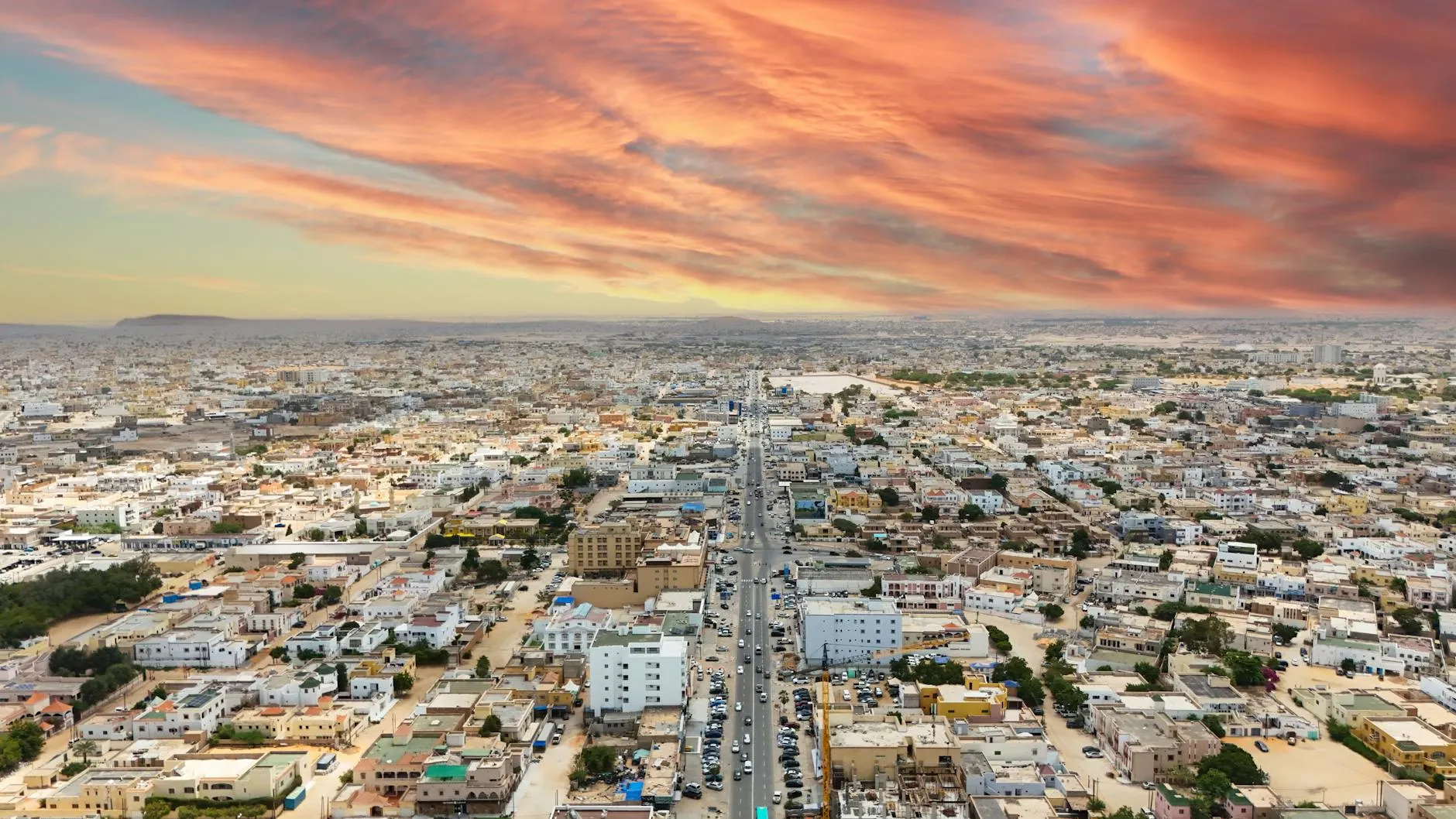
Nouakchott Oumtounsy Airport (NKC) — The Complete Master Guide 2026
Nouakchott-Oumtounsy International Airport opened in June 2016 as the greenfield replacement for the old Nouakchott airport — a 30,000 m² terminal with 6 jet bridges, 2 million passenger annual capacity, designed by Omer Houessou and described at the time as Mauritania’s largest single infrastructure project since independence in 1960. Yellow fever certificate mandatory. Currency is the Mauritanian ouguiya (MRU); redenominated 1 January 2018 (1 new MRU = 10 old MRO), polymer banknotes 50/100/200/500/1000; $1 ≈ MRU 40 (May 2026). US lists Mauritania at Level 3 — Reconsider Travel; UK FCDO advises against travel beyond the major cities. Nouakchott itself functions for visiting business and aid workers within the central neighbourhoods.
📍 25 km N of Nouakchott
🚖 Taxi 30-45 min · MRU 400-800
🛂 e-Visa $60 since Jan 2025
⚡ 2026 Quick Reference — Key Facts at a Glance
25 km · 30-45 min by taxi via Sheikh Zayed Road south into the city
MRU 400-800 (~USD 10-20) to central Nouakchott; meters not used, pre-agree
Taxi or hotel transfer only
Mauritanian ouguiya (MRU) — $1 ≈ MRU 40 (May 2026); polymer banknotes since 2018 redenomination; cards work in upmarket hotels only
— Mauritania operates own e-Visa system
e-Visa $60 · 7-14 day processing · 90-day validity, 30-day stay; embassy issuance ended June 2025
Algeria, Gambia, Côte d’Ivoire, Libya, Mali, Niger, Senegal, Tunisia
US Level 3 — Reconsider Travel; UK FCDO: avoid travel beyond Nouakchott / Nouadhibou / Atar
🏢 1. The 2016 Greenfield Terminal & the Carrier Map
Nouakchott-Oumtounsy International Airport — designed by Beninese architect Omer Houessou — opened in June 2016 as a complete greenfield replacement for the old Nouakchott International Airport, which sat closer to the city centre and had become operationally inadequate. The new airport is 25 km north on the road to Akjoujt. The terminal building is 30,000 m², with six jet bridges and a design ceiling of 2 million passengers a year. There is a separate cargo terminal and a VIP reception facility. The airport was funded as part of a strategic infrastructure programme financed by Mauritanian and Gulf-state investment; at the time of opening it was described as the country’s largest single infrastructure project since independence in 1960.
🛫 The 2016 Terminal
Layout: single concourse with six jet-bridge stands; landside services span check-in, immigration, security and gates in a compact 5-7 minute walk-through.
Capacity: 2 million passengers per year — well above current actual traffic, leaving the terminal feeling unrushed.
⭐ The Carrier Map
National carrier: Mauritania Airlines International (MAI), which operates regional + European routes from NKC.
European direct: Air France (Paris CDG).
Operating airlines (2026)
- Mauritania Airlines International (MAI) — national carrier, hubbed at NKC. Regional African + selected European routes; the principal in-country flag.
- Royal Air Maroc — Casablanca (CMN), the principal European/trans-Atlantic feed.
- Air France — Paris (CDG), the longest-running European direct service.
- Turkish Airlines — Istanbul (IST), the main link into Asian and trans-Atlantic via IST.
- Air Algérie — Algiers (ALG), the Algerian connection (Mauritania and Algeria share a long Saharan border).
- Tunisair — Tunis (TUN), North African link.
- Air Sénégal — Dakar (DSS Diass), the regional West African link.
- ASKY Airlines — Lomé (LFW), Pan-African feed.
No direct service to North America, Asia, or Australia. Connect via CDG (Air France), CMN (Royal Air Maroc), or IST (Turkish).
🛂 2. The 2025 e-Visa Reform & the Sahara-Border Reality
Mauritania operates its own visa regime. The system was overhauled in January 2025: Mauritania launched an e-Visa portal, and as of June 2025 embassies stopped issuing visas entirely — all visa-required nationals now apply via the e-Visa system before boarding. The fee is $60, processing 7-14 days, the visa is valid for 90 days from issue and the maximum stay is 30 days. Visa-on-arrival remains available at Nouakchott-Oumtounsy as a single-entry 30-day document. Eight nationalities enter visa-free: Algeria, Gambia, Côte d’Ivoire, Libya, Mali, Niger, Senegal, Tunisia.
e-Visa Since January 2025
$60 fee, 7-14 day processing, 90-day validity from issue with 30-day maximum stay. Apply via the official Mauritanian e-Visa portal. Embassy issuance discontinued June 2025 — embassies redirect applicants to the online portal.
Visa-on-Arrival at NKC Only
VoA is available only at Nouakchott-Oumtounsy airport (not at land borders or other airports), as a single-entry 30-day document. Yellow-fever certificate mandatory in all cases.
Ouguiya — Redenominated 2018
The Mauritanian ouguiya (MRU) was redenominated on 1 January 2018 at 1 new MRU = 10 old MRO. $1 ≈ MRU 40 (May 2026). Polymer banknotes 50/100/200/500/1000. The khoums sub-unit has lost all practical purchasing power and coins have fallen into disuse. Cards work in upmarket hotels (Tfeila Plaza, Iman, Nour); cash dominates elsewhere.
Who needs what for short visits
| Passport | Visa route | Yellow fever | Notes |
|---|---|---|---|
| Algeria, Gambia, Côte d’Ivoire, Libya, Mali, Niger, Senegal, Tunisia | No visa — visa-free entry | Yes — mandatory | Standard arrival card |
| EU / UK / USA / Canada / Australia / NZ | e-Visa $60 OR visa-on-arrival at NKC (single-entry 30 days) | Yes — mandatory | e-Visa pre-applied is faster; embassy issuance discontinued June 2025 |
| Other African Union / Asia / South America | e-Visa $60 OR visa-on-arrival at NKC | Yes — mandatory | Verify VoA eligibility per current rules |
US: Level 3 Reconsider Travel. UK FCDO advises against travel beyond the major cities of Nouakchott, Nouadhibou, and Atar. The Mauritanian government designates certain areas “No Movement Zones” — these are along the Mali border where armed Sahelian insurgent groups operate. Independent desert travel is strongly discouraged; organised tours with experienced local operators are the standard. In Nouakchott itself, violent crime occurs frequently outside the Tevragh Zeina neighbourhood (the diplomatic / hotel quarter); muggings and armed robberies on unlit beaches and in the ‘Le Cinquième’, ‘Dar Naim’ and Cité Plage districts. Stick to Tevragh Zeina and the central business areas; use pre-arranged transport after dark.
🚖 3. Sheikh Zayed Road: Taxi & the No-Movement-Zone Map
NKC has no airport rail and no scheduled airport bus. The 25 km journey to central Nouakchott runs south along the Sheikh Zayed Road (named for the UAE’s founding president; the highway was Emirati-funded). The three transport options at NKC are airport taxi, pre-arranged hotel transfer, and embassy/NGO-arranged driver — the last being the standard for visiting diplomats and corporate travellers.
🚖 Airport Taxi
- Pickup at the rank outside arrivals.
- Negotiate the fare before getting in — no meters; opening quote is typically double the going rate.
- Typical fare to central Nouakchott: MRU 400-800 (~USD 10-20) for the 25 km / 30-45 min run.
- Drivers speak Arabic, Hassaniya (Mauritanian Arabic dialect), and French; English is rare. Have your hotel address written down in Arabic if possible.
🏨 Hotel Transfer
- The major Nouakchott hotels (Hôtel Tfeila Plaza, Hôtel Iman, Hôtel Nour, Hôtel Khaïma in Tevragh Zeina) offer paid pickups at USD 25-50.
- Driver-meets-you-in-arrivals with name placard; secure vehicle; no fare negotiation.
- The default for international business travellers and arriving NGO staff.
🛡️ Embassy / NGO Driver
- For diplomatic, NGO, and corporate travellers, pre-arranged drivers coordinated through the organisation are standard.
- Particularly important for travellers continuing onward to interior destinations (Atar, Chinguetti, Adrar) where the Sheikh Zayed Road’s continuation north becomes the only viable route.
📵 No App-Based Ride-Hail
- Uber, Bolt, Yango, inDrive do not operate in Mauritania as of 2026.
- Within Nouakchott, urban taxis circulate; shared mini-buses run on fixed routes within the central districts but do not serve NKC.
🛋️ 4. Salon VIP at Oumtounsy
NKC has a single airside Salon VIP in the international departures area. Practical access is via business-class boarding pass on the operating carriers (Royal Air Maroc Business, Turkish Business, Air France Business, Mauritania Airlines Business). Priority Pass and other third-party programmes do not consistently list NKC in the 2026 directories — verify in your card’s app before relying on it. Walk-in access is paid at the door where available.
🛋️ Salon VIP — International Airside
Location: airside, after security and immigration, in the international departure area.
Hours: aligned with the international departure bank — typically afternoon through evening for the Royal Air Maroc, Air France, and Turkish departures.
Programmes: business-class boarding pass on operating carriers. Priority Pass acceptance varies; verify at door. Walk-in pricing where offered not published.
📦 The Honest Assessment
Hot meal selection during departure waves, mint tea (the Mauritanian institution), soft drinks, beer (limited; Mauritania is an Islamic Republic and alcohol is restricted), espresso, Wi-Fi, runway view.
Functional regional airport lounge; comfortable for the 2-3 hour pre-departure wait. Not a destination in itself.
🐪 5. Mauritanian Food: Thieboudienne, Méchoui, Tea & Camel
Mauritanian cooking sits at the crossroads of Arab Maghreb, West African coastal, and Saharan nomadic traditions. Rice and fish dominate the coastal districts; mutton, camel and grain are the interior staples. The Atlantic coast provides one of West Africa’s most productive fishing zones — Mauritanian fish exports are a national economic pillar. Note: Mauritania is an Islamic Republic and alcohol is restricted; most restaurants do not serve alcohol; the upmarket hotels (Tfeila, Iman, Nour) have limited international-license bars.
Thieboudienne (also “Cebbu Jen”) — Senegalese-originated rice with fish, vegetables and tomato base — is also the most-eaten dish on the Mauritanian coast. The Nouakchott version uses local fish from the Atlantic. MRU 200-500 (~USD 5-12) at a restaurant.
Méchoui — slow-roasted whole lamb or large cuts, North African style — appears at celebrations and at the better restaurants in Tevragh Zeina. Mauritanian méchoui has a Saharan signature: longer slow-cooking with cumin, coriander, and the spice mix used across the western Sahara. MRU 400-1,200 per portion.
Camel meat (typically called “lahem nuq” in Hassaniya) appears at the maquis and roadside restaurants — grilled, stewed, or as merguez sausage. Camel milk (laban) is the Saharan-tradition drink. Both are distinctive Mauritanian regional foods; the airside food court at NKC stocks the iconic camel-milk powder as a souvenir.
Atay — the Mauritanian green-tea-and-mint preparation — is served in three distinct rounds: bitter (first), sweet (second), strong (third). Each round is poured from height to produce the signature foam. The whole ceremony takes 30-60 minutes. The most consistent Mauritanian cultural experience, offered routinely at homes, shops, and restaurants.
Duty-Free & Souvenirs — What’s Worth Buying
🪨 Saharan Geodes & Crystals
Mauritania’s deserts are a source of geodes, gypsum crystals (sand roses), and trilobite fossils. Tourist-grade pieces from MRU 200-1,000 (~USD 5-25); larger specimen-grade pieces several times that. Verify origin claims.
🧺 Berber / Hassaniya Carpets
Hand-woven Saharan carpets in the Hassaniya tradition — geometric patterns, natural-dye colours. Smaller pieces MRU 1,000-3,000 (~USD 25-75); larger pieces MRU 5,000-15,000+. The artisan market at Marché Capitale is where the workshops sell direct.
🥃 Bissap & Camel-Milk Products
Camel milk powder, camel milk soaps, camel leather goods — distinctive Saharan exports. Bissap (hibiscus) drink concentrates. MRU 200-800 (~USD 5-20).
🫖 Tea Sets & Tray Glasses
The full Mauritanian tea-ceremony kit — engraved metal teapot, glass cups, small tray — at MRU 500-2,000 (~USD 12-50). The most usable cultural souvenir.
💡 6. Insider: National Museum, Fish Market & Chinguetti
The National Museum in Nouakchott holds the country’s principal archaeological and ethnographic collection — Neolithic finds from the Sahara, prehistoric arrowheads and pottery sherds, traditional nomadic costume, instruments, and trade artefacts from the Saharan caravan era. Two galleries, 20-30 minutes is sufficient to see the main exhibits. Labels primarily in French and Arabic; a guide is useful for English context. The single best Nouakchott visit for travellers wanting Saharan material-culture grounding.
The Port de Pêche (Nouakchott fishing port) on the Atlantic coast is one of the most distinctive sights in West Africa — hundreds of brightly-painted wooden pirogues land their catch in the late afternoon, the beach turns into an open-air sorting and selling floor with the day’s tuna, sardine, octopus and grouper. The whole scene runs from approximately 16:00 to 19:00 daily. One of the great free spectacles in the region. Daylight or early-dusk only; the surrounding beach areas are not safe after dark.
Chinguetti — UNESCO World Heritage 1991, the medieval Saharan trade town with its 13th-century minaret and its five working libraries holding 700-year-old Islamic manuscripts — is the great Mauritanian tourism destination. It is 8 hours by 4×4 from Nouakchott via Atar; it is not a layover stop. The same applies to Ouadane (UNESCO 1996, even more dramatic ruins) and Tichit. The Adrar region requires a 3-5 day commitment with an organised tour; not a place to attempt from a layover.
The Banc d’Arguin National Park (UNESCO 1989, ~12,000 km²) on the Atlantic coast north of Nouakchott is one of the world’s most important migratory bird wintering areas — flamingos, terns, sandpipers, white pelicans in their hundreds of thousands. Reached by 4×4 + boat with a licensed tour operator. Multi-day commitment, not a layover destination.
Tevragh Zeina is the diplomatic and upmarket-hotel district of Nouakchott — the only neighbourhood where international visitors should stay. Hôtel Tfeila Plaza, Hôtel Iman, Hôtel Nour, Hôtel Khaïma — all USD 80-200 per night, all with secure parking, generators, and Wi-Fi. Outside Tevragh Zeina, the practical security risk increases substantially.
Mauritel and Mattel are the two operators. SIMs at landside arrivals or in central Nouakchott for MRU 100-400 (~USD 2.50-10) with passport registration; data bundles MRU 200-800 for 5-15 GB. 4G works in Nouakchott, Nouadhibou, and the major towns along the Sheikh Zayed corridor; outside the populated zones the network is thin. 5G has not deployed.
4-hour layover: stay airside. The 25 km drive each way + e-visa processing eats most of the window.
6-hour layover (with valid visa): taxi to Port de Pêche for the afternoon fish-landing scene (late afternoon ideally) + tea at a Tevragh Zeina café. Round trip with city time 3 hours.
9+ hours: add the National Museum (20-30 min plenty) + Marché Capitale carpet bazaar. Round trip 4-5 hours. Daylight only; avoid the beach areas after dark; allow 90 min return-buffer.
❓ Frequently Asked Questions
📊 2026 Summary Data Table
| Feature | Current Data (2026) |
|---|---|
| IATA / ICAO | NKC / GQNO |
| Official name | Nouakchott–Oumtounsy International Airport |
| Opened | June 2016 — greenfield replacement for old Nouakchott airport; designed by Omer Houessou |
| Distance to Nouakchott | 25 km north via Sheikh Zayed Road — taxi 30-45 min |
| Terminal | 30,000 m² / 6 jet bridges / 2M annual passenger capacity |
| Currency / Border | Mauritanian ouguiya (MRU, redenominated 1 Jan 2018, $1 ≈ MRU 40) |
| Visa system | e-Visa $60 since Jan 2025 (embassy issuance ended Jun 2025); VoA at NKC only (single-entry 30 days); 8 nationalities visa-free |
| Yellow fever | Mandatory; WHO certificate valid for life since 2016 |
| Airport taxi | MRU 400-800 (~USD 10-20); negotiate before boarding |
| Hotel transfer | USD 25-50 — Tfeila Plaza, Iman, Nour, Khaïma in Tevragh Zeina |
| Airport bus / rail / ride-hail | None — taxi or hotel transfer only |
| Lounge | Salon VIP International — business-class access; Priority Pass not consistently listed for NKC 2026 |
| Carriers (2026) | Mauritania Airlines International, Royal Air Maroc, Air France (CDG), Turkish (IST), Air Algérie, Tunisair, Air Sénégal, ASKY |
| Long-haul direct | None to North America / Asia / Australia — connect via CDG, BRU, CMN, IST |
| Time zone | GMT (UTC+0) year-round |
| Travel advisory | US Level 3 Reconsider Travel; UK FCDO: avoid travel beyond Nouakchott / Nouadhibou / Atar; Mali-border No Movement Zones |
| Layover hooks | Port de Pêche fish-landing scene (late afternoon); Musée National; Marché Capitale carpet bazaar — Tevragh Zeina district |
| Mobile | Mauritel + Mattel; MRU 100-400 SIM; 4G in Nouakchott + corridor towns, no 5G |
🌍 Planning the trip? Read our Mauritania travel guide — best time to go, where to stay, and how to get around.